
Algés, Oeiras Mon to Fri · 09:00 to 13:00 and 14:00 to 19:00 · Sat · 09:00 to 14:00
WhatsApp Book a consultation

Body aesthetics

Dark neckWhen the neck looks darker or “dirty” and a bath does not fix it

Many people describe a dark neck as dirt that will not come off, and the first reaction is to scrub more. But most of the time the colour is not on the surface: it is in the skin itself, and scrubbing hard only irritates it. Behind it may be very different causes, from acanthosis nigricans, dark, velvety skin that may be linked to insulin resistance, to a benign dermatosis that comes off with alcohol, a fungal infection, the effect of sun or of a perfume. Here we explain how they are told apart, when a medical assessment is needed before any treatment, what can be done first at home and what a chemical peel can, and cannot, do, at Clínica Luxmed, in Algés.

Reviewed by Dr Michelle Campagnoli, clinical director

  • 1Procedure for this concern
  • 1assessment, always first
  • Nocommitment
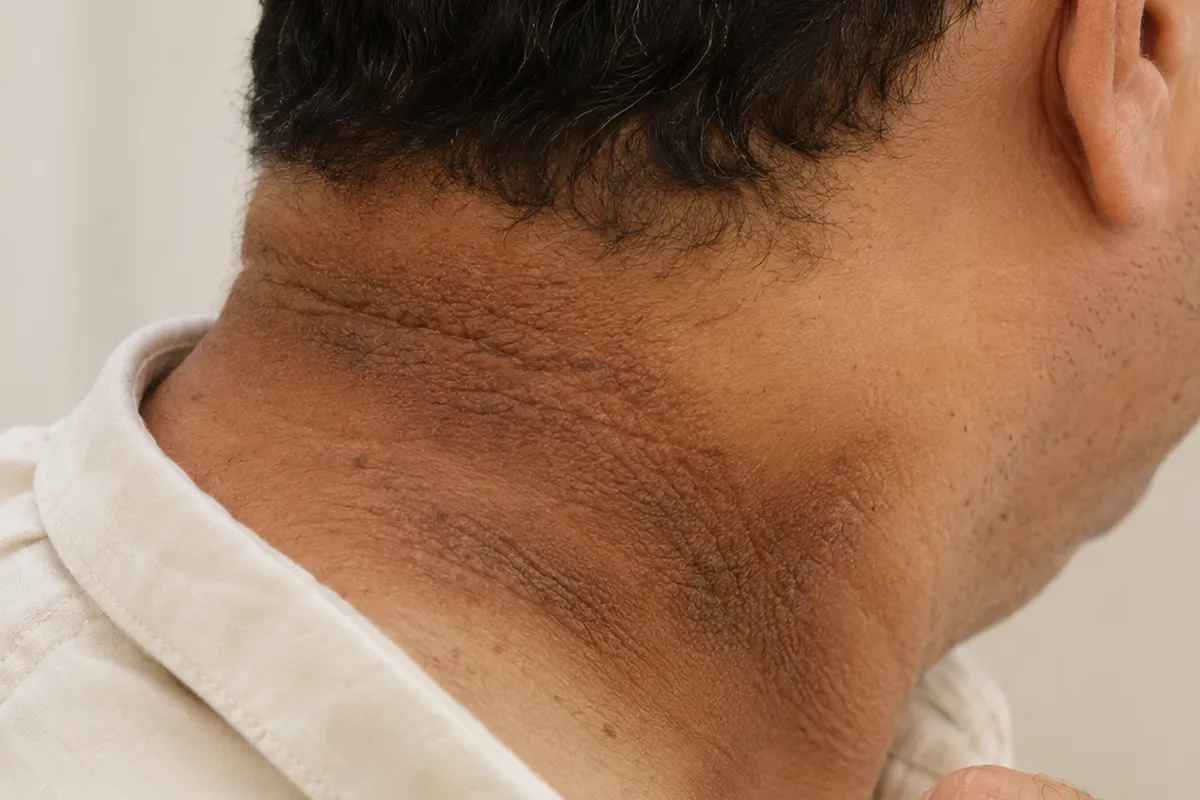
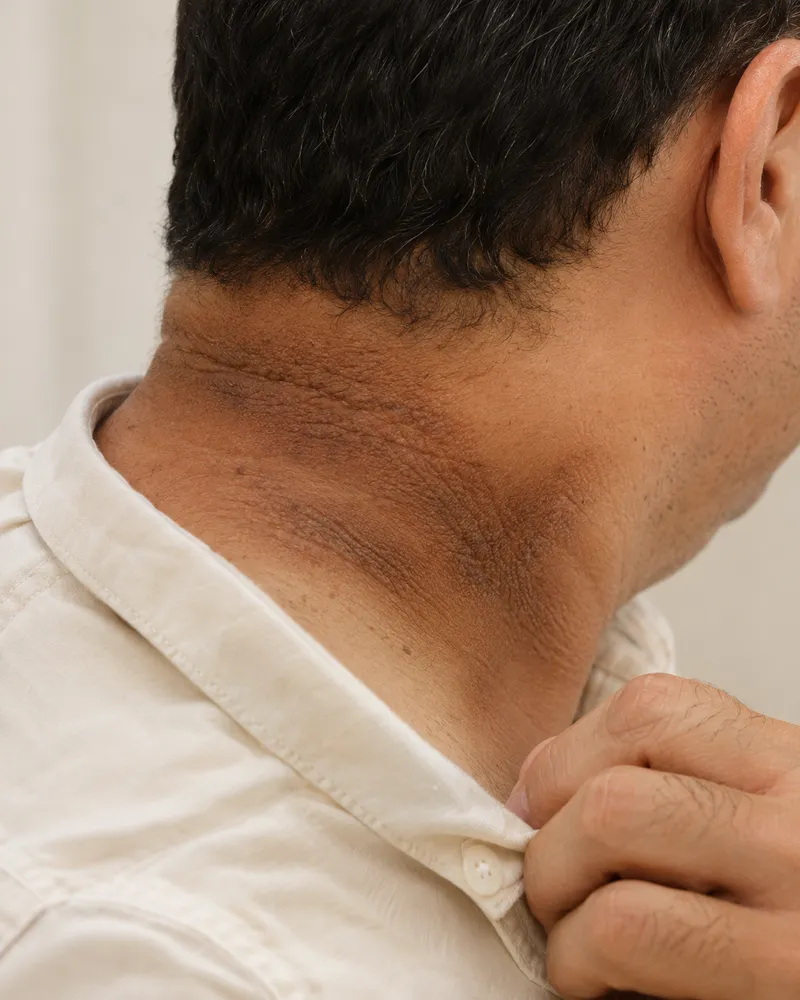
Nape of a man adjusting his shirt collar, with darkened skin in the neck folds

How to recognise it

Is it darkening of the skin of the neck?

A dark neck can look very different, and it is the look, together with the place where it appears, that gives the best clues about the cause. These signs help you to see what is going on before the assessment.

Tick what you recognise0/7

Tick the signs you recognise in your case. This is not a diagnosis, it is only meant to give you an idea.

Did the darkening appear quickly or is it extensive? Is there thick, velvety skin in several folds, with weight gain, great thirst, urinating a lot, tiredness or irregular menstrual cycles? Is there a patch on one side only, or a mole that changes colour, shape or outline, that bleeds, hurts or forms a sore? You need medical assessment before any treatment. Out of hours, call SNS 24: 808 24 24 24.

Female doctor examining the neck and décolletage of a seated patient
Photograph of a consultation. The dots mark what the doctor is assessing.

Why it happens

What may be behind a dark neck

There are several causes with a similar look, and that is why guessing is costly. Choose a situation to see how it is recognised and what usually helps.

Acanthosis nigricans

It is a velvety, thick darkening of the folds, especially of the neck and underarms, and often also appears in the groin. In most cases it is associated with insulin resistance, a change that may precede type 2 diabetes, and with excess weight, and also with polycystic ovary syndrome and some medicines, such as corticosteroids. Excess insulin stimulates the growth of the skin, which becomes thicker and darker. The patch is, for this reason, a warning to assess.

What weighs on it

Treating only the colour with creams or procedures without assessing the cause, and scrubbing hard, which irritates and may darken more.

What helps

Medical assessment, tests when indicated (for example, fasting blood glucose and glycated haemoglobin) and treatment of the cause: the skin usually improves when the cause is controlled.

Normal or to be assessed

Simple darkening or something that needs assessment

Many dark necks have a benign, easy-to-treat cause. But some situations call for an assessment before any treatment, because the colour is only the visible part.

  • How it looks. Mild to moderate darkening, the same on both sides, without marked thickening, in those who get sun on the neck, use perfume in the area or have collars and necklaces that rub.

  • When it is noticed. In summer, after the sun, and in low collars or necklines. The patches become stronger where the product was applied or where the skin is exposed.

  • What the clinic does. The doctor listens to the history, examines the skin and confirms the cause before proposing what makes sense.

  • At home. Daily sunscreen, perfume off the skin, soft clothing, moisturising and giving the skin time.

Do you have intense thirst with vomiting, rapid breathing or confusion? Call 112. If you have rapid darkening, a mole that is changing or doubts, out of hours you can call SNS 24: 808 24 24 24.

Book an assessment

What the clinic may consider

Options to lighten the neck

Treatment depends on the cause, and that is where we start. In acanthosis, the metabolic cause is treated (weight, physical activity, insulin resistance), with retinoid, urea or lactic acid creams when the doctor advises them. In sun spots and poikiloderma, sun protection comes first, and poikiloderma may be referred for treatments directed at the vessels and pigment, with a specialist. In “terra firma-forme” dermatosis, cleaning with alcohol is enough, and pityriasis versicolor is treated with an antifungal. Only then, and after an assessment, is a procedure considered. For darkening of the neck, the clinic proposes the chemical peel. The evidence is limited: studies on peels for pigment come mainly from other areas and other conditions, and the skin of the neck is thinner and more reactive than that of the face, so the steps are gentler and more gradual. Results vary from person to person, are in general temporary if the cause persists and call for maintenance.

Book an assessment
Dr Michelle Campagnoli, clinical director of Clínica Luxmed

First step

Assessment consultation

The doctor listens to what you are experiencing, examines your case and explains the suitable options. No treatment begins without this consultation.

May be considered when

you want to understand the cause and decide on the best path, with time and without commitment.

Book an assessment
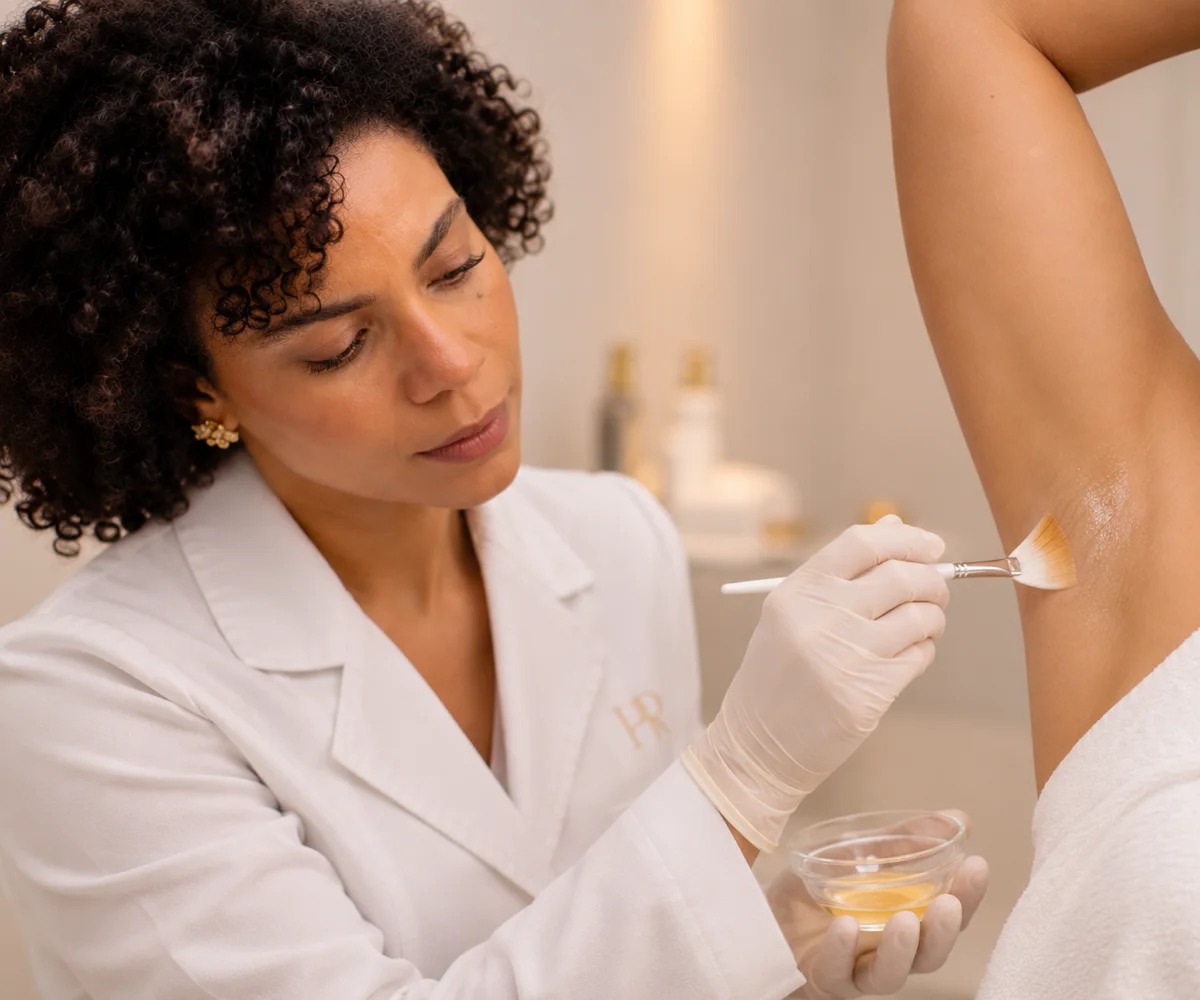
Consulting-room brush applying a peel solution to the skin, in bright consulting-room light

Skin renewal

Chemical peel

Application of an acid to the skin to renew the superficial layers, evening out the tone and softening thickened or darkened skin. On the neck, the skin is thinner and more reactive than that of the face, so the solution is gentler and the treatment is carried out gradually, over several weeks. In darker skin the agent is chosen carefully, because an irritation may darken the area instead of lightening it.

May be considered when

the cause of the darkening has been assessed and treated or controlled, the skin is not irritated, you are not pregnant or breastfeeding, there is no lesion awaiting assessment, and you are willing to protect your neck from the sun.

Find out more

What the journey looks like

From the first conversation to a plan tailored to you

No procedure begins without an assessment consultation with the doctor. First we understand what it is, then the cause is treated, and only then is more considered.

  1. 01At the clinic

    Telling your story

    The doctor asks since when you noticed the darkening, whether it appeared quickly, whether it itches, flakes or has a smell, how weight has progressed, whether there is diabetes in the family and what products, perfumes and creams you have already used on the neck.

  2. 02At the clinic

    Examining the skin

    The colour, thickness and texture of the skin of the neck and of the other folds are examined, and where the patch spares. If there are signs of acanthosis, if the darkening is rapid or if the patch looks different, tests are requested or you are referred to dermatology or endocrinology.

  3. 03At home

    Treat the cause and care for the skin

    The neck is protected from the sun, perfume is taken off the skin, scrubbing is stopped and the skin is moisturised. When there is a change in metabolism, medical follow-up, weight and physical activity are the centre of the plan.

  4. 04Over time

    Decide and follow up

    If the colour persists after the cause has been treated, the doctor explains whether a peel makes sense, what can be expected and how many sessions are needed, without promising results. The examination is repeated and the plan adjusted, including maintenance.

Day to day

What helps at home

What you do at home matters more than you might think. These are sensible measures to take while you wait for your consultation and alongside the clinic’s plan.

The golden rule

Understanding what it is before cleaning, scrubbing or lightening

The same dark colour may be sun, a fungus, a benign dermatosis or a sign of insulin resistance, and each calls for a different path. Scrubbing hard irritates and may darken more. And darkening that has changed quickly, or that comes with thirst, tiredness or weight gain, should be seen by a doctor instead of being “treated”.

Protecting the neck from the sun

The neck and neckline get sun every day and thin skin darkens easily.

In practice: apply sunscreen to the neck and neckline, not only the face, and wear a collar or hat when exposed.

Putting perfume off the skin

Some perfumes make the skin more sensitive to the sun and leave patches where they are applied.

In practice: apply perfume to clothing or to covered areas, and do not use it on the neck before going out in the sun.

Washing and moisturising gently

The skin of the neck gets irritated more quickly than that of the face.

In practice: a mild, unperfumed soap, dry the folds without rubbing and moisturise every day.

Taking care of what lies behind

If there is excess weight or a risk of diabetes, the cause of the darkening may be in the metabolism.

In practice: move more, eat better, have tests when the doctor requests them and bring photographs of the skin in the same light to the consultation.

Dr Michelle Campagnoli, clinical director of Clínica Luxmed

Who will look after you

An assessment carried out by the doctor

At Luxmed in Algés, the first step is always an assessment with Dr Michelle Campagnoli. She examines your skin, determines whether the darkening is straightforward or whether an underlying cause needs investigation, and agrees an appropriate plan with you before any procedure.

  • Physical examination and medical historyA conversation about onset, weight, habits, products and medication, and examination of the skin in several folds.
  • A plan tailored to youA clear plan, without promises, with the cause treated first and follow-up over time.
  • No obligationThe cost of any treatment is confirmed only after the assessment.
Book an assessment

Book a consultation

Book your consultation

Choose how you prefer to get in touch. We will arrange the assessment consultation with Dr Michelle Campagnoli.

Booking through the websiteAssessment consultationTalk to our assistant on WhatsApp and ask for the current price of the assessment.

New Life Miraflores, Algés · Office Center, R. Santa Teresa do Menino Jesus n.º 6, 9.º C, 1495-048

Your details are used only for this contact. Any treatment depends on a prior medical assessment.

Request an appointmentIt takes less than a minute.
Speciality
You do not need to go into detail. The doctor will talk to you during the consultation.
Request received. Our team will contact you as soon as possible.
Why does the neck become dark?

The most frequent causes are acanthosis nigricans (dark, velvety skin, often linked to insulin resistance and excess weight), “terra firma-forme” dermatosis (brown plaques that look like dirt), pityriasis versicolor (a fungal infection that flakes), the effect of the sun, with poikiloderma of Civatte, and a reaction to a perfume or another product. Friction from collars and necklaces may also leave a mark. As they look alike, the first step is to understand which of them is yours.

Is a dark neck a lack of hygiene? Is it contagious?

No. The colour is in the skin itself and is not dirt, and scrubbing hard does not remove it: in acanthosis, it irritates it and may darken it more. Nor is it contagious. Even pityriasis versicolor results from a fungus that already lives on everyone’s skin, and which overgrows with heat and sweat.

What is acanthosis nigricans? Does it mean I have diabetes?

Acanthosis nigricans is a velvety, thick darkening of the folds, especially of the neck and underarms. In most cases it is associated with insulin resistance, a change that may precede type 2 diabetes, but it does not mean you already have diabetes: it indicates risk and justifies tests, such as fasting blood glucose and glycated haemoglobin. It is also associated with polycystic ovary syndrome and some medicines. Rarely, acanthosis of sudden onset and extensive may be associated with another internal disease and should be assessed quickly.

How do I tell acanthosis, “terra firma-forme”, fungus and sun spots apart?

Acanthosis is dark, velvety and thick, and usually also appears in the underarms and groin. “Terra firma-forme” dermatosis gives brown plaques with a crusted look, which come off with isopropyl alcohol applied firmly. Pityriasis versicolor gives lighter or brown patches with fine flaking, which worsens in summer. Poikiloderma is reddish-brown, with small vessels, on the sides of the neck and spares the area under the chin. But looks deceive, so the distinction is made at the consultation.

How do I get rid of patches on the neck?

It depends on the cause. In acanthosis, the metabolic cause is treated (weight, physical activity, insulin resistance) and creams with retinoids, urea or lactic acid, or peels, may complement it, on medical indication. In sun spots, daily sun protection counts above all, and there are depigmenting agents and peels with indication. In poikiloderma, treatments are directed at the vessels and pigment, with a specialist. “Terra firma-forme” dermatosis comes off with alcohol and pityriasis versicolor is treated with an antifungal. Results are gradual and vary from person to person.

Can I use face creams on the neck? And lemon or bicarbonate of soda?

Some face creams may do, but the skin of the neck gets irritated more easily, so it is advisable to choose mild products and try them on a small area. Lemon, bicarbonate of soda, toothpaste and other home “tricks” have no proof that they lighten, are irritants and may burn the thin skin of the neck, leaving a worse patch. Lightening creams only on medical indication.

Does a chemical peel lighten the neck?

It may help to even out the tone and soften thickened skin, and it is the procedure the clinic proposes for darkening of the neck, after the cause has been assessed. But reviews on peels for pigment come mainly from other areas and other conditions, the skin of the neck is thinner and more reactive, and in darker skin the choice of agent is more limited, because an irritation may darken instead of lighten. So the peel is decided after the cause has been assessed and treated, and never in pregnancy or while breastfeeding.

How long does it take to see results? Does the colour come back?

There are no guaranteed results. It is generally said 2 to 3 months to see improvement, and it depends on the cause: in acanthosis, the skin usually lightens when the cause is treated, but, if excess weight or insulin resistance persist, the darkening tends to return. With sun and perfume, it returns if sun protection and habits do not change. So maintenance and changing habits count as much as the procedure.

Does acanthosis go away with weight loss?

It can improve a great deal. Losing weight, increasing physical activity and treating insulin resistance often improve the skin, which usually lightens slowly, over months, and not always completely. If the cause is a medicine, the doctor may consider changing it. You should not stop or change medication on your own initiative.

When should I see a doctor first?

Book a consultation if the darkening appeared quickly or is extensive, if there is thick, velvety skin in several folds, or if you have weight gain, excessive thirst, urinating a lot, tiredness or irregular menstrual cycles. Also if there is a patch on one side only, a mole that changes colour, shape or outline, or that bleeds, hurts or forms a sore. If in doubt, out of hours call SNS 24 (808 24 24 24). With intense thirst, vomiting, rapid breathing or confusion, call 112.

We could not find that question. Ask us on WhatsApp

Scientific references

This page is based on the sources below and was reviewed by Dr. Michelle Campagnoli. Last updated on .

  1. Karadağ AS, You Y, Danarti R, Al-Khuzaei S, Chen W. Acanthosis nigricans and the metabolic syndrome. Clin Dermatol, 2018.
  2. Phiske MM. An approach to acanthosis nigricans. Indian Dermatol Online J, 2014.
  3. Berk DR. Terra firma-forme dermatosis: a retrospective review of 31 patients. Pediatr Dermatol, 2012.
  4. Sarkar R, Bansal S, Garg VK. Chemical peels for melasma in dark-skinned patients. J Cutan Aesthet Surg, 2012.
  5. NHS. Acanthosis nigricans. (NHS, acedido 2026-11-11)
  6. American Academy of Dermatology Association. Acanthosis nigricans: overview. (AAD, acedido 2026-11-11)
  7. DermNet NZ. Acanthosis nigricans. (DermNet, acedido 2026-11-11)
  8. DermNet NZ. Terra firma-forme dermatosis. (DermNet, acedido 2026-11-11)
  9. DermNet NZ. Pityriasis versicolor. (DermNet, acedido 2026-11-11)
  10. DermNet NZ. Poikiloderma of Civatte. (DermNet, acedido 2026-11-11)
CallAssistantAvailableBook