Algés, Oeiras Mon to Fri · 09:00 to 13:00 and 14:00 to 19:00 · Sat · 09:00 to 14:00
WhatsApp Book a consultation

Body aesthetics

Patches on the chest and necklineWhen the chest and neckline develop patches and an uneven tone and you want to understand where they come from

The décolletage is exposed to the sun for decades but rarely receives the sunscreen applied to the face. The skin in this area is thin and shows the effects of cumulative exposure early: brown patches, uneven skin tone, small visible blood vessels and a rougher texture. In most cases, these are benign sun and age spots, but not all patches on the chest are the same, and some require medical assessment before any treatment. Here we explain what usually causes them, how perfume and hormones are involved, how to protect the décolletage, what chemical peels and microneedling can and cannot do, and when it is advisable to see a doctor first at Clínica Luxmed in Algés.

Reviewed by Dr Michelle Campagnoli, clinical director

  • 2procedures for this topic
  • 1assessment, always first
  • Nocommitment
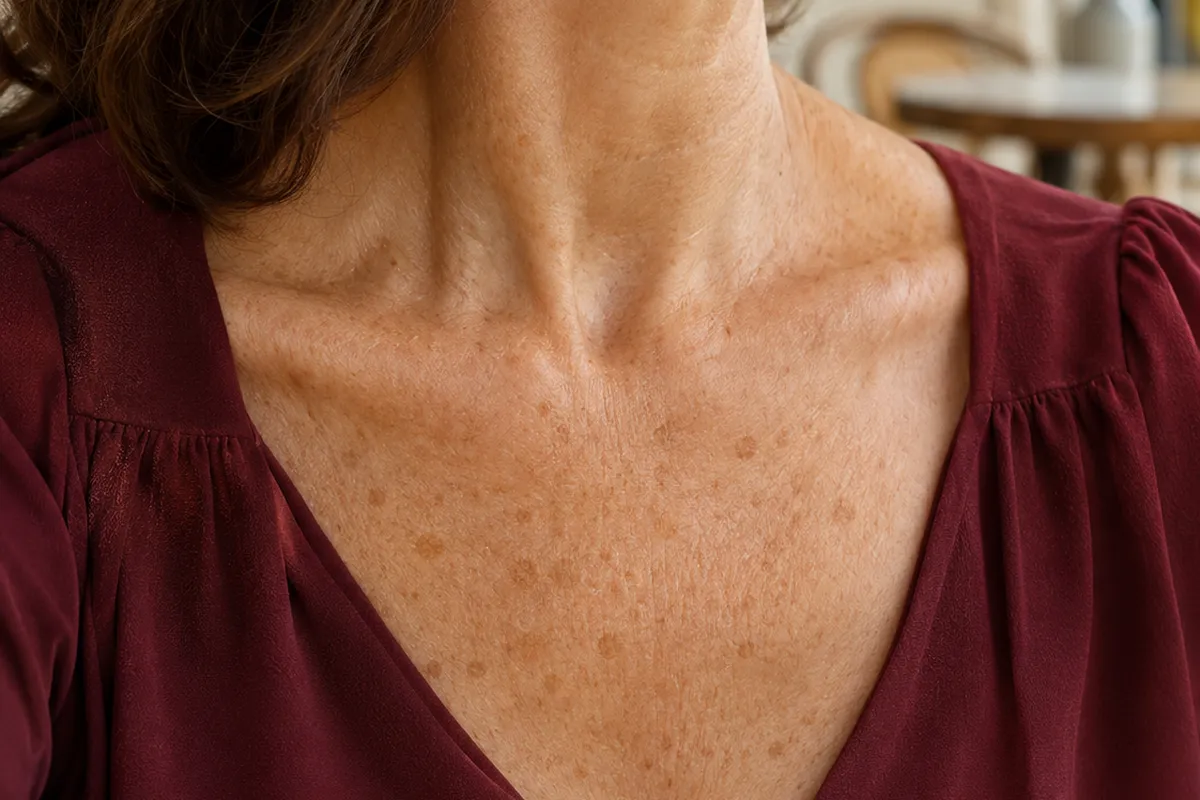
Woman in a V-neck blouse at a café table, with sun spots on her décolletage

How to recognise it

Is it sun damage on the chest and neckline?

Chest patches may all look the same at first glance, but there are several types, and the appropriate course of action depends on the type. These signs can help you understand what may be happening before your assessment.

Tick what you recognise0/7

Tick the signs you recognise in your case. This is not a diagnosis, it is only meant to give you an idea.

Is there a new patch, that grows, changes colour, has irregular edges, bleeds, itches or hurts? Is there a patch different from all the others, dark, raised or with several colours? Are there sores that do not heal? You need medical assessment before any treatment. Out of hours, call SNS 24: 808 24 24 24.

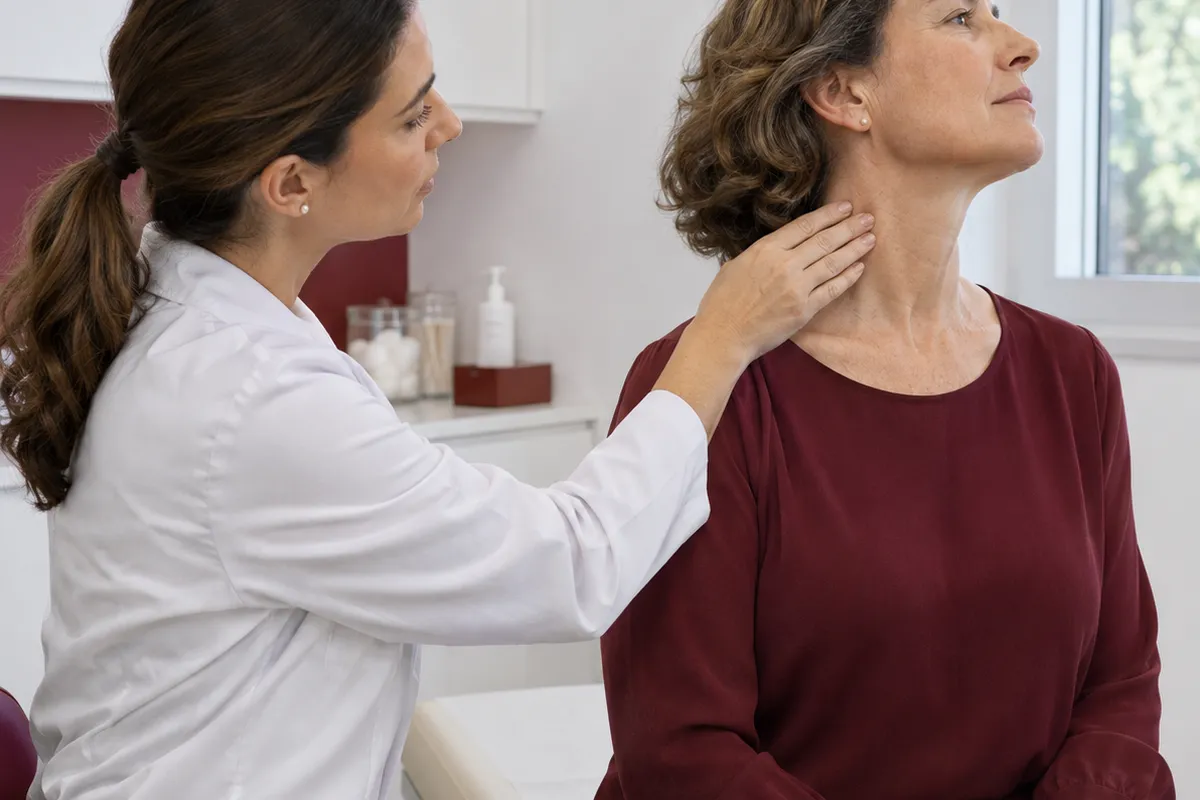
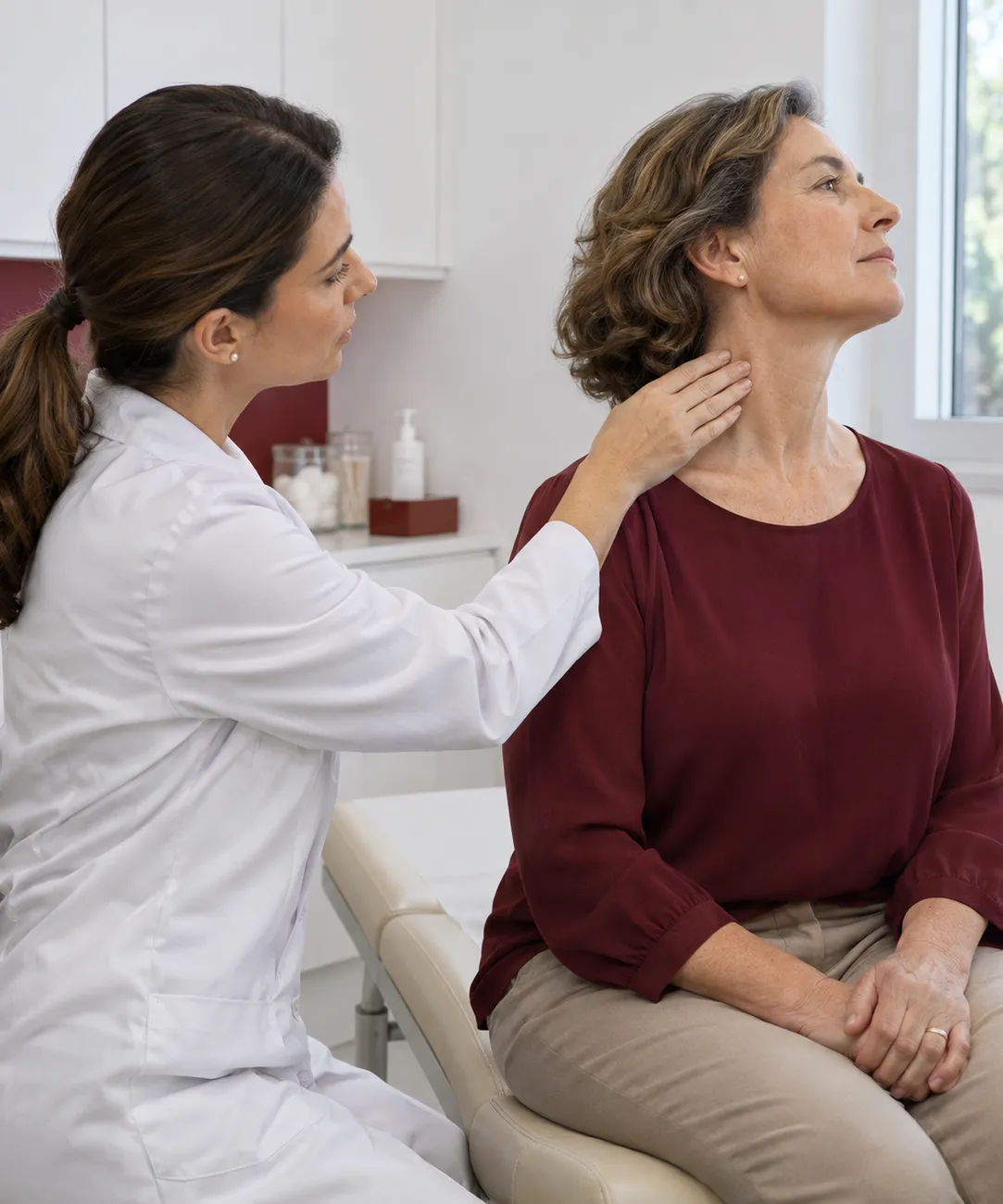
Female doctor examining the neck and décolletage of a seated patient
Photograph of a consultation. The dots mark what the doctor is assessing.

Why it happens

What may be behind neckline patches

There is almost always more than one cause at the same time. Choose a situation to see how it may contribute and what usually helps.

The accumulated sun

The décolletage is exposed in almost all summer clothing, at the beach, in the garden and while driving, yet may go without sunscreen for years. Repeated ultraviolet exposure stimulates melanocytes, causing flat brown patches (solar lentigines), uneven skin tone and, in some people, small visible blood vessels. This is the most common cause of patches on the chest.

What weighs on it

Exposure without protection, tanning and sunburn, especially if repeated throughout life.

What helps

Use broad-spectrum sunscreen down to the décolletage every day, as well as protective clothing and shade when the sun is strongest; this will not remove existing patches, but will help prevent new ones.

Normal or to be assessed

Benign sun spots or something that needs assessment

Most patches on the décolletage are benign signs of sun exposure. However, some require assessment before any treatment because appearance alone is not enough to distinguish them from lesions that require medical attention.

  • How it looks. Several flat brown patches, well defined and similar to one another, freckles that darken in summer or a reddish-brown tone with small vessels, without marked relief or recent changes.

  • When it is noticed. In summer and in open clothing. Flat patches similar to one another, which do not change, are the pattern of benign sun damage.

  • What the clinic does. The doctor takes a medical history, examines the skin and confirms whether its appearance is as expected before recommending an appropriate course of action.

  • At home. Use sunscreen daily, wear protective clothing, seek shade, moisturise, apply perfume only to clothing and photograph the patches to monitor them for changes.

Have you had extensive sunburn with fever, confusion or fainting? Call 112. If you have a new or changing patch, or if you are concerned, you can call SNS 24 out of hours on 808 24 24 24.

Book an assessment

What the clinic may consider

Options for neckline patches

The first step is to prevent further damage: use sunscreen down to the décolletage, keep perfume away from exposed skin and adopt simple protective habits. Only then, and following an assessment, should a medical procedure be considered. For patches on the chest and décolletage, the clinic offers chemical peels and microneedling over several sessions. Carboxytherapy, which is also listed among the body treatments for this concern, acts mainly on microcirculation and skin elasticity; the doctor will tell you whether it is suitable in your case. The evidence is limited: many studies of peels and microneedling have focused on other areas and conditions, and few have involved the décolletage. Results vary from person to person, are gradual, rarely remove patches completely and require maintenance and sun protection. The reddish tone and small visible blood vessels respond poorly to these procedures, and the doctor may recommend referral to dermatology.

Book an assessment
Dr Michelle Campagnoli, clinical director of Clínica Luxmed

First step

Assessment consultation

The doctor listens to what you are experiencing, examines your case and explains the suitable options. No treatment begins without this consultation.

May be considered when

you want to understand the cause and decide on the best path, with time and without commitment.

Book an assessment
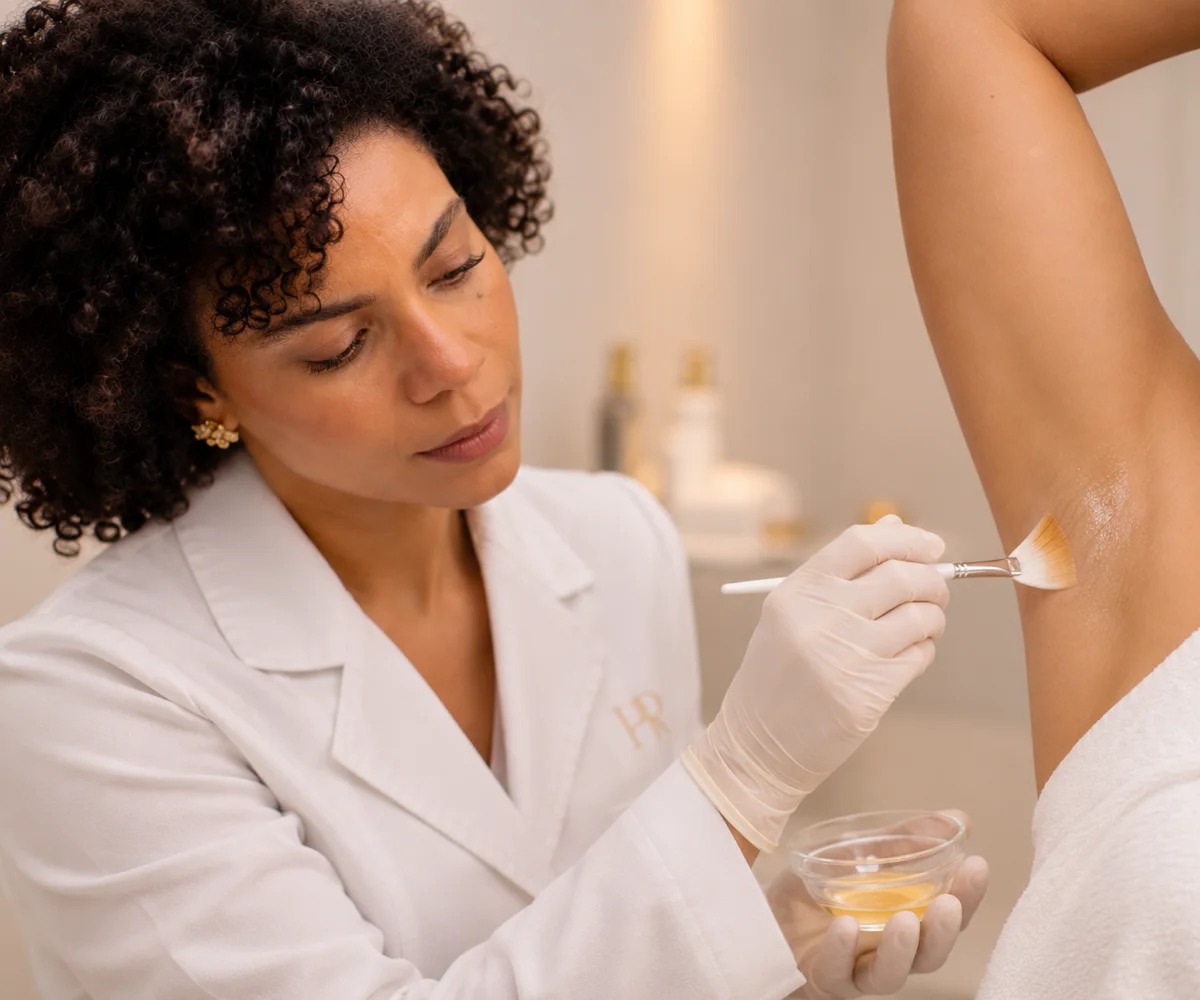
Consulting-room brush applying a peel solution to the skin, in bright consulting-room light

Skin renewal

Chemical peel

An acid is applied to the skin to renew its superficial layers, evening out skin tone and softening thickened or darkened skin. As the skin of the décolletage is thin, a superficial peel is used over several sessions. For darker skin tones, the agent is selected carefully because irritation may darken the area rather than lighten it.

May be considered when

the patches have been assessed and confirmed as benign sun spots, the skin is neither irritated nor sunburnt, you are not pregnant or breastfeeding, you will protect the area from the sun, and the doctor has explained the risks and set realistic expectations.

Find out more
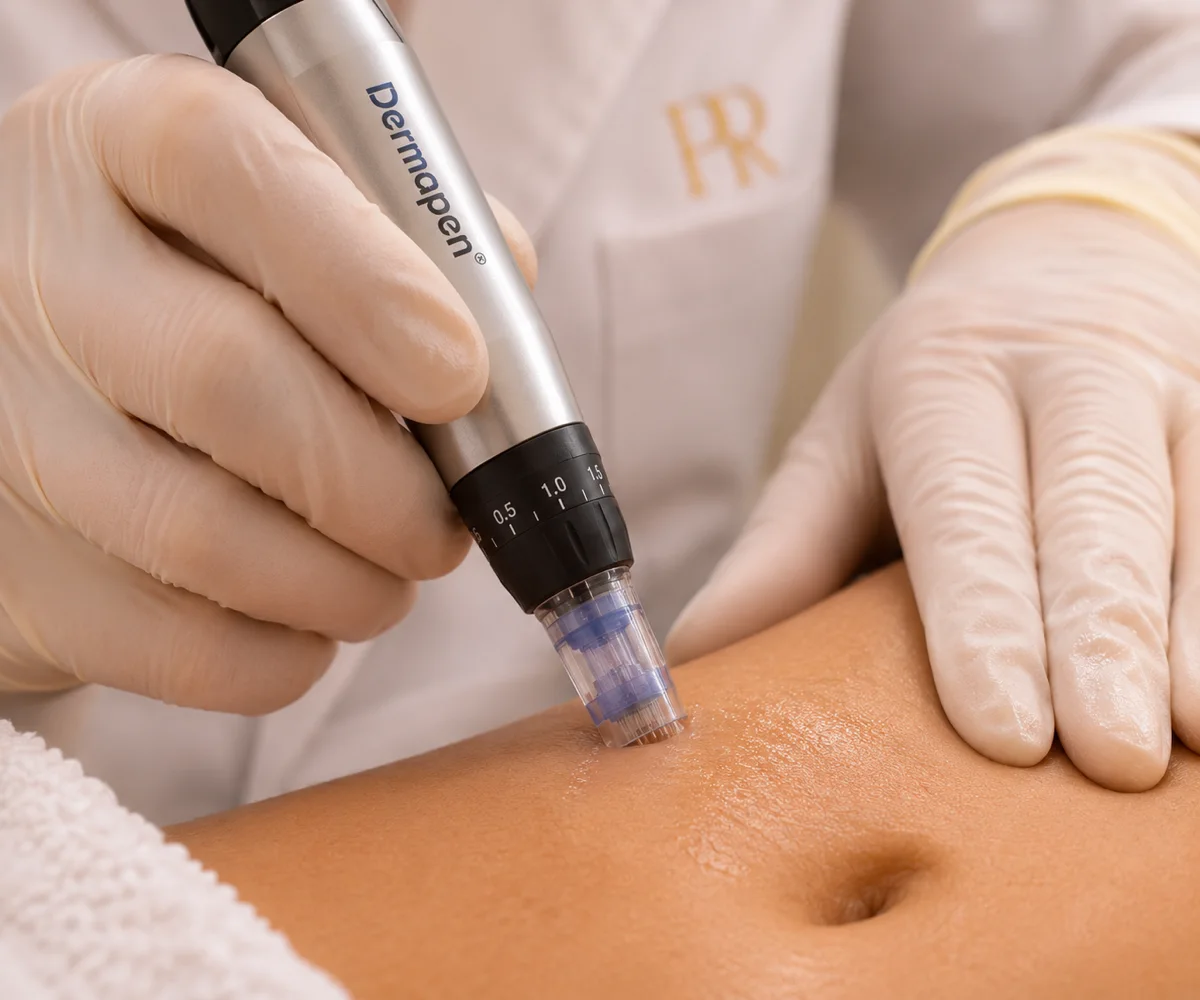
Microneedling pen gliding over the skin in a session at the clinic, in bright light

Skin stimulation

Microneedling

Small, controlled injuries are made in the skin using very fine needles to stimulate collagen and elastin and improve texture and evenness of tone. On the chest, this is carried out over several sessions spaced weeks apart, with temporary redness for the next few days.

May be considered when

the patches have been assessed, what bothers you most is the texture, fine wrinkles and uneven tone, the skin is not irritated, infected or sunburned, and the doctor has explained the risks and what is realistic to expect.

Find out more

What the journey looks like

From the first conversation to a plan tailored to you

No procedure begins without a consultation and assessment by the doctor. Most people start with sun protection and skin care, and further treatment is only considered afterwards.

  1. 01At the clinic

    Telling your story

    The doctor asks when you first noticed the patches, whether they have changed, whether you have had sunburn, which perfumes, creams and medicines you use, whether you have been pregnant, taken the pill or gone through the menopause, and whether there is a history of skin cancer.

  2. 02At the clinic

    Examining the skin

    Each patch is examined: colour, outline and relief, often with a dermatoscope. If any patch raises doubts, has changed or is different from the others, you are referred to dermatology before any treatment.

  3. 03At home

    Protect and care for the skin

    Apply sunscreen down to the décolletage, keep perfume off skin that will be exposed to the sun, moisturise and allow time for the skin to improve. Without these measures, patches will return and new ones will appear, however effective the treatment.

  4. 04Over time

    Decide and follow up

    If benign patches persist, the doctor explains whether a procedure makes sense, how many sessions are needed and at what time of year, without promising results. The examination is repeated and the plan adjusted, including maintenance.

Day to day

What helps at home

What you do at home matters more than you might think. These are sensible measures to take while you wait for your consultation and alongside the clinic’s plan.

The golden rule

Protect the neckline before treating it

Skin that continues to be exposed to the sun without protection will develop patches again, however effective the treatment. Extending facial sunscreen down to the décolletage is more valuable than any cream. A new or changing patch should be examined by a doctor rather than simply “treated”.

Extending sunscreen to the neckline

The neckline is the forgotten area of the routine, and accumulated sun is the most frequent cause of patches.

In practice: broad-spectrum sunscreen of factor 30 or higher, in generous amounts, on the face, neck and neckline, every day.

Reapply and cover

Sunscreen comes off with sweat, water and clothing, and the thin skin of the chest burns quickly.

In practice: reapply every 2 hours outdoors and after bathing, and wear more closed clothing or a scarf when spending a long time in the sun.

Moving perfume to clothing

Perfumes can make the skin sensitive to light and leave irregular patches.

In practice: apply perfume to clothing or covered areas, and wash the skin well if product has fallen on the neckline before going in the sun.

Examine and photograph

It helps to see whether a patch has changed, and it is what the doctor most wants to know.

In practice: one photograph a month, in the same light and with a ruler alongside, and a list of products, medication and history.

Dr Michelle Campagnoli, clinical director of Clínica Luxmed

Who will look after you

An assessment carried out by the doctor

At Luxmed in Algés, the first step is always an assessment with Dr Michelle Campagnoli. She will examine your skin, determine whether the patches are benign signs of sun exposure or whether any require closer attention, and agree the most appropriate course of action with you before any procedure.

  • Physical examination and medical historyA conversation about sun, perfumes and creams, hormones and medication, and examination of each patch, with a dermatoscope when necessary.
  • A plan tailored to youA clear plan, without promises, with skin protection first and follow-up over time.
  • No obligationThe cost of any treatment is confirmed only after the assessment.
Book an assessment

Book a consultation

Book your consultation

Choose how you prefer to get in touch. We will arrange the assessment consultation with Dr Michelle Campagnoli.

Booking through the websiteAssessment consultationTalk to our assistant on WhatsApp and ask for the current price of the assessment.

New Life Miraflores, Algés · Office Center, R. Santa Teresa do Menino Jesus n.º 6, 9.º C, 1495-048

Your details are used only for this contact. Any treatment depends on a prior medical assessment.

Request an appointmentIt takes less than a minute.
Speciality
You do not need to go into detail. The doctor will talk to you during the consultation.
Request received. Our team will contact you as soon as possible.
Why do patches appear on the neckline?

In most cases, patches are caused by cumulative sun exposure: the décolletage is exposed for years but rarely protected with sunscreen, and its thin skin shows damage early. Age, hormones (pregnancy, the pill and the menopause), perfume applied to the chest before sun exposure and skin type also play a part. There is almost always more than one cause, so the first step is to identify the type of patches you have.

Why do I only have patches on the neckline and not on the face?

Because many people protect their face every day but forget the décolletage. The face receives sunscreen and skin care while the chest remains exposed, so the difference eventually becomes visible. Perfume, which is often applied to the neck and chest, and the thinner skin of the décolletage also play a part.

Are neckline patches dangerous?

Most are benign, such as solar lentigines or freckles, but they indicate sun damage, which is a risk factor for skin cancer. The patches should therefore be monitored, and a new patch that grows, changes colour or outline, bleeds, itches or hurts requires medical assessment. Raised patches with a “stuck-on” appearance may be benign seborrhoeic keratoses, but they can be confused with other lesions; the doctor will distinguish between them.

What is poikiloderma, the reddish-brown tone on the neck and neckline?

It is a benign, chronic change that is more common in women after the menopause, with reddish-brown patches, fine visible blood vessels and slightly thinner skin on the sides of the neck and over the V of the upper chest. It usually spares the shaded strip beneath the chin. Cumulative sun exposure is the main factor, while perfume and hormones may also contribute. The doctor distinguishes it from other skin conditions affecting the neck. The visible blood vessels respond poorly to peels and microneedling, so referral to dermatology may be appropriate.

How do I get rid of neckline patches?

First, address the causes: use sunscreen down to the décolletage, keep perfume off exposed skin and use gentle skin care. Only then, if benign patches persist, will the doctor consider a procedure such as a chemical peel or microneedling. Depigmenting creams should only be used on medical advice because they may cause irritation and darkening. Results are not guaranteed, and the patches rarely disappear completely.

Does a chemical peel help with chest patches?

It may help even out skin tone and smooth the texture, and is one of the procedures the clinic offers for patches on the chest and décolletage. However, most evidence from reviews of peels for pigmentation relates to other areas and conditions. For darker skin tones, the choice of agent is more limited because irritation may darken the skin rather than lighten it. As the skin of the décolletage is thin, a gentler peel than would be used on the face is applied over several sessions. Treatment is only decided after the patches have been assessed and is never carried out during pregnancy or while breastfeeding.

Does microneedling work on neckline patches?

The clinic offers microneedling for the body and recommends it mainly to improve the texture, fine wrinkles and uneven tone of the décolletage. The procedure creates small, controlled injuries in the skin to stimulate renewal, and reviews show improvements in scars, stretch marks and wrinkles. There is little evidence specifically relating to pigmentation, however, and results vary. Treatment involves several sessions and causes redness for the next few days; it is not carried out on irritated, infected or sunburnt skin.

Can I treat neckline patches in summer? And how many sessions are needed?

Treatments that renew the skin make it more sensitive to the sun, so they are usually scheduled outside the months when the sun is strongest; the doctor will advise you on the best time. Several sessions are normally needed, spaced weeks apart, and improvement is gradual over a period of months. Afterwards, sunscreen and skin care are as important as the procedure: if sun exposure continues, the patches will return.

Are the results permanent? And do the patches come back?

Results are neither guaranteed nor permanent. Patches will return if the skin continues to be exposed to the sun without protection, and new ones may appear. Maintenance with daily sunscreen, protective clothing and shade is therefore as important as the procedure. During the assessment, the doctor will agree a plan with you and set realistic expectations without promising results.

When should I see a doctor first?

Book a consultation if there is a new patch that grows, changes colour, shape or outline, has irregular edges or multiple colours, bleeds, itches or hurts, or if there is a sore that does not heal. You should also book if a patch looks different from all the others, you have had many episodes of sunburn or you have a history of skin cancer. If in doubt, call SNS 24 out of hours on 808 24 24 24. If you have extensive sunburn with fever, confusion or fainting, call 112.

We could not find that question. Ask us on WhatsApp

Scientific references

This page is based on the sources below and was reviewed by Dr. Michelle Campagnoli. Last updated on .

  1. Krutmann J, Bouloc A, Sore G, Bernard BA, Passeron T. The skin aging exposome. J Dermatol Sci, 2017.
  2. Katoulis AC, Stavrianeas NG, Panayiotides JG, Bozi E, Vamvasakis E, Kalogeromitros D, Georgala S. Poikiloderma of Civatte: a histopathological and ultrastructural study. Dermatology, 2007.
  3. Katoulis AC, Sgouros D, Bozi E, Pappa G, Theotokoglou S, Konstantinou MP, Voudouri A, Voudouri M, Theofili M, Tzima K, Hofmann-Wellenhof R. Diagnosis and Differential Diagnosis of Poikiloderma of Civatte: A Dermoscopy Cohort Study. Dermatol Pract Concept, 2023.
  4. Hughes MC, Williams GM, Baker P, Green AC. Sunscreen and prevention of skin aging: a randomized trial. Ann Intern Med, 2013.
  5. Green AC, Williams GM, Logan V, Strutton GM. Reduced melanoma after regular sunscreen use: randomized trial follow-up. J Clin Oncol, 2011.
  6. Alster TS, Graham PM. Microneedling: a review and practical guide. Dermatol Surg, 2018.
  7. Sarkar R, Bansal S, Garg VK. Chemical peels for melasma in dark-skinned patients. J Cutan Aesthet Surg, 2012.
  8. Kaufman BP, Aman T, Alexis AF. Postinflammatory hyperpigmentation: epidemiology, clinical presentation, pathogenesis and treatment. Am J Clin Dermatol, 2018.
  9. Tunzi M, Gray GR. Common skin conditions during pregnancy. Am Fam Physician, 2007.
  10. DermNet NZ. Poikiloderma of Civatte. (DermNet, acedido 2026-11-11)
  11. DermNet NZ. Solar lentigo. (DermNet, acedido 2026-11-11)
  12. DermNet NZ. Melasma. (DermNet, acedido 2026-11-11)
  13. NHS. Sunscreen and sun safety. (NHS, acedido 2026-11-11)
  14. American Academy of Dermatology Association. How to apply sunscreen. (AAD, acedido 2026-11-11)
  15. NHS. Symptoms of melanoma skin cancer. (NHS, acedido 2026-11-11)
CallAssistantAvailableBook