Algés, Oeiras Mon to Fri · 09:00 to 13:00 and 14:00 to 19:00 · Sat · 09:00 to 14:00
WhatsApp Book a consultation

Body aesthetics

Thin skin on the armsWhen the skin of the arms looks like paper, tears easily and bruises with the slightest touch

Thin, fragile skin on the arms is very common from the age of 50 or 60 and almost always results from a combination of factors: age, lifetime sun exposure, genetics and certain medicines, such as corticosteroids and anticoagulants. In medicine, pronounced skin fragility is known as dermatoporosis. It is not always merely a cosmetic concern: thin skin tears after minor knocks, heals slowly and bruises easily. Here, we explain the common causes, when bruising is benign and when it requires assessment, what can help at home and what the clinic may consider, with an honest account of what to expect, at Clínica Luxmed, in Algés.

Reviewed by Dr Michelle Campagnoli, clinical director

  • 2options the clinic may consider
  • 1assessment, always first
  • Nocommitment
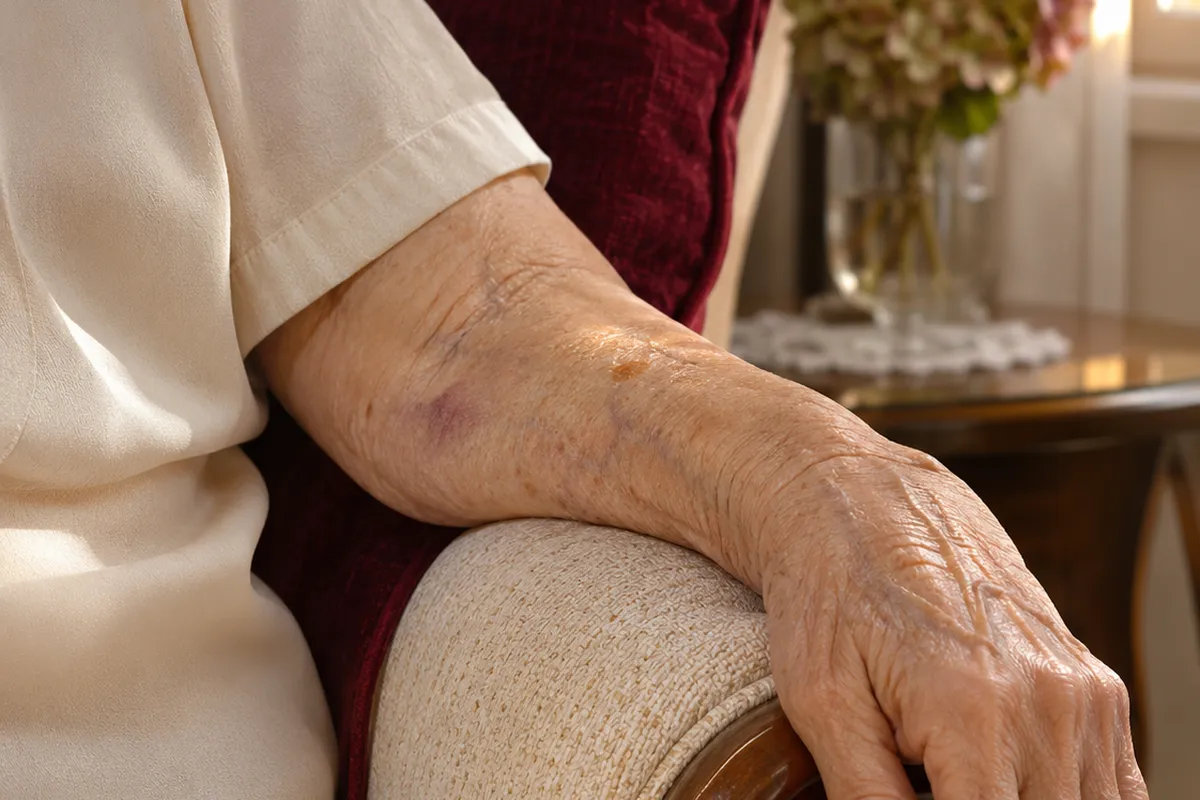
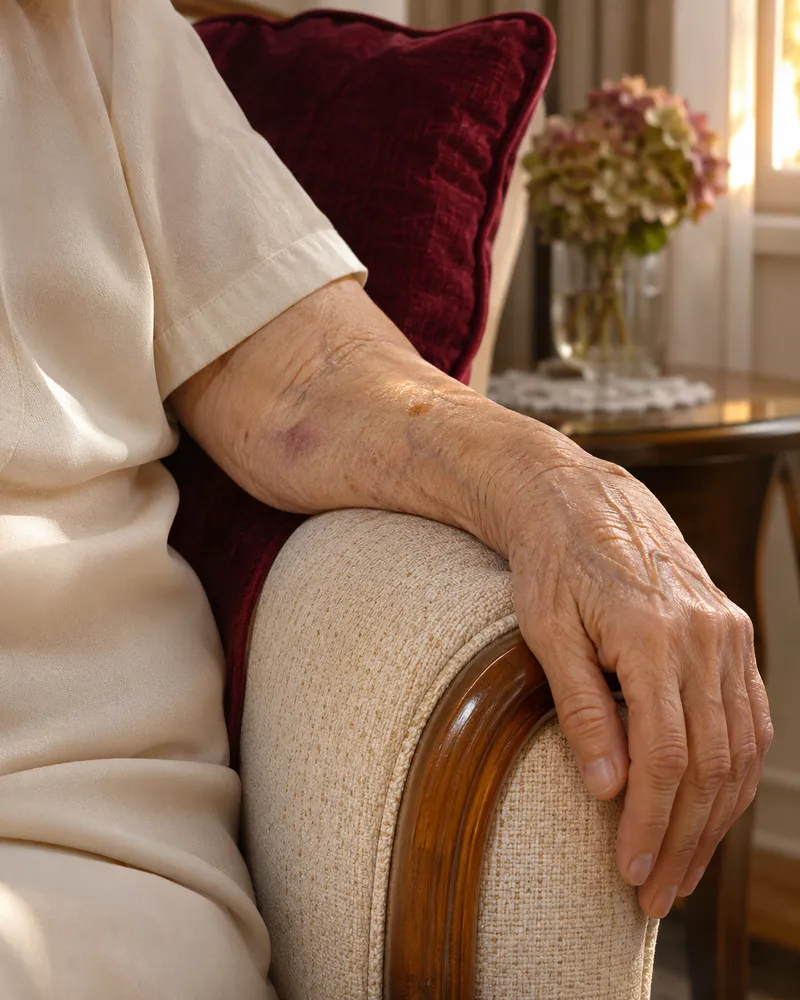
Forearm resting on the arm of an armchair, with thin skin and a bruise

How to recognise it

Is it thin, fragile skin on the arms?

Not all mature skin is fragile: some people have thin skin by nature and some have more fragile skin because of a medicine or the sun. These signs help to understand what is going on before the assessment.

Tick what you recognise0/7

Tick the signs you recognise in your case. This is not a diagnosis, it is only meant to give you an idea.

Do bruises appear on the trunk, legs or in several areas, without any knock, or come with bleeding gums or nose, blood in the urine or stools, tiredness, fever or weight loss? Is there a sore that does not heal or is red, hot and with pus? It needs a medical assessment before any treatment. Do not stop any anticoagulant or corticosteroid without your doctor’s instruction. Out of hours, call SNS 24: 808 24 24 24.

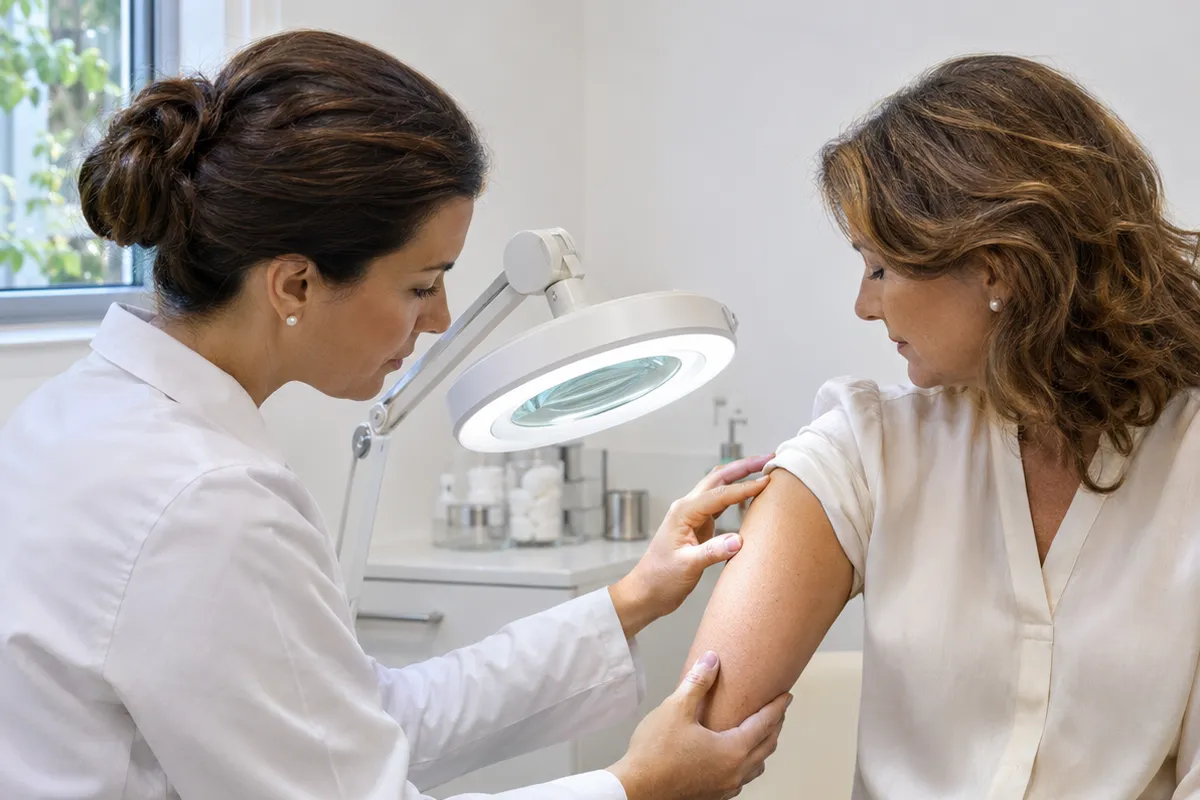
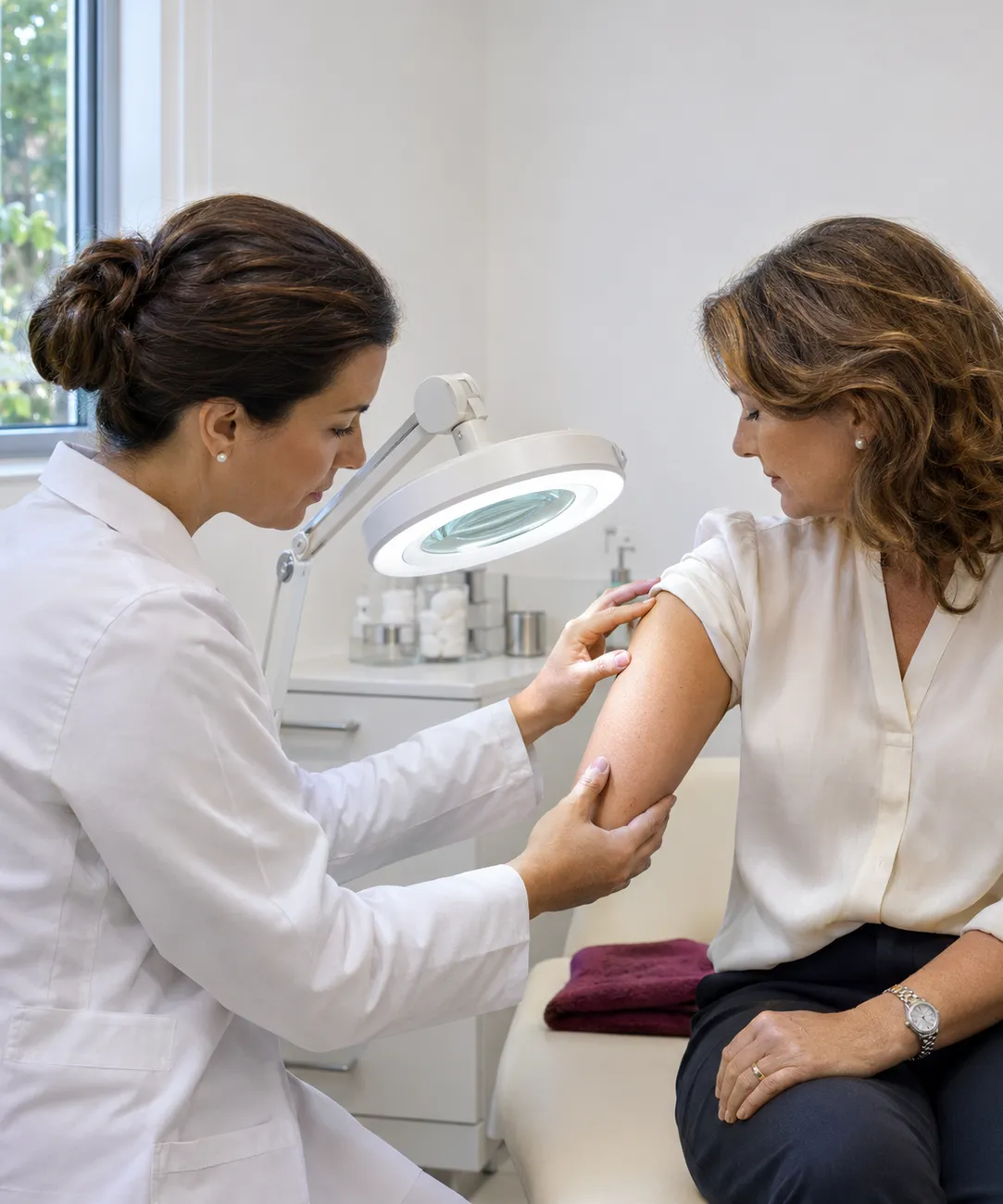
Female doctor assessing a patient's arm with an examination magnifier
Photograph of a consultation. The dots mark what the doctor is assessing.

Why it happens

What may be behind thin skin

There is almost always more than one cause at the same time. Choose a situation to see how it may contribute and what usually helps.

Ageing of the skin

With the years, the skin produces less collagen and less hyaluronic acid, the dermis thins and the epidermis renews itself more slowly. The skin becomes less thick, less elastic and drier, and is harder to repair after an insult. In women, the fall in oestrogen at the menopause contributes to the loss of thickness.

What weighs on it

Dry skin and lack of care, very hot, prolonged baths, harsh soaps.

What helps

Moisturising every day, lukewarm, short baths and protecting the skin from knocks and the sun.

Normal or to be assessed

Thin skin with age or something to assess

In most cases, bruises on the forearms of thin, sun-damaged skin are benign. But some situations call for assessment, because the purple patch may be only the visible part.

  • What it looks like. Well-defined purple patches, only on the forearms and the backs of the hands, after small knocks, on thin skin with signs of sun, which fade in one to three weeks and may leave a brownish mark.

  • When it is noticed. In people over 50 or 60, with a lot of accumulated sun or taking corticosteroids or anticoagulants, and with no other symptoms.

  • What the clinic does. The doctor listens to the history, examines the skin, reviews the medication with your doctor if needed and proposes care and protection.

  • At home. Moisturising, protecting from the sun and from knocks, and monitoring the patches without rubbing or pricking them.

Do you have bleeding that does not stop, shortness of breath, chest pain or have you lost consciousness? Call 112. If bruises appear for no reason, in many areas, or there is other bleeding, out of hours you can call SNS 24: 808 24 24 24.

Book an assessment

What the clinic may consider

Options to improve the quality of the skin on the arms

Thin skin is treated first with what is simple: protecting from the sun, moisturising well, avoiding knocks, reviewing with the doctor the medicines that thin it and, when it makes sense, a topical retinoid on medical advice. Only then, and after an assessment, does the doctor consider a procedure. For the quality of the skin on the arms, the clinic proposes collagen biostimulators and Sectum radiofrequency, and microneedling and carboxytherapy, which it also performs on the body, may be considered as complements when the doctor sees fit. The evidence is limited: most studies of these procedures are on laxity, texture and scars, and not on the fragility of mature skin on the forearms, so use in this area is, in general, outside approved indications (off-label). Results are gradual, vary from person to person, are as a rule temporary and do not remove the need for daily protection.

Book an assessment
Dr Michelle Campagnoli, clinical director of Clínica Luxmed

First step

Assessment consultation

The doctor listens to what you are experiencing, examines your case and explains the suitable options. No treatment begins without this consultation.

May be considered when

you want to understand the cause and decide on the best path, with time and without commitment.

Book an assessment
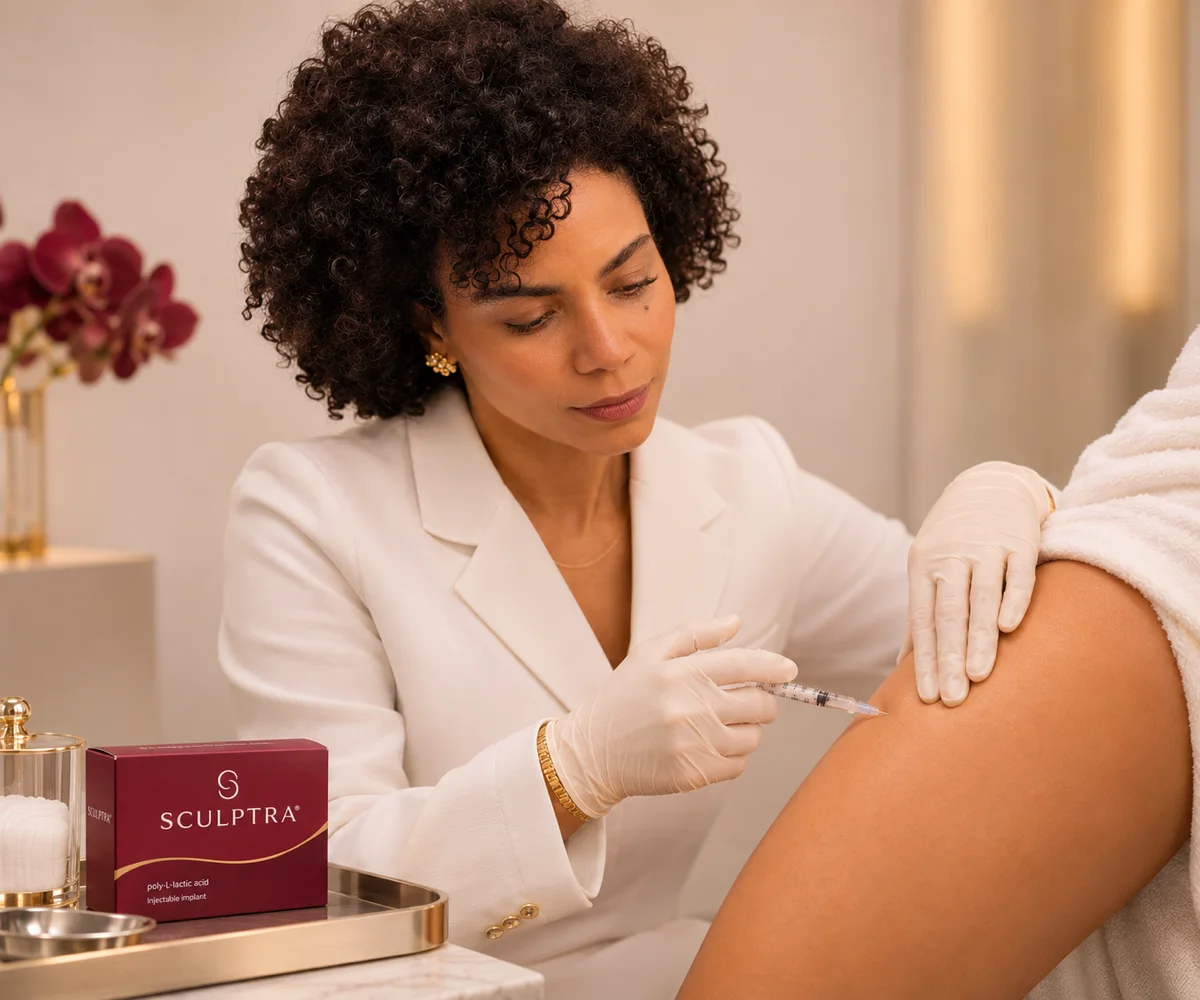
The doctor injecting a product into the outer side of a patient’s arm, in a treatment room

Collagen

Collagen biostimulators

Injectable products that stimulate the skin to produce its own collagen, gradually, with the aim of improving the firmness and quality of the skin. They are done in a few sessions spaced weeks apart. In this area, use is outside approved indications and there is little specific evidence for the thin, fragile skin of the forearms. They may cause bruising, swelling and, more rarely, nodules, and the doctor assesses the skin before deciding.

May be considered when

the skin is intact, without wounds or infection, the cause of the thinning has been assessed, you are not taking anticoagulants without the agreement of the doctor who prescribes them, and the doctor has explained what is realistic to expect and the risks.

Find out more
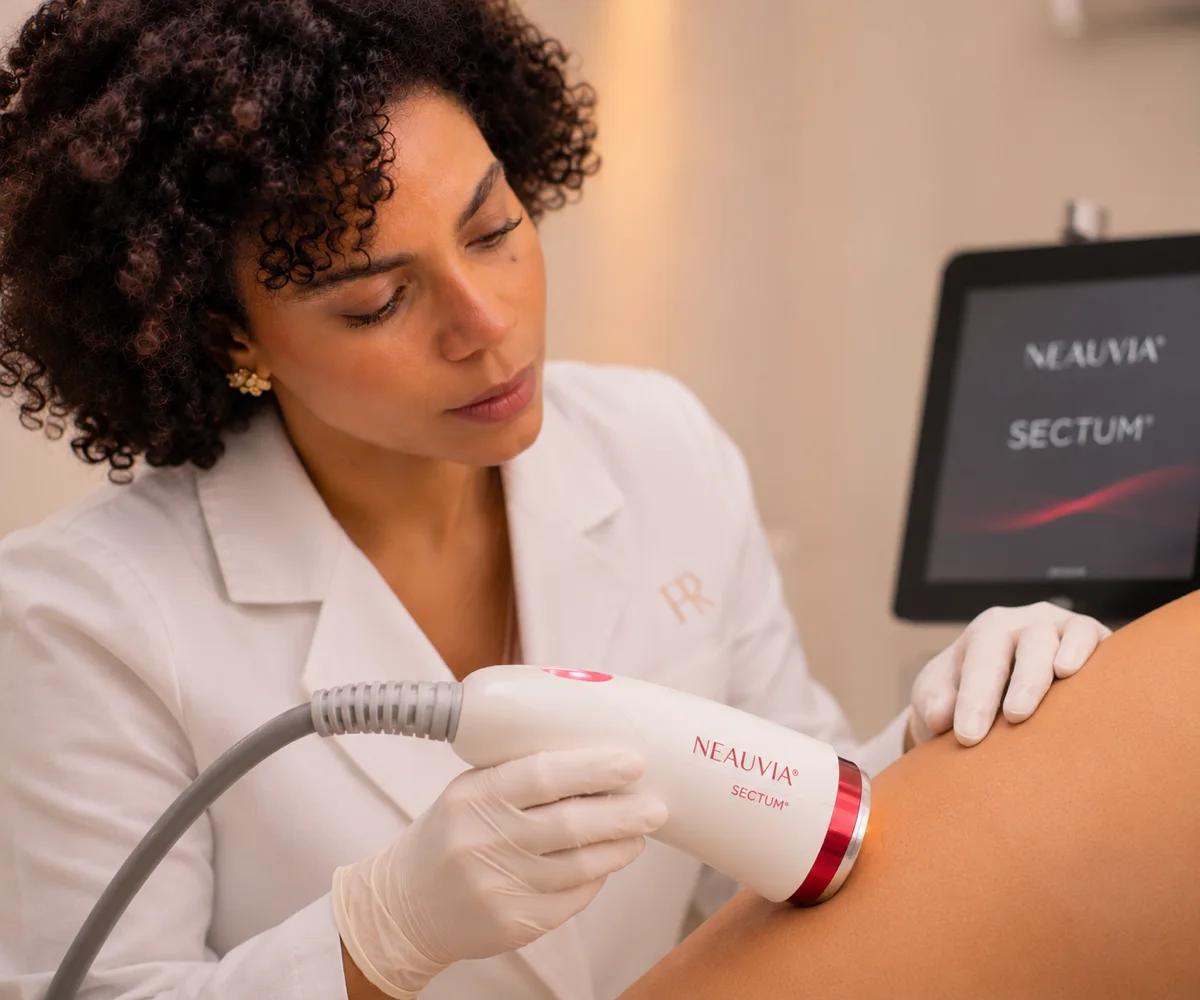
Radiofrequency tip gliding over a patient’s arm, in a treatment room

Technology

Sectum radiofrequency Neauvia

Radiofrequency that heats the skin in depth, with the intention of stimulating the production of the body’s own collagen and firming the skin. It is done in several sessions and, as a rule, without recovery time. The evidence is mainly in laxity, not in the fragility of mature skin, and the improvement expected is mild to moderate. It is not done on very thin skin or skin with lesions, and the doctor decides after examining it.

May be considered when

the skin is intact, without wounds, infection, swelling or pain awaiting assessment, the fragility is not due to a cause awaiting treatment and the doctor has explained what is realistic to expect and how many sessions may be needed.

Find out more

What the journey looks like

From the first conversation to a plan tailored to you

No procedure begins without an assessment by the doctor. Most people start with the simplest approach, and only then is anything further considered.

  1. 01At the clinic

    Telling your story

    The doctor asks since when the skin has been like this, whether bruises appear without a knock, in which areas, which medicines you take (corticosteroids, anticoagulants, antiplatelets and others) and which conditions you have.

  2. 02At the clinic

    Examining the skin

    The thickness and elasticity, the purple and brownish patches, the star-shaped scars and the sun damage are examined. If there are warning signs, tests are requested or you are referred to your family doctor or a specialist.

  3. 03At home

    Protecting and moisturising

    The skin is protected from the sun and from knocks, moisturised every day and what thins it is reviewed with the prescribing doctor. In many cases, this is what most reduces bruises and wounds.

  4. 04Over time

    Decide and follow up

    If the skin is stable and intact, the doctor explains whether a procedure makes sense, what can be expected and how many sessions are needed, without promising results. The examination is repeated and the plan adjusted.

Day to day

What helps at home

What you do at home matters more than you might think. These are sensible measures to take while you wait for your consultation and alongside the clinic’s plan.

The golden rule

First protecting the skin you already have

No treatment fully reverses skin that continues to be exposed to the sun and knocks. Protecting, moisturising and reviewing the medicines that thin it is worth more than any cream. And bruises for no reason, in several areas, should be seen by a doctor rather than “treated”.

Protect from the sun

The sun is what damages the skin of the forearms most, and the damage accumulates.

In practice: light sleeves in a tightly woven fabric, a hat and sunscreen of factor 30 or higher on exposed areas, avoiding strong midday sun.

Hydrate every day

Moisturised skin has a stronger barrier and tears less.

In practice: a cream with urea at low concentration or another moisturiser, once or twice a day, after bathing, with the skin still damp.

Protecting the skin from knocks

Many wounds and bruises come from minimal impacts with furniture, doors and bags.

In practice: light long sleeves at home, cushioning on the corners of furniture, good lighting and care when picking up objects and opening doors.

Talking to the doctor about medication

Corticosteroids and anticoagulants thin the skin or increase bruising, and may be necessary.

In practice: bring the list of medicines to the consultation and ask whether there are alternatives or another way of using them. Do not stop them on your own.

Dr Michelle Campagnoli, clinical director of Clínica Luxmed

Who will look after you

An assessment carried out by the doctor

At Luxmed, in Algés, the first step is always an assessment with Dr Michelle Campagnoli. She is the one who examines the skin, understands whether the fragility is just age and sun or whether there is a cause to investigate and defines with you what makes sense, before any procedure.

  • Physical examination and medical historyA conversation about bruises, wounds and medication, and examination of the skin of the arms.
  • A plan tailored to youA clear plan, without promises, with skin protection first and follow-up over time.
  • No obligationThe cost of any treatment is confirmed only after the assessment.
Book an assessment

Book a consultation

Book your consultation

Choose how you prefer to get in touch. We will arrange the assessment consultation with Dr Michelle Campagnoli.

Booking through the websiteAssessment consultationTalk to our assistant on WhatsApp and ask for the current price of the assessment.

New Life Miraflores, Algés · Office Center, R. Santa Teresa do Menino Jesus n.º 6, 9.º C, 1495-048

Your details are used only for this contact. Any treatment depends on a prior medical assessment.

Request an appointmentIt takes less than a minute.
Speciality
You do not need to go into detail. The doctor will talk to you during the consultation.
Request received. Our team will contact you as soon as possible.
Why is the skin on my arms so thin?

Almost always from a sum of causes: ageing (less collagen and less hyaluronic acid), sun accumulated over life, genetics and certain medicines, such as corticosteroids and anticoagulants. When the fragility is marked, with paper-thin skin, easy bruising, wounds that tear and white star-shaped scars, we speak of dermatoporosis. Less often, there are chronic conditions or deficiencies behind it. The first step is to understand what weighs in your case.

What is dermatoporosis?

It is the name given to the chronic insufficiency of aged skin: thin skin that has lost part of its protective function and tears, bruises and heals poorly with minimal trauma. The typical signs are senile purpura, white star-shaped scars and atrophy of the skin. It is not a rare disease or a lack of care: it is frequent at advanced ages and worsens with sun and certain medicines. It can be prevented in part and improved with care, but is not always fully reversed.

Bruises on the forearms for no reason: is it serious?

In most cases, no. Senile purpura is benign and very frequent: purple patches on the forearms and the backs of the hands, after minimal knocks, on thin, sun-damaged skin, which disappear in one to three weeks and sometimes leave a brownish mark. But bruises on the trunk or legs, in many areas, without any knock, or with bleeding from the gums or nose, tiredness, fever or weight loss, call for medical assessment and, sometimes, tests.

Do corticosteroids and anticoagulants thin the skin?

Corticosteroids thin the skin, above all those taken for a long time or potent creams applied for months, and make it more fragile, with bruising. Anticoagulants and antiplatelets do not thin the skin, but make bruises appear more easily and be larger. In many cases they are indispensable medicines: never stop them without talking to the doctor who prescribed them, who may review the dose or the way of using them.

Does thin skin thicken again? What helps to thicken it?

It may improve in part, but rarely goes back to what it was. What has the most support is protecting from the sun, moisturising well and avoiding what harms it. Topical retinoids, on medical advice, have been shown in small studies in older people to improve signs of skin ageing after a few months, but may irritate and are not suitable for all skin, or during pregnancy. Urea and other moisturisers strengthen the barrier. Biostimulators and radiofrequency have limited evidence for this indication.

Do collagen biostimulators work on thin skin on the arms?

They are used to improve the firmness and quality of the skin, stimulating collagen, but specific evidence for the thin, fragile skin of the forearms is limited, and use in this area is outside approved indications. They may cause bruising, swelling and, more rarely, nodules, which matters on skin that already bruises easily. Results are gradual, vary from person to person and, as a rule, are not permanent. The doctor assesses the skin and the medication before deciding whether it makes sense.

Do radiofrequency or microneedling help to thicken the skin?

Radiofrequency stimulates collagen and is studied mainly in laxity, with mild to moderate improvement. Microneedling is better documented in scars, stretch marks and wrinkles. Neither has solid evidence for the fragility of mature skin on the forearms, and on very thin skin, with wounds or with recent bruises, the doctor may advise against the procedure. The clinic also performs carboxytherapy, which may be considered as a complement. It is decided at the consultation, after assessing the skin and the medication.

Do a collagen supplement or vitamin C help?

The evidence for collagen supplements is limited and variable, and they do not replace basic care. Vitamin C only has a clear effect when there is a deficiency (rare in practice); with a normal diet, the effect is limited. If you take anticoagulants or other medicines, talk to your doctor before starting a supplement. What has the most support is a complete diet, with enough protein, and sun protection.

How many sessions are needed and are the results permanent?

There are no guaranteed or permanent results. Several sessions are normally needed, spaced weeks apart, and improvement, when there is any, is gradual and mild to moderate. If the sun, medicines and knocks continue, the skin tends to become fragile again, so maintenance and daily care count as much as the procedure. At the assessment, the doctor defines the plan and expectations, without promising results.

When should I see a doctor first?

Book a consultation if bruises appear for no reason, are many or appear outside the forearms, if there are wounds that do not heal or become red, hot and with pus, or if there is other bleeding (gums, nose, urine, stools), tiredness, fever or weight loss. Also if you have taken corticosteroids for a long time. Do not stop medication on your own. If in doubt, out of hours call SNS 24 (808 24 24 24). With bleeding that does not stop, shortness of breath or chest pain, call 112.

We could not find that question. Ask us on WhatsApp

Scientific references

This page is based on the sources below and was reviewed by Dr. Michelle Campagnoli. Last updated on .

  1. Kaya G, Saurat JH. Dermatoporosis: a chronic cutaneous insufficiency/fragility syndrome. Clinicopathological features, mechanisms, prevention and potential treatments. Dermatology, 2007.
  2. Farage MA, Miller KW, Elsner P, Maibach HI. Characteristics of the aging skin. Adv Wound Care, 2013.
  3. Krutmann J, Bouloc A, Sore G, Bernard BA, Passeron T. The skin aging exposome. J Dermatol Sci, 2017.
  4. Niculet E, Bobeica C, Tatu AL. Glucocorticoid-Induced Skin Atrophy: The Old and the New. Clin Cosmet Investig Dermatol, 2020.
  5. DermNet NZ (Ip KH; revisão de Oakley A). Senile purpura. (DermNet, acedido 2026-11-11)
  6. Kafi R, Kwak HS, Schumacher WE, Cho S, Hanft VN, Hamilton TA, King AL, Neal JD, Varani J, Fisher GJ, Voorhees JJ, Kang S. Improvement of naturally aged skin with vitamin A (retinol). Arch Dermatol, 2007.
  7. Pan M, Heinecke G, Bernardo S, Tsui C, Levitt J. Urea: a comprehensive review of the clinical literature. Dermatol Online J, 2013.
  8. Danby SG, Brown K, Higgs-Bayliss T, Chittock J, Albenali L, Cork MJ. The Effect of an Emollient Containing Urea, Ceramide NP, and Lactate on Skin Barrier Structure and Function in Older People with Dry Skin. Skin Pharmacol Physiol, 2016.
  9. Hughes MC, Williams GM, Baker P, Green AC. Sunscreen and prevention of skin aging: a randomized trial. Ann Intern Med, 2013.
  10. NHS. Sunscreen and sun safety. (NHS, acedido 2026-11-11)
  11. Beasley KL, Weiss RA. Radiofrequency in cosmetic dermatology. Dermatol Clin, 2014.
  12. Araújo AR, Soares VP, Silva FS, Moreira TS. Radiofrequency for the treatment of skin laxity: myth or truth. An Bras Dermatol, 2015.
  13. Vleggaar D, Fitzgerald R, Lorenc ZP. Understanding, avoiding, and treating potential adverse events following the use of injectable poly-L-lactic acid for facial and nonfacial volumization. J Drugs Dermatol, 2014.
  14. Kaya A, Saurat JH, Kaya G. Senotherapeutic Effect of Retinaldehyde and Hyaluronate Fragments in Dermatoporosis. Dermatopathology (Basel), 2023.
CallAssistantAvailableBook