
Algés, Oeiras Mon to Fri · 09:00 to 13:00 and 14:00 to 19:00 · Sat · 09:00 to 14:00
WhatsApp Book a consultation

Body aesthetics

Loss of body firmness and collagenWhen the skin of the body no longer bounces back as it used to and you want to understand what collagen has to do with it

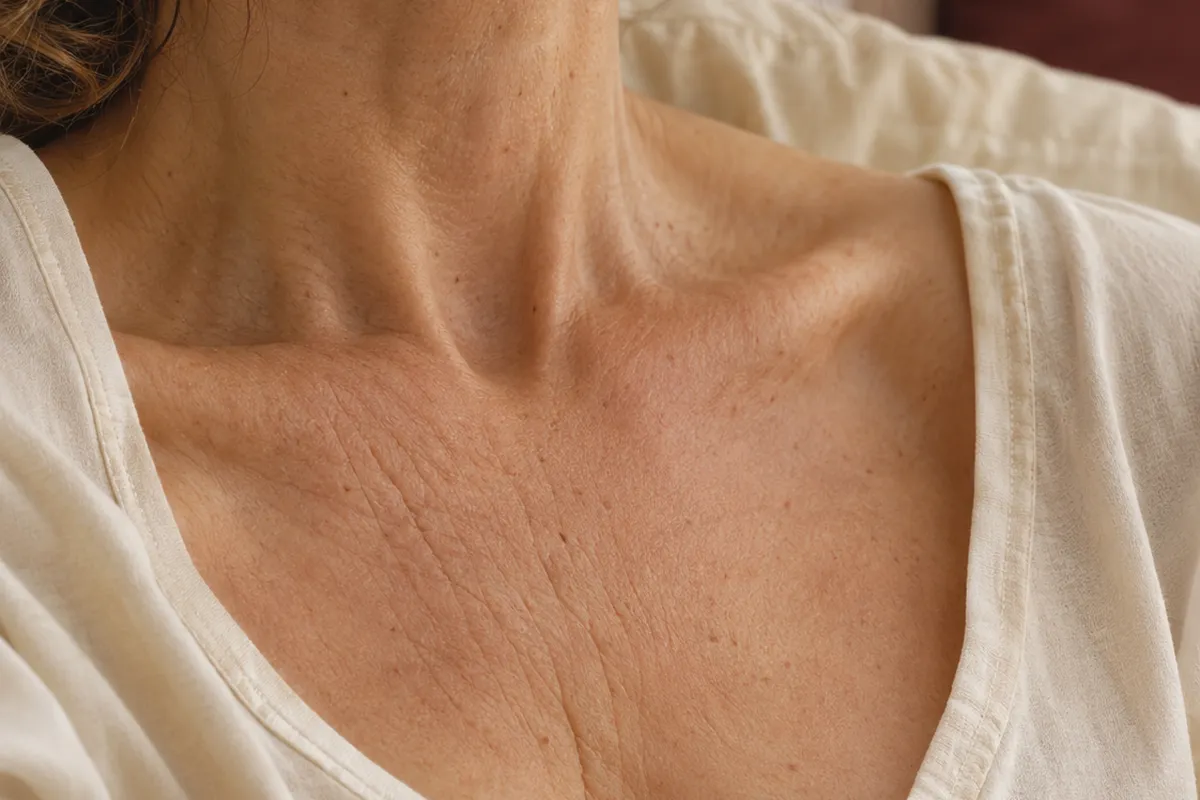
The skin of the body keeps its firmness thanks to collagen and elastin, two proteins that, from adulthood, the body produces in smaller quantities and breaks down faster. In the first years after the menopause the loss accelerates, and sun, tobacco and large variations in weight add to it. The result is usually seen on the arms, abdomen, thighs, knees and décolletage: thinner skin that yields more and takes longer to recover. Here we explain how collagen is lost, what diet, supplements and exercise can and cannot do, what to expect from biostimulators and radiofrequency on the body, and when a medical assessment is advisable, at Clínica Luxmed, in Algés.

Reviewed by Dr Michelle Campagnoli, clinical director

  • 2main procedures for this topic
  • 1assessment, always first
  • Nocommitment
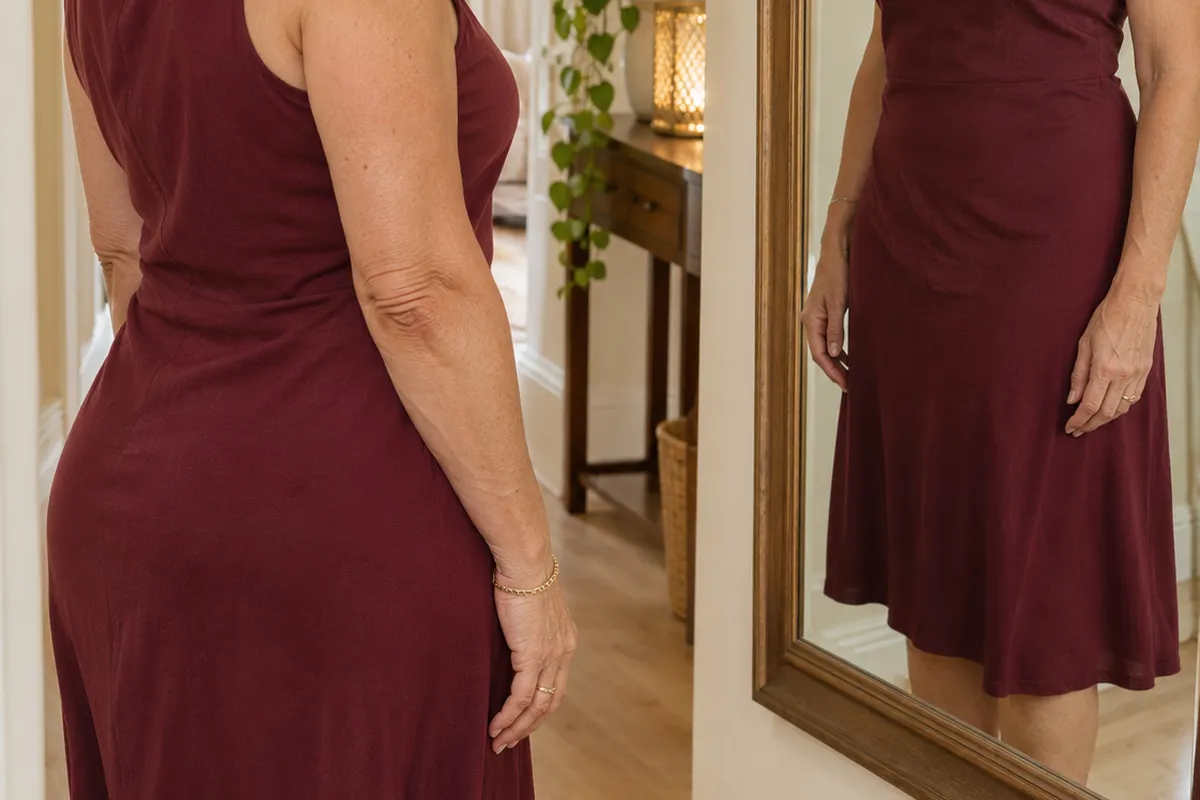
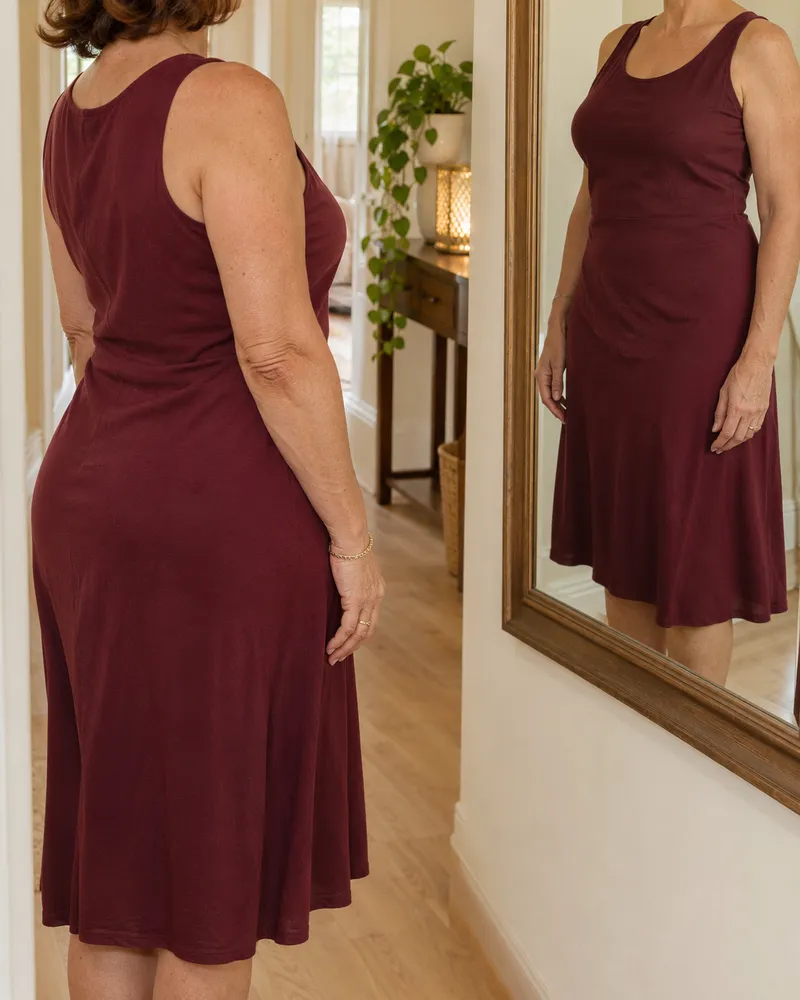
Woman in a summer dress looking at her silhouette in the hallway mirror

How to recognise it

Is it loss of firmness of the skin of the body?

Loss of firmness does not appear all at once or in the same way in everyone. These signs help to understand whether what you notice is consistent with less collagen, before the assessment.

Tick what you recognise0/7

Tick the signs you recognise in your case. This is not a diagnosis, it is only meant to give you an idea.

Did the laxity appear quickly, without explanation, or does it come with weight loss you did not seek, marked tiredness or fever? Is there an arm or a leg swollen on one side only, with pain or redness? After a treatment, did painful nodules, spreading redness or fever appear? It needs a medical assessment before any treatment. Out of hours, call SNS 24: 808 24 24 24.

Female doctor in a white coat assessing the abdomen of a woman in gym clothes, in a consulting room
Photograph of a consultation. The dots mark what the doctor is assessing.

Why it happens

What makes the skin of the body lose firmness

There is almost never a single cause. Choose a situation to see how it may contribute and what usually helps.

Natural ageing

In young adulthood the body begins to produce less collagen and elastin and to break them down faster. The dermis becomes thinner, the fibres lose organisation and the skin no longer returns into place with the same speed. These changes are partly determined by genetics, so some people notice them earlier, and they become more pronounced with the years across the whole body.

What weighs on it

Expecting a single cream or supplement to restore what time has taken away, and comparing your skin with that of other people of the same age.

What helps

Protecting the skin from what breaks it down, keeping habits that help it and choosing with the doctor what makes sense, knowing that age cannot be undone.

Normal or to be assessed

Expected loss of firmness or something to assess

Most changes in the firmness of body skin are a gradual, expected process. But some situations call for a medical assessment before any treatment is considered.

  • What it looks like. Skin that has lost firmness gradually, in several places at the same time (arms, abdomen, thighs, knees), often with the menopause, sun or weight variations behind it.

  • When it is noticed. In daylight, in more revealing clothing and on touching the skin, which looks thinner and takes a while to go back into place.

  • What the clinic does. The doctor listens to the history, examines the skin and tells you what is skin, what is muscle and what is fat, before proposing whatever makes sense.

  • At home. Protecting from the sun, stopping smoking, eating with enough protein, doing strength exercise and losing weight gradually, if applicable.

Do you have shortness of breath, chest pain or a very swollen, sore limb? Call 112. If the laxity appeared quickly, with weight loss you cannot explain, or you have doubts after a treatment, out of hours you can call SNS 24: 808 24 24 24.

Book an assessment

What the clinic may consider

Options to stimulate collagen

First come habits and sun protection, which are the basis and cost nothing. Then, and only after an assessment, the clinic may consider two ways of stimulating collagen on the body: injectable biostimulators, which provoke it over months, and radiofrequency, which does so with controlled heat in the dermis. Microneedling and carboxytherapy, which the clinic also performs on the body, come in more when the problem is stretch marks, scars, texture or microcirculation, and the doctor tells you whether they make sense in your case. None works miracles: the effect is gradual, depends on the quality of the skin you start with, varies from person to person and calls for maintenance. The evidence for these techniques on the body is, in general, limited, and in very sagging skin surgery is usually more effective.

Book an assessment
Dr Michelle Campagnoli, clinical director of Clínica Luxmed

First step

Assessment consultation

The doctor listens to what you are experiencing, examines your case and explains the suitable options. No treatment begins without this consultation.

May be considered when

you want to understand the cause and decide on the best path, with time and without commitment.

Book an assessment
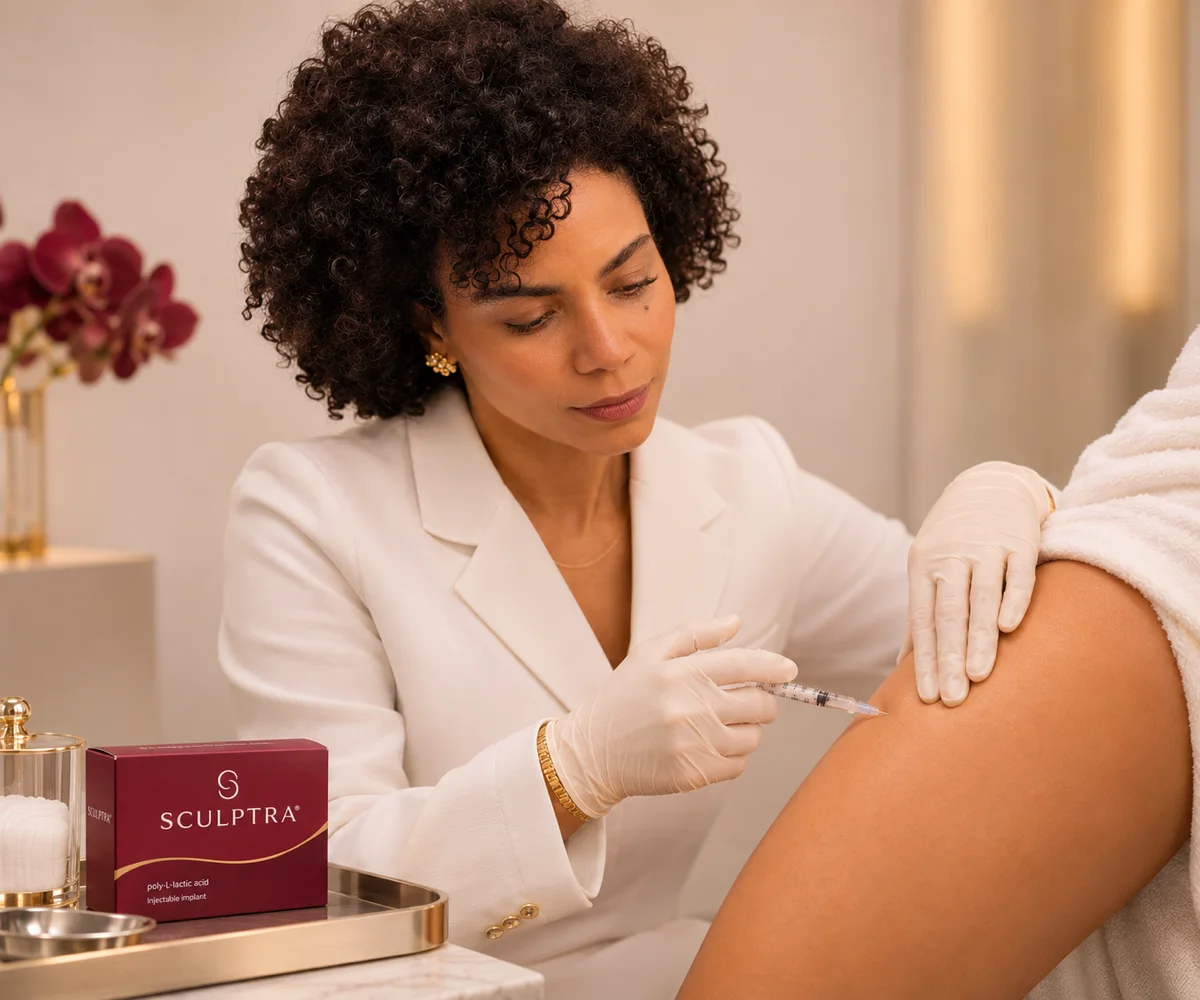
The doctor in gloves applying an injectable to the upper part of a patient’s arm, with a product box on a tray beside her, in a soft-lit consulting room

Stimulating collagen

Collagen biostimulators

Injections of a substance that stimulates the body to form collagen over months, with the aim of improving the firmness and texture of the skin in areas such as the arms, abdomen, thighs and knees. It is done in a few sessions, and the effect appears gradually. Bruising, papules and nodules may appear, as a rule transient, and the use of several biostimulators on the body is off-label, which the doctor has to explain to you.

May be considered when

the laxity is mild to moderate, the skin still has some quality and expectations are realistic, after an assessment and understanding what changes and what does not.

Find out more
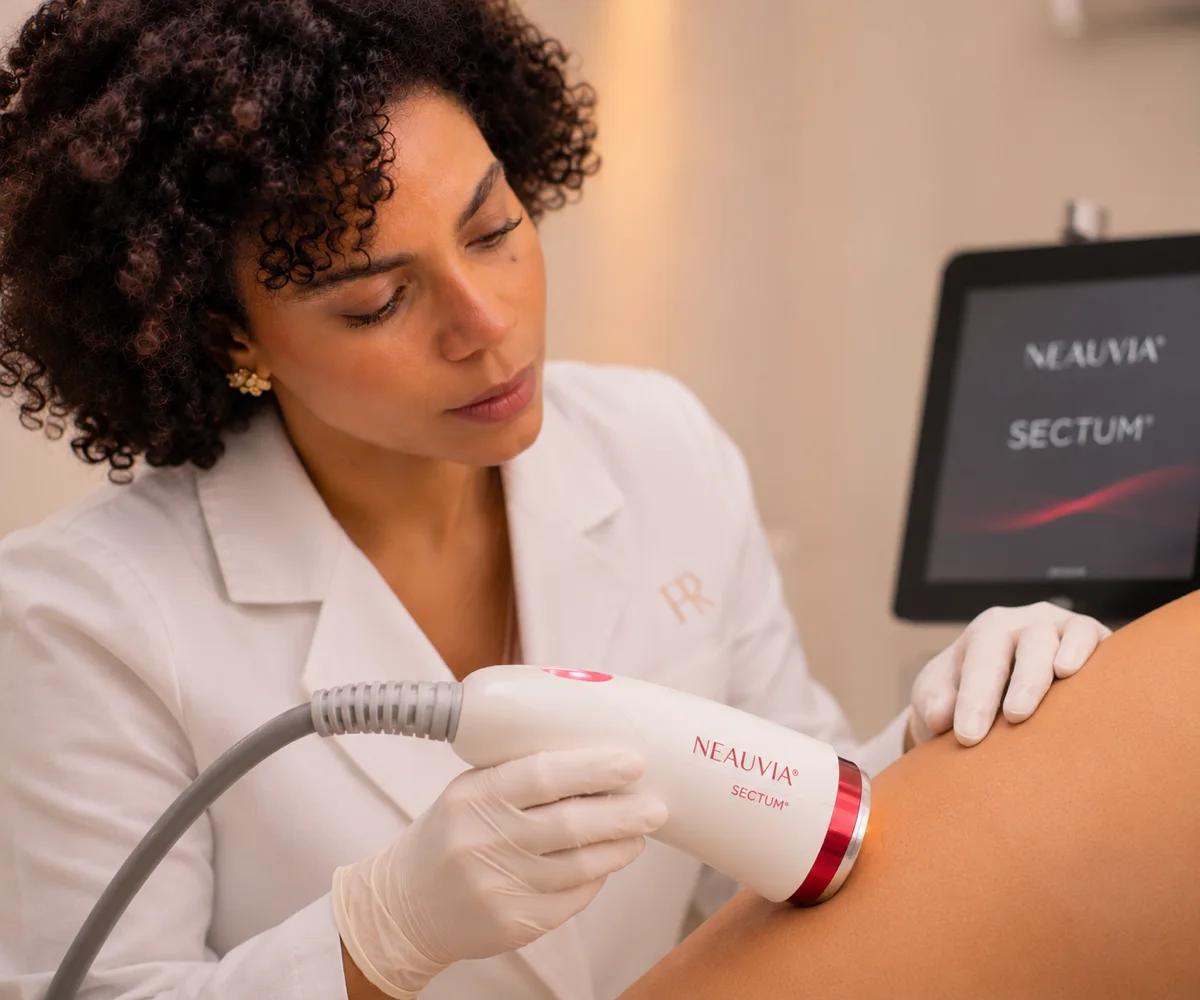
The doctor passing a radiofrequency tip over the patient’s arm, with the device screen in the background, in a soft-lit consulting room

Heat in the dermis

Sectum radiofrequency Neauvia

Application of controlled heat in the dermis, with a tip passed over the skin, which contracts collagen and stimulates the formation of new collagen, with the aim of firming the skin and treating laxity in areas such as the arms, abdomen and thighs. It is done in several sessions and improvement is gradual. There may be redness and, rarely, a burn, and the effect needs maintenance.

May be considered when

the laxity is mild to moderate and you want an option with no recovery time, after an assessment that rules out contraindications and knowing what is realistic to expect.

Find out more

What the journey looks like

From the first conversation to a plan tailored to you

No procedure begins without an assessment by the doctor. Most people start with the simplest approach, and only then is anything further considered.

  1. 01At the clinic

    Telling your story

    The doctor asks since when you noticed the loss of firmness, whether it was gradual or quick, what changed with the menopause, weight and habits, and what you have already tried, including supplements and creams.

  2. 02At the clinic

    Examining and assessing the skin

    The thickness, elasticity and distribution of the laxity are examined. If there are signs that depart from what is expected, such as rapid laxity or unexplained weight loss, tests are requested or you are referred to another specialty.

  3. 03At home

    Looking after the basics

    The skin is protected from the sun, you stop smoking, and take care of diet and strength exercise. This is the basis of any plan and, in mild cases, may be what helps the skin most to stay firm.

  4. 04Over time

    Decide and follow up

    If the skin continues to bother you, the doctor explains whether a biostimulator, radiofrequency or another option makes sense, how many sessions and what care, without promising results. It is followed up and adjusted, including maintenance.

Day to day

What protects the skin at home

These measures apply at any stage and do not replace the consultation. They make sense while you wait for the assessment and alongside the clinic’s plan.

The golden rule

Protecting collagen before trying to restore it

Nothing replaces sunscreen and the habits that preserve the collagen you still have. Supplements have a modest, uncertain effect, exercise improves the contour and the skin does not rebuild itself. Medical procedures help, but work better on protected skin.

Protect from the sun every day

The sun is the external factor that breaks down collagen most, and regular protection reduces skin ageing.

In practice: sunscreen of at least factor 30 and good UVA protection, in sufficient quantity and reapplied; clothing and shade in the hours of most sun.

Eating protein, fruit and vegetables

The skin needs amino acids and vitamin C to form collagen, which it obtains from a balanced diet.

In practice: protein at every main meal and fruit and vegetables every day; only take vitamin C as a supplement if the doctor detects a deficiency.

Doing strength exercise

It strengthens the muscle beneath the skin and improves the contour of the body, although it does not change the skin itself.

In practice: strength work two or more days a week, with weights, resistance bands or body weight, adjusted to your fitness.

Losing weight slowly and moisturising

Rapid weight loss leaves more loose skin, and dry skin loses apparent elasticity.

In practice: gradual weight loss, supported by a professional, and a daily body moisturiser after bathing.

Dr Michelle Campagnoli, clinical director of Clínica Luxmed

Who will look after you

An assessment carried out by the doctor

At Luxmed, in Algés, the first step is always an assessment with Dr Michelle Campagnoli. She is the one who examines the skin, understands whether the loss of firmness is what is expected for your stage and defines with you what makes sense, before any procedure.

  • Physical examination and medical historyA conversation about the menopause, weight, sun, habits and medication, and examination of the elasticity of the skin.
  • A plan tailored to youA clear plan, without promises, with the basics dealt with first and follow-up over time.
  • No obligationThe cost of any treatment is confirmed only after the assessment.
Book an assessment

Book a consultation

Book your consultation

Choose how you prefer to get in touch. We will arrange the assessment consultation with Dr Michelle Campagnoli.

Booking through the websiteAssessment consultationTalk to our assistant on WhatsApp and ask for the current price of the assessment.

New Life Miraflores, Algés · Office Center, R. Santa Teresa do Menino Jesus n.º 6, 9.º C, 1495-048

Your details are used only for this contact. Any treatment depends on a prior medical assessment.

Request an appointmentIt takes less than a minute.
Speciality
You do not need to go into detail. The doctor will talk to you during the consultation.
Request received. Our team will contact you as soon as possible.
Why is collagen lost and from what age?

Collagen production begins to decrease in young adulthood and breakdown increases, so the skin gradually becomes thinner and less firm over the years. It is a normal process, which varies from person to person and has a genetic component. After the menopause, the loss accelerates in the first years, because oestrogens help to maintain the skin’s collagen. Sun, tobacco, excess sugar and large variations in weight may accentuate the loss. There is no set age, and what the doctor assesses is your case.

What accelerates loss of firmness and what protects the skin?

It is accelerated by unprotected sun, tobacco, a diet rich in sugar, a sedentary life and very rapid weight loss. It is protected by daily sunscreen, not smoking, a balanced diet, gradual weight loss and exercise, including strength training. None of this gives back the collagen that has already been lost, but it helps to preserve what is left and the skin to stay firmer for longer.

Does the menopause change the firmness of body skin? And in men?

Yes. After the menopause, the fall in oestrogen is associated with thinner, drier skin, with less collagen and less elasticity, above all in the first years. In men, the skin is thicker and the loss is more gradual, without the acceleration of the menopause. If firmness and other menopausal symptoms bother you, talk to your doctor, who can explain the options, including hormonal ones, with their risks and benefits.

Is laxity just a lack of collagen?

Not always. Body firmness depends on the skin (collagen and elastin), on the muscle that supports it and on the fat beneath. Loose skin after weight loss may have little collagen lost and a lot of excess skin, and skin with a lack of muscle may improve with strength exercise. So the assessment separates what is skin, muscle and fat before proposing a treatment.

Do collagen supplements work?

The effect is modest and uncertain. A meta-analysis of trials with oral hydrolysed collagen found small benefits in skin hydration and elasticity, but the studies differ from one another and many were funded by industry. There is no proof that they restore the collagen of body skin, and they do not replace sunscreen or medical procedures. If you have kidney or liver disease or take chronic medication, talk to your doctor before taking them.

Do diet and exercise help the skin to be firmer?

Diet gives the skin what it needs: enough protein, vitamin C (essential for forming collagen) and fruit and vegetables. Vitamin C as a supplement is only justified if there is a deficiency. Strength exercise improves the contour of the body by strengthening the muscle, but does not change the skin itself, and gelatine and bone broth provide amino acids but have no proof of a direct effect on the skin. Sun protection has the strongest evidence against skin ageing.

What are collagen biostimulators and what can I expect?

They are injectables that stimulate the body to form its own collagen over months. They are done in a few sessions, and the effect appears between 1 and 3 months, gradually. At the clinic, the doctor assesses whether it makes sense for you. Data on the body are still limited, and the use of several biostimulators on the body is off-label, which should be explained beforehand. Bruising, papules and nodules may appear, in general transient, and very rarely inflammatory granulomas.

How does radiofrequency work on the body and is it safe?

Controlled heat is applied to the dermis with a tip, which contracts collagen and stimulates the body to form new collagen. A series of sessions is usually done, without recovery time, and the effect is gradual and needs maintenance. It may cause redness and, rarely, a burn, so it should be done after assessment and by trained professionals. The evidence is limited, because many devices have not been well tested and parameters vary between studies.

Can I combine biostimulators and radiofrequency? Do the results last?

They can be combined, with a suitable interval between sessions, and it is the doctor who defines the plan. Biostimulators may last more than a year and radiofrequency needs maintenance, but no result is permanent: the skin continues to age. People with mild to moderate laxity, some skin quality and realistic expectations benefit most. In very sagging skin, surgery is usually more effective, and the doctor will say whether that is your case.

When should I see a doctor first?

Book a consultation if the laxity appeared quickly, without explanation, or if it comes with weight loss you did not seek, marked tiredness or fever. Also if you have an arm or a leg swollen on one side only, with pain or redness. After a treatment, if painful nodules, spreading redness or fever appear, contact the clinic. If in doubt, out of hours call SNS 24 (808 24 24 24). With shortness of breath, chest pain or a very swollen, sore limb, call 112.

We could not find that question. Ask us on WhatsApp

Scientific references

This page is based on the sources below and was reviewed by Dr. Michelle Campagnoli. Last updated on .

  1. Farage MA, Miller KW, Elsner P, Maibach HI. Characteristics of the Aging Skin. Adv Wound Care (New Rochelle), 2013.
  2. Thornton MJ. Estrogens and aging skin. Dermatoendocrinol, 2013.
  3. Krutmann J, Bouloc A, Sore G, Bernard BA, Passeron T. The skin aging exposome. J Dermatol Sci, 2017.
  4. Morita A. Tobacco smoke causes premature skin aging. J Dermatol Sci, 2007.
  5. Hughes MC, Williams GM, Baker P, Green AC. Sunscreen and prevention of skin aging: a randomized trial. Ann Intern Med, 2013.
  6. NHS. Sunscreen and sun safety. (NHS (Reino Unido), acedido 2026-11-11)
  7. de Miranda RB, Weimer P, Rossi RC. Effects of hydrolyzed collagen supplementation on skin aging: a systematic review and meta-analysis. International journal of dermatology, 2021.
  8. World Health Organization. WHO guidelines on physical activity and sedentary behaviour. Geneva: WHO, 2020.
  9. NHS. Physical activity guidelines for adults aged 19 to 64. (NHS, acedido 2026-11-11)
  10. Beasley KL, Weiss RA. Radiofrequency in cosmetic dermatology. Dermatol Clin, 2014.
  11. Araújo AR, Soares VP, Silva FS, Moreira TS. Radiofrequency for the treatment of skin laxity: myth or truth. An Bras Dermatol, 2015.
  12. Christen MO. Collagen stimulators in body applications: a review focused on poly-L-lactic acid (PLLA). Clin Cosmet Investig Dermatol, 2022.
  13. Haddad A, Avelar L, Fabi SG, et al. Injectable Poly-L-Lactic Acid for Body Aesthetic Treatments: An International Consensus on Evidence Assessment and Practical Recommendations. Aesthetic Plast Surg, 2025.
  14. Vleggaar D, Fitzgerald R, Lorenc ZP. Understanding, avoiding, and treating potential adverse events following the use of injectable poly-L-lactic acid for facial and nonfacial volumization. J Drugs Dermatol, 2014.
  15. Fitzgerald R, Bass LM, Goldberg DJ, Graivier MH, Lorenc ZP. Physiochemical Characteristics of Poly-L-Lactic Acid (PLLA). Aesthet Surg J, 2018.
CallAssistantAvailableBook