Algés, Oeiras Mon to Fri · 09:00 to 13:00 and 14:00 to 19:00 · Sat · 09:00 to 14:00
WhatsApp Book a consultation

Body aesthetics

Lines on the décolletageWhen the skin of the décolletage gets lines and a crumpled texture and you want to understand where they come from

The décolletage is one of the first areas to show signs of ageing: the skin is thin, has been exposed to the sun for years and folds against the mattress at night. Wrinkles appear in two forms: vertical lines between the breasts, often noticeable on waking, and a fine, crepey texture caused mainly by sun exposure. They are generally not a sign of disease, but this is also an area where patches and moles should be monitored. Here, we explain the usual causes, the role of sleeping position and the menopause, what you can do at home, which treatments the clinic may consider, what the evidence says about each option and when you should have a medical assessment before any treatment at Clínica Luxmed, in Algés.

Reviewed by Dr Michelle Campagnoli, clinical director

  • 4treatment options for this concern
  • 1assessment, always first
  • Nocommitment
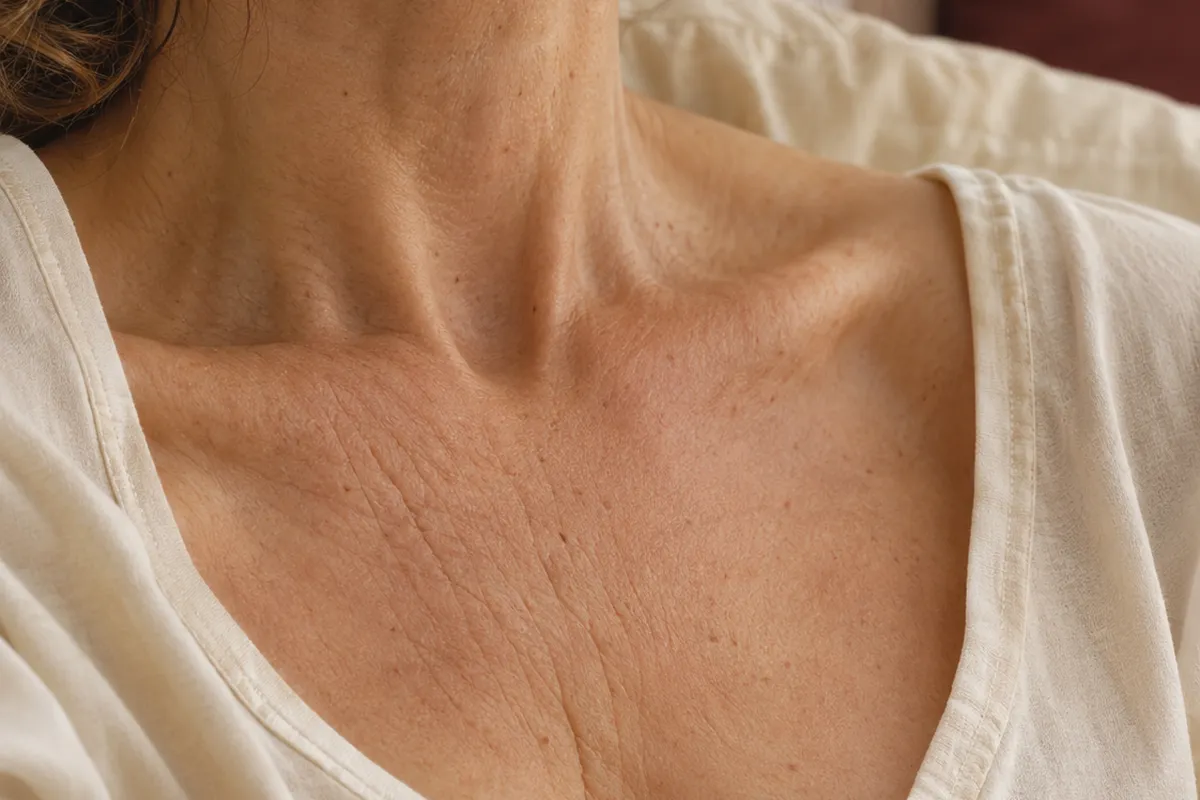
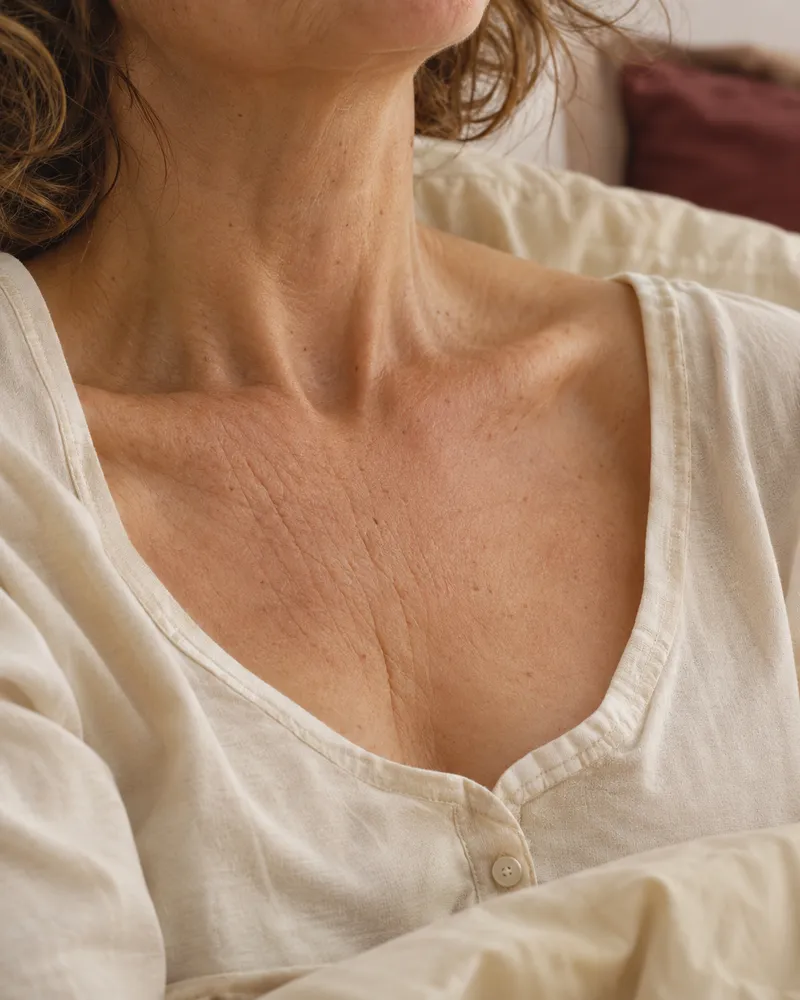
Woman waking up, with vertical sleep creases on her décolletage

How to recognise it

Could these be décolletage wrinkles?

Not all décolletage wrinkles are the same: some are deep lines caused by sleeping position, while others form a fine texture caused by the sun, and the appropriate approach depends on the cause. These signs can help you understand what is happening before your assessment.

Tick what you recognise0/7

Tick the signs you recognise in your case. This is not a diagnosis, it is only meant to give you an idea.

Is there a new patch or mole, or one that has changed in size, shape or colour? Is there a lesion that bleeds, forms a crust, hurts or itches, a sore that does not heal within a few weeks, or a patch with an irregular outline and several colours? A medical assessment is advisable before any treatment, because the décolletage is an area heavily exposed to the sun. Out of hours, call SNS 24: 808 24 24 24.

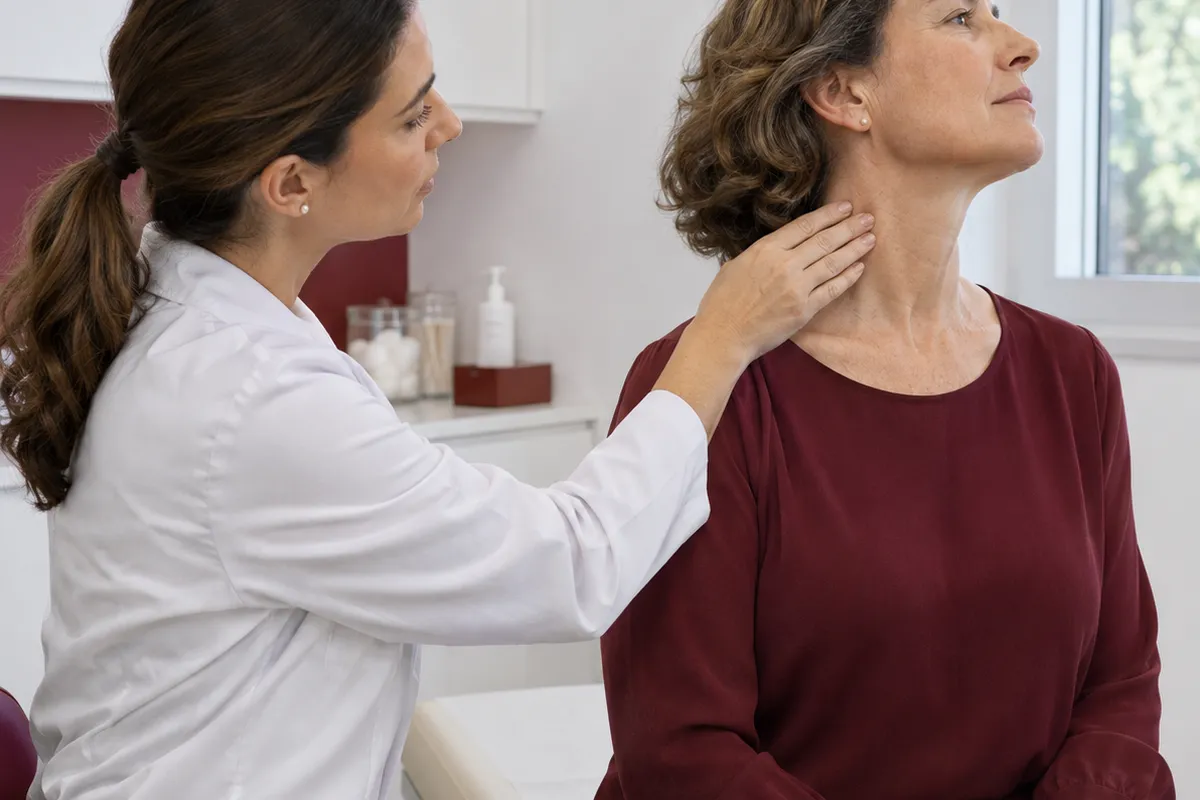
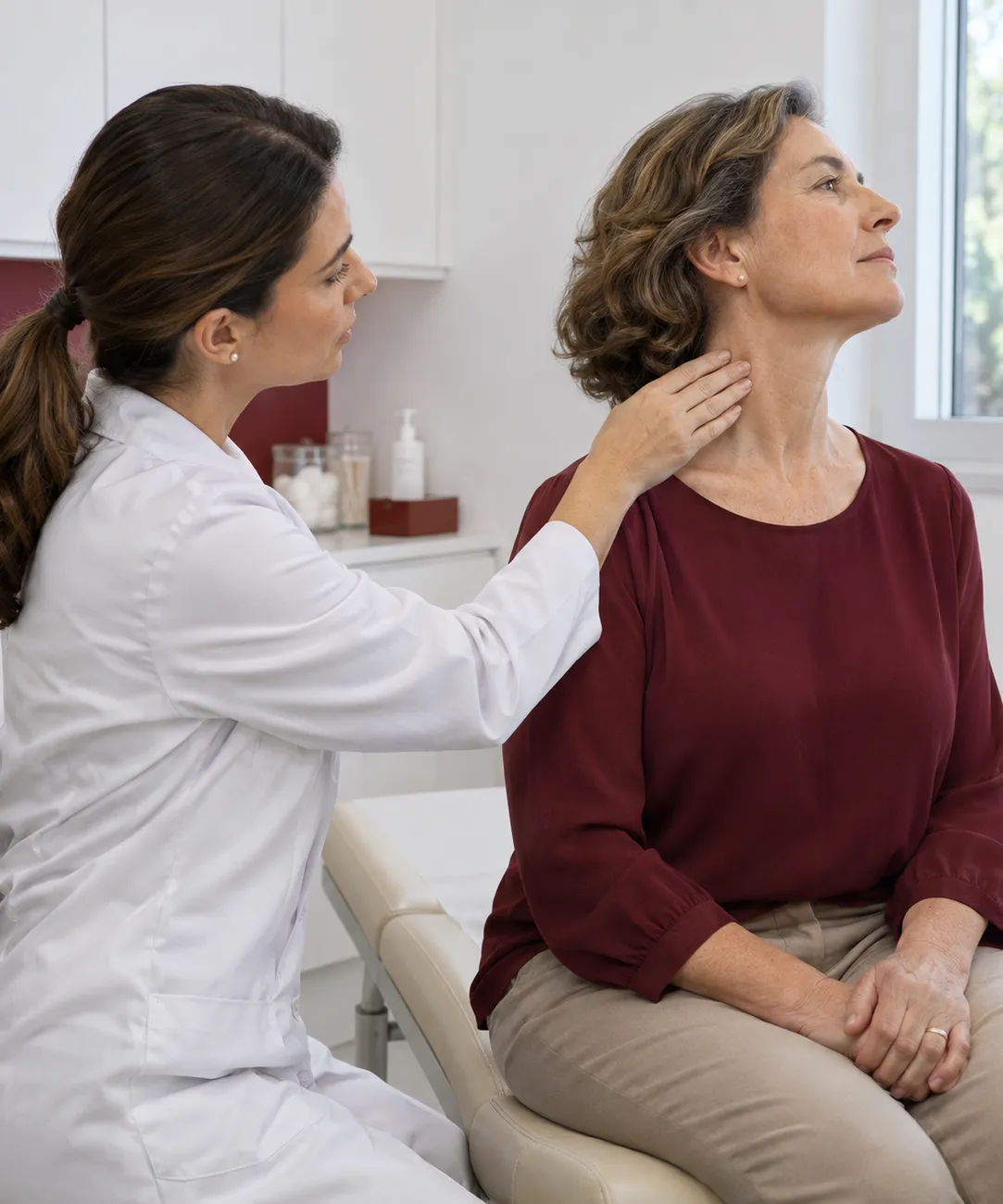
Female doctor examining the neck and décolletage of a seated patient
Photograph of a consultation. The dots mark what the doctor is assessing.

Why it happens

What may be behind décolletage wrinkles

There is almost always more than one cause at the same time. Choose a situation to see how it may contribute and what usually helps.

The accumulated sun

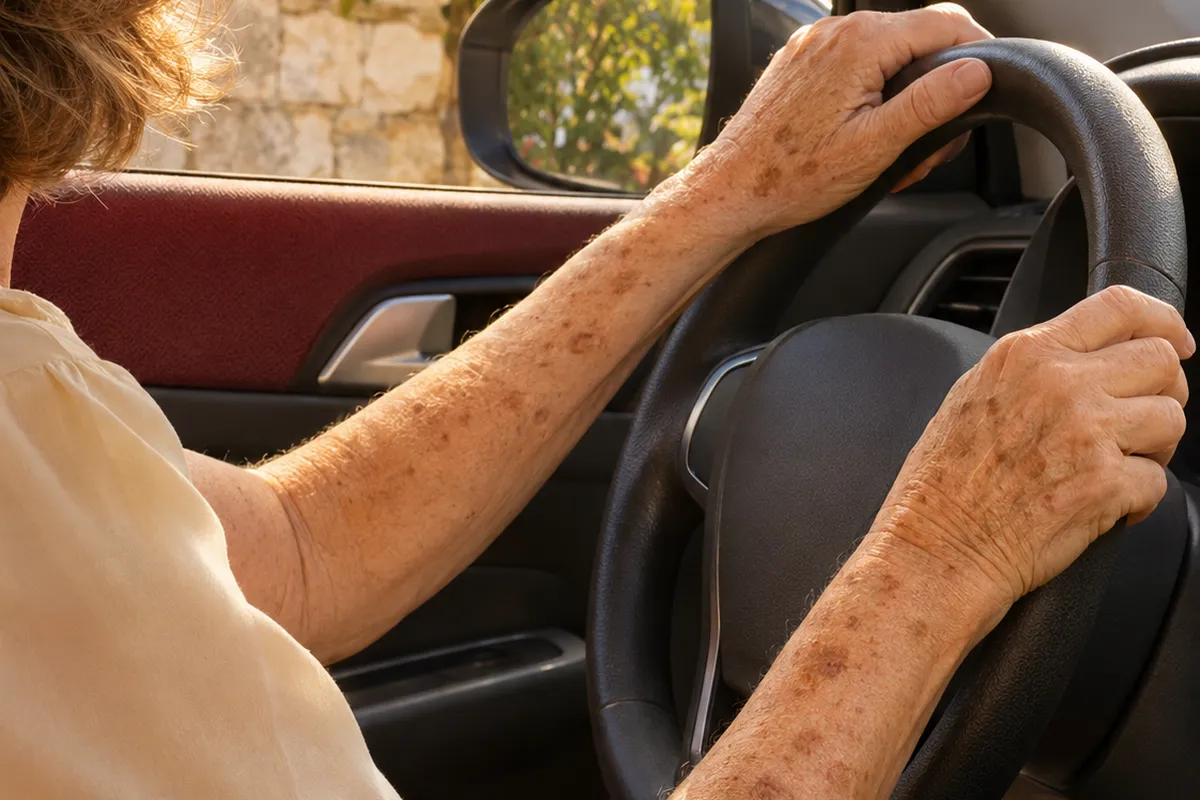
The skin of the décolletage is thin and rarely receives the same sunscreen protection as the face. Over the years, ultraviolet radiation breaks down collagen and elastin, leaving the skin with a fine, crepey texture, uneven tone and, sometimes, patches and thread veins. This is photoageing, the most significant external factor in skin ageing.

What weighs on it

Tanning the chest, repeated sunburn, wearing low-cut tops without sun protection and applying sunscreen only to the face.

What helps

Broad-spectrum sunscreen with a sun protection factor of 30 or higher on all exposed skin, including the décolletage, reapplied as needed, together with clothing or shade during the hours of strongest sunlight.

Normal or to be assessed

Simple décolletage wrinkles or something to assess

Most lines on the décolletage have a straightforward cause. However, some skin changes on the chest need to be assessed before any treatment, because the wrinkle may be only the most visible feature.

  • What it looks like. Vertical lines between the breasts, fine lines with a crepey texture or horizontal folds that develop gradually, without sores, bleeding or changing patches.

  • When it is noticeable. On waking, in side lighting and when wearing low-cut clothing. At first, sleep lines fade during the morning, but they become more persistent with age.

  • What the clinic does. The doctor listens to the history, examines the skin and confirms that they are sleep or sun wrinkles, before proposing whatever makes sense.

  • At home. Protecting the décolletage from the sun, changing sleeping position or supporting the chest, moisturising at night and giving the skin time.

Have you noticed a patch or mole that is changing, a lesion that bleeds or a sore that does not heal? Book a medical assessment before any treatment. Out of hours, you can call SNS 24: 808 24 24 24.

Book an assessment

What the clinic may consider

Options to improve décolletage wrinkles

The most important measures come first: protecting the décolletage from the sun, changing sleeping position and caring for the skin. Without these measures, the lines will return, however effective the treatment. Only then, following an assessment, should a medical procedure be considered. In its body aesthetics catalogue, the clinic lists collagen biostimulators, microneedling, radiofrequency (Sectum Neauvia radiofrequency) and carboxytherapy for this concern. Below, we describe the two treatments most commonly used for texture and fine lines; at the consultation, the doctor will explain whether radiofrequency or carboxytherapy is appropriate in your case. The evidence is limited: most studies concern the face or skin in general, and recommendations for the décolletage are based mainly on expert consensus. Some applications on the décolletage are outside approved indications. Results develop gradually, vary between individuals and require maintenance; sleep wrinkles tend to return if sleeping position does not change.

Book an assessment
Dr Michelle Campagnoli, clinical director of Clínica Luxmed

First step

Assessment consultation

The doctor listens to what you are experiencing, examines your case and explains the suitable options. No treatment begins without this consultation.

May be considered when

you want to understand the cause and decide on the best path, with time and without commitment.

Book an assessment
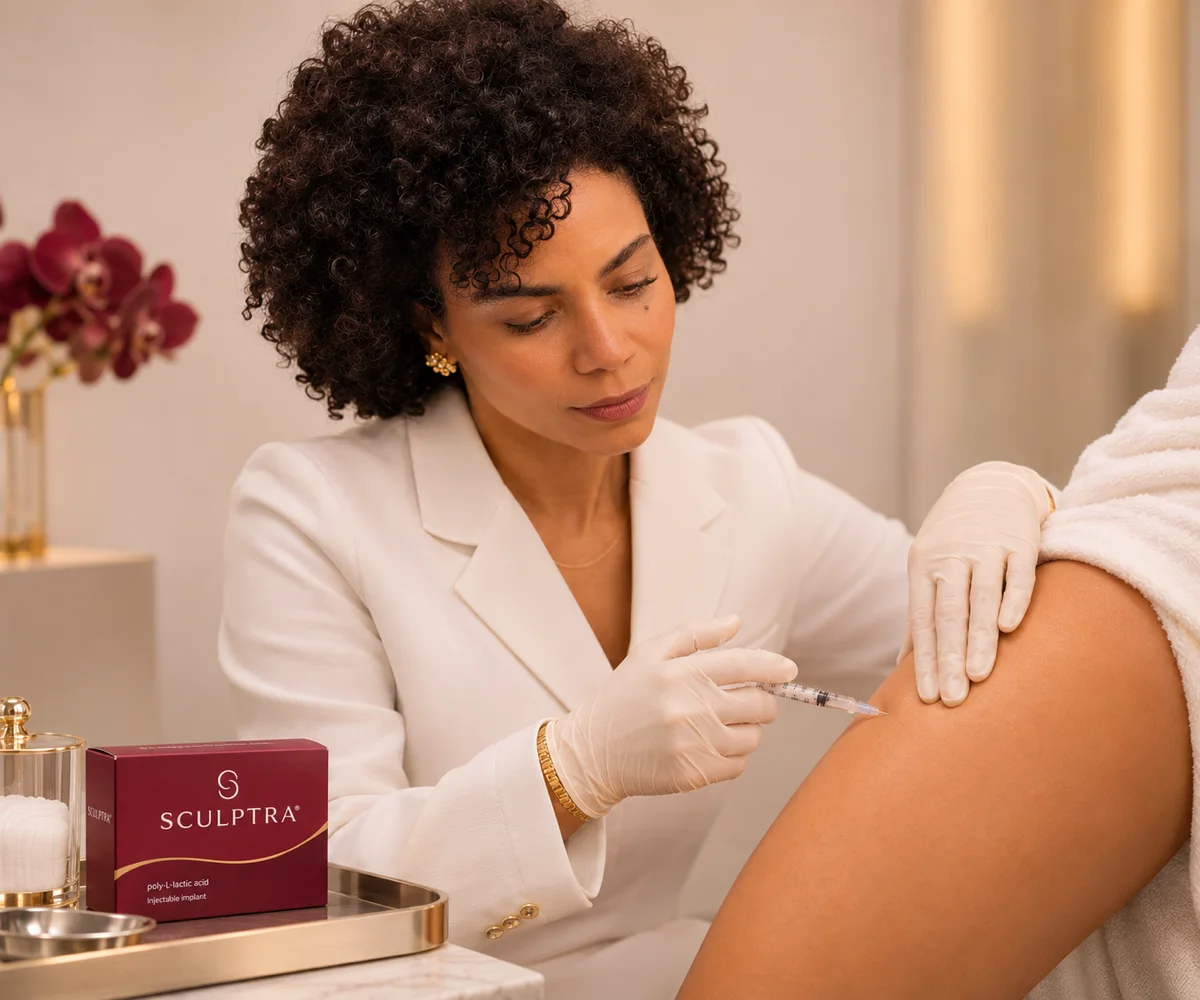
Application of a biostimulator by syringe into an area of the body, in a brightly lit consulting room

Stimulating collagen

Collagen biostimulators

Substances injected using a careful technique to stimulate the skin to produce collagen gradually, with the aim of improving firmness and texture. Several sessions are generally required. Papules or palpable nodules may develop; these usually resolve but require follow-up.

May be considered when

the lines are fine and the skin has lost firmness and thickness, the relevant lifestyle factors have already been addressed, and the doctor has explained what is and is not known about results on the décolletage.

Find out more
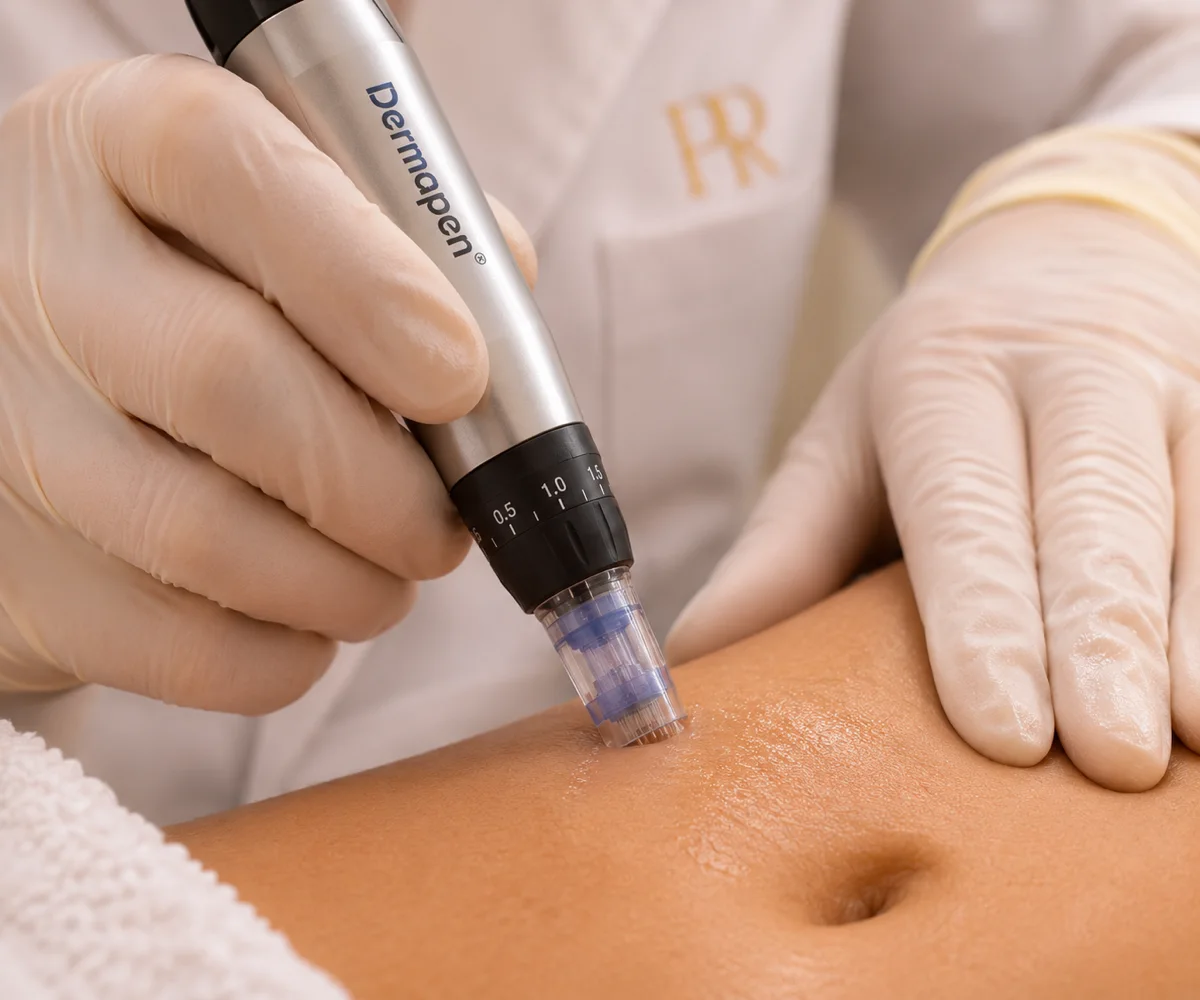
Microneedling pen gliding over the skin of the abdomen under bright clinical lighting

Renewing the texture

Microneedling

Controlled micro-injuries in the skin, created with a pen fitted with fine needles, stimulate collagen and elastin to improve texture and soften fine lines. Reviews report improvements in wrinkles, scars and stretch marks, with a short recovery time, but there is little evidence specific to the décolletage.

May be considered when

the main concern is a crepey texture and shallow lines, the skin is free from irritation and infection, and the doctor has explained the number of sessions and what you can realistically expect.

Find out more

What the journey looks like

From the first conversation to a plan tailored to you

No procedure begins without an assessment by the doctor. Most people start with the simplest approach, and only then is anything further considered.

  1. 01At the clinic

    Telling your story

    The doctor asks when you first noticed the lines, whether they are visible immediately on waking, which position you usually sleep in, your sun exposure, whether you smoke, and about the menopause, your weight and any creams or treatments you have already used.

  2. 02At the clinic

    Examining the skin

    The doctor examines the texture, thickness and firmness of the skin on the décolletage, notes where the lines are and checks for patches, moles or lesions. If there is a suspicious lesion, the doctor refers you to dermatology before any treatment.

  3. 03At home

    Protecting and changing habits

    Protect the décolletage from the sun every day, change or support your sleeping position, moisturise at night and stop smoking, if applicable. For many people, these measures prevent the lines from worsening.

  4. 04Over time

    Decide and follow up

    If the lines persist, the doctor will explain whether a procedure is appropriate, how many sessions are needed and what to expect, without promising results. Improvement is gradual, over several months, and requires maintenance.

Day to day

What helps at home

What you do at home matters more than you might think. These are sensible measures to take while you wait for your consultation and alongside the clinic’s plan.

The golden rule

Protecting the décolletage from the sun and repeated folding

Skin that continues to be exposed to the sun without protection and to fold every night will develop lines again, however effective the treatment. Reducing these sources of damage is more valuable than any cream. A patch or mole that has changed should be examined by a doctor rather than ‘treated’.

Protecting the cleavage from the sun

The décolletage is often missed when sunscreen is applied, and cumulative sun exposure is the main contributor to its crepey texture.

In practice: broad-spectrum sunscreen, factor 30 or higher, in a generous amount and reapplied, and clothing or shade in the hours of most sun.

Changing or supporting the sleeping position

Repeated folding of the skin during the night is what causes the vertical lines.

In practice: sleep on your back whenever possible, or put a small pillow between the breasts, and a soft sleep bra if comfortable. The evidence is limited, but it is safe.

Moisturising at night

Moisturised skin is more flexible, and recent lines are less visible.

In practice: a simple, unperfumed moisturiser every day; any more active product, such as a retinoid, only on medical advice, because it may irritate thin skin.

Looking at the skin of the chest

The décolletage is a highly exposed area, and being familiar with the skin there helps you notice any changes.

In practice: examine the area in a mirror once a month and take a photograph in the same lighting, so that you can show the doctor if any patch or mole changes.

Dr Michelle Campagnoli, clinical director of Clínica Luxmed

Who will look after you

An assessment carried out by the doctor

At Luxmed, in Algés, the first step is always an assessment with Dr Michelle Campagnoli. She will examine your skin, determine whether the lines are related to sleep, sun exposure or age, check for any lesions that need monitoring and work with you to decide what is appropriate before any procedure.

  • Physical examination and medical historyA discussion about sun exposure, sleep, the menopause and your current skincare routine, followed by an examination of the skin on your décolletage.
  • A plan tailored to youA clear plan, without promises, with habits first and follow-up over time.
  • No obligationThe cost of any treatment is confirmed only after the assessment.
Book an assessment

Book a consultation

Book your consultation

Choose how you prefer to get in touch. We will arrange the assessment consultation with Dr Michelle Campagnoli.

Booking through the websiteAssessment consultationTalk to our assistant on WhatsApp and ask for the current price of the assessment.

New Life Miraflores, Algés · Office Center, R. Santa Teresa do Menino Jesus n.º 6, 9.º C, 1495-048

Your details are used only for this contact. Any treatment depends on a prior medical assessment.

Request an appointmentIt takes less than a minute.
Speciality
You do not need to go into detail. The doctor will talk to you during the consultation.
Request received. Our team will contact you as soon as possible.
Why do décolletage wrinkles appear?

It is almost always due to a combination of factors: cumulative sun exposure, which gives the skin a thin, crumpled texture; sleeping position, which folds the skin and creates vertical lines between the breasts; and the loss of collagen and elasticity with age and the menopause. Breast weight and smoking also play a part. It is rarely a sign of disease, but this area is heavily exposed to the sun, so any patches and moles should also be checked.

Are décolletage wrinkles on waking really caused by your sleeping position?

Probably, to a large extent. When you sleep on your side, the upper breast presses against the lower one and the skin remains folded for hours, creating V-shaped or fan-shaped lines between the breasts. In the early years, these fade over the course of the morning; as elasticity is lost, they remain visible throughout the day. This explanation is based on what is known about facial sleep wrinkles, as few studies have focused specifically on the décolletage.

At what age do they appear and why do they get worse at the menopause?

They may begin to appear between the ages of 30 and 40, particularly with extensive sun exposure. After the menopause, the fall in oestrogen makes the skin thinner and drier, with less collagen, so the lines become more pronounced. This is not a disease but a natural change; however, some measures can help the skin age better. Hormone therapy, when indicated, should be decided with your doctor and not solely for its effects on the skin.

Do bras or breast weight affect wrinkles?

They may. Larger, heavier breasts place more tension on the skin and can contribute to horizontal lines and folds, while a supportive bra reduces this tension. The evidence is limited, but there is no harm in wearing a well-fitting bra during the day and, if comfortable, a soft one at night.

How can décolletage wrinkles be prevented or improved at home?

First what is within your reach: sunscreen on the décolletage every day, sleeping on your back or supporting the chest, moisturising at night, stopping smoking and wearing a supportive bra. Recent lines may improve, older ones usually need treatment. A topical retinoid only on medical advice, because it irritates thin skin and requires sun protection. None of this eliminates wrinkles that are already deep.

Do pillows or patches for the décolletage work?

They may reduce compression during sleep, but the scientific evidence is limited and there is no guarantee that the lines will disappear. If they help you sleep on your back or keep your breasts apart, they are a safe option. Sleeping position and sun protection remain the most important measures.

Which treatments may the clinic consider for décolletage wrinkles?

In its body aesthetics catalogue, the clinic lists collagen biostimulators, microneedling, radiofrequency (Sectum Neauvia radiofrequency) and carboxytherapy for this concern. Biostimulators and radiofrequency aim to improve skin firmness and quality, while microneedling targets texture and fine lines. The literature also describes low-viscosity hyaluronic acid for more pronounced vertical wrinkles, botulinum toxin and superficial peels. These are not among the treatments linked to this concern in the clinic’s catalogue; if you are interested in them, ask about them at your assessment. No option eliminates wrinkles completely, and results vary.

How many sessions are needed, how long do the results last and is there any downtime?

It depends on the procedure, but several sessions spaced weeks apart are generally needed, and improvement is gradual over a period of months. Results are not permanent and require maintenance, while sleep wrinkles tend to return if sleeping position does not change. Downtime is usually short, with mild redness or swelling for a few days, depending on the procedure. The doctor will determine the plan at your assessment without promising results.

What are the risks?

All procedures carry risks. Injectables may cause bruising and swelling; biostimulators may also cause papules or palpable nodules, which usually resolve, and, very rarely, granulomas. Microneedling may cause temporary redness and flaking, as well as infection if the skin is not intact. It should not be performed on irritated or infected skin, or during pregnancy or breastfeeding unless medically advised. The doctor will explain the risks and what to expect before you decide.

When should I see a doctor first?

Book a consultation if you have a new patch or mole, or one that has changed in size, shape or colour, a lesion that bleeds, forms a crust, hurts or itches, or a sore that does not heal within a few weeks, and if there is a history of skin cancer. These signs call for assessment before any wrinkle treatment. If in doubt, out of hours call SNS 24 (808 24 24 24).

We could not find that question. Ask us on WhatsApp

Scientific references

This page is based on the sources below and was reviewed by Dr. Michelle Campagnoli. Last updated on .

  1. Krutmann J, Bouloc A, Sore G, Bernard BA, Passeron T. The skin aging exposome. J Dermatol Sci, 2017.
  2. Anson G, Kane MA, Lambros V. Sleep wrinkles: facial aging and facial distortion during sleep. Aesthet Surg J, 2016.
  3. Thornton MJ. Estrogens and aging skin. Dermatoendocrinol, 2013.
  4. Farage MA, Miller KW, Elsner P, Maibach HI. Characteristics of the aging skin. Adv Wound Care, 2013.
  5. Fabi SG, Burgess C, Carruthers A, et al. Consensus recommendations for combined aesthetic interventions using botulinum toxin, fillers, and microfocused ultrasound in the neck, décolletage, hands, and other areas of the body. Dermatol Surg, 2016.
  6. Vleggaar D, Fitzgerald R, Lorenc ZP. Understanding, avoiding, and treating potential adverse events following the use of injectable poly-L-lactic acid for facial and nonfacial volumization. J Drugs Dermatol, 2014.
  7. Alster TS, Graham PM. Microneedling: a review and practical guide. Dermatol Surg, 2018.
  8. Hughes MC, Williams GM, Baker P, Green AC. Sunscreen and prevention of skin aging: a randomized trial. Ann Intern Med, 2013.
  9. NHS. Sunscreen and sun safety. (NHS, acedido 2026-11-11)
  10. NHS. Symptoms of melanoma skin cancer. (NHS, acedido 2026-11-11)
CallAssistantAvailableBook