Algés, Oeiras Mon to Fri · 09:00 to 13:00 and 14:00 to 19:00 · Sat · 09:00 to 14:00
WhatsApp Book a consultation

Body aesthetics

Keratosis pilaris and rough skinWhen the skin of the arms and thighs looks like goose bumps and you want to understand what can be done

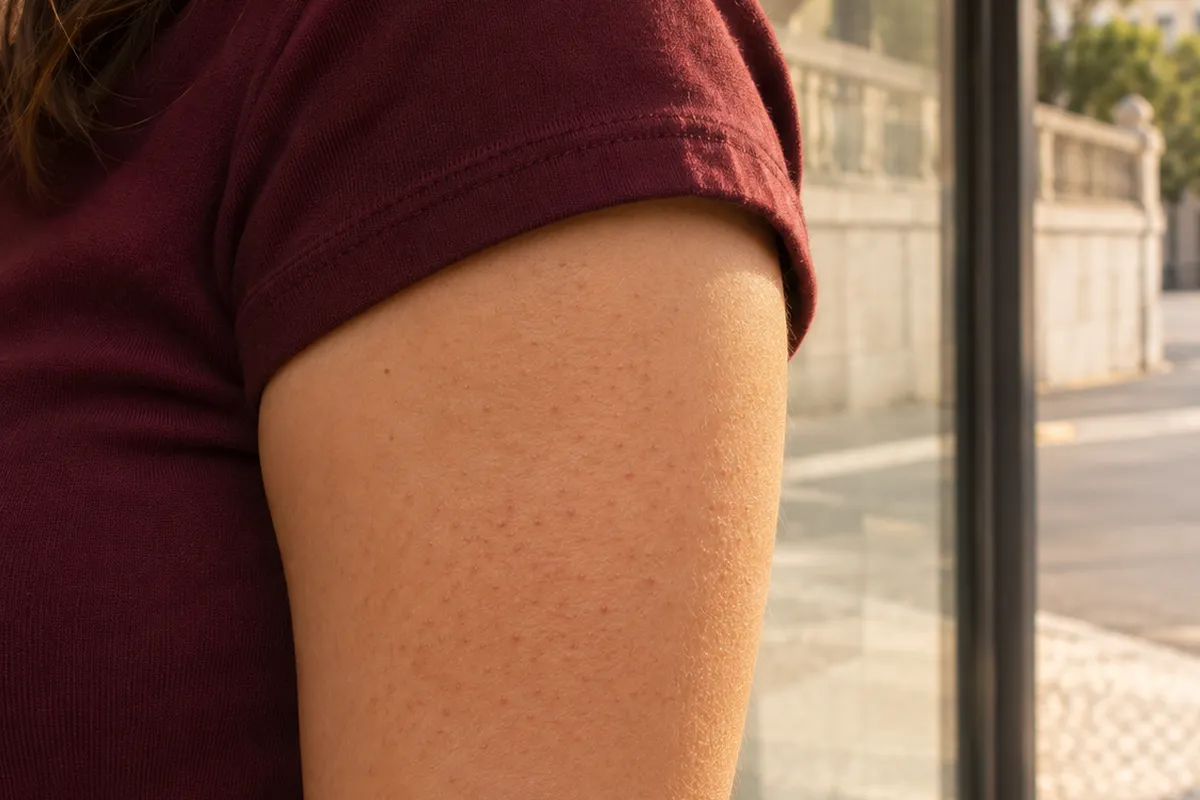
Keratosis pilaris is very common: small rough spots, sometimes reddish or brownish, above all on the backs of the arms and on the thighs. It results from keratin that builds up at the entrance to the follicles and is neither contagious nor dangerous. It tends to be more evident with dry skin and in winter, and often improves with age. It has no definitive cure, but it can be controlled, and daily care counts for more than any procedure. Here we explain what is usually behind rough skin, what helps at home, what a chemical peel can and cannot do, and when a medical assessment is advisable, at Clínica Luxmed, in Algés.

Reviewed by Dr Michelle Campagnoli, clinical director

  • 2procedures for this topic
  • 1assessment, always first
  • Nocommitment
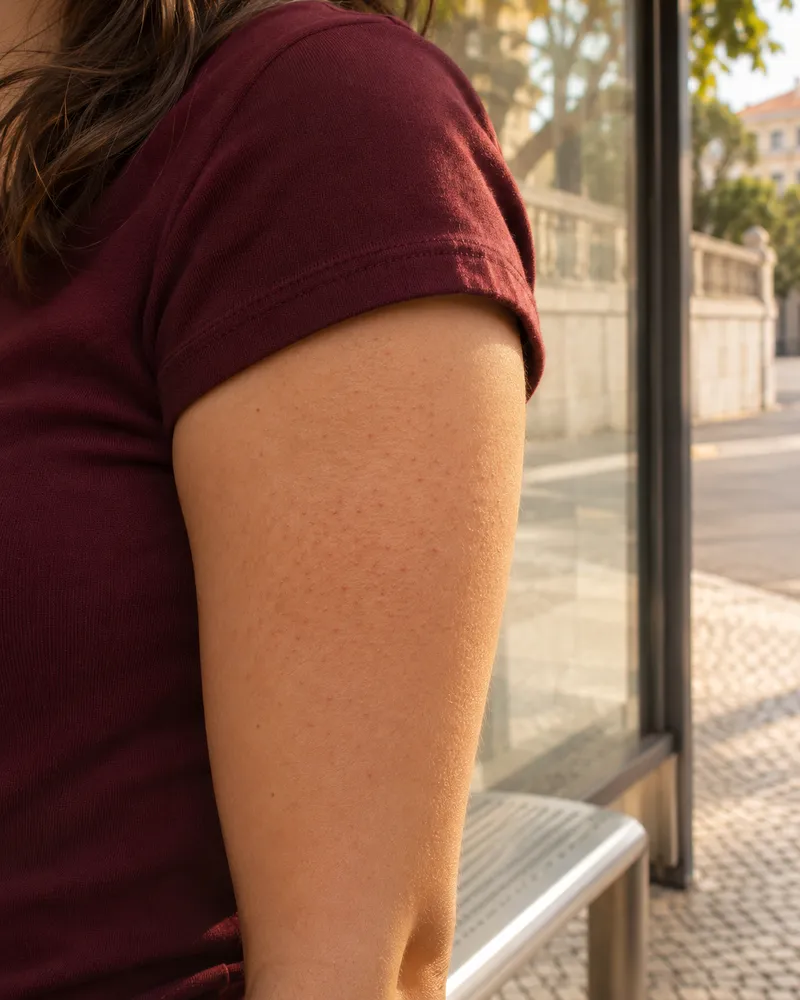
Upper arm of a woman at a bus stop, with textured skin

How to recognise it

Is it keratosis pilaris or just dry skin?

Keratosis pilaris can almost always be seen and felt: the skin feels like fine sandpaper. These signs help to understand what is going on before the assessment.

Tick what you recognise0/7

Tick the signs you recognise in your case. This is not a diagnosis, it is only meant to give you an idea.

Are the spots inflamed, with pain, pus or crusts, or is the skin hot and red in plaques? Is there intense itching that stops you sleeping? Did it appear suddenly, in many areas of the body, or is there an isolated lesion that grows, changes colour or bleeds? Is there very dry skin with itching without a rash, weight loss or tiredness? It needs a medical assessment before any treatment. Out of hours, call SNS 24: 808 24 24 24.

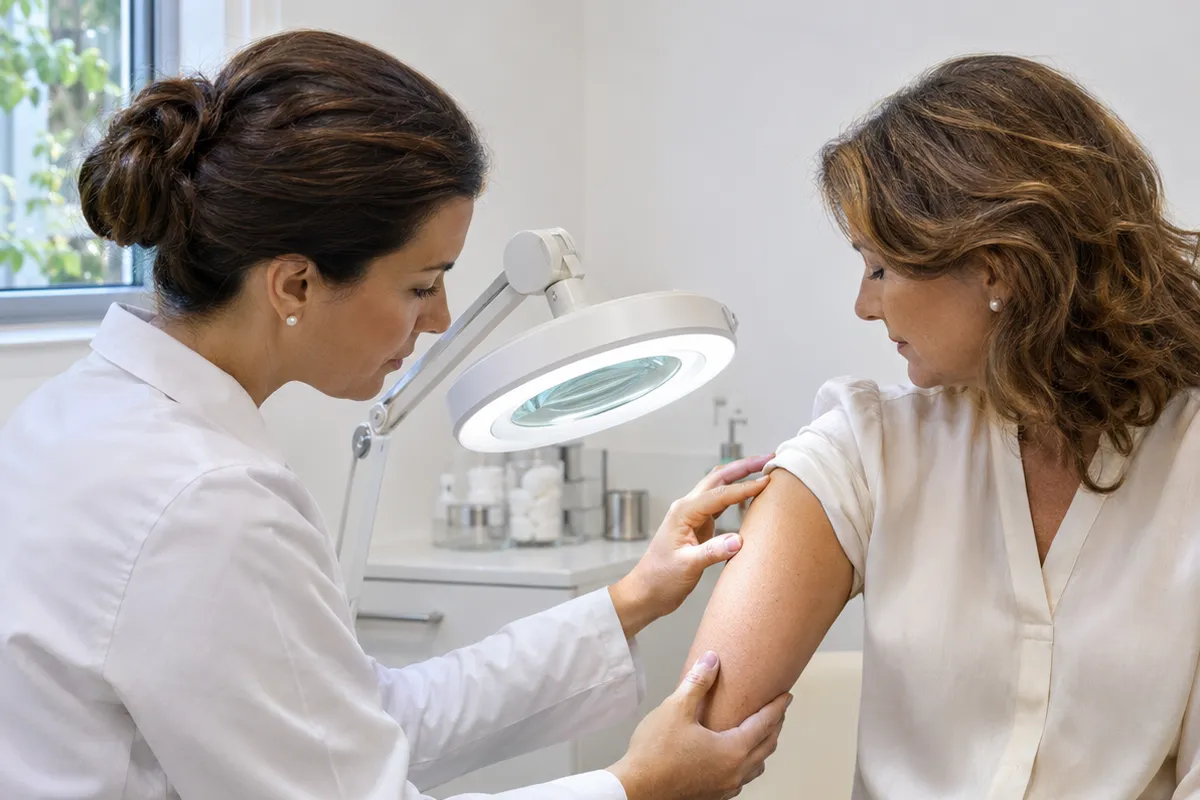
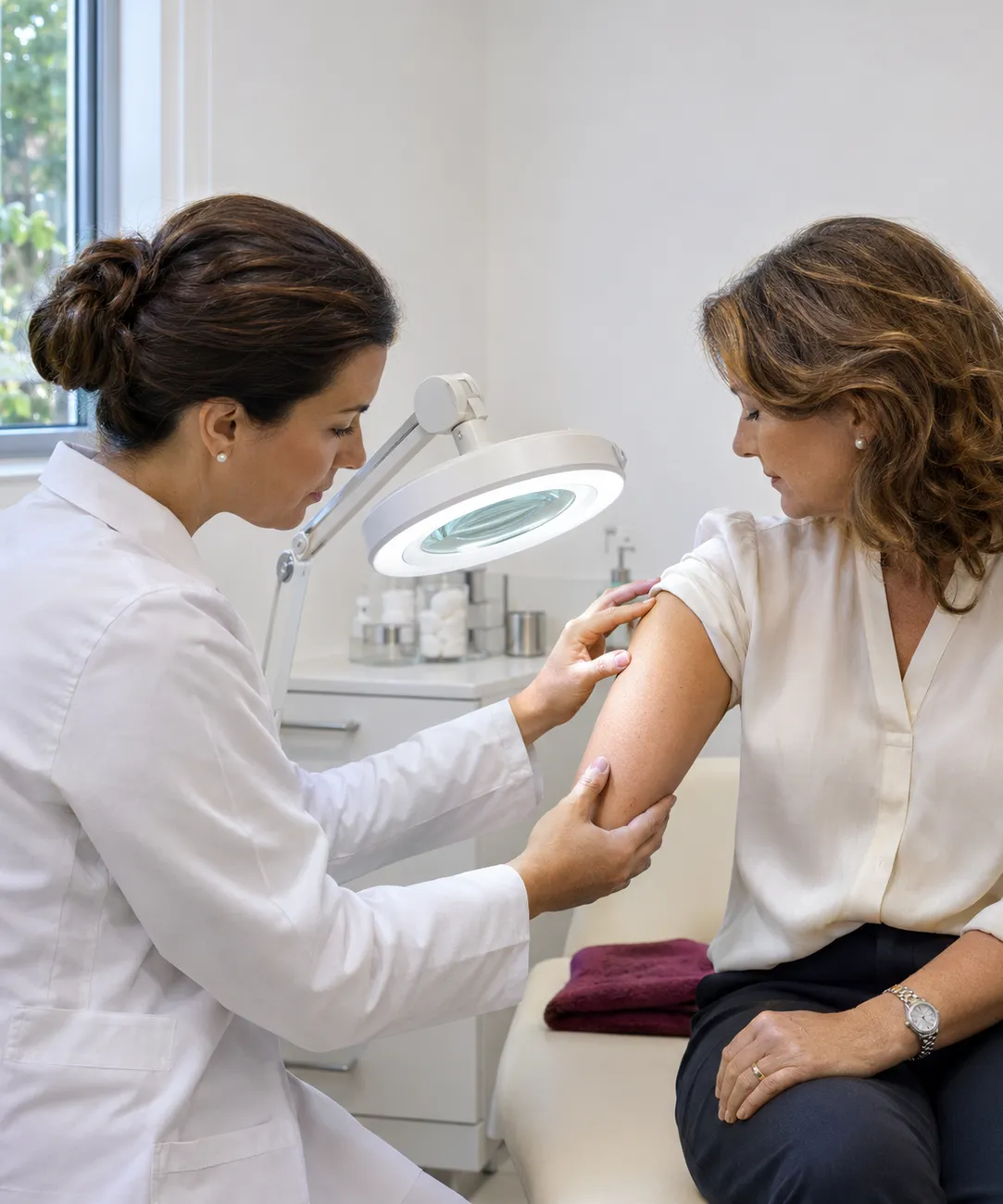
Female doctor assessing a patient's arm with an examination magnifier
Photograph of a consultation. The dots mark what the doctor is assessing.

Why it happens

What may be behind rough skin

There is almost always more than one cause at the same time. Choose a situation to see how it may contribute and what usually helps.

Keratin and genetics

Keratosis pilaris is a frequent hereditary change: keratin builds up at the entrance to the follicle and forms a small plug, which feels like a rough spot. It tends to be more visible in adolescence and adulthood, and it is common for someone else in the family to have the same pattern. It is not a sign of poor hygiene.

What weighs on it

Trying to remove the spots “by force”, by scrubbing, squeezing or pulling.

What helps

Softening the keratin with regular care and accepting that it is a condition that is controlled, not a disease.

Normal or to be assessed

Simple keratosis pilaris or something to assess

Most rough skin on the arms and thighs is keratosis pilaris or simple dryness. But some situations call for an assessment before any treatment.

  • What it looks like. Small rough spots, skin-coloured, reddish or brownish, on both arms and the thighs, more evident in winter, without pain and with little or no itching.

  • When it is noticed. In short-sleeved clothing, to the touch, and after a hot bath or a strong exfoliation, which may redden the skin.

  • What the clinic does. The doctor listens to the history, examines the skin and confirms that it is keratosis pilaris or dryness, before proposing whatever makes sense.

  • At home. Short, lukewarm baths, a moisturiser with urea or lactic acid on damp skin, without scrubbing, and patience: improvement takes place over weeks.

Do you have a high fever, an area of red, hot, painful skin that is spreading quickly, or swelling of the face or difficulty breathing? Call 112. If you have inflamed spots, a lesion that is changing or doubts, out of hours you can call SNS 24: 808 24 24 24.

Book an assessment

What the clinic may consider

Options to smooth rough skin

The basis is care: a short, lukewarm bath, moisturisers with urea or gentle acids and regularity. Only then, and after an assessment, is a medical procedure considered. For rough skin, the clinic considers the chemical peel and microneedling. Other body treatments in the catalogue, such as radiofrequency and carboxytherapy, are designed for skin firmness and circulation and not for the keratin of the follicles. The evidence is limited: reviews highlight mainly creams with acids and lasers, and there are few studies on peels and microneedling in keratosis pilaris. Results vary, and when you stop caring for the skin it tends to go back to what it was.

Book an assessment
Dr Michelle Campagnoli, clinical director of Clínica Luxmed

First step

Assessment consultation

The doctor listens to what you are experiencing, examines your case and explains the suitable options. No treatment begins without this consultation.

May be considered when

you want to understand the cause and decide on the best path, with time and without commitment.

Book an assessment
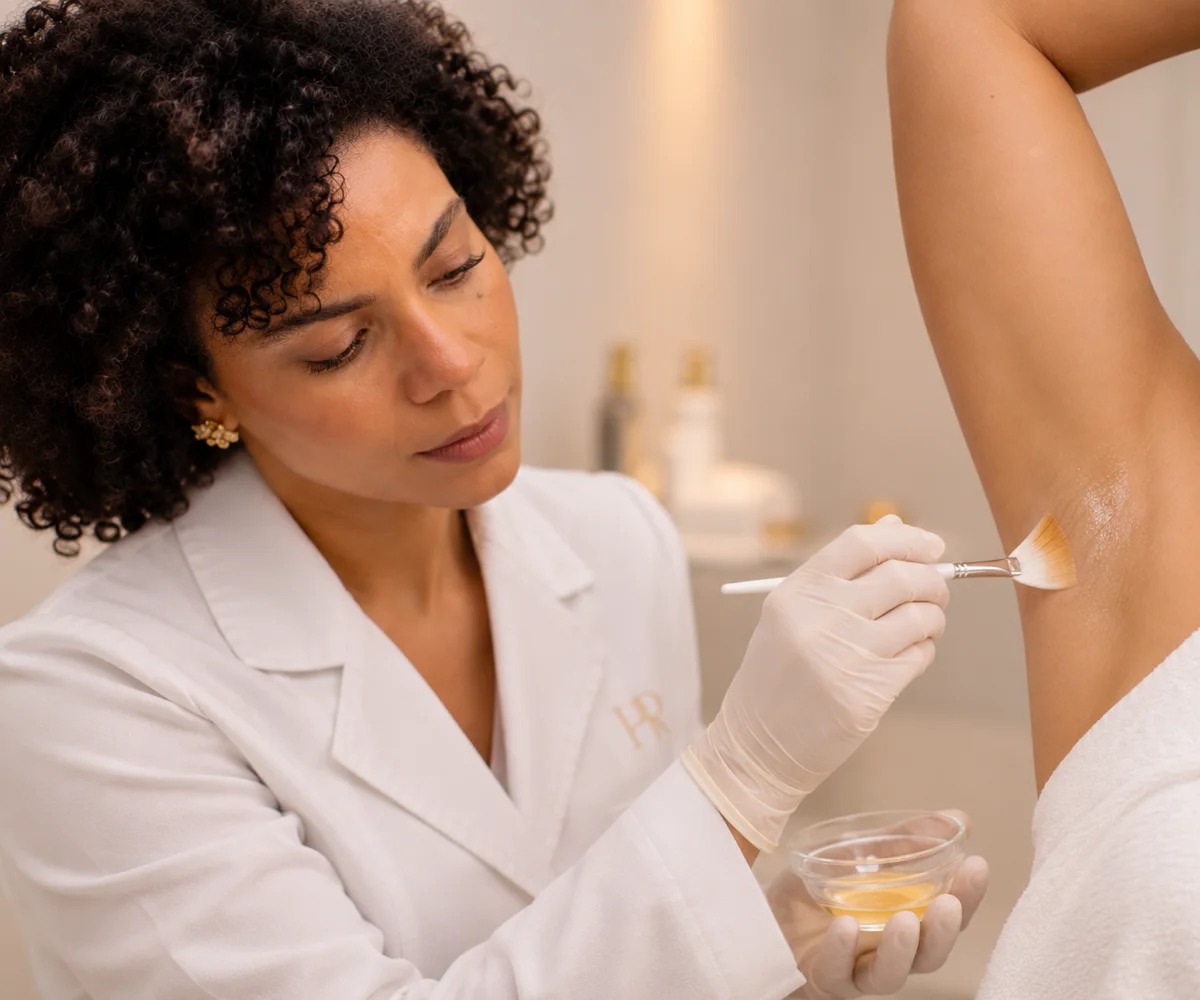
A clinician applying a peel solution to a skin fold with a brush in a brightly lit consulting room

Skin renewal

Chemical peel

Application of an acid to the skin to renew the superficial layers, smoothing roughness and texture and softening brown marks. In darker skin the agent is chosen carefully, because an irritation may leave a dark mark.

May be considered when

the skin does not respond to daily care alone, is not inflamed or infected, you are not pregnant or breastfeeding, and the doctor has explained the risks, what is realistic to expect and the need for maintenance.

Find out more
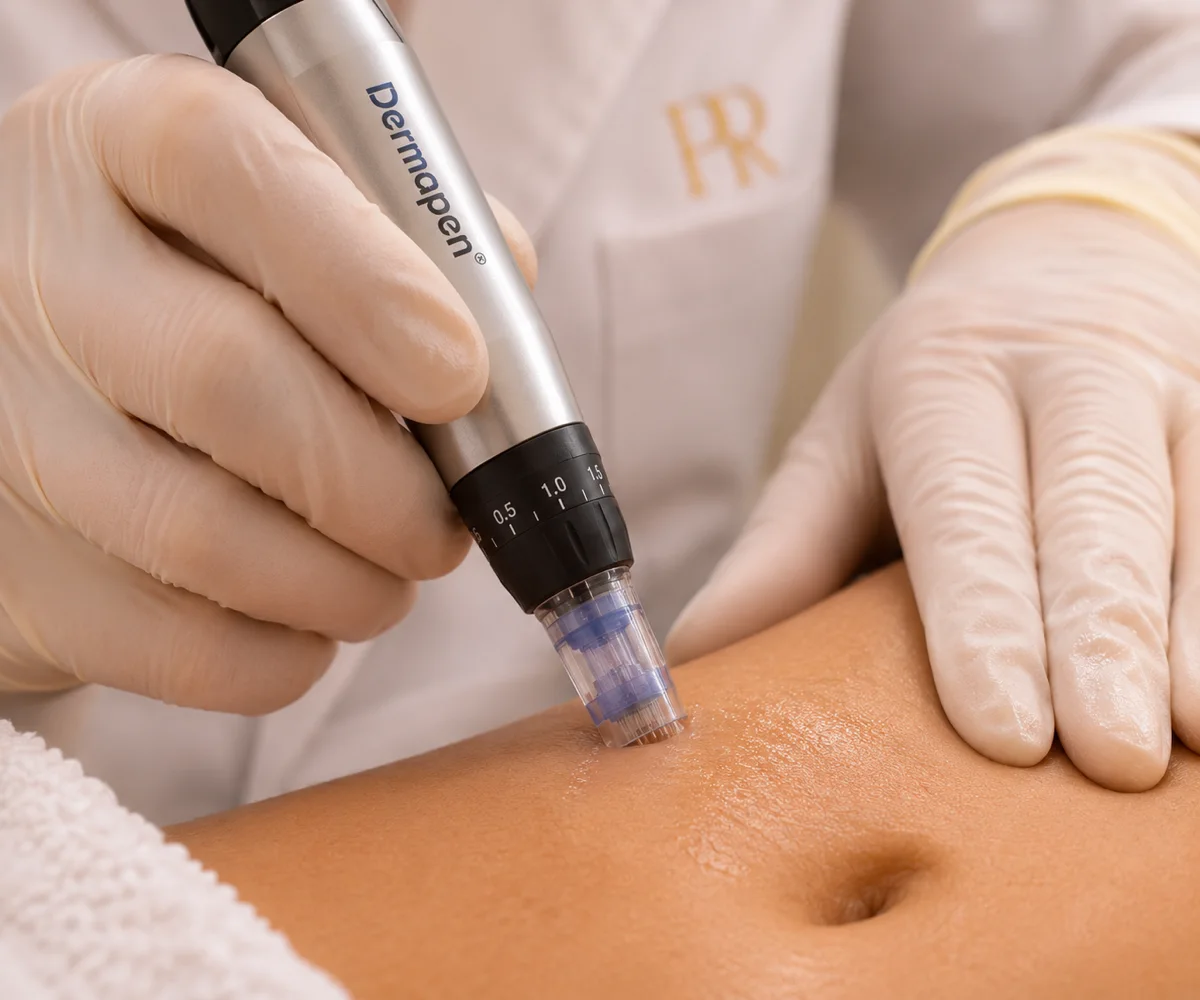
Microneedling pen gliding over the skin of the abdomen under bright clinical lighting

Skin stimulation

Microneedling

Small controlled micro-injuries in the skin to stimulate its renewal and soften uneven texture. It is done in several sessions spaced weeks apart and, for keratosis pilaris in particular, the evidence is scarce.

May be considered when

the doctor has assessed that the skin tolerates the procedure, there is no inflammation or infection in the area, and what is realistic to expect and the likely number of sessions have been explained.

Find out more

What the journey looks like

From the first conversation to a plan tailored to you

No procedure begins without an assessment by the doctor. Most people start with the simplest approach, and only then is anything further considered.

  1. 01At the clinic

    Telling your story

    The doctor asks since when the skin has been like this, whether it gets worse in winter, whether there is eczema, dry skin or itching, and which creams and exfoliations you have already used.

  2. 02At the clinic

    Examining the skin

    The colour, texture and distribution of the spots are examined, on the arms, thighs and other areas. If there is inflammation, infection, intense itching or a different lesion, that is dealt with first or you are referred to dermatology.

  3. 03At home

    Caring for the skin every day

    Short, lukewarm baths, a moisturiser with urea or lactic acid on damp skin and less exfoliation. In many cases, this alone improves the appearance, after a few weeks.

  4. 04Over time

    Decide and follow up

    If the skin continues to bother you, the doctor explains whether a procedure makes sense, what can be expected and how many sessions are needed, without promising results. The examination is repeated and the plan adjusted, including maintenance.

Day to day

What helps at home

What you do at home matters more than you might think. These are sensible measures to take while you wait for your consultation and alongside the clinic’s plan.

The golden rule

Softening the skin every day, without harming it

Keratosis pilaris does not go away for good, and rough skin returns when you stop caring for it. Regularity weighs more than force: a short bath, the right moisturiser and patience. And skin that is inflamed, with intense itching or a lesion that has changed should be seen by a doctor rather than “exfoliated”.

A short, lukewarm bath

Heat and time in the shower remove lipids from the skin and leave it drier and rougher.

In practice: up to about 10 minutes, lukewarm water, an unperfumed gel, and dry the skin without rubbing.

Moisturising straight after bathing

Skin that is still damp holds moisturiser better, and urea and gentle acids soften the keratin.

In practice: a cream with urea, lactic acid or glycerine, applied every day to the arms and thighs, with more care on irritated skin.

Being regular, even when it improves

Improvements take place over weeks and are undone when you stop.

In practice: keep up the routine in winter and reduce the pace in summer, rather than abandoning it.

Looking after the environment and clothing

Dry air, strong heating and rough fabrics worsen roughness.

In practice: soft, loose clothing, moisturise after the pool and a humidifier if the air at home is very dry.

Dr Michelle Campagnoli, clinical director of Clínica Luxmed

Who will look after you

An assessment carried out by the doctor

At Luxmed, in Algés, the first step is always an assessment with Dr Michelle Campagnoli. She is the one who examines the skin, understands whether it is keratosis pilaris, dryness or something else to investigate, and defines with you what makes sense, before any procedure.

  • Physical examination and medical historyA conversation about bathing habits, products, eczema and medication, and examination of the skin of the arms and thighs.
  • A plan tailored to youA clear plan, without promises, with care at home first and follow-up over time.
  • No obligationThe cost of any treatment is confirmed only after the assessment.
Book an assessment

Book a consultation

Book your consultation

Choose how you prefer to get in touch. We will arrange the assessment consultation with Dr Michelle Campagnoli.

Booking through the websiteAssessment consultationTalk to our assistant on WhatsApp and ask for the current price of the assessment.

New Life Miraflores, Algés · Office Center, R. Santa Teresa do Menino Jesus n.º 6, 9.º C, 1495-048

Your details are used only for this contact. Any treatment depends on a prior medical assessment.

Request an appointmentIt takes less than a minute.
Speciality
You do not need to go into detail. The doctor will talk to you during the consultation.
Request received. Our team will contact you as soon as possible.
What is keratosis pilaris and why does it appear?

It is a very common, benign change, of genetic cause, in which keratin builds up at the entrance to the follicles and forms small rough spots, like goose bumps, on the backs of the arms, on the thighs and sometimes on the buttocks and cheeks. The spots may be skin-coloured, reddish or brownish. It is not contagious or dangerous, nor a sign of poor hygiene. It is more frequent in people with dry skin or eczema, and gets worse in winter.

Is keratosis pilaris the same as acne or spots on the arms?

No, although it looks similar. In acne there is inflammation of the sebaceous glands and spots with pus may appear, which hurt. In keratosis pilaris the spot is a small plug of keratin in the follicle, rough and without pus, in typical areas such as the backs of the arms. So squeezing does not solve it and makes it worse. If you have spots with pus, pain or crusts, or doubts, you should be assessed.

Are red or brown spots on the arms keratosis pilaris?

Often yes, above all if they are small, rough, on both arms and worse in winter. They may also be a sign of another condition, such as folliculitis (inflammation of the follicle), eczema or a reaction to a product. Spots that hurt, with pus, that spread quickly or an isolated lesion that changes are a reason for medical assessment.

Is dry, rough skin normal with age?

It is very common, because with the years the skin produces fewer lipids and retains less water, but it should not be treated as inevitable: it has a solution in most cases, with lukewarm baths, moisturising and attention to the environment. If itching is intense, does not improve with moisturising, or if there are sores, weight loss or tiredness, an assessment is advisable, because dryness may have other causes.

How can goose bumps on the arms be removed?

There is no definitive cure, but there are ways to soften it. The basis is daily care: a short, lukewarm bath, moisturisers with urea or gentle acids (lactic, salicylic) applied to damp skin and a great deal of regularity. If that is not enough, the doctor may consider topical retinoids, stronger acids or a chemical peel. Improvement is usually noticed after 4 to 8 weeks of regular use and, if you stop, the skin gradually goes back to what it was.

Which cream should I use for keratosis pilaris?

Creams with urea (about 10 to 20%), lactic acid or salicylic acid are the most used, because they soften and gently exfoliate the keratin. Reviews point to lactic and glycolic acids as the most studied. They may sting on irritated or cracked skin, so start slowly and stop if the skin stings or turns very red. Retinoids and stronger acids are prescription products or products on medical advice, and are not used in pregnancy.

Does the chemical peel help with keratosis pilaris?

It may help to smooth roughness and soften brown marks when creams are not enough, and it is one of the options the clinic considers. But there are few specific studies on peels in keratosis pilaris, and reviews highlight mainly creams with acids and lasers. In darker skin the agent is chosen carefully, because an irritation may darken the skin. It is decided after the skin has been assessed and is not done on inflamed skin, nor in pregnancy or when breastfeeding.

Do microneedling, radiofrequency or carboxytherapy resolve keratosis pilaris?

There is no proof that they resolve it. The clinic performs microneedling on the body, which stimulates skin renewal, but for keratosis pilaris in particular the evidence is scarce. Radiofrequency and carboxytherapy are designed for skin firmness and circulation, not for the keratin of the follicles. The doctor tells you, at the assessment, whether any of them makes sense in your case. Laser and intense pulsed light are used by dermatology, mainly for redness, and the doctor explains what is available and, where applicable, refers you.

Are the results permanent? Can it come back?

No. Keratosis pilaris is a chronic condition that is controlled but does not go away for good, and the skin may become rough again if you stop caring for it, above all in winter. So maintenance counts as much as the procedure. In many people it improves with time, but nobody can guarantee results. At the assessment, the doctor defines the plan and expectations.

When should I see a doctor first?

Book a consultation if the spots are inflamed, with pain, pus or crusts, if there is intense itching, if the rash appeared suddenly in many areas, or if you have an isolated lesion that grows, changes colour or bleeds. Very dry skin with itching without a rash, weight loss or tiredness also calls for assessment. If in doubt, out of hours call SNS 24 (808 24 24 24). With a high fever, red, hot, painful skin that is spreading, swelling of the face or difficulty breathing, call 112.

We could not find that question. Ask us on WhatsApp

Scientific references

This page is based on the sources below and was reviewed by Dr. Michelle Campagnoli. Last updated on .

  1. Hwang S, Schwartz RA. Keratosis pilaris: a common follicular hyperkeratosis. Cutis, 2008.
  2. Wang JF, Orlow SJ. Keratosis pilaris and its subtypes: associations, new molecular and pharmacologic etiologies, and therapeutic options. Am J Clin Dermatol, 2018.
  3. Wong PC, Wang MA, Ng TJ, Akbarialiabad H, Murrell DF. Keratosis pilaris treatment paradigms: assessing effectiveness across modalities. Clin Exp Dermatol, 2024.
  4. Beyron A. Keratosis pilaris: a systematic review of the literature and strategies for optimal treatment. Eur J Dermatol, 2025.
  5. Pan M, Heinecke G, Bernardo S, Tsui C, Levitt J. Urea: a comprehensive review of the clinical literature. Dermatol Online J, 2013.
  6. White-Chu EF, Reddy M. Dry skin in the elderly: complexities of a common problem. Clin Dermatol, 2011.
  7. Farage MA, Miller KW, Elsner P, Maibach HI. Characteristics of the aging skin. Adv Wound Care (New Rochelle), 2013.
  8. Alster TS, Graham PM. Microneedling: a review and practical guide. Dermatol Surg, 2018.
  9. DermNet NZ. Keratosis pilaris. (DermNet, acedido 2026-11-11)
  10. American Academy of Dermatology Association. Keratosis pilaris: overview. (AAD, acedido 2026-11-11)
  11. DermNet NZ. Dry skin (xeroderma). (DermNet, acedido 2026-11-11)
  12. American Academy of Dermatology Association. Dermatologists' top tips for relieving dry skin. (AAD, acedido 2026-11-11)
CallAssistantAvailableBook