Algés, Oeiras Mon to Sat · 09:00 to 13:00 and 14:00 to 19:00
WhatsApp Book a consultation

Body mesoaesthetics

Loss of firmness and stretch marksWhen the skin of the body has stretched, sagged or been marked after growing, being pregnant or losing weight

Stretch marks and less firm skin are two faces of the same phenomenon: the skin of the body was stretched faster or for longer than it could keep up with. It happens in growth, in pregnancy, when gaining or losing weight, and says nothing about care or neglect. On this page we explain how stretch marks change colour over time, why the skin loses support after weight loss, what the muscle has to do with it, what a ritual carried out at Clínica Luxmed, in Algés, can and cannot do, and when excess skin is a matter for another specialty.

Reviewed by Dr Michelle Campagnoli, clinical director

  • 3rituals for this topic
  • 1assessment, always first
  • Noobligation
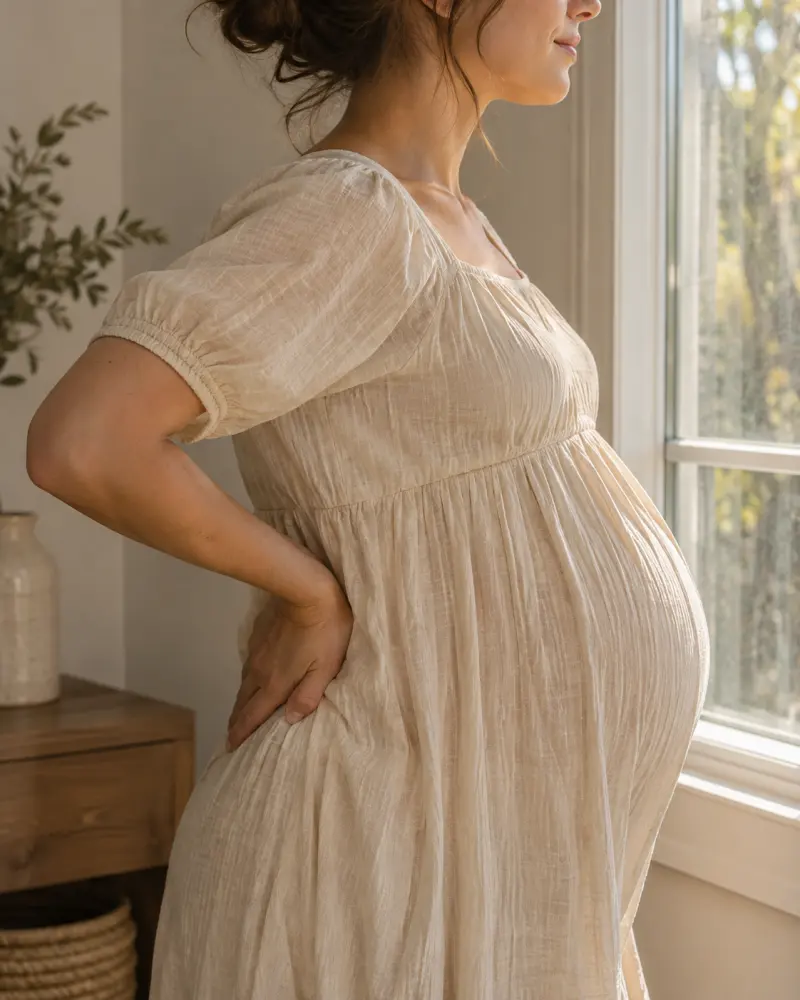
Pregnant woman in a light dress by the window, with a hand on her back

How to recognise it

Stretch marks, loss of firmness, or both?

Everyone sees their own body differently. These signs help you understand what is happening in your skin before speaking to the doctor, and put into words what bothers you most.

Tick what you recognise0/7

Tick the signs you recognise in your case. This is not a diagnosis, it is only meant to give you an idea.

Stretch marks that appear suddenly, are very numerous, an intense purple colour or painful, especially with unexplained weight gain, a rounder face, high blood pressure, irregular periods or use of corticosteroids, should be seen by a doctor before any ritual.

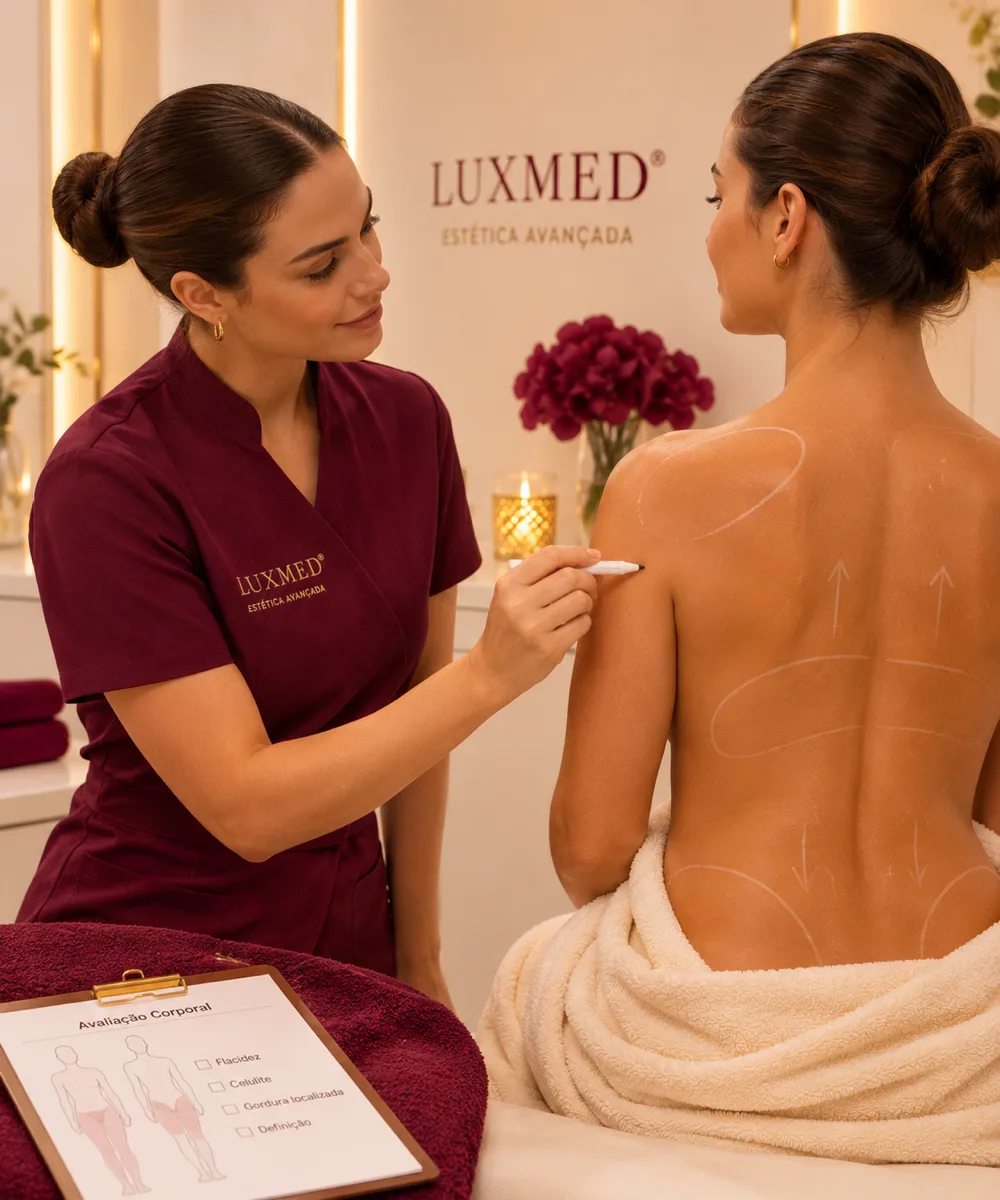
Professional in a burgundy coat marking assessment lines on a client's back with a marker
Photograph of a body assessment. The dots mark areas where stretch marks and loss of firmness tend to show; the image does not show stretch marks.

Why it happens

What weighs on stretch marks and loss of firmness

It is rarely just one thing. Choose a cause to see how it acts, what makes it worse and what usually helps.

Stretching of the skin

Stretch marks are described as a form of scar of the dermis, the supporting layer of the skin. When the skin is stretched quickly or a lot, the collagen and elastin fibres of the dermis tear or rearrange, and the upper layer, which is only the surface, stays intact but shows what happened underneath. First there is inflammation and colour, and later a paler, thinner scar. That is why a stretch mark cannot be rubbed away from the surface.

What makes it worse

Very rapid changes in weight or volume, with no time for the skin to adapt.

What helps

A more gradual pace when possible, and well-cared-for, moisturised skin, without expecting that this alone will prevent the marks.

Red or white

Recent stretch marks and older stretch marks

Colour tells a story. Understanding what stage your stretch marks are in helps you have realistic expectations, and know whether it is worth starting now.

  • What they look like. Reddish, wine-coloured or purplish lines, sometimes slightly raised, which may itch or give a pulling sensation.

  • What stage they are in. There is inflammation and more blood vessels in the area, which is why they have colour. It is the most active stage of the mark.

  • Why it helps to start early. The clinic's website says results tend to be better on recent stretch marks, and so starting early has advantages.

  • What usually helps. An assessment, regular moisturising, sun protection and, if the doctor considers it appropriate, a ritual that works on the look, colour and texture.

  • Say at the consultation. How long they have been there, whether new ones are appearing and whether there is pregnancy, breastfeeding or medication, including cortisone.

Stretch marks of different ages? It is common. Book an assessment and the doctor explains what you can expect from each, and where it makes sense to start.

Book an assessment

What the clinic can do

Rituals for firmness and stretch marks

It is important to be clear: stretch marks are scars of the dermis and no approach makes them disappear, and significant excess skin is not resolved with rituals. These rituals use professional mesoestetic® active ingredients and manual technique, and may be proposed after an assessment to improve the look, colour and texture of the marks and to support the firmness of the skin. Results vary from person to person, depend on the stage of the stretch marks and on the starting point, and the doctor explains what is realistic before any decision.

Book an assessment
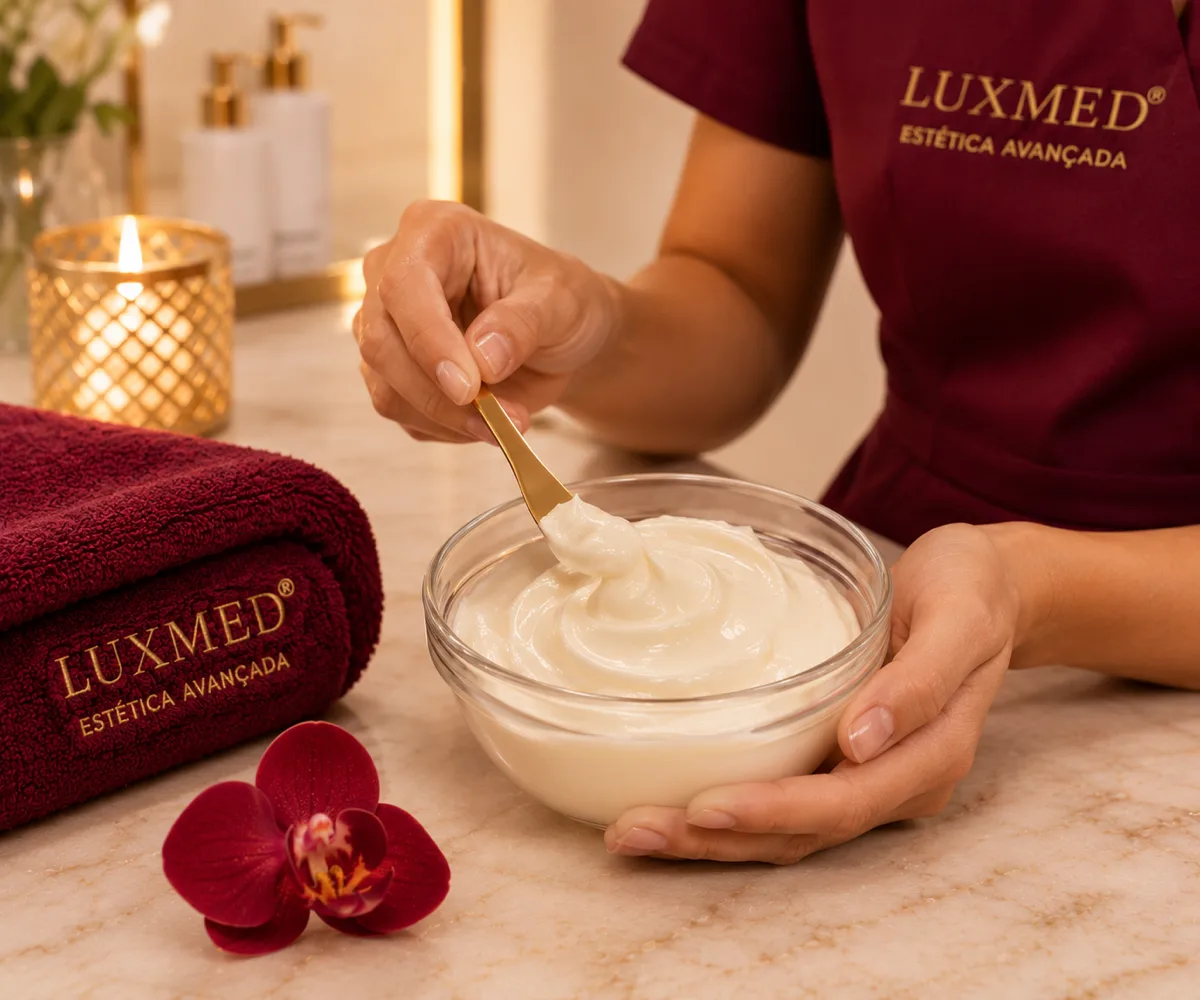
Hands in a burgundy coat serving white cream with a golden spatula into a glass bowl

Firmness

Ritual Firme Body

Designed for skin on the body that has lost tone through weight fluctuations or with the passing of time, and to reinforce firmness and elasticity where the skin has given way.

Suitable when

the skin of the body is less firm after weight loss or with age, and the excess skin is slight or moderate.

Find out more
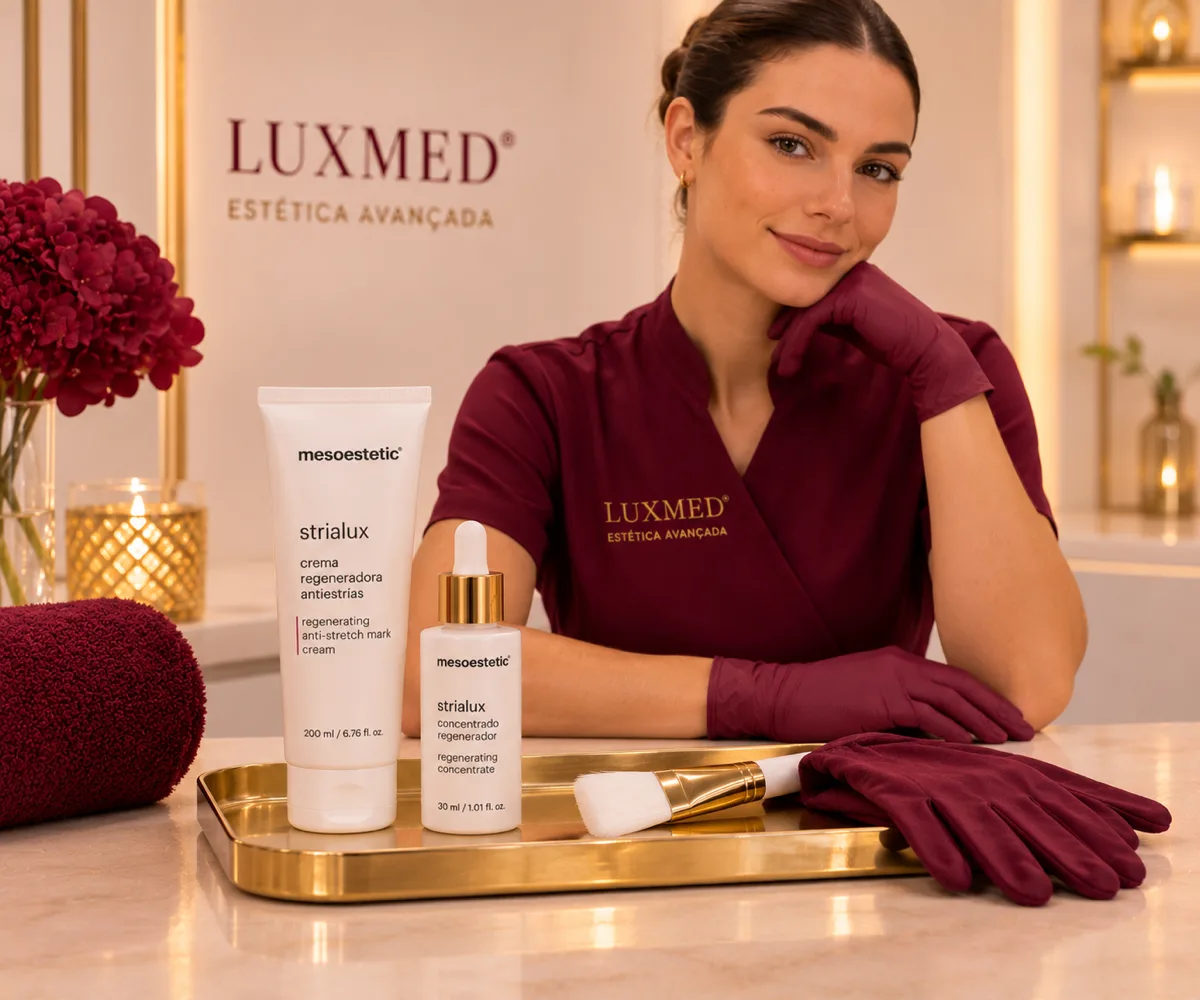
Professional in burgundy coat and gloves at the counter, beside a cream and a Strialux concentrate

Stretch marks

Ritual Strialux

Designed to improve the look, colour and texture of stretch marks. It tends to give better results on recent stretch marks, still reddish, but it can also improve older ones.

Suitable when

you have stretch marks and want to work on their look and texture, after the doctor has assessed the stage and ruled out other causes.

Find out more
Treatment bed with burgundy towel in a bright room with golden light, next to a product trolley

Complete care

Ritual Prestige Body

A long ritual that brings several steps together in a single session, which the team may propose as a complement when you want more complete body care.

Suitable when

you want to combine firmness and well-being in a single session, and the assessment shows that it makes sense to combine steps.

Find out more

Which to choose? By stage and by complaint: Strialux is the ritual designed for stretch marks, Firme Body for skin that has given way, and Prestige Body for complete care. One does not replace another, and the assessment defines which makes sense, in what order and at what interval. Whatever goes beyond a ritual, such as significant excess skin, is referred for the appropriate medical assessment.

What the journey looks like

From the first assessment to follow-up

No ritual begins without an assessment. This is how it goes.

  1. 01At the clinic

    Telling the story of the skin

    The team asks how long the stretch marks have been there, at what stage of life they appeared, whether there was pregnancy, breastfeeding or weight loss, what medication you take and what care you have already tried, in order to understand the cause.

  2. 02At the clinic

    Looking at the body and the skin

    The doctor examines the stretch marks, their colour and depth, the firmness of the skin in the different areas and what the muscle underneath shows. She looks for signs that call for another assessment before any ritual.

  3. 03At the clinic

    Telling what a ritual can do

    She explains what is realistic for recent and older stretch marks, for less firm skin, and when excess skin or the abdominal muscle call for another type of assessment.

  4. 04At the clinic

    Choosing the ritual and the pace

    If it makes sense, she proposes the appropriate ritual, the areas to treat and the number of sessions, which the assessment defines case by case. The team explains each step before starting.

  5. 05Over time

    Follow-up

    The doctor looks at the skin again, compares it with the starting point, adjusts the plan and agrees with you on care and habits that can help. Skin changes slowly, and the plan keeps to that pace.

Day to day

What helps at home

What you do at home matters, above all for the muscle and the skin, and helps give meaning to what is done at the clinic.

The golden rule

Caring for what lies beneath the skin

Body firmness does not live only at the surface. Muscle, the pace at which weight changes and the protection of the skin matter more than any cream. A body with more muscle mass tends to sit better, and the skin has more time to adapt when changes are gradual.

Strength training, adapted to you

Strength exercise helps preserve muscle mass during weight loss, and muscle is part of what gives the body its shape.

In practice: start where you feel comfortable and, if you have doubts about what you can do, talk to your doctor or an exercise professional.

Protein and a balanced diet

An adequate protein intake helps maintain muscle mass when losing weight, according to reviews on weight loss.

In practice: if you are losing weight, agree with your doctor or nutritionist how much makes sense for you.

Gradual weight loss, when possible

More time gives the skin the chance to adapt, and the muscle the chance to hold on.

In practice: if the weight loss is supervised, talk to whoever is following you about the pace, especially if you notice the skin giving way quickly.

Moisturising and protecting from the sun

Moisturised skin is more comfortable, and accumulated sun weakens the skin's support over the years.

In practice: moisturiser every day, after the shower, and sun protection on exposed areas. Moisturising comforts the skin, but it is no proof that it prevents or erases stretch marks.

Taking photographs and measurements

Slow changes go unnoticed in the mirror.

In practice: always photograph in the same light and the same position, and keep the images to show the doctor and track progress.

Dr Michelle Campagnoli, clinical director of Clínica Luxmed

Who will look after you

An assessment carried out by the doctor

At Luxmed, the first step is always an assessment with Dr. Michelle Campagnoli, at the clinic in Algés. She examines your skin, understands the stage of the stretch marks and the firmness of the body, and designs the plan with you, before any ritual.

  • Physical examination and medical historyExamination of the stretch marks, the firmness of the skin, the medication you take, pregnancy or breastfeeding and any signs that call for another route.
  • A plan tailored to youA plan tailored to your skin and your body, with the rituals and the pace clearly explained, and follow-up over time.
  • No obligationThe cost of any treatment is confirmed only after the assessment.
Book an assessment

Book a consultation

Book your consultation

Choose how you prefer to get in touch. We will arrange the assessment consultation with Dr Michelle Campagnoli.

Booking through the websiteAssessment consultationTalk to our assistant on WhatsApp and ask for the current price of the assessment.

New Life Miraflores, Algés · Office Center, R. Santa Teresa do Menino Jesus n.º 6, 9.º C, 1495-048

Your details are used only for this contact. Any treatment depends on a prior medical assessment.

Request an appointmentIt takes less than a minute.
Speciality
You do not need to go into detail. The doctor will talk to you during the consultation.
Request received. Our team will contact you as soon as possible.
What are stretch marks and why do they appear?

They are lines on the skin of the body that form when the dermis, the supporting layer, is stretched beyond what it can keep up with. The collagen and elastin fibres change, and the upper layer lets the mark show. They appear mainly during growth, pregnancy and weight changes, and there are also hormonal factors and individual predisposition. They are very common, not serious, and having them says nothing about how well you look after your skin.

White or red stretch marks: what is the difference?

The red, wine-coloured or purplish ones are more recent, still with inflammation and blood vessels in the area. Over time the colour fades, leaving lighter, pearly and slightly depressed lines, which are the scar once it has settled. The difference matters because, according to what the clinic describes for the Strialux ritual, results tend to be better on recent stretch marks. This does not mean white ones cannot improve a little, but expectations should be more moderate.

Can white stretch marks be treated?

They can improve in look and texture, but they do not disappear, because they are a scar of the dermis. The scientific literature describes several methods, with variable results and no fully effective treatment, and those with the best results are medical procedures, described on other pages. For the Strialux ritual, the clinic's website says it can also improve older stretch marks, but the best result tends to be on recent ones. The assessment defines what to expect in your case.

Red stretch marks: when should I treat them?

The earlier the better, within what is possible, because at this stage the skin responds more. There is no need to wait for the colour to fade, and starting early does not mean doing everything at once. The first step is an assessment, to confirm that they are ordinary stretch marks and not another condition, and to ask about medication, pregnancy and breastfeeding. Only then is it decided whether a ritual makes sense and at what point.

Do stretch mark creams work?

The evidence is weak. A Cochrane review on prevention in pregnancy found no preparation shown to be effective, and a later review indicates limited evidence for centella and, possibly, for massage with bitter almond oil, and that cocoa butter and olive oil did not work. For stretch marks that have already formed, the evidence is also limited. Moisturising gives comfort to the skin, but you should not expect it to erase the marks.

Can stretch marks be prevented in pregnancy?

Scientific reviews have not found a reliable way to prevent them. Individual predisposition, age and the pace of weight gain seem to matter more than products. Keeping the skin moisturised and gaining weight gradually, under your obstetrician's supervision, is reasonable, but it does not prevent stretch marks with certainty. Some active ingredients used for stretch marks, such as retinoids, should be avoided in pregnancy, so always tell the team if you are pregnant or breastfeeding.

Stretch marks after childbirth: can anything still be done?

Yes, but there are timings to respect. If you are breastfeeding or not much time has passed since the birth, the team assesses what is appropriate, and some rituals or active ingredients may have to wait. With time, recent stretch marks tend to lose their colour and become lighter, which is natural. The assessment is there to understand what stage they are in, what you can expect and when to begin, and there is no hurry to decide.

Why did my skin become loose after losing weight?

Because the skin adapted to more volume and does not always retract at the pace at which the body loses weight. The amount and speed of weight loss, age, individual predisposition, accumulated sun and the muscle underneath all matter, and the muscle also shrinks when you lose weight. In people who have lost a lot of weight, especially after obesity surgery, excess skin on the abdomen is a very common complaint and can be significant.

Does weight training help loose skin?

It helps with what lies beneath the skin. Reviews on weight loss indicate that strength exercise, with an adequate protein intake, helps preserve muscle mass, and muscle contributes to the shape of the arms, abdomen and thighs. It does not return the skin to what it was, and it does not erase stretch marks, but it improves the whole. Start with what your physical condition allows and talk to your doctor if you have doubts.

I lost weight with medication. Could I have more sagging?

Rapid weight loss can leave the skin less firm, and reviews indicate that weight loss with the new obesity medications includes a variable reduction in lean mass, although the clinical importance of this is debated. Adequate protein and strength training help preserve muscle. Do not change your medication on your own. Talk to the doctor who follows you and show us what bothers you at the assessment.

When is excess skin no longer something rituals can resolve?

When the excess skin is significant, forms heavy folds, causes discomfort, chafing or limits activity, which is common after major weight loss. Here the issue is the amount of skin rather than firmness, and the assessment is with a plastic surgeon. Rituals can help improve the look of less firm skin, but they do not remove excess skin or replace that assessment, and the doctor tells you frankly where you stand.

When should I see a doctor first?

Before thinking about rituals, if the stretch marks appeared suddenly, are very numerous or an intense purple colour, if there is pain, unexplained weight gain, a rounder face, high blood pressure or menstrual changes, or if you use or have used corticosteroids, topical or oral. Also if the skin is broken, infected or has dermatitis in the area, or if you have a diastasis of the abdominal muscles after childbirth. These cases call for a medical assessment, and our consultation is the starting point.

How many sessions are needed and how long does it take?

There is no one number for everyone. It depends on the ritual, the stage of the stretch marks, the firmness of the skin and the starting point, and the assessment defines the number of sessions and the interval, with realistic expectations. Changes in the skin are gradual, and follow-up and adjustments over time are normal. No number is promised in advance, and if the plan does not make sense to you, the doctor explains it again.

What should I bring and say at the assessment?

Bring the list of products you use on your skin, the allergies you know of and the treatments you have had recently. Say how long the stretch marks have been there, whether there was pregnancy, breastfeeding or weight loss, and what medication you take, including cortisone creams. Old photographs help show how things have changed. If you are pregnant, may be pregnant or are breastfeeding, say so right away, because some rituals have to wait. Book the assessment in Algés, with no obligation.

We could not find that question. Ask us on WhatsApp

Scientific references

This page is based on the sources below and was reviewed by Dr. Michelle Campagnoli. Last updated on .

  1. Al-Himdani S, Ud-Din S, Gilmore S, Bayat A. Striae distensae: a comprehensive review and evidence-based evaluation of prophylaxis and treatment. Br J Dermatol, 2014.
  2. Brennan M, Young G, Devane D. Topical preparations for preventing stretch marks in pregnancy. Cochrane Database Syst Rev, 2012.
  3. Korgavkar K, Wang F. Stretch marks during pregnancy: a review of topical prevention. Br J Dermatol, 2015.
  4. Lokhande AJ, Mysore V. Striae Distensae Treatment Review and Update. Indian Dermatol Online J, 2019.
  5. Lu H, Guo J, Hong X, Chen A, Zhang X, Shen S. Comparative effectiveness of different therapies for treating striae distensae: a systematic review and network meta-analysis. Medicine (Baltimore), 2020.
  6. Elsedfy H. Striae distensae in adolescents: a mini review. Acta Biomed, 2020.
  7. Elander A, Biörserud C, Fagevik Olsén M. Excess skin after weight loss following bariatric surgery: focus on the abdomen. Surg Obes Relat Dis, 2021.
  8. Cava E, Yeat NC, Mittendorfer B. Preserving Healthy Muscle during Weight Loss. Adv Nutr, 2017.
  9. Caturano A, Amaro A, Berra CC, Conte C. Sarcopenic obesity and weight loss-induced muscle mass loss. Curr Opin Clin Nutr Metab Care, 2025.
CallAssistantAvailableBook