
Algés, Oeiras Mon to Fri · 09:00 to 13:00 and 14:00 to 19:00 · Sat · 09:00 to 14:00
WhatsApp Book a consultation

Facial aesthetics

Nose wrinkles when smilingWhen lines appear beside the nose when smiling, laughing or scrunching up, and you want to understand where they come from

Some people notice, when smiling in a photograph or laughing in the mirror, oblique lines that form on both sides of the nose, near the root. These are the so-called “bunny lines” and they are expression wrinkles: they arise from the movement of the small muscles that scrunch up the nose. In many people they appear early, are mild and are part of the expression of each face. In others they become more visible over time, or after the forehead and the space between the eyebrows have been treated. Here we explain what usually lies behind these lines, how they are distinguished from others, what botulinum toxin can and cannot do in this area, and when a medical assessment is advisable before any treatment, at Clínica Luxmed, in Algés.

Reviewed by Dr Michelle Campagnoli, clinical director

  • 1option for this topic
  • 1assessment, always first
  • Nocommitment
Fotografia · rugas-do-nariz-ao-sorrir-hero800 × 1000 px · vertical 4:5Mulher de uns 35 anos, de cabelo apanhado, vista de perfil a rir com naturalidade junto a uma janela com luz natural de manhã, enquadrada dos ombros para cima; retrato espontâneo e luminoso, sem close da pele do nariz nem marcação de linhas

How to recognise it

Are they expression wrinkles of the nose?

Not all lines beside the nose are the same: some only appear with the gesture, others already remain at rest, and the cause changes what makes sense to do. These signs help you understand what is going on before the assessment.

Tick what you recognise0/7

Tick the signs you recognise in your case. This is not a diagnosis, it is only meant to give you an idea.

Do you have a sore, crust or spot on the nose that does not heal, bleeds easily or is slowly growing? Is there a patch or a mole that changes colour, shape or outline? Is the area red, swollen and painful, with fever? You need a medical assessment, in dermatology, before any treatment: expression wrinkles do not explain these signs. Out of hours, call SNS 24: 808 24 24 24.

Fotografia · rugas-do-nariz-ao-sorrir-consulta1083 × 1300 px · vertical 5:6Médica de bata branca sentada de frente para uma paciente de uns 35 anos, num consultório de luz natural, com um espelho de mão e uma folha de papel sobre a secretária; plano médio, ambiente acolhedor, sem close do rosto nem marcação de linhas
Photograph of a consultation. The dots mark what the doctor is assessing.

Why it happens

What may lie behind nose wrinkles when smiling

There is almost always more than one cause at the same time. Choose a situation to see how it may contribute and what usually helps.

The muscle of the nose in movement

These lines are attributed to the contraction of the nasal muscles, especially the nasalis, which crease the skin of the bridge of the nose when smiling, laughing or grimacing. Each contraction folds the skin in the same place and, with the years, the fold leaves a mark. It is the most direct cause, but anatomical studies show that it is not always the nasalis alone that is working: neighbouring muscles also count.

What weighs on it

Expecting a movement line to disappear with creams alone, which do not relax the muscle.

What helps

Understanding that it is an expression line, accepting part of it as natural and letting the doctor observe which muscles are active.

Normal or to be assessed

Expression lines or something to assess

Most lines on the nose when smiling have a simple cause. But some situations call for an assessment before any treatment, because the lines are only the visible part.

  • What it looks like. Oblique lines or small folds on each side of the bridge of the nose, symmetrical, that appear when smiling or frowning and almost disappear at rest, without any change in the skin.

  • When it is noticed. In photographs, when laughing and at moments of concentration. They may be more evident after the forehead has been treated.

  • What the clinic does. The doctor examines the face at rest and in movement, confirms that they are expression lines and explains what makes sense, including doing nothing.

  • At home. Sunscreen every day, gentle hydration, stopping smoking and noticing the gesture of scrunching the nose.

After an injection in the face, do you have severe pain, pallor or purplish patches on the skin, a change in vision, a severe headache or weakness on one side of the face? Call 112 or go to the emergency department and contact immediately the clinic that carried out the treatment. If you have a lesion that does not heal or any doubts, out of hours you can call SNS 24: 808 24 24 24.

Book an assessment

What the clinic may consider

Options for nose wrinkles when smiling

Expression lines of the nose are not treated with routine cosmetics: creams help the skin, but do not relax the muscle. First come the right habits, such as daily sun protection, hydration and stopping smoking. Only then, and after an assessment, is a procedure considered. For this topic, the clinic associates botulinum toxin. The evidence is modest and specific: a study of 250 people, in the nasalis, gave a satisfactory result with the usual injection in only 40%, and the rest needed additional points, and a recent anatomical study showed that injecting directly into the wrinkle may reach connective tissue instead of muscle. The result therefore depends on who assesses and chooses the points. It is temporary, is repeated, does not erase skin that is marked at rest and is not a promise.

Book an assessment
Dr Michelle Campagnoli, clinical director of Clínica Luxmed

First step

Assessment consultation

The doctor listens to what you are experiencing, examines your case and explains the suitable options. No treatment begins without this consultation.

May be considered when

you want to understand the cause and decide on the best path, with time and without commitment.

Book an assessment
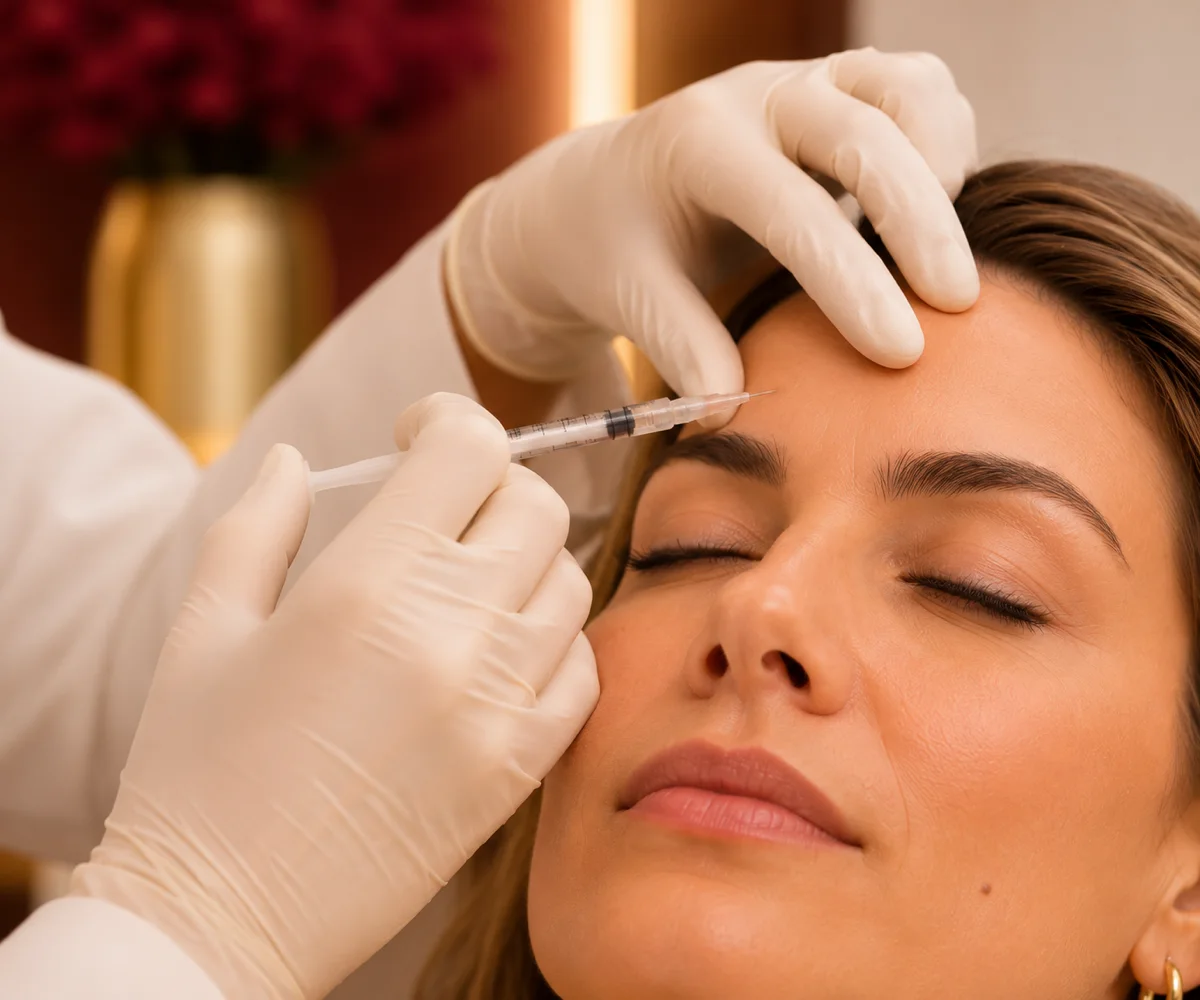
Application of botulinum toxin with a fine syringe, by gloved hands, during a medical consultation, in bright light

Relaxing the muscle

Botulinum toxin

Injection of small amounts at chosen points to reduce the contraction of the muscles that scrunch the nose when smiling or laughing, softening the movement lines. It does not erase skin that is marked at rest, the effect is temporary and the applications are repeated. The choice of points depends on each person’s pattern and, in some cases, needs adjusting at a second examination. There are possible effects, such as bruising, asymmetry of the smile or a change in the position of the upper lip, which the doctor explains beforehand.

May be considered when

the lines are due to movement (they appear when smiling or frowning and almost disappear at rest), there is no skin lesion awaiting assessment, you are not pregnant or breastfeeding, you do not have a neuromuscular condition, and you accept that the effect is temporary and that the result may be partial.

Find out more

What the journey looks like

From the first conversation to a plan tailored to you

No procedure begins without an assessment by the doctor. Most people start with the simplest approach, and only then is anything further considered.

  1. 01At the clinic

    Telling your story

    The doctor asks since when you noticed the lines, when they are seen most, whether they changed after a treatment of the forehead, which products or treatments you have already used and what bothers you most, the line itself or the gesture.

  2. 02At the clinic

    Observe the face in movement

    The skin is observed at rest and then when smiling, laughing and scrunching the nose, to work out which lines are due to movement and which are already marked. If there is a lesion or a mole that changes, referral to dermatology comes first.

  3. 03At home

    Look after the skin and the gesture

    Sunscreen every day, gentle hydration, stopping smoking and noticing the habit of scrunching the nose. In many cases, mild lines need no more than this.

  4. 04Over time

    Decide and follow up

    If the lines continue to bother you, the doctor explains whether toxin makes sense, at which points, what can be expected and what might go less well, without promising results. A review is arranged to see whether adjustment is needed, and maintenance is planned, if you wish to continue.

Day to day

What helps at home

What you do at home matters more than you might think. These are sensible measures to take while you wait for your consultation and alongside the clinic’s plan.

The golden rule

Protect the skin and know the gesture

An expression wrinkle is a movement that has become marked, and no cream stops the movement. What is within your reach is to protect the skin from the sun, which speeds up ageing, and to understand what is natural to your face. A lesion on the nose that does not heal should be seen by a doctor instead of being “treated” with cosmetics.

Protect from the sun every day

The nose is one of the most exposed areas, and the sun breaks down collagen and elastin.

In practice: broad-spectrum sunscreen on the face and nose every morning, reapplied outdoors, and sunglasses.

Moisturise with gentle care

Well-moisturised, non-irritated skin looks more even and marks the fold less.

In practice: a simple moisturising cream and products without fragrance or rough exfoliants around the nose area.

Notice the gesture

Scrunching the nose without realising reinforces the same lines.

In practice: watch yourself in the mirror laughing and talking; if it is a habit of concentration, breaks and relaxing the face are sometimes enough.

Record and bring to the consultation

It helps the doctor to work out whether the lines have changed and with what.

In practice: monthly photographs, smiling and at rest, in the same light, and a list of previous treatments and medication.

Dr Michelle Campagnoli, clinical director of Clínica Luxmed

Who will look after you

An assessment carried out by the doctor

At Luxmed, in Algés, the first step is always an assessment with Dr Michelle Campagnoli. She is the one who examines the face at rest and in movement, works out whether they are expression lines or whether there is something to investigate and decides with you what makes sense, before any procedure.

  • Physical examination and medical historyA conversation about the lines, previous treatments and habits, and an examination of the face when smiling and scrunching the nose.
  • A plan tailored to youA clear plan, without promises, beginning with the simplest measures and including follow-up over time.
  • No obligationThe cost of any treatment is confirmed only after the assessment.
Book an assessment

Articles on nose wrinkles when smiling

From our blog
Fotografia · rugas-do-nariz-ao-sorrir-blog-11200 × 800 px · horizontal 3:2Natureza-morta sobre uma secretária de madeira clara: um espelho de mão, uma chávena de chá e uma planta, à luz da manhã que entra por uma janela; plano aberto, sem rosto

Facial aesthetics

Nose wrinkles when smiling: what they are and why they appear

What the lines that form beside the nose when smiling or frowning are, which muscles and habits weigh in and when they are just the expression of the face.

Fotografia · rugas-do-nariz-ao-sorrir-blog-21200 × 800 px · horizontal 3:2Mãos enluvadas da médica a segurar uma seringa fina sobre uma bandeja de consultório, com um frasco e gaze ao lado, em luz clara; plano aproximado nas mãos e no material, sem rosto

Facial aesthetics

Nose wrinkles: treatment with botulinum toxin

What botulinum toxin can and cannot do for lines on the nose, why the result depends on the points chosen and what care to explain beforehand.

Fotografia · rugas-do-nariz-ao-sorrir-blog-31200 × 800 px · horizontal 3:2Mulher de costas, de cabelo apanhado, diante de um espelho de parede num corredor luminoso, vista da cintura para cima e sem o rosto à vista; luz natural suave

Facial aesthetics

Nose wrinkles after treating the forehead: why they appear

Why the lines on the nose can become more noticeable after treating the forehead and the space between the eyebrows, what is known and what can be done.

Book a consultation

Book your consultation

Choose how you prefer to get in touch. We will arrange the assessment consultation with Dr Michelle Campagnoli.

Booking through the websiteAssessment consultationTalk to our assistant on WhatsApp and ask for the current price of the assessment.

New Life Miraflores, Algés · Office Center, R. Santa Teresa do Menino Jesus n.º 6, 9.º C, 1495-048

Your details are used only for this contact. Any treatment depends on a prior medical assessment.

Request an appointmentIt takes less than a minute.
Speciality
You do not need to go into detail. The doctor will talk to you during the consultation.
Request received. Our team will contact you as soon as possible.
Why do wrinkles appear on my nose when I smile?

Because, when smiling, laughing or scrunching, the small muscles of the nose contract and fold the thin skin of the bridge of the nose in the same place every time. With the years, the skin loses collagen and elasticity and the fold remains marked for longer. Sun, tobacco, genetics and the habit of scrunching the nose are part of the story. In the great majority of cases they are expression lines and not a sign of disease.

What are “bunny lines”? Are they normal?

They are the oblique or vertical lines that form on the sides of the bridge of the nose, near the root, when smiling or frowning. They are very common and perfectly normal, and in many people they are mild and go unnoticed. They only become a concern when they bother the person who has them. The name comes from the resemblance to the gesture of a rabbit scrunching its nose.

Is it the same thing as the “nasolabial fold” or crow’s feet?

No. The grooves from the nose to the mouth (the “nasolabial folds”) run down from the sides of the nose to the corners of the mouth, and have more to do with loss of volume and laxity than with muscle movement. Crow’s feet are beside the eyes. Nose wrinkles when smiling are on the bridge of the nose, near the root, and are movement lines. Because the cause is different, what is done is also different.

Why did they become more visible after treating the forehead with toxin?

When the forehead and the space between the eyebrows are relaxed, these lines can become more noticeable. A plausible explanation is that the muscles of the upper part of the face work together and, when some relax, others do more, or that the line already existed and became easier to see. But it is mainly an observation from consultations and the direct evidence is limited. If this has happened to you, talk to the doctor who carried out the treatment: the points and doses may need to be reassessed.

Does botulinum toxin treat nose wrinkles?

It can soften movement lines in this area, and is used for that purpose, but the result depends heavily on each person’s pattern. In a study of 250 people, the usual injection in the nasalis was sufficient in 40%, and most needed additional points, and a study on cadavers and ultrasound suggests that injecting directly into the wrinkle may reach connective tissue and not muscle. Toxin relaxes the muscle, does not erase skin that is marked at rest, and the doctor explains at the assessment what is realistic to expect.

How long does it last and does it need to be repeated?

The effect of toxin is temporary and applications are repeated over time, if you want to maintain the result. The effect sets in after a few days and lasts a few months, varying from person to person. A study of 945 people who had at least three cycles found no loss of efficacy with repetition, but that does not mean you have to repeat it: you can decide to stop at any time, and the lines return to what they were.

Are there creams or other treatments that help?

Creams help the skin, but do not relax the muscle, so they do not erase a movement line. What has the best support is protecting the skin from the sun every day: in a randomised trial of 903 adults, daily use of sunscreen slowed skin ageing. For this topic, the clinic associates botulinum toxin; the doctor tells you, at the assessment, whether there are other options to consider.

What are the risks of toxin in this area?

The most common are small bruises, headache and a partial or asymmetrical effect. Near the nose, toxin can alter the movement of the upper lip and of the smile, temporarily, and, rarely, affect the eyelid through diffusion. It is not carried out during pregnancy or breastfeeding, or in people with neuromuscular conditions or an allergy to the product, or with infection in the area. The doctor explains these risks beforehand and tells you when to contact the clinic.

Can I have a filler in the nose to smooth these lines?

It is not the usual treatment for these lines, which are due to movement. The bridge of the nose and the area next to the eyes are of higher vascular risk: an injection into a vessel can, rarely, cause serious problems with the skin and vision. If you are considering any injection in this area, seek an experienced doctor, who knows the anatomy and knows how to treat complications. Severe pain, pallor or purplish patches on the skin, a change in vision or a severe headache after an injection are an emergency: call 112 and contact immediately the clinic that carried it out.

When should I see a doctor first?

Book a consultation if you have a sore, crust or spot on the nose that does not heal, bleeds or grows, a patch or mole that changes colour, shape or outline, or redness, swelling and pain with fever: in these cases, assessment in dermatology comes before any aesthetic treatment. If in doubt, out of hours call SNS 24 (808 24 24 24). If after an injection you have severe pain, pallor of the skin, a change in vision or facial weakness, call 112.

We could not find that question. Ask us on WhatsApp

Scientific references

This page is based on the sources below and was reviewed by Dr. Michelle Campagnoli. Last updated on .

  1. Ahn H, Hu H, Kim SB, Lee JH. Anatomical etiology of bunny lines based on cadaveric dissection and ultrasonographic evaluation. Clin Anat, 2025.
  2. Tamura BM, Odo MY, Chang B, Cucé LC. Treatment of nasal wrinkles with botulinum toxin. Dermatol Surg, 2005.
  3. Yi KH, Lee JH, Hu HW, Kim HJ. Novel Anatomical Guidelines on Botulinum Neurotoxin Injection for Wrinkles in the Nose Region. Toxins (Basel), 2022.
  4. Ramos HHA, Amaral V, de Oliveira Afonso LP, Campagnaro JCM, Gazzinelli HCG, Muzy G, de Almeida ART. Advanced Injection of Botulinum Toxin in the Nasal Muscles: A Novel Dynamic Change in Facial Expression. Aesthetic Plast Surg, 2024.
  5. Jia Z, Lu H, Yang X, Jin X, et al. Adverse Events of Botulinum Toxin Type A in Facial Rejuvenation: A Systematic Review and Meta-Analysis. Aesthetic Plast Surg, 2016.
  6. Klein AW. Contraindications and complications with the use of botulinum toxin. Clin Dermatol, 2004.
  7. Rzany B, Dill-Müller D, Grablowitz D, Heckmann M, Caird D. Repeated botulinum toxin A injections for the treatment of lines in the upper face: a retrospective study of 4,103 treatments in 945 patients. Dermatol Surg, 2007.
  8. Hughes MCB, Williams GM, Baker P, Green AC. Sunscreen and prevention of skin aging: a randomized trial. Ann Intern Med, 2013.
  9. Kennedy C, Bastiaens MT, Bajdik CD, Willemze R, Westendorp RG, Bouwes Bavinck JN. Effect of smoking and sun on the aging skin. J Invest Dermatol, 2003.
  10. NHS (Reino Unido). Before you have a cosmetic procedure. (NHS, Cosmetic procedures, acedido 2026-11-11)
CallAssistantAvailableBook