Algés, Oeiras Mon to Fri · 09:00 to 13:00 and 14:00 to 19:00 · Sat · 09:00 to 14:00
WhatsApp Book a consultation

Body aesthetics

Little bumps, milia and cystsSmall lumps and bumps on the skin, almost always benign, but which can only be told apart well by examination

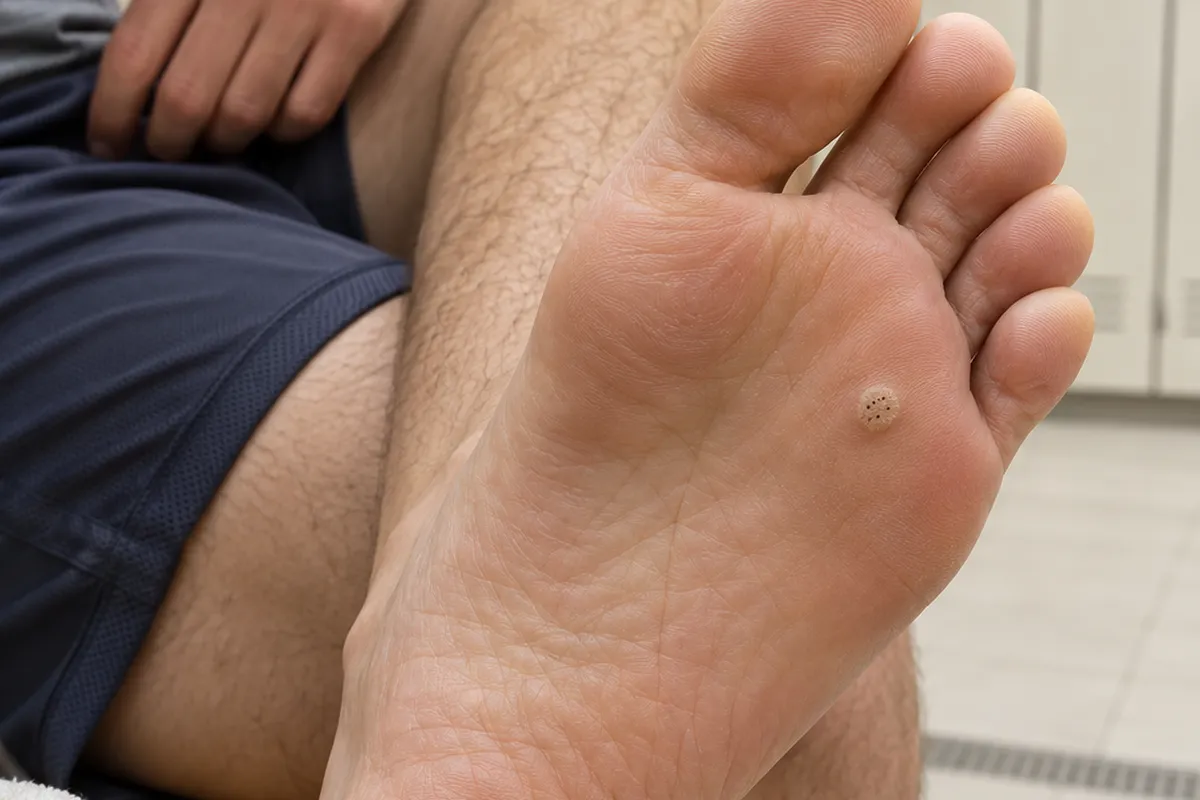
“Little bumps on the skin” is a very frequent search and covers very different situations: small, hard, white keratin cysts (milia), lumps beneath the skin with a central dot (cysts), rough skin on the arms and thighs (keratosis pilaris), spots around hairs (folliculitis), pearly papules with a tiny dot in the centre (molluscum contagiosum) and other small benign growths. The colour, the place where they appear and the presence of itching help to guide, but the right diagnosis is made at the consultation. On this page we explain how the most common types are recognised, why they appear, what can be done and what should not be done, and, prominently, when a growth on the skin should be assessed by a doctor before any treatment. At Clínica Luxmed, in Algés, the doctor examines the lesion and defines the path at the assessment consultation.

Reviewed by Dr Michelle Campagnoli, clinical director

  • Appearancecolour, place and itching help to guide
  • 1assessment, always first
  • Nocommitment
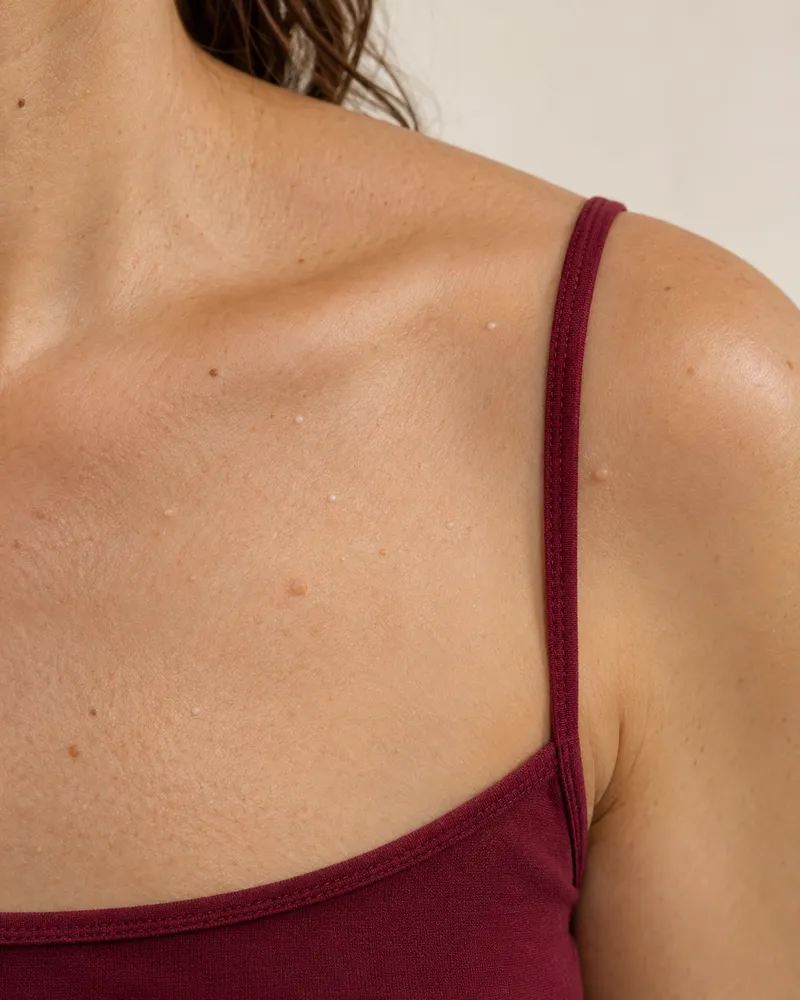
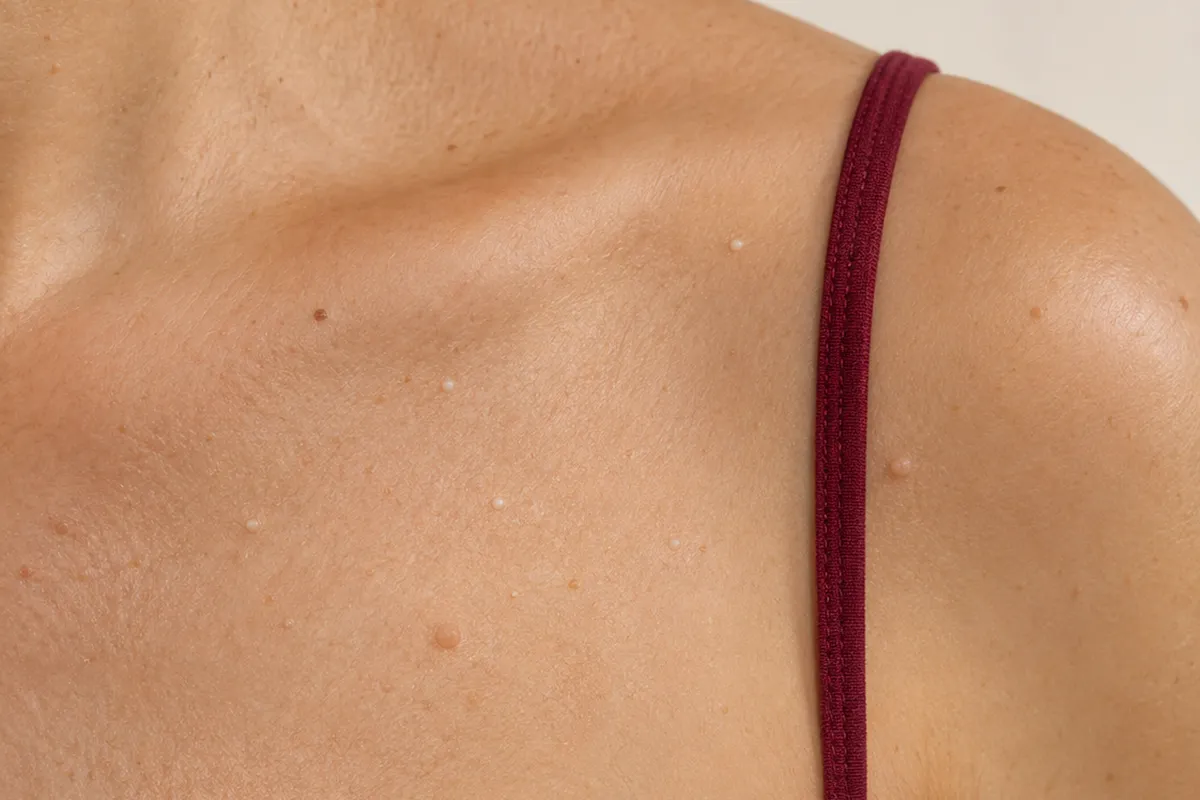
Shoulder of a woman in a strappy top, with small white bumps (milia)

How to recognise it

What type of bumps are they?

These signs help to describe what you see and to prepare the conversation with the doctor. Many bumps look the same to the eye and are not, and that is why examination always comes before any treatment.

Tick what you recognise0/7

Tick the signs you recognise in your case. This is not a diagnosis, it is only meant to give you an idea.

Intense itching, fever, pain, bumps that spread quickly, or a lesion that grows within weeks, bleeds without trauma, forms a crust that returns, does not heal within four weeks or changes colour, shape or size need a medical assessment without delay. If in doubt, call the SNS 24 line (808 24 24 24). 112 is only for an emergency.

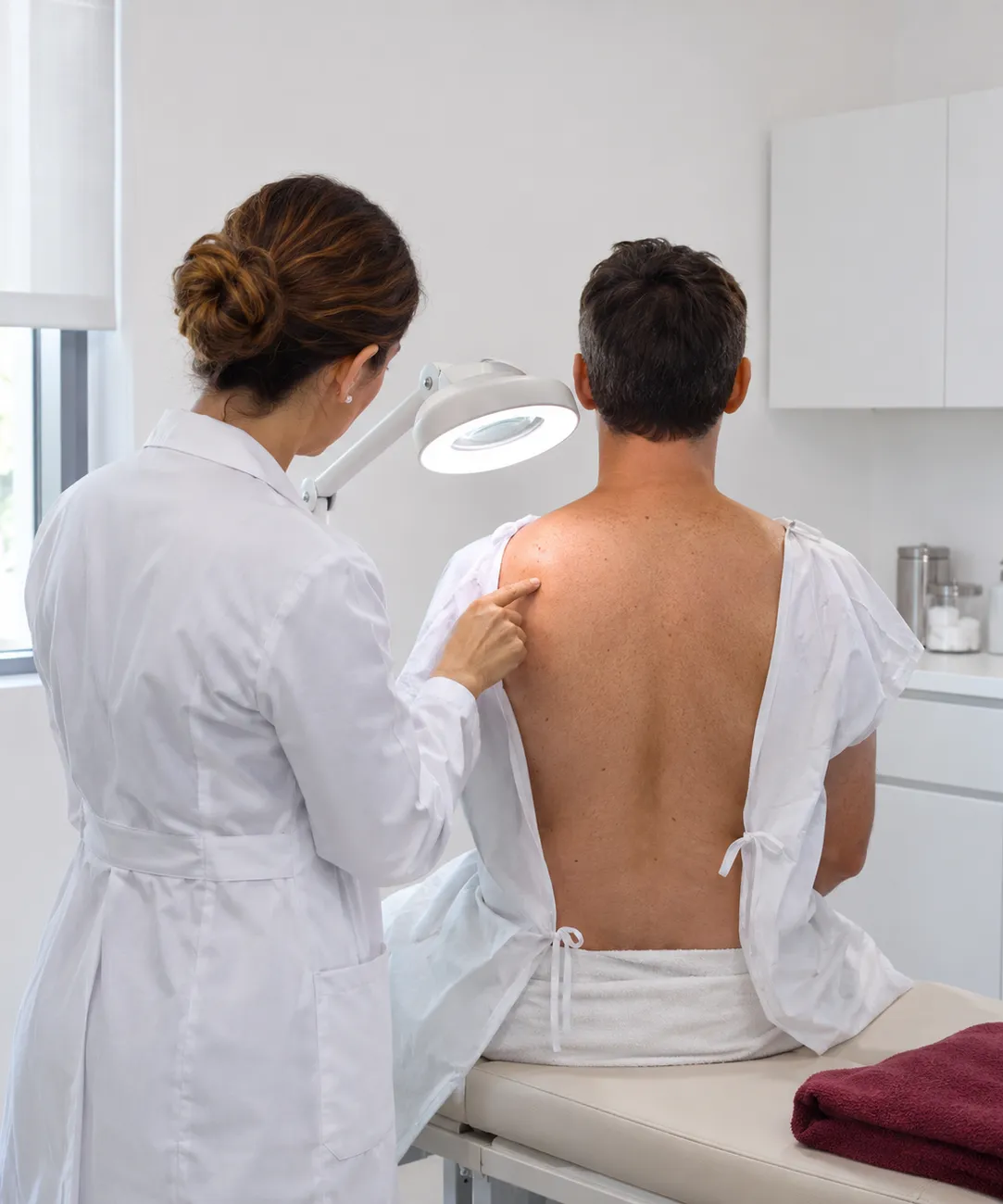
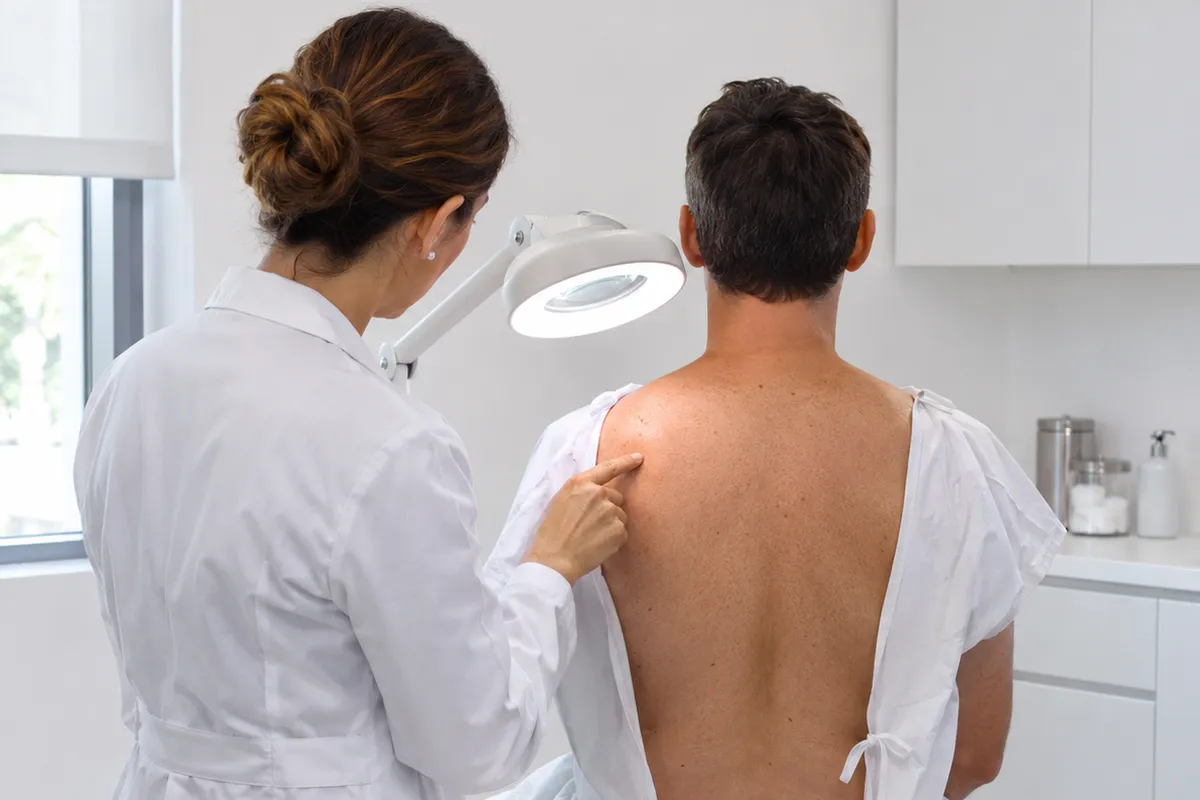
Female doctor examining the skin on the back of a patient sitting on the examination couch
Photograph of a consultation. The dots mark what the doctor is assessing.

Why they appear

What is behind bumps on the skin

There are several causes, and each gives bumps with their own appearance. Choose one to see how it acts and what helps.

Keratin that stays trapped

Keratin is the protein of the superficial layer of the skin. When it is retained beneath the skin, milia form, small, hard white cysts, and when it blocks the opening of the follicles on the arms and thighs, keratosis pilaris arises, rough skin with tiny dots. Neither is infectious. Keratosis pilaris tends to run in families and may last for years.

What favours it

Dry skin, lesions or burns that heal, some creams applied for a long time and friction from clothing.

What helps

Moisturising regularly, lukewarm baths instead of hot ones, mild, unperfumed products, and avoiding scrubbing hard.

Normal or to be assessed

Does it look like a common benign growth or does it need assessment?

Most bumps are benign and not urgent, but there are situations in which nothing is squeezed, applied or tried before a doctor has seen it. See which side your lesion is on.

  • What they look like. White, small and hard (milia), rough and skin-coloured or reddish on the arms and thighs, pearly with a central dimple in a group, or a mobile lump with a dot in the centre.

  • What stage they are at. Many stay the same for years and some disappear on their own, such as molluscum contagiosum. A benign lesion that does not bother you may simply be monitored.

  • Why it is worth confirming. Different lesions have different treatments, and only examination tells a milium from a cyst, or a cyst from a lesion that calls for another path.

  • What usually helps. Not squeezing, moisturising, using mild products and, if it bothers you, booking an assessment to choose the method.

  • Tell us at the consultation. Since when it has been there, whether it has changed, how many there are, whether they hurt or itch and what you have already applied.

Not sure what it is? Book an assessment. The doctor examines the lesion, tells you what it is, whether monitoring is enough or whether it is worth treating, and only then is the method chosen.

Book an assessment

What can be done

Removing bumps and cysts: what to expect

Many small benign growths do not need treatment, and the first decision is, often, only to monitor. When they bother you, the method depends on the lesion. Described, for example, are extraction of milia with a sterile needle, done by a professional, surgical removal of the epidermal cyst outside an inflamed phase, with complete removal of the capsule to reduce return, and electrosurgery or laser for sebaceous hyperplasia and syringomas, with results that vary and lesions that may return. Molluscum contagiosum usually resolves on its own in months and, according to the Cochrane review, there is no clear evidence in favour of any treatment. In keratosis pilaris, regular moisturising and gentle care are the basis, and other treatments have limited evidence. No lesion is treated without a diagnosis, and if there is any suspicious characteristic analysis of the tissue may be needed. At Luxmed, the path is defined at the assessment consultation, and the doctor refers to dermatology when necessary.

Book an assessment
Dr Michelle Campagnoli, clinical director of Clínica Luxmed

First step

Assessment consultation

The doctor listens to what you are experiencing, examines your case and explains the suitable options. No treatment begins without this consultation.

you want to understand the cause and decide on the best path, with time and without commitment.

Book an assessment

What the journey looks like

From the first examination to follow-up

No lesion is treated without being assessed first. This is how it goes.

  1. 01At the clinic

    Discuss the history of the injury

    The doctor asks since when it has been there, whether it has changed, how many there are, whether it hurts, itches or bleeds, what you have already applied and whether it has been removed and returned.

  2. 02At the clinic

    Examining the lesion

    She looks at the colour, size, surface, central dot and mobility, and confirms whether it is a common benign growth. If there are signs that do not fit, the decision is different: a more careful assessment and, if needed, analysis of the tissue.

  3. 03At the clinic

    Deciding between monitoring, treating or referring

    She explains what to expect from each path, including the time, the risks of scar or patch and the possibility of the lesion returning, and refers to dermatology when necessary.

  4. 04Over time

    Follow-up

    She sees the area again, adjusts the plan and agrees the care at home. A lesion that changes in the meantime should be shown without waiting for the appointed date.

Day to day

What helps at home

What you do between consultations counts towards not irritating the skin and not delaying the diagnosis.

The golden rule

First, knowing what it is

Most problems with bumps begin with squeezing or treating at home a lesion that nobody has confirmed. If you know what it is and it is benign, the priority is not to irritate it. If you have doubts, the priority is the consultation. A lesion that changes, bleeds or does not heal is not for trying things on, it is for showing.

Moisturising the skin regularly

Dry skin worsens the rough skin of the arms and thighs and itching.

In practice: an unperfumed moisturiser after bathing, and short, lukewarm baths instead of hot ones.

Using mild, unperfumed products

Harsh soaps and perfumes irritate the follicles and skin that is already sensitive.

In practice: mild shower gel, clean towels and loose, cotton clothing on areas with spots.

Taking a break from hair removal

Shaving, waxing or plucking injures the follicle and favours folliculitis.

In practice: suspend hair removal in the area for a few weeks and, if applicable, warm compresses for 15 to 20 minutes.

Covering contagious lesions and having your own towels

Molluscum contagiosum passes by contact and through shared objects.

In practice: do not share towels or sponges, cover the lesions at the pool with a waterproof plaster and wash your hands after touching them.

Dr Michelle Campagnoli, clinical director of Clínica Luxmed

Who will look after you

An assessment carried out by the doctor

At Luxmed, the first step is always an assessment with Dr Michelle Campagnoli, at the clinic in Algés. She is the one who examines the lesion, confirms what it is and tells you whether monitoring is enough, whether it is advisable to treat or whether it should be referred to dermatology, before any decision.

  • Physical examination and medical historyExamination of the lesion, its location and progress, the clinical history, the medication and any signs that call for another assessment before any treatment.
  • A plan tailored to youA clear plan, with the path explained, the risks and the possibility of the lesion returning, and follow-up over time.
  • No obligationThe cost of any treatment is confirmed only after the assessment.
Book an assessment

Book a consultation

Book your consultation

Choose how you prefer to get in touch. We will arrange the assessment consultation with Dr Michelle Campagnoli.

Booking through the websiteAssessment consultationTalk to our assistant on WhatsApp and ask for the current price of the assessment.

New Life Miraflores, Algés · Office Center, R. Santa Teresa do Menino Jesus n.º 6, 9.º C, 1495-048

Your details are used only for this contact. Any treatment depends on a prior medical assessment.

Request an appointmentIt takes less than a minute.
Speciality
You do not need to go into detail. The doctor will talk to you during the consultation.
Request received. Our team will contact you as soon as possible.
Bumps on the skin: what can they be?

They can be several things, and colour, place and itching help to guide. Hard, white bumps are usually milia. Rough skin on the arms and thighs is usually keratosis pilaris. Red spots around hairs may be folliculitis. Pearly papules with a central dimple may be molluscum contagiosum. A lump beneath the skin with a central dot is usually a cyst, and small hanging “skin tags” may be soft fibromas. Red and itchy ones may be urticaria, bites or dermatitis. Only examination confirms what it is.

White bumps on the skin: what are they?

If they are small, hard and white, one to two millimetres, and are mainly around the eyes and on the cheeks, they may be milia: small keratin cysts, benign, without an opening and without pain. In newborns they disappear on their own within a few weeks, but in adults they may persist. If they are yellowish with a central depression, they may be sebaceous hyperplasia, and if they are skin-coloured around the eyes they may be syringomas. The diagnosis is made by examination.

Red bumps on the skin: what can they be?

Red around hairs, and above all after shaving, hair removal or tight clothing, they may be folliculitis. Rough, like goose bumps, on the arms and thighs, keratosis pilaris. Red and itchy, that come and go, urticaria, bites or dermatitis. If there is fever, pain, intense itching or they spread quickly, ask for assessment. A red lesion that bleeds easily and grows should also be seen.

Bumps on the skin that do not itch: should I be concerned?

Itching is not a good criterion for deciding. Many benign growths do not itch, such as milia, cysts or syringomas, and many skin cancers do not hurt or itch either. What counts is the behaviour of the lesion: if it grows, bleeds, forms a crust, changes colour or shape, or does not heal within four weeks, it should be assessed. If it is small, stable and the same for years, it may be monitored.

Do milia disappear on their own? Can I squeeze them?

In newborns they disappear within weeks. In adults they may disappear within weeks or months, or stay for a long time. They should not be squeezed or punctured at home, because they have no opening, and the act may cause infection and scarring. When they bother you, extraction is done by a professional with a sterile needle, and topical retinoids are an option for numerous lesions. At Luxmed, the method is defined at the assessment consultation.

Cyst on the skin: is it “sebaceous”? Can it come back after being removed?

What is called a “sebaceous cyst” is, in general, an epidermal cyst, which does not come from the sebaceous glands. It is a mobile lump beneath the skin, often with a central dot. Many do not need treatment. If it ruptures or becomes inflamed, it may need medical treatment, and surgical removal is preferably done outside the inflammation. It may return if the capsule is not removed completely. Not squeezing it avoids inflammation and infection.

Is molluscum contagiosum contagious? How is it treated?

Yes. It passes by skin-to-skin contact and through shared objects, such as towels. In people with normal defences it usually resolves on its own in months, sometimes more than a year, and the Cochrane review found no clear evidence in favour of any treatment. Not scratching or squeezing, covering the lesions at the pool and not sharing towels are the useful measures. If there are many lesions, if they are near the eyes or genital area, if they become infected or if your defences are reduced, ask for assessment.

Sebaceous hyperplasia and syringomas: are they treated?

They are benign and do not need treatment. When they bother you by their appearance, light electrosurgery and laser are described, among other options, but results vary, they may return, and in syringomas results are, often, short of what is expected. Before treating it is advisable to confirm the diagnosis, because some lesions may be confused with skin cancer. At Luxmed, the path is defined at the consultation, and the doctor refers to dermatology when necessary.

When should a growth on the skin be assessed?

Without delay if it grows within weeks, bleeds without trauma, forms a crust that returns, does not heal within four weeks, changes colour, shape or size, is pearly with tiny vessels or is different from all the others. Also if it is inflamed and painful, or with fever. If in doubt, SNS 24 line, 808 24 24 24. 112 is only for an emergency. A lesion that does not hurt may be serious, and waiting to see if it goes away is not advisable when there are warning signs.

What should I say and bring to the assessment?

Say since when the lesion has been there, whether it has changed, how many there are, whether they hurt, itch or bleed, what you have already applied and whether it has been removed and returned, and bring an old photograph, if you have one, for the doctor to see the progress. Also say which conditions you have and which medication you take. Do not apply products to the area in the preceding days, so that the lesion can be seen clearly. Book the assessment in Algés, with no commitment.

We could not find that question. Ask us on WhatsApp

Scientific references

This page is based on the sources below and was reviewed by Dr. Michelle Campagnoli. Last updated on .

  1. van der Wouden JC, van der Sande R, Kruithof EJ, Sollie A, van Suijlekom-Smit LW, Koning S. Interventions for cutaneous molluscum contagiosum. Cochrane Database Syst Rev, 2017.
  2. Abbasi NR, Shaw HM, Rigel DS, Friedman RJ, McCarthy WH, Osman I, Kopf AW, Polsky D. Early diagnosis of cutaneous melanoma: revisiting the ABCD criteria. JAMA, 2004.
  3. Hwang S, Schwartz RA. Keratosis pilaris: a common follicular hyperkeratosis. Cutis, 2008.
  4. de Berker D, McGregor JM, Mohd Mustapa MF, Exton LS, Hughes BR. British Association of Dermatologists' guidelines for the care of patients with actinic keratosis 2017. Br J Dermatol, 2017.
  5. DermNet. Epidermoid cyst. (dermnetnz.org, acedido 2026-11-11)
  6. DermNet. Milium, milia. (dermnetnz.org, acedido 2026-11-11)
  7. DermNet. Sebaceous hyperplasia. (dermnetnz.org, acedido 2026-11-11)
  8. DermNet. Syringoma. (dermnetnz.org, acedido 2026-11-11)
  9. NHS. Molluscum contagioso (Molluscum contagiosum). (nhs.uk, acedido 2026-11-11)
  10. NHS. Keratosis pilaris. (nhs.uk, acedido 2026-11-11)
  11. American Academy of Dermatology. Acne-like breakouts could be folliculitis. (aad.org, acedido 2026-11-11)
  12. NHS. Symptoms of non-melanoma skin cancer. (nhs.uk, acedido 2026-11-11)
  13. NHS. Symptoms of melanoma skin cancer. (nhs.uk, acedido 2026-11-11)
  14. American Academy of Dermatology. Basal cell carcinoma: from symptoms to treatments. (aad.org, acedido 2026-11-11)
  15. American Academy of Dermatology. What to look for: ABCDEs of melanoma. (aad.org, acedido 2026-11-11)
CallAssistantAvailableBook