Algés, Oeiras Mon to Fri · 09:00 to 13:00 and 14:00 to 19:00 · Sat · 09:00 to 14:00
WhatsApp Book a consultation

Body aesthetics

Soft fibromas (little skin tags)Small, soft, hanging “skin tags” on the neck, underarms or folds: benign and common, but which only an examination confirms

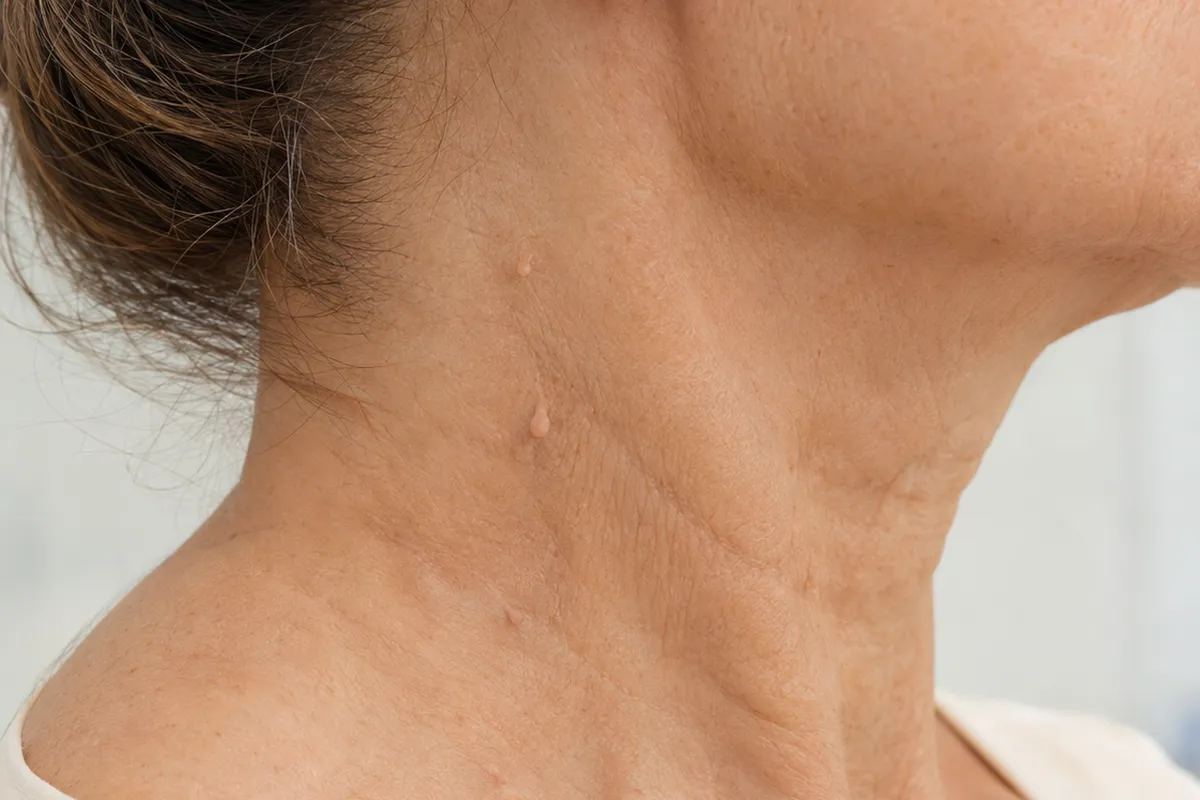
Soft fibromas, also called acrochordons or, in everyday speech, “skin tags”, are small, soft skin protrusions attached by a thin stalk, which appear mainly where there is friction: on the neck, underarms, groin, under the breast and on the eyelids. They are benign, not contagious and very frequent, with the passing of the years. Almost always they are just a nuisance, with clothing, a necklace or appearance. But when there are many, above all with darker, velvety skin in the folds, it is worth asking about insulin and blood sugar. On this page we explain how they are recognised, why they appear, what is known about the link with insulin resistance, which removal methods exist and what to expect, and when a lesion needs to be seen by a doctor before any decision. At Clínica Luxmed, in Algés, the doctor examines the lesions and defines the path at the assessment consultation.

Reviewed by Dr Michelle Campagnoli, clinical director

  • 50–60 %of adults have at least one “skin tag”
  • 1–5 mmis the most common size
  • Benignand not contagious
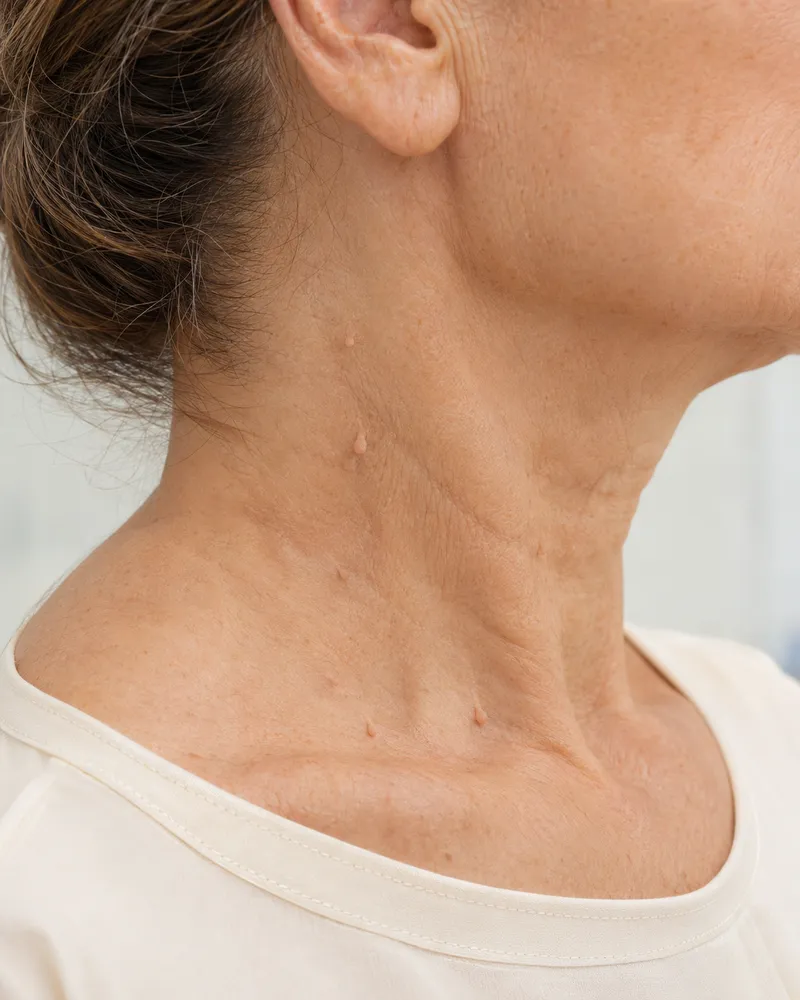
Neck of a woman with small skin tags (acrochordons)

How to recognise it

Is it really a soft fibroma?

These signs help to describe what you see and to prepare the conversation with the doctor. Other, more serious skin lesions may look like a “skin tag”, and so examination comes before any decision.

Tick what you recognise0/7

Tick the signs you recognise in your case. This is not a diagnosis, it is only meant to give you an idea.

A lesion that bleeds for no reason, that grows quickly, that changes colour, that is hard, dark, asymmetrical or with irregular edges, or that does not have the soft, hanging look of a “skin tag”, needs a medical assessment before any removal. The same applies if you have many and also thirst, passing a lot of urine, tiredness or dark, velvety skin in the folds. If in doubt, call the SNS 24 line (808 24 24 24).

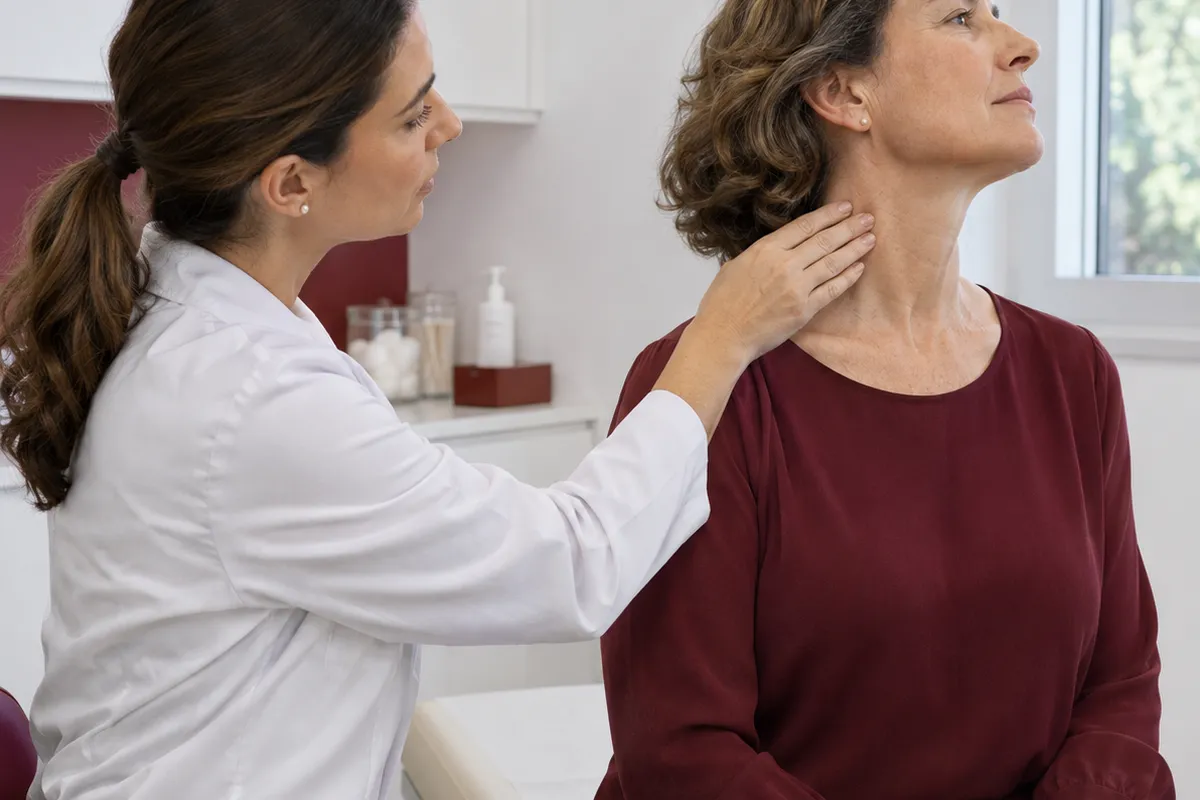
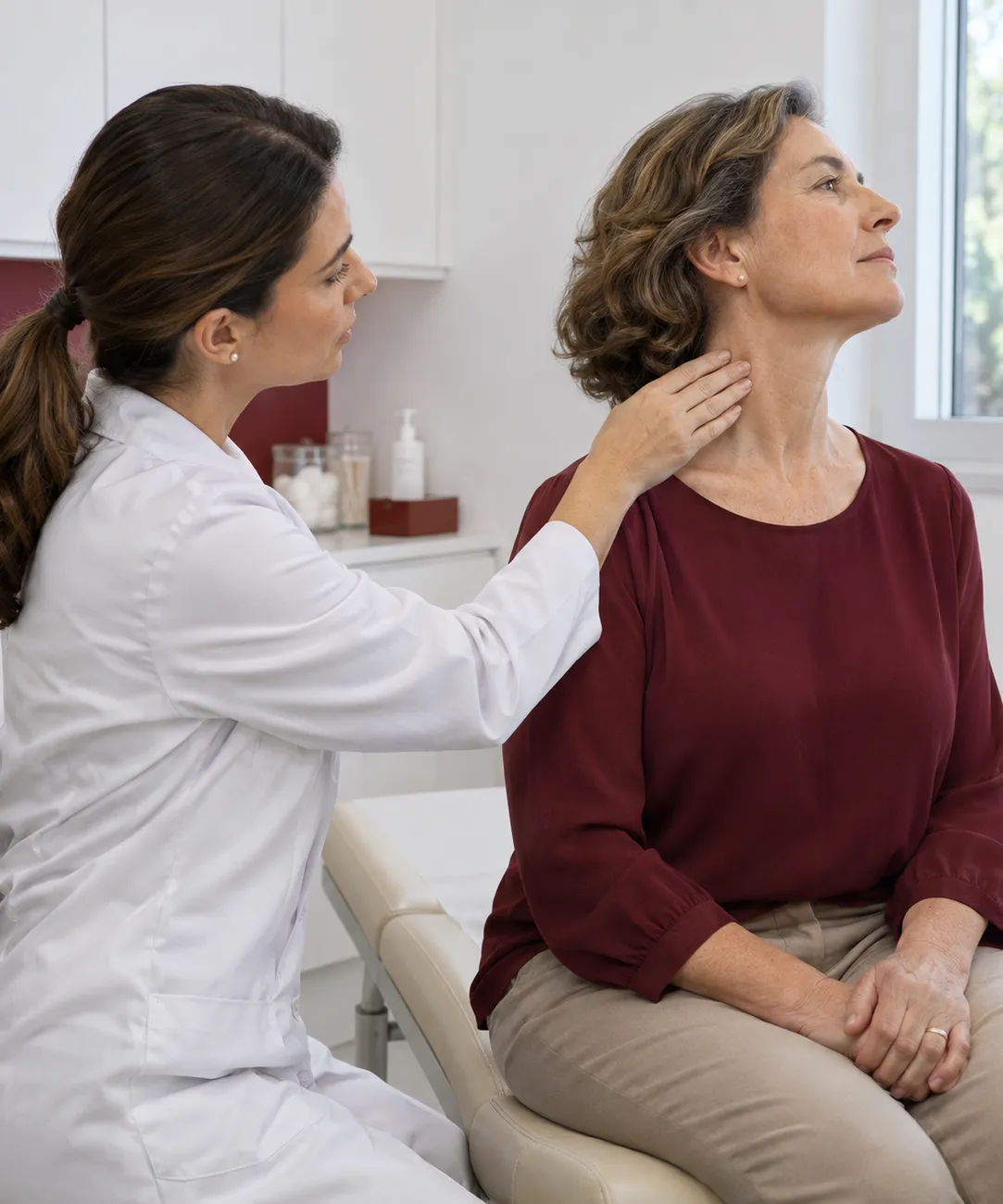
Female doctor examining the neck and décolletage of a seated patient
Photograph of a consultation. The dots mark what the doctor is assessing.

Why they appear

What is behind skin tags

The cause is not always known, and several factors add up. Choose one to see how it fits into the history and what helps.

Friction in the folds

Soft fibromas appear mainly in areas where skin rubs against skin or clothing: sides of the neck, underarms, groin and under the breast. Repeated friction, with heat and sweat, seems to favour their appearance, and that is why they are often seen together, in a line or a cluster.

What favours it

Tight clothing, friction from necklaces, chains and clasps, and folds that stay damp and rub.

What helps

Loose, cotton clothing in areas of friction, dry skin in the folds and necklaces that do not always rub in the same place.

Normal or to be assessed

A common skin tag or a lesion to assess?

Most soft fibromas are benign and not urgent, but there are situations in which nothing is removed or tried before a doctor has seen it. See which side your lesion is on.

  • What it looks like. A protrusion of 1 to 5 mm, sometimes larger, soft, skin-coloured or brownish, attached by a thin stalk, in a fold or area of friction.

  • What stage it is at. It does not progress to anything serious and is not contagious. It may stay the same for years, and there is no hurry to remove one that does not bother you.

  • Why it is worth confirming. Only examination distinguishes a soft fibroma from a wart, a mole or other lesions. When there is doubt, analysis of the tissue resolves it.

  • What usually helps. Avoiding friction and tugging, keeping the area clean and dry and, if it bothers you, booking an assessment to choose the method.

  • Tell us at the consultation. How many there are, since when, whether they are increasing, whether they catch on clothing, weight, a pregnancy and whether there is diabetes in the family.

Not sure what it is? Book an assessment. The doctor examines the lesions, confirms what they are, tells you whether it is advisable to monitor, remove or request tests, and only then is the path chosen.

Book an assessment

What can be done

Removing soft fibromas: what to expect

No soft fibroma needs to be removed for health reasons: removal is a decision made because of nuisance, appearance or irritation. Among the methods described in the medical literature are cutting with sterile scissors, electrocoagulation, cryotherapy and laser, chosen according to size, number and area. In a randomised trial with 68 people, cutting with scissors had better healing and less pain than a 532 nm laser, which left more redness and changes in skin colour. Healing generally takes one to two weeks, and a minimal mark may remain, lighter or darker, above all in brown and dark skin. New ones may appear over time, because removal does not treat the cause. Tying off with thread, cutting with a blade or using products at home increases the risk of bleeding, of infection and of treating as benign a lesion that is not. Removal is only done after the lesion has been assessed and, if there is doubt, with analysis of the tissue. At Luxmed, the method, if that is the path, is defined at the assessment consultation, with the risks explained before any decision.

Book an assessment
Dr Michelle Campagnoli, clinical director of Clínica Luxmed

First step

Assessment consultation

The doctor listens to what you are experiencing, examines your case and explains the suitable options. No treatment begins without this consultation.

you want to understand the cause and decide on the best path, with time and without commitment.

Book an assessment

What the journey looks like

From the first examination to follow-up

No lesion is removed without being assessed first. This is how it goes.

  1. 01At the clinic

    Telling the story of the skin tags

    The doctor asks since when they have been there, how many there are, whether they are increasing, whether they catch on clothing, whether they have been removed and returned, and asks about weight, a pregnancy, diabetes in the family and symptoms of high sugar.

  2. 02At the clinic

    Examining the skin

    She looks at the appearance and location of the lesions, looks for those that do not fit a soft fibroma and looks at the folds of the neck and underarms, looking for dark, velvety skin. If there are doubts, the decision becomes another: tests, histology or another specialty.

  3. 03At the clinic

    Deciding between monitoring and removing

    She explains what to expect from each path, including the method, healing, the possibility of new ones appearing and the risk of a patch or scar, and defines with you what makes sense.

  4. 04Over time

    Follow-up

    She sees the area again, treats what is needed and follows the rest: tests, weight, habits and clothing. If the picture changes, we go back to examination.

Day to day

What helps at home

What you do between consultations helps to reduce friction and nuisance, and to understand whether there is something more to investigate.

The golden rule

Do not fiddle, do not cut or tie off

The most common mistake with “skin tags” is removing them at home with scissors, thread or a blade. It may bleed a lot, become infected, leave a mark and, worse, treat as benign a lesion that nobody has confirmed. If one bothers you, the answer is to book an assessment, not to improvise.

Reduce friction

Folds that rub and tight clothing favour appearance and irritate those that already exist.

In practice: loose, cotton clothing, longer necklaces and clasps that do not sit over the lesions.

Keeping the folds clean and dry

Dampness and sweat increase irritation and the risk of infection if a lesion opens.

In practice: wash with a mild soap, dry the folds well and, in hot weather, change clothes after sport.

Counting and photographing

It helps to see whether they are increasing, and at what pace, and whether there is more dark skin in the folds.

In practice: a photograph every two months, in the same light, and bring it to the consultation.

Having tests when there are many

Many soft fibromas, above all with dark skin in the folds, justify checking blood sugar.

In practice: ask the doctor for fasting glucose and glycated haemoglobin, and talk about weight and family.

Dr Michelle Campagnoli, clinical director of Clínica Luxmed

Who will look after you

An assessment carried out by the doctor

At Luxmed, the first step is always an assessment with Dr Michelle Campagnoli, at the clinic in Algés. She is the one who examines the lesions, confirms that they are soft fibromas and tells you whether it is advisable to monitor, remove or have tests, before any decision.

  • Physical examination and medical historyExamination of the lesions, their location and progress, the skin of the folds, the clinical history, weight, medication and any signs that call for tests or another assessment.
  • A plan tailored to youA clear plan, with the path explained, the risks and the possibility of new ones appearing, and follow-up over time.
  • No obligationThe cost of any treatment is confirmed only after the assessment.
Book an assessment

Book a consultation

Book your consultation

Choose how you prefer to get in touch. We will arrange the assessment consultation with Dr Michelle Campagnoli.

Booking through the websiteAssessment consultationTalk to our assistant on WhatsApp and ask for the current price of the assessment.

New Life Miraflores, Algés · Office Center, R. Santa Teresa do Menino Jesus n.º 6, 9.º C, 1495-048

Your details are used only for this contact. Any treatment depends on a prior medical assessment.

Request an appointmentIt takes less than a minute.
Speciality
You do not need to go into detail. The doctor will talk to you during the consultation.
Request received. Our team will contact you as soon as possible.
What is a soft fibroma?

It is a small, soft, hanging skin protrusion, attached by a thin stalk, skin-coloured or brownish, which usually measures 1 to 5 millimetres, sometimes more. It is also called an acrochordon, and in everyday speech a “skin tag”. It appears mainly in areas of friction, such as the neck, underarms, groin, under the breast and the eyelids. It is benign, very common and not contagious. Only examination confirms that it really is a soft fibroma.

Are soft fibromas warts? Are they contagious?

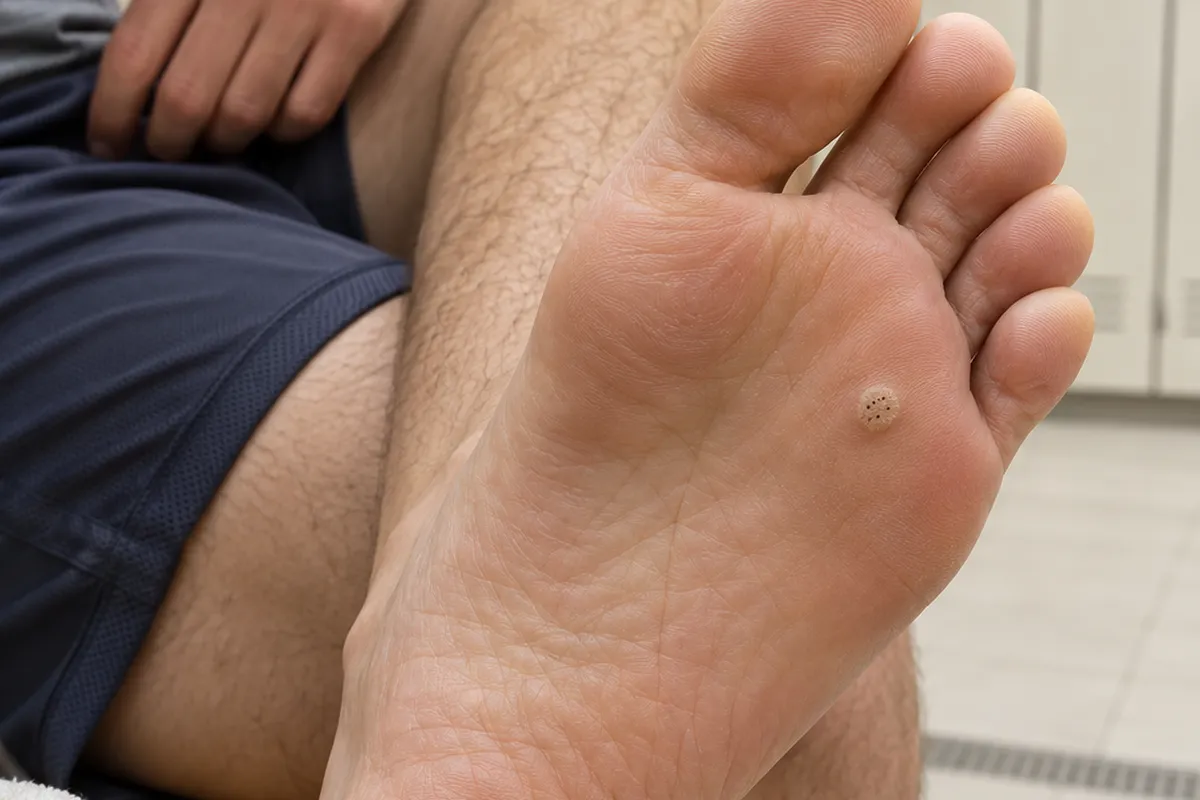
No. Soft fibromas are not caused by viruses and are not transmitted to other people, or from one part of the body to another. Warts are another situation: they are caused by the HPV virus, are contagious and have a different appearance, rougher. As the two get confused, examination by a doctor tells which is which, and the treatment of each is different.

Can soft fibromas become cancer?

It is very rare. A soft fibroma almost never becomes malignant. What matters is confirming that the lesion really is a soft fibroma, because other lesions may look like it. If a lesion bleeds for no reason, grows quickly, changes colour or shape, is hard, dark or with irregular edges, it should be seen by a doctor before being removed, and analysis of the tissue may be needed.

Why do so many skin tags appear on the neck and underarms?

Because these are fold areas, where skin rubs against skin and clothing, and where heat and sweat keep the skin damp. They increase with age, with excess weight, in pregnancy and when there is a family predisposition, and many people have at least one over their lifetime. When there are many, above all in a young adult, it is advisable to ask about blood sugar too.

Does having many skin tags on the neck mean I have diabetes?

No, but it may be worth having tests. Studies associate many soft fibromas with changes in sugar metabolism and with insulin resistance, above all when there is also dark, velvety skin on the neck or underarms (acanthosis nigricans), abdominal excess weight or diabetes in the family. One or two lesions mean nothing. The doctor may request fasting glucose and glycated haemoglobin, and follow up the rest.

If I lose weight, do soft fibromas disappear?

Those that already exist generally do not disappear, because the tissue is already formed. Losing weight and improving metabolism may, however, reduce the appearance of new ones, and helps health for reasons that go far beyond the skin. If the existing ones bother you, removal is possible and is decided at the consultation.

How can skin tags be removed from the neck: which methods exist?

Among the methods described in the medical literature are cutting with sterile scissors, electrocoagulation, cryotherapy, for small lesions, and laser, in some cases of several lesions. In a randomised trial, cutting with scissors healed better and hurt less than a 532 nm laser. The choice depends on size, number and area, and the method, if that is the path, is defined at the assessment consultation.

Can I cut or tie off a skin tag with thread at home?

It is not recommended. Cutting with scissors or a blade at home may cause bleeding and infection, and tying off with thread may cause pain and inflammation and leave a badly healed wound. Besides, if the lesion is not a soft fibroma, the opportunity to assess it and, if necessary, to analyse the tissue is lost. If a skin tag bothers you, it is better to book an assessment.

Is there a mark after removal? Do they come back?

In general a minimal mark remains, and healing takes one to two weeks. Cryotherapy and electrocoagulation may leave a small crust or a lighter or darker patch, above all in brown and dark skin, and laser may leave redness. After removal, keep the area clean and dry, do not pick off crusts and protect it from the sun. Removal does not treat the cause, so new ones may appear over time.

When should I see a doctor and what should I bring?

Before removing anything, if the lesion bleeds, grows quickly, changes colour or shape, is hard, dark or asymmetrical, or if you have many and also thirst, an urge to urinate a lot, tiredness or dark skin in the folds. Call the SNS 24 line, 808 24 24 24. 112 is only for an emergency, for example bleeding that does not stop. At the assessment, say since when they have been there, how many there are, the medication and conditions, and bring recent test results, if you have them. Book the assessment in Algés, with no commitment.

We could not find that question. Ask us on WhatsApp

Scientific references

This page is based on the sources below and was reviewed by Dr. Michelle Campagnoli. Last updated on .

  1. Rasi A, Soltani-Arabshahi R, Shahbazi N. Skin tag as a cutaneous marker for impaired carbohydrate metabolism: a case-control study. Int J Dermatol, 2007.
  2. Karadağ AS, You Y, Danarti R, Al-Khuzaei S, Chen W. Acanthosis nigricans and the metabolic syndrome. Clin Dermatol, 2018.
  3. American Diabetes Association Professional Practice Committee. 2. Diagnosis and Classification of Diabetes: Standards of Care in Diabetes-2024. Diabetes Care, 2024.
  4. Pandey A, Saleh HM. Skin Tag (Acrochordon). StatPearls. StatPearls Publishing, 2025.
  5. Haase O, Winkelmann-Schirmer C, Mrowka P, Krengel S. Removal of skin tags: scissor excision versus non-ablative 532nm-LBO-laser in a randomized intraindividual controlled observer-blinded clinical trial: Laser is not always better. Arch Dermatol Res, 2025.
  6. NHS. Skin tags. (nhs.uk, acedido 2026-11-11)
  7. American Academy of Dermatology. Acanthosis nigricans: overview. (aad.org, acedido 2026-11-11)
  8. American Academy of Dermatology. How to spot melanoma: the ABCDEs. (aad.org, acedido 2026-11-11)
CallAssistantAvailableBook