Algés, Oeiras Mon to Sat · 09:00 to 13:00 and 14:00 to 19:00
WhatsApp Book a consultation

Hair problem

Damaged hairWhen dyes, straightening, heat, sun or pollution have left the hair rough, dull and breaking

Bleaching, dyeing, straightening, using a hairdryer every day or spending the summer in the sun and salt water leaves its mark on the hair. Here we explain what happens inside the hair, how to tell that the damage has passed the limit, what can and cannot be “repaired” in hair that has already grown, and when the problem actually lies in the scalp.

Reviewed by Dr Michelle Campagnoli, clinical director

  • 3treatments the clinic may suggest
  • 1assessment consultation, always first
  • 70 €assessment booked through the website
Woman with bleached platinum blonde hair and a black sweater, in a studio portrait with a serious look

How to recognise it

Is it damaged hair, or is the problem something else?

Damage can be seen and felt in the hair. These signs help you tell whether the hair has gone beyond normal wear. This is not a diagnosis; it serves to organise what you notice before the consultation.

Tick what you recognise0/7

Tick the signs you recognise in your case. This is not a diagnosis, it is only meant to give you an idea.

Sudden and heavy hair loss, a painful scalp, sores, marked flaking, redness or patches that appear quickly should be seen without delay, because they usually have another cause. A chemical burn on the scalp also calls for prompt assessment.

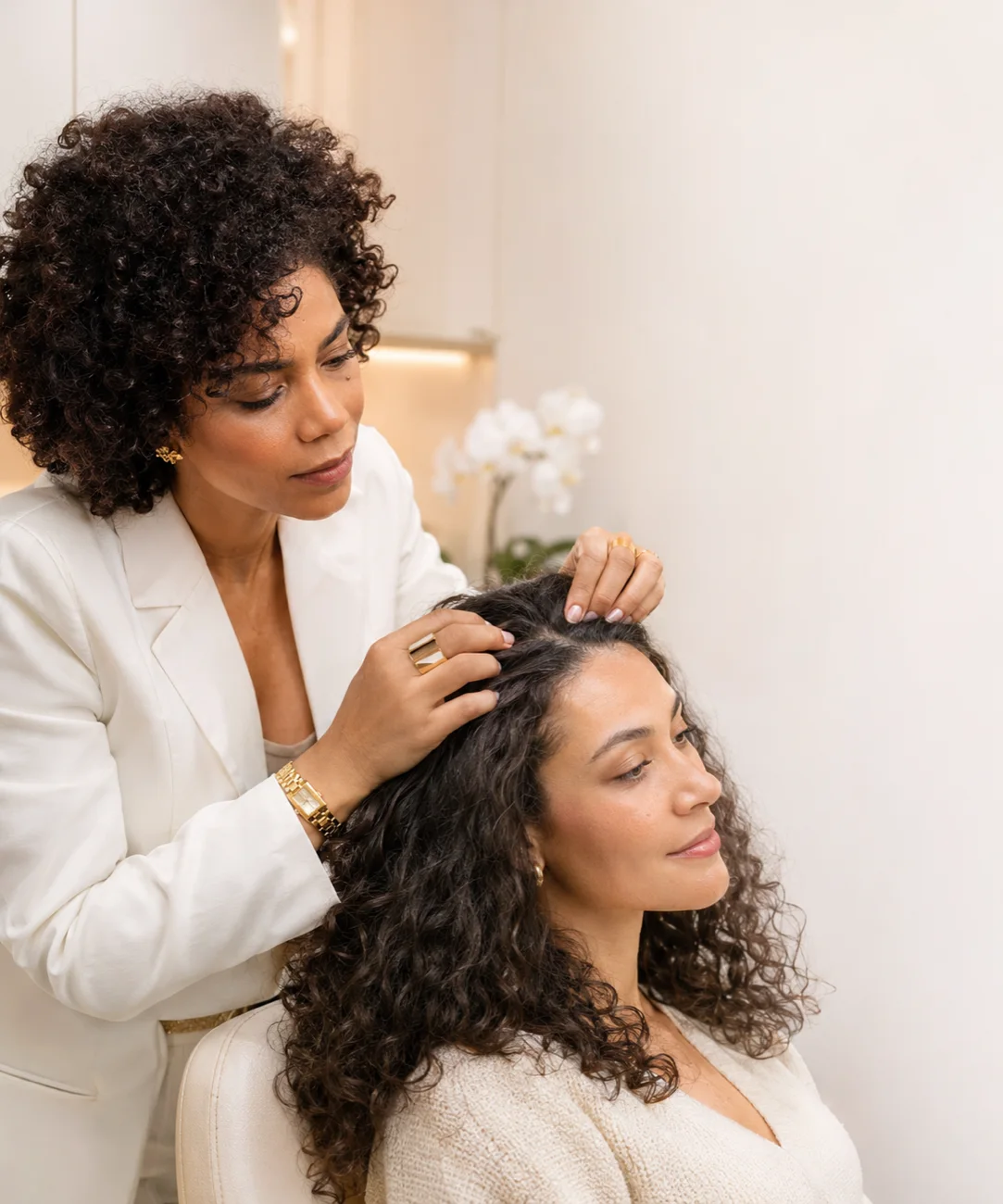
The doctor examining a patient's scalp during a hair assessment consultation
Photograph of an assessment consultation. The dots mark areas the doctor examines when there is damage from chemicals or sun; the image does not show damaged hair.

Why it happens

What damages the hair

It is almost never just one thing: damage adds up over the years. Choose a cause to see what aggravates it and what helps.

Bleaching and dyes

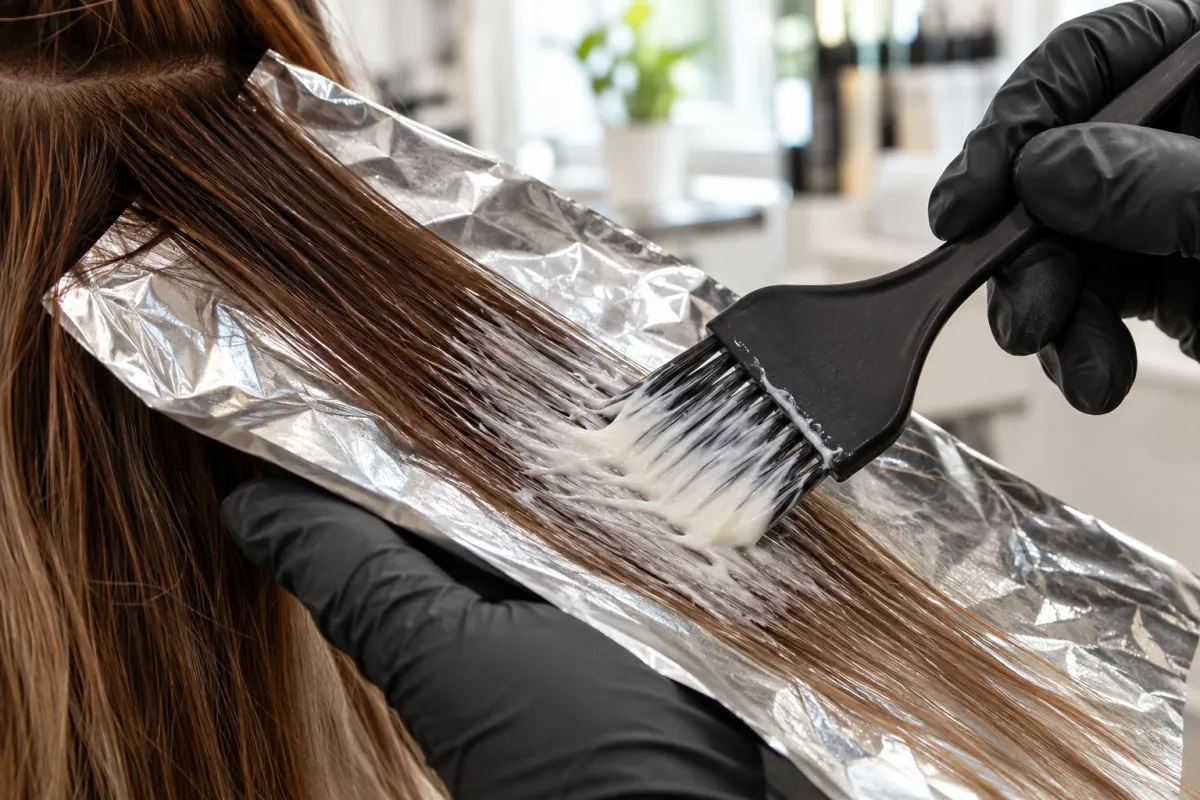
To lighten, the product opens the outer layer of the hair and removes pigment from inside it. The lighter the result and the more often it is repeated, the more porous, dry and fragile the hair becomes. Dark dyes tend to be less harsh than bleaching, but they also have a cumulative effect.

What makes it worse

Bleaching over hair that is already bleached, touch-ups that overlap product onto the lengths, and combining several processes on the same day.

What helps

Spacing out sessions, applying product only to the roots for touch-ups, accepting a less extreme shade, and asking the professional to assess the condition of the hair before starting.

Hair strand or scalp

Is the damage in the hair shaft or in the scalp?

The most helpful question is where the problem lies: a strand that has already grown does not renew itself, while the hair that is growing in does. The answer changes what can be expected.

  • What it looks like. Rough, dry, dull and brittle hair with split ends, which breaks when combed and tangles easily, especially in the lengths and ends.

  • What to expect. A strand that has already grown is lifeless material and cannot be "repaired": care only protects it and improves its appearance, and the damaged strand eventually has to be cut.

  • What helps. Cutting off what can no longer be saved, moisturizing, protecting from heat and sun, and spacing out chemical processes.

  • Follow-up. The new hair that grows in healthy is what shows real improvement, and that takes months.

  • Tell us at the consultation. Which products you used, for how long and whether any of them irritated your skin.

Is your hair becoming more and more fragile, or did your scalp react badly? Book an assessment consultation, so the doctor can understand where the problem lies and what can be done.

Book an assessment consultation

What the clinic can do

Treatments when the scalp is affected too

An honest warning: no treatment at the clinic repairs hair that has already grown, because that hair is no longer alive. These treatments act on the scalp and the follicle, that is, on the hair that is growing in, and are only justified when the doctor considers them appropriate after seeing your case. Results vary from person to person and science is still studying these treatments, so the doctor explains what is known and what you can expect before any decision.

Book an assessment consultation
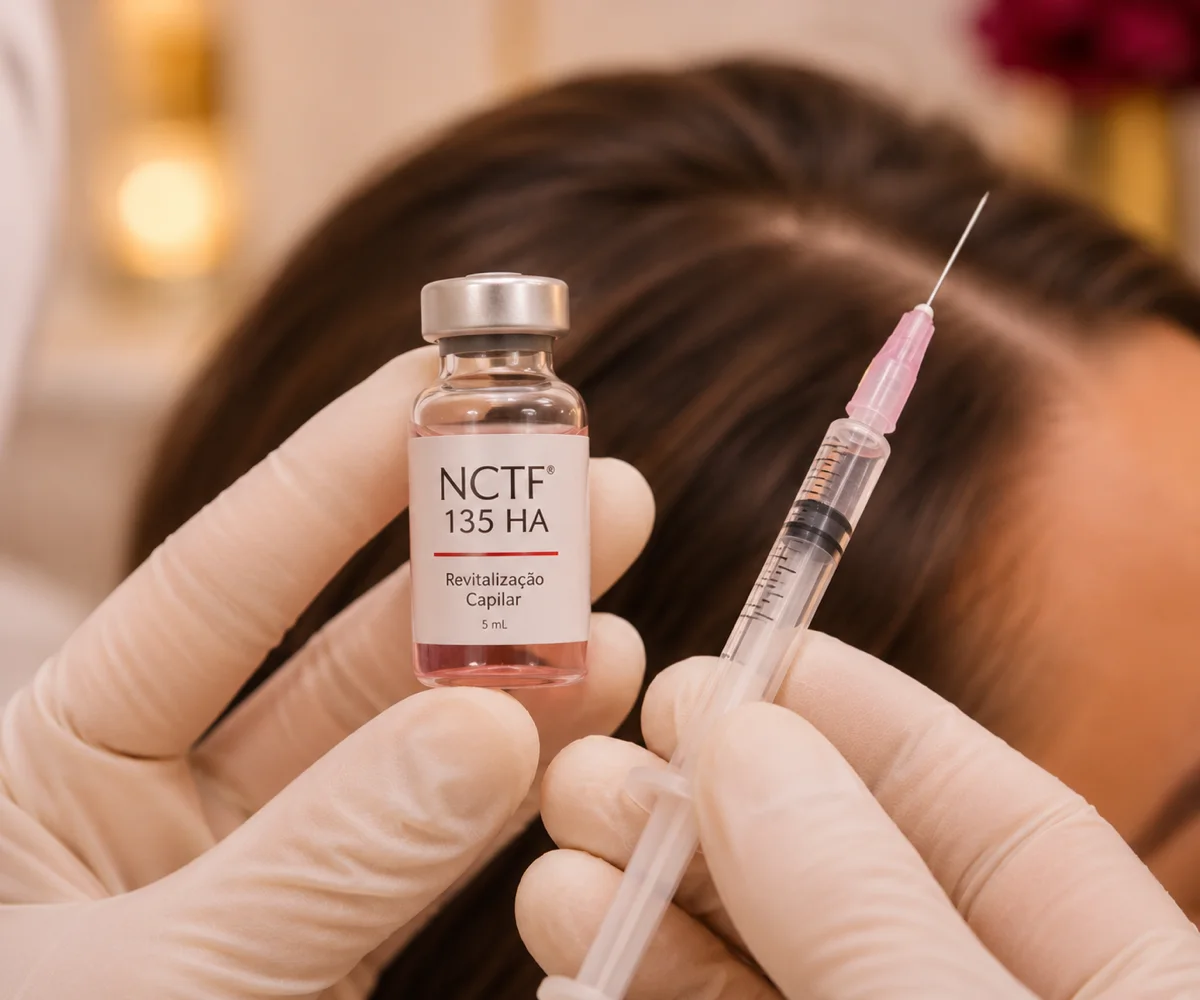
Ampoule of NCTF hair revitalisation and a syringe next to the scalp

Regeneration

Hair NCTF

Vitamins, amino acids, minerals and hyaluronic acid, which may help nourish the scalp and support the hair that is growing in. It does not repair hair that is already damaged.

Suitable when

the scalp is sensitised and the doctor considers nourishing it appropriate.

Find out more
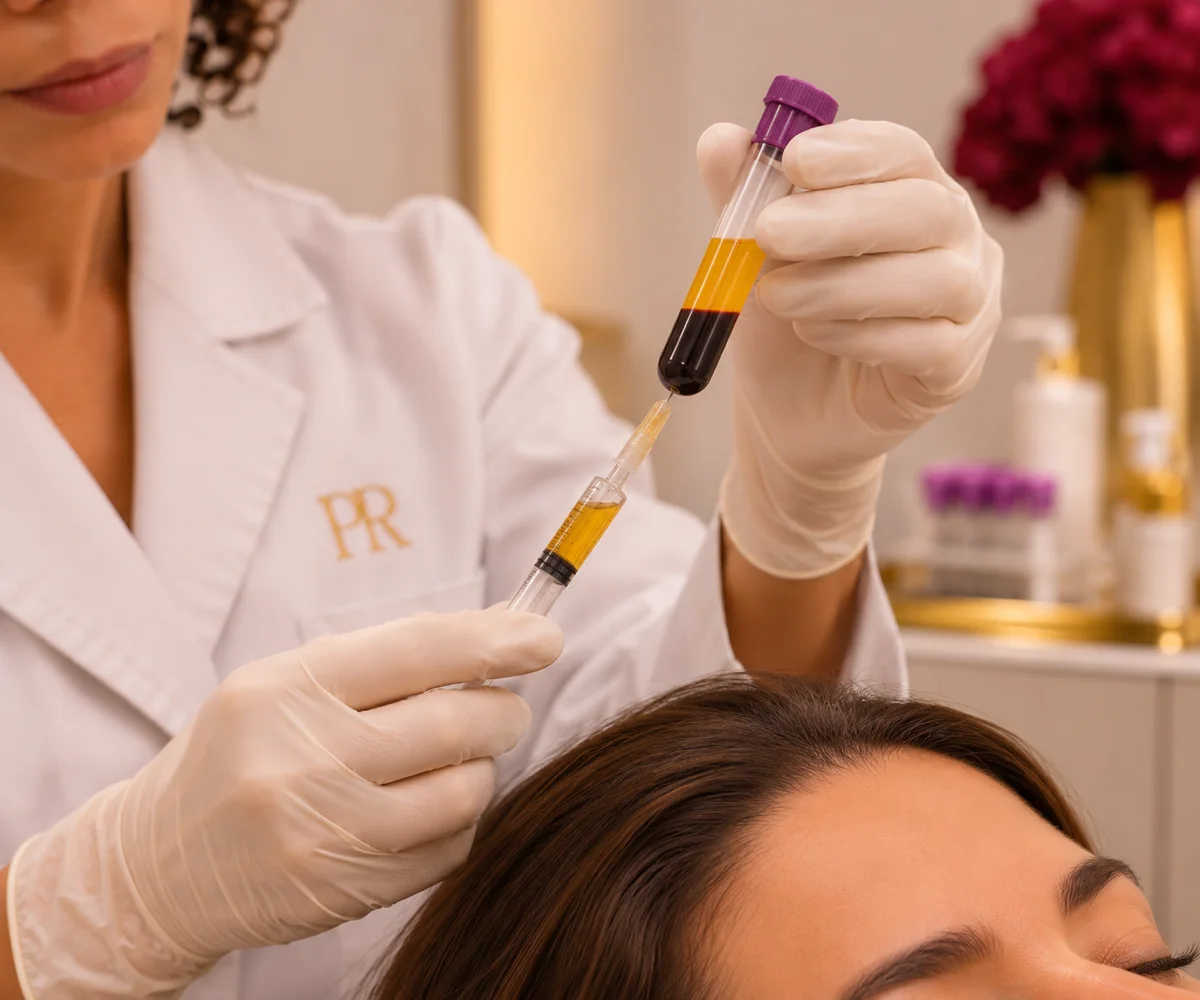
A doctor preparing platelet-rich plasma in a syringe, next to a tube of centrifuged blood

Regeneration

Hair PRP

Platelet-rich plasma, obtained from your own blood, which may help stimulate the follicle in some cases, with limited evidence. The doctor first assesses whether it is appropriate.

Suitable when

there is more hair loss or hair that grows in weaker and the doctor considers stimulating the follicle appropriate.

Find out more
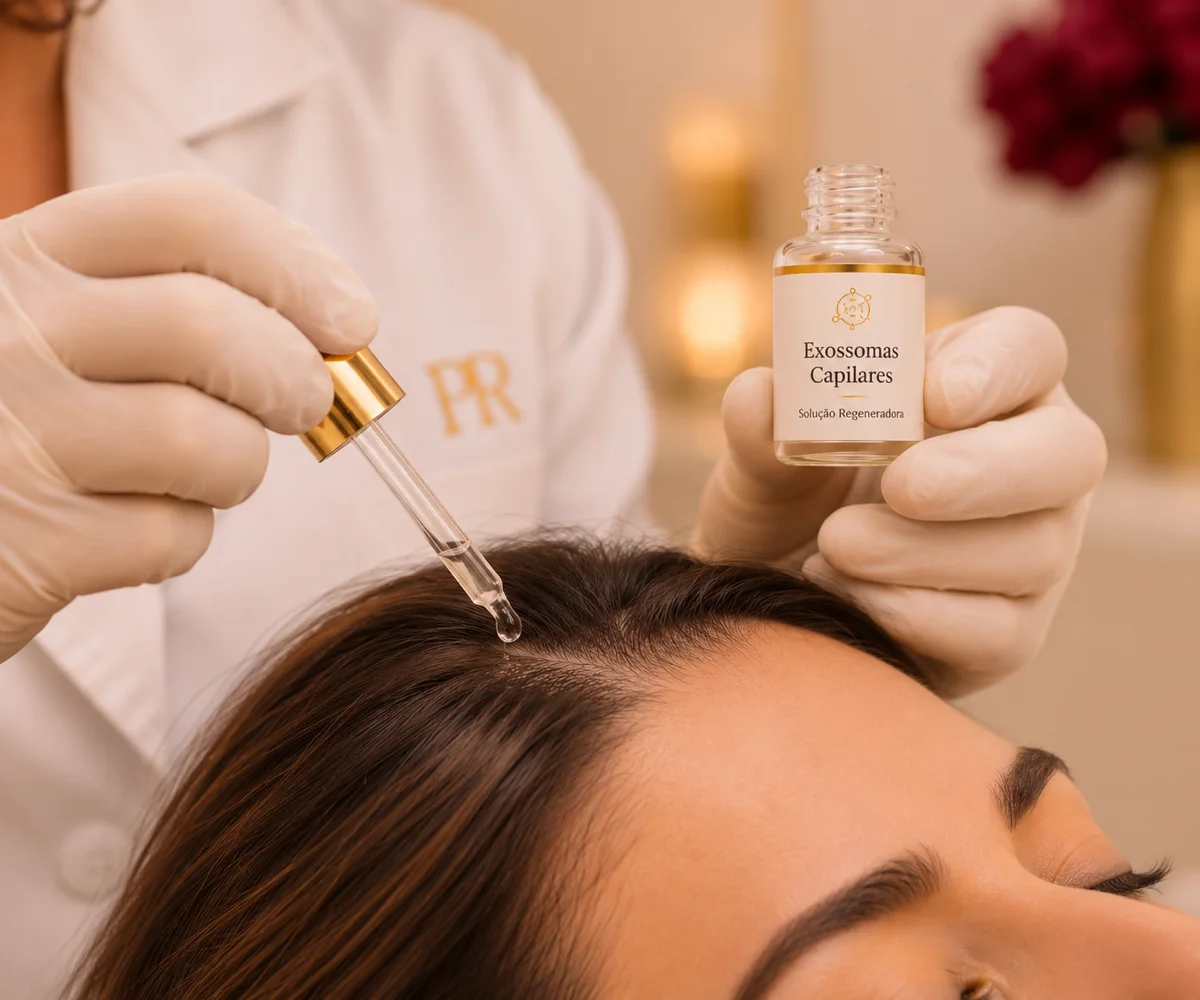
Vial of hair exosomes and a dropper over the scalp

Advanced regeneration

Hair exosomes

Regenerative solution that may help support the follicle and the hair that is growing in, with variable response and limited evidence.

Suitable when

the doctor considers it useful to reinforce the plan with a regenerating active ingredient on the scalp.

Find out more

What about the damaged strand? When the problem is only the strand, the honest answer is to cut off what can no longer be saved, protect the rest and let the new hair grow. When there is irritation or hair loss, treating the scalp comes first, and the doctor explains the options after the assessment. Results are gradual.

What the journey looks like

From the first consultation to follow-up

No treatment starts without an assessment consultation with the doctor. This is how it works.

  1. 01At the clinic

    Assessment consultation

    The doctor asks which processes you have had and when (bleaching, dyes, straightening), what heat you use, how you wash and comb your hair and whether your scalp has reacted to any product.

  2. 02At the clinic

    Examining hair and scalp

    She examines the scalp and the hairs with trichoscopy, to see whether the damage is only in the lengths or whether the scalp and the root are also affected.

  3. 03At the clinic

    See what matters most

    If useful, she requests blood tests, for example for iron, thyroid and other vitamins, and asks about diet, stress and medication.

  4. 04At the clinic

    Saying clearly what can be expected

    She explains what cannot be recovered (hair that has already grown), what can be protected and, if there is irritation or hair loss, which scalp treatments may make sense.

  5. 05Over time

    Plan and follow-up

    It combines care at home, the treatments that make sense and a pause in aggressive processes, and the hair is reviewed again after a few months.

Day to day

What helps at home

Handling your hair gently protects what is still healthy and gives new hair time to grow. These are the measures that matter most.

The golden rule

Protect what is healthy and cut what can no longer be saved

Damaged hair cannot be rebuilt with products or injections: care only protects it. What helps most is avoiding further damage, cutting the ends that can no longer be saved and waiting for new hair to grow in healthy.

Trimming the ends regularly

Damaged hair does not recover.

In practice: cut off what is split or broken, even if you lose a few centimetres, rather than waiting for it to improve on its own.

Spacing out bleaching and straightening

Damage adds up with every process.

In practice: leave several months between sessions and ask the professional whether the strand can take another one.

Moisturising with masks and conditioner

They help the strand become more manageable and less rough.

In practice: apply from mid-length to the ends, leave it on and rinse well, without weighing down the root.

Protecting from the sun and from sea and pool water

Summer is hard on the hair.

In practice: wear a hat or scarf, wet the hair with fresh water beforehand and rinse after the sea or the pool.

Combing with care

Wet hair is more fragile.

In practice: start at the ends, work upwards gradually and use a wide-tooth comb or a detangling brush.

Dr Michelle Campagnoli, clinical director of Clínica Luxmed

Who will look after you

An assessment carried out by the doctor

At Luxmed, the first step is always an assessment consultation with Dra. Michelle Campagnoli. She examines the hair and the scalp, looks for what lies behind the damage and designs the plan with you, being honest about what can and cannot be recovered.

  • Physical examination and medical historyAssessment of the strand, the scalp and the processes and products you use.
  • A plan tailored to youA plan suited to your case, clearly explained, with follow-up over time.
  • No obligationThe cost of any treatment is confirmed only after the assessment.
Book an assessment consultation

Book a consultation

Book your consultation

Choose how you prefer to get in touch. We will arrange the assessment consultation with Dr Michelle Campagnoli.

Booking through the website100€70€Assessment consultationExclusive price for those who book the assessment through the website. Outside the website, the price is 100 €.

New Life Miraflores, Algés · Office Center, R. Santa Teresa do Menino Jesus n.º 6, 9.º C, 1495-048

Your details are used only for this contact. Any treatment depends on a prior medical assessment.

Request an appointmentIt takes less than a minute.
Speciality
You do not need to go into detail. The doctor will talk to you during the consultation.
Request received. Our team will contact you as soon as possible.
Can damaged hair be “repaired”?

Not completely. Hair that has already grown is lifeless material and does not regenerate. Masks, conditioners and certain products can smooth the surface and improve the feel and shine for a few days, but they do not rebuild the structure. What really changes the outcome is to stop the aggression, cut off what is broken and let healthy new hair grow.

How do I know if the damage has gone too far?

Some signs usually indicate that the hair can no longer take any more: it breaks easily when combed, becomes soft and stretchy when wet, forms knots that are hard to undo, the ends split again soon after a trim, and there are many short bits in the brush. When several of these occur together, it is best to pause the treatments and ask for an assessment.

Does bleaching and straightening cause hair loss?

Damaged hair breaks, which looks like hair loss but is breakage midway along the length. True hair loss, from the root, is different and usually has other causes, such as stress, deficiencies or hormones. However, some products irritate the scalp and, in that case, there may be more shedding in the following days. If the root is irritated or hairs fall out with the bulb, it is worth having it assessed.

Are “formaldehyde-free” straightening treatments safe?

Not always. Some products that claim to be formaldehyde-free release formaldehyde or use other substances, such as glyoxylic acid, and there are recent reports of serious effects in rare cases. Always ask the hairdresser for the composition, avoid products without a clear label, and speak to the doctor or your own physician if you have burning, shortness of breath, pain or changes in urine after a straightening treatment.

How long does damaged hair take to improve?

Hair that has already grown does not improve in the sense of renewing itself; what improves is the new hair that grows from the root. As hair grows slowly, this effect is gradual and it takes months for the new length to replace what was damaged. The doctor explains what is realistic in your case, with no guaranteed timeframes.

Can I keep dyeing my hair?

Many people can, with caution. Darker dyes without bleaching tend to be less harsh, and touching up only the roots spares the lengths. If you have had burning, itching or swelling of the scalp, stop and speak to the doctor, as it may be an allergy and tests are advisable before using the same product again.

Do sun and sea really damage hair?

They can worsen the damage. Ultraviolet radiation, salt and chlorine draw water out of the hair and may leave it drier, lighter and more porous, especially if it was already bleached. Laboratory studies on bleached hair show an effect on porosity, but this does not mean that all hair reacts in the same way. A hat and rinsing with fresh water help.

What treatments does the clinic use?

Depending on the case: hair NCTF, hair PRP and hair exosomes, always after the assessment consultation. They act on the scalp and the follicle, that is, on the hair that grows, and do not repair a strand that has already grown. The evidence is limited and the response varies, so the doctor only proposes them when she considers them appropriate.

Do scalp injections repair the ends?

No. The ends are the oldest part of the hair and are no longer alive, so no injection repairs them. What treatments can do, when indicated, is support the scalp and the follicle, that is, the hair that is growing in. For ends that are already damaged, the honest solution is to cut and protect.

Do I need blood tests?

Sometimes. If, besides damaged hair, there is hair loss, thinning hair or tiredness, the doctor may request blood tests for iron, thyroid and vitamins, because certain deficiencies or conditions make hair more fragile. Supplements should not be taken on your own without knowing what is lacking.

When should I book a consultation?

If the scalp burns, flakes, has sores, is red or hurts, or if hair falls out suddenly and heavily or bald patches appear quickly, do not wait. It is also worth booking if, even with a pause in treatments and care at home, the hair keeps breaking or thinning after a few months.

Does hair loss after a dye or straightening go back to normal?

When the cause is a temporary scalp irritation and the product is avoided, hair loss usually settles gradually. If there is an allergy, using the same product again may bring the problem back. And if the hair loss continues or bald patches appear, the doctor assesses whether there is another cause behind it.

Do “repairing” shampoos and ampoules work?

They help the surface of the strand and may improve its feel, manageability and shine, especially if the hair is dry. But they do not rebuild the structure or replace cutting off what is broken. Choose gentle products, avoid combining many at the same time and be wary of promises of total repair.

Can damaged hair be due to a deficiency of something?

There may be a contribution. Iron, protein or zinc deficiency and thyroid disorders make newly growing hair thinner and more fragile, and external damage is added to hair of poorer quality. For this reason, when the problem is persistent, the doctor considers blood tests, rather than treating only the outside.

We could not find that question. Ask us on WhatsApp

Scientific references

This page is based on the sources below and was reviewed by Dr. Michelle Campagnoli. Last updated on .

  1. Gavazzoni Dias MF. Hair cosmetics: an overview. Int J Trichology, 2015.
  2. Sharma A, Mhatre M. Cosmetic Trichology: Hair Cosmetics, Styling, and their Effect on the Hair Fiber!. Indian Dermatol Online J, 2020.
  3. Haskin A, Kwatra SG, Aguh C. Breaking the cycle of hair breakage: pearls for the management of acquired trichorrhexis nodosa. J Dermatolog Treat, 2017.
  4. Yang SJ, Yu HJ, Lee J, Hwang SJ, Kang NG, Jeong ET. Effects of ultraviolet rays and particulate matter on hair porosity in damaged hair. J Cosmet Dermatol, 2024.
  5. Thomas ZM, Jamiolkowski D, Chantraine S, Steveling-Klein E, Hofmeier KS, Hartmann K. Contact dermatitis to hair cosmetics: Current diagnostic recommendations. J Dtsch Dermatol Ges, 2021.
  6. Palmer V, McMichael AJ. Hidden Risks of Formaldehyde in Hair-Straightening Products. Cutis, 2024.
CallAssistantAvailableBook