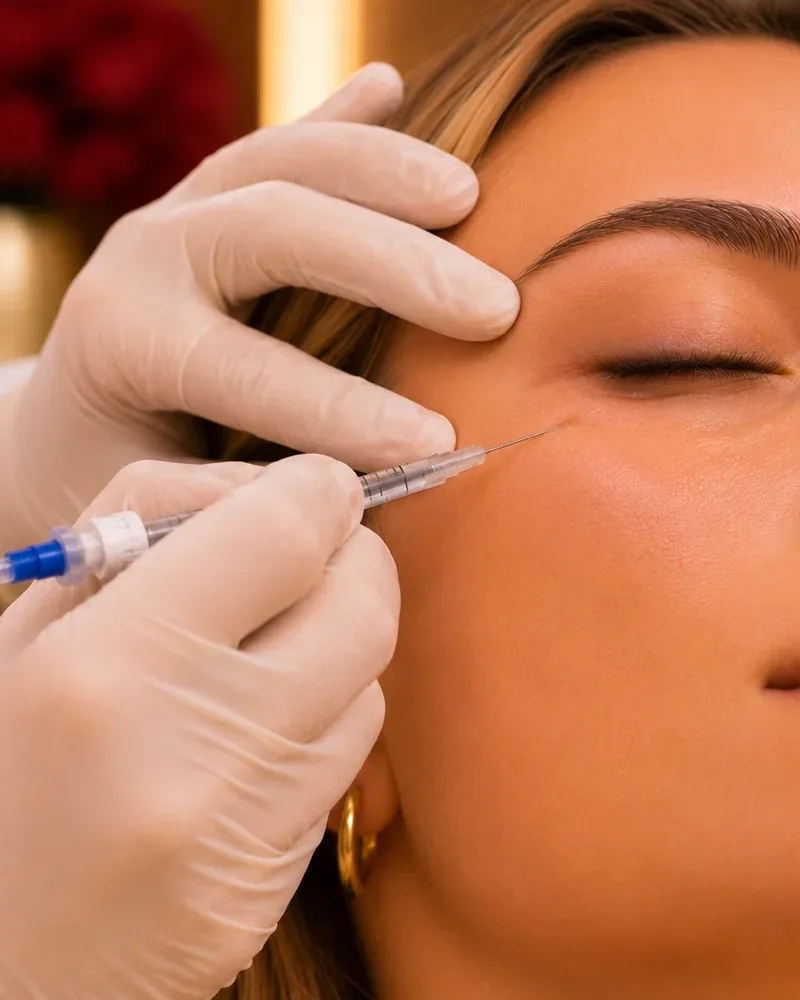
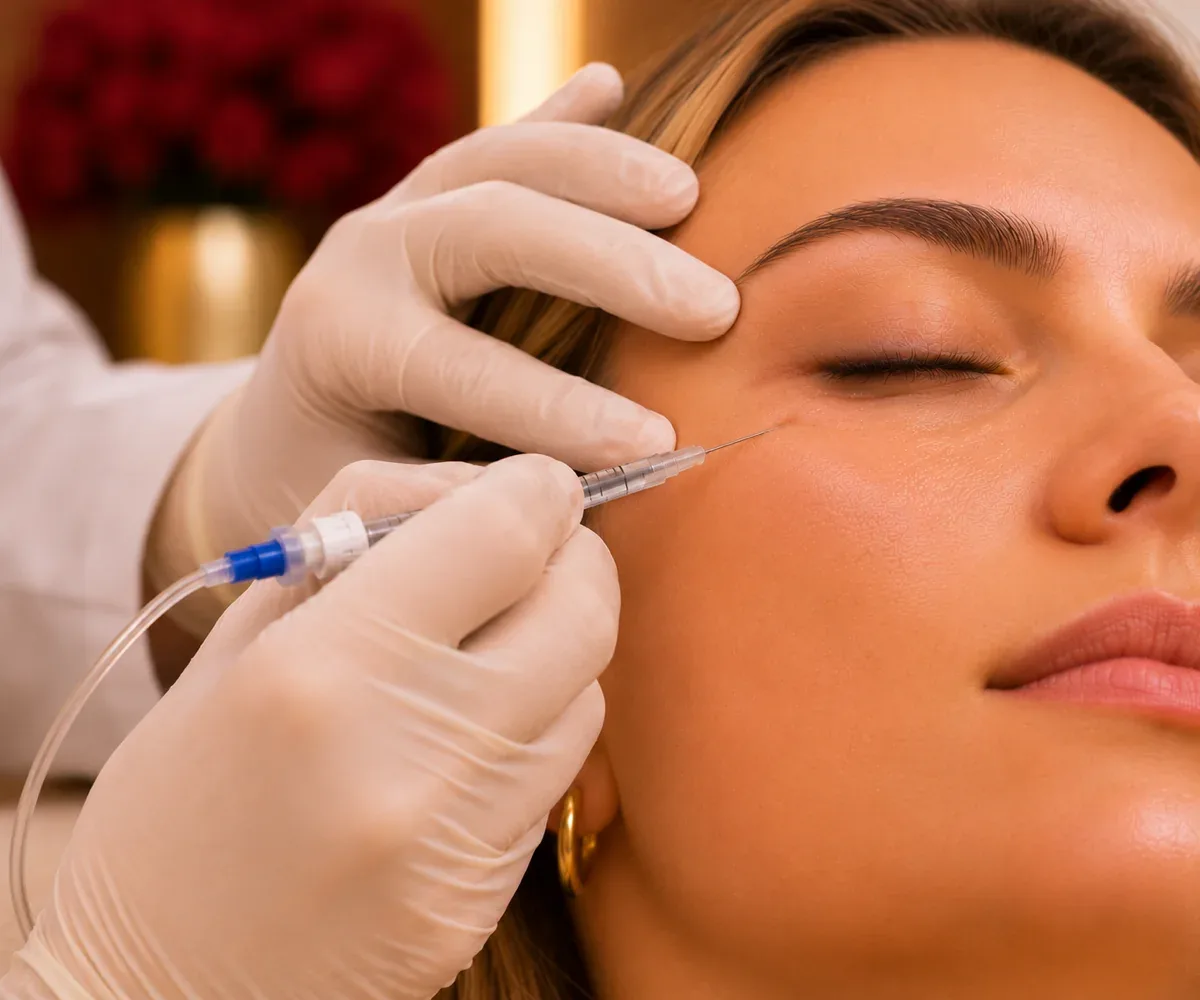
What is carboxytherapy?
This treatment involves injecting small amounts of sterile, medical carbon dioxide (CO2) into or just under the skin. The gas dilates small blood vessels, increases local circulation and oxygenation, and is eliminated by the body. On the face, it is mainly used as a complementary treatment for dark circles, the double chin and to improve the appearance of the skin. Results vary and the evidence is limited, so the doctor assesses with you whether it is appropriate.
How does it work and what can I expect?
The gas temporarily improves circulation and, through the Bohr effect, increases the release of oxygen to the tissues. Animal studies have also observed increased collagen renewal in the dermis. Human studies are small and results vary: it may improve skin tone and appearance in some people, but it does not alter facial structure or remove fat or excess skin.
How does it differ from microneedling, mesotherapy and PRF?
In microneedling, needles create micro-injuries that stimulate the skin. In mesotherapy and intradermotherapy, substances are injected into the dermis. In PRF and PRP, a concentrate from the person's own blood is applied. In carboxytherapy, a gas is injected, acting mainly on local circulation and oxygenation. These are different techniques that may complement each other, and the choice is made at the assessment.
What about surgery (blepharoplasty or liposuction of the double chin)?
These options are different in nature. Surgery removes or repositions fat and excess skin, with a generally more predictable and lasting result, but it involves anaesthesia, incisions and a recovery of several weeks. Carboxytherapy is non-surgical, is performed over several sessions, has a short recovery and a moderate, variable effect, particularly on skin colour and quality. Clínica Luxmed does not perform surgery: if the doctor believes at the assessment that surgery would be the best option for you, she will tell you.
Does it hurt?
According to reviews, pain during the injection is the main limitation of the treatment. You will feel a prick, pressure and a burning sensation as the gas spreads, which are more noticeable around the eyes and pass after the session. Sensitivity varies from person to person, and the doctor adjusts the pace to your comfort.
How many sessions are needed and how often?
In studies on dark circles, the protocols involved 3 to 4 sessions, weekly or fortnightly, and one of them assessed the results six months later. At the clinic, the number and interval depend on the area, what is to be treated and the skin’s response, and are set at the assessment.
Can I combine it with other treatments?
You can, when appropriate. The literature describes combinations with PRP, peels or microneedling, always with an interval between sessions set by the doctor. At the assessment, the doctor will tell you whether it is worth combining treatments or whether a single technique is enough.
Does carboxytherapy reduce a double chin and improve facial contour?
Reviews mention the double chin as one of the areas in which it is used, but we found no studies specifically on the double chin. The only controlled trial we found on fat involved the abdomen and 16 people: fat decreased slightly immediately after the sessions, but this difference was no longer seen at 28 weeks. It may therefore be considered as a complementary treatment in mild cases, with realistic expectations. If the double chin is mainly fat or loose skin, the doctor will explain the other options, including surgery.
Does carboxytherapy treat dark circles? What does the evidence say?
There are several small studies, almost all without a comparison group, and most show an improvement in colour after 3 to 4 sessions, without serious adverse effects. In a study of 35 people, the improvement was seen six months later. In another, involving 20 people, the improvement was statistically significant, but only some had a complete response. In a comparative study of 23 people, PRP produced a better response than carboxytherapy. Results therefore vary and the evidence is limited, so the doctor first assesses with you what type of dark circles you have and whether carboxytherapy is appropriate.
Does it treat eye bags?
No. Carboxytherapy does not remove fat or correct bulging of the eyelid, and we found no studies specifically on eye bags. At most, it may help the skin and circulation around the eye. If eye bags are your main concern, the doctor will explain the options, including blepharoplasty, which the clinic does not perform.
Are the results permanent?
No. Results are gradual, vary from person to person and may not last. In the trial on abdominal fat, for example, the difference seen immediately after the sessions was no longer visible at 28 weeks. At the assessment and after the sessions, the doctor will tell you whether repeating treatment is appropriate.
What are the risks and side effects?
The most frequent effects are pain during injection, redness, swelling and bruising: haematomas are the most commonly reported adverse effect. Subcutaneous emphysema, meaning gas trapped under the skin, including around the eye, has been reported rarely in cases that resolved within days to weeks. Infections due to poor hygiene of the equipment have also occurred. If you have severe pain, rapidly increasing swelling, changes in vision, fever or pus, contact the clinic and, if it is serious, call 112; outside opening hours, you can call SNS 24 (808 24 24 24).
Who should not have it?
People who are pregnant or breastfeeding, or who have an infection, fever or inflammation in the area, severe heart, vascular or kidney disease, thrombosis or stroke, uncontrolled high blood pressure, or clotting disorders. The doctor assesses each case, including the medication you take.
Is an assessment needed first? Is there a charge?
Yes. All treatments at Clínica Luxmed begin with an assessment consultation with the doctor, where we work out whether the treatment makes sense for you. The cost of the assessment is deducted if you decide to go ahead with the treatment.
How should I prepare and what should I do afterwards?
Come with clean skin and no make-up, and mention any medication that affects clotting and any change in your health since the assessment. Afterwards, there may be redness, swelling and bruising for a few days: use sunscreen and avoid rubbing the area. The doctor will give you instructions for your case.
Can I work and carry on with my normal life afterwards?
As a rule, yes: recovery is short. However, bruising and swelling may appear around the eyes for a few days. If you have an important event, mention it at the assessment so that we can schedule the sessions well in advance.