Algés, Oeiras Mon to Fri · 09:00 to 13:00 and 14:00 to 19:00 · Sat · 09:00 to 14:00
WhatsApp Book a consultation

Facial aesthetics

Dull, lifeless skinWhen your face has lost its glow, looks tired even after rest and you want to understand why

Dull skin is skin that reflects little light: the tone looks grey or yellowish, the surface rougher and the face more faded than age and rest would justify. It is not a disease or a diagnosis, but a visual impression with several possible origins, from dryness and the build-up of cells on the surface to sun, habits and, more rarely, a health cause that should not be missed. Here we explain what usually lies behind it, what helps at home, what the evidence says about peels, mesotherapy and microneedling, and when a medical assessment is advisable before any treatment, at Clínica Luxmed, in Algés.

Reviewed by Dr Michelle Campagnoli, clinical director

  • 3options the clinic may consider
  • 1assessment, always first
  • Nocommitment
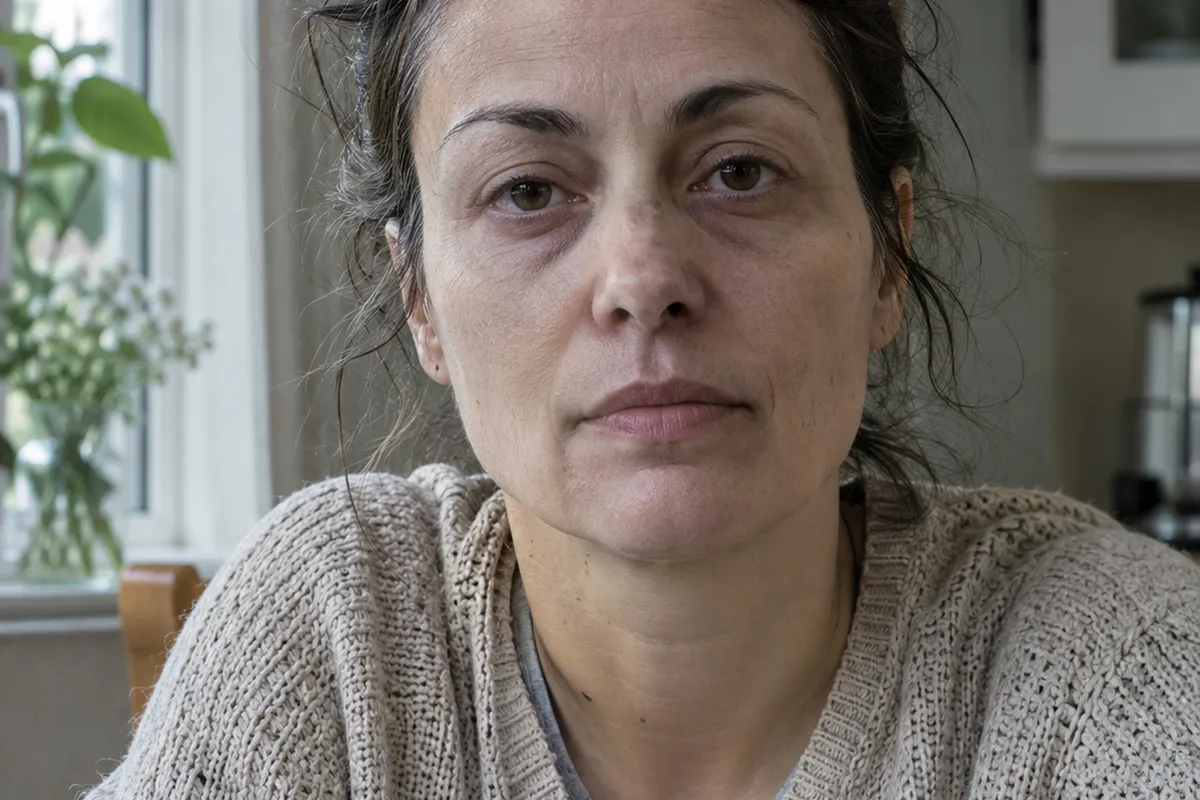
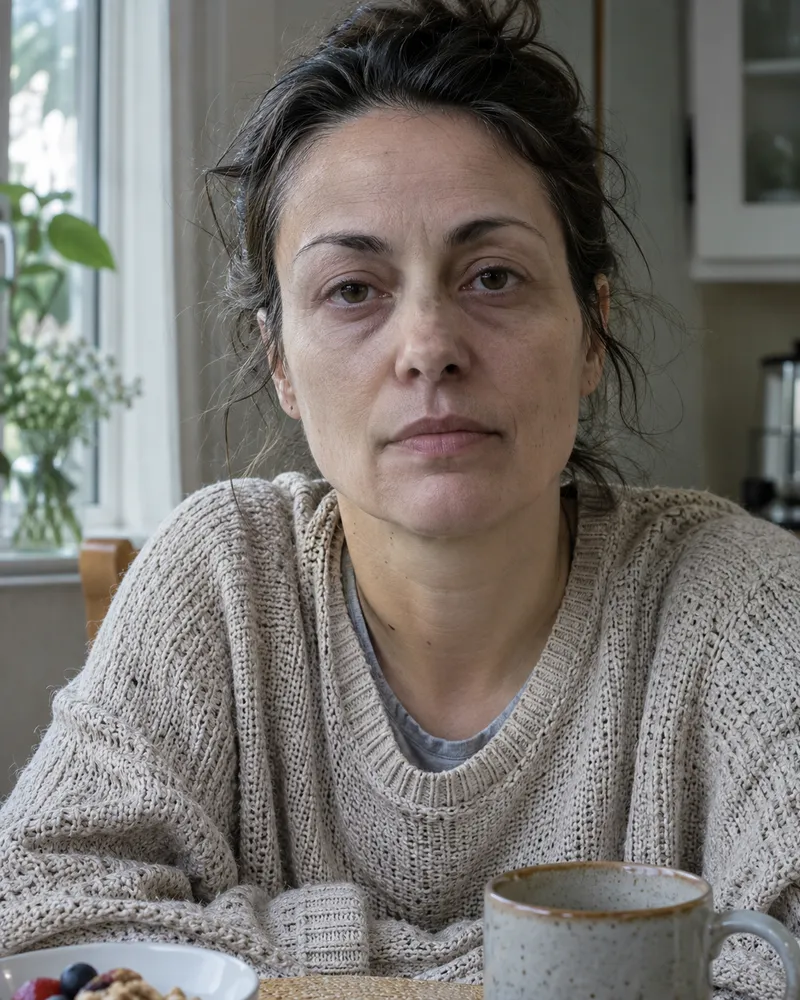
Woman at the breakfast table with dull, tired-looking skin lacking radiance

How to recognise it

Is it really a lack of radiance in the skin?

Dull skin, dry skin and tired skin are confused in the mirror, and the origin changes what makes sense to do. These signs help you understand what is going on before the assessment.

Tick what you recognise0/7

Tick the signs you recognise in your case. This is not a diagnosis, it is only meant to give you an idea.

Have your skin or the whites of your eyes turned yellow? Did the pallor appear with unusual tiredness, shortness of breath or palpitations? Did dry, dull skin come with constant cold, weight gain, hair loss or a hoarse voice? Is there a patch or mole that has changed colour, shape or size, that bleeds or hurts? You need a medical assessment before any treatment. Out of hours, call SNS 24: 808 24 24 24.

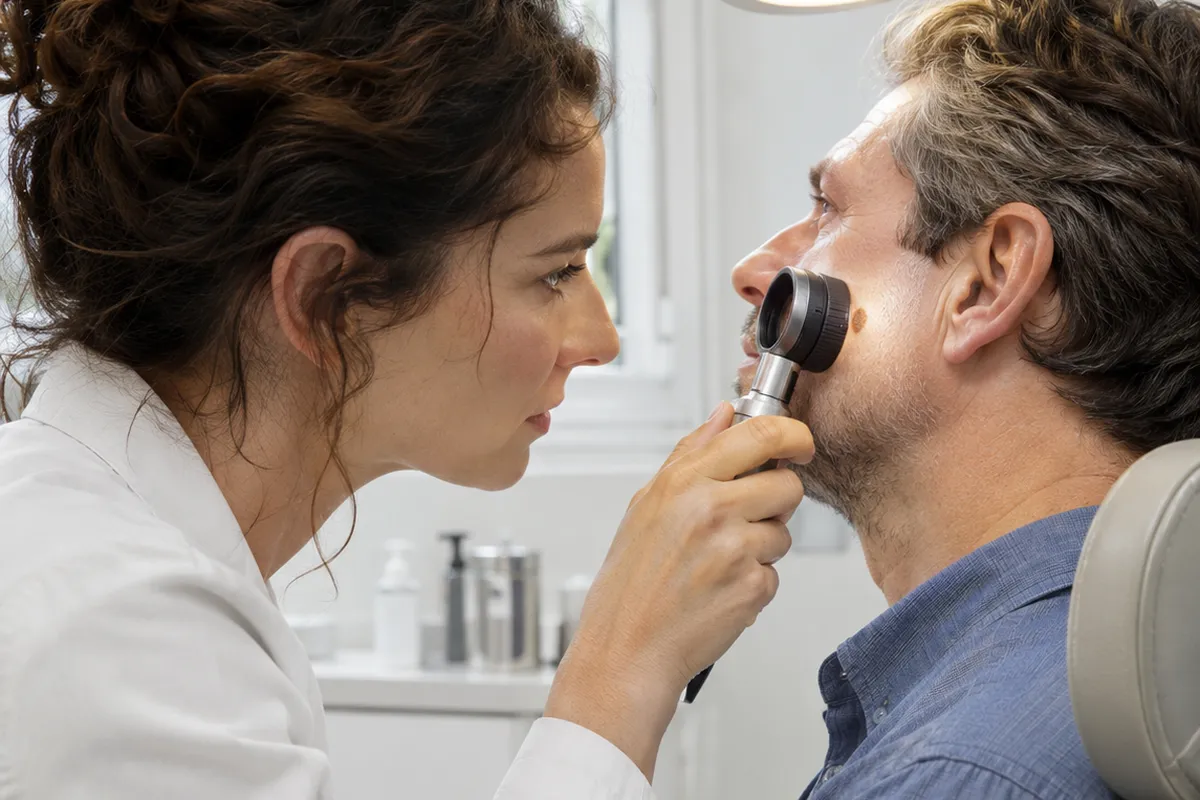
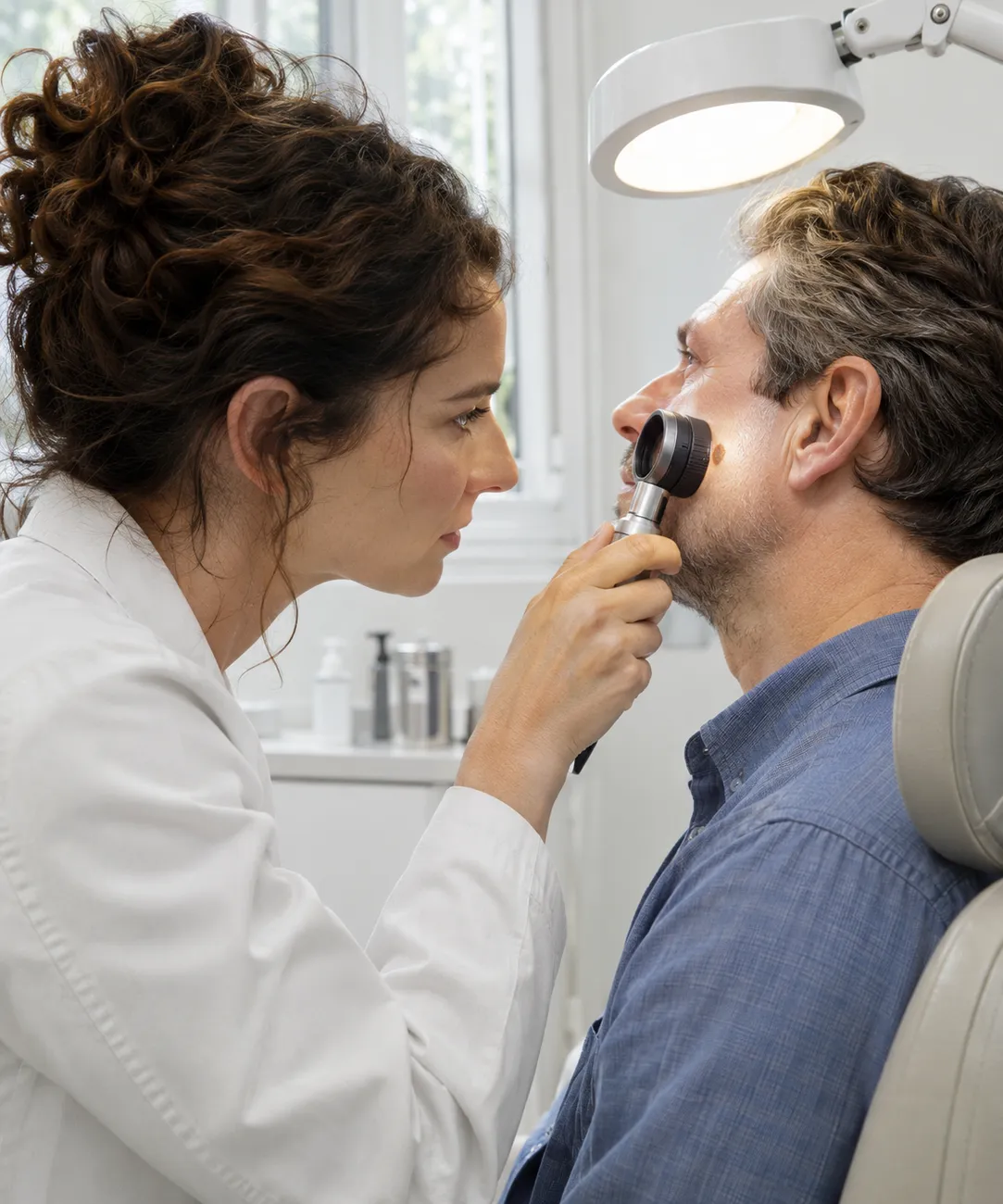
Doctor examining a patient's face with a dermatoscope under an examination light
Photograph of a consultation. The dots mark what the doctor is assessing.

Why it happens

What may lie behind dull skin

There is almost always more than one cause at the same time. Choose a situation to see how it may contribute and what usually helps.

Accumulated cells on the surface

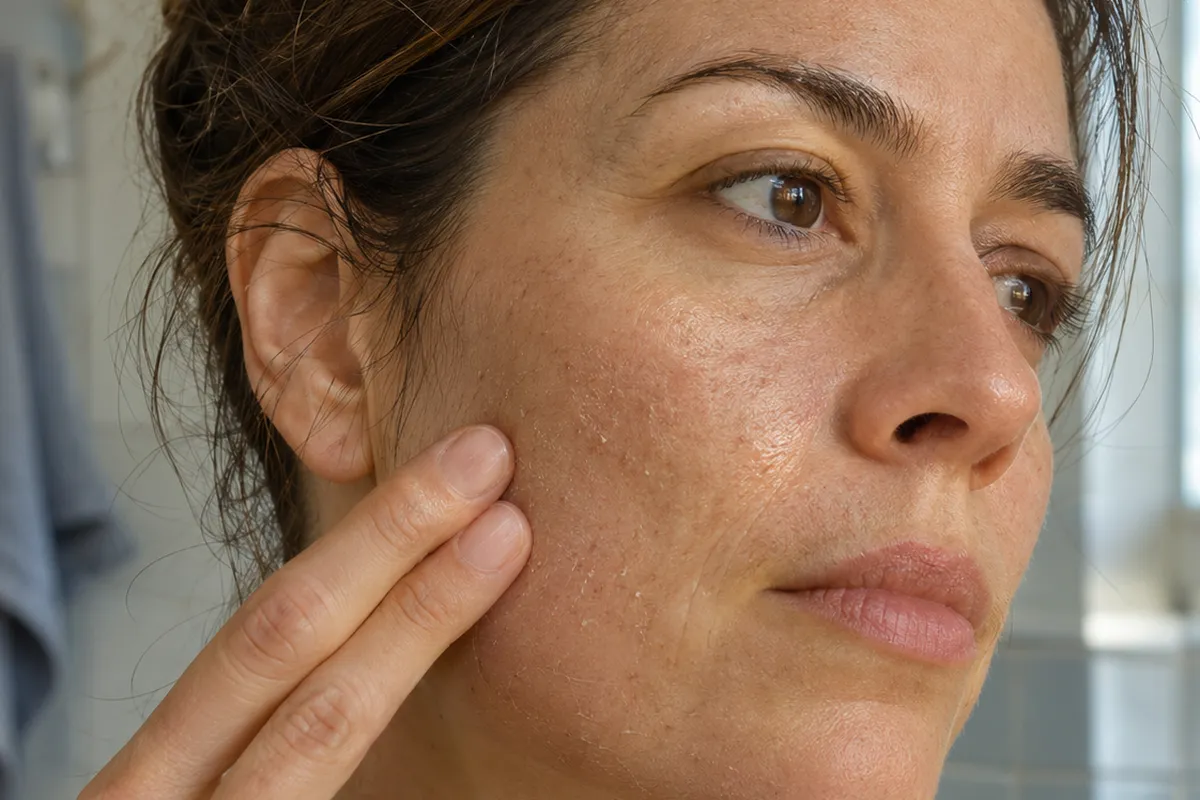
The outermost layer of the skin renews itself continuously, and when this process slows, as happens with age, dead cells stay on the surface for longer. The skin reflects light less evenly and looks rougher and more faded, even with nothing wrong underneath.

What weighs on it

Disguising with heavy make-up, or scrubbing with scrubbing mitts and rough exfoliants that harm the skin instead of renewing it.

What helps

A gentle cleanse, a light, infrequent chemical exfoliation chosen for your skin type, and whatever treatment the doctor sees fit after examining the skin.

Normal or to be assessed

Simple dull skin or something to assess

Most dull skin has a simple, treatable cause. But some situations call for an assessment before any treatment, because the lack of radiance may be only the visible part.

  • What it looks like. Skin without reflection, with a rough texture and fine flaking, that gets worse with cold, dry air, a harsh routine or accumulated sun, without other symptoms.

  • When it is noticed. In the morning, in daylight, in photographs and when make-up sits badly. It is usually worse in winter.

  • What the clinic does. The doctor listens to the history, examines the skin and confirms that it is dryness, sun damage or slow renewal, before proposing what makes sense.

  • At home. Simplifying the routine, cleansing gently, moisturising, protecting from the sun every day and taking breaks from the most irritating active ingredients.

Are your skin or the whites of your eyes yellow, or do you have shortness of breath, chest pain or fainting? Seek urgent help or call 112. If you have doubts or a recent change in your skin, out of hours you can call SNS 24: 808 24 24 24.

Book an assessment

What the clinic may consider

Options for restoring radiance to the skin

Before any procedure come the right habits: sun protection every day, a gentle routine, hydration, not smoking and treatment of any health cause. Only then is a procedure considered. For lack of radiance, the clinic associates three options: chemical peel, NCTF and microneedling. The evidence is limited and of variable quality: superficial peeling has a long history and is described in reviews as useful for improving the look of the skin; for NCTF there is a randomised trial funded by the manufacturer with improved radiance; and for mesotherapy in general a review concluded that evidence of efficacy is still lacking. Microneedling has good acceptance and few adverse effects in reviews, but it has been studied mainly for wrinkles and texture, not for radiance itself, so it does not appear on a card. Results vary from person to person, are not permanent and are generally temporary.

Book an assessment
Dr Michelle Campagnoli, clinical director of Clínica Luxmed

First step

Assessment consultation

The doctor listens to what you are experiencing, examines your case and explains the suitable options. No treatment begins without this consultation.

May be considered when

you want to understand the cause and decide on the best path, with time and without commitment.

Book an assessment
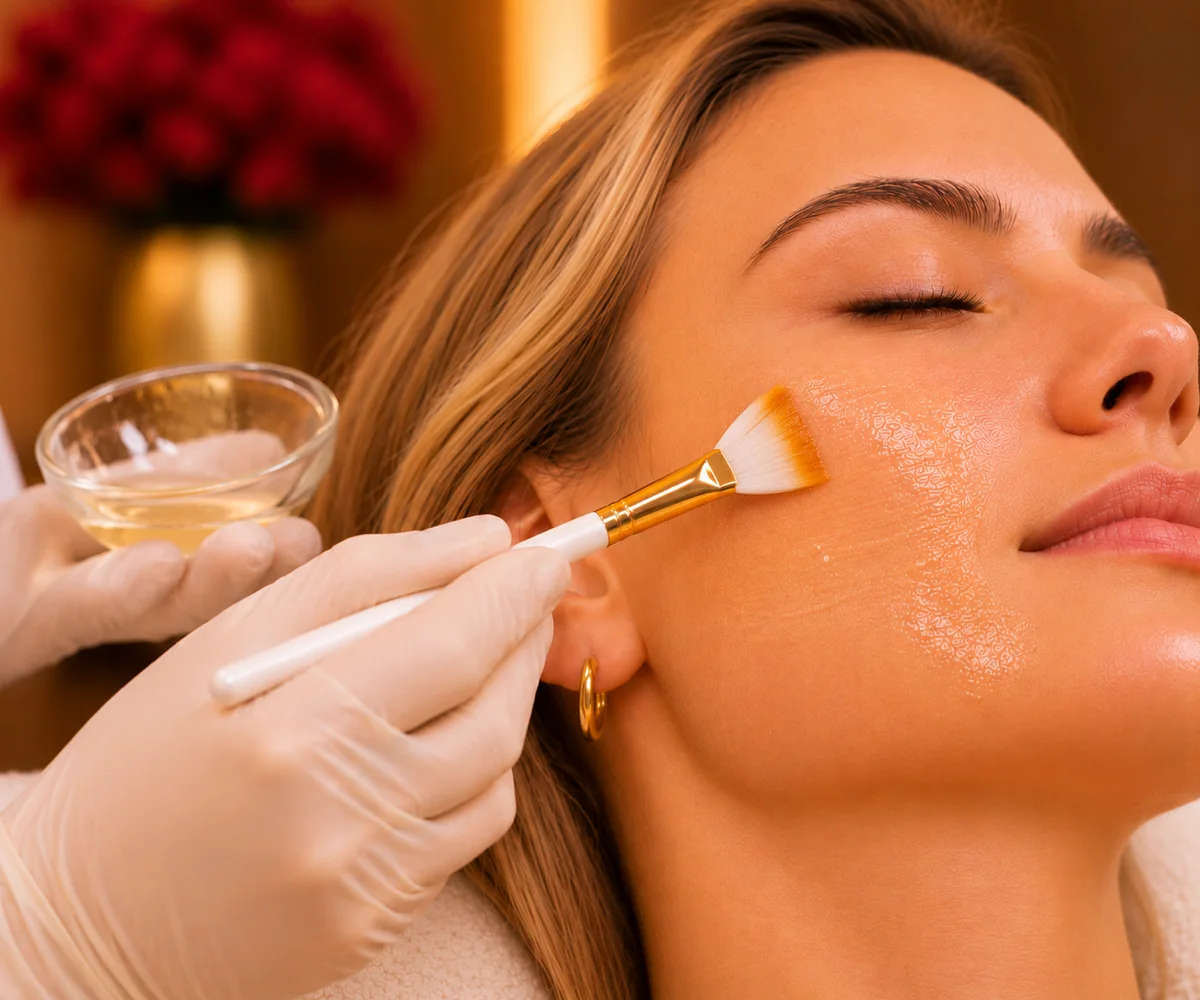
Application with a brush of a peel solution on the face, in bright consulting-room light

Skin renewal

Chemical peel

Application of an acid to the skin to remove the most superficial layers and leave skin that is more even in tone and texture. A superficial peel can give a lighter, less rough look, usually over several sessions, but the effect is temporary and requires strict sun protection. In darker skin (phototypes IV to VI) the risk of marks and scarring is greater and calls for more caution.

May be considered when

the skin is dull mainly at the surface, through dryness, build-up of cells or sun, is not irritated or infected, the health cause has been assessed, and the doctor has explained the risks and what is realistic to expect.

Find out more
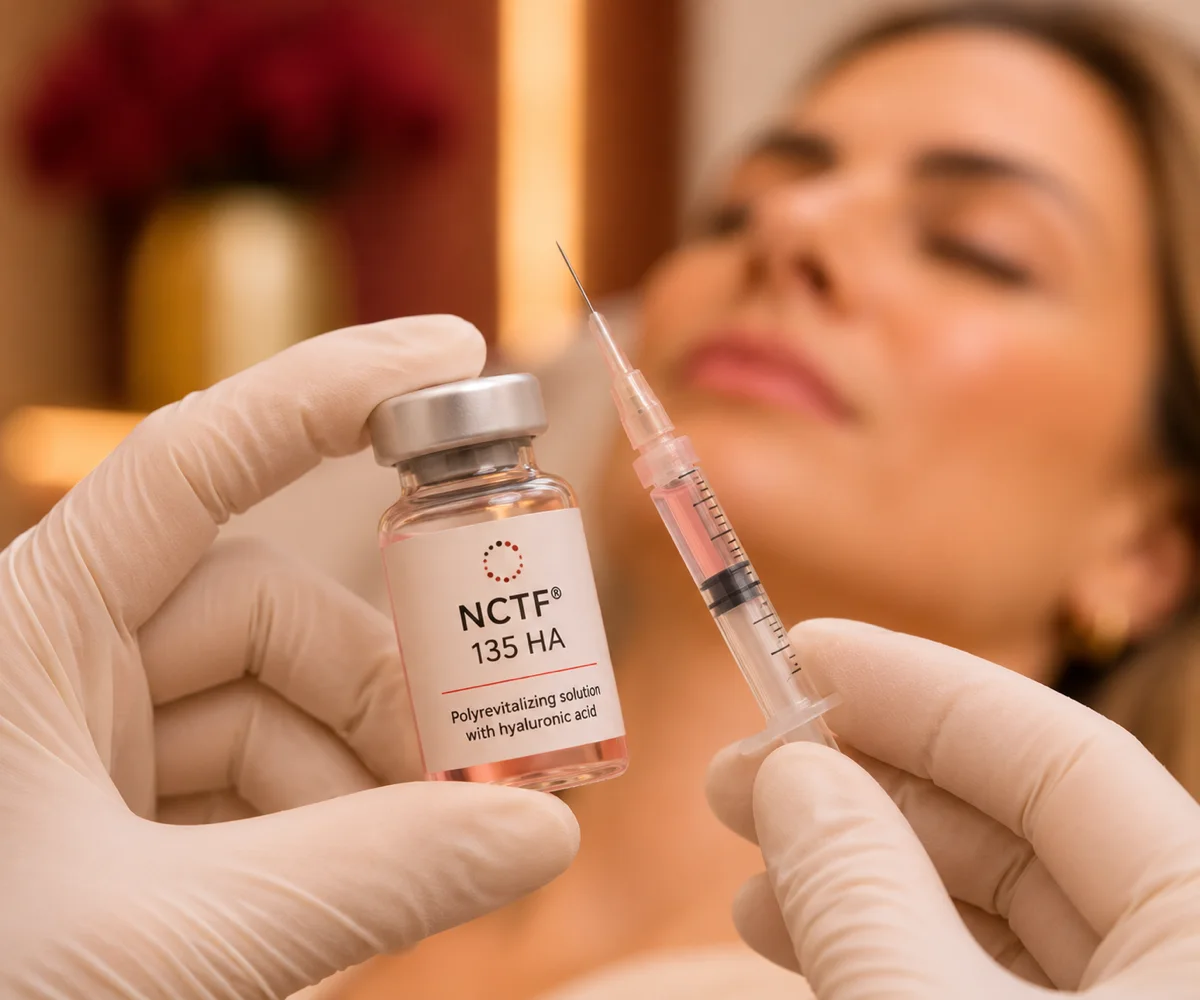
An ampoule and syringe in the foreground, on a bright consulting-room counter

Skin nourishment

NCTF

Injection into the skin, in small amounts, of a solution with hyaluronic acid, vitamins, amino acids and minerals, to hydrate and nourish the skin in depth. A randomised trial, funded by the manufacturer, described improved radiance and hydration compared with routine care, but mesotherapy in general has little solid evidence. There may be redness, swelling and small bruises, which usually resolve in days.

May be considered when

the skin is dehydrated and tired, without active infection or dermatitis, the health cause has been assessed and the person understands that the effect is temporary and that several sessions are needed.

Find out more

What the journey looks like

From the first conversation to a plan tailored to you

No procedure begins without an assessment by the doctor. Most people start with the simplest approach, and only then is anything further considered.

  1. 01At the clinic

    Telling your story

    The doctor asks since when the skin has been like this, whether it changed suddenly, which care and products you use, whether you smoke, how you sleep, medication and illnesses, and what you would like to see changed.

  2. 02At the clinic

    Examining the skin

    The tone, hydration, texture and sun damage are observed, in front and side light. If there is pallor, yellowing, intense dryness with other symptoms or a suspicious mole, tests are requested or you are referred to dermatology or general medicine.

  3. 03At home

    Simplify and protect

    What harms the barrier is changed: hot water, strong soap, excess active ingredients. The skin is protected from the sun every day, moisturised, and smoking is stopped with support. In many cases, this already improves the look of the skin.

  4. 04Over time

    Decide and follow up

    If the skin continues to look faded, the doctor explains whether a peel, NCTF or another procedure makes sense, what can be expected and how many sessions are needed, without promising results. The examination is repeated and the plan adjusted, including maintenance.

Day to day

What helps at home

What you do at home matters more than you might think. These are sensible measures to take while you wait for your consultation and alongside the clinic’s plan.

The golden rule

Protect and simplify before adding

The radiance of the skin depends, first of all, on skin without too much sun, without irritation and with the barrier in order. A peel or an injection on skin that continues to be harmed does not last long. And a pallor, yellow skin or new dryness deserve to be seen by a doctor, and not “treated” with creams.

Sunscreen every day

Accumulated sun is the main external factor in skin ageing, and daily protection slows it.

In practice: broad-spectrum, on the face and neck, even on cloudy days, reapplied when you are in the sun.

Cleansing gently

Very hot water and harsh soaps strip the natural oil and leave the skin drier and more faded.

In practice: lukewarm water, a gentle cleanser and drying without rubbing.

Moisturising skin that is still damp

Retaining water at the surface restores comfort and a less rough look.

In practice: a moisturiser suited to your skin type, straight after cleansing, morning and night.

Stop smoking and moderate alcohol

These are factors associated with more signs of skin ageing.

In practice: ask your GP or pharmacy for support, and bear in mind that your skin may be one more reason.

Dr Michelle Campagnoli, clinical director of Clínica Luxmed

Who will look after you

An assessment carried out by the doctor

At Luxmed, in Algés, the first step is always an assessment with Dr Michelle Campagnoli. She is the one who examines the skin, works out whether the lack of radiance is simple or whether there is a cause to investigate and decides with you what makes sense, before any procedure.

  • Physical examination and medical historyA conversation about care, habits, health and medication, and an examination of the skin in front and side light.
  • A plan tailored to youA clear plan, without promises, with the cause treated first and follow-up over time.
  • No obligationThe cost of any treatment is confirmed only after the assessment.
Book an assessment

Book a consultation

Book your consultation

Choose how you prefer to get in touch. We will arrange the assessment consultation with Dr Michelle Campagnoli.

Booking through the websiteAssessment consultationTalk to our assistant on WhatsApp and ask for the current price of the assessment.

New Life Miraflores, Algés · Office Center, R. Santa Teresa do Menino Jesus n.º 6, 9.º C, 1495-048

Your details are used only for this contact. Any treatment depends on a prior medical assessment.

Request an appointmentIt takes less than a minute.
Speciality
You do not need to go into detail. The doctor will talk to you during the consultation.
Request received. Our team will contact you as soon as possible.
Why does skin become dull and lacklustre?

Almost always through a combination of simple causes: dead cells that accumulate on the surface when renewal slows, dry skin or skin with an altered barrier, sun accumulated over the years, tobacco and pollution, and products or habits that irritate the skin. More rarely, the cause is a health one, such as anaemia, a thyroid problem or a liver condition. So the first step is to work out what the cause is in your case.

Is dull skin the same as dry or dehydrated skin?

They are not the same thing, but they are confused. We speak of dry skin when oil is lacking and of dehydrated skin when water is lacking, and both leave the outer layer rough, with a dull look and sometimes with flaking. But skin can be dull for other reasons, such as sun, the build-up of cells or a yellowish tone. The doctor’s examination helps to distinguish.

Is it normal for skin to lose radiance with age or at the menopause?

It is common. With the years, the skin renews itself more slowly, produces less oil and accumulates the effect of the sun, and at the menopause it tends to become drier. This does not mean there is nothing to be done: protecting from the sun, moisturising and simplifying the routine help, and the doctor assesses whether a procedure makes sense. An abrupt change, on the other hand, deserves to be assessed.

Do lack of sleep, stress and diet make the skin look dull?

Less than is said. In a controlled experiment, one whole night without sleep did not measurably alter skin colour, nor the opinion of those who assessed the photographs. Sleep, stress and diet matter for health in general, but there is no solid evidence that they change the radiance of the skin in the short term, and a beta-carotene supplement did not slow skin ageing in a trial of 903 adults. If the skin has been dull for a long time, look for other causes.

How can I make my skin more radiant at home?

Sunscreen every day, gentle cleansing, hydration, and a light, spaced chemical exfoliation, if the skin tolerates it. Stopping smoking also counts. Avoid scrubbing, piling on many products and very hot water. Results are gradual, and skin that continues to be irritated does not gain radiance, however good the product. Before starting acids or retinoids, ask for guidance, especially if your skin is sensitive, you are pregnant or breastfeeding.

Does a chemical peel restore radiance to the skin?

It can help. Superficial peels remove layers of cells on the surface and leave the skin with a more even tone and texture, and are described in reviews as useful for the look of the skin. The effect is gradual, needs several sessions and is temporary, and strict sun protection is mandatory. In darker skin there is a higher risk of marks, and the choice of agent is more cautious. It is decided after the assessment and is not carried out on irritated, infected or tanned skin.

What is facial mesotherapy and does NCTF work for dull skin?

Mesotherapy consists of injecting small amounts of substances such as hyaluronic acid, vitamins and minerals into the skin. NCTF is one of these products. A randomised trial of 146 people, funded by the manufacturer, described improved radiance and hydration compared with a cream alone. But a review of mesotherapy for skin rejuvenation concluded that evidence of efficacy is still lacking, and many studies are small. Results vary and are temporary.

Does microneedling help dull skin?

The clinic carries out facial microneedling, which makes small controlled injuries in the skin to stimulate its renewal. A systematic review of 723 people described 83% satisfaction and few adverse effects, mainly temporary redness, but the studies measured mainly wrinkles and texture, and radiance itself very little, so it is not possible to promise that effect. Several sessions spaced weeks apart are carried out, and it is not carried out on irritated skin, or with inflamed or infected acne.

How long do the results last and how many sessions are needed?

There are no guaranteed or permanent results. Several sessions, spaced weeks apart, are normally needed, and the improvement is gradual. The effect tends to fade, especially if the cause persists, such as unprotected sun, dryness or tobacco, so maintenance and care at home count as much as the procedure. All carry risks, such as redness, swelling, bruising or marks, and the doctor explains them in the consultation.

When should I see a doctor first?

Book a consultation if the skin suddenly became dull, if it is pale or yellowish, if there is intense dryness with tiredness, cold, weight gain or hair loss, or if you have a mole or a patch that has changed colour, shape or size, that bleeds or hurts. If in doubt, out of hours call SNS 24 (808 24 24 24). With yellow skin or whites of the eyes, shortness of breath, chest pain or fainting, seek urgent help or call 112.

We could not find that question. Ask us on WhatsApp

Scientific references

This page is based on the sources below and was reviewed by Dr. Michelle Campagnoli. Last updated on .

  1. Krutmann J, Bouloc A, Sore G, Bernard BA, Passeron T. The skin aging exposome. J Dermatol Sci, 2017.
  2. Wong QYA, Chew FT. Defining skin aging and its risk factors: a systematic review and meta-analysis. Sci Rep, 2021.
  3. Hughes MCB, Williams GM, Baker P, Green AC. Sunscreen and prevention of skin aging: a randomized trial. Ann Intern Med, 2013.
  4. Goodman GD, Kaufman J, Day D, Weiss R, Kawata AK, Garcia JK, Santangelo S, Gallagher CJ. Impact of smoking and alcohol use on facial aging in women: results of a large multinational, multiracial, cross-sectional survey. J Clin Aesthet Dermatol, 2019.
  5. Holding BC, Sundelin T, Cairns P, Perrett DI, Axelsson J. The effect of sleep deprivation on objective and subjective measures of facial appearance. J Sleep Res, 2019.
  6. DermNet NZ. Dry skin (xeroderma): causes, treatments, and more. (DermNet, acedido 2026-11-11)
  7. DermNet NZ. Chemical peels (face peels). (DermNet, acedido 2026-11-11)
  8. Soleymani T, Lanoue J, Rahman Z. A practical approach to chemical peels: a review of fundamentals and step-by-step algorithmic protocol for treatment. J Clin Aesthet Dermatol, 2018.
  9. Atiyeh BS, Abou Ghanem O. An update on facial skin rejuvenation effectiveness of mesotherapy EBM V. J Craniofac Surg, 2021.
  10. Fanian F, Deutsch JJ, Bousquet MT, Boisnic S, Andre P, Catoni I, Beilin G, Lemmel C, Taieb M, Gomel-Toledano M, Issa H, Garcia P. A hyaluronic acid-based micro-filler improves superficial wrinkles and skin quality: a randomized prospective controlled multicenter study. J Dermatolog Treat, 2023.
  11. Foppiani JA, Fanning JE, Beltran K, Raska O, Hernandez Alvarez A, Taritsa I, Kim E, Escobar MJ, Lee D, Choudry U, Lin SJ. Microneedling for facial rejuvenation: a systematic review. Aesthetic Plast Surg, 2025.
  12. NHS. Jaundice. (NHS, acedido 2026-11-11)
  13. NHS. Iron deficiency anaemia. (NHS, acedido 2026-11-11)
  14. NHS. Underactive thyroid (hypothyroidism). (NHS, acedido 2026-11-11)
CallAssistantAvailableBook