Algés, Oeiras Mon to Fri · 09:00 to 13:00 and 14:00 to 19:00 · Sat · 09:00 to 14:00
WhatsApp Book a consultation

Body aesthetics

Advanced celluliteWhen the orange-peel relief is already seen standing and lying down, and you want to understand what has changed in the skin and beneath it

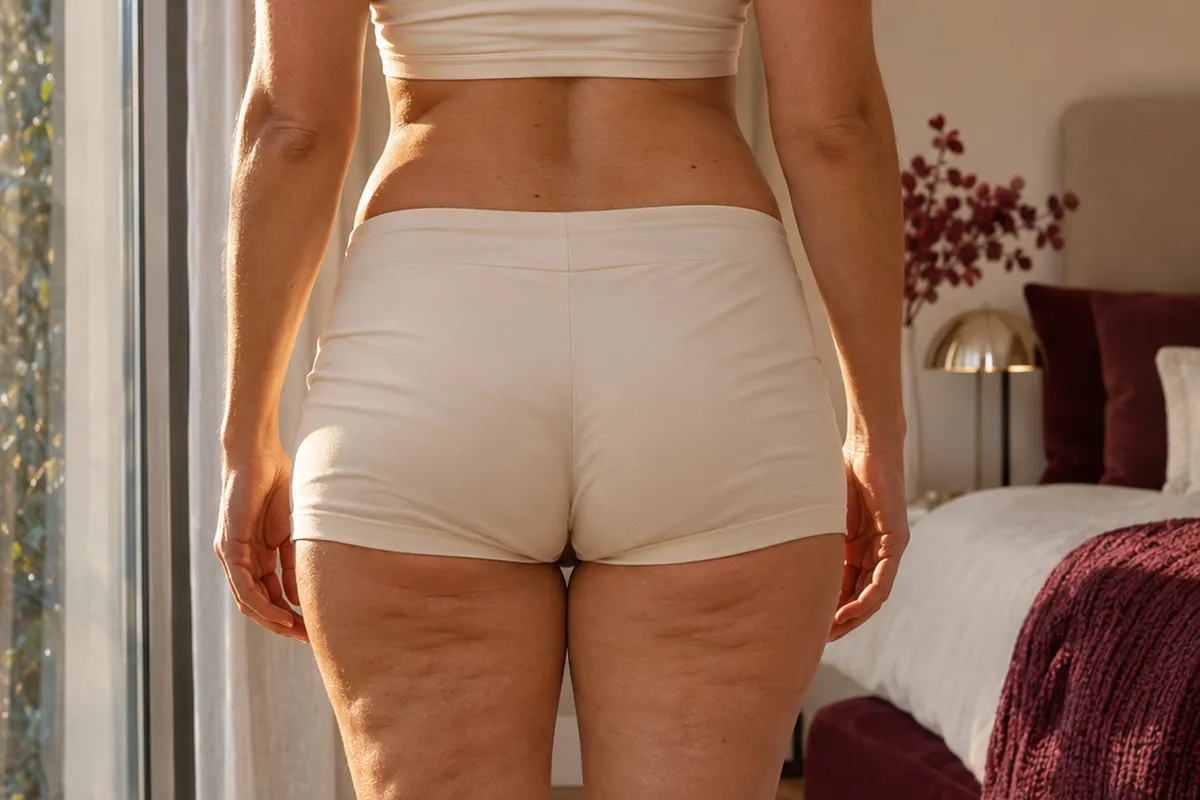
Advanced cellulite, also known as grade III or severe cellulite, is characterised by dimples and rippling that are readily visible even when the body is at rest. It is not simply ‘more fat’. The fat lobules, the fibrous bands that run through them, skin firmness and, in some people, circulation are all affected. This is why it improves more slowly than milder forms and why no single treatment can resolve it. Here, we explain what causes the uneven texture, what treatments can and cannot achieve, how weight loss affects it, and when leg symptoms require medical assessment before any procedure at Clínica Luxmed, in Algés.

Reviewed by Dr Michelle Campagnoli, clinical director

  • 4treatment options for this concern
  • 1assessment, always first
  • Nocommitment
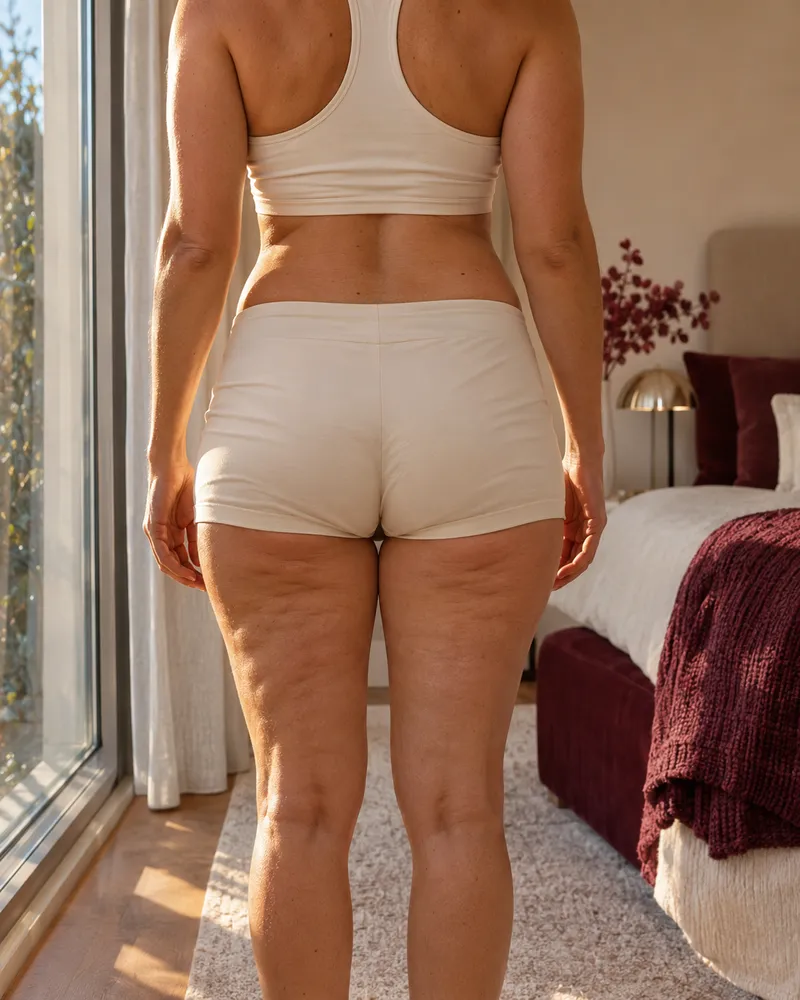
Woman seen from behind beside a window, in shorts and a crop top, with the skin texture of her thighs visible

How to recognise it

Is it advanced cellulite that you see on your skin?

Advanced cellulite is recognised by the uneven texture that remains visible even at rest, but only an assessment can distinguish it from other conditions that alter the appearance of the legs. These signs can help you decide whether this description matches your experience before the consultation.

Tick what you recognise0/7

Tick the signs you recognise in your case. This is not a diagnosis, it is only meant to give you an idea.

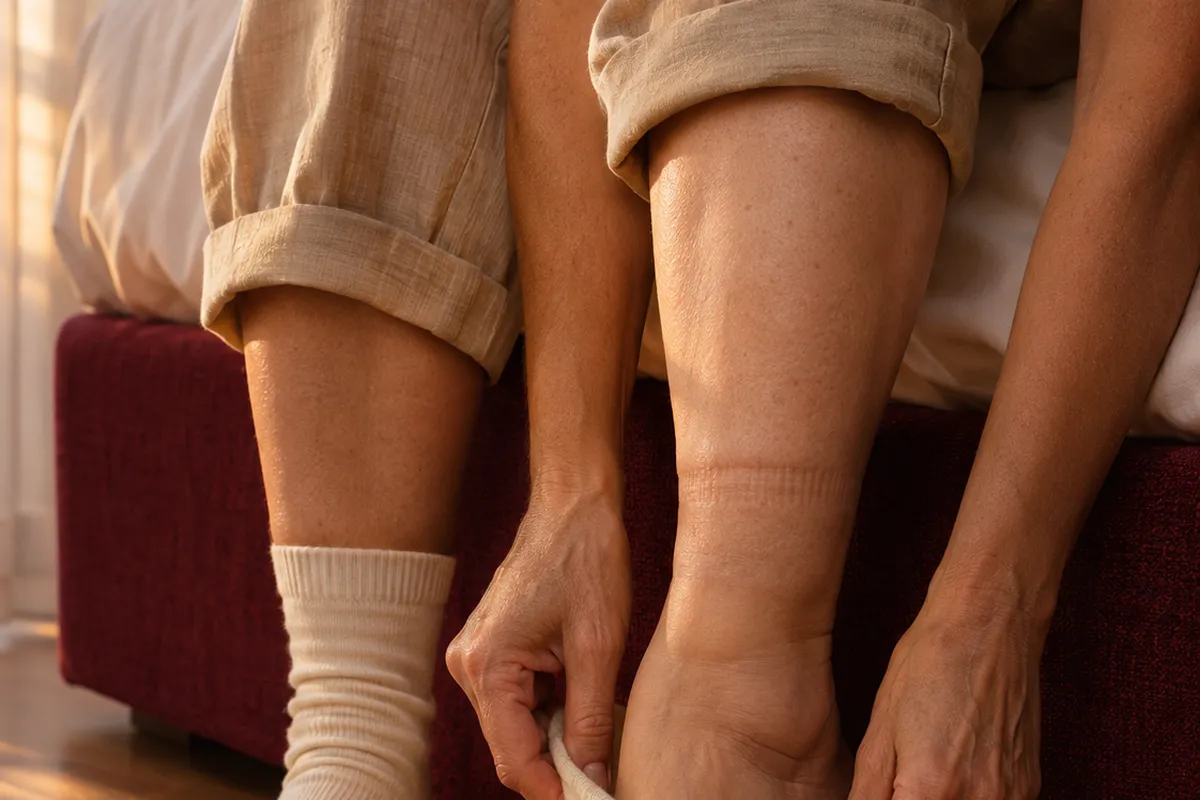
Is one leg, or just one area of it, swollen, red, warm and painful, with fever or chills? Do you have pain, heaviness or swelling in the legs that does not go away with rest, easy bruising, painful lumps, new varicose veins or wounds that do not heal? You need medical assessment before any treatment: it may be a skin infection, a venous or lymphatic disease, or another cause. Out of hours, call SNS 24: 808 24 24 24. If you have shortness of breath or chest pain, call 112.

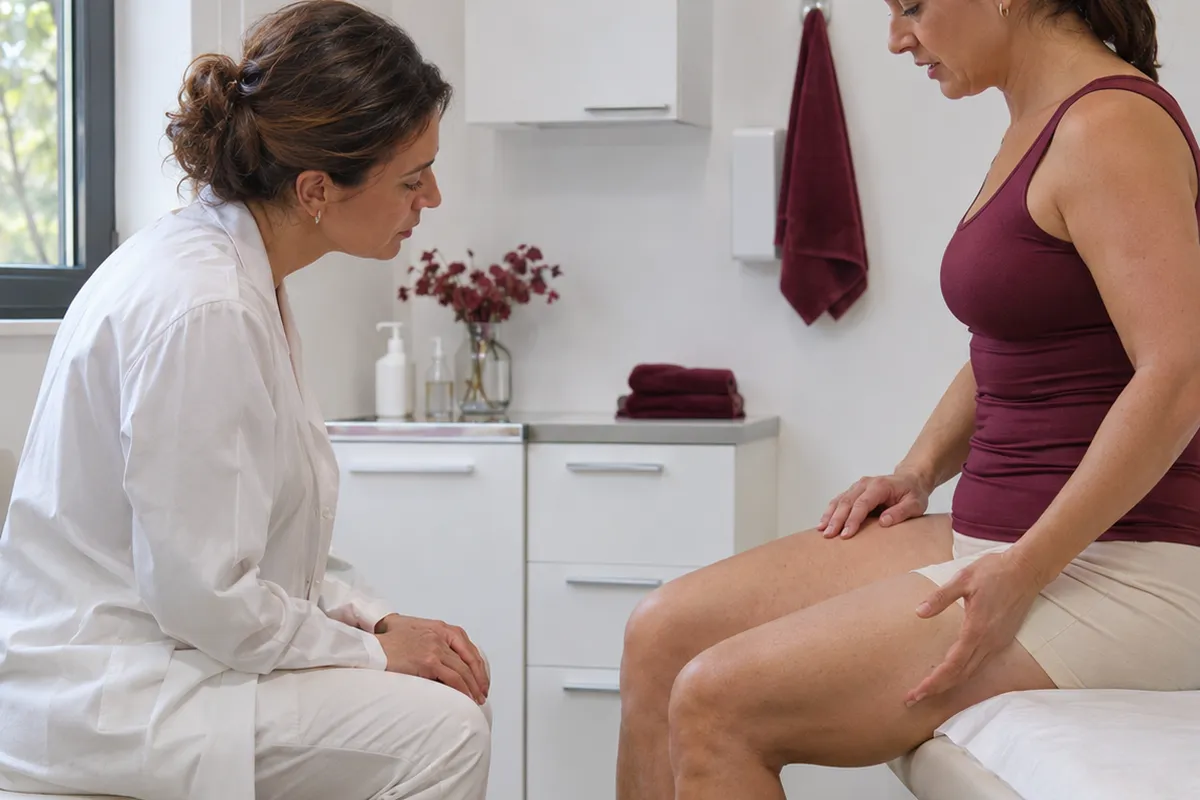
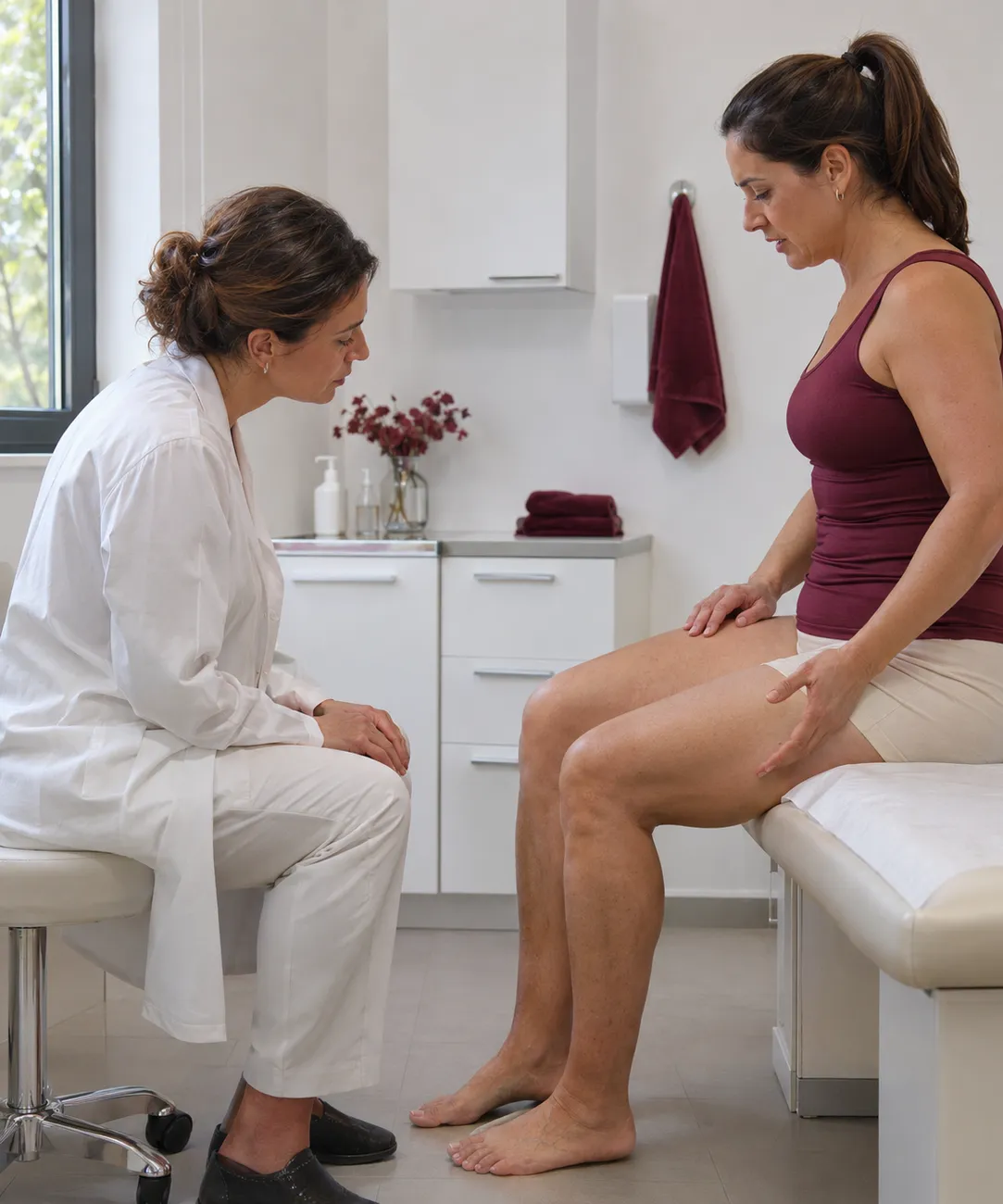
Female doctor sitting beside a woman on the examination couch, examining her legs
Photograph of a consultation. The dots mark what the doctor is assessing.

What changes

What is happening in the skin and beneath it

In advanced cellulite, several structures are affected at the same time. Select one to see how it contributes and what usually does and does not help.

The fibrous bands under the skin

Beneath the skin, fat is organised into lobules separated by thin bands of fibrous tissue that connect the skin to deeper layers. In women with cellulite, imaging studies show lobules projecting further into the dermis and bands with a more vertical orientation. As these bands become thicker and more rigid, they pull the skin down at fixed points, creating dimples. According to the most recent reviews, changes in these bands are central to the condition.

What makes it worse

Expecting a diet or cream to loosen a fixed fibrous band: the anchored points remain even when the surrounding fat decreases.

What helps

Treatments that act on deeper tissues over several sessions and require maintenance, together with realistic expectations about what they can change.

Normal or to be assessed

Advanced cellulite or another condition affecting the legs

In most people, marked dimples are advanced cellulite and do not threaten health. But some situations look like cellulite and are not, and call for assessment before any treatment.

  • How it looks. Marked dimples and undulations on both sides, on the thighs, hips and buttocks, visible standing and lying down, with skin that is soft to the touch and painless.

  • When it is noticed. In tight clothing, after weight changes, at the menopause and in the raking light of the beach or the mirror at home.

  • What the clinic does. The doctor examines the skin standing and lying down, assesses firmness and circulation and explains what is realistic to expect before proposing a plan.

  • At home. Regular movement, strength training, stable weight, not smoking and protecting the skin, with patience and realistic goals.

Do you have shortness of breath, chest pain, or a leg that is suddenly very swollen, warm and painful? Call 112. If there is swelling that does not go away, leg pain or doubts, out of hours you can call SNS 24: 808 24 24 24.

Book an assessment

What the clinic may consider

Options to improve advanced cellulite

Lifestyle measures and an assessment come first, as they underpin any result. The doctor may then recommend technologies from the range of body aesthetic treatments. We describe two—radiofrequency (Sectum, by Neauvia) and carboxytherapy—while contouring massage and intradermal therapy may also be included in the plan and are explained during the consultation. Scientific reviews show that no single option resolves advanced cellulite: studies are small and short, in some cases lasting only a few weeks; results vary and are generally temporary and require maintenance. Other techniques have been described for severe cellulite but are not among these options, and the doctor will explain the alternatives and limitations in your case.

Book an assessment
Dr Michelle Campagnoli, clinical director of Clínica Luxmed

First step

Assessment consultation

The doctor listens to what you are experiencing, examines your case and explains the suitable options. No treatment begins without this consultation.

May be considered when

you want to understand the cause and decide on the best path, with time and without commitment.

Book an assessment
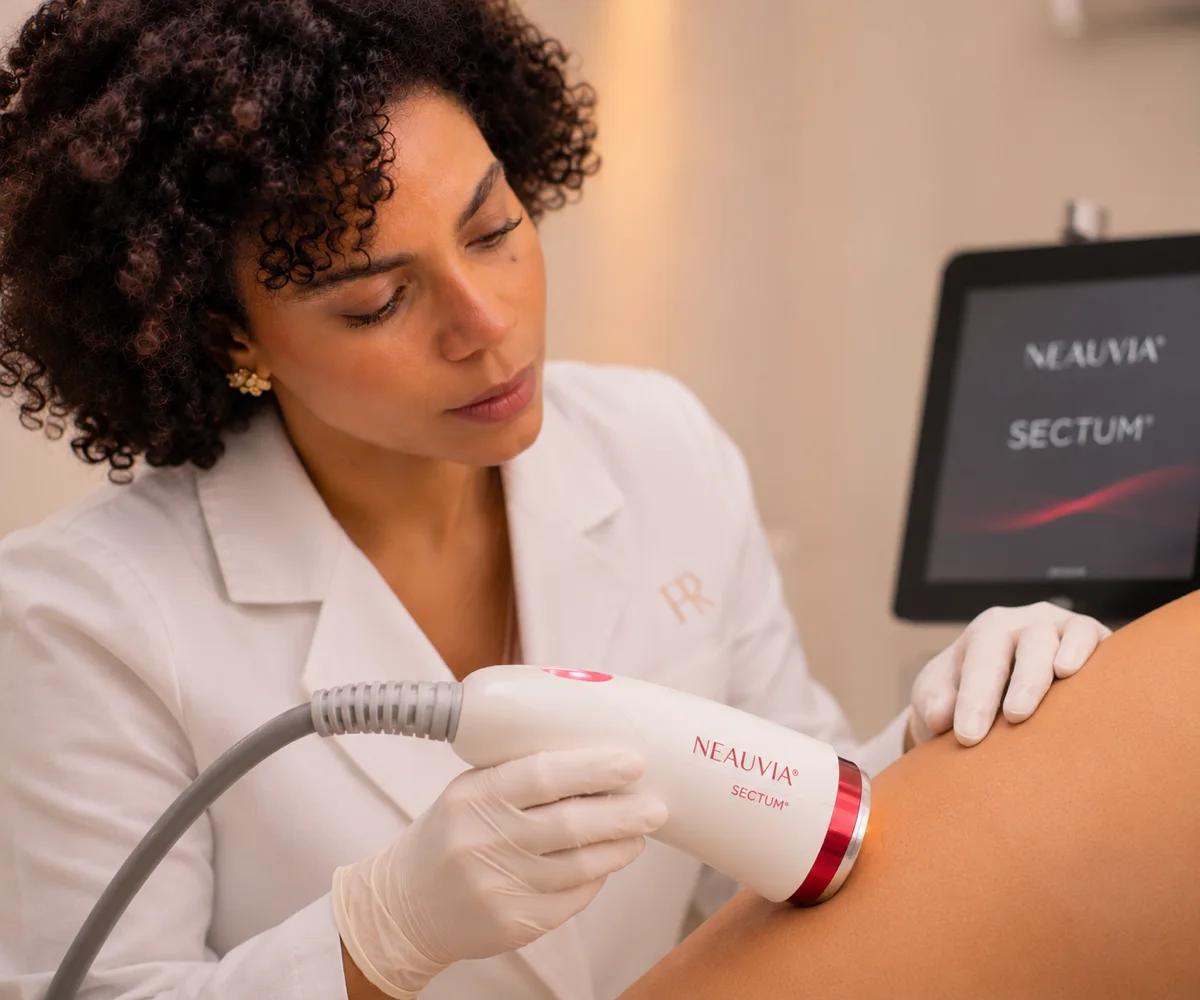
Radiofrequency handpiece gliding over a thigh covered with a towel, with the device in the background

Technology

Sectum radiofrequency Neauvia

Radiofrequency heats the deeper tissues to stimulate collagen production and firm the skin, and is used on areas such as the thighs, arms and abdomen. It has some of the most favourable evidence among non-invasive options for cellulite, although follow-up periods are short and results vary. Several sessions and ongoing maintenance are usually required.

May be considered when

loss of skin firmness is contributing to the unevenness, lifestyle measures have already been addressed, the legs have been assessed, and the doctor has explained what is and is not known about the results.

Find out more
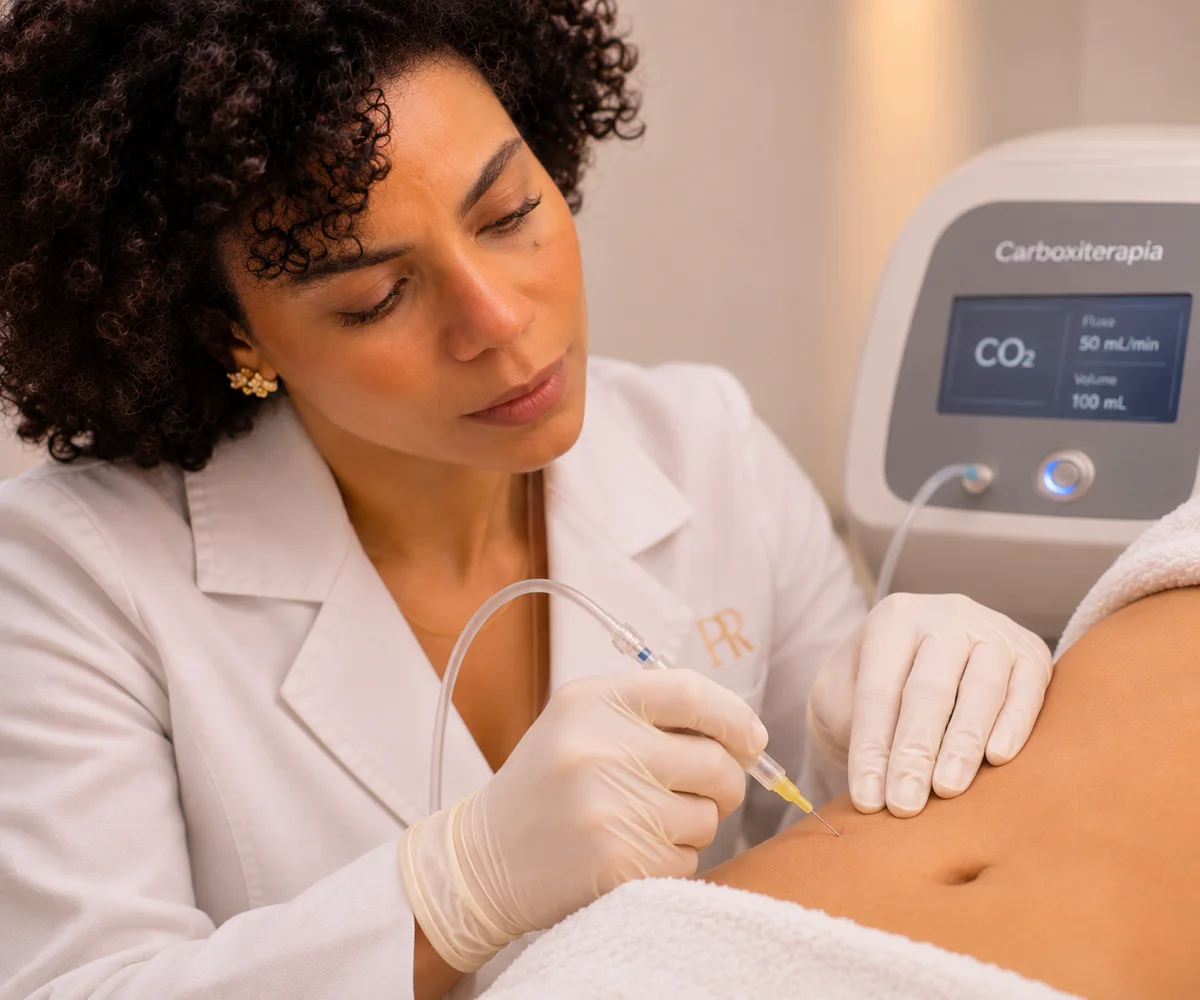
The doctor inserting a fine needle to administer the gas under the skin of the abdomen, with the device in the background

Medical procedure

Carboxytherapy

Small amounts of carbon dioxide are injected under the skin with the aim of improving microcirculation and elasticity. It is used for cellulite, although the evidence is limited and results vary, and it generally involves several sessions at set intervals.

May be considered when

cellulite is the main complaint, the swelling and circulation have been assessed, there are no signs of infection in the areas to be treated and the doctor has explained the limits of the evidence.

Find out more

What the journey looks like

From the first consultation to a realistic plan

No treatment begins without an assessment by the doctor. For advanced cellulite, the plan usually combines lifestyle measures and skin care before any device-based treatment is considered.

  1. 01At the clinic

    Discussing what has changed

    The doctor asks how long the relief has been noticeable, what changed with weight, pregnancies or the menopause, whether there is heaviness and swelling in the legs, which creams, massages or treatments you have already tried and what you hope to achieve.

  2. 02At the clinic

    Observing and measuring

    The skin is examined while you are standing and lying down, and its firmness, laxity and the depth of the dimples are assessed. The legs are also checked for swelling, varicose veins or pain. If there are signs of another condition, investigating that cause becomes the priority.

  3. 03At home

    Building the foundation

    Strength training and regular movement, a stable weight, enough protein, not smoking and protecting the skin from the sun. In many cases, part of the appearance improves with this alone, and everything else rests on this foundation.

  4. 04Over time

    Combine, assess and maintain

    Where appropriate, the doctor suggests one or two options, explains how many sessions are likely to be needed and what can realistically be achieved, without promising results. Progress is reviewed and maintenance is planned, because the effects are not permanent.

Day to day

What helps at home

These measures underpin any plan and make sense while you wait for the consultation. None of them makes advanced cellulite disappear, but all of them help the skin and the muscle that supports it.

The golden rule

Muscle, stable weight and skin before technology

The skin and the muscle beneath it determine how the legs look. Gradual weight loss, strength training and good skincare matter more than you might think and help prevent the skin from becoming more uneven. Any swelling, pain or difference between the legs should be assessed by a doctor, not ‘treated’ as cellulite.

Strength training and walking every day

Firmer muscles support the skin, and movement helps circulation in the legs.

In practice: two to three strength-training sessions a week and regular walks, as well as walking breaks if you spend the day sitting down.

Losing (or maintaining) weight gradually

Rapid and repeated weight changes leave the skin less firm.

In practice: gradual loss, with enough protein, and without extreme diets or the yo-yo effect.

Caring for the skin

Skin that is moisturised and protected from the sun retains collagen better.

In practice: moisturise after the shower, use sun protection and stop smoking if you smoke.

Keeping a record of progress

This helps both you and the doctor see whether anything is changing.

In practice: photographs every three months with the same light and the same position, standing and lying down, and a list of what you are using.

Dr Michelle Campagnoli, clinical director of Clínica Luxmed

Who will look after you

An assessment carried out by the doctor

At Luxmed, in Algés, the first step is always an assessment with Dr Michelle Campagnoli. She examines your skin and legs, determines whether the changes are due to advanced cellulite or whether there may be another underlying cause, and works with you to decide on the most appropriate approach before any procedure.

  • Physical examination and medical historyA conversation about your history, weight, medication and what you have already tried, and examination of the skin and the legs.
  • A plan tailored to youA clear plan, without promises, with habits first, the limits explained and follow-up over time.
  • No obligationThe cost of any treatment is confirmed only after the assessment.
Book an assessment

Book a consultation

Book your consultation

Choose how you prefer to get in touch. We will arrange the assessment consultation with Dr Michelle Campagnoli.

Booking through the websiteAssessment consultationTalk to our assistant on WhatsApp and ask for the current price of the assessment.

New Life Miraflores, Algés · Office Center, R. Santa Teresa do Menino Jesus n.º 6, 9.º C, 1495-048

Your details are used only for this contact. Any treatment depends on a prior medical assessment.

Request an appointmentIt takes less than a minute.
Speciality
You do not need to go into detail. The doctor will talk to you during the consultation.
Request received. Our team will contact you as soon as possible.
What is advanced cellulite (grade III)?

This is the form of cellulite in which dimples and rippling are pronounced and visible both standing and lying down, even when the skin is at rest. It is not a disease: it is a change in the organisation of the tissue beneath the skin, involving larger fat lobules, thicker and more rigid fibrous bands that pull the skin downwards, loss of skin firmness and, in some people, slower circulation and swelling. This is why it is also called severe cellulite or a pronounced orange-peel appearance, and why it is harder to improve than milder forms.

What changes in the skin and beneath it?

Beneath the skin, fat lobules protrude further into the dermis and the fibrous bands separating them become thicker and more rigid, creating fixed points that pull the skin down. Within the skin, collagen levels and elasticity decrease with age, weight fluctuations and smoking, so the skin no longer conceals the structures beneath it as effectively. In some people, slower circulation causes heaviness and swelling. The processes involved are not yet fully understood, which is why no treatment offers a cure.

Is advanced cellulite dangerous?

In itself, no: it is a characteristic of the skin and not a disease. But persistent swelling, pain, lumps, easy bruising, wounds or one leg being different from the other are not cellulite and call for assessment, because they may be a venous disease, lipedema or a skin infection. A red, warm and painful leg, especially with fever, is an emergency.

Does advanced cellulite have a cure? Does it go away?

There is no permanent cure: the appearance can be improved, but it rarely disappears completely, and the effects of treatment tend to be temporary. The underlying genetic, hormonal and structural factors remain, so maintenance and lifestyle habits matter just as much as the procedure.

Which treatments work on advanced cellulite?

No single treatment can resolve it. Scientific reviews are based on small, short-term studies, and the most promising options are radiofrequency, shockwave therapy and minimally invasive techniques, although results vary. At the clinic, after assessing the skin and legs, the doctor may recommend radiofrequency (Sectum, by Neauvia) and carboxytherapy, with body-contouring massage and intradermal therapy as adjuncts, combining them as appropriate for your circumstances. The assessment determines the treatment plan, and results vary from person to person.

What can the treatments do, and what can they not do?

They can improve skin firmness and texture, reduce feelings of heaviness and swelling, and make unevenness less noticeable, particularly when treatments are combined. They do not eliminate cellulite permanently, replace exercise or weight management when indicated, or correct substantial excess skin or fat, which may require a different approach, including surgery. This is why technology is combined with lifestyle measures and the limitations are discussed openly.

Does liposuction remove cellulite?

It does not treat cellulite and, in some cases, may even make the skin look more uneven, because it removes fat without releasing the fibrous bands or improving skin firmness. Liposuction serves a different purpose—reducing volume in a particular area—and is only considered after an assessment.

How long do the results last?

It varies from person to person. In general, improvement is gradual and may last for months, but tends to fade if lifestyle measures and maintenance are discontinued. Studies have short follow-up periods, so the long-term duration of the effects is not well established. During the assessment, the doctor explains what can realistically be expected and how many sessions are likely to be needed.

Does losing weight resolve advanced cellulite?

It depends. In a study of women who lost weight through medical programmes, most saw an improvement, particularly those who had a higher body weight and more pronounced cellulite at the outset. In women with a lower body weight, or whose weight loss was modest and whose tissues became less firm, cellulite remained unchanged or worsened. Losing weight gradually, doing strength training and looking after your skin help preserve firmness. If your skin has become lax after weight loss, the doctor will assess what can be done to improve its firmness and texture.

When should I see a doctor first?

Book a consultation before any treatment if you have pain, heaviness or persistent swelling in your legs, enlarged veins, painful lumps, easy bruising, wounds that do not heal, or one leg that looks different from the other. If one leg is swollen, red, warm and painful, especially if you also have a fever, seek urgent medical help. If you are unsure what to do outside normal hours, call SNS 24 (808 24 24 24). If you experience shortness of breath or chest pain, call 112.

We could not find that question. Ask us on WhatsApp

Scientific references

This page is based on the sources below and was reviewed by Dr. Michelle Campagnoli. Last updated on .

  1. Rossi AB, Vergnanini AL. Cellulite: a review. J Eur Acad Dermatol Venereol, 2000.
  2. Querleux B, Cornillon C, Jolivet O, Bittoun J. Anatomy and physiology of subcutaneous adipose tissue by in vivo magnetic resonance imaging and spectroscopy: relationships with sex and presence of cellulite. Skin Res Technol, 2002.
  3. Luebberding S, Krueger N, Sadick NS. Cellulite: an evidence-based review. Am J Clin Dermatol, 2015.
  4. Zerini I, Sisti A, Cuomo R, Ciappi S, Russo F, et al. Cellulite treatment: a comprehensive literature review. J Cosmet Dermatol, 2015.
  5. Smalls LK, Hicks M, Passeretti D, Gersin K, Kitzmiller WJ, et al. Effect of weight loss on cellulite: gynoid lypodystrophy. Plast Reconstr Surg, 2006.
  6. Hexsel DM, Dal'forno T, Hexsel CL. A validated photonumeric cellulite severity scale. J Eur Acad Dermatol Venereol, 2009.
  7. Bass LS, Kaminer MS. Insights Into the Pathophysiology of Cellulite: A Review. Dermatol Surg, 2020.
  8. Bass LS, Hibler BP, Khalifian S, Shridharani SM, et al. Cellulite Pathophysiology and Psychosocial Implications. Dermatol Surg, 2023.
  9. Menon A, Shauly O, Marxen T, Losken A, Faulkner HR. A Clinical Guide to the Treatment of Cellulite and Comprehensive Review of the Etiology, Pathophysiology, and Utility of Intervention. Aesthetic Plast Surg, 2024.
  10. Lim SK, Gultekin G, Suresan S, Jacob A, Zou Y, et al. Comparative Analysis of Cellulite Treatment Modalities: A Systematic Review. Aesthetic Plast Surg, 2025.
  11. Buso G, Depairon M, Tomson D, Raffoul W, Vettor R, Mazzolai L. Lipedema: A Call to Action!. Obesity (Silver Spring), 2019.
  12. NHS. Lipoedema. (nhs.uk, acedido 2026-11-11)
  13. NHS. Cellulitis. (nhs.uk, acedido 2026-11-11)
  14. NHS. DVT (deep vein thrombosis). (nhs.uk, acedido 2026-11-11)
CallAssistantAvailableBook