Algés, Oeiras Mon to Fri · 09:00 to 13:00 and 14:00 to 19:00 · Sat · 09:00 to 14:00
WhatsApp Book a consultation

Body aesthetics

Hard or fibrous celluliteWhen cellulite is firm, seems “stuck” underneath and responds worse to what you have already tried

Some cellulite shifts and softens when you change position, while some always looks the same: firm, compact and sometimes tender to the touch. This is known as hard or fibrous cellulite and is often the most frustrating type, as creams, massage and dieting have little effect on the dimples. Here, we explain what sets it apart, why it can be more difficult to treat, which treatments target firmness and texture and the evidence behind them, and when leg pain should be medically assessed before any procedure at Clínica Luxmed in Algés.

Reviewed by Dr Michelle Campagnoli, clinical director

  • 4treatment options for this concern
  • 1assessment, always first
  • Nocommitment
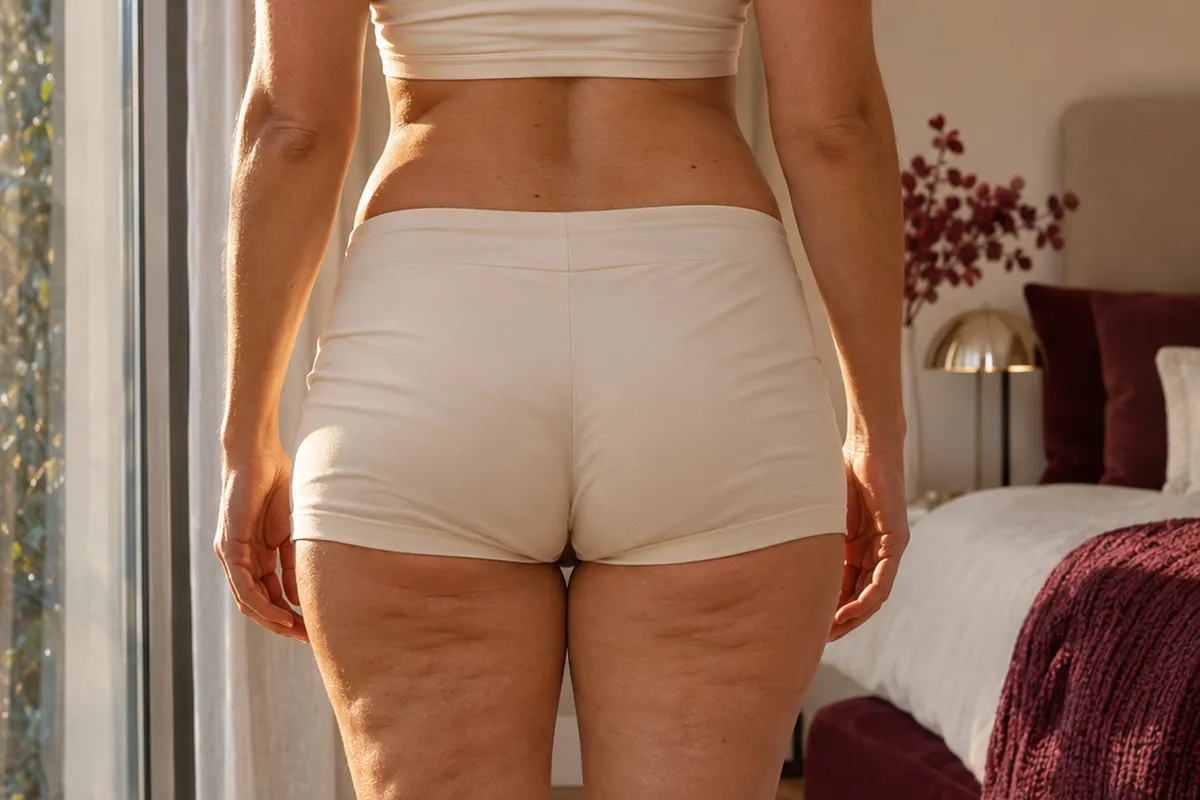
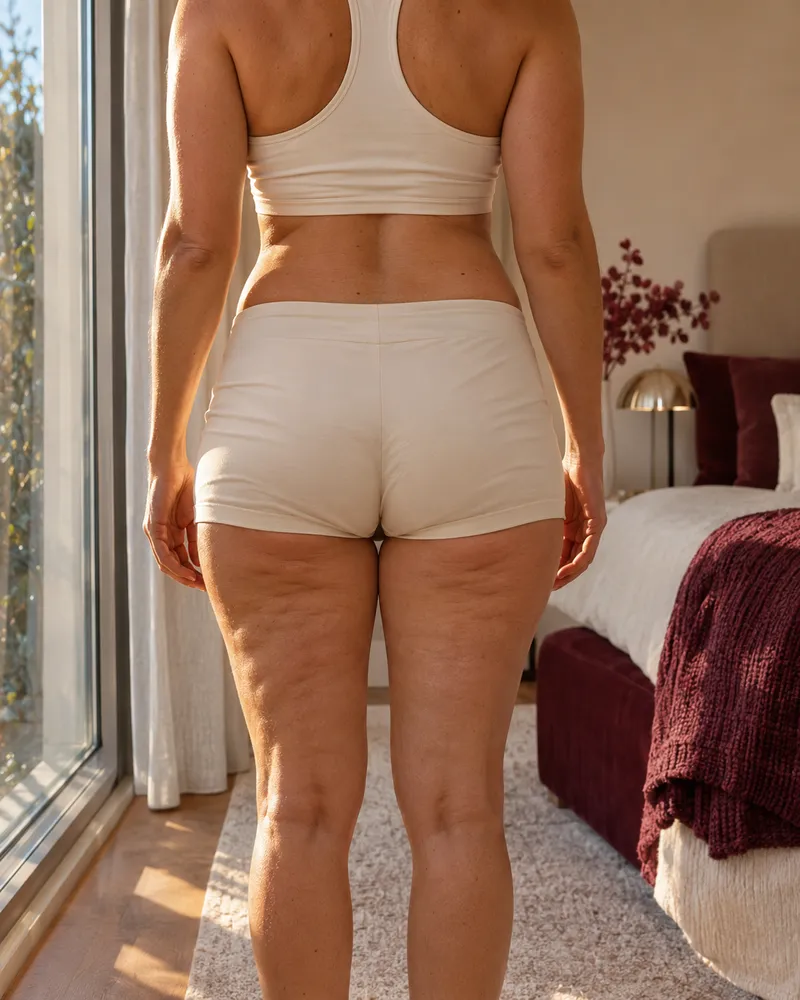
Woman seen from behind beside a window, in shorts and a crop top, with the skin texture of her thighs visible

How to recognise it

Is it hard or fibrous cellulite?

Cellulite is not all the same: some is soft and changes a lot with position, some is firm and hardly changes at all. These signs help you to see which type yours is, before the assessment.

Tick what you recognise0/7

Tick the signs you recognise in your case. This is not a diagnosis, it is only meant to give you an idea.

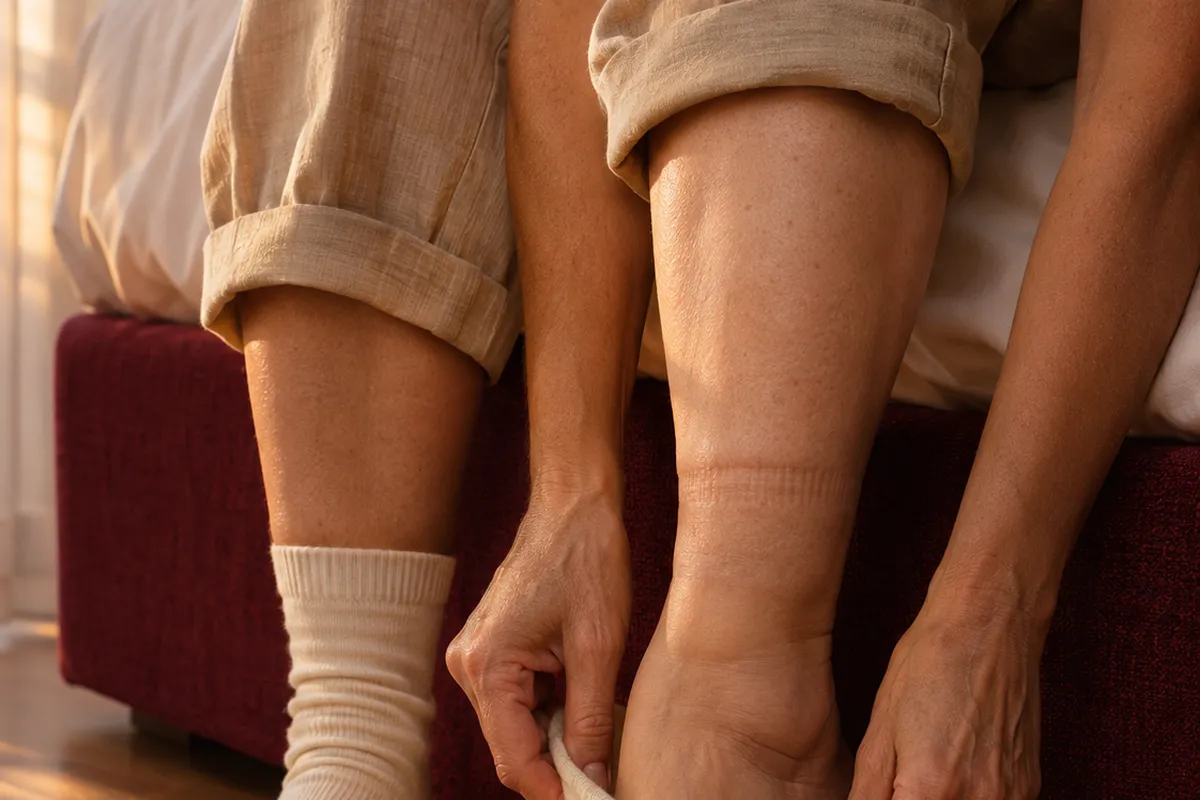
Persistent or increasing pain, growing lumps, easy bruising, legs out of proportion, or a change in skin colour? A red, warm and painful area, with or without fever, may be an infection. A single leg that is swollen and sore, suddenly, may be a thrombosis and needs urgent assessment, especially with shortness of breath. If in doubt, out of hours, call SNS 24: 808 24 24 24.

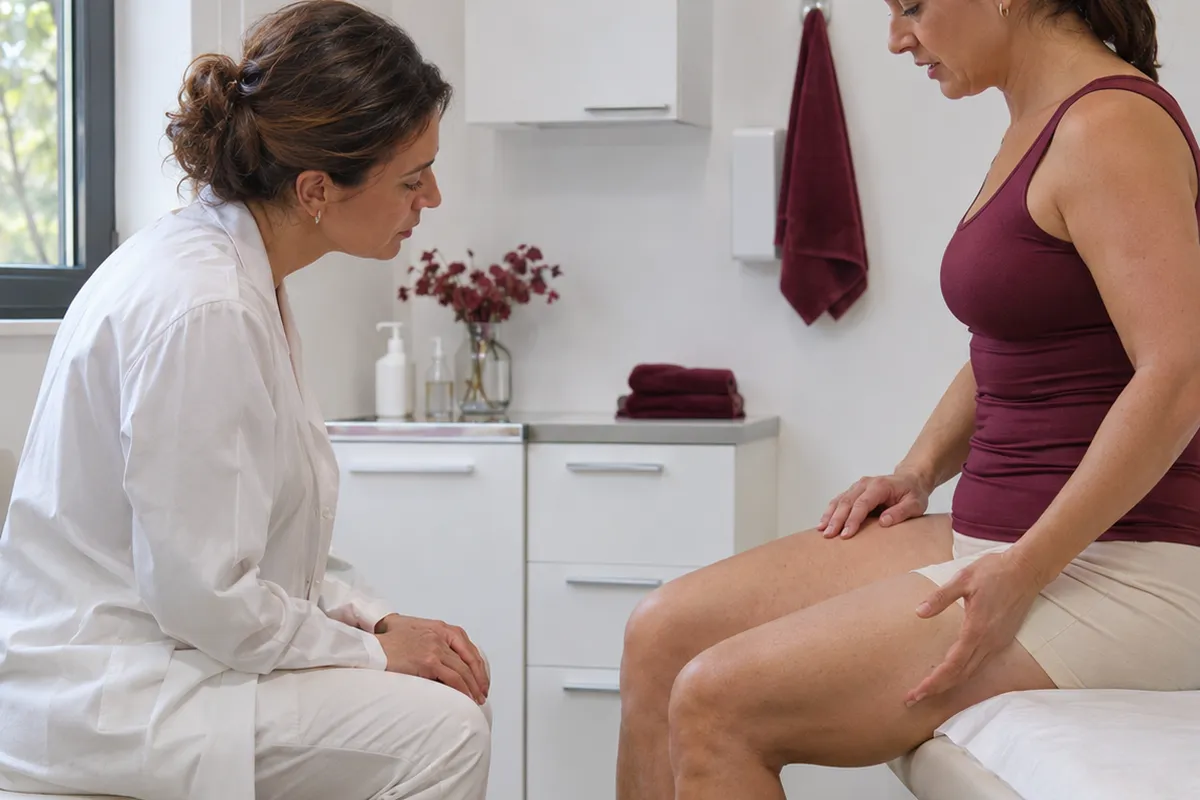
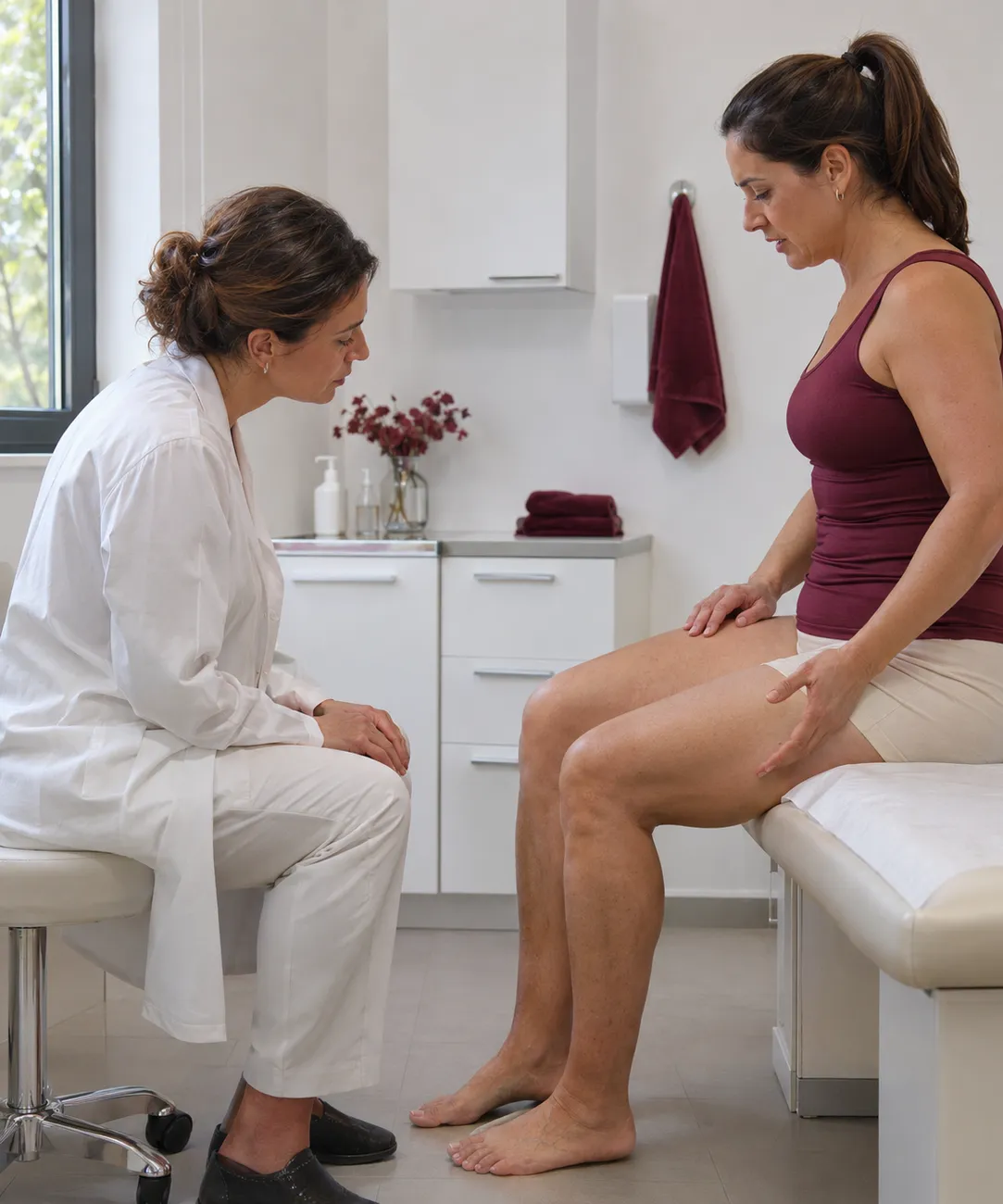
Female doctor sitting beside a woman on the examination couch, examining her legs
Photograph of a consultation. The dots mark what the doctor is assessing.

Why it happens

What makes it firmer and more stubborn

There is almost never a single cause. Choose a factor to see how it contributes and what usually helps.

The thicker fibrous septa

Beneath the skin are bands of fibrous tissue that anchor it to deeper tissue. MRI studies have associated dimples with the presence of these underlying bands. In hard cellulite, the bands are thicker and more rigid and pull the skin down at fixed points, so its appearance changes little with position.

What weighs on it

Expecting creams or massage to release these bands: they act mainly at the surface.

What helps

Understanding that the target lies deeper and working with the doctor to choose an option that targets firmness and texture, with realistic expectations.

Normal or to be assessed

Hard cellulite or another cause for the pain

Hard cellulite is a benign cosmetic concern. However, legs that are painful, feel heavy or bruise easily may indicate another condition, which should be addressed before any skin treatment.

  • How it looks. Dimples at fixed points, firm and compact skin, the same appearance on both sides that changes little with position, sometimes with slight tenderness when pinched.

  • When it is noticed. In side light and after exercise, even with a stable weight. In general there is no marked swelling or change in skin colour.

  • What the clinic does. The doctor identifies the type, rules out other causes and explains what can be expected from each option, before proposing a plan.

  • At home. Regular movement, strength training, skin hydration and patience with treatments that give slight, short-lived relief.

A leg that is swollen and sore suddenly, with shortness of breath or chest pain? Call 112. For other doubts about pain, swelling or redness, out of hours you can call SNS 24: 808 24 24 24.

Book an assessment

What the clinic may consider

Options for firm cellulite

Hard cellulite is generally the most stubborn type, and no treatment can make it disappear permanently. The essentials come first: ruling out another cause of pain, staying active, doing strength training and having realistic expectations. Only then should a medical procedure be considered, with the choice depending on the type and grade. The clinic offers Sectum radiofrequency and carboxytherapy to improve skin firmness and texture; intradermotherapy and contouring massage may be used as adjuncts, and the doctor will explain when they are appropriate. The evidence is limited: systematic reviews include small studies using different methods and short follow-up periods, and no option has been proven to provide a permanent solution. Results vary and usually require maintenance. Subcision, a minor procedure that releases the fibrous bands and has the most direct evidence for treating dimples, is a separate medical option not included on this page. If it may be relevant to you, ask the doctor about it at your consultation.

Book an assessment
Dr Michelle Campagnoli, clinical director of Clínica Luxmed

First step

Assessment consultation

The doctor listens to what you are experiencing, examines your case and explains the suitable options. No treatment begins without this consultation.

May be considered when

you want to understand the cause and decide on the best path, with time and without commitment.

Book an assessment
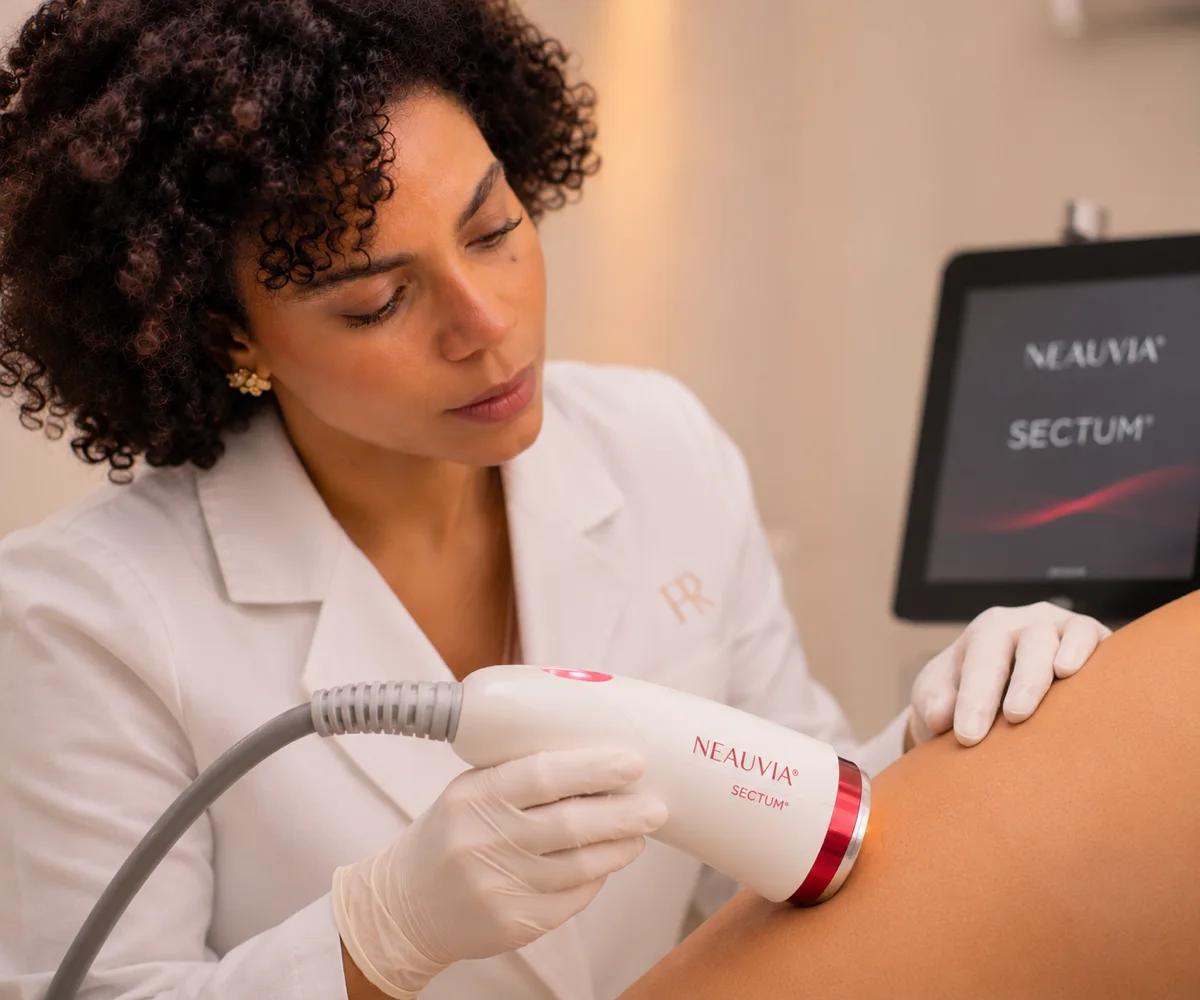
A radiofrequency handpiece gliding over the skin of the thigh during a treatment session in a brightly lit room

Firmness and texture

Sectum radiofrequency Neauvia

Radiofrequency that heats deep tissue to stimulate collagen, used to firm the skin in areas such as the thighs, arms and abdomen. Reviews suggest that it is among the technologies with the most favourable evidence for skin texture, although the improvement in cellulite is mild to moderate and its duration is uncertain.

May be considered when

the cellulite is firm, you want to improve the firmness and texture of the skin, the cause of any pain has been assessed and the doctor has checked your medication and contraindications.

Find out more
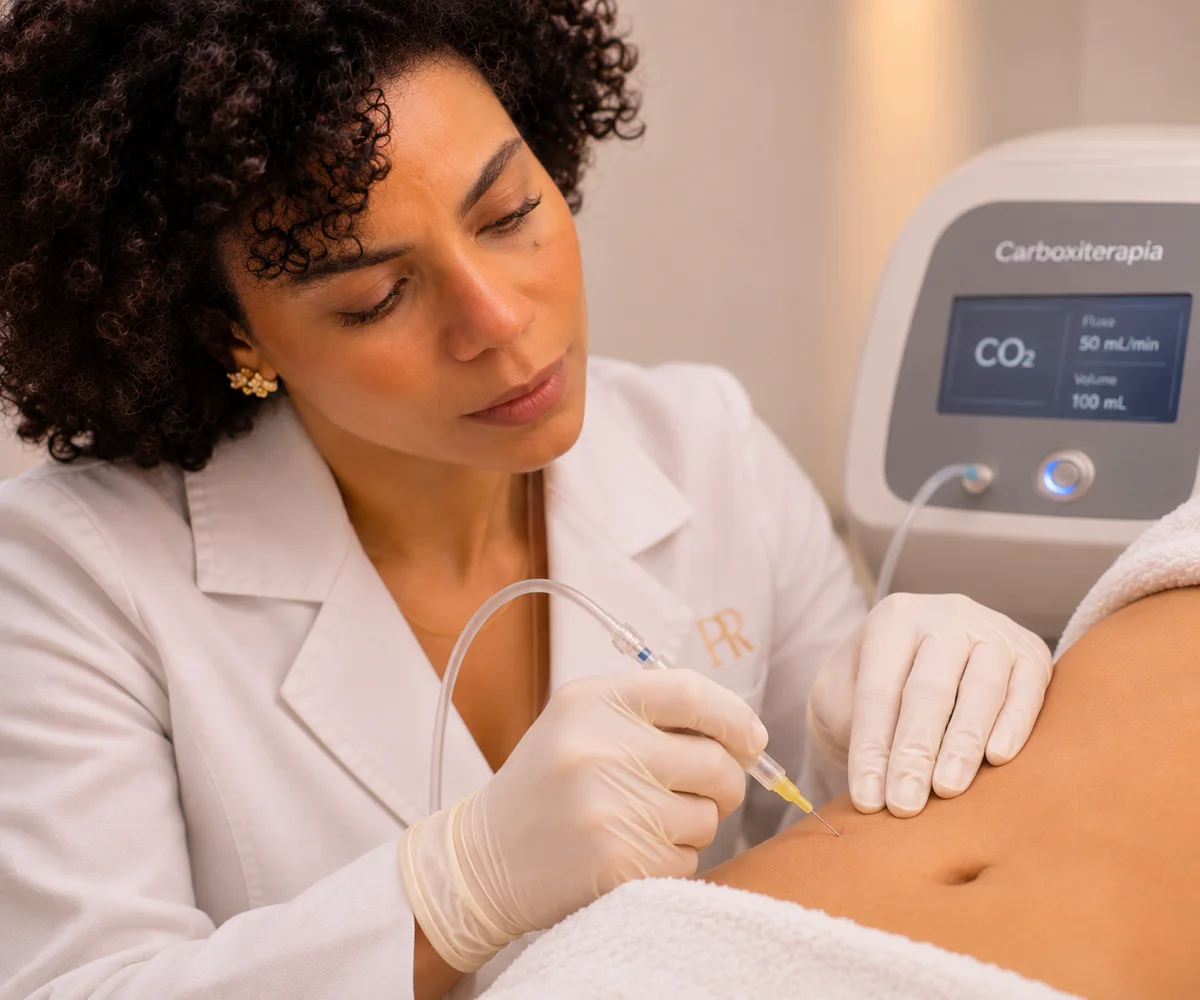
The doctor treating the skin with carboxytherapy, with the device at the back of the room

Microcirculation and elasticity

Carboxytherapy

Application of small doses of carbon dioxide under the skin, to improve microcirculation and elasticity, used in cellulite, stretch marks and scars. Studies are small and results vary from person to person.

May be considered when

you want to improve the elasticity and look of the skin in areas with cellulite, after the assessment, and accept that results are gradual and variable.

Find out more

What the journey looks like

From the first conversation to a plan tailored to you

No procedure is carried out without an initial assessment by the doctor. The type of cellulite is identified first, along with any other possible cause of the pain, and only then are further options considered.

  1. 01At the clinic

    Telling your story

    The doctor asks how long you have had cellulite, which areas are affected, whether it is painful to the touch or at the end of the day, whether your legs feel heavy or you experience swelling or easy bruising, and which skincare measures, massages or treatments you have already tried.

  2. 02At the clinic

    Identify the type

    The skin is examined while you are standing, sitting and lying down, both relaxed and pinched, to determine whether the cellulite is firm and fixed, soft, associated with swelling or a combination of these. If there are signs of lipoedema, a venous problem or an infection, a different approach is needed and the doctor will refer you to the appropriate specialist.

  3. 03At home

    Lay the foundations

    Strength training and regular movement, a stable weight, skin hydration and patience with what gives brief relief. These measures are worthwhile in themselves and prepare the ground for any procedure.

  4. 04Over time

    Decide and follow up

    If a procedure is appropriate, the doctor explains what it targets, what to expect, how many sessions are needed and what the risks are, without promising results. The examination is repeated and the plan, including maintenance, is adjusted as needed.

Day to day

What helps at home

Home care cannot release the septa, but it can affect muscle tone and the appearance of the skin. These measures make sense alongside the clinic’s treatment plan.

The golden rule

First understand why it hurts, then smooth the skin

Ordinary cellulite rarely hurts. If the legs hurt, feel heavy or bruise easily, it is worth knowing why before investing in treatments for the dimples. And if the cellulite is hard, it is best to look realistically at what each treatment can do.

Strengthening the legs and buttocks

Firmer muscle improves the tone and contour of the area, even without erasing the dimples.

In practice: two to three strength training sessions a week, with squats, lunges and hip raises, adapted to your condition.

Moving throughout the day

Long periods of sitting or standing still can adversely affect circulation in the legs.

In practice: get up and walk for a few minutes every hour, and climb stairs whenever you can.

Keeping a stable weight

Losing and gaining weight quickly may worsen the appearance because the skin has less underlying support.

In practice: a balanced diet, without very restrictive diets, with good hydration.

Record and bring to the consultation

It helps the doctor to see what has changed and to understand whether there is associated pain.

In practice: photographs in the same light, and notes on when it hurts, what relieves it and the medication you take.

Dr Michelle Campagnoli, clinical director of Clínica Luxmed

Who will look after you

An assessment carried out by the doctor

At Luxmed in Algés, the first step is always an assessment with Dr Michelle Campagnoli. She examines the skin, determines whether the cellulite is firm, soft or mixed, rules out other causes of pain and works with you to decide what is appropriate before any procedure.

  • Physical examination and medical historyA discussion about pain, swelling, medication and treatments you have already tried, followed by an examination of the skin while you are standing, sitting and lying down.
  • A plan tailored to youA clear plan, without promises, with the cause of the pain assessed first and follow-up over time.
  • No obligationThe cost of any treatment is confirmed only after the assessment.
Book an assessment

Book a consultation

Book your consultation

Choose how you prefer to get in touch. We will arrange the assessment consultation with Dr Michelle Campagnoli.

Booking through the websiteAssessment consultationTalk to our assistant on WhatsApp and ask for the current price of the assessment.

New Life Miraflores, Algés · Office Center, R. Santa Teresa do Menino Jesus n.º 6, 9.º C, 1495-048

Your details are used only for this contact. Any treatment depends on a prior medical assessment.

Request an appointmentIt takes less than a minute.
Speciality
You do not need to go into detail. The doctor will talk to you during the consultation.
Request received. Our team will contact you as soon as possible.
Why does cellulite in the legs hurt?

Ordinary cellulite does not usually hurt, or causes only mild pain when pinched. With hard or fibrous cellulite, areas may feel firmer and be tender to the touch. However, if the legs are painful, feel heavy or bruise easily, other causes should be considered: lipoedema (a symmetrical, painful increase in fat in the legs), venous insufficiency (heaviness, swelling and varicose veins), a skin infection or, if only one leg suddenly becomes swollen and painful, thrombosis. A doctor must make the diagnosis, and the pain should be assessed before any cosmetic treatment.

What is hard or fibrous cellulite and how is it told apart from soft cellulite?

It is cellulite that feels firm and compact to the touch, as if it were “stuck” to what lies beneath, and that changes little with position. The septa, the fibrous bands that connect the skin to the deeper layer, are thicker and more rigid and pull the skin at fixed points. In soft cellulite, the skin wobbles and the appearance changes considerably between standing and lying down. In cellulite with swelling, the skin is taut, leaves a mark when pressed and worsens at the end of the day.

Are hard, fibrous and compact cellulite the same thing? And can it become soft?

They are different names for the same form, which is firmer. Many people have mixed forms, with areas that are firm and others that are soft or with swelling. With age, loss of firmness of the skin may change the look of hard cellulite, but that is not an improvement: the type changes, and what helps changes too. That is why it is worth reviewing the type from time to time, and not only when starting a treatment.

How do I know whether it is hard cellulite or lipoedema?

It is not easy to distinguish between them by sight alone, and the diagnosis is clinical and must be made by a doctor. Lipoedema is a chronic disorder of adipose tissue that occurs almost exclusively in women, causing symmetrical enlargement of the legs, tenderness, easy bruising and little response to weight loss. It is often mistaken for cellulite or obesity. With hard cellulite, the main features are dimples at fixed points and firm skin. If pain, enlargement and bruising are the predominant features, there may be another cause requiring a different approach.

Why does hard cellulite respond worse to the usual treatments?

Because the depressions are caused mainly by fibrous septa pulling on the skin. Treatments that primarily target fat or fluid retention have little effect on the dimples if these bands continue to pull on the skin. In addition, studies of cellulite treatments use very different methods and have short follow-up periods, so no option has been proven to provide a permanent solution. Expectations should therefore be modest, and treatment usually combines more than one approach.

Does massage soften hard cellulite?

It may provide temporary relief, such as a feeling of lightness or improved circulation, but it does not alter the septa permanently. If the area is tender, very firm massage may worsen discomfort and cause bruising, so the technique should be adapted accordingly. At the clinic, contouring massage may be used alongside other treatments rather than as a treatment on its own.

Does radiofrequency help with fibrous cellulite?

Radiofrequency heats tissue and stimulates collagen, and reviews suggest that it is among the technologies with the most favourable evidence, particularly for improving skin firmness and texture, with mild to moderate improvement. However, many studies have methodological flaws and short follow-up periods, so the duration of the effect is uncertain and results vary from person to person. The clinic offers this treatment using Neauvia Sectum radiofrequency after assessing the type of cellulite, medication and contraindications.

And carboxytherapy, intradermotherapy and subcision?

Carboxytherapy (carbon dioxide injected under the skin) and intradermotherapy (microinjections containing variable formulations, some of which involve substances used outside their approved indications) have limited evidence from small studies. The clinic offers carboxytherapy and may consider intradermotherapy as an adjunct. Subcision is a minor procedure that releases the septa and has more direct evidence for treating dimples; its risks include pain, bruising and, rarely, irregularities such as streaks. It is not among the options on this page, and the doctor will tell you at the consultation whether it is relevant in your case.

Are the results permanent? How many sessions are needed?

There are no guaranteed or permanent results. In general several sessions are needed, spaced weeks apart, and the improvement, when there is one, is gradual and variable. Treated septa may stay looser, but new depressions may appear, and the cellulite may become noticeable again, so maintenance and habits count as much as the procedure. The doctor defines the plan and expectations at the assessment, without promising results.

When should I see a doctor first?

Book a consultation if the pain is persistent, your legs become disproportionately enlarged, or you experience easy bruising, growing lumps or changes in skin colour. A red, warm and painful area, with or without fever, may be an infection, while sudden swelling and pain in one leg may indicate thrombosis: seek urgent medical help. If in doubt, call SNS 24 out of hours on 808 24 24 24. If you experience shortness of breath or chest pain, call 112.

We could not find that question. Ask us on WhatsApp

Scientific references

This page is based on the sources below and was reviewed by Dr. Michelle Campagnoli. Last updated on .

  1. Hexsel DM, Abreu M, Rodrigues TC, Soirefmann M, do Prado DZ, Gamboa MM. Side-by-side comparison of areas with and without cellulite depressions using magnetic resonance imaging. Dermatol Surg, 2009.
  2. Rossi AB, Vergnanini AL. Cellulite: a review. J Eur Acad Dermatol Venereol, 2000.
  3. Luebberding S, Krueger N, Sadick NS. Cellulite: an evidence-based review. Am J Clin Dermatol, 2015.
  4. Zerini I, Sisti A, Cuomo R, Ciappi S, Russo F, Brandi C, D'Aniello C, Nisi G. Cellulite treatment: a comprehensive literature review. J Cosmet Dermatol, 2015.
  5. Bass LS, Kaminer MS. Insights Into the Pathophysiology of Cellulite: A Review. Dermatol Surg, 2020.
  6. Menon A, Shauly O, Marxen T, Losken A, Faulkner HR. A Clinical Guide to the Treatment of Cellulite and Comprehensive Review of the Etiology, Pathophysiology, and Utility of Intervention. Aesthetic Plast Surg, 2024.
  7. Lim SK, Gultekin G, Suresan S, Jacob A, Zou Y, Liyanage DD, Parekh JN, Mavilakandy AK, Vyas K, Khajuria A. Comparative Analysis of Cellulite Treatment Modalities: A Systematic Review. Aesthetic Plast Surg, 2025.
  8. Hexsel DM, Mazzuco R. Subcision: a treatment for cellulite. Int J Dermatol, 2000.
  9. Dhillon RK, Dayan SH, Hexsel D, Shridharani S, Chilukuri S, LaTowsky B, Fabi SG. Update: Cellulite Therapies and Optimizing Treatment Combinations. Aesthet Surg J, 2023.
  10. Buck DW, Herbst KL. Lipedema: A Relatively Common Disease with Extremely Common Misconceptions. Plast Reconstr Surg Glob Open, 2016.
  11. Eberhardt RT, Raffetto JD. Chronic venous insufficiency. Circulation, 2014.
  12. Raff AB, Kroshinsky D. Cellulitis: A Review. JAMA, 2016.
  13. NHS. Cellulitis. (NHS (Reino Unido), acedido 2026-11-11)
  14. NHS. DVT (deep vein thrombosis). (NHS (Reino Unido), acedido 2026-11-11)
CallAssistantAvailableBook