Algés, Oeiras Mon to Fri · 09:00 to 13:00 and 14:00 to 19:00 · Sat · 09:00 to 14:00
WhatsApp Book a consultation

Body aesthetics

Cellulite on the bellyWhen the skin of the abdomen has dimples or undulations and you want to know whether it is cellulite or laxity

On the abdomen, dimpled or rippled skin is not always cellulite. It is often skin laxity, particularly after pregnancy or weight loss, and some people have both at the same time, together with stretch marks. The distinction matters because cellulite and skin laxity are not treated in the same way. In some cases, the change in abdominal contour is not caused by the skin at all, but by separation of the abdominal muscles or a hernia. Here we explain how to tell these conditions apart, the factors involved after childbirth and weight loss, what radiofrequency, carboxytherapy and contouring massage can and cannot achieve, and when to seek a medical assessment before any treatment at Clínica Luxmed, in Algés.

Reviewed by Dr Michelle Campagnoli, clinical director

  • 3treatment options for this concern
  • 1assessment, always first
  • Nocommitment
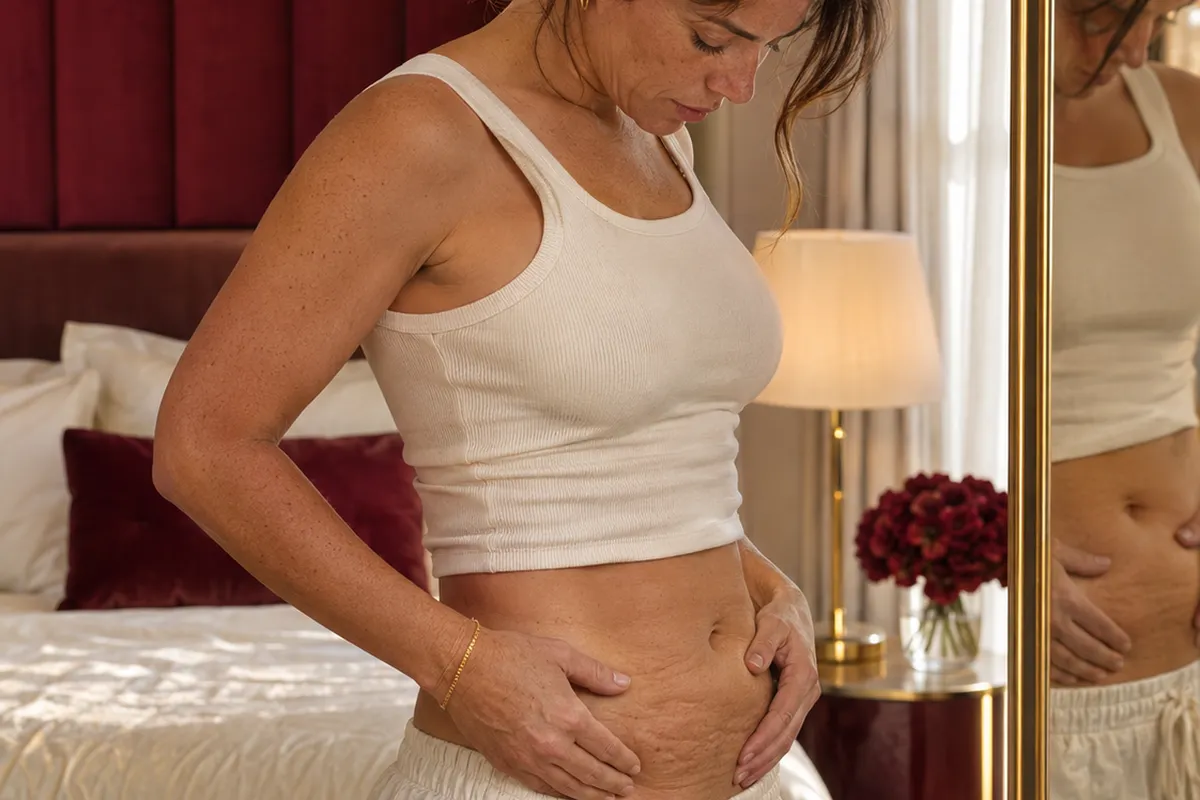
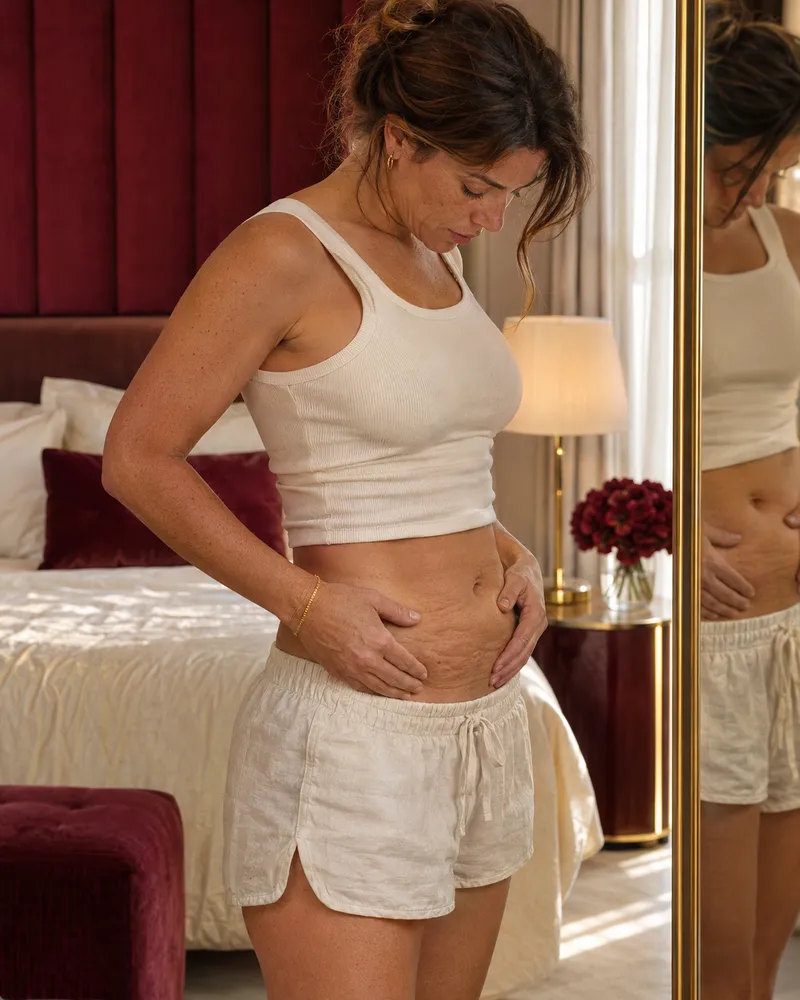
Woman in a top and shorts in front of a mirror, touching the skin of her abdomen with her hand

How to recognise it

Is it cellulite or laxity on your belly?

On the abdomen, dimples and loose skin are easily confused, but each requires a different approach. These signs can help you understand what may be happening before your assessment.

Tick what you recognise0/7

Tick the signs you recognise in your case. This is not a diagnosis, it is only meant to give you an idea.

Have you noticed a bulge that appears or grows when you strain, cough or stand up? Does the belly “change” when you strain, is there persistent pain or rapid changes in contour? Is there redness, warmth or painful lumps on the skin? You need medical assessment before any treatment. With severe pain that does not go away, vomiting or a bulge that has become hard and painful, call 112. For doubts out of hours, call SNS 24: 808 24 24 24.

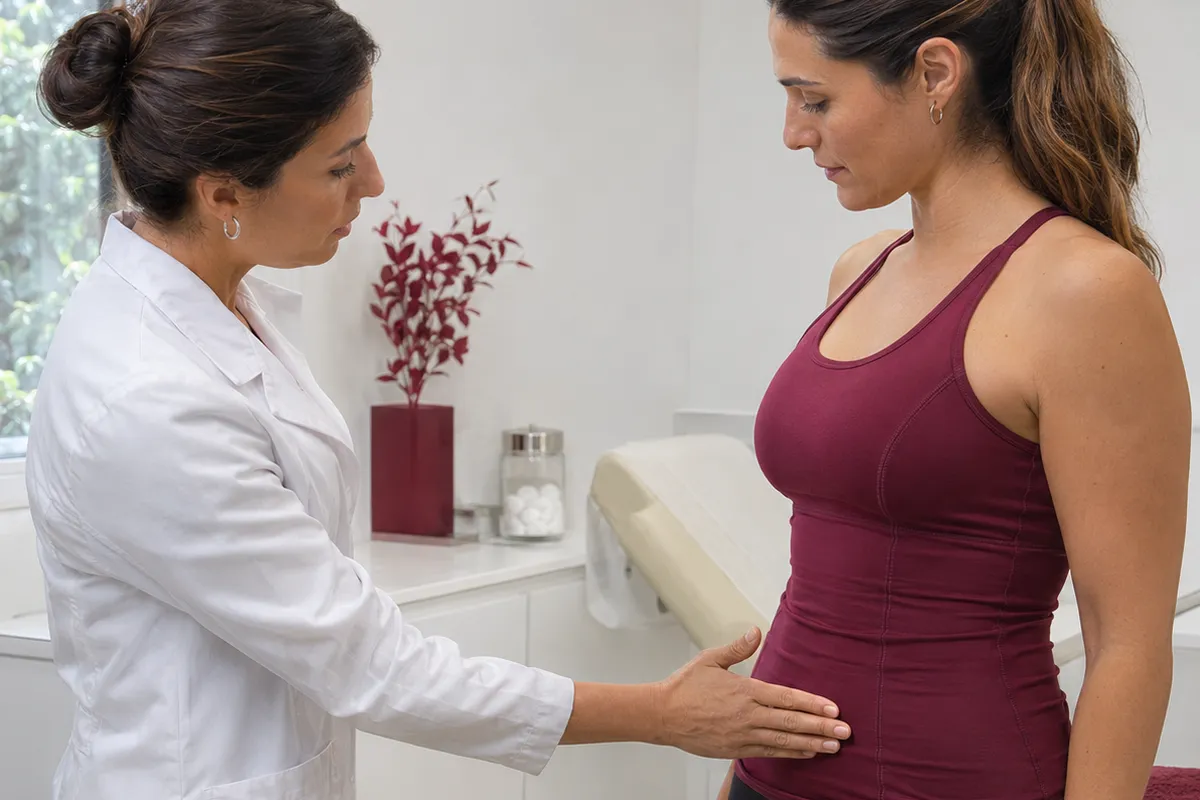
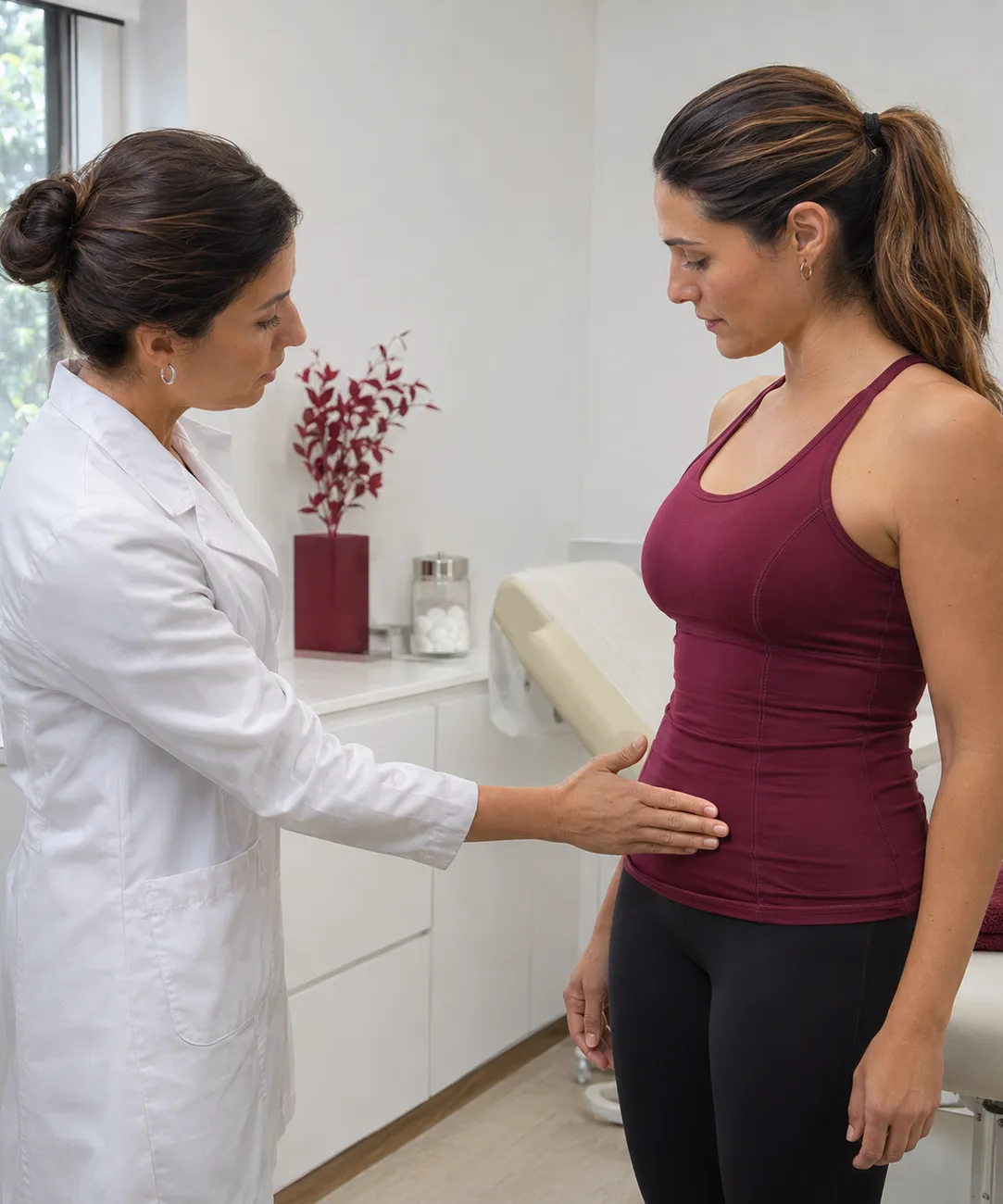
Female doctor in a white coat assessing the abdomen of a woman in gym clothes, in a consulting room
Photograph of a consultation. The dots mark what the doctor is assessing.

Why it happens

What may be behind the look of the belly

There is almost always more than one factor involved. Choose a situation to see how it fits into the overall picture and what usually helps.

Cellulite itself

Cellulite occurs when fat beneath the skin bulges between the fibrous septa that anchor the skin to deeper tissue. It appears as dimples in otherwise firm skin. It is very common in women after adolescence and is most noticeable on the thighs and buttocks, although it can also occur on the abdomen.

What weighs on it

Expecting a cream or compression garment to smooth out the uneven skin, or comparing your abdomen with edited images.

What helps

Daily movement, strength training and, if your weight needs to change, making that change gradually; all of these measures can improve the appearance, although they will not make it disappear.

Normal or to be assessed

Ordinary appearance or something to assess

In most cases it is cellulite, laxity or both, and neither is a disease. But there are situations in which the contour of the belly changes for another reason, and these call for an assessment before any treatment.

  • How it looks. Dimples in firm skin, or loose, thin skin that forms folds when leaning, or both, without pain and without a bulge.

  • When it is noticed. In side light, when pinching the skin and leaning the trunk, and after a pregnancy or weight loss.

  • What the clinic does. The doctor examines the belly, tells cellulite, laxity and stretch marks apart and explains what is realistic to expect before proposing what makes sense.

  • At home. Strength and core training, daily movement, stable weight, skin care and recovery time after childbirth.

Do you have severe, constant abdominal pain, vomiting, or a bulge that has become hard and very painful? Call 112. If you have a new bulge, pain or concerns, you can call SNS 24 out of hours on 808 24 24 24.

Book an assessment

What the clinic may consider

Options for the look of the belly

First-line measures include daily movement, strength and core training, maintaining a stable weight and, after childbirth, allowing time for recovery. Only then, and following an assessment, might the doctor consider body-contouring options for the abdomen: Neauvia Sectum radiofrequency, which is aimed more at improving skin firmness, and carboxytherapy, which focuses more on texture. Contouring massage may be used as an adjunct, and the clinic also uses collagen biostimulators for more pronounced skin laxity; during the consultation, the doctor will explain whether any of these options are appropriate in your case. Transparency is part of our work: scientific reviews have not found any option with clear, lasting efficacy for cellulite. Studies are small and short, results vary from person to person, tend to be temporary and require maintenance. Significant excess skin responds better to surgery.

Book an assessment
Dr Michelle Campagnoli, clinical director of Clínica Luxmed

First step

Assessment consultation

The doctor listens to what you are experiencing, examines your case and explains the suitable options. No treatment begins without this consultation.

May be considered when

you want to understand the cause and decide on the best path, with time and without commitment.

Book an assessment
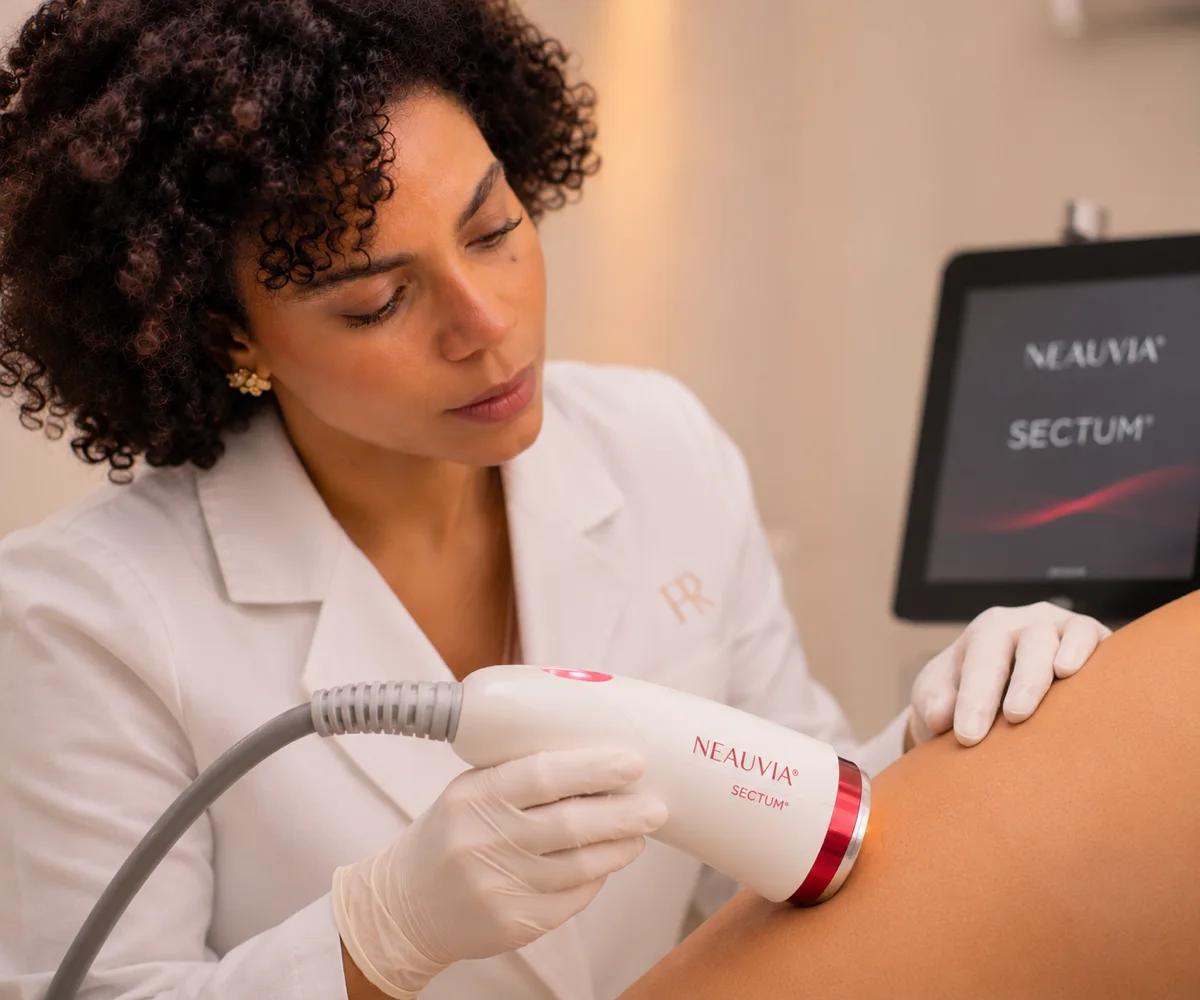
Radiofrequency handpiece passing over the thigh, with the device screen in the background

Firmness of the skin

Sectum radiofrequency Neauvia

Radiofrequency heats deep tissue to stimulate collagen and improve skin firmness in areas such as the abdomen, arms and thighs. It is aimed primarily at skin laxity; for cellulite, reviews report limited data and short follow-up periods.

May be considered when

mild to moderate skin laxity is the main concern, lifestyle measures have already been addressed, sufficient time has passed for recovery after childbirth, and the doctor has explained what is and is not known about the results.

Find out more
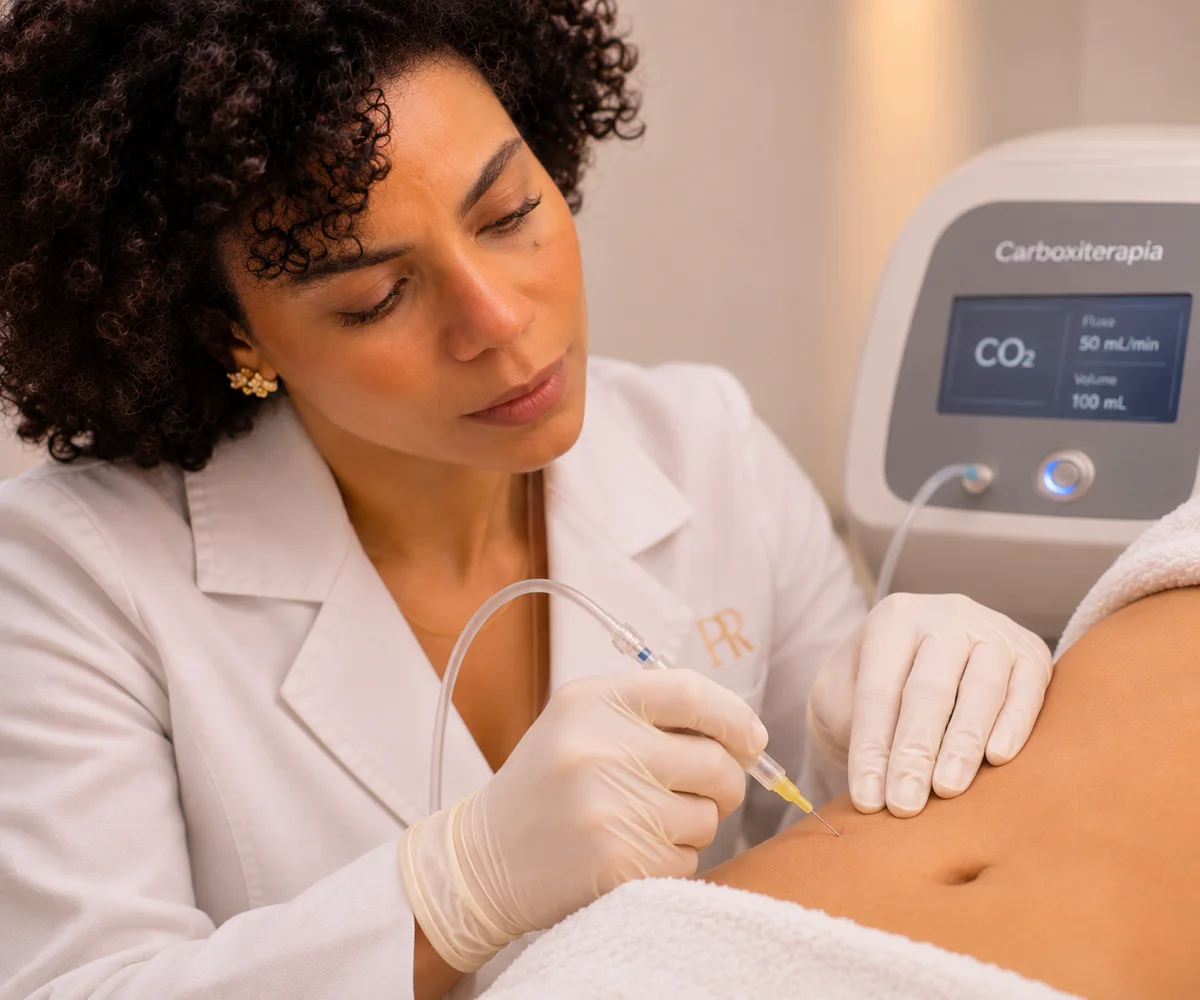
The doctor inserting a fine needle into the abdomen, with the gas delivery device in the background

Medical procedure

Carboxytherapy

Small amounts of carbon dioxide are administered beneath the skin with the aim of improving microcirculation and elasticity. Studies on carboxytherapy for cellulite are few and small, and results vary and require maintenance.

May be considered when

cellulite of the abdomen is the main complaint, there is no pregnancy, active infection or hernia in the area awaiting assessment, and the doctor has explained the limits of the evidence.

Find out more

What the journey looks like

From the first conversation to a plan tailored to you

No treatment starts without an assessment consultation with the doctor. This is how it works.

  1. 01At the clinic

    Telling your story

    The doctor asks when you first noticed the dimples or loose skin, whether they changed following pregnancy, weight loss or ageing, whether you have pain, a bulge, urinary leakage or stretch marks, and what treatments you have already tried.

  2. 02At the clinic

    Examine the abdomen

    The abdomen is examined in side lighting while you are standing, while the skin is pinched and as you bend forwards; the doctor also checks for separation of the abdominal muscles or a hernia. This helps distinguish between cellulite, skin laxity, stretch marks and excess skin.

  3. 03At home

    Prioritise what is within your control

    Strength and core training, daily movement, stable weight and, after childbirth, recovery time and the guidance of a physiotherapist when the doctor advises it. In many cases, it is the foundation on which the rest depends.

  4. 04Over time

    Choose, measure and maintain

    If a treatment is appropriate, the treatment area, number of sessions and realistic expectations will be explained without making promises. Standardised photographs will be taken to compare results objectively, and maintenance will be agreed because the appearance may return.

Day to day

What helps at home

What you do at home weighs more than it seems, above all as a whole. These are the habits that make sense alongside the clinic's plan.

The golden rule

Understanding what it is before choosing what to do

Cellulite, skin laxity, separation of the abdominal muscles and a hernia can all alter the contour of the abdomen, and each requires a different approach. Identifying which applies to you is the best way to avoid wasting time and money on something that will not help, or putting strain on an abdomen that needs different management.

Do strength and core training

Stronger muscles give better support and better posture, and improve the contour even when they do not remove cellulite.

In practice: two to three times a week, with the progression your body can handle; after childbirth, with guidance.

Move every day

Circulation and daily energy expenditure count more than isolated, intense sessions.

In practice: walk, climb stairs and get up every hour if you spend a lot of time sitting.

Lose or maintain weight gradually

Abrupt changes stretch and relax the skin each time, and the result on cellulite is unpredictable.

In practice: gradual losses, with enough protein and strength training, and assessment of the skin once weight has stabilised.

Record and bring to the consultation

This helps the doctor determine whether its appearance has changed and what may have caused the change.

In practice: photographs every two months with the same light and position, and a note of pregnancies, surgeries and weight changes.

Dr Michelle Campagnoli, clinical director of Clínica Luxmed

Who will look after you

An assessment carried out by the doctor

At Luxmed, in Algés, the first step is always an assessment with Dr Michelle Campagnoli. She will examine your abdomen, determine whether cellulite or skin laxity predominates, assess whether anything requires referral, and agree with you on the most appropriate approach before any procedure.

  • Physical examination and medical historyA discussion about pregnancy, weight and lifestyle, and examination of your abdomen while you are standing, with the skin pinched and while you bend forwards.
  • A plan tailored to youA clear plan, without promises, with habits first, the right timing after childbirth and follow-up over time.
  • No obligationThe cost of any treatment is confirmed only after the assessment.
Book an assessment

Book a consultation

Book your consultation

Choose how you prefer to get in touch. We will arrange the assessment consultation with Dr Michelle Campagnoli.

Booking through the websiteAssessment consultationTalk to our assistant on WhatsApp and ask for the current price of the assessment.

New Life Miraflores, Algés · Office Center, R. Santa Teresa do Menino Jesus n.º 6, 9.º C, 1495-048

Your details are used only for this contact. Any treatment depends on a prior medical assessment.

Request an appointmentIt takes less than a minute.
Speciality
You do not need to go into detail. The doctor will talk to you during the consultation.
Request received. Our team will contact you as soon as possible.
Cellulite on the belly: how do I know whether it is cellulite or laxity?

Cellulite appears as dimpling or an orange-peel texture in skin that remains firm and becomes more noticeable when pinched. Skin laxity means loose, thin, wrinkled skin that hangs and forms fine folds when you lean forwards. Many people have both, sometimes together with stretch marks, and separation of the abdominal muscles (diastasis) can also alter the contour. Because cellulite and skin laxity are treated differently, the best starting point is for the doctor to examine your abdomen while you are standing, with the skin pinched and while you bend forwards.

Do men get cellulite on the belly too?

It is rare. In men, abdominal fat without dimpling is more common. If a man notices dimples or a bulge on the abdomen, it is important to determine whether the cause is loose skin, fat or a hernia.

What is the difference between cellulite, stretch marks and excess skin?

Cellulite consists of dimpling of the skin; stretch marks are streaks or lines that are initially pink or purple and become paler over time; and excess skin is a substantial amount of loose skin, particularly after major weight loss. All three can occur on the same abdomen. Stretch marks are very common and harmless, and often become less visible over time. Significant excess skin responds best to surgery.

My belly “changes” when I strain: is it cellulite?

No, and it should be assessed. A bulge or protrusion that appears along the midline when you strain, get out of bed or cough may be separation of the abdominal muscles (diastasis), which is common after pregnancy, or a hernia. Neither is cellulite. A painful bulge, or one that has become hard and painful and is accompanied by vomiting, requires urgent medical attention: call 112.

How do I get rid of cellulite on the belly?

There is no treatment that makes it go away for good. What can be achieved is to improve the look of the skin, with strength and core training, daily movement, stable weight and skin care, and, if it makes sense, with medical treatments chosen after the assessment. Scientific reviews do not find an option with clear and lasting efficacy, and results vary from person to person. Sit-ups strengthen the muscle, but do not eliminate cellulite or localised fat, and girdles treat neither.

Cellulite on the belly after pregnancy: when can I treat it?

After pregnancy, the abdomen takes months to recover, and the skin and muscles need that time. Aesthetic treatments are generally postponed until you have recovered from childbirth and finished breastfeeding; the doctor will advise you when the time is right. Before undertaking strenuous exercise, it is advisable to assess separation of the abdominal muscles. Exercise tailored to the core and pelvic floor can improve posture and contour, and reviews indicate that a structured programme reduces the distance between the muscles, although it does not always improve function.

Cellulite on the belly after losing weight: why does it get worse and what helps?

Losing a lot of weight leaves excess skin, and the effect on cellulite is not the same in everyone: in a study of women in supervised weight-loss programmes, most improved, but in others it worsened. Strength training to maintain muscle, gradual weight loss and, once weight has stabilised, firming treatments may improve mild to moderate cases. Large excesses of skin respond better to surgery, and the doctor explains what makes sense.

Does radiofrequency help with cellulite and laxity of the abdomen?

Neauvia Sectum radiofrequency heats deep tissue to stimulate collagen and is used primarily to improve skin firmness in areas such as the abdomen. For cellulite, reviews report limited data: many studies have methodological flaws or follow-up periods of only a few weeks, so it is uncertain how long the results last. The doctor will explain what is known, when it may be appropriate and how many sessions are usually required, without promising results.

Do carboxytherapy and contouring massage work on the belly?

Carboxytherapy applies small amounts of carbon dioxide under the skin, and contouring massage works on circulation and contour. Studies on carboxytherapy are few and small, and the effect of massage is mainly temporary. They may be complements within a plan, not stand-alone solutions, and the results call for maintenance. Neither treats a hernia or separation of the muscles, and there are contraindications, such as pregnancy, an active infection in the area or a hernia awaiting assessment.

When should I see a doctor first?

Book a consultation before any treatment if you have noticed a bulge on the belly, if the belly “changes” when you strain, if there is pain, urine leakage, redness, warmth or painful lumps, or if the contour has changed quickly. With severe, constant pain, vomiting or a hard, painful bulge, call 112. If in doubt, out of hours call SNS 24 (808 24 24 24). Before treating, the clinic also assesses whether there is diastasis, a hernia or excess skin that change the plan.

We could not find that question. Ask us on WhatsApp

Scientific references

This page is based on the sources below and was reviewed by Dr. Michelle Campagnoli. Last updated on .

  1. Luebberding S, Krueger N, Sadick NS. Cellulite: an evidence-based review. Am J Clin Dermatol, 2015.
  2. Zerini I, Sisti A, Cuomo R, Ciappi S, Russo F, Brandi C, D'Aniello C, Nisi G. Cellulite treatment: a comprehensive literature review. J Cosmet Dermatol, 2015.
  3. Lim SK, Gultekin G, Suresan S, Jacob A, Zou Y, Liyanage DD, Parekh JN, Mavilakandy AK, Vyas K, Khajuria A. Comparative Analysis of Cellulite Treatment Modalities: A Systematic Review. Aesthetic Plast Surg, 2025.
  4. Bass LS, Kaminer MS. Insights Into the Pathophysiology of Cellulite: A Review. Dermatol Surg, 2020.
  5. Smalls LK, Hicks M, Passeretti D, Gersin K, Kitzmiller WJ, Bakhsh A, Wickett RR, Whitestone J, Visscher MO. Effect of weight loss on cellulite: gynoid lypodystrophy. Plast Reconstr Surg, 2006.
  6. Benjamin DR, van de Water AT, Peiris CL. Effects of exercise on diastasis of the rectus abdominis muscle in the antenatal and postnatal periods: a systematic review. Physiotherapy, 2014.
  7. Capoccia Giovannini S, Hoffmann H, Bracale U, Cavallaro G, et al. Non operative management of postpartum Diastasis Recti: a systematic review and metanalysis of randomized controlled trials. Hernia, 2026.
  8. Brandi C, D'Aniello C, Grimaldi L, Bosi B, Dei I, Lattarulo P, Alessandrini C. Carbon dioxide therapy in the treatment of localized adiposities: clinical study and histopathological correlations. Aesthetic Plast Surg, 2001.
  9. NHS. Hernia. (NHS, acedido 2026-11-11)
  10. NHS. Stretch marks. (NHS, acedido 2026-11-11)
CallAssistantAvailableBook