Algés, Oeiras Mon to Fri · 09:00 to 13:00 and 14:00 to 19:00 · Sat · 09:00 to 14:00
WhatsApp Book a consultation

Body aesthetics

Cellulite on the bottom and buttocksWhy dimples appear so early and so often in this area, and what can realistically be done

The buttocks are one of the areas where cellulite appears earliest and most often, even in young, slim women who exercise. It is not caused by carelessness or a lack of willpower: it results from the way the female body stores fat, the structure of the skin in this area and, in part, hereditary factors. Nor is there any way to get rid of it permanently. A combination of measures, starting with strength training and healthy habits, can improve contour and texture, and certain medical procedures may then be considered, with variable results that require maintenance. Here, we explain what usually causes cellulite on the buttocks, what helps and what is a myth, when an assessment is advisable before undergoing treatment, and what Clínica Luxmed in Algés can offer.

Reviewed by Dr Michelle Campagnoli, clinical director

  • 4Body treatment options for this concern
  • 1assessment, always first
  • Nocommitment
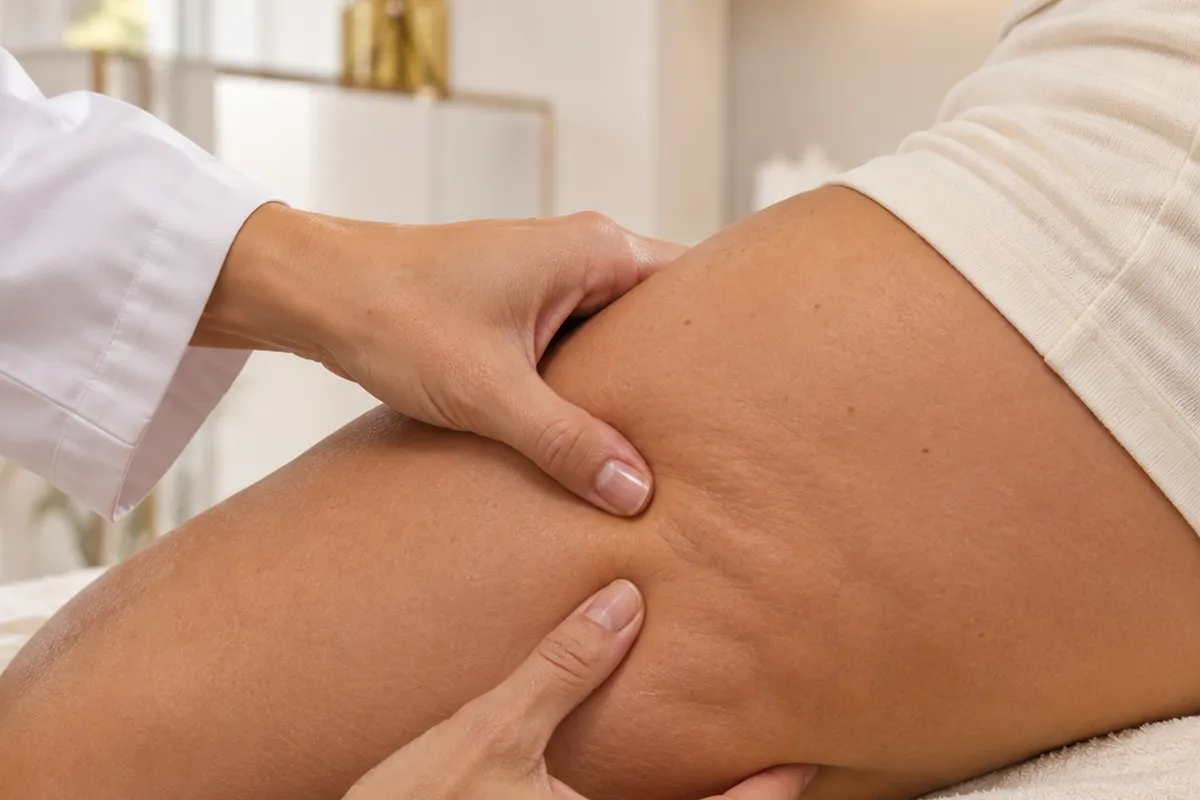
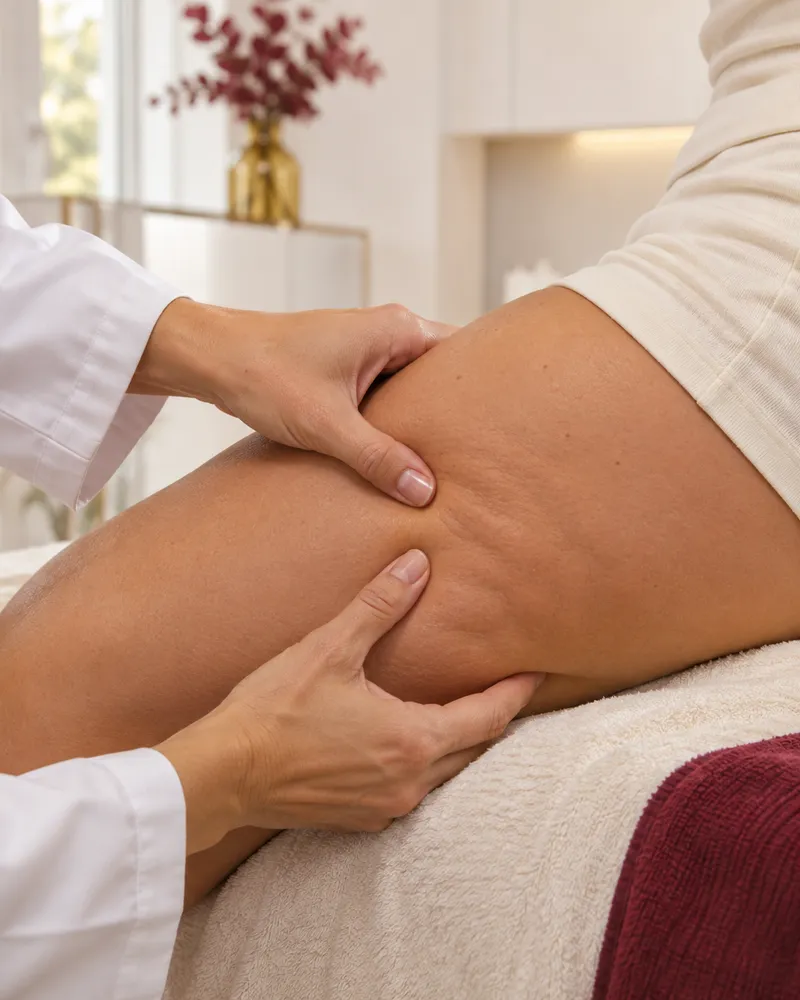
Doctor's hands gently pinching the skin of the thigh of a woman sitting on an examination couch

How to recognise it

Are cellulite dimples what you see on your bottom?

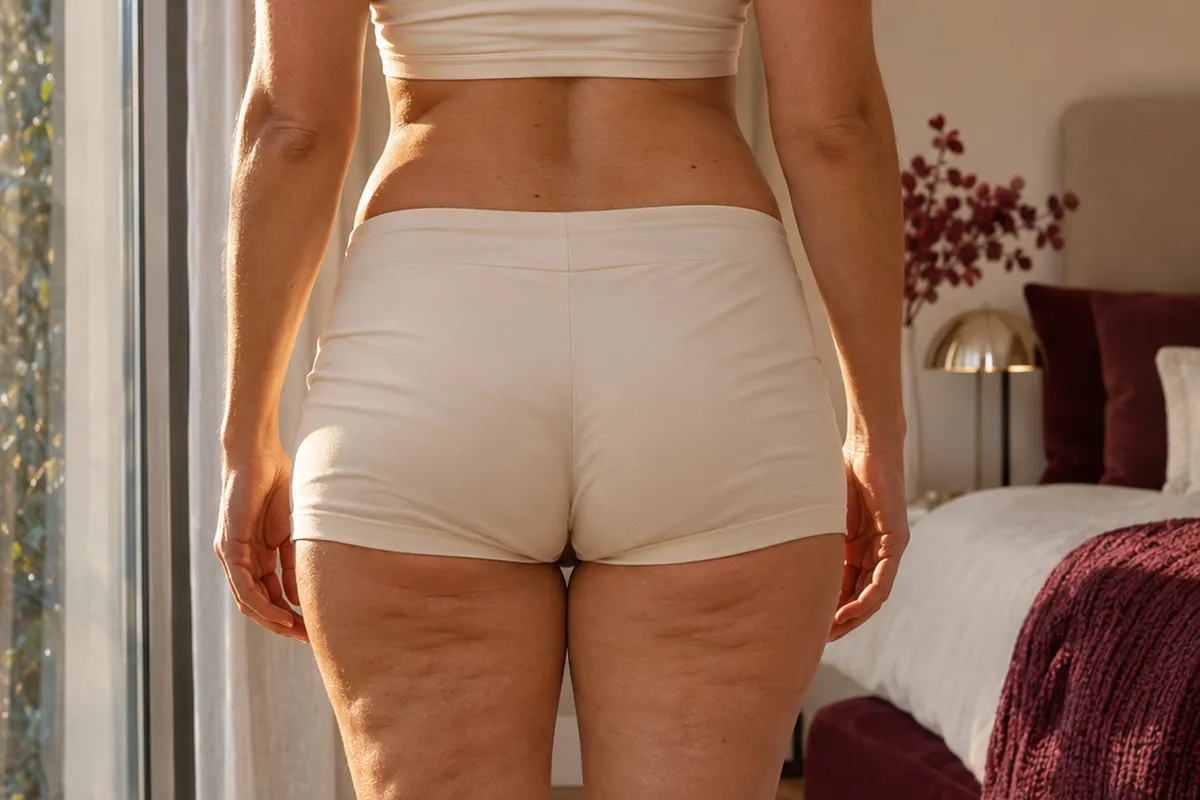
On the buttocks, cellulite may be very discreet or quite visible, and is almost always more noticeable in certain lights or positions. These signs help you to see what is going on before the assessment.

Tick what you recognise0/7

Tick the signs you recognise in your case. It is not a diagnosis, it serves to give you a first guide.

Do you have painful lumps, wounds, an abscess or a red, warm and swollen area on the buttocks or thighs, particularly with fever? This may be an infection or another condition rather than cosmetic cellulite, and you need a same-day medical assessment. Out of hours, call SNS 24 on 808 24 24 24. If you have a high fever, dark or purple skin, very severe pain or confusion, call 112.

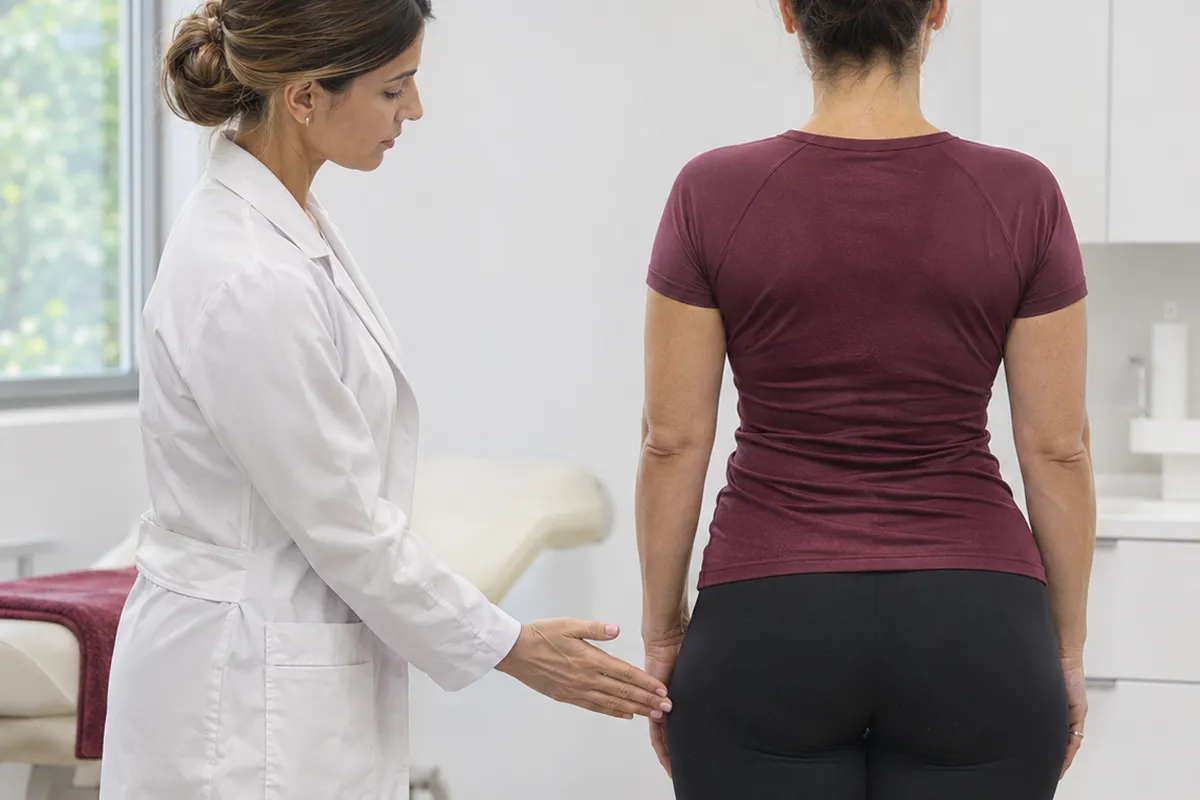
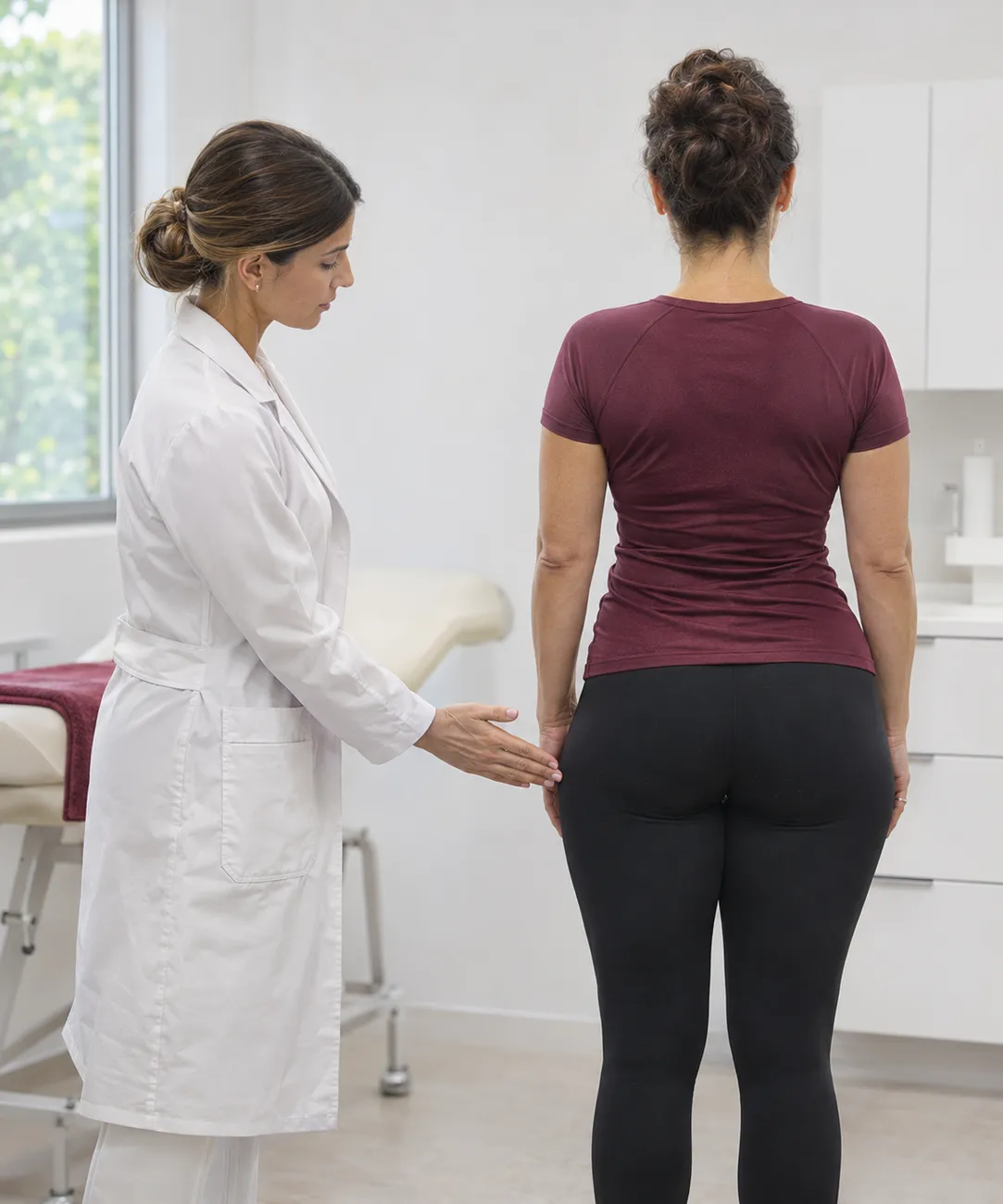
Female doctor standing beside a patient with her back turned, examining the contour of the hips
Photograph of a consultation. The dots mark what the doctor is assessing.

Why it appears

Why cellulite is so frequent on the buttocks

Several factors are involved at the same time, and almost none of them are within your control. Choose one to see how it contributes and what genuinely helps.

Hormones and gluteofemoral fat

In women, oestrogens favour the storage of fat on the hips, thighs and buttocks, the so-called gluteofemoral pattern. That is why cellulite appears mostly after puberty and is uncommon in men. Hormonal changes, such as pregnancy, certain contraceptives or the menopause, may accentuate the appearance.

What weighs on it

Feeling that it is a personal flaw or that “eating better” would be enough to avoid it.

What helps

Knowing that it is a very common characteristic of the female body and telling the doctor what stage of life you are at.

Normal or to be assessed

Ordinary cellulite or something to assess

In almost all cases, dimples on the buttocks are purely cosmetic and harmless. However, some conditions can resemble cellulite and require medical assessment before any treatment.

  • How it looks. Dimples and undulations the same on both sides, stable for months or years, more visible when the skin is pinched or in certain light.

  • How it feels. The skin is a normal colour and temperature and is painless, or only slightly tender when pinched. There is no fever or broken skin.

  • What the clinic does. The doctor examines the skin standing and pinched, confirms that it is aesthetic cellulite and explains the grade, what can be expected and the limits of each option.

  • At home. Strength training for the glutes, less time sitting still, stable weight and skin care, which are the starting point of any plan.

Do you have high fever, dark or purple skin, very severe pain or confusion? Call 112. If there are painful lumps, a warm and red area or doubts, out of hours you can call SNS 24: 808 24 24 24.

Book an assessment

What the clinic may consider

Medical options for cellulite on the buttocks

After exercise and lifestyle changes, and only following an assessment, the doctor may recommend options from the clinic’s body treatment range, depending on the grade and type of cellulite and whether skin laxity is also present. Below, we describe radiofrequency (Sectum, by Neauvia), intended to improve firmness, and carboxytherapy, used to target texture and microcirculation. At the consultation, the doctor will also explain intradermotherapy, which uses microinjections and may involve the off-label use of certain substances, and contouring massage, which may temporarily reduce swelling and improve body contours. The evidence is limited: reviews identify small studies with short follow-up periods, outcomes vary between individuals and are generally temporary, and maintenance treatment is required. No option eliminates cellulite.

Book an assessment
Dr Michelle Campagnoli, clinical director of Clínica Luxmed

First step

Assessment consultation

The doctor listens to what you are experiencing, examines your case and explains the suitable options. No treatment begins without this consultation.

May be considered when

you want to understand the cause and decide on the best path, with time and without commitment.

Book an assessment
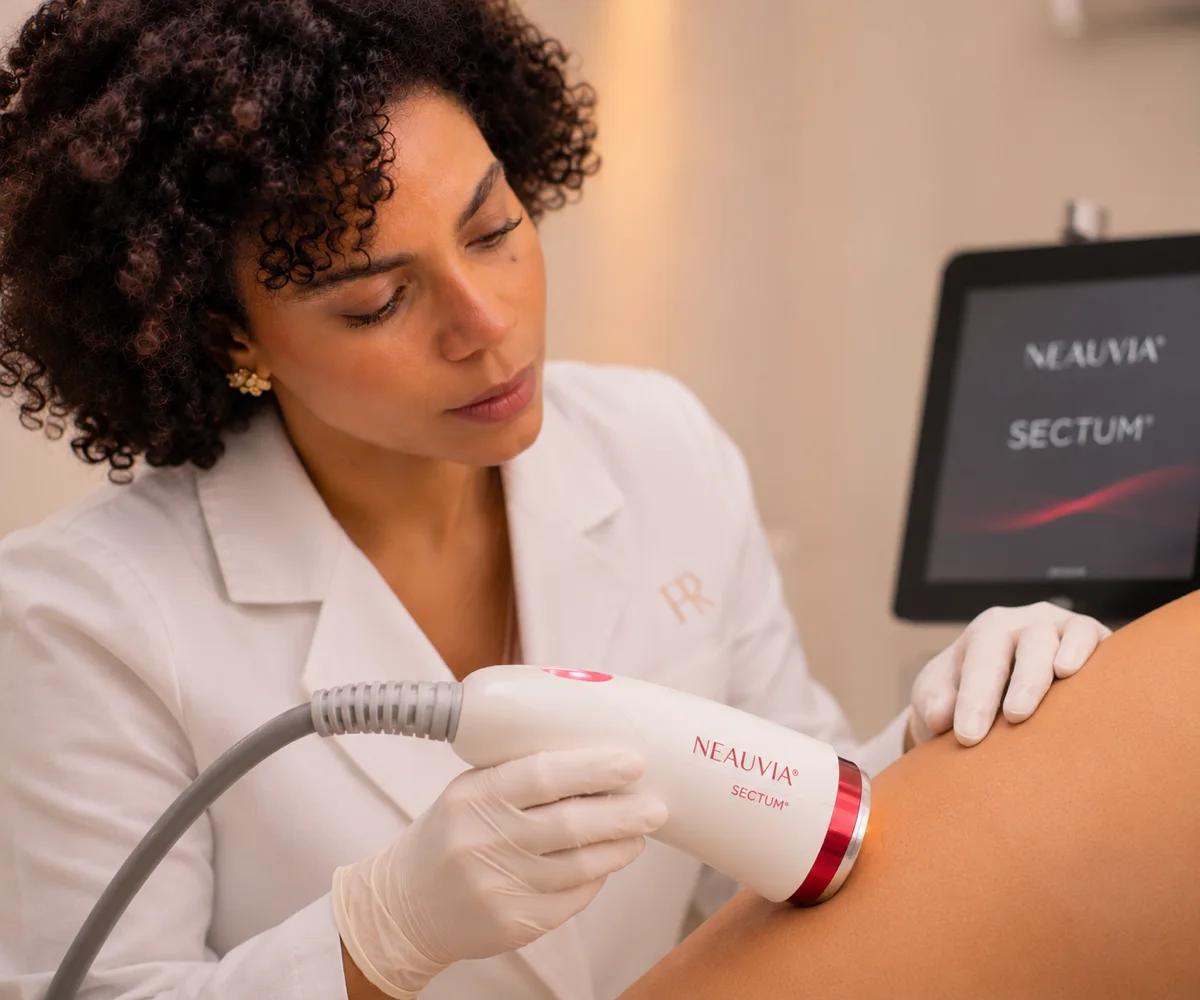
Radiofrequency handpiece passing over the back of the thigh, with the device screen in the background

Technology

Sectum radiofrequency Neauvia

Radiofrequency heats deeper tissue to stimulate collagen production and firm the skin, making it particularly relevant when cellulite is accompanied by some skin laxity. Of the options for cellulite, radiofrequency has some of the strongest supporting data, although follow-up periods are short and outcomes vary.

May be considered when

gluteal cellulite is accompanied by some loss of firmness, exercise and lifestyle measures have already been addressed, and the doctor has explained the benefits and limitations.

Find out more
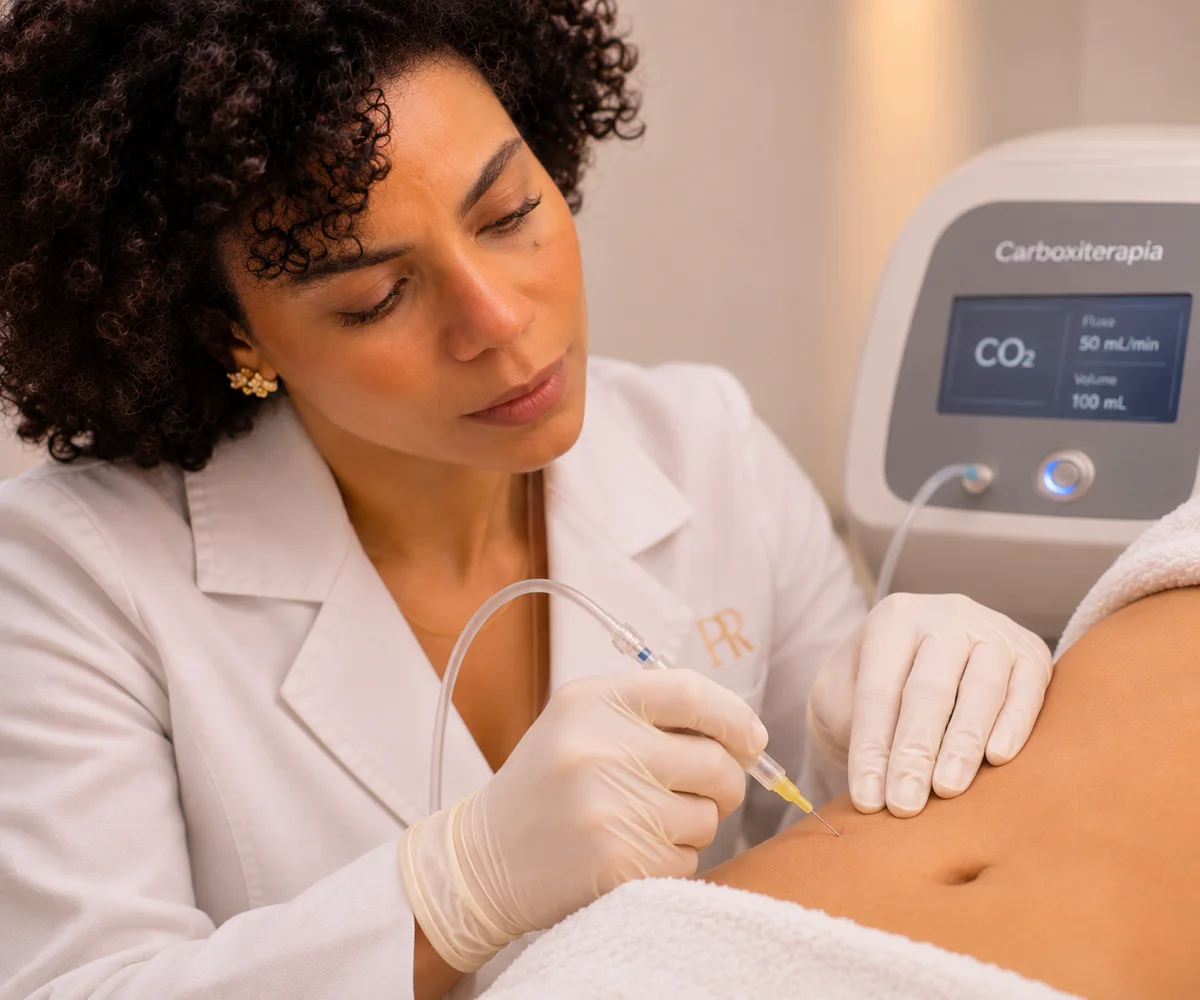
The doctor inserting a fine needle into the abdomen, with the gas delivery device in the background

Medical procedure

Carboxytherapy

Small amounts of carbon dioxide are administered beneath the skin to improve microcirculation and elasticity and, in turn, skin texture. Studies are small-scale, outcomes vary and maintenance sessions are usually required. Bruising and discomfort may occur at the injection site.

May be considered when

cellulite is the main complaint, there is no infection or clotting disorder and the doctor has explained what is known and what is not known about the results.

Find out more

What the journey looks like

From the first conversation to a realistic plan

No procedure begins without an assessment with the doctor. Most people start from the simplest measures, and only then consider more.

  1. 01At the clinic

    Confirm what it is

    The doctor asks when you first noticed the dimples, in which positions they are visible, whether they changed with pregnancy, weight or hormones, and whether there is any pain, warmth, lumps, wounds or swelling. If there are signs of infection or another condition, these must be addressed first.

  2. 02At the clinic

    Examining the skin

    The skin is examined while you are standing, both relaxed and pinched, under side lighting because its appearance changes with position. The doctor grades the cellulite and checks for associated skin laxity and whether the cellulite is softer or more fibrous, as these factors affect the choice of treatment.

  3. 03At home

    Training, habits and care

    The starting point is strength training for the glutes, spending less time sitting still, maintaining a stable weight and caring for the skin. There may be little visible change in the first few weeks, and the aim is to build muscle and improve body contours, not to make cellulite disappear.

  4. 04Over time

    Decide and follow up

    If the concern persists, the doctor explains whether an option from the clinic’s treatment range may be appropriate, how many sessions are usually needed, what to expect and what maintenance may be required, without promising results. Follow-up photographs are taken and the plan is adjusted.

Day to day

What helps at home

What you do each day matters more than you might think. These measures are appropriate while you wait for your consultation and alongside the clinic’s treatment plan.

The golden rule

First muscle and habits, then technology

Stronger gluteal muscles provide better support for the skin and improve body contours, making this the area where your efforts are most worthwhile. Strengthening them will not eliminate cellulite, but it provides a foundation that can help any appropriate procedure work better and produce longer-lasting results.

Training the glutes 2 to 3 times a week

Squats, glute bridges, lunges and exercises with a resistance band increase the volume and firmness of the muscle.

In practice: start with a few sets and increase the load gradually, with the support of a professional if you have doubts about technique.

Getting up every hour

Breaking up periods of sitting helps circulation and activates the muscles in the area.

In practice: a break of a few minutes to walk, or an alarm on your phone, if you work in an office.

Walking every day and keeping a stable weight

Regular movement and avoiding major fluctuations in weight benefit both your body contours and your skin.

In practice: daily walks and a balanced diet, without drastic diets.

Moisturising the skin and giving up smoking

Healthier, well-moisturised skin makes irregularities less noticeable, while smoking impairs circulation.

In practice: moisturiser after the shower and, if you smoke, ask for help to stop.

Dr Michelle Campagnoli, clinical director of Clínica Luxmed

Who will look after you

An assessment carried out by the doctor

At Luxmed in Algés, the first step is always an assessment with Dr Michelle Campagnoli. She examines your skin, confirms that the concern is cosmetic cellulite rather than another condition and works with you to determine what is appropriate before any procedure.

  • Physical examination and medical historyA conversation about your habits, pregnancies, medication and what you have already tried, and examination of the skin in several positions.
  • A plan tailored to youA clear plan, without promises of results, with training and habits first and follow-up over time.
  • No obligationThe cost of any treatment is confirmed only after the assessment.
Book an assessment

Book a consultation

Book your consultation

Choose how you prefer to get in touch. We will arrange the assessment consultation with Dr Michelle Campagnoli.

Booking through the websiteAssessment consultationTalk to our assistant on WhatsApp and ask for the current price of the assessment.

New Life Miraflores, Algés · Office Center, R. Santa Teresa do Menino Jesus n.º 6, 9.º C, 1495-048

Your details are used only for this contact. Any treatment depends on a prior medical assessment.

Request an appointmentIt takes less than a minute.
Speciality
You do not need to go into detail. The doctor will talk to you during the consultation.
Request received. Our team will contact you as soon as possible.
Why do I have cellulite on my bottom and buttocks, even though I am slim?

Cellulite does not depend on weight alone. On the buttocks, several factors come together: the fat that the female body stores around the hips and thighs under the influence of oestrogens, relatively thin skin over a thick layer of fat, septa that tend to run vertically and, to some extent, genetics. That is why it occurs in slim, young women and athletes and is not a sign of neglect. It affects the vast majority of women after puberty and is a very common feature of the body that poses no risk to health.

Is it normal to have cellulite on the buttocks at 20?

Yes, it is very common. Cellulite mainly develops after puberty, and many women first notice dimples on their bottom and thighs while they are still young, even if they are a healthy weight. What varies is its grade and how visible it is under different lighting, in different positions and at different stages of life.

Is cellulite on the buttocks different from that on the legs?

The cause is the same, but the buttocks have certain distinctive features: fat accumulates there under hormonal influences, the skin is relatively thin compared with the layer of fat, and the area is compressed when sitting. In the legs, swelling and circulation are also relevant. The treatment plan may therefore have a different emphasis, and the doctor will tailor it to the area concerned.

Does sitting for many hours cause cellulite on the bottom?

There is no strong evidence that sitting causes cellulite, but it may make the area look less firm by the end of the day because it is compressed and the muscles are used very little. Getting up every hour, walking every day and training the glutes are simple measures that can improve body contours, although they will not eliminate cellulite.

Does doing squats remove cellulite from the bottom?

It strengthens the muscle and may improve the contour and the support of the skin, but it does not eliminate cellulite, because the dimples depend on the structure of the skin and the septa. In general, 8 to 12 weeks of regular training, two to three times a week, are needed to notice changes in muscle firmness, and the cellulite may change little. Even so, strength training is the most useful starting point.

Do cellulite creams work? And dry brushing?

Creams with caffeine or retinol may slightly improve the texture in some studies, but the data are inconsistent and the effect disappears when you stop using them. There is no evidence that dry brushing reduces cellulite. They serve as a complement, and not as a solution.

What in-clinic treatments are available for cellulite on the buttocks?

Options include radiofrequency to improve firmness, carboxytherapy and intradermotherapy to target texture, and contouring massage for swelling and body contours. The choice depends on the grade and type of cellulite and whether skin laxity is present. The evidence is limited, with small studies and short follow-up periods, and reviews have not identified any clearly superior treatment. Outcomes vary, are generally temporary and require maintenance.

How many sessions are needed and is there recovery time?

Treatment generally involves several sessions at intervals, with gradual improvement and follow-up photographs to allow an objective comparison. In most cases, you can return to your usual activities the same day, although injectable treatments may cause bruising and discomfort. The exact number of sessions and the interval between them are determined after the assessment, with no guarantee of results.

Can I combine these treatments with other procedures on the buttocks?

In some cases, yes, following an assessment and with an appropriate interval between procedures. If you are considering or have already had another procedure on your buttocks, tell the doctor at your consultation. Together, you can decide what is appropriate and in which order. If the cellulite is fibrous, with pronounced depressions, the doctor will explain the options and whether a different approach would be more suitable.

When should I see a doctor first?

Book a consultation before any treatment if you have pain, painful lumps, wounds, abscesses, warmth or redness, disproportionate swelling of the legs and buttocks, easy bruising or a clotting disorder, or if you are pregnant. If you are unsure, call SNS 24 out of hours on 808 24 24 24. If you have a high fever, dark or purple skin, very severe pain or confusion, call 112.

We could not find that question. Ask us on WhatsApp

Scientific references

This page is based on the sources below and was reviewed by Dr. Michelle Campagnoli. Last updated on .

  1. Luebberding S, Krueger N, Sadick NS. Cellulite: an evidence-based review. Am J Clin Dermatol, 2015.
  2. Rossi AB, Vergnanini AL. Cellulite: a review. J Eur Acad Dermatol Venereol, 2000.
  3. Nürnberger F, Müller G. So-called cellulite: an invented disease. J Dermatol Surg Oncol, 1978.
  4. Querleux B, Cornillon C, Jolivet O, Bittoun J. Anatomy and physiology of subcutaneous adipose tissue by in vivo magnetic resonance imaging and spectroscopy: relationships with sex and presence of cellulite. Skin Res Technol, 2002.
  5. Kligman AM, Pagnoni A, Stoudemayer T. Topical retinol improves cellulite. J Dermatolog Treat, 1999.
  6. Zerini I, Sisti A, Cuomo R, Ciappi S, Russo F, Brandi C, D'Aniello C, Nisi G. Cellulite treatment: a comprehensive literature review. J Cosmet Dermatol, 2015.
  7. Menon A, Shauly O, Marxen T, Losken A, Faulkner HR. A Clinical Guide to the Treatment of Cellulite and Comprehensive Review of the Etiology, Pathophysiology, and Utility of Intervention. Aesthetic Plast Surg, 2024.
  8. Lim SK, Gultekin G, Suresan S, Jacob A, Zou Y, Liyanage DD, Parekh JN, Mavilakandy AK, Vyas K, Khajuria A. Comparative Analysis of Cellulite Treatment Modalities: A Systematic Review. Aesthetic Plast Surg, 2025.
  9. Bass LS, Kaminer MS. Insights Into the Pathophysiology of Cellulite: A Review. Dermatol Surg, 2020.
  10. Bass LS, Hibler BP, Khalifian S, Shridharani SM, Klibanov OM, Moradi A. Cellulite Pathophysiology and Psychosocial Implications. Dermatol Surg, 2023.
  11. Hexsel DM, Dal'forno T, Hexsel CL. A validated photonumeric cellulite severity scale. J Eur Acad Dermatol Venereol, 2009.
  12. Herbst KL, Kahn LA, Iker E, Ehrlich C, Wright T, McHutchison L, Schwartz J, Sleigh M, Donahue PM, Lisson KH, Faris T, Miller J, Lontok E, Schwartz MS, Dean SM, Bartholomew JR, Armour P, Correa-Perez M, Pennings N, Wallace EL, Larson E. Standard of care for lipedema in the United States. Phlebology, 2021.
  13. NHS. Cellulitis. (nhs.uk, acedido 2026-11-11)
CallAssistantAvailableBook