Algés, Oeiras Mon to Sat · 09:00 to 13:00 and 14:00 to 19:00
WhatsApp Book a consultation

Hair problem

Patches in the hairWhen the scalp shows in areas where there used to be hair

A patch in the hair, where the scalp is visible, can have several causes, and some call for early assessment. Here we explain what usually lies behind it, which signs should not wait and what the doctor assesses at the appointment.

Reviewed by Dr Michelle Campagnoli, clinical director

  • 3treatments the clinic may suggest
  • 1assessment consultation, always first
  • 70 €assessment booked through the website
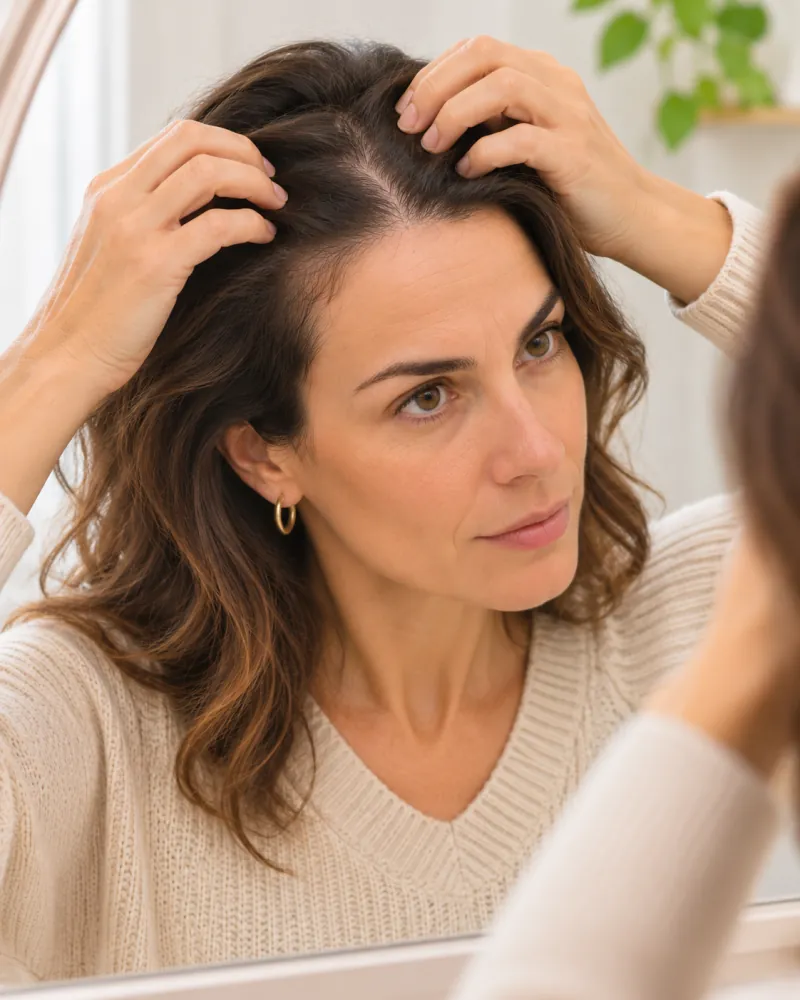
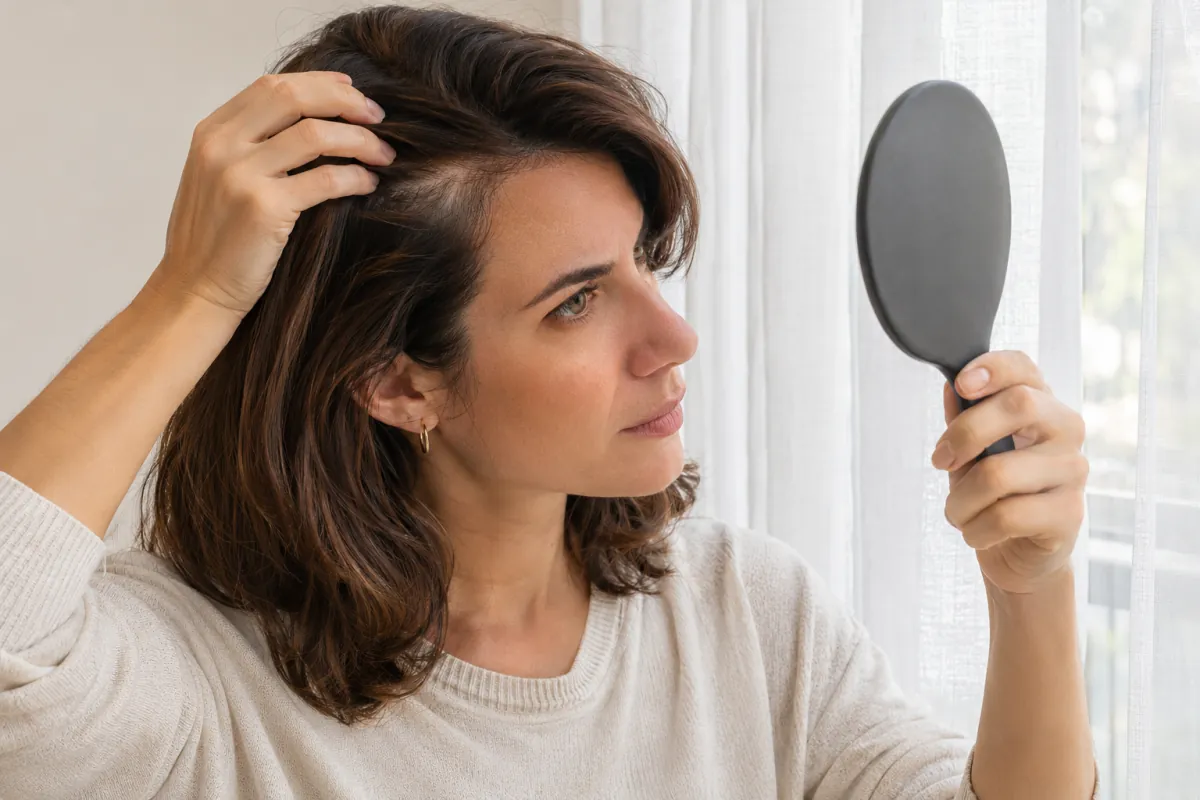
Woman at a mirror parting her hair with both hands to see her scalp, with an attentive expression

How to recognise it

Are these patches that call for assessment?

There are many causes for a patch in the hair, and only examining the scalp can tell them apart. These signs help you understand what to describe to the doctor and whether you should come sooner.

Tick what you recognise0/5

Tick the signs you recognise in your case. This is not a diagnosis, it is only meant to give you an idea.

Sudden and heavy shedding, patches that appear quickly, a painful scalp, sores, marked flaking, redness or scarring should be seen without delay.

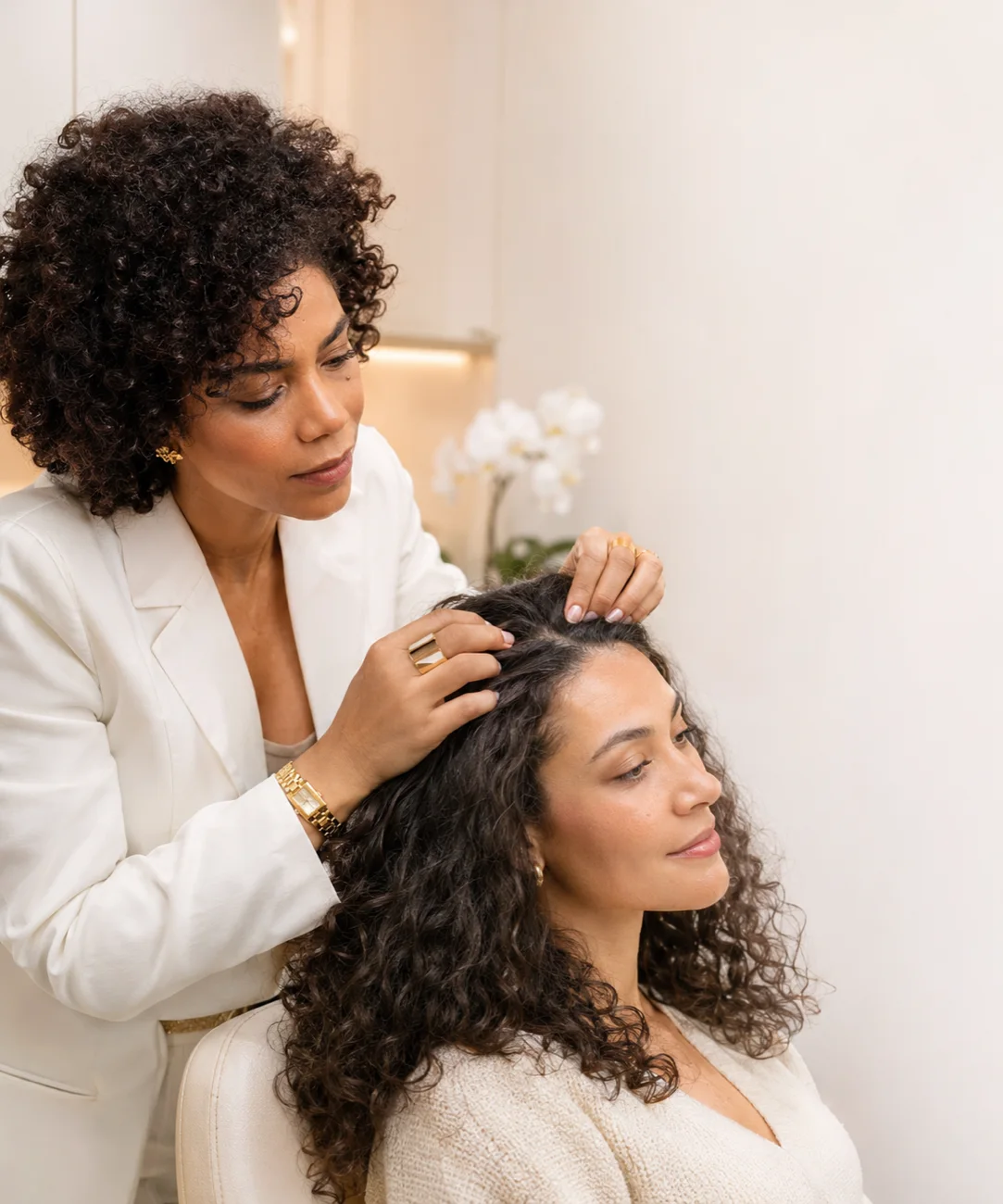
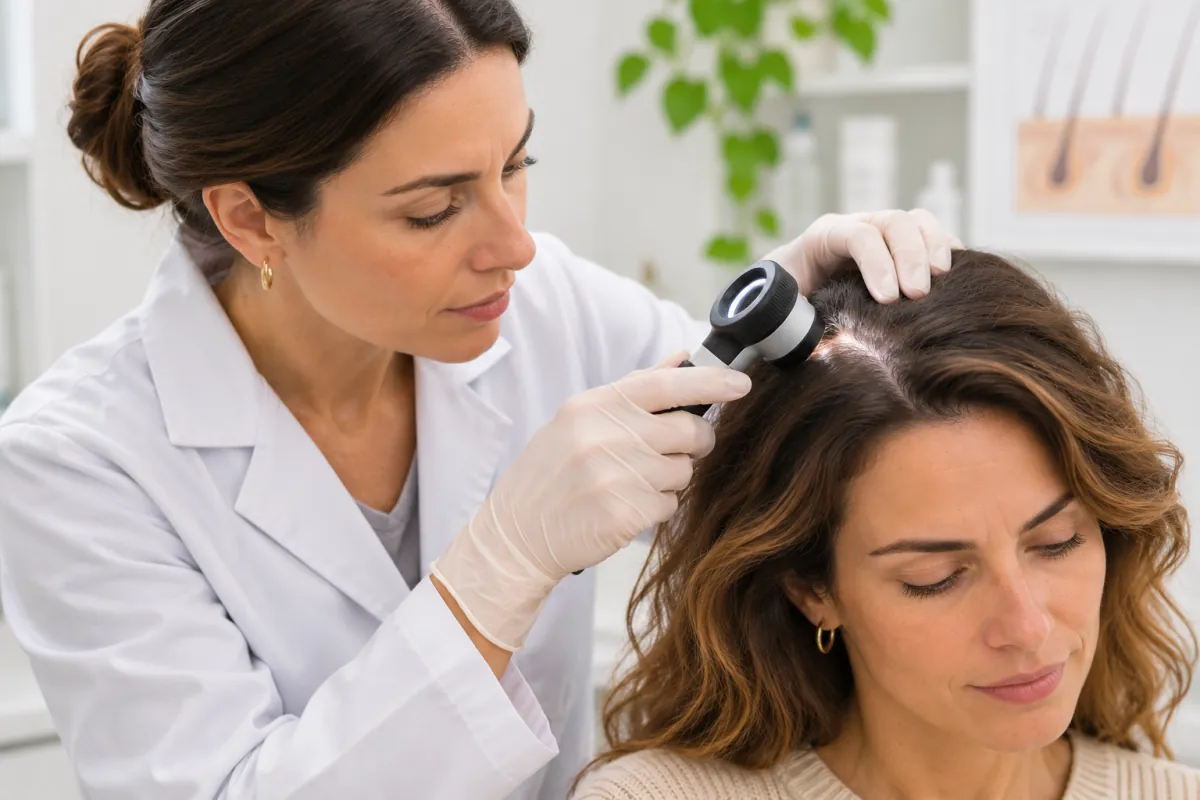
The doctor examining a patient's scalp during a hair assessment consultation
Photograph of an assessment appointment. The points mark the areas of the scalp that the doctor usually observes; the image does not show hair patches.

Why it happens

What may be behind the patches

Patches do not have a single cause, and appearance alone is not enough to tell them apart. Choose a hypothesis to see what usually makes it worse and what helps.

Alopecia areata

It usually causes round or oval patches of smooth skin, without pain. It has an immune origin and the follicle is not usually destroyed, so the hair may regrow. The dedicated page explains it in detail.

What makes it worse

Letting time pass without confirming, while new patches appear.

What helps

Assessment to confirm and follow the progress, which is unpredictable.

When not to wait

Patches to monitor or to be seen now

Not all patches progress at the same pace. These signs help you understand whether you can book calmly or should come without delay.

  • What it looks like. A patch of smooth skin, with no pain, flaking or redness.

  • How it evolves. It may stay the same, increase or even regrow, and this is hard to predict.

  • What the clinic does. The doctor observes the scalp, confirms the type of patch and explains what you can expect.

  • Follow-up. Even when stable, it is advisable to follow up with reviews.

Noticed a patch in your hair? Book an assessment appointment, so the doctor can understand what is going on and whether there are signs that should not wait.

Book an assessment consultation

What the clinic can do

Supportive treatments for the plan

The first step is to understand the cause of the patches, and some causes call for specific medical treatment or dermatology. After the assessment, the doctor may propose one of these treatments as support for the plan. Results vary from person to person and science is still studying these treatments, so the doctor explains what is known and what you can expect before any decision.

Book an assessment consultation
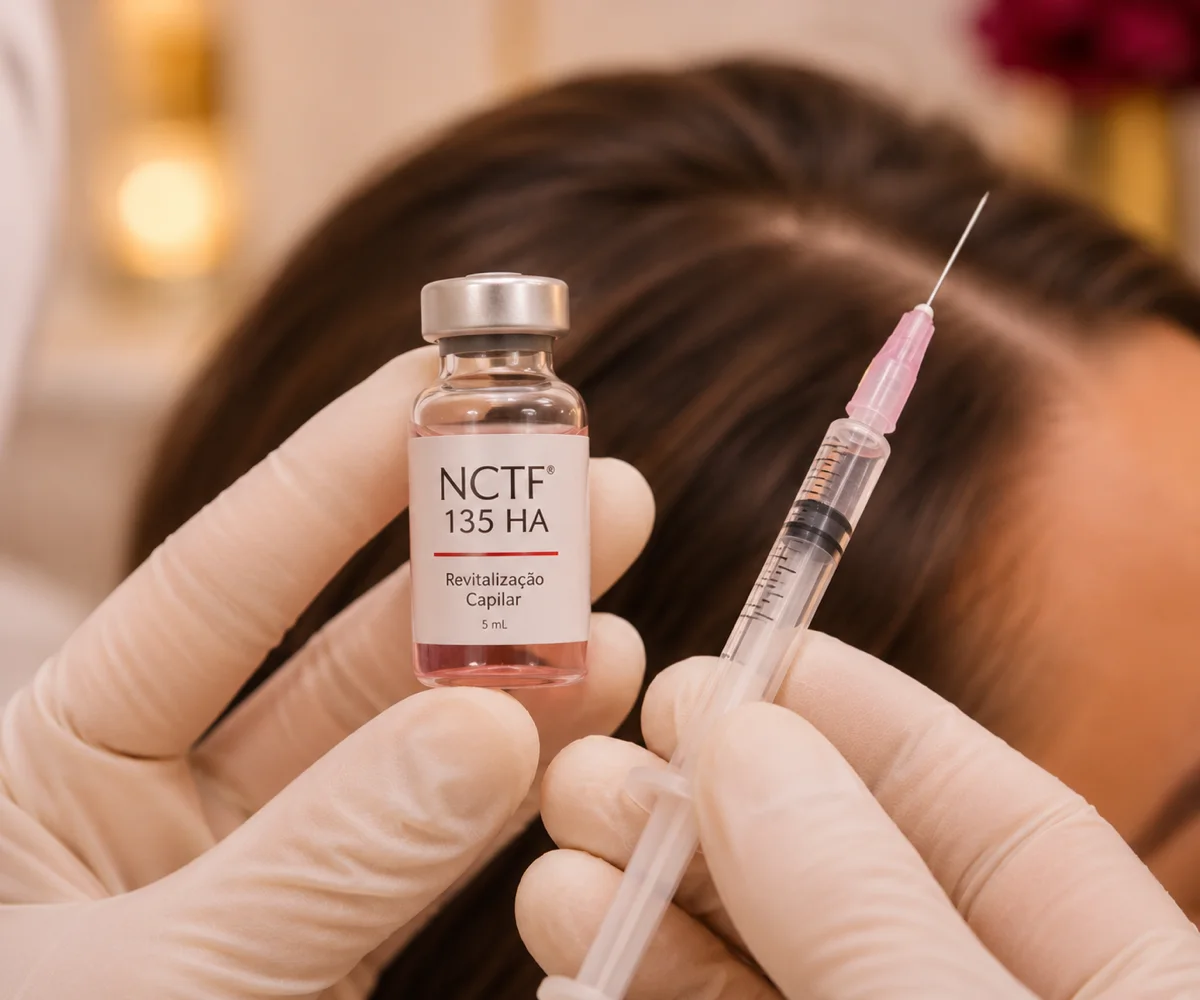
Ampoule of NCTF hair revitalisation and a syringe next to the scalp

Regeneration

Hair NCTF

Vitamins, amino acids, minerals and hyaluronic acid, which may help nourish the scalp and the follicle environment.

Suitable when

the doctor considers that scalp nourishment may support the plan.

Find out more
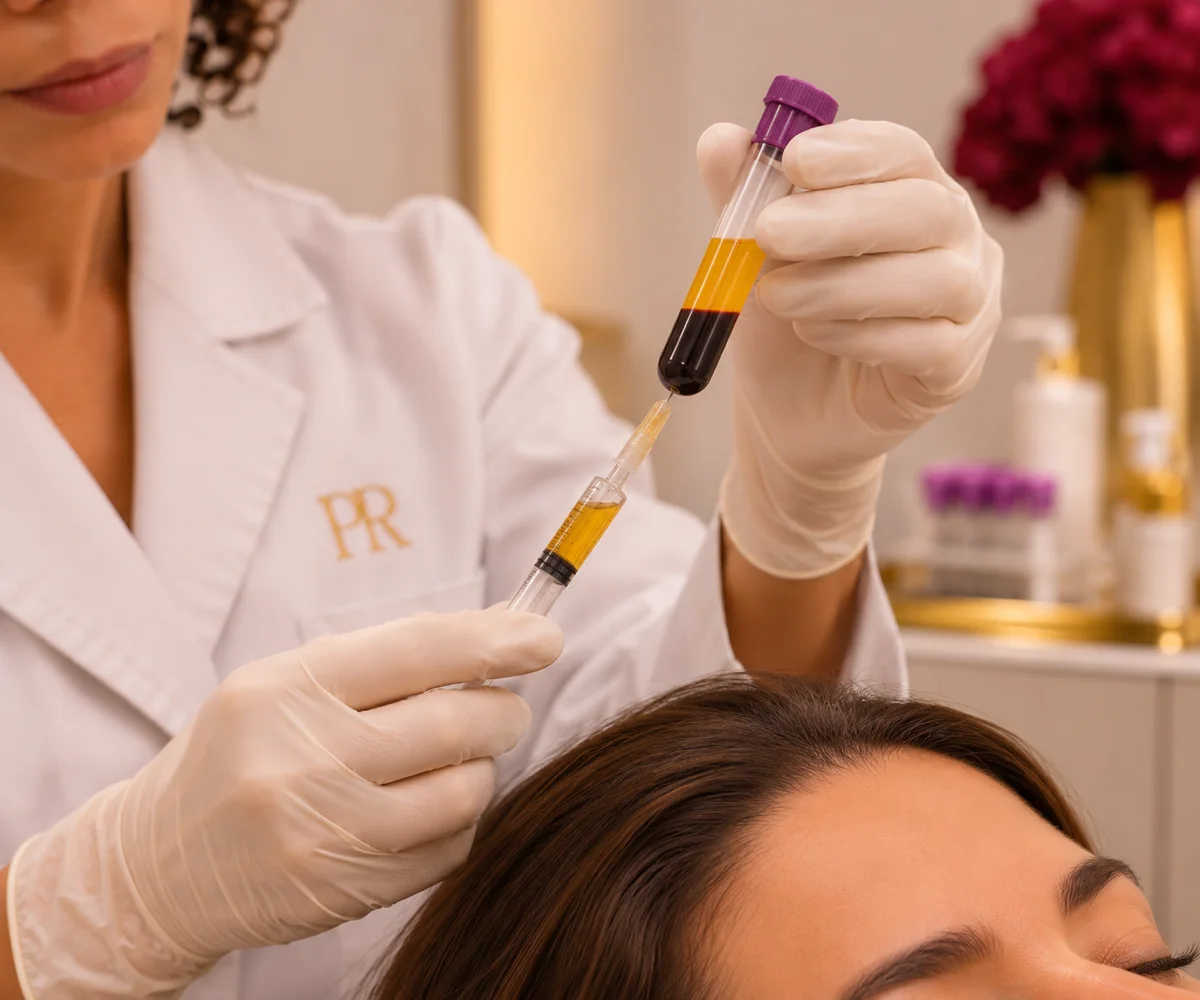
A doctor preparing platelet-rich plasma in a syringe, next to a tube of centrifuged blood

Regeneration

Hair PRP

Platelet-rich plasma, obtained from your own blood, which may help stimulate the follicle in some cases. The doctor first assesses whether it is appropriate.

Suitable when

the cause has already been clarified and the doctor considers that stimulating the follicle may support the plan.

Find out more
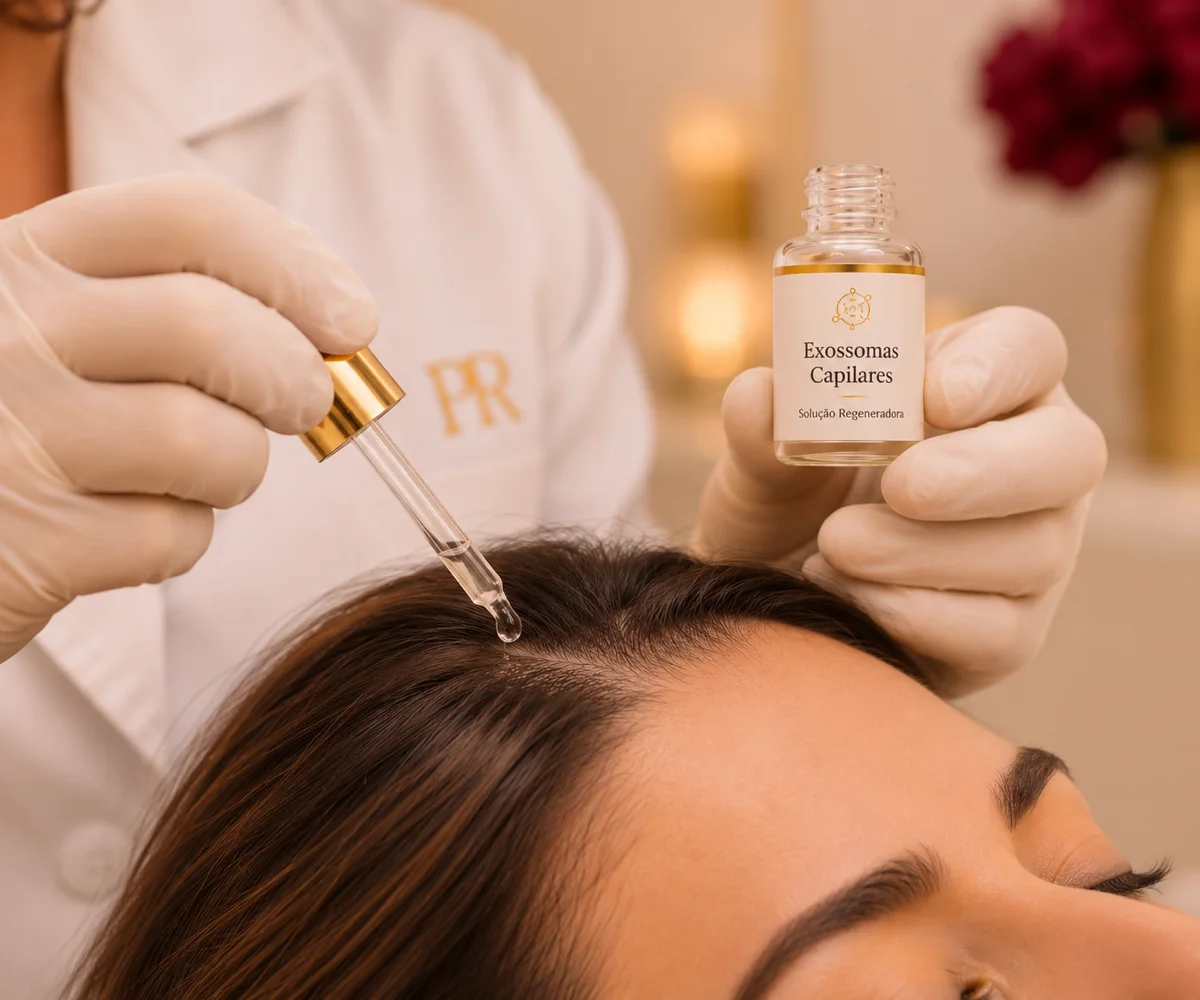
Vial of hair exosomes and a dropper over the scalp

Advanced regeneration

Hair exosomes

Regenerative solution that may help support the scalp and the follicle, with a variable response.

Suitable when

the doctor considers it useful to reinforce the plan with a regenerating active ingredient.

Find out more

What about oral therapy and other medical options? When there is an infection, inflammation or alopecia that calls for specific treatment, the doctor explains the options, chooses them after the assessment and, if useful, after tests. When the case warrants it, she may refer you to dermatology. Results vary from person to person.

What the journey looks like

From the first consultation to follow-up

No treatment starts without an assessment consultation with the doctor. This is how it works.

  1. 01At the clinic

    Assessment consultation

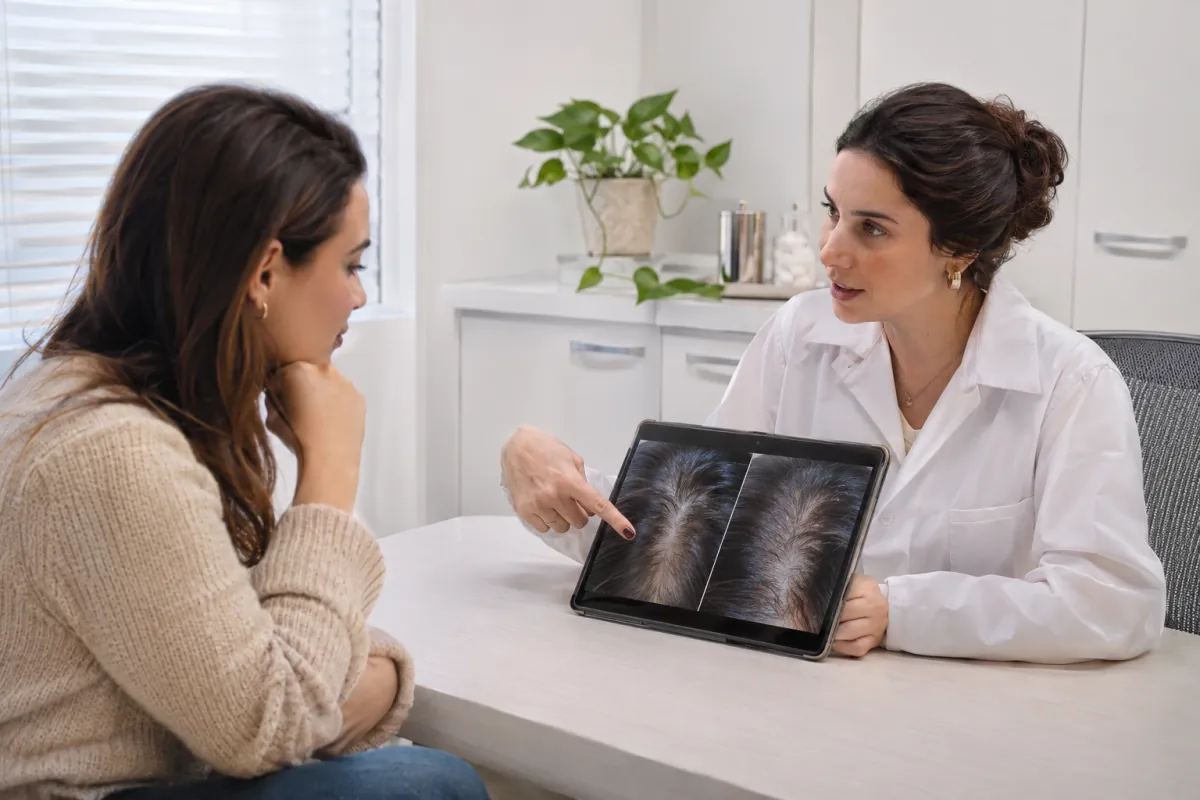
    The doctor asks when the patch appeared, whether it is growing, whether there is pain, itching or flaking, which hairstyles and products you use, and examines the scalp and the edges of the patch.

  2. 02At the clinic

    See in more detail

    If useful, she observes with trichoscopy, requests tests or, in selected cases, a biopsy, and looks for causes such as infection or traction.

  3. 03At the clinic and at home

    A plan tailored to you

    She treats or refers the cause and, if appropriate, assesses whether any of the clinic's options can support the plan.

  4. 04Over time

    Follow-up

    We see the scalp again after some time and adjust the plan, because progress varies from case to case.

Day to day

What helps at home

There are simple measures that protect the scalp while you wait for the appointment and throughout the plan.

The golden rule

Do not wait and do not treat on your own

Patches with symptoms or that grow quickly call for early assessment. Treating before knowing the cause may delay the right treatment.

Observe and record

A photograph from time to time helps you see whether it changes.

In practice: photograph the area in the same light and bring the images to the appointment.

Treat it gently

An irritated scalp needs care.

In practice: wash with a gentle shampoo and brush slowly.

Protect the area

Exposed skin burns easily.

In practice: protect the patch from the sun with a hat or a suitable sun protection product.

Saying everything at the appointment

Hairstyles, habits and products matter.

In practice: also mention extensions, dyes and any habit of touching or pulling the hair.

Dr Michelle Campagnoli, clinical director of Clínica Luxmed

Who will look after you

An assessment carried out by the doctor

At Luxmed, the first step is always an assessment appointment with Dra. Michelle Campagnoli. She observes the scalp, works out what is going on, requests tests if useful and designs the plan with you.

  • Physical examination and medical historyObservation of the scalp and the patches, with trichoscopy when useful, and review of your history and the products you use.
  • A plan tailored to youA plan suited to your case, clearly explained, with referral when necessary and follow-up over time.
  • No obligationThe cost of any treatment is confirmed only after the assessment.
Book an assessment consultation

Book a consultation

Book your consultation

Choose how you prefer to get in touch. We will arrange the assessment consultation with Dr Michelle Campagnoli.

Booking through the website100€70€Assessment consultationExclusive price for those who book the assessment through the website. Outside the website, the price is 100 €.

New Life Miraflores, Algés · Office Center, R. Santa Teresa do Menino Jesus n.º 6, 9.º C, 1495-048

Your details are used only for this contact. Any treatment depends on a prior medical assessment.

Request an appointmentIt takes less than a minute.
Speciality
You do not need to go into detail. The doctor will talk to you during the consultation.
Request received. Our team will contact you as soon as possible.
What can cause hair patches?

There are several causes, such as alopecia areata, traction, scalp ringworm, the habit of pulling the hair, scarring alopecias and diffuse shedding. Appearance alone is not enough to tell them apart, so the doctor examines the scalp.

Is a patch in the hair always alopecia areata?

No. Alopecia areata usually causes smooth, well-defined patches, but other causes can look similar. Only a medical assessment can tell them apart.

When should I book a consultation?

As soon as you notice the patch. Sudden and heavy shedding, patches that appear or grow quickly, pain, sores, flaking, redness or scarring should be seen without delay.

Will the hair grow back?

It depends on the cause. In some situations the follicle remains and the hair may regrow. In others, such as scarring alopecias, the follicle is damaged and it is more difficult. The doctor explains what is realistic for you.

What is a scarring alopecia?

It is a group of conditions in which inflammation destroys the follicle and the scalp becomes smooth, without pores. They call for early assessment, because treating before scarring occurs offers more options.

Can scalp ringworm cause patches?

Yes. It is a fungal infection that can cause patches with flaking, redness and itching. It does not usually resolve with topical products alone, and inflammatory forms can leave permanent patches.

What happens at the appointment?

The doctor asks when the patch appeared, examines the scalp and may use trichoscopy. If useful, she requests tests or, in selected cases, a biopsy.

What treatments does the clinic use?

Depending on the case: hair NCTF, hair PRP or hair exosomes, as support for the plan, once the cause has been clarified. None is chosen before the assessment appointment.

I have a habit of pulling my hair. Can I talk about it?

Yes. It is a well-known situation and the doctor handles the subject naturally. Talking about it helps choose the best path.

Can I treat the patch on my own?

It is not advisable. Without knowing the cause, products may irritate the scalp and delay the right treatment. It is best to book an assessment.

We could not find that question. Ask us on WhatsApp

Scientific references

This page is based on the sources below and was reviewed by Dr. Michelle Campagnoli. Last updated on .

  1. Kanti V, Röwert-Huber J, Vogt A, Blume-Peytavi U. Cicatricial alopecia. J Dtsch Dermatol Ges, 2018.
  2. Dr Harriet Bell (atualização); Oakley A (criação); DermNet. Tinea capitis (scalp ringworm). (DermNet, acedido 2026-11-11)
  3. Melo DF, Lima CDS, Piraccini BM, Tosti A. Trichotillomania: What Do We Know So Far?. Skin Appendage Disord, 2022.
  4. Pratt CH, King LE Jr, Messenger AG, Christiano AM, Sundberg JP. Alopecia areata. Nat Rev Dis Primers, 2017.
  5. Billero V, Miteva M. Traction alopecia: the root of the problem. Clin Cosmet Investig Dermatol, 2018.
  6. American Academy of Dermatology Association. Hair loss types: Central centrifugal cicatricial alopecia overview. (American Academy of Dermatology (aad.org), acedido 2026-11-11)
CallAssistantAvailableBook