Algés, Oeiras Mon to Fri · 09:00 to 13:00 and 14:00 to 19:00 · Sat · 09:00 to 14:00
WhatsApp Book a consultation

Body aesthetics

Laxity of the backWhen the skin on the back has lost firmness, forms folds or seems looser than before

The back is the part of the body we see and talk about least, but the skin there also ages. Fine folds, looser skin near the underarms and a less even texture may develop, especially after the age of 50, around the menopause, following weight loss or after many summers in the sun. This is not a disease and, in the vast majority of cases, is a natural process. However, it is important to distinguish loose skin from fat, understand what genuinely helps at home and recognise when a change on the back requires medical assessment before any firming treatment. Here, we explain the usual causes, what radiofrequency and collagen biostimulators can and cannot achieve, and how Clínica Luxmed, in Algés, assesses each case.

Reviewed by Dr Michelle Campagnoli, clinical director

  • 2treatment options for this concern
  • 1assessment, always first
  • Nocommitment
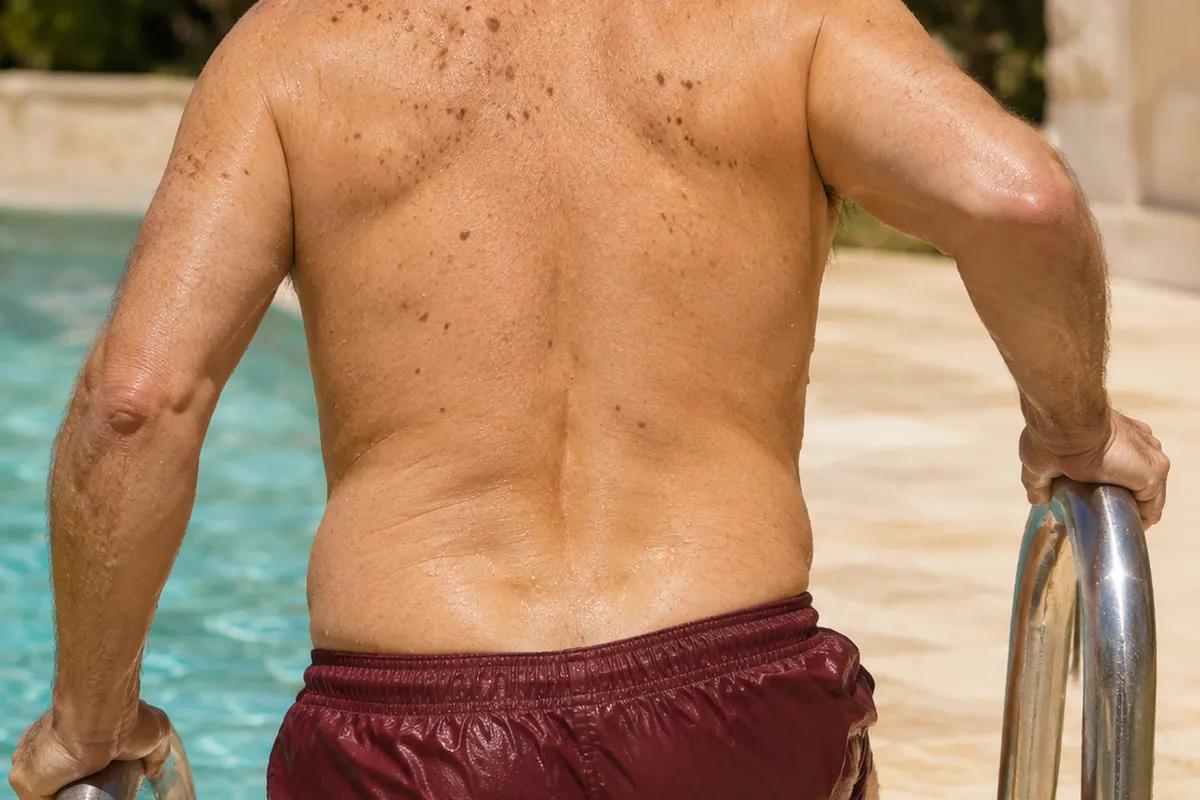
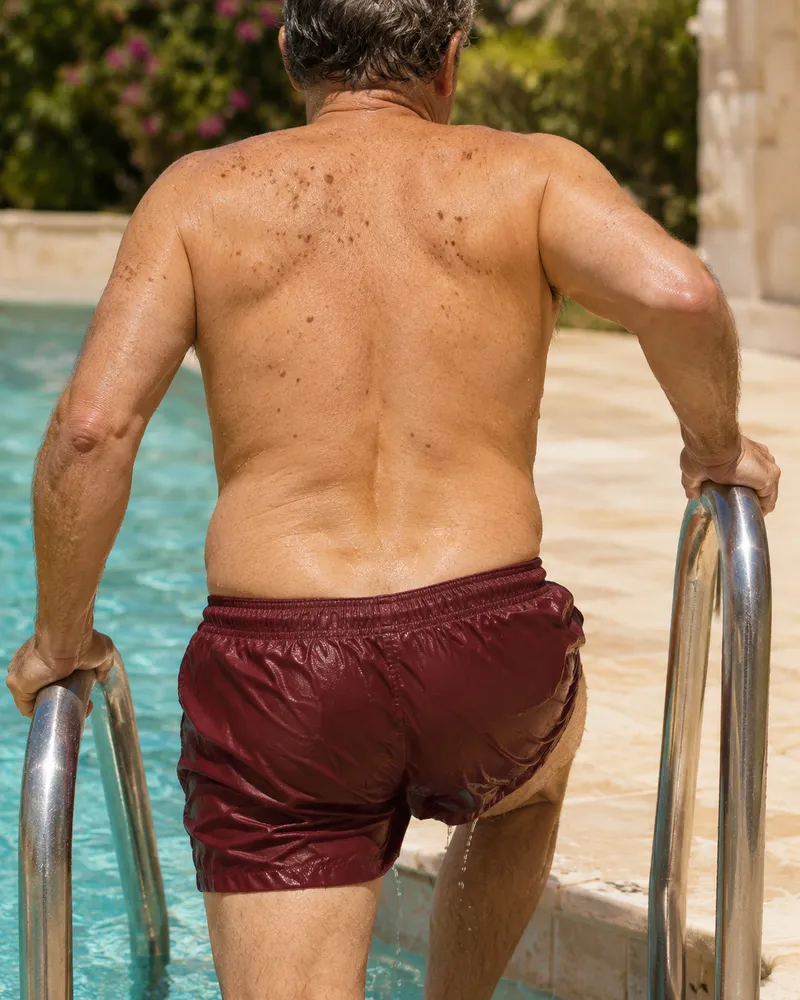
Man seen from behind climbing out of a swimming pool, with moles and blemishes on his back

How to recognise it

Is it laxity of the skin of the back?

Hardly anyone can see their own back, so the change is often first noticed in a photograph or changing-room mirror, or after someone comments on it. These signs can help you understand what is happening before your assessment.

Tick what you recognise0/7

Tick the signs you recognise in your case. This is not a diagnosis, it is only meant to give you an idea.

Is there a mole or patch on the back that has changed shape, colour or size, that bleeds, crusts or itches, or a sore that does not heal? Is there a new lump, back pain that does not go away, unexplained weight loss or weakness and tingling in the legs? You need medical assessment before any firming treatment. Out of hours, call SNS 24: 808 24 24 24.

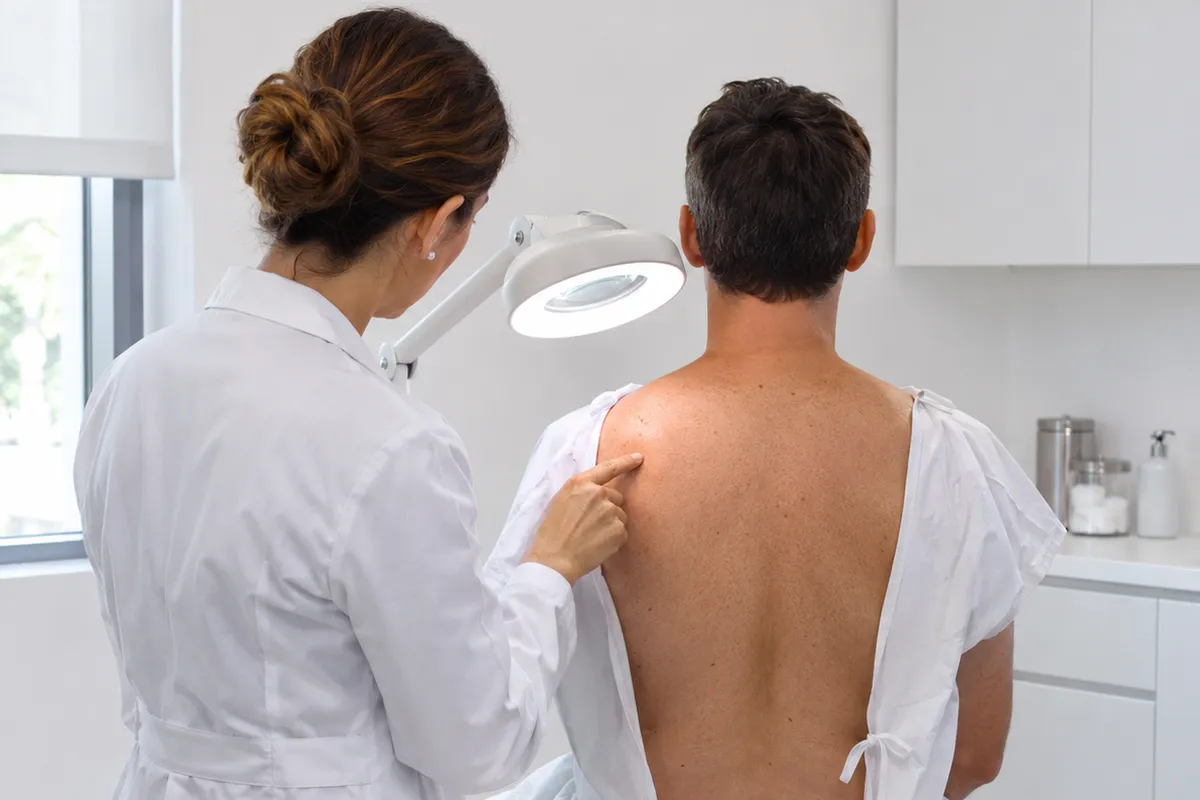
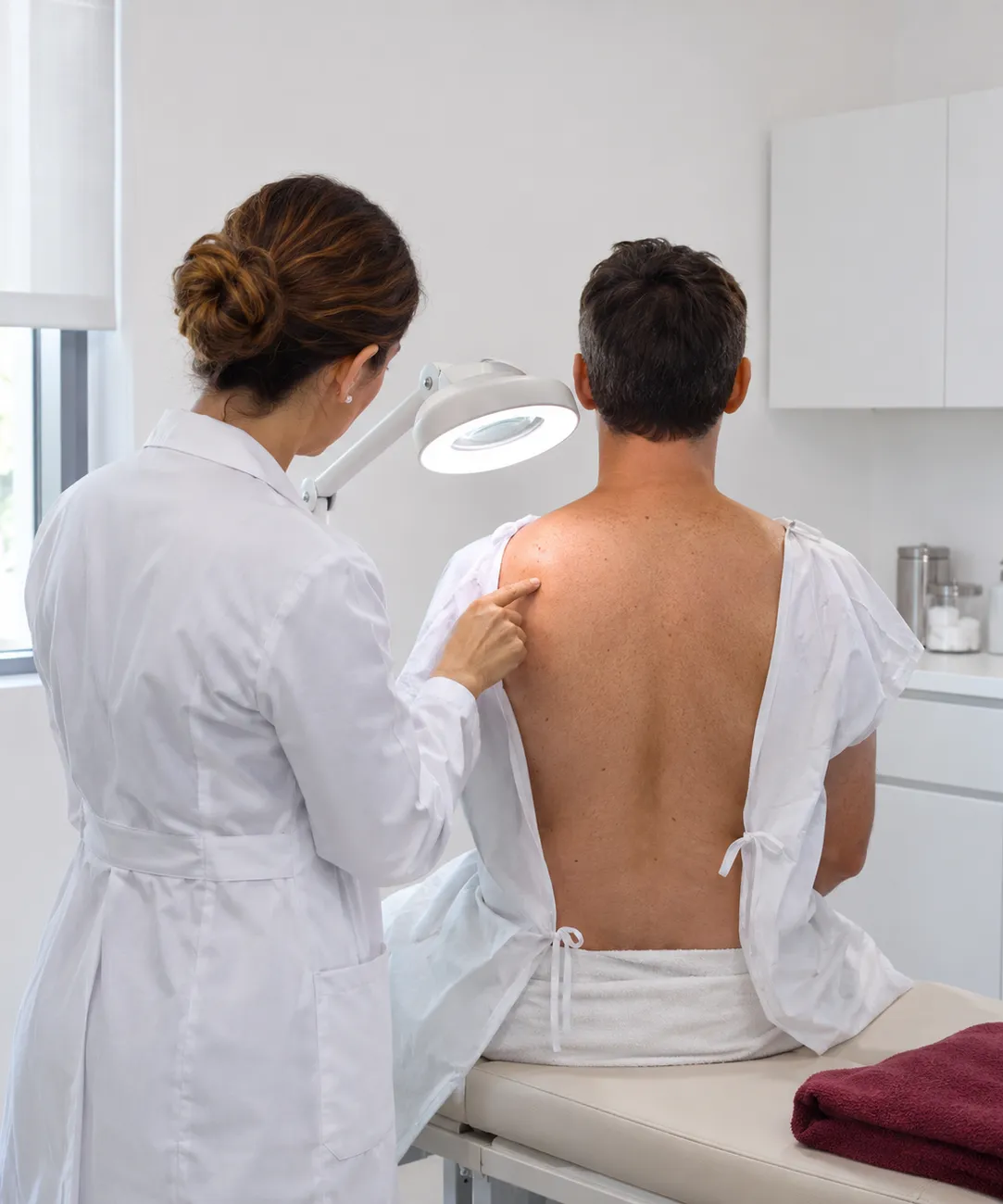
Female doctor examining the skin on the back of a patient sitting on the examination couch
Photograph of a consultation. The dots mark what the doctor is assessing.

Why it happens

What may be behind loose skin on the back

There is rarely a single cause. Choose a situation to see how it may contribute and what usually helps.

Age and collagen

As we age, the skin produces less collagen and elastin, the fibres that give it firmness and help it spring back into place. This is an intrinsic process that occurs at a different rate in each person and affects the back just as it does any other area, although it often goes unnoticed unless you deliberately look.

What weighs on it

Expecting the skin to “go back” by itself or comparing yourself with other people of the same age.

What helps

Accepting that a slight loss of firmness is natural, protecting the skin you have and deciding with your doctor which options are appropriate.

Normal or to be assessed

Uncomplicated loose skin or something that needs assessment

Most skin laxity on the back is part of a natural process. However, some situations require assessment before any treatment, because the loss of firmness may only be the visible sign.

  • How it looks. Thin skin that wrinkles when pinched, fine folds when leaning the trunk, less even texture, in a similar way on both sides, and without moles that have changed.

  • When it is noticed. In summer, in backless necklines, swimwear and photographs. It is more evident when hunched or after losing weight.

  • What the clinic does. The doctor examines the skin, tells loose skin from fat and proposes, if it makes sense, the options that may be considered.

  • At home. Sunscreen, moisturising, strength training and a more upright posture are all things you can do yourself.

Do you have back pain with chest pain, shortness of breath, weakness in the legs or loss of bladder control? Call 112. If you have a mole that is changing or doubts, out of hours you can call SNS 24: 808 24 24 24.

Book an assessment

What the clinic may consider

Options to firm the skin of the back

The first-line measures do not require treatment at the clinic: sun protection, moisturising, strength training and a more upright posture. A procedure is only considered after these measures and following an assessment. For skin laxity on the back, the clinic may consider two options: radiofrequency and collagen biostimulators. The evidence is limited: most studies have involved other areas of the body, with little research specifically on the back; studies of biostimulators on the body are mainly observational, and the use of some products on the body may be off-label. Results are gradual and moderate, vary from person to person and are not a substitute for surgery when there is a large amount of excess skin. Your doctor will advise which option, if any, is appropriate for you.

Book an assessment
Dr Michelle Campagnoli, clinical director of Clínica Luxmed

First step

Assessment consultation

The doctor listens to what you are experiencing, examines your case and explains the suitable options. No treatment begins without this consultation.

May be considered when

you want to understand the cause and decide on the best path, with time and without commitment.

Book an assessment
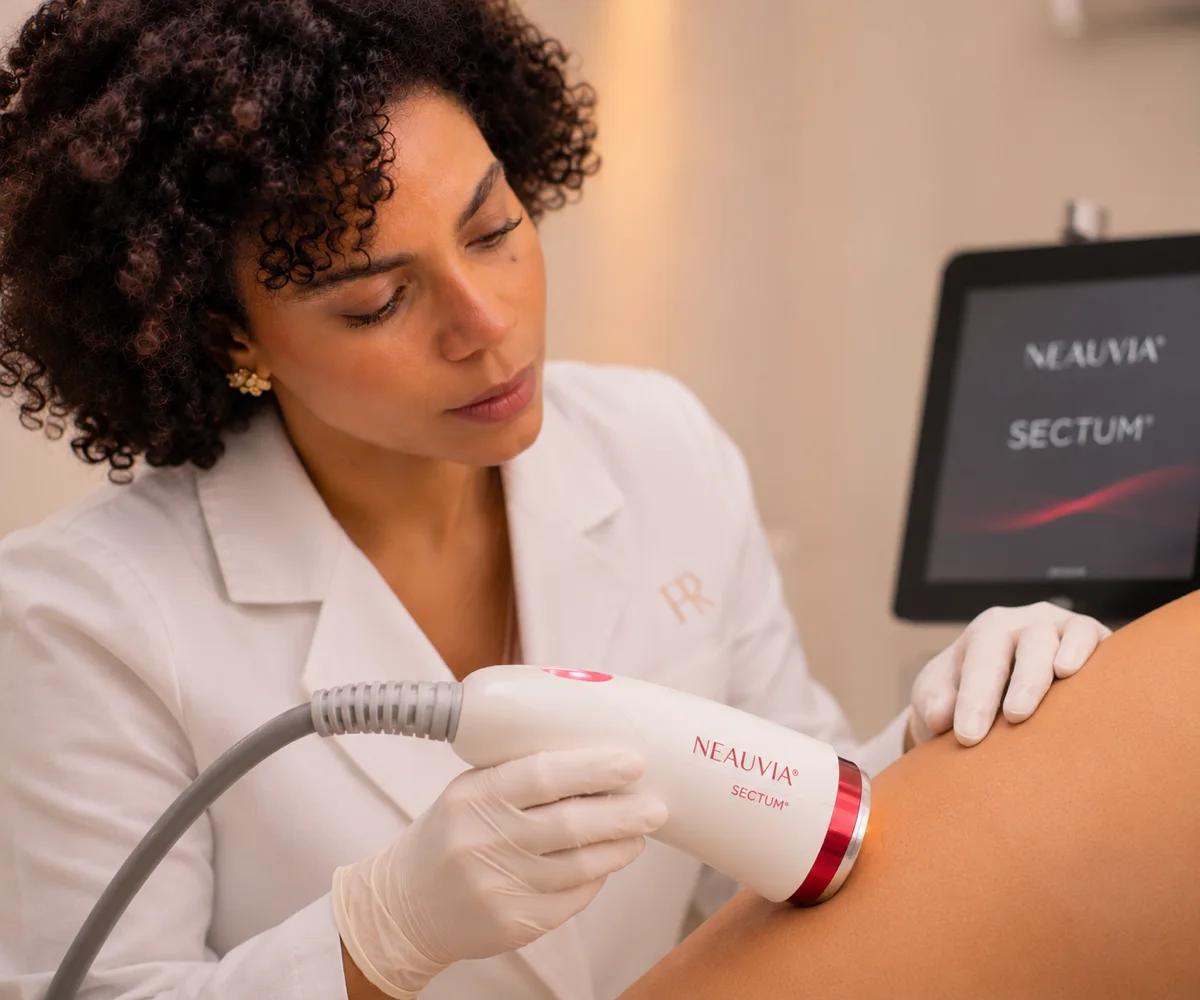
Handpiece of a radiofrequency device passing over the skin of the body in a brightly lit consultation room

Firmness of the skin

Sectum radiofrequency Neauvia

Controlled heating of the deeper layers of the skin to stimulate collagen and improve firmness. It is used to treat skin laxity on areas of the body such as the arms, abdomen and thighs, and the clinic will assess whether it is suitable for the back. Treatment is carried out over several sessions, with gradual, moderate improvement, and your doctor will explain the aftercare and risks.

May be considered when

the skin is thin or slightly loose, with no lesions awaiting assessment, and you would like a procedure with minimal downtime, after your doctor has explained what results you can realistically expect.

Find out more
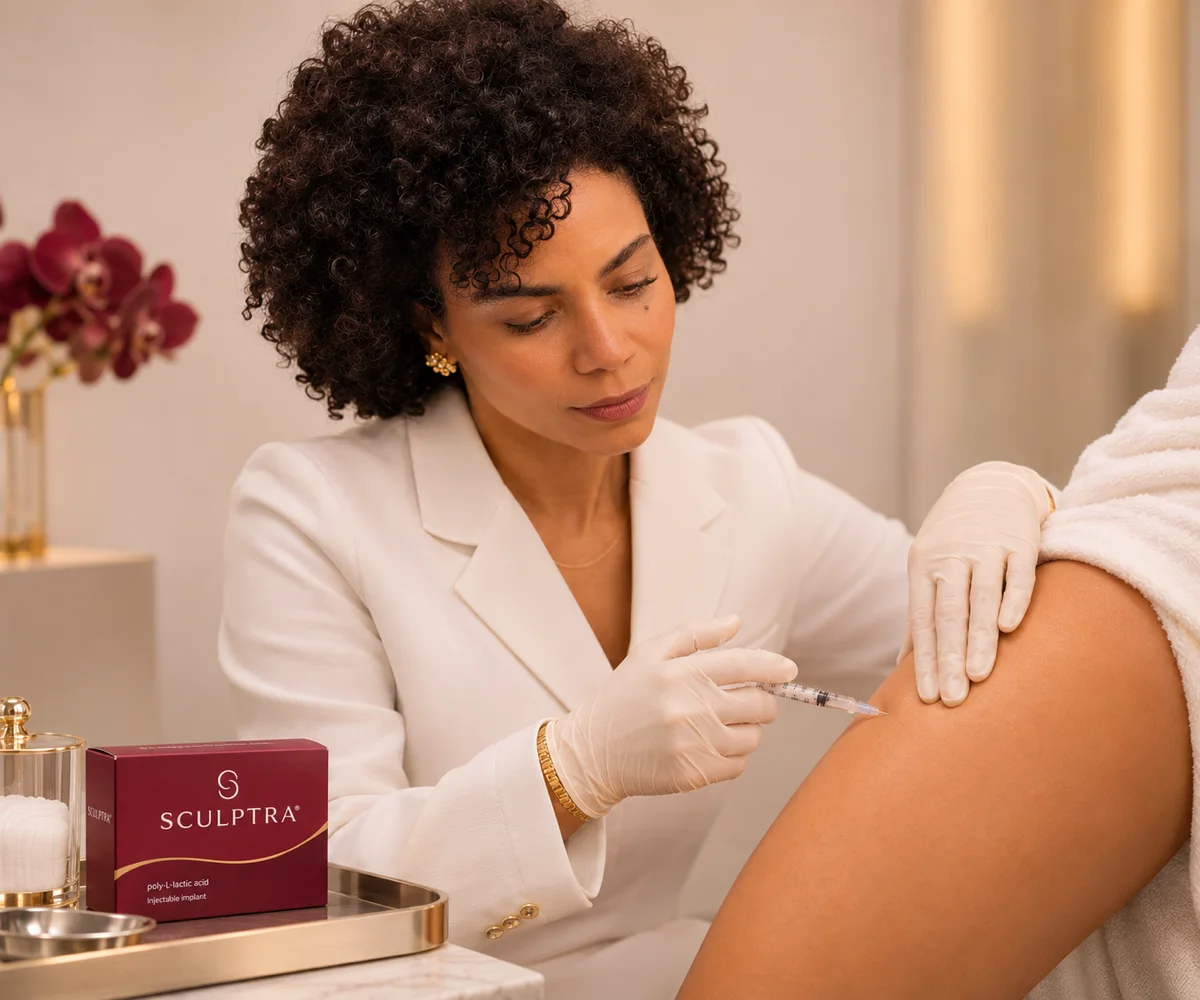
Doctor administering an injectable treatment to an area of skin on the body in a brightly lit consultation room

Collagen

Collagen biostimulators

Injectable treatments that trigger a controlled response in the skin to stimulate collagen, gradually improving firmness and texture over several months. Treatment usually involves a small number of sessions at intervals, typically two or three. It may cause bruising, swelling or nodules, and the use of some products on the body may be off-label.

May be considered when

the skin is loose but still has some thickness, the doctor has assessed risks and contraindications, and the gradual, moderate result is what you are looking for.

Find out more

What the journey looks like

From the first conversation to a plan tailored to you

No procedure begins without an assessment by the doctor. Most people start with the simplest approach, and only then is anything further considered.

  1. 01At the clinic

    Telling your story

    The doctor asks how long you have noticed the loose skin, whether it changed with weight loss, the menopause or sun exposure, what skin care you already use, and whether there are any moles, patches or back pain.

  2. 02At the clinic

    Examine the skin and the back

    The doctor assesses the thickness, elasticity and texture of the skin, distinguishes loose skin from fat and examines any moles and patches. If anything requires further investigation, you will be referred to dermatology or another specialty before any treatment.

  3. 03At home

    Protect and strengthen

    Sunscreen, moisturising after showering, strength training for the back and shoulders and a more upright posture: these are all things you can do yourself and will help whatever you decide.

  4. 04Over time

    Decide and follow up

    If the laxity bothers you, the doctor explains whether radiofrequency or biostimulators make sense, how many sessions are needed and what to expect, without promising results. The examination is repeated and the plan adjusted.

Day to day

What helps at home

What you do at home makes more difference than you might think, and the skin on the back is often overlooked. These measures are worth starting now, alongside the clinic’s plan.

The golden rule

Protect the skin you have

Cumulative sun exposure is one factor you can tackle, and the back is the area where sunscreen is most often forgotten. A randomised study in adults under 55 showed that daily sunscreen use reduces skin ageing. A mole on the back that has changed should be examined by a doctor rather than ‘treated’.

Protect from the sun

The back is hard to reach and, as a result, often goes without protection.

In practice: sunscreen of factor 30 or more, reapplied at the beach and the pool, with help or an applicator, and a T-shirt in the hours of strongest sun.

Moisturise and exfoliate gently

Dry, rough skin can make its texture look duller.

In practice: a simple moisturiser after the shower and, if the skin is rough, a gentle exfoliation once a week, without scrubbing hard.

Train your back and shoulders

Muscle is what the skin covers, and training also improves posture.

In practice: rows, resistance bands and exercises for shoulders and back, two to three times a week, and breaks to straighten up throughout the day.

Check your moles

Nobody sees their own back, and a change may go unnoticed for years.

In practice: once a month, with someone’s help, a mirror or photographs in the same light, and consult if anything has changed.

Dr Michelle Campagnoli, clinical director of Clínica Luxmed

Who will look after you

An assessment carried out by the doctor

At Luxmed, in Algés, the first step is always an assessment with Dr Michelle Campagnoli. She will examine the skin on your back, distinguish loose skin from fat, check for any moles or patches that require assessment and agree with you what is appropriate before any procedure.

  • Physical examination and medical historyA conversation about sun, weight, the menopause and habits, and examination of the skin of the back, including moles and patches.
  • A plan tailored to youA clear plan, without promises, which starts with simple care and has follow-up over time.
  • No obligationThe cost of any treatment is confirmed only after the assessment.
Book an assessment

Book a consultation

Book your consultation

Choose how you prefer to get in touch. We will arrange the assessment consultation with Dr Michelle Campagnoli.

Booking through the websiteAssessment consultationTalk to our assistant on WhatsApp and ask for the current price of the assessment.

New Life Miraflores, Algés · Office Center, R. Santa Teresa do Menino Jesus n.º 6, 9.º C, 1495-048

Your details are used only for this contact. Any treatment depends on a prior medical assessment.

Request an appointmentIt takes less than a minute.
Speciality
You do not need to go into detail. The doctor will talk to you during the consultation.
Request received. Our team will contact you as soon as possible.
What is skin laxity on the back and why does it happen?

It is a loss of firmness in the skin on the back, which becomes thinner and looser and forms folds, particularly when you bend forwards or raise your arms. It happens because the skin produces less collagen and elastin with age, and the process is accelerated by cumulative sun exposure, smoking, the menopause, weight loss and loss of muscle mass. Genetics also play a part. It is not a disease, but it is important to distinguish loose skin from fat and to check for any moles or patches that require assessment.

Folds on the back: is it skin laxity or fat?

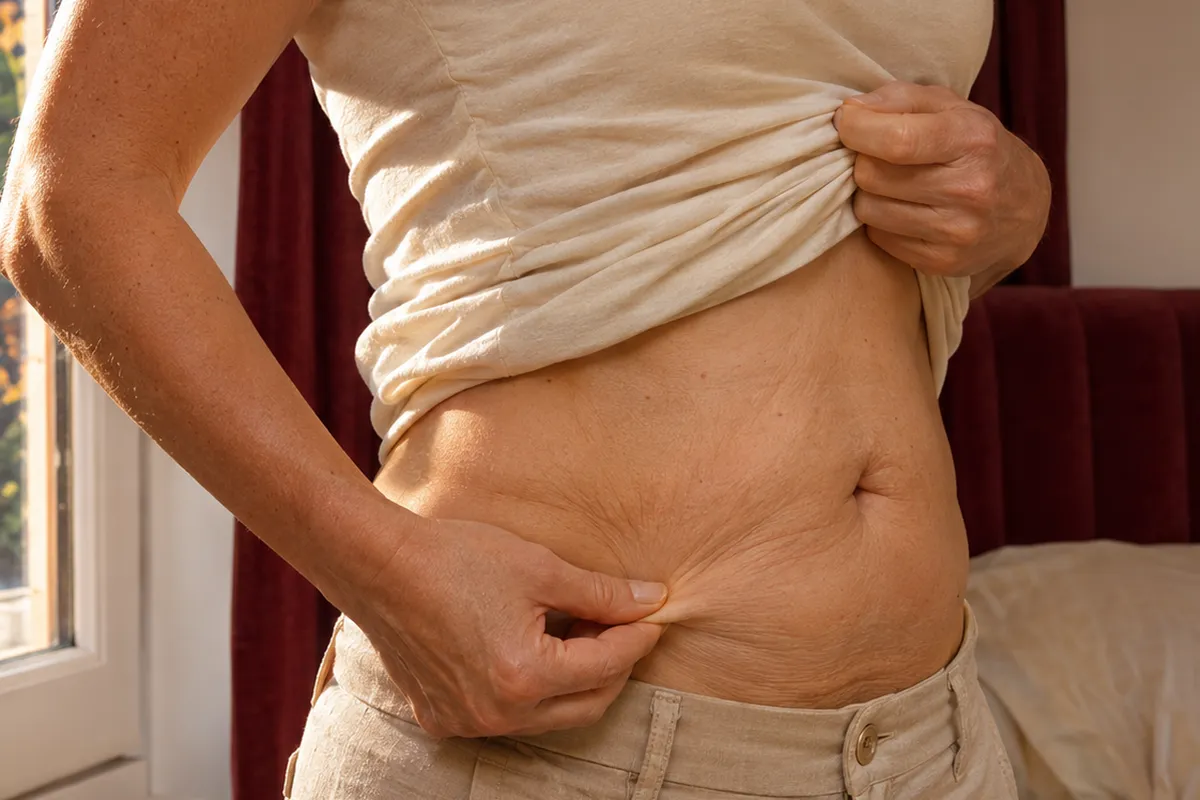
Pinch the skin. If it is thin and wrinkles easily, skin laxity is likely to be the main issue. If the fold is thick and firm, it is more likely to be fat, and the treatment approach will be different. Both are often present at the same time, and your doctor will assess which predominates, because treatments that firm the skin do not reduce fat, and vice versa.

Why do I notice it more in summer? Do men get it too?

In summer, with backless necklines, swimwear and lighter clothing, the back is more visible and loose skin is more noticeable, especially in photographs. And yes, men get it too, although it is a less talked-about complaint.

Is skin laxity on the back related to the menopause or weight loss?

It can be related to both. After the menopause, falling oestrogen levels leave the skin thinner and with less collagen throughout the body. Weight loss, particularly if rapid, can also leave excess skin, which may be visible on the back, around the bra line and armpits. This is not inevitable; it depends on skin elasticity, age and the amount of weight lost.

Do exercise and posture help?

They improve what lies beneath the skin, but they do not shrink excess skin. Strength training for the back and shoulders increases muscle volume and improves posture, while a more upright posture can smooth out some of the folds. Combining these measures with a procedure, where appropriate, tends to produce a better overall result than either alone, although no outcome can be promised.

Do creams and moisturisers firm the skin of the back?

A simple moisturiser improves the look of the surface and the comfort of dry skin, but it is not proven that it firms loose skin. What has the best evidence is prevention: a randomised trial showed that daily sunscreen use reduces skin ageing. Be wary of products that promise quick firmness.

What treatments are there for laxity on the back?

The clinic may consider radiofrequency (Neauvia Sectum), which heats the deeper layers of the skin to stimulate collagen, and injectable collagen biostimulators. Evidence specifically for the back is limited: studies mainly concern other areas of the body and, for biostimulators, are largely observational. Results are moderate and gradual, and when there is a large amount of excess skin, only surgery can remove it.

How do radiofrequency and biostimulators work, and what risks do they have?

Radiofrequency heats the skin in a controlled way, stimulating collagen production with little or no downtime. Biostimulators trigger a controlled inflammatory response that stimulates collagen production over several months. The most common effects of injectable treatments are discomfort, bruising, swelling and redness, which are generally temporary; nodules may also develop, while more serious reactions are rare. The use of some products on the body may be off-label, and your doctor will explain this beforehand.

How many sessions are needed, is there any downtime and can I have treatment before the summer?

It depends on the treatment and your skin. Radiofrequency is carried out over several sessions. Biostimulators generally involve two or three sessions at intervals, with results developing over several months. There is little downtime, although injectable treatments may cause bruising. If you want to see results by the summer, it is best to start well in advance; maintenance and sun protection matter just as much as the procedure. Results are neither guaranteed nor permanent.

When should I see a doctor first?

Book a consultation if there is a mole or patch on the back that has changed shape, colour or size, that bleeds, crusts or itches, if there is a sore that does not heal or a new lump, or if you have persistent back pain, unexplained weight loss or weakness and tingling in the legs. If in doubt, out of hours call SNS 24 (808 24 24 24). With chest pain, shortness of breath, weakness in the legs or loss of bladder control, call 112.

We could not find that question. Ask us on WhatsApp

Scientific references

This page is based on the sources below and was reviewed by Dr. Michelle Campagnoli. Last updated on .

  1. Farage MA, Miller KW, Elsner P, Maibach HI. Characteristics of the Aging Skin. Adv Wound Care (New Rochelle), 2013.
  2. Krutmann J, Bouloc A, Sore G, Bernard BA, Passeron T. The skin aging exposome. J Dermatol Sci, 2017.
  3. Brincat MP. Hormone replacement therapy and the skin. Maturitas, 2000.
  4. Hughes MC, Williams GM, Baker P, Green AC. Sunscreen and prevention of skin aging: a randomized trial. Ann Intern Med, 2013.
  5. NHS. Sunscreen and sun safety. (NHS (Reino Unido), acedido 2026-11-11)
  6. NHS. Symptoms of melanoma skin cancer. (NHS (Reino Unido), acedido 2026-11-11)
  7. Beasley KL, Weiss RA. Radiofrequency in cosmetic dermatology. Dermatol Clin, 2014.
  8. Mazzoni D, Lin MJ, Dubin DP, Khorasani H. Review of non-invasive body contouring devices for fat reduction, skin tightening and muscle definition. Australas J Dermatol, 2019.
  9. Haddad A, Avelar L, Fabi SG, et al. Injectable Poly-L-Lactic Acid for Body Aesthetic Treatments: An International Consensus on Evidence Assessment and Practical Recommendations. Aesthetic Plast Surg, 2025.
  10. Fitzgerald R, Bass LM, Goldberg DJ, Graivier MH, Lorenc ZP. Physiochemical Characteristics of Poly-L-Lactic Acid (PLLA). Aesthet Surg J, 2018.
  11. Vleggaar D, Fitzgerald R, Lorenc ZP. Understanding, avoiding, and treating potential adverse events following the use of injectable poly-L-lactic acid for facial and nonfacial volumization. J Drugs Dermatol, 2014.
CallAssistantAvailableBook