Algés, Oeiras Mon to Fri · 09:00 to 13:00 and 14:00 to 19:00 · Sat · 09:00 to 14:00
WhatsApp Book a consultation

Body aesthetics

Loose skin after losing weightWhy the skin does not always go back into place and what can really be done

Losing a great deal of weight is a significant health achievement, but skin that has been stretched for years cannot always adapt. It may remain loose on the abdomen, inner upper arms and thighs, chest and neck, and many people wonder whether this is due to a lack of care, whether losing weight quickly is to blame and whether it is too late to improve it. Here we explain why the skin loses its ability to retract, what determines how much excess skin remains, what skin-firming treatments can achieve, when only surgery can remove the excess, and what Clínica Luxmed, in Algés, can assess and recommend.

Reviewed by Dr Michelle Campagnoli, clinical director

  • 93 %were left with excess skin after bariatric surgery
  • 1assessment, always first
  • Nocommitment
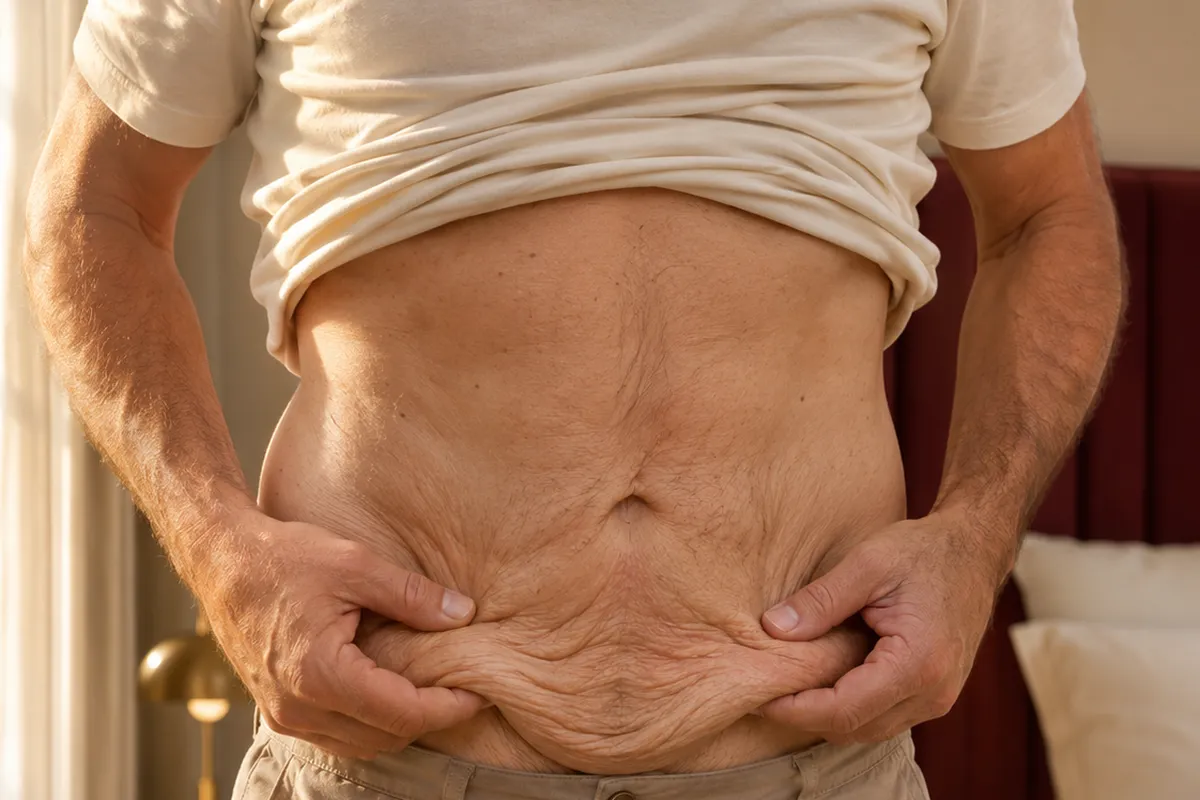
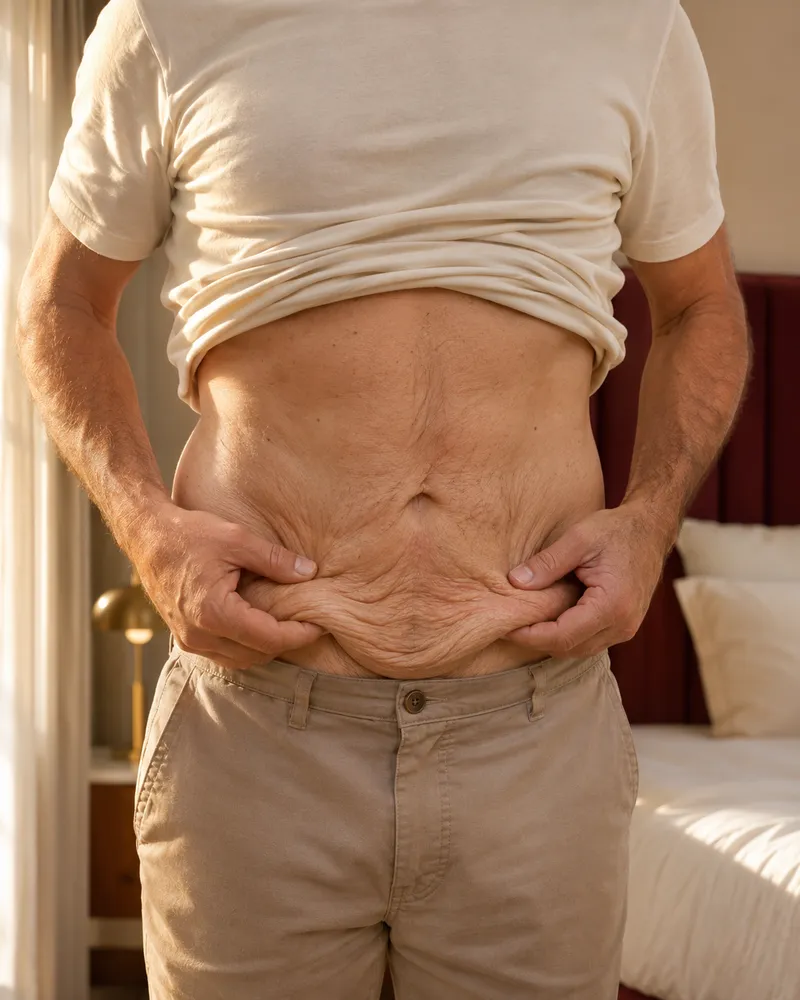
Man pinching the loose skin of his abdomen between his hands after weight loss

How to recognise it

Is this loose skin due to weight loss?

Some people simply have reduced skin firmness, while others have excess skin, and the distinction affects which options are appropriate. These signs can help you understand your situation before your assessment.

Tick what you recognise0/7

Tick what you recognise. This does not replace the consultation: it is only a first guide.

Chafing that does not go away, red skin, stinging or a bad smell in the folds, sores or signs of infection call for medical assessment before any aesthetic treatment. If you are losing weight quickly without meaning to, also talk to your doctor. If in doubt, call SNS 24: 808 24 24 24. High fever, a red area that is growing quickly, intense pain or feeling seriously unwell: call 112 or go to the emergency department.

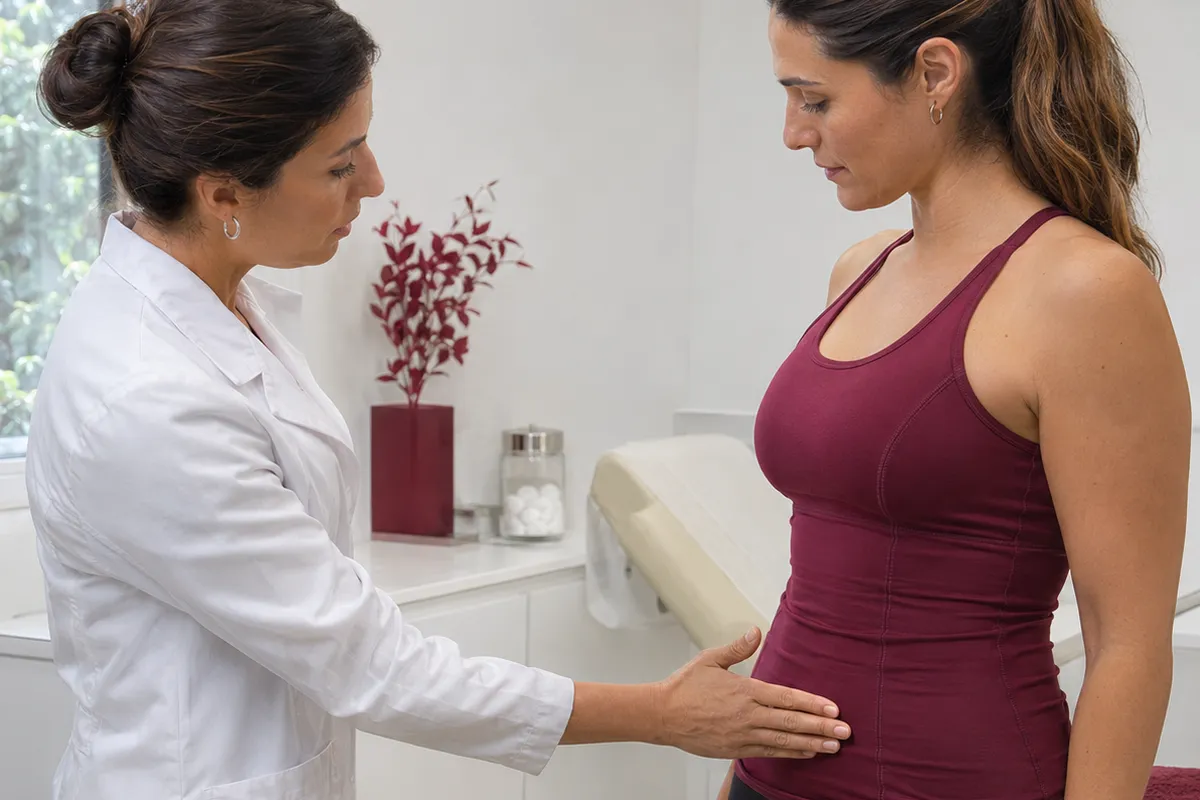
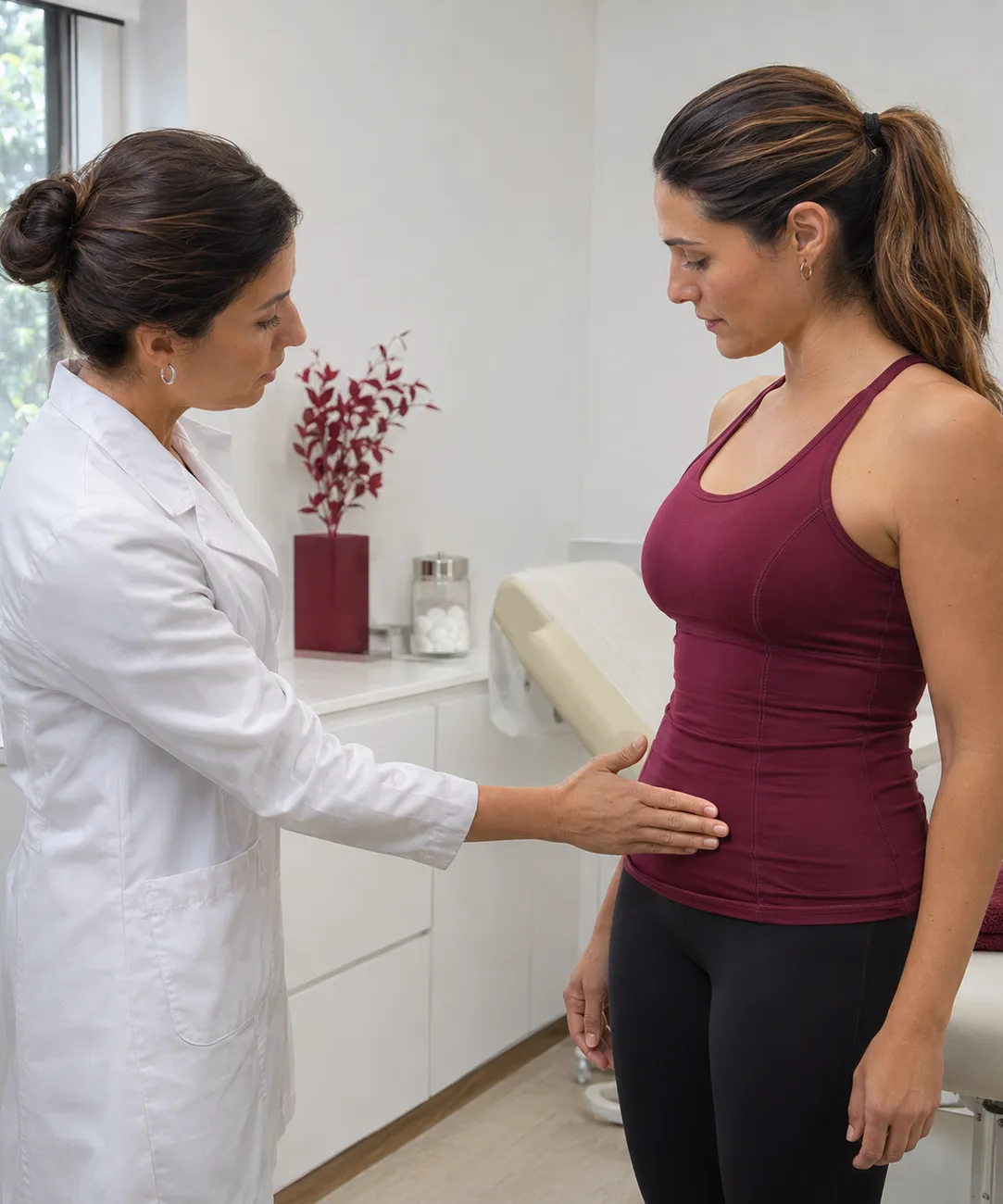
Female doctor in a white coat assessing the abdomen of a woman in gym clothes, in a consulting room
Photograph of a consultation. The dots mark what the doctor is assessing.

Why it happens

Why the skin does not go back into place

Understanding what determines skin retraction helps explain why some people are left with very little excess skin and others with a great deal. Choose a factor to see how it contributes and what can help.

Tired collagen and elastin

When the body remains larger for a long time, the skin stretches and the collagen and elastin fibres that provide firmness and allow it to spring back lose some of their elasticity. When weight decreases, the skin needs to retract, but it cannot always do so, leaving loose skin behind. The longer and further it has been stretched, the less likely it is to return to its previous state.

What usually weighs against

Expecting the skin to return to its previous state by itself after being stretched for years.

What helps

Knowing that some retraction happens with time and that the amount varies a great deal from person to person.

Two different situations

Less firm skin or excess skin?

The decision between treatments and surgery depends on one question: is the skin only less firm or is there excess skin? Treatments may improve the quality of the skin, and only surgery removes skin.

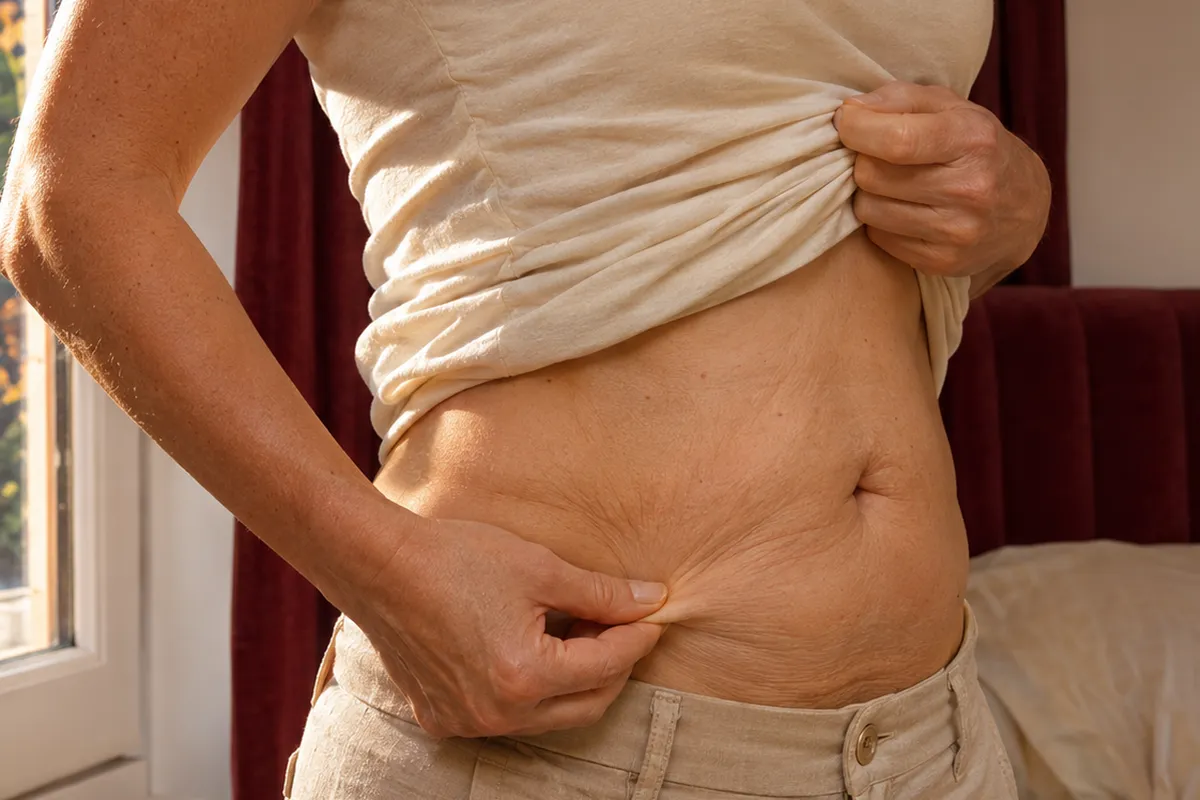
  • What it is like. The skin is looser and with less tone, but without folds that fold over themselves. When pinched, it returns slowly.

  • Where it is noticed. Belly, inner arms and thighs, chest, neck and buttocks, with weight already stable.

  • Symptoms. Mainly aesthetic: thinner texture, a less firm look, without chafing or difficulty with hygiene.

  • What is usually considered. Lifestyle measures, strength training and, in some cases, biostimulators and radiofrequency. Results vary, and each case requires individual assessment.

  • Tell us at your consultation. How much weight you lost, over what period, how long your weight has been stable and what you have already tried.

Less firm skin, with no folds or chafing? An assessment will help determine which options are appropriate and what results you can realistically expect. Large folds, chafing or recurrent infections? Surgery may be the most effective option, and the clinic will refer you appropriately where necessary.

Book an assessment

What the clinic can do

Medical options for loose skin

Once lifestyle measures have been addressed, your weight is stable and you have had an assessment, your doctor may recommend collagen biostimulators or radiofrequency (Sectum, by Neauvia) if the skin is less firm but there are no significant folds. These options are described below. Transparency is part of our work: evidence reviews report small studies using different methods and short follow-up periods. Results vary from person to person, are generally partial and may require maintenance. Neither treatment removes skin; where there is excess skin and folding, surgery is the most effective option.

Book an assessment
Dr Michelle Campagnoli, clinical director of Clínica Luxmed

First step

Assessment consultation

The doctor listens to what you are experiencing, examines your case and explains the suitable options. No treatment begins without this consultation.

May be considered when

you want to understand the cause and decide on the best path, with time and without commitment.

Book an assessment
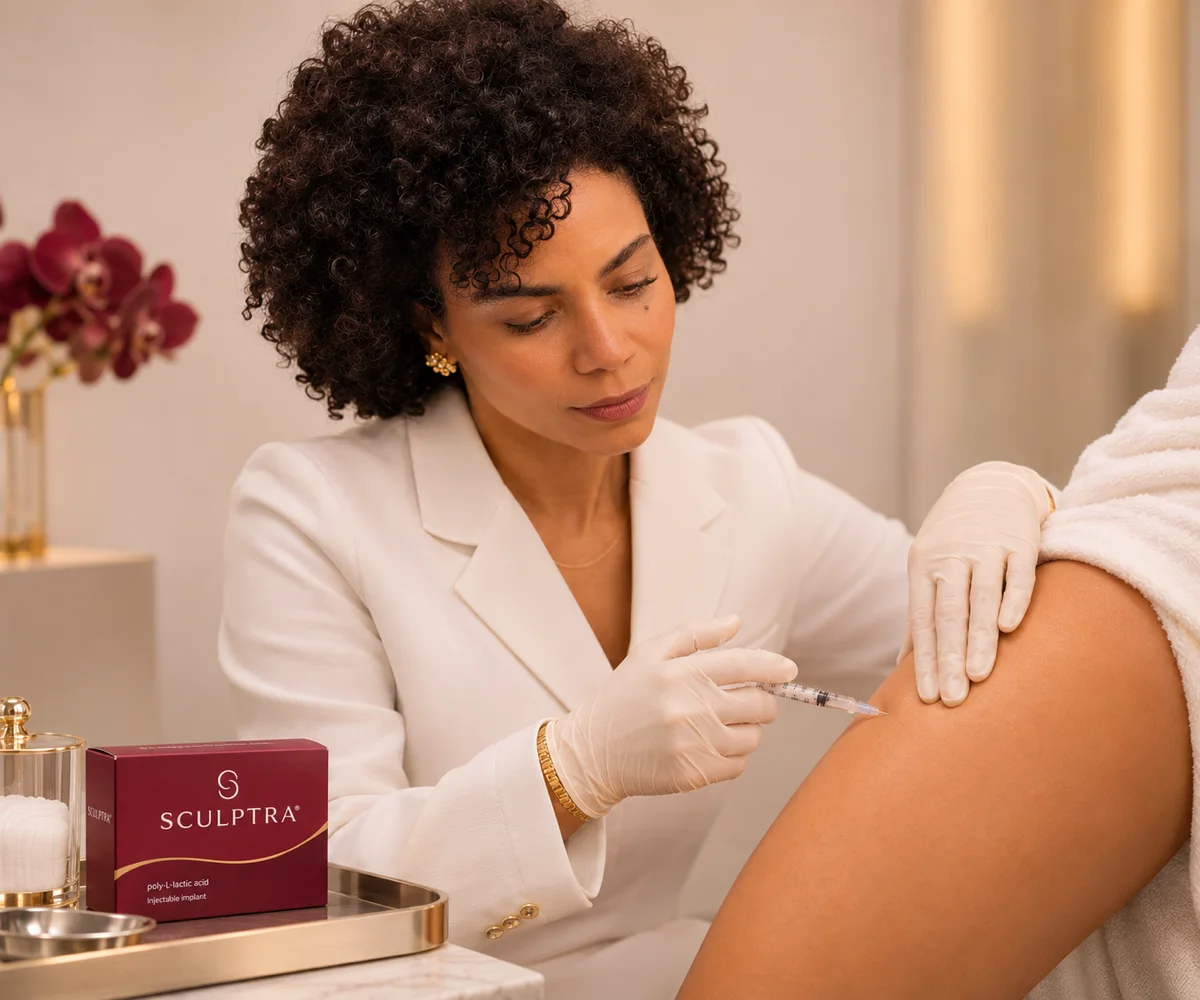
The doctor’s hands preparing an injectable treatment for the arm in a consultation room

Medical procedure

Collagen biostimulators

Injectable products that stimulate the body to produce collagen progressively, with the aim of improving the firmness and texture of the skin. Reviews on use on the body describe favourable results but still limited data, and the effect is gradual and varies from person to person.

May be considered when

the skin is less firm but there are no folds that double over on themselves, your weight has been stable for several months, and your doctor has explained what is and is not known about the results.

Find out more
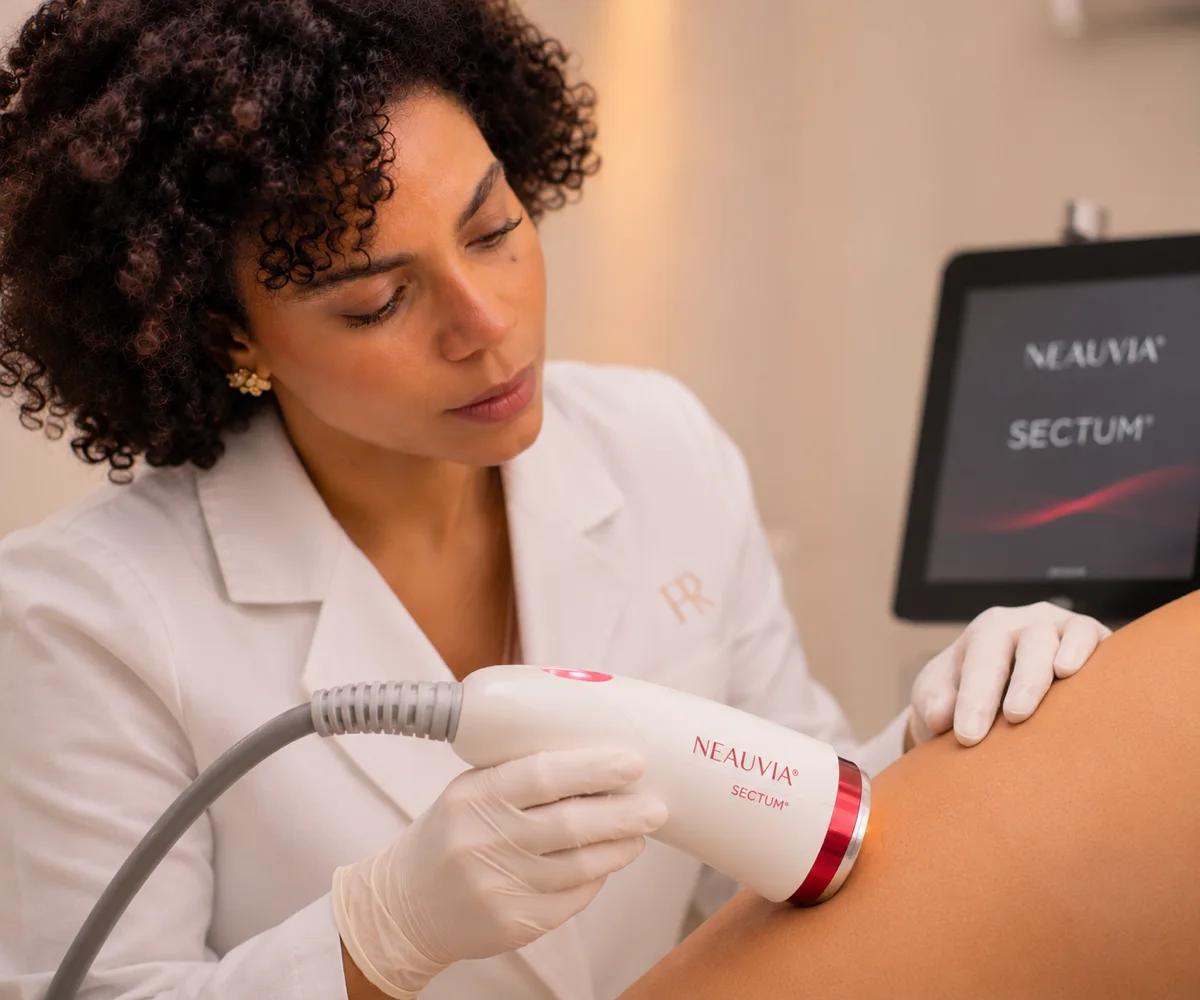
Radiofrequency handpiece passing over the arm, with the device screen in the background

Technology

Sectum radiofrequency Neauvia

Radiofrequency treatment that heats tissue at depth to stimulate collagen production and improve skin firmness. Reviews describe a real but modest effect, based on low-quality studies with widely varying treatment parameters.

May be considered when

the skin is less firm and the amount of excess skin is small or moderate, lifestyle measures have already been addressed, and your doctor considers the option appropriate after explaining its benefits and limitations.

Find out more

What the journey looks like

From doubt to a realistic plan

No treatment begins without an assessment. This is how it goes.

  1. 01At the clinic

    Describe your weight-loss journey

    The doctor asks how much weight you lost, over how long, how (diet, bariatric surgery or medication) and how long the weight has been stable. If the weight is still changing, it is best to wait, because the skin continues to adjust.

  2. 02At the clinic

    Examine the skin and the folds

    The skin is viewed standing, at rest and pinched. The doctor tells loss of firmness from excess skin and checks the state of the skin in the creases, looking for chafing or infections that are treated first.

  3. 03At the clinic

    Decide between treatments and surgery

    With less firm skin and no folds, firming treatments may be considered. With folds that fold over themselves or chafing, it is explained that only surgery removes skin, and you are referred to a plastic surgeon.

  4. 04Over time

    Choose, measure and follow up

    If a treatment makes sense, the areas, the number of sessions and what is reasonable to expect are explained, without promises. Standardised photographs are taken to compare honestly and follow-up is agreed.

Day to day

What helps and what only costs money

At home you cannot make the excess skin disappear, but there are habits that preserve what the skin still has and avoid making it worse.

The golden rule

First stabilise weight, only then decide

While weight is still going down or up, the skin continues to adjust, and any decision is incomplete. Stabilising weight, training strength and protecting the skin are the foundation of any serious plan, and make the assessment more reliable, before any treatment.

Strength training

More muscle beneath the skin gives more contour and support, and helps to preserve muscle mass during weight loss.

In practice: two to three sessions a week, with the load your body can handle and, if possible, with guidance from a professional.

Eating protein at every meal

Adequate protein intake helps to maintain muscle while losing weight.

In practice: include a source of protein in each meal, adjusted with the support of a dietitian or your doctor.

Giving up smoking and protecting from the sun

Smoke degrades collagen and the sun weakens the dermis, and both worsen the quality of the skin that is left over.

In practice: seek support to stop smoking and use sunscreen on uncovered areas.

Looking after the folds

Skin that folds and sweats is more prone to chafing and infections.

In practice: keep the folds clean and well dried, wear cotton clothing and seek assessment if there is redness, sores or a bad smell.

Dr Michelle Campagnoli, clinical director of Clínica Luxmed

Who will look after you

An assessment carried out by the doctor

Everything begins with an assessment consultation with Dr Michelle Campagnoli, in Algés. It is for her to see whether the skin is less firm or whether there is excess, and to agree with you what makes sense, before any treatment.

  • Physical examination and medical historyExamination of the skin in several positions, weight history, medication and your expectations.
  • A plan tailored to youA clear plan, without promises of results, with reference photographs, and referral to plastic surgery when it is the best option.
  • No obligationThe cost of any treatment is confirmed only after the assessment.
Book an assessment

Book a consultation

Book your consultation

Choose how you prefer to get in touch. We will arrange the assessment consultation with Dr Michelle Campagnoli.

Booking through the websiteAssessment consultationTalk to our assistant on WhatsApp and ask for the current price of the assessment.

New Life Miraflores, Algés · Office Center, R. Santa Teresa do Menino Jesus n.º 6, 9.º C, 1495-048

Your details are used only for this contact. Any treatment depends on a prior medical assessment.

Request an appointmentIt takes less than a minute.
Speciality
You do not need to go into detail. The doctor will talk to you during the consultation.
Request received. Our team will contact you as soon as possible.
Why does the skin become lax after weight loss?

Because skin that has been stretched for a long time loses part of the collagen and elastin that gave it firmness and the ability to retract. When weight comes down, the skin does not always keep up, and what is left is loose on the belly, arms, thighs, chest and neck. Age (younger skin retracts better), the amount of weight lost, the time spent overweight, genetics, sun and smoking all weigh. It is not lack of care or a sign that you did something wrong.

Does the skin go back into place with time?

In part. The skin may continue to retract for about one to two years after weight stabilises, but large excess rarely disappears on its own. In small or moderate losses and in younger skin, the improvement tends to be more visible. In very large losses, such as those that follow bariatric surgery, excess skin is often left, and only clinical assessment shows what can still improve.

Does losing weight slowly avoid laxity?

The direct evidence is limited. There are no studies that prove that losing weight slowly avoids loose skin, and the total amount of weight lost, age and genetics seem to weigh more than speed. What helps is preserving muscle, with strength training two to three times a week and enough protein, not smoking, protecting the skin from the sun and avoiding the yo-yo effect. Large losses leave excess skin, regardless of speed.

What is the difference between less firm skin and excess skin?

With less firm skin, the skin is looser and with less tone, but without folds that fold over themselves, and quality may improve with treatments. With excess skin there is too much skin, with folds that fold over, sometimes with chafing or infections, and treatments do not remove it: only surgery removes skin. That is why the first question of the assessment is this one.

When can I start treating the skin?

When weight is stable, in general for at least six to twelve months, because while it changes the skin continues to adjust and the result cannot be assessed well. Treating during weight loss is usually not the best option. The doctor sees with you the right moment, and if it makes sense to wait a little longer, says so frankly.

Do biostimulators and radiofrequency resolve loose skin?

They may improve firmness and texture when the skin is less firm, but do not remove skin, and so do not resolve excess. Reviews describe favourable results but still limited data, with small studies, different methods and short follow-up. Results vary from person to person, are in general partial and may call for maintenance. The doctor explains at the assessment what is reasonable to expect in your case.

When is surgery needed for excess skin?

When there are folds that fold over themselves, significant excess skin or repeated chafing and infections, which usually happens after very large losses. Only body contouring surgery removes the skin that is left over, and the decision is for a plastic surgeon, after weight is stable. The clinic assesses the skin and refers you in that direction when it is the best solution, and firming treatments may, in some cases, complement surgery.

Is surgery for excess skin covered by the SNS?

In some cases, after bariatric surgery and on functional grounds, for example with chafing or repeated infections that are not controlled with care. The decision depends on clinical criteria and a surgeon’s assessment, so it is advisable to ask your attending doctor. The clinic does not decide on that coverage.

When should I see a doctor instead of booking an aesthetic assessment?

When there is chafing that does not go away, red skin, stinging or a bad smell in the folds, sores or signs of infection, or when you are losing weight quickly without meaning to. See your doctor. Out of hours, call SNS 24 (808 24 24 24). Go to the emergency department, or call 112, if there is high fever, a red area that grows quickly, intense pain or feeling seriously unwell.

Do you assess skin after weight loss in Algés and what should I bring?

Yes, the assessment is carried out by Dr Michelle Campagnoli at the clinic, in Algés (Oeiras), and, if it makes sense, a plan follows. It is worth bringing your weight history (starting weight, current weight and dates), whether you lost weight with bariatric surgery or medication, your usual medication, allergies and, if you have them, old photographs. Let us know if there is pregnancy or breastfeeding, diabetes or skin disease.

We could not find that question. Ask us on WhatsApp

Scientific references

This page is based on the sources below and was reviewed by Dr. Michelle Campagnoli. Last updated on .

  1. Kitzinger HB, Abayev S, Pittermann A, Karle B, Bohdjalian A, Langer FB, Prager G, Frey M. After massive weight loss: patients' expectations of body contouring surgery. Obes Surg, 2012.
  2. Farage MA, Miller KW, Elsner P, Maibach HI. Characteristics of the aging skin. Adv Wound Care, 2013.
  3. Cava E, Yeat NC, Mittendorfer B. Preserving healthy muscle during weight loss. Adv Nutr, 2017.
  4. Morita A. Tobacco smoke causes premature skin aging. J Dermatol Sci, 2007.
  5. Elander A, Biörserud C, Fagevik Olsén M. Excess skin after weight loss following bariatric surgery: focus on the abdomen. Surg Obes Relat Dis, 2021.
  6. Klassen AF, Kaur M, Breitkopf T, Thoma A, Cano S, Pusic AL, et al. Using the BODY-Q to understand impact of weight loss, excess skin, and the need for body contouring following bariatric surgery. Plast Reconstr Surg, 2018.
  7. Giordano S, Victorzon M, Koskivuo I, Suominen E. Physical discomfort due to redundant skin in post-bariatric surgery patients. J Plast Reconstr Aesthet Surg, 2013.
  8. van der Beek ES, van der Molen AM, van Ramshorst B. Complications after body contouring surgery in post-bariatric patients: the importance of a stable weight close to normal. Obes Facts, 2011.
  9. Christen MO. Collagen stimulators in body applications: a review focused on poly-L-lactic acid (PLLA). Clin Cosmet Investig Dermatol, 2022.
  10. Araújo AR, Soares VP, Silva FS, Moreira TS. Radiofrequency for the treatment of skin laxity: myth or truth. An Bras Dermatol, 2015.
  11. Beasley KL, Weiss RA. Radiofrequency in cosmetic dermatology. Dermatol Clin, 2014.
  12. American Society of Plastic Surgeons. Body lift. plasticsurgery.org, 2026.
CallAssistantAvailableBook