Algés, Oeiras Mon to Fri · 09:00 to 13:00 and 14:00 to 19:00 · Sat · 09:00 to 14:00
WhatsApp Book a consultation

Body aesthetics

Laxity on the armsWhen the skin on the inner arms has lost firmness and you want to understand why and what you can do

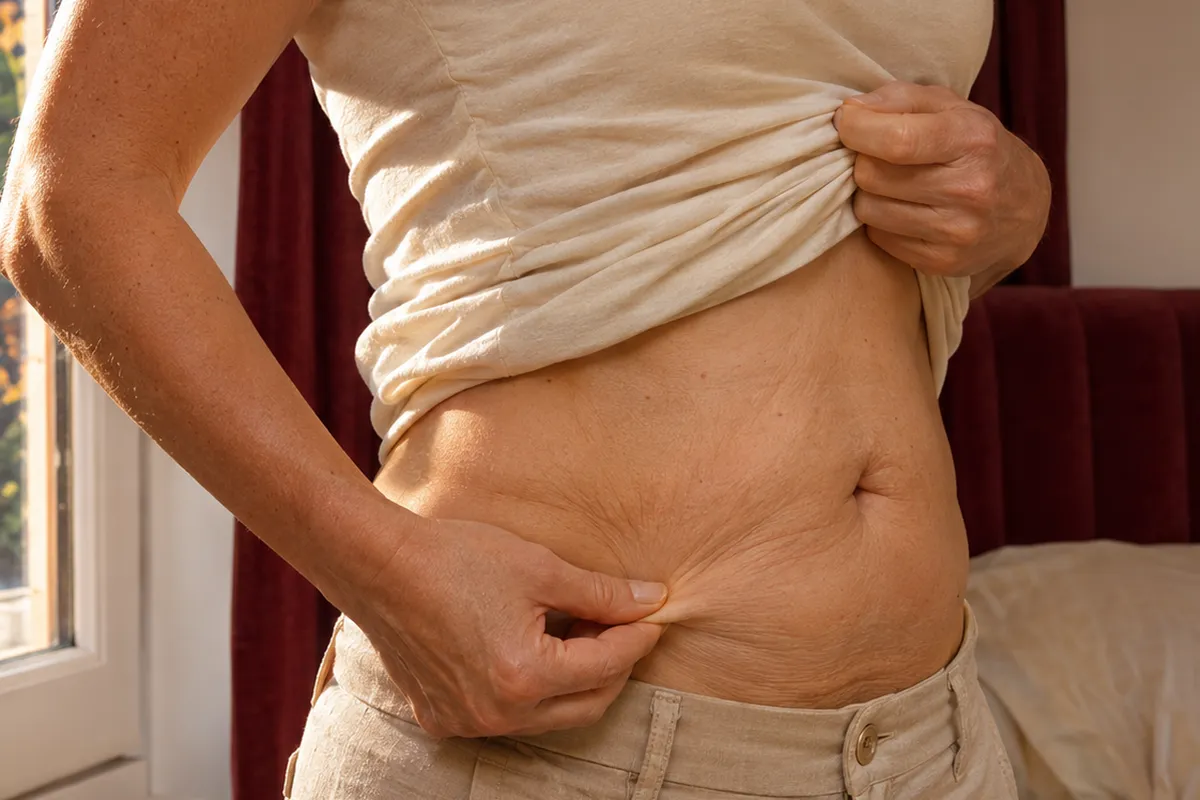
The inner arm has thin skin with little support, which is why it is one of the first areas of the body to show laxity: the skin may “wobble” when you move your arm or hang lower than you would like. This occurs with age, the menopause, sun exposure and smoking, after substantial or rapid weight loss, and is strongly influenced by genetics. Strength training helps shape the muscle but does not tighten skin that is already loose. Here, we explain the usual causes of laxity, the limits of exercise, the non-surgical options available, when surgery is the only way to remove excess skin, and when changes, swelling or pain in an arm require medical assessment at Clínica Luxmed in Algés.

Reviewed by Dr Michelle Campagnoli, clinical director

  • 2non-surgical treatments to consider
  • 1assessment, always first
  • Nocommitment
Woman in a sleeveless top hanging a curtain, with her arms raised

How to recognise it

Is it laxity of the skin of the arms?

Arm laxity may involve the skin, the muscle or both, and fat may also contribute. Understanding which factor is most relevant in your case helps determine the appropriate approach. These signs can provide an indication before your assessment.

Tick what you recognise0/7

Tick the signs you recognise in your case. This is not a diagnosis, it is only meant to give you an idea.

Has only one arm swollen, feels heavy, sore, red, warm or changed colour? Is there a new lump, or a patch or mole that grows or changes? Do you have shoulder or elbow pain that does not go away, or loss of strength in the arm? You need medical assessment before any treatment. Out of hours, call SNS 24: 808 24 24 24. If you have shortness of breath or chest pain, call 112.

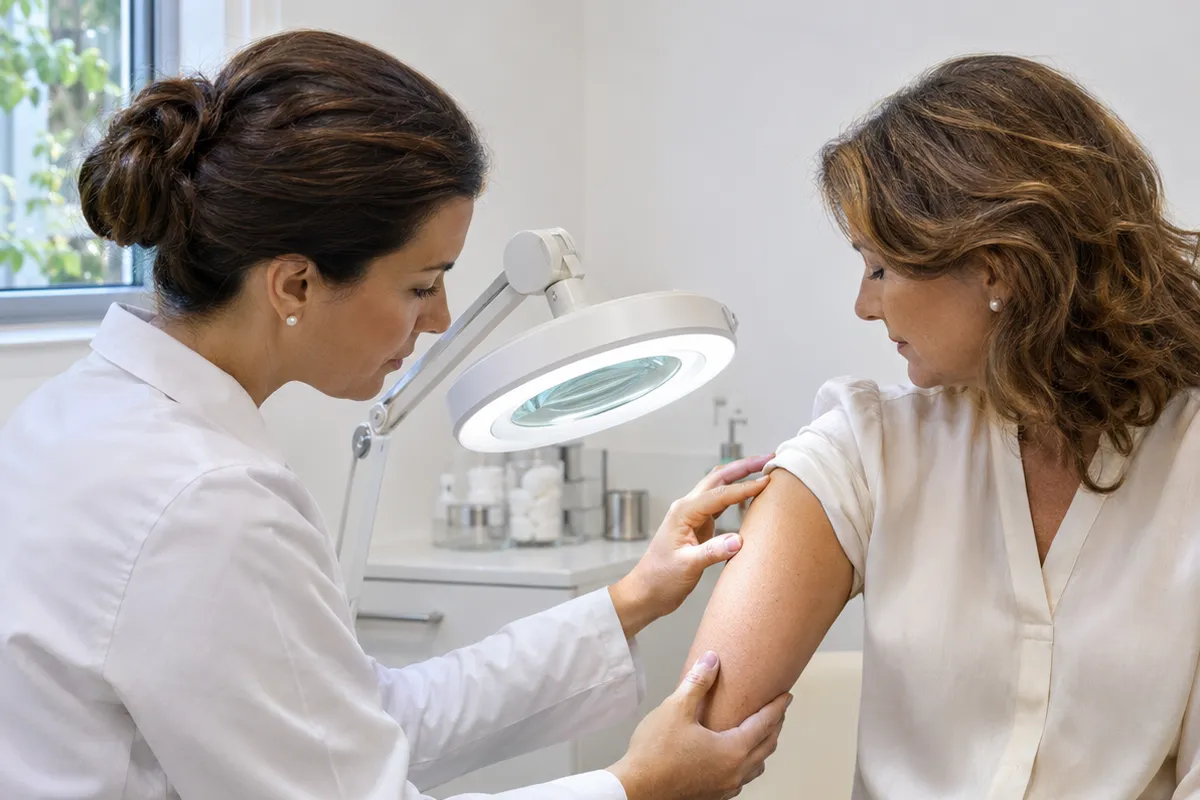
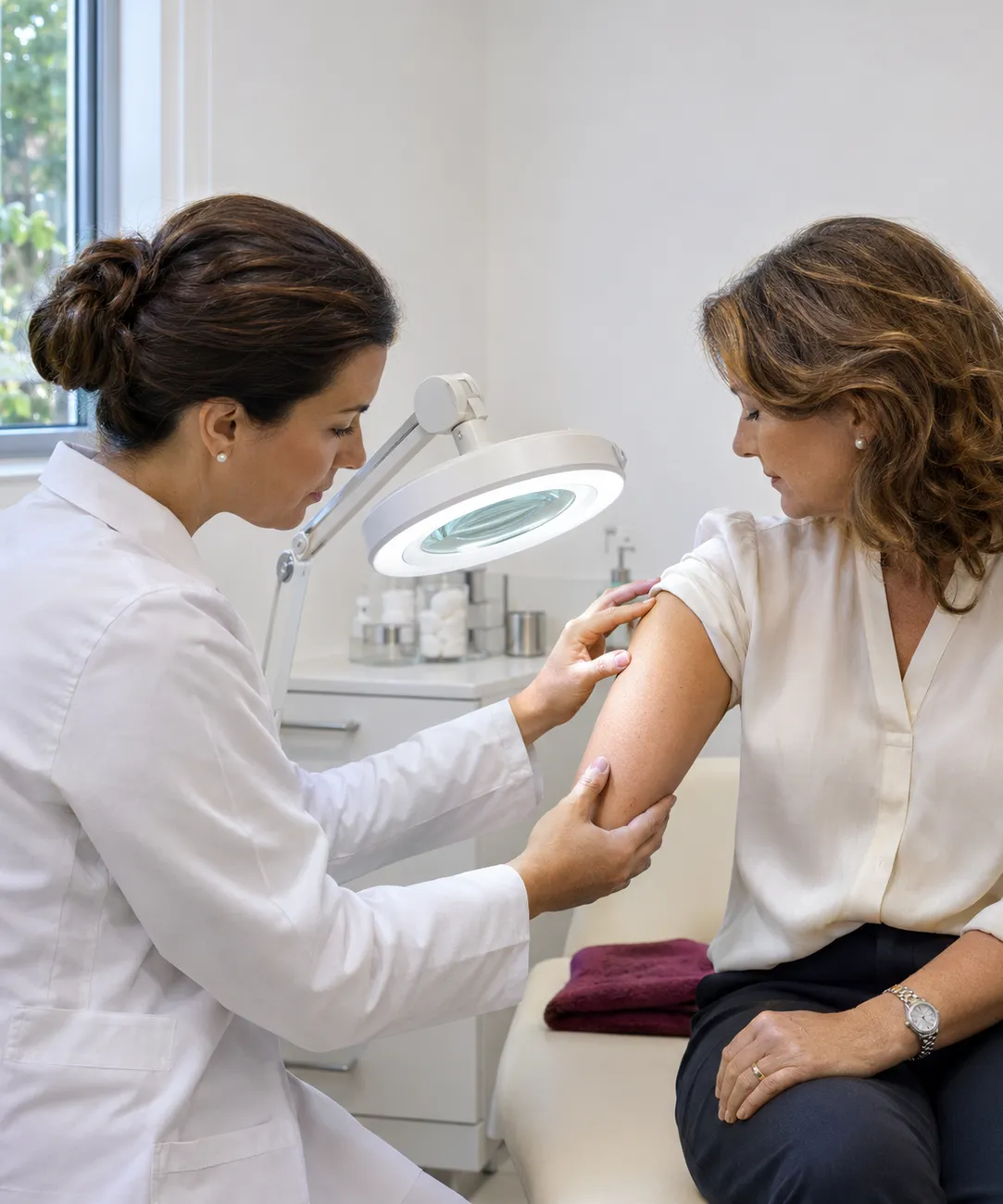
Female doctor assessing a patient's arm with an examination magnifier
Photograph of a consultation. The dots mark what the doctor is assessing.

Why it happens

What may be behind laxity on the arms

There is almost always more than one cause at the same time. Choose a situation to see how it may contribute and what usually helps.

Ageing of the skin

Over the years, the skin produces less collagen and elastin and loses thickness and elasticity. The inner arm, where the skin is thin and has little structural support, is one of the first areas to show these changes, and gravity does the rest. This is a normal process and not a sign of disease.

What weighs on it

Expecting the skin alone to “go back into place” and rubbing in creams hoping they will stretch loose skin.

What helps

Taking care of the skin, protecting it from the sun and keeping muscle in shape; if it bothers you, assessing the options.

Normal or to be assessed

Skin laxity or something to assess

Most arm laxity affects the skin and is benign. However, an arm that swells, hurts or changes colour may have another underlying cause, which requires assessment before any aesthetic treatment.

  • How it looks. The skin on the inner side of both arms is loose and “wobbles”, without pain, swelling or change of colour, and has become like this over the years or after losing weight.

  • When it is noticed. When raising the arm, waving, in sleeveless tops or when putting on clothing that is tight on the arms.

  • What the clinic does. The doctor takes your history, examines the skin, muscle and fat, and tells you whether the laxity is mild or moderate, or whether there is excess skin.

  • At home. Strength training, sun protection, not smoking and keeping a stable weight.

Do you have shortness of breath, chest pain or an arm that has suddenly become very swollen and sore? Call 112. If you have an arm that has swollen or changed colour, or doubts, out of hours you can call SNS 24: 808 24 24 24.

Book an assessment

What the clinic may consider

Options to firm the arms

First-line measures are carried out at home: strength training, sun protection, not smoking and, if appropriate, losing weight gradually. When laxity is mild, these measures may improve the appearance considerably because the muscle provides better support beneath the skin. If the skin remains loose, non-surgical treatments are available. For mild laxity, the clinic may consider radiofrequency; for moderate laxity, collagen biostimulators may be considered, sometimes in combination with radiofrequency. Results are gradual and vary from person to person, and the evidence is limited: studies of radiofrequency are heterogeneous and of low quality, while some biostimulators are used off-label on the arms. When there is a substantial amount of excess skin, particularly after major weight loss, only brachioplasty, a plastic surgery procedure that leaves a scar along the inner arm, can remove it. The clinic does not perform this procedure but can refer you to a plastic surgeon.

Book an assessment
Dr Michelle Campagnoli, clinical director of Clínica Luxmed

First step

Assessment consultation

The doctor listens to what you are experiencing, examines your case and explains the suitable options. No treatment begins without this consultation.

May be considered when

you want to understand the cause and decide on the best path, with time and without commitment.

Book an assessment
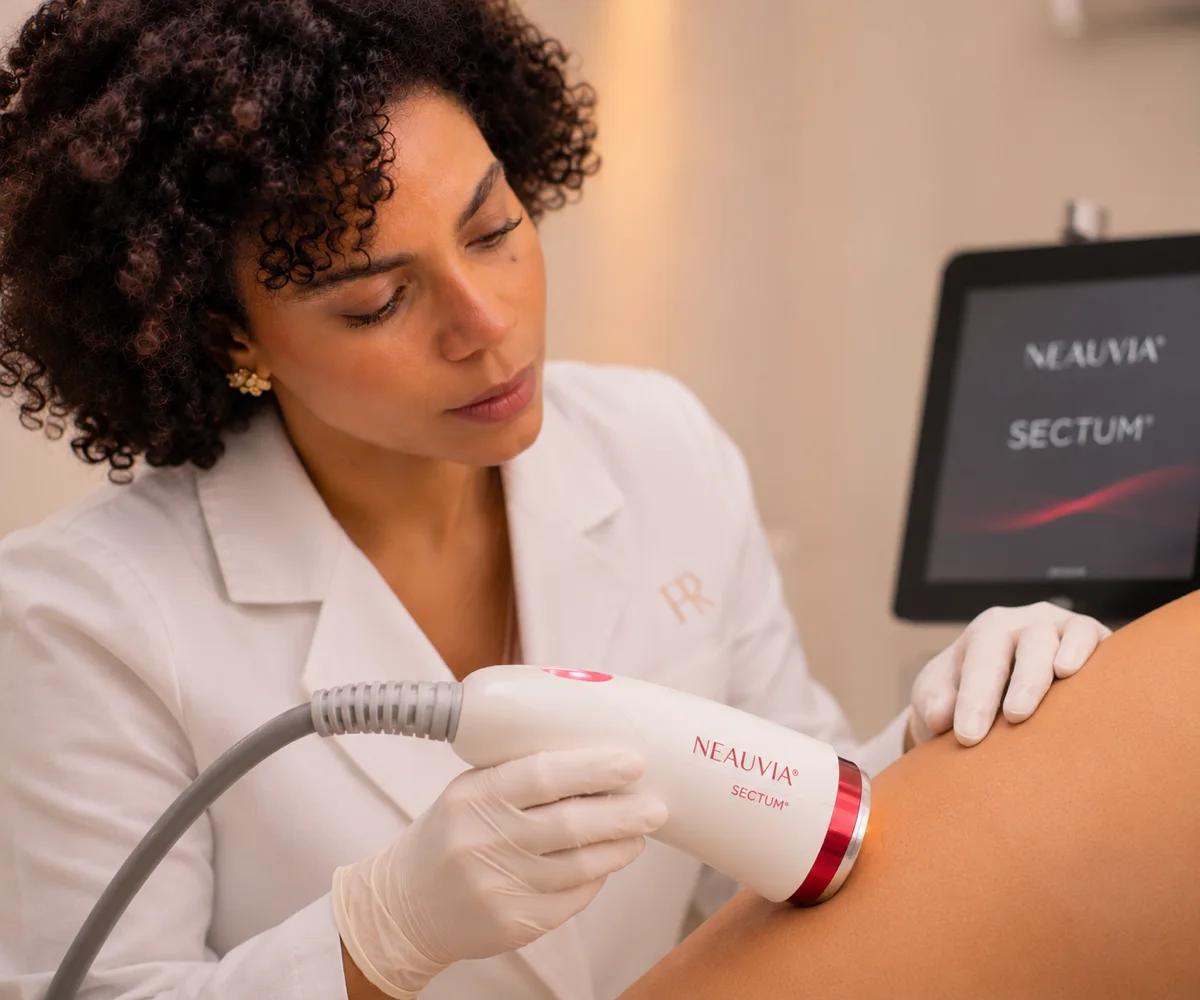
Radiofrequency handpiece gliding over the inner side of a patient’s arm, in a treatment room

Technology

Sectum radiofrequency Neauvia

Radiofrequency heats the deeper layers of the skin with the aim of stimulating its own collagen production and firming the skin on the inner arm. It is carried out over several sessions, requires no downtime, and the expected improvement is slight to moderate. The evidence is limited, and it is not a substitute for surgery when there is a substantial amount of excess skin.

May be considered when

the laxity is mild to moderate, the skin is not irritated or infected, there is no swelling or pain in the arm awaiting assessment, and the doctor has explained what is realistic to expect and how many sessions may be needed.

Find out more
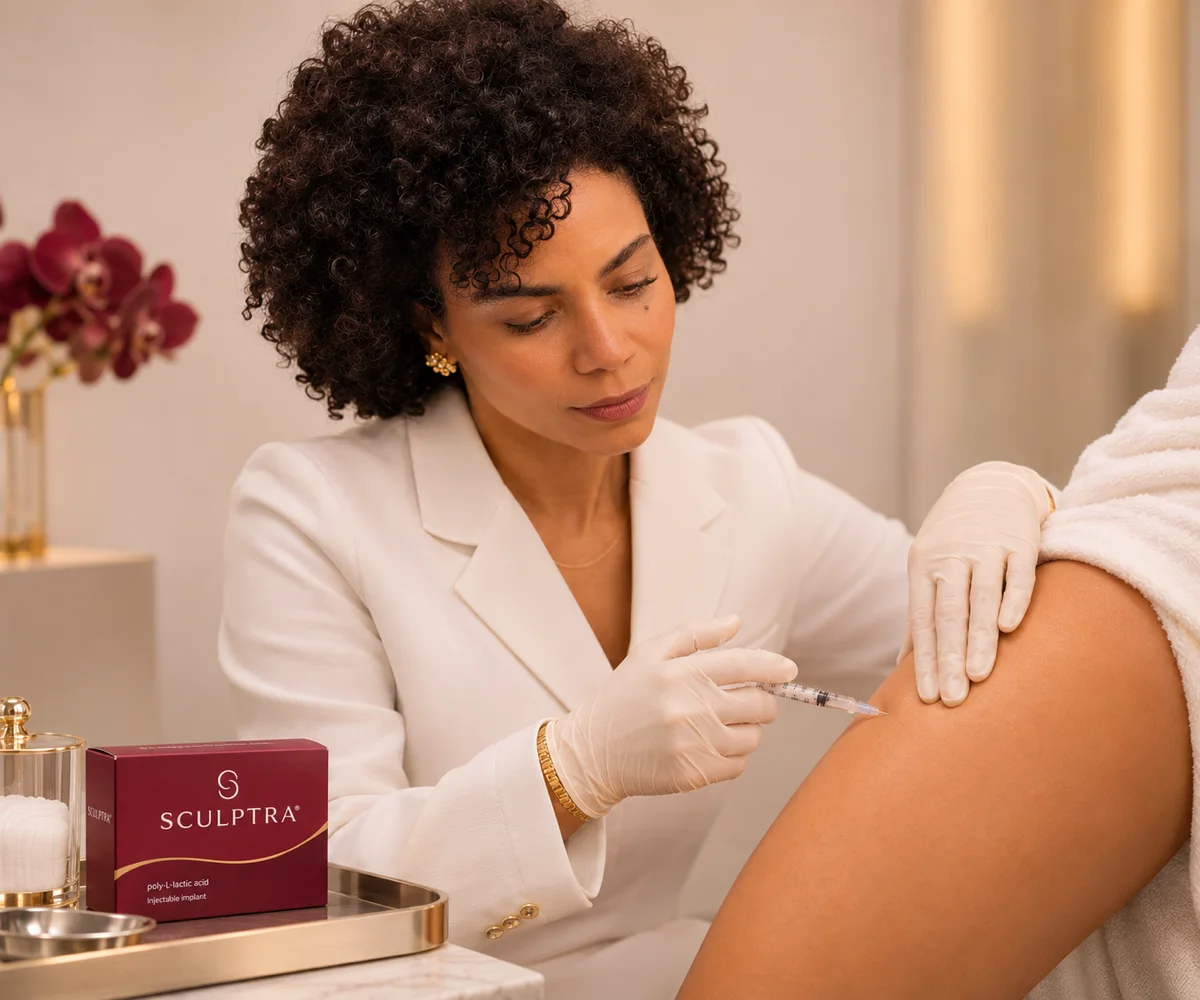
The doctor administering an injection into a patient’s inner arm, wearing gloves and under clinical lighting

Collagen stimulation

Collagen biostimulators

Injections of a substance that stimulates the skin to produce its own collagen gradually over a period of weeks and months. Usually, 2 to 3 sessions are needed. Discomfort and bruising may occur, and nodules may develop, particularly if the technique is not appropriate. Some products are used off-label on the body.

May be considered when

the laxity is moderate, with no significant excess skin, the doctor has explained the risks, the evidence and the off-label use of some products, and the decision is yours.

Find out more

What the journey looks like

From the first conversation to a plan tailored to you

No treatment begins without an assessment with the doctor. Most people start with the simplest measures and only then consider further treatment, and the amount of loose skin determines the appropriate approach.

  1. 01At the clinic

    Telling your story

    The doctor asks when you first noticed the laxity, whether you have lost weight, been pregnant or gone through the menopause, whether you exercise or smoke, about sun exposure, and whether you have swelling, pain or other symptoms.

  2. 02At the clinic

    Examine the arms

    The skin, muscle and fat on the inner side of both arms are examined and felt, and the amount of loose skin is measured. If an arm is swollen, sore or different from the other, tests are requested or you are referred before any treatment.

  3. 03At home

    Train, protect and care

    Strength training, sun protection, giving up smoking and, if appropriate, losing weight gradually. In cases of mild laxity, these measures often provide the greatest benefit.

  4. 04Over time

    Decide and follow up

    If the skin is still loose, the doctor explains the options without surgery or, if there is a lot of excess skin, refers you for plastic surgery. She explains what can be expected and how many sessions may be needed, without promising results, and follows the progress.

Day to day

What helps at home

What you do at home matters more than you might think. These are sensible measures to take while you wait for your consultation and alongside the clinic’s plan.

The golden rule

Firm muscle, protected skin and a stable weight

Muscle supports the skin, while sun exposure and smoking damage it, and large fluctuations in weight leave it loose. Training, protecting the skin and stabilising your weight improve its appearance and protect your health, even if you later consider treatment. An arm that swells or hurts should be assessed by a doctor rather than “toned”.

Strength training 2 to 3 times a week

Firmer muscle fills the skin and improves the shape of the arm, although it does not stretch loose skin.

In practice: triceps extensions, incline push-ups, rows and shoulder presses, with progressive overload and correct technique.

Sunscreen on the arms

The sun destroys collagen and elastin and accelerates the loss of firmness.

In practice: apply sunscreen on the arms and exposed areas, every sunny day, and wear protective clothing.

Losing or maintaining weight gradually

Large, rapid fluctuations leave excess skin.

In practice: avoid very restrictive diets and combine weight loss with strength training.

Stopping smoking

Smoking reduces collagen and causes premature skin ageing.

In practice: ask your doctor for help if you find it hard to stop.

Dr Michelle Campagnoli, clinical director of Clínica Luxmed

Who will look after you

An assessment carried out by the doctor

At Luxmed, in Algés, the first step is always an assessment with Dr Michelle Campagnoli. She examines the skin, muscle and fat of the arms, determines whether the laxity is mild or moderate or whether there is excess skin, and works with you to decide on the appropriate approach before any treatment.

  • Physical examination and medical historyA conversation about weight, training, sun and smoking, and examination of both arms.
  • A plan tailored to youA clear plan, without promises, with home care first and follow-up over time.
  • No obligationThe cost of any treatment is confirmed only after the assessment.
Book an assessment

Book a consultation

Book your consultation

Choose how you prefer to get in touch. We will arrange the assessment consultation with Dr Michelle Campagnoli.

Booking through the websiteAssessment consultationTalk to our assistant on WhatsApp and ask for the current price of the assessment.

New Life Miraflores, Algés · Office Center, R. Santa Teresa do Menino Jesus n.º 6, 9.º C, 1495-048

Your details are used only for this contact. Any treatment depends on a prior medical assessment.

Request an appointmentIt takes less than a minute.
Speciality
You do not need to go into detail. The doctor will talk to you during the consultation.
Request received. Our team will contact you as soon as possible.
What causes arm laxity?

The skin on the inner arm is thin and has little support, and it loses collagen and elastin with age. The menopause, substantial or rapid weight loss, sun exposure, smoking and loss of muscle mass all contribute, while genetics also plays a major part. This is why some people develop loose skin on their arms earlier than others. It is more common in women, although it also affects men. The first step is to identify the main contributing factors in your case.

Can young people develop arm laxity?

Yes, especially after substantial or rapid weight loss, when the skin does not keep pace with the reduction in volume. Genetics also plays a part, and some people have looser skin on their arms from a young age. If the skin has been extremely elastic or fragile in several areas of the body from a very early age, speak to the doctor.

What is loose skin that “wobbles” and why is it more noticeable at the back of the arm?

It is the skin on the inner arm, and sometimes the fat beneath it, moving as you move your arm. It is more noticeable here because the skin is thin, has little support and is exposed when you raise your arm. It may be due to the skin alone, the muscle alone or a combination involving fat, and an assessment can distinguish between them.

Is a swollen, lax arm just laxity?

Not necessarily. A single arm that is swollen, heavy, sore, red or warmer may have another cause, such as thrombosis or a problem with lymphatic drainage, and requires medical assessment before any aesthetic treatment. Out of hours, call SNS 24 (808 24 24 24). If you have shortness of breath or chest pain, call 112.

Can exercise correct arm laxity?

It can address part of the problem. Strength training firms the muscle and provides better support beneath the skin, and may considerably improve the appearance of mild laxity. When the skin is very loose, exercise will not restore it to its previous position. Train 2 to 3 times a week using progressive overload; a difference is generally noticeable within 8 to 12 weeks. If the skin is still hanging after a few months, the main issue lies in the skin itself, and other options are available.

Does triceps training eliminate fat and skin on the arms?

No. A study of 104 people who trained one arm for 12 weeks did not find evidence that exercise reduced fat specifically in the trained arm, and it did not assess excess skin. Triceps training strengthens the muscle and improves the shape of the arm, but it does not remove fat or skin from that area alone.

What non-surgical treatments are available for arm laxity?

The clinic may consider radiofrequency using Sectum by Neauvia, as well as collagen biostimulators. Radiofrequency is more commonly used for mild laxity, over several sessions, and produces a slight to moderate improvement. Biostimulators are used for moderate laxity, over 2 to 3 sessions, with the effect developing gradually over several months. The evidence is limited, results vary, and the doctor will explain what is realistic in your case without promising results.

Do biostimulators hurt, and what are the risks?

There is mild discomfort, and a local anaesthetic may be used when necessary. Bruising and swelling may occur and, less commonly, nodules, the risk of which depends greatly on the technique; granulomas are very rare. Some products are used off-label on the body, which the doctor will explain before a decision is made. The procedure is not performed on infected or irritated skin or without a prior assessment.

Are the results permanent? How many sessions are needed?

Results are neither guaranteed nor permanent. Radiofrequency usually requires several sessions, while biostimulators require 2 to 3 sessions, with gradual improvement over a period of weeks and months. The skin continues to age, so sun exposure, smoking and weight fluctuations affect how long the results last, and maintenance treatment may be needed. At the assessment, the doctor will establish the plan and set expectations.

When should I think about brachioplasty?

When there is a substantial amount of excess skin, especially after major weight loss, and non-surgical treatments are insufficient. Brachioplasty is a plastic surgery procedure that removes excess skin and leaves a scar along the inner arm, and it requires a recovery period. The clinic does not perform it but can refer you to a plastic surgeon. An assessment will establish how much excess skin there is and whether there are any contraindications.

We could not find that question. Ask us on WhatsApp

Scientific references

This page is based on the sources below and was reviewed by Dr. Michelle Campagnoli. Last updated on .

  1. Farage MA, Miller KW, Elsner P, Maibach HI. Characteristics of the aging skin. Adv Wound Care (New Rochelle), 2013.
  2. Morita A. Tobacco smoke causes premature skin aging. J Dermatol Sci, 2007.
  3. Brincat MP. Hormone replacement therapy and the skin. Maturitas, 2000.
  4. Kostek MA, Pescatello LS, Seip RL, Angelopoulos TJ, Clarkson PM, Gordon PM, et al. Subcutaneous fat alterations resulting from an upper-body resistance training program. Med Sci Sports Exerc, 2007.
  5. World Health Organization. WHO guidelines on physical activity and sedentary behaviour. Geneva: WHO, 2020.
  6. Beasley KL, Weiss RA. Radiofrequency in cosmetic dermatology. Dermatol Clin, 2014.
  7. Araújo AR, Soares VP, Silva FS, Moreira TS. Radiofrequency for the treatment of skin laxity: myth or truth. An Bras Dermatol, 2015.
  8. Vleggaar D, Fitzgerald R, Lorenc ZP. Understanding, avoiding, and treating potential adverse events following the use of injectable poly-L-lactic acid for facial and nonfacial volumization. J Drugs Dermatol, 2014.
  9. American Society of Plastic Surgeons. Arm lift (brachioplasty). plasticsurgery.org, 2023.
  10. Susini P, Marcaccini G, Diluiso G, Cuomo R, Grimaldi L, Nisi G. Brachioplasty in the post-bariatric patient: a systematic review. Aesthetic Plast Surg, 2026.
CallAssistantAvailableBook