Algés, Oeiras Mon to Fri · 09:00 to 13:00 and 14:00 to 19:00 · Sat · 09:00 to 14:00
WhatsApp Book a consultation

Body aesthetics

Abdominal fatWhen the belly resists diet and exercise and you want to know what fat it is and what is realistic to do

Abdominal fat is one of the most common and most misunderstood concerns, because the same appearance can have very different causes. Some fat lies beneath the skin, feels soft and is primarily a matter of body contour. Other fat lies inside the abdomen around the organs, feels firm and matters more for health than for appearance. Only the first type can be treated with aesthetic procedures, and even then results are modest. Here we explain how to tell them apart, what really reduces abdominal fat, what non-invasive treatments can and cannot achieve, and when to seek a medical assessment before any procedure at Clínica Luxmed, in Algés.

Reviewed by Dr Michelle Campagnoli, clinical director

  • 2catalogue options for this topic
  • 1assessment, always first
  • Nocommitment
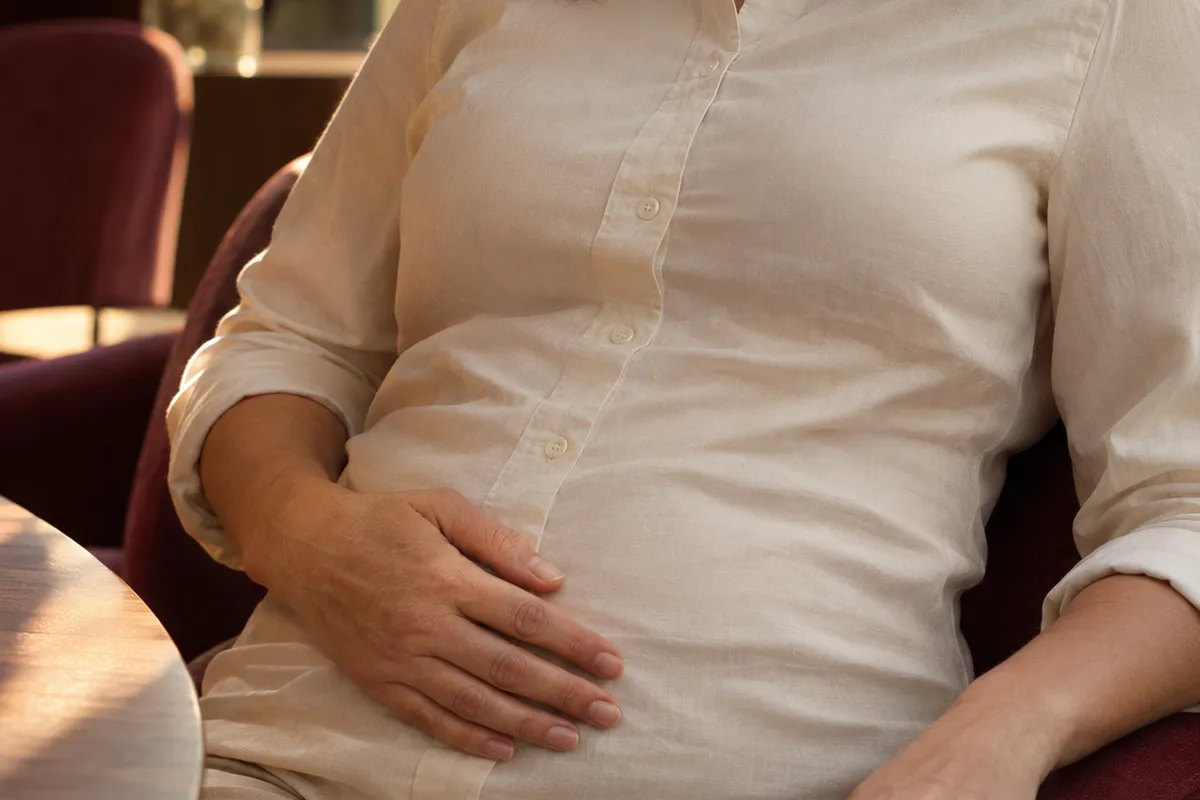
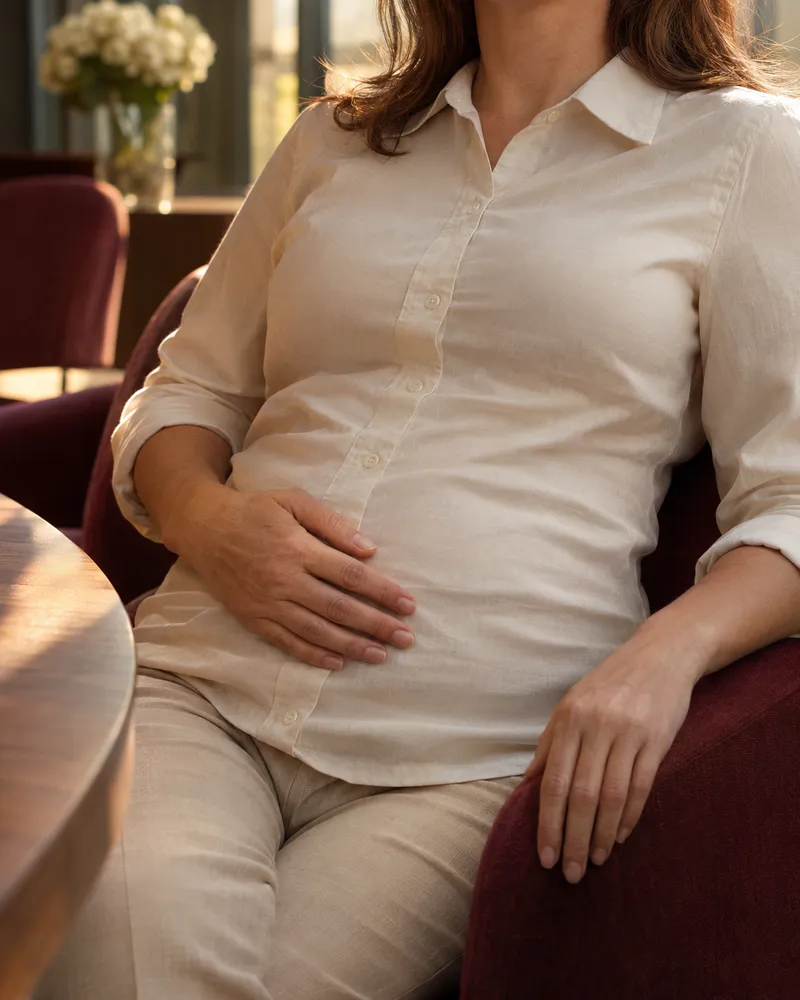
Woman in a white shirt sitting in an armchair, with her hand resting on her belly

How to recognise it

Is it localised fat on the belly?

Not all abdominal fat is the same: some can be grasped and some cannot, and the distinction determines which options may be appropriate. These signs can help you understand what may be happening before your assessment.

Tick what you recognise0/7

Tick the signs you recognise in your case. This is not a diagnosis, it is only meant to give you an idea.

Has the belly grown quickly, in weeks, without a change in what you eat, or is it accompanied by swollen legs, shortness of breath, tiredness, unexplained weight loss, blood in the stool or a change in bowel habits? Is there a bulge that appears when coughing or straining, near the navel or in a scar? You need medical assessment before any treatment. Out of hours, call SNS 24: 808 24 24 24.

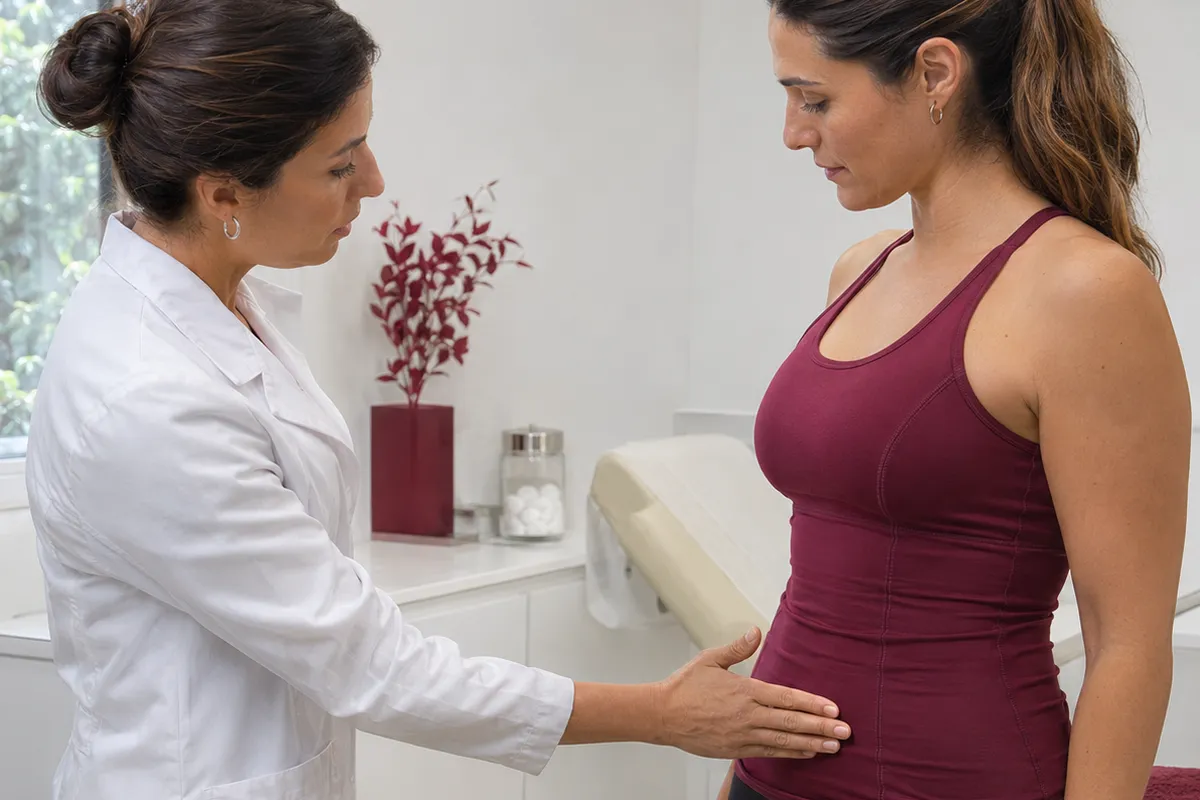
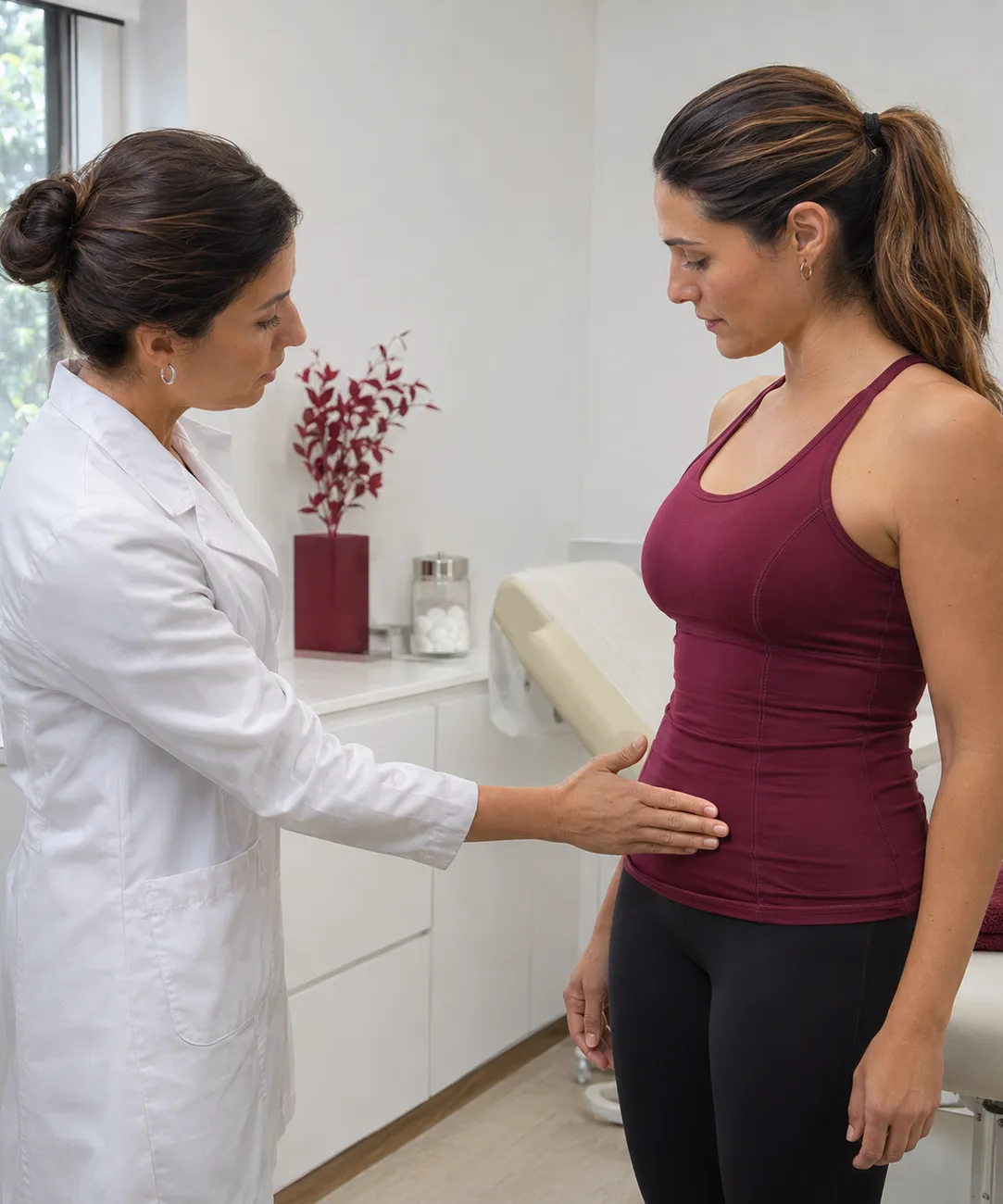
Female doctor in a white coat assessing the abdomen of a woman in gym clothes, in a consulting room
Photograph of a consultation. The dots mark what the doctor is assessing.

Why it happens

What may be behind belly fat

There is almost always more than one cause at the same time. Choose a situation to see how it may contribute and what usually helps.

Subcutaneous fat

This is the fat between the skin and the muscle. It is soft, visible and can be grasped, and is mainly a body-contouring concern. It may accumulate even when the rest of the body is in proportion. In general, it is the only type of fat that aesthetic treatments can target, and even then the reductions are modest.

What weighs on it

Expecting a device or cream to make a fold of fat disappear when the body continues to store fat there.

What helps

Understanding what type of fat it is, setting a realistic goal and keeping your weight stable before considering any procedures.

Normal or to be assessed

Subcutaneous fat or something to assess

Most people have some subcutaneous abdominal fat and often some visceral fat as well. However, some situations require medical assessment before any treatment, because the enlargement may be only the visible sign of an underlying problem.

  • How it looks. A soft fold of fat, which can be grasped between the fingers, generally above or around the navel, with the waist within reference values.

  • When it is noticed. Standing and from the side, in tight clothing or in photographs. It tends to be similar on both sides.

  • What the clinic does. The doctor listens to the history, measures the waist, examines the belly and confirms that it is subcutaneous fat, and only then explains what makes sense.

  • At home. Diet, aerobic and strength exercise, sleep and stress management, with realistic goals and stable weight.

Do you have a painful, hard bulge that cannot be pushed back in, accompanied by vomiting, fever or an inability to pass stools? Go to the emergency department or call 112. If your belly is growing quickly or you are unsure about your symptoms, you can call SNS 24 out of hours on 808 24 24 24.

Book an assessment

What the clinic may consider

Options to shape the fat on the belly

Habits come first because they are what reduce fat, and an assessment is needed before any procedure. Non-invasive treatments target only subcutaneous fat, not visceral fat, and are intended for people close to their ideal weight who have stubborn pockets of fat. They are not weight-loss treatments. The clinic offers radiofrequency (Sectum, by Neauvia) and contouring massage, and the doctor will tell you whether either option is appropriate in your case. Scientific reviews generally show modest reductions of a few centimetres, with protocols varying widely between studies; radiofrequency is among the techniques studied in the fewest patients. Other techniques are available, such as cryolipolysis and focused ultrasound, and the choice always depends on the assessment. Results vary, tend to appear gradually and require you to maintain a stable weight.

Book an assessment
Dr Michelle Campagnoli, clinical director of Clínica Luxmed

First step

Assessment consultation

The doctor listens to what you are experiencing, examines your case and explains the suitable options. No treatment begins without this consultation.

May be considered when

you want to understand the cause and decide on the best path, with time and without commitment.

Book an assessment
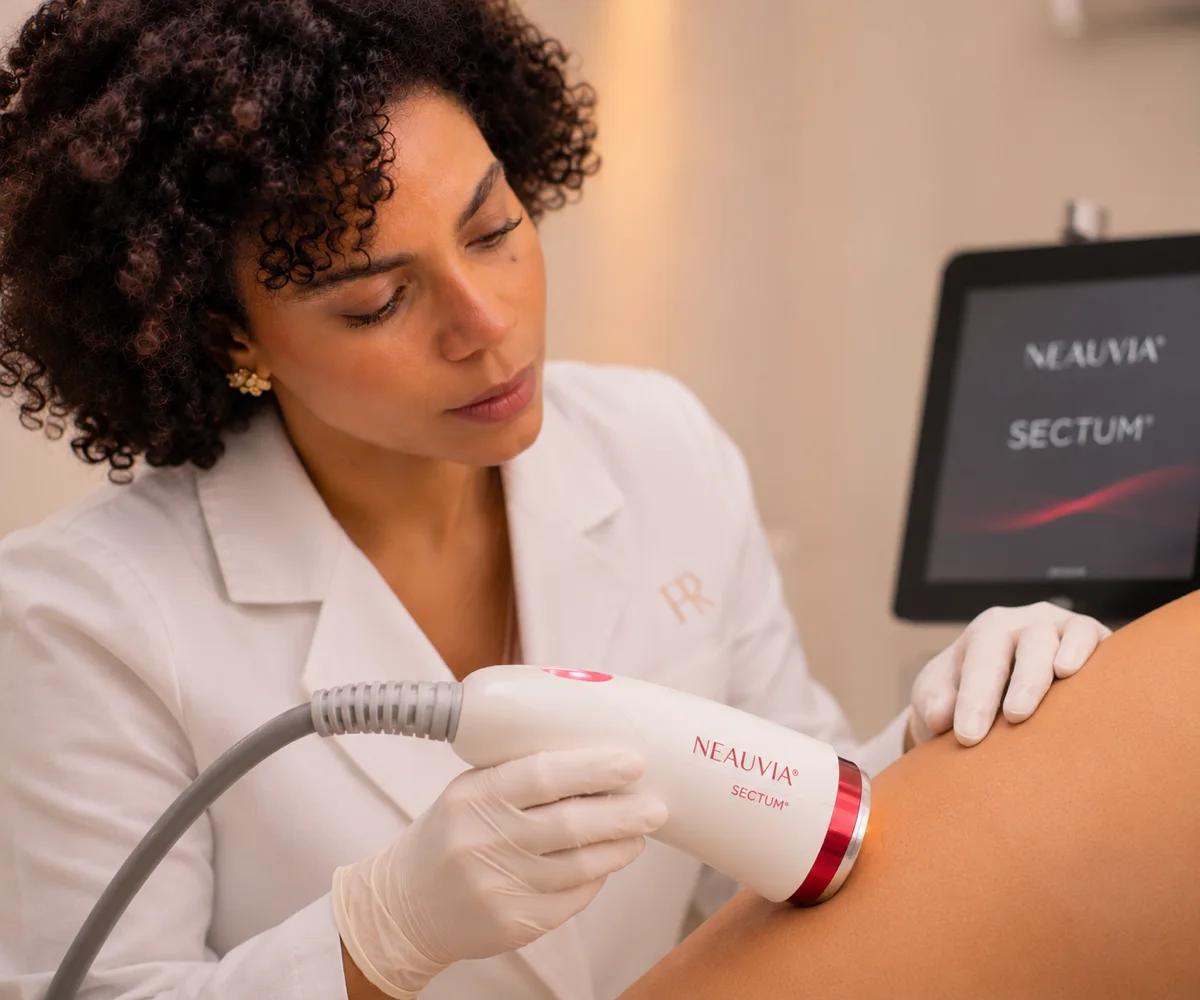
Radiofrequency handpiece treating an area of the body, with the device screen in the background

Technology

Sectum radiofrequency Neauvia

Radiofrequency heats deeper tissues to stimulate collagen and improve skin firmness in areas such as the abdomen. It may slightly reduce circumference and improve firmness, although results are modest and vary from person to person.

May be considered when

the fat is subcutaneous, your weight is stable and your skin is firm, and the doctor has ruled out other causes for the enlargement and explained what you can realistically expect.

Find out more
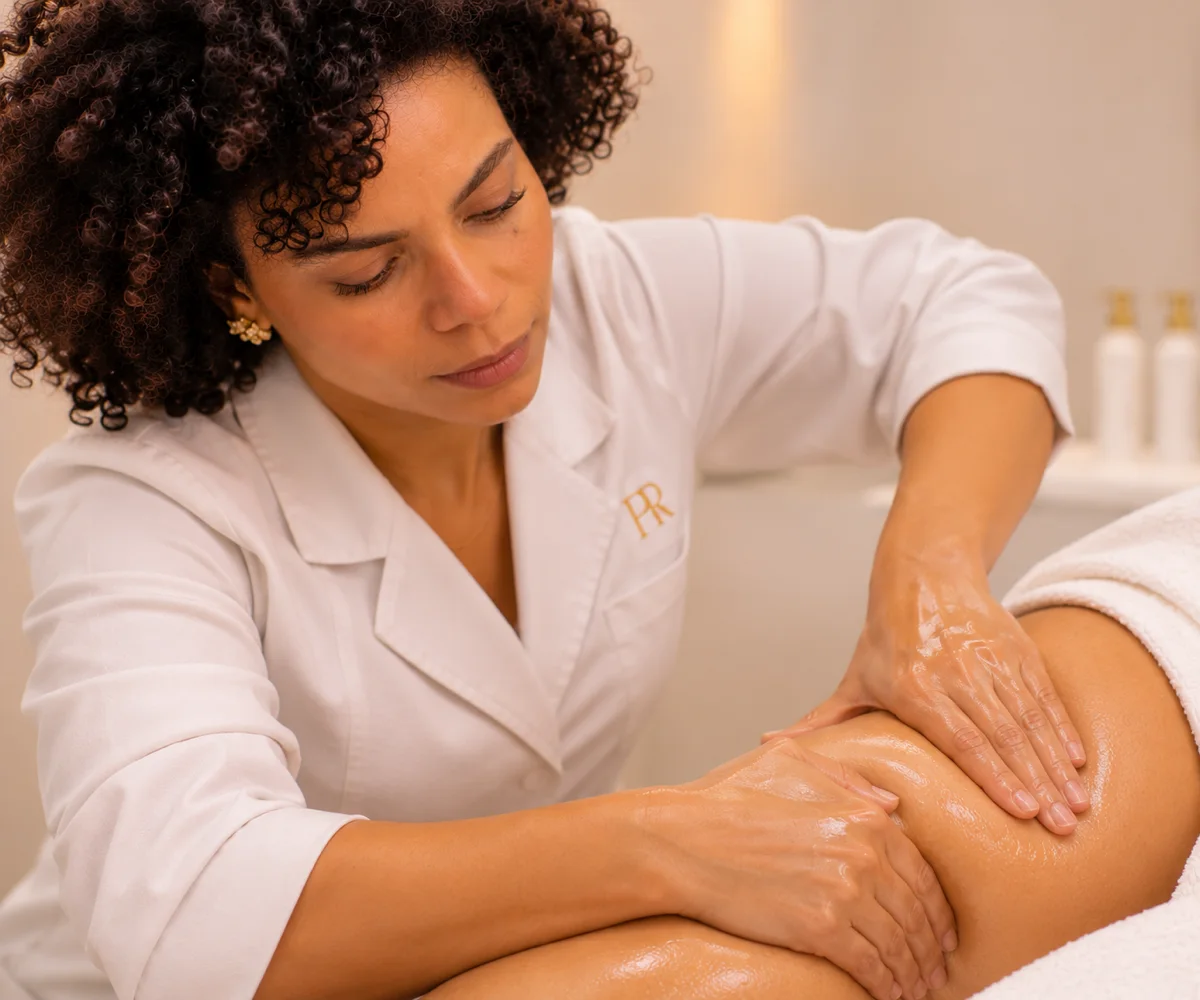
The therapist’s hands moving over the thigh in a contouring massage

Manual care

Contouring massage

Massage to enhance body contours, stimulate circulation and support the results of other procedures. Its effect on contour and swelling is temporary, and it is not a substitute for weight loss or a treatment for visceral fat.

May be considered when

the aim is to improve the look of the contour and the feeling of swelling, without inflammation or another problem in the area, and the doctor has explained that the effect is temporary.

Find out more

What the journey looks like

From the first conversation to a plan tailored to you

No procedure begins without an assessment by the doctor. Most people start with the simplest approach, and only then is anything further considered.

  1. 01At the clinic

    Telling your story

    The doctor asks when you first noticed the change in your abdomen, how it has changed with age, pregnancy or the menopause, what you eat, what exercise you do, how you sleep and what you have already tried.

  2. 02At the clinic

    Measure and examine

    The waist is measured and the abdomen examined to determine the type of fat and check for a hernia or separation of the abdominal muscles. If the waist measurement is above the reference range or there are related medical conditions, the doctor refers you to your GP.

  3. 03At home

    Put habits first

    Diet, exercise, sleep and stress management are the foundation. Abdominal fat is lost through a moderate, sustained calorie deficit, not through exercises targeting one area. This is what makes the greatest difference.

  4. 04Over time

    Decide and follow up

    If the fat is subcutaneous and your weight is stable, the doctor will explain whether one of the options is appropriate, how many sessions are needed and what to expect, without promising results. Measurements and photographs are recorded to allow an objective comparison, and a maintenance plan is agreed.

Day to day

What helps at home

What you do at home matters more than you might think. These measures complement the clinic’s plan and can also be followed while you wait for your consultation.

The golden rule

Belly fat is reduced with the whole body

No exercise or product can remove fat from the belly alone. It is reduced through a moderate, sustained calorie deficit, together with physical activity, adequate sleep and less stress, and results appear over months. Any promise that you can lose belly fat in a few days is, in itself, a sign of marketing hype.

Measure the waist

The waist says more about visceral fat than the scales do.

In practice: measure midway between the lowest rib and the top of the hip bone, at the end of a normal exhalation. Above 88 cm in women or 102 cm in men, talk to the doctor.

Moving regularly

Moderate or intense aerobic exercise helps to reduce visceral fat, even without dieting.

In practice: at least 150 minutes a week of moderate activity and strength training twice a week, with the load your body can handle.

Maintaining a moderate calorie deficit

It is a calorie deficit maintained over time that reduces fat, and not a radical cut.

In practice: less ultra-processed food, sugar and alcohol; more vegetables, fruit, protein and fibre. A loss of 0.5 to 1 kg a week is considered sustainable for many people.

Sleeping and managing stress

Insufficient sleep and prolonged stress are associated with more abdominal fat.

In practice: regular sleep schedules and an activity that relaxes you, such as walking or breathing calmly.

Dr Michelle Campagnoli, clinical director of Clínica Luxmed

Who will look after you

An assessment carried out by the doctor

At Luxmed, in Algés, the first step is always an assessment with Dr Michelle Campagnoli. She will take measurements, examine your abdomen, determine whether the fat is subcutaneous or whether something else needs investigating, and work with you to decide what is appropriate before any procedure.

  • Physical examination and medical historyA conversation about weight, age, habits and health, measurement of the waist and examination of the belly.
  • A plan tailored to youA clear plan, without promises, with habits first and follow-up over time.
  • No obligationThe cost of any treatment is confirmed only after the assessment.
Book an assessment

Book a consultation

Book your consultation

Choose how you prefer to get in touch. We will arrange the assessment consultation with Dr Michelle Campagnoli.

Booking through the websiteAssessment consultationTalk to our assistant on WhatsApp and ask for the current price of the assessment.

New Life Miraflores, Algés · Office Center, R. Santa Teresa do Menino Jesus n.º 6, 9.º C, 1495-048

Your details are used only for this contact. Any treatment depends on a prior medical assessment.

Request an appointmentIt takes less than a minute.
Speciality
You do not need to go into detail. The doctor will talk to you during the consultation.
Request received. Our team will contact you as soon as possible.
What is localised abdominal fat, and is it the same as visceral fat?

They are not the same. Localised abdominal fat is usually subcutaneous fat: it lies beneath the skin, is soft and can be grasped between the fingers, and is mainly a body-contouring concern. Visceral fat lies inside the abdomen, around the organs, causes a firm, protruding belly and is associated with a higher risk of diabetes, heart disease and fatty liver. Both types may be present at the same time, and only an assessment can determine this. Aesthetic treatments target only subcutaneous fat.

How do I know if my fat is visceral?

One clue is a firm, protruding, ‘ball-shaped’ belly that cannot be grasped, even in people with slim arms and legs. The key measurement is waist circumference, taken midway between the lowest rib and the top of the hip bone at the end of a normal breath out: a measurement above 88 cm in women or 102 cm in men suggests excess visceral fat. Thresholds vary slightly according to ethnic background, and this measurement alone is not diagnostic. If your measurement is above the relevant threshold, or you have high blood pressure, high blood sugar or high cholesterol, talk to your GP.

Can I have a normal weight and high visceral fat?

Yes, it is possible. Your weight on the scales does not show where fat is stored, and some people have a normal body mass index but an increased waist circumference. This is why waist circumference is a useful measurement and why weight alone is not always reassuring.

Why does my belly get bigger after 40 or the menopause?

With age and, in women, with the menopause, fat tends to shift from the hips to the abdomen and visceral fat increases. Energy expenditure falls slightly and physical activity tends to decrease. This is not a lack of willpower but a biological change that can be mitigated through strength training, dietary adjustments and medical support.

How do I lose belly fat?

You cannot lose fat from the belly alone: it is lost alongside fat from the rest of the body through a moderate, sustained calorie deficit, aerobic and strength exercise, adequate sleep and less stress. Results appear over months, not days. Aesthetic treatments may help contour stubborn deposits of subcutaneous fat in people close to their ideal weight, but they are not a substitute for weight loss.

Do sit-ups burn belly fat?

Not in a targeted way. In one trial, six weeks of sit-ups did not reduce abdominal fat, although they did improve muscle endurance. In one small study, prolonged abdominal exercise combined with running reduced trunk fat slightly more, suggesting that the evidence is not yet conclusive; however, this is not a reason to do sit-ups alone. Overall exercise and diet are what matter.

Radiofrequency and contouring massage: how much can they achieve?

Results are modest. For non-invasive techniques in general, reviews report reductions of a few centimetres in circumference, with protocols and follow-up periods varying widely; radiofrequency is among the techniques studied in the fewest patients. Contouring massage has a temporary effect on contour and swelling. Both work best in people whose weight is stable and whose skin is firm.

How many sessions are needed and does the fat come back?

It varies with the technique and the case. Many protocols use between four and eight sessions, and the results appear over weeks. Fat may accumulate again if weight increases, so weight maintenance is essential to keep the result. The doctor defines the plan at the assessment, without promising results.

Who should not have these treatments or should wait?

People with a very large excess of fat or skin usually benefit more from a surgical option, which is discussed with a surgeon. It is advisable to wait, or to assess first, if there is a hernia or separation of the abdominal muscles, disease in the area, skin infection or inflammation, pregnancy or breastfeeding, or if weight is still changing. People with increased visceral fat or metabolic disease should first talk to their attending doctor.

When should I see a doctor first?

Book a consultation if your waist measurement is above 88 cm (women) or 102 cm (men), if you have high blood pressure, high blood sugar or high cholesterol, if your belly has grown quickly without any change in what you eat, or if you have swollen legs, shortness of breath, tiredness, unexplained weight loss, blood in your stools or a bulge that appears when you strain. If in doubt, call SNS 24 out of hours on 808 24 24 24. If you have severe abdominal pain, vomiting, fever or a hard bulge that cannot be pushed back in, go to the emergency department or call 112.

We could not find that question. Ask us on WhatsApp

Scientific references

This page is based on the sources below and was reviewed by Dr. Michelle Campagnoli. Last updated on .

  1. Neeland IJ, Ross R, Després JP, Matsuzawa Y, Yamashita S, Shai I, et al. Visceral and ectopic fat, atherosclerosis, and cardiometabolic disease: a position statement. Lancet Diabetes Endocrinol, 2019.
  2. Ross R, Neeland IJ, Yamashita S, Shai I, Seidell J, Magni P, et al. Waist circumference as a vital sign in clinical practice: a Consensus Statement from the IAS and ICCR Working Group on Visceral Obesity. Nat Rev Endocrinol, 2020.
  3. World Health Organization. Waist circumference and waist-hip ratio: report of a WHO expert consultation, Geneva, 8-11 December 2008. WHO, 2011.
  4. Bull FC, Al-Ansari SS, Biddle S, Borodulin K, Buman MP, Cardon G, et al. World Health Organization 2020 guidelines on physical activity and sedentary behaviour. Br J Sports Med, 2020.
  5. Vispute SS, Smith JD, LeCheminant JD, Hurley KS. The effect of abdominal exercise on abdominal fat. J Strength Cond Res, 2011.
  6. Brobakken MF, Krogsaeter I, Helgerud J, Wang E, Hoff J. Abdominal aerobic endurance exercise reveals spot reduction exists: A randomized controlled trial. Physiol Rep, 2023.
  7. Vissers D, Hens W, Taeymans J, Baeyens JP, Poortmans J, Van Gaal L. The effect of exercise on visceral adipose tissue in overweight adults: a systematic review and meta-analysis. PLoS One, 2013.
  8. Lovejoy JC, Champagne CM, de Jonge L, Xie H, Smith SR. Increased visceral fat and decreased energy expenditure during the menopausal transition. Int J Obes (Lond), 2008.
  9. Karastergiou K, Smith SR, Greenberg AS, Fried SK. Sex differences in human adipose tissues - the biology of pear shape. Biol Sex Differ, 2012.
  10. Hall KD, Kahan S. Maintenance of Lost Weight and Long-Term Management of Obesity. Med Clin North Am, 2018.
  11. Kennedy J, Verne S, Griffith R, Falto-Aizpurua L, Nouri K. Non-invasive subcutaneous fat reduction: a review. J Eur Acad Dermatol Venereol, 2015.
  12. Alizadeh Z, Halabchi F, Bodaghabadi Z, Zarandi MM, Abolhasani M, Seifi V, et al. Non-invasive Body Contouring Technologies: An Updated Narrative Review. Aesthetic Plast Surg, 2024.
  13. Ingargiola MJ, Motakef S, Chung MT, Vasconez HC, Sasaki GH. Cryolipolysis for fat reduction and body contouring: safety and efficacy of current treatment paradigms. Plast Reconstr Surg, 2015.
CallAssistantAvailableBook