Algés, Oeiras Mon to Fri · 09:00 to 13:00 and 14:00 to 19:00 · Sat · 09:00 to 14:00
WhatsApp Book a consultation

Body aesthetics

Fat on the lower abdomenWhen the area below the navel is the last to change, despite careful attention to diet and exercise

Many people lose weight from their waist, chest and face yet still have a small bulge below the navel, the well-known ‘pouch’. This is rarely due to a lack of effort: it is one of the most stubborn areas of the body because it is influenced by genetics, hormones, age and, in women, pregnancy. Nor is it always caused by fat alone. Skin laxity, separation of the abdominal muscles (diastasis), bloating caused by gas and posture can also create a lower abdominal bulge. Here, we explain the usual causes, what changes after 40, when non-invasive treatment may be appropriate, when surgery may need to be considered and when a medical assessment is needed first at Clínica Luxmed, in Algés.

Reviewed by Dr Michelle Campagnoli, clinical director

  • 2treatments for this topic
  • 1assessment, always first
  • Nocommitment
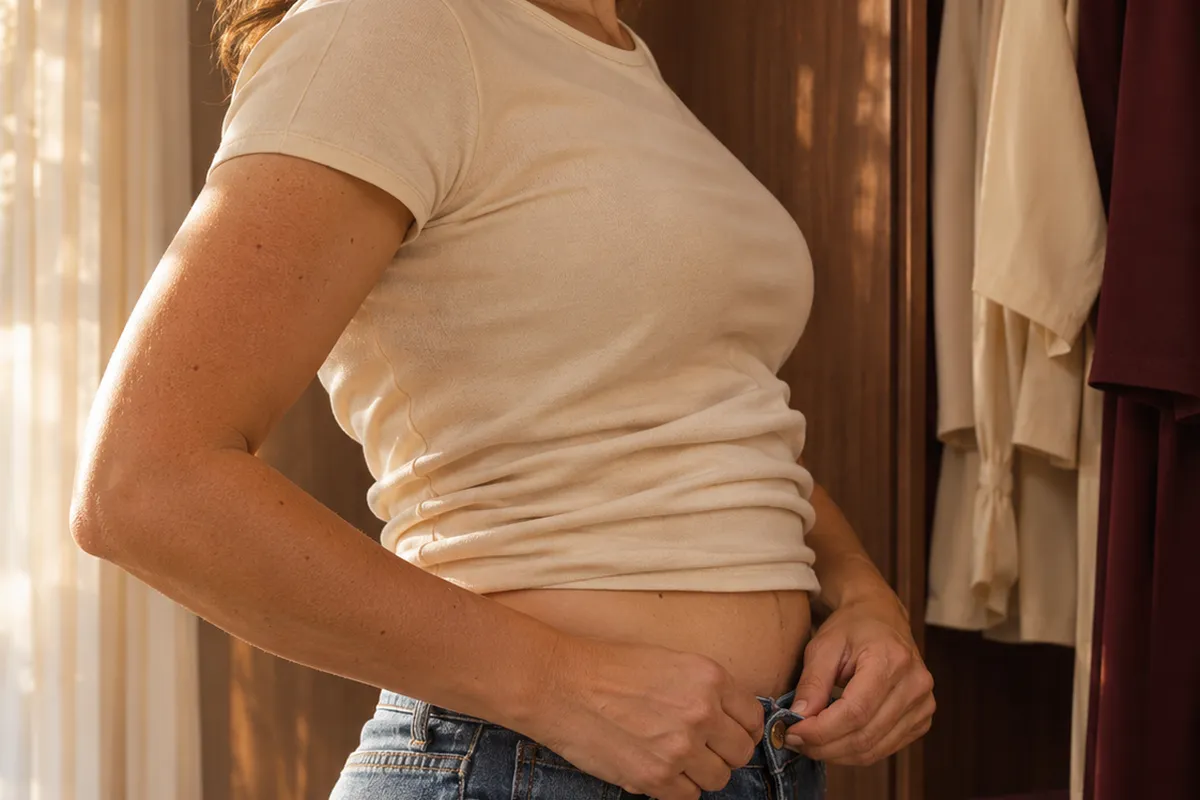
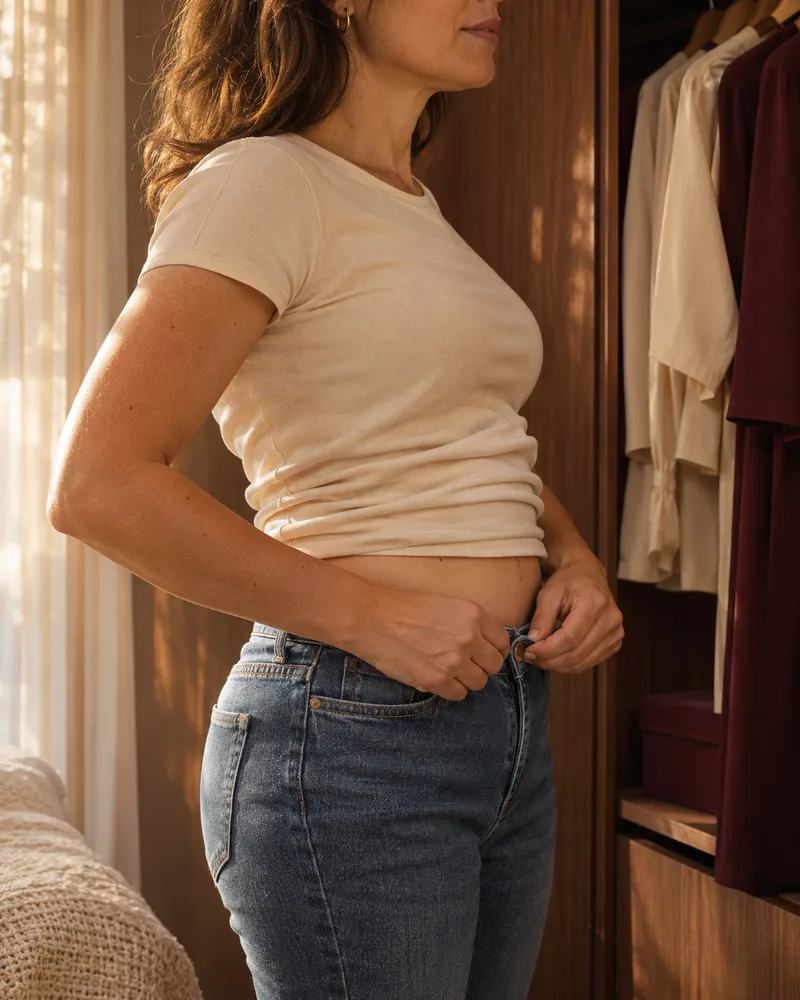
Woman in profile fastening her jeans beside an open wardrobe

How to recognise it

Is it fat in the lower abdomen?

Not every lower abdominal bulge is caused by fat: the skin, muscles, gas and posture also play a part, and the cause determines the appropriate approach. These signs can help you understand what may be happening before your assessment.

Tick what you recognise0/7

Tick the signs you recognise in your case. This is not a diagnosis, it is only meant to give you an idea.

Has the belly grown quickly, with bloating that does not go away, pain, a feeling of fullness as soon as you start eating, bowel changes, unexplained weight loss or abnormal bleeding? Is there a bulge at the navel or groin that appears with coughing or effort, or does the belly “change” when you strain? You need medical assessment before any treatment. Out of hours, call SNS 24: 808 24 24 24.

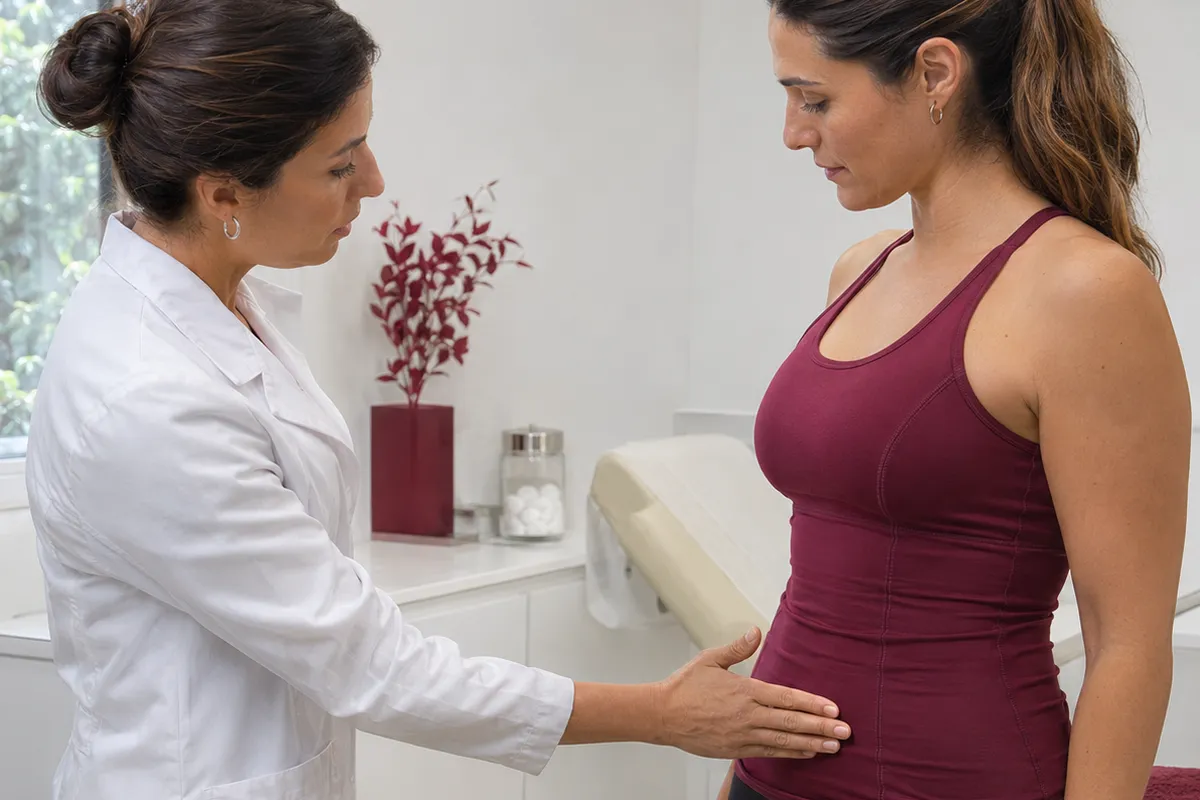
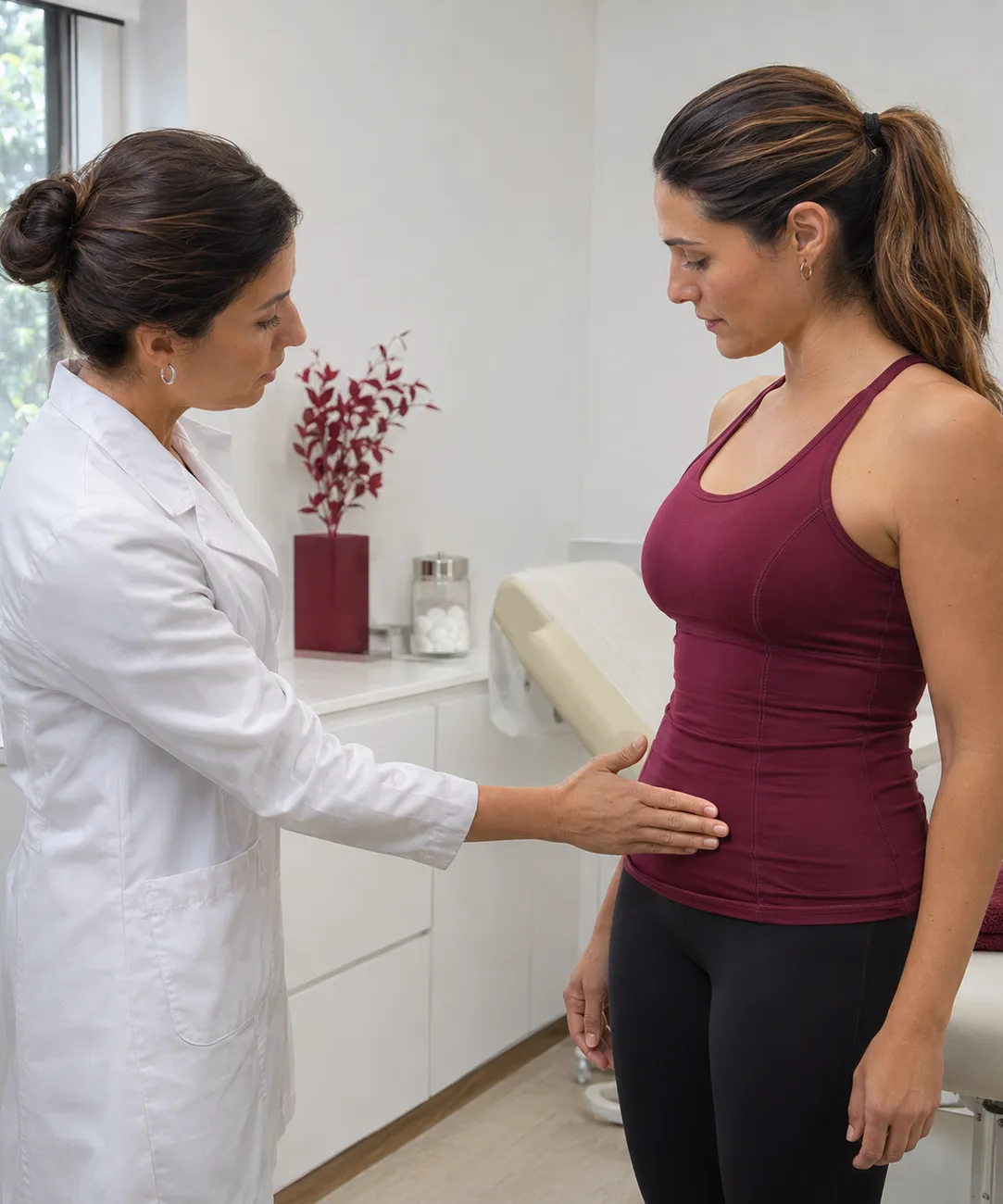
Female doctor in a white coat assessing the abdomen of a woman in gym clothes, in a consulting room
Photograph of a consultation. The dots mark what the doctor is assessing.

Why it happens

What may be behind the low belly

There is almost always more than one cause at the same time. Choose a situation to see how it may contribute and what usually helps.

Genetics and body pattern

The body does not distribute fat evenly: in many women, fat tends to be stored around the hips and thighs, while in other people, including many men, it tends to accumulate around the abdomen. This pattern is largely inherited and linked to sex hormones. This is why the lower abdomen is one of the areas most resistant to change for many people, and it is not a matter of willpower.

What weighs on it

Comparing yourself with others and trying to force your body to change its natural pattern through very restrictive diets.

What helps

Accepting that fat is lost from the body as a whole rather than from one specific area, maintaining a moderate calorie deficit and tracking progress through body measurements and photographs, not just the scales.

Normal or to be assessed

Ordinary low belly or something to assess

Most cases of lower abdominal bulging have straightforward causes that can be identified during a consultation. However, some require assessment before any treatment, because what you can see is only the outward sign.

  • How it looks. A stable bulge below the navel, the same from day to day, with more or less firm skin, which became more pronounced with age, the menopause or a pregnancy, without pain and without a bulge.

  • When it is noticed. In front of the mirror, in tight clothing and at the end of the day. The difference between fat and bloating is seen straight away: bloating varies from morning to night.

  • What the clinic does. The doctor takes your medical history, examines the skin, fat and muscles, and recommends appropriate measures, starting with lifestyle changes.

  • At home. Strength training, protein, sleep, less alcohol and sugar and gradual weight loss, alongside a plan with measurements and photographs.

Do you have a bulge on the belly or in the groin that is very painful, hard or discoloured, with vomiting or unable to pass stool? Call 112. If the belly has grown quickly, you have persistent bloating or doubts, out of hours you can call SNS 24: 808 24 24 24.

Book an assessment

What the clinic may consider

Options for the contour of the lower abdomen

First-line measures are lifestyle changes: gradual weight loss, strength training, core and pelvic floor exercises, sleep, less alcohol, and treatment of any underlying medical cause. Only then, following an assessment, should non-invasive treatment be considered for someone whose weight is stable and who has a small amount of fat and firm skin. For the lower abdomen, the clinic may recommend Sectum radiofrequency Neauvia and contouring massage. The evidence is limited: reviews of non-invasive devices report a modest reduction in circumference in several studies, but the treatments, areas treated and follow-up periods vary widely, and there is little long-term evidence. Results vary from person to person, are generally gradual and temporary, and are not a substitute for weight loss. Where there is a moderate to large amount of fat, excess skin or significant diastasis, plastic surgery may be the most appropriate option, and the clinic can make a referral.

Book an assessment
Dr Michelle Campagnoli, clinical director of Clínica Luxmed

First step

Assessment consultation

The doctor listens to what you are experiencing, examines your case and explains the suitable options. No treatment begins without this consultation.

May be considered when

you want to understand the cause and decide on the best path, with time and without commitment.

Book an assessment
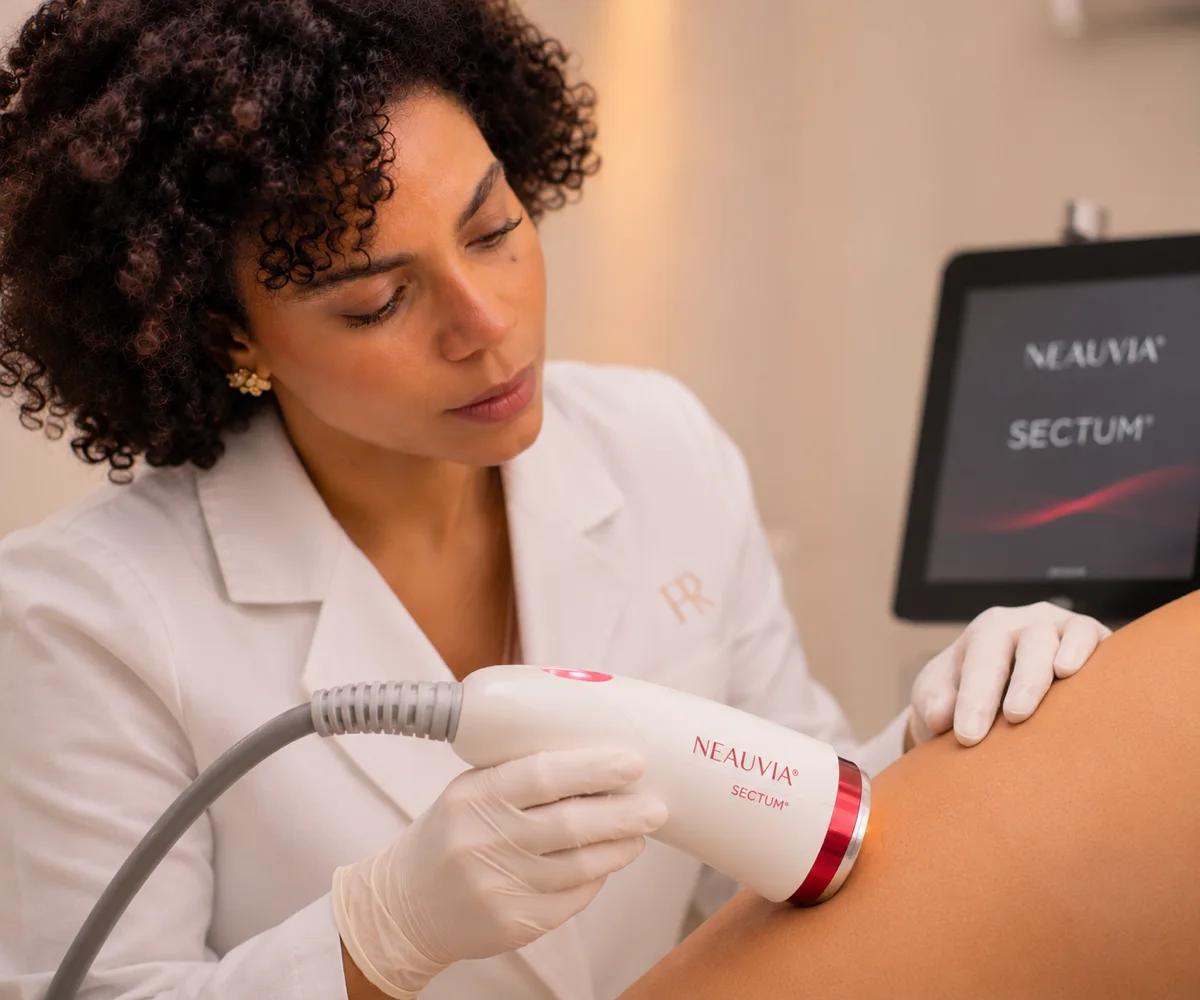
Radiofrequency handpiece gliding over the skin, with the device screen in the background

Technology

Sectum radiofrequency Neauvia

Radiofrequency treatment that heats deeper tissue to stimulate collagen, with the aim of firming the skin and improving abdominal contour. There are few studies specifically on this treatment, results vary, and maintenance treatment is required.

May be considered when

there is a mild to moderate amount of fat and some loss of firmness in the lower abdomen, weight is stable, lifestyle measures have already been addressed, underlying medical causes have been ruled out and the doctor has explained what to expect.

Find out more
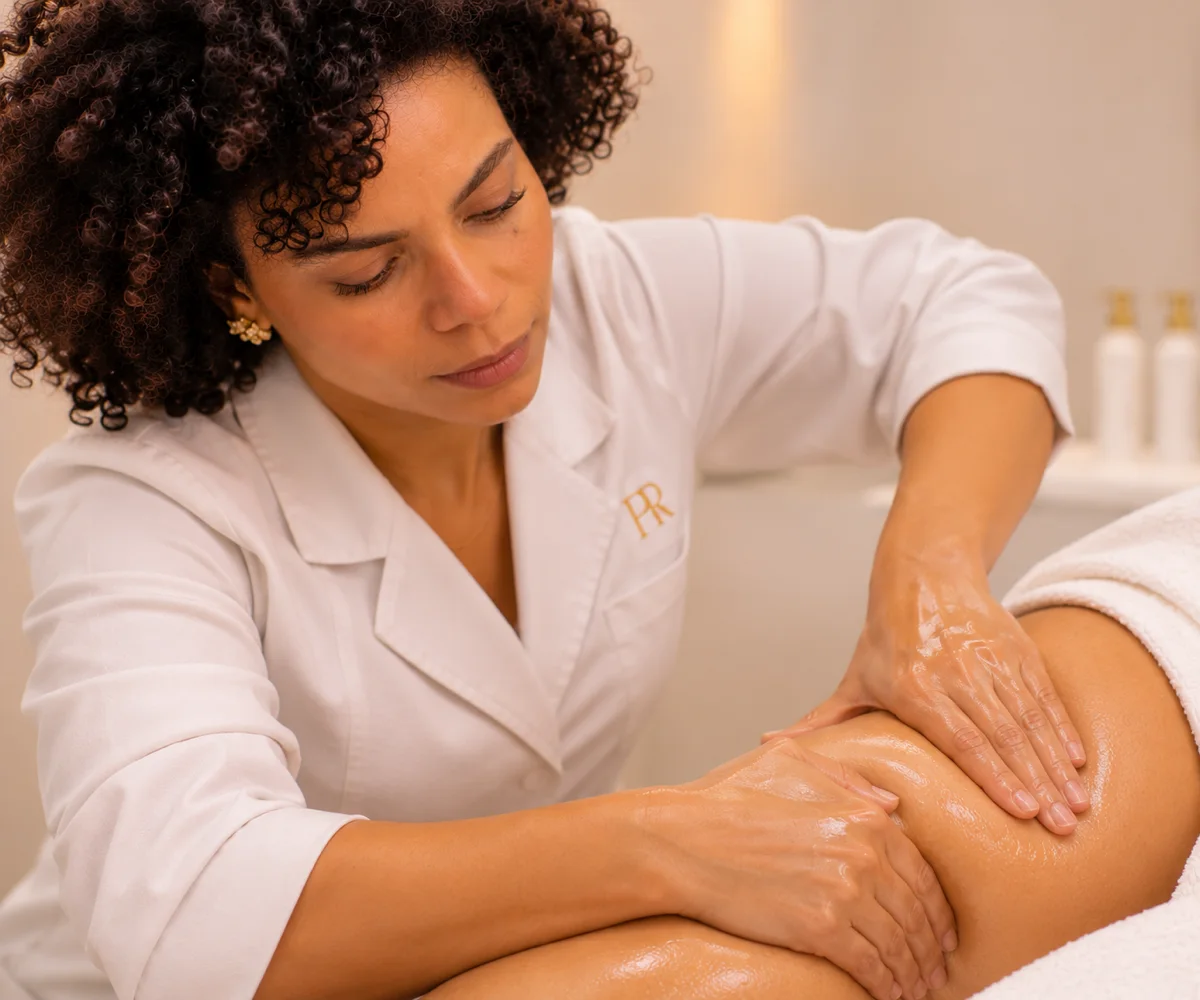
The therapist’s hands moving over the skin, in a contour-shaping massage

Manual therapy

Contouring massage

Massage techniques to enhance body contour, stimulate circulation and support the effects of other procedures. It does not remove fat; it is an adjunct, not a substitute for lifestyle measures or assessment.

May be considered when

the person wishes to improve the contour and circulation of the area, has no pain or signs of infection, and understands that the effect is limited and temporary and that the treatment must be combined with lifestyle measures.

Find out more

What the journey looks like

From the first conversation to a plan tailored to you

No treatment begins without an assessment appointment with the doctor. Most people start with the simplest measures, and only then are further options considered.

  1. 01At the clinic

    Tell fat, skin and muscle apart

    The doctor asks how long the lower abdomen has been bothering you, whether it changed with pregnancy, the menopause or changes in weight, and whether you have bloating, pain or a bulge that changes when you strain. She examines the fat, skin and muscles.

  2. 02At the clinic

    Rule out causes other than fat

    If there are signs of a hernia, significant diastasis or a rapid increase in abdominal size, tests are arranged or you are referred to your usual doctor or for a surgical assessment before any treatment.

  3. 03At home

    Address the fundamentals

    Strength training, guided core and pelvic floor exercises, enough protein, sleep, less alcohol and sugar, and gradual weight loss. In many cases, these measures make the greatest difference to appearance.

  4. 04Over time

    Decide and follow up

    Once your weight is stable and the cause has been assessed, the doctor explains whether non-invasive treatment is appropriate, how many sessions are needed and what results you can realistically expect, or whether surgery is the better option. Measurements and photographs taken under the same lighting conditions show your progress.

Day to day

What helps at home

What you do at home matters more than you might think. These are sensible measures to take while you wait for your consultation and alongside the clinic’s plan.

The golden rule

Fat comes off globally, and muscle holds up the rest

You cannot choose where you lose fat from: the lower abdomen is often the last area to respond, and that is normal. Patiently working on muscle strength, sleep and diet is more worthwhile than any quick fix. An abdomen that changes quickly or develops a bulge when you strain should be examined by a doctor rather than “treated”.

Strength training

Muscle helps maintain your metabolism, particularly after 40, and improves posture.

In practice: two to three times a week, with exercises for the legs, back and chest, and not only for the belly.

Targeting the core and pelvic floor

After a pregnancy or surgery, it is advisable to strengthen safely.

In practice: ask for guidance from a physiotherapist or the doctor, especially if there is a ridge in the middle of the belly.

Getting enough protein and sleep

Too little sleep and insufficient protein contribute to muscle loss and fat gain.

In practice: protein at each meal, going to bed at the same time and reducing alcohol and sugar in the evening.

Measuring progress

The scales lie when muscle goes up and fat goes down, and light changes the look of the belly.

In practice: measure the waist once a month and take photographs in the same light and in the same position.

Dr Michelle Campagnoli, clinical director of Clínica Luxmed

Who will look after you

An assessment carried out by the doctor

At Luxmed, in Algés, the first step is always an assessment with Dr Michelle Campagnoli. She examines the lower abdomen, determines whether the problem is fat, skin laxity or diastasis, rules out causes that require a different approach, and works with you to decide what is appropriate before any treatment.

  • Physical examination and medical historyA conversation about pregnancies, the menopause, habits and medication, and examination of the fat, skin and muscles.
  • A plan tailored to youA clear plan, without promises, starting with lifestyle measures and including ongoing follow-up.
  • No obligationThe cost of any treatment is confirmed only after the assessment.
Book an assessment

Book a consultation

Book your consultation

Choose how you prefer to get in touch. We will arrange the assessment consultation with Dr Michelle Campagnoli.

Booking through the websiteAssessment consultationTalk to our assistant on WhatsApp and ask for the current price of the assessment.

New Life Miraflores, Algés · Office Center, R. Santa Teresa do Menino Jesus n.º 6, 9.º C, 1495-048

Your details are used only for this contact. Any treatment depends on a prior medical assessment.

Request an appointmentIt takes less than a minute.
Speciality
You do not need to go into detail. The doctor will talk to you during the consultation.
Request received. Our team will contact you as soon as possible.
Fat in the lower abdomen: why is it the last to go?

Because the body does not lose fat from specific areas. Fat is lost across the whole body, and the order in which each area responds depends on genetics, hormones and age. In women, abdominal fat tends to increase with age and after the menopause. It is therefore normal for this to be one of the last areas to change, even with diet and exercise. Fat may not be the only factor: skin laxity, diastasis recti, bloating caused by gas and posture can all create the appearance of a lower abdominal bulge. An assessment can determine how much each factor contributes.

Is it possible to have a lower abdominal bulge while being slim?

Yes. In slim people, a lower abdominal bulge is often due to genetics, skin laxity, diastasis after pregnancy, bloating caused by gas or a forward-tilting pelvis. In these cases, losing more weight may not solve the problem and may be counterproductive. The key is to identify the cause: muscle and posture, skin or the bowel.

Can planks and sit-ups reduce a lower abdominal bulge?

They strengthen the core, but a trial in which participants performed sit-ups for six weeks found no reduction in abdominal fat or waist circumference, although muscular endurance improved. In one small study of overweight men who combined abdominal exercises with running, trunk fat decreased more, but the issue remains open to debate. The safest approach is to do whole-body strength training and maintain a healthy diet, using core exercises to improve muscle strength and posture. If there is a ridge along the middle of the abdomen, seek professional advice first.

A lower abdominal bulge after 40 and during the menopause: what changes?

As oestrogen levels fall, fat tends to accumulate around the abdomen rather than the hips and thighs, often without substantial weight gain. Age-related loss of muscle mass reduces energy expenditure, while poorer sleep and stress also contribute. Strength training, adequate protein, less alcohol and sugar, and discussing the menopause with your doctor can help. Hormone therapy may affect fat distribution, but it is prescribed for medical, not cosmetic, reasons. Men may also develop this pattern as testosterone levels fall and muscle mass declines.

How do I tell fat, diastasis recti and a hernia apart?

Fat can be felt when you pinch a fold of skin and does not change when you strain. Diastasis recti is a separation of the rectus abdominis muscles, seen as a ridge or “groove” along the middle of the abdomen when you lift your head or strain, and is common after pregnancy. A hernia is a bulge, often at the navel or in the groin, that appears when you cough or strain and may be painful. All three can coexist, and diagnosis is based on examination and, when necessary, an ultrasound scan. A bulge that is very painful, hard or changes colour is an emergency.

What treatments are available for fat in the lower abdomen?

First, lifestyle measures: gradual weight loss, strength training, core and pelvic floor exercises, sleep, less alcohol and sugar, as well as treatment of any underlying medical cause. Then, and only after an assessment, the clinic may consider Sectum radiofrequency Neauvia and contouring massage, particularly for people whose weight is stable and who have a small amount of fat and firm skin. Results vary, are generally gradual and temporary, and are not a substitute for weight loss. Where there is a large amount of fat, excess skin or significant diastasis, plastic surgery may be preferable.

Does Sectum radiofrequency Neauvia eliminate fat from the lower abdomen?

Radiofrequency heats deeper tissue and stimulates collagen, and is used to firm the skin and improve body contour. Reviews of non-invasive techniques report modest reductions in circumference in several studies, but the evidence is limited because few radiofrequency cases have been studied, follow-up periods are short and the methods vary widely. It is not a weight-loss method, is not a substitute for lifestyle measures, and results vary and require maintenance. During the assessment, the doctor will explain whether it is appropriate for you.

Does contouring massage help in the lower abdomen?

It is a manual therapy that enhances body contour, stimulates circulation and may support other procedures. It does not remove fat on its own, and the effect is limited and temporary, so it is an adjunct rather than a substitute for lifestyle measures or an assessment. It should not be performed if there is pain, a skin infection or an unexplained abdominal lump.

Non-invasive treatments or surgery?

It depends on three factors: how much fat there is, the condition of the skin and the condition of the muscles. With a small amount of fat, firm skin and normal muscles, non-invasive treatments may help. With more fat and firm skin, liposuction is more effective. Where there is excess skin or significant diastasis, abdominoplasty may be an option. Each procedure has different risks and recovery times, and anyone planning a pregnancy or substantial weight loss is advised to wait. An in-person assessment is essential, and the clinic will refer you for plastic surgery when this is the best option.

When should I see a doctor first?

Book an appointment if your abdomen has enlarged quickly or you have persistent bloating, pain, a feeling of fullness soon after starting to eat, bowel changes, unexplained weight loss or abnormal bleeding. You should also seek medical advice if there is a bulge at the navel or in the groin, or if your abdomen develops a bulge when you strain. If in doubt, call SNS 24 out of hours on 808 24 24 24. If a bulge is very painful, hard or discoloured, or if you are vomiting or unable to pass stool, call 112.

We could not find that question. Ask us on WhatsApp

Scientific references

This page is based on the sources below and was reviewed by Dr. Michelle Campagnoli. Last updated on .

  1. Vispute SS, Smith JD, LeCheminant JD, Hurley KS. The effect of abdominal exercise on abdominal fat. J Strength Cond Res, 2011.
  2. Ramírez-Campillo R, Andrade DC, Campos-Jara C, Henríquez-Olguín C, Alvarez-Lepín C, Izquierdo M. Regional fat changes induced by localized muscle endurance resistance training. J Strength Cond Res, 2013.
  3. Brobakken MF, Krogsaeter I, Helgerud J, Wang E, Hoff J. Abdominal aerobic endurance exercise reveals spot reduction exists: A randomized controlled trial. Physiol Rep, 2023.
  4. Karastergiou K, Smith SR, Greenberg AS, Fried SK. Sex differences in human adipose tissues - the biology of pear shape. Biol Sex Differ, 2012.
  5. Lovejoy JC, Champagne CM, de Jonge L, Xie H, Smith SR. Increased visceral fat and decreased energy expenditure during the menopausal transition. Int J Obes (Lond), 2008.
  6. Davis SR, Castelo-Branco C, Chedraui P, Lumsden MA, Nappi RE, Shah D, Villaseca P, Writing Group of the International Menopause Society for World Menopause Day 2012. Understanding weight gain at menopause. Climacteric, 2012.
  7. Benjamin DR, van de Water AT, Peiris CL. Effects of exercise on diastasis of the rectus abdominis muscle in the antenatal and postnatal periods: a systematic review. Physiotherapy, 2014.
  8. Benjamin DR, Frawley HC, Shields N, Peiris CL, van de Water ATM, Bruder AM, Taylor NF. Conservative interventions may have little effect on reducing diastasis of the rectus abdominis in postnatal women - A systematic review and meta-analysis. Physiotherapy, 2023.
  9. Sperstad JB, Tennfjord MK, Hilde G, Ellström-Engh M, Bø K. Diastasis recti abdominis during pregnancy and 12 months after childbirth: prevalence, risk factors and report of lumbopelvic pain. Br J Sports Med, 2016.
  10. Kennedy J, Verne S, Griffith R, Falto-Aizpurua L, Nouri K. Non-invasive subcutaneous fat reduction: a review. J Eur Acad Dermatol Venereol, 2015.
  11. Gormley J, Copeland A, Augustine H, Axelrod C, McRae M. Impact of Rectus Diastasis Repair on Abdominal Strength and Function: A Systematic Review. Cureus, 2020.
  12. American Society of Plastic Surgeons. Tummy tuck (abdominoplasty). ASPS, 2026.
  13. NHS. Hernia. (NHS, acedido 2026-11-11)
  14. World Health Organization. WHO guidelines on physical activity and sedentary behaviour. WHO, 2020.
CallAssistantAvailableBook