Algés, Oeiras Mon to Fri · 09:00 to 13:00 and 14:00 to 19:00 · Sat · 09:00 to 14:00
WhatsApp Book a consultation

Body aesthetics

Fat on the thighsWhen the fat on the inner thighs insists on staying and the skin rubs with every step

The inner thighs are one of the areas where women most commonly store fat, and they often do not respond to diet or exercise to the same extent as the rest of the body. When the thighs rub together while walking, friction can cause stinging, redness and chafing, followed over time by darker patches. Here we explain why this happens, what you can do at home, when enlarged legs require medical assessment (for example, to rule out lipedema or venous problems), and what radiofrequency and contouring massage can and cannot achieve at Clínica Luxmed, in Algés.

Reviewed by Dr Michelle Campagnoli, clinical director

  • 2options for this area
  • 1assessment, always first
  • Nocommitment
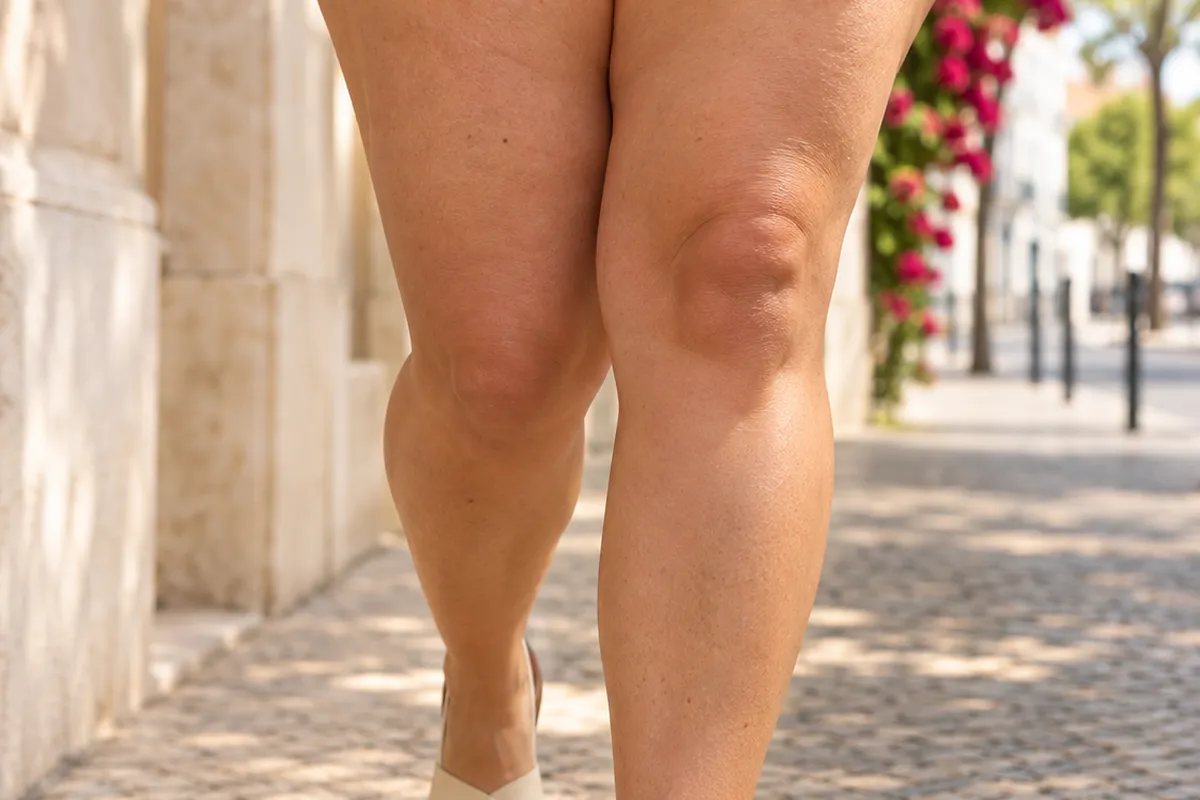
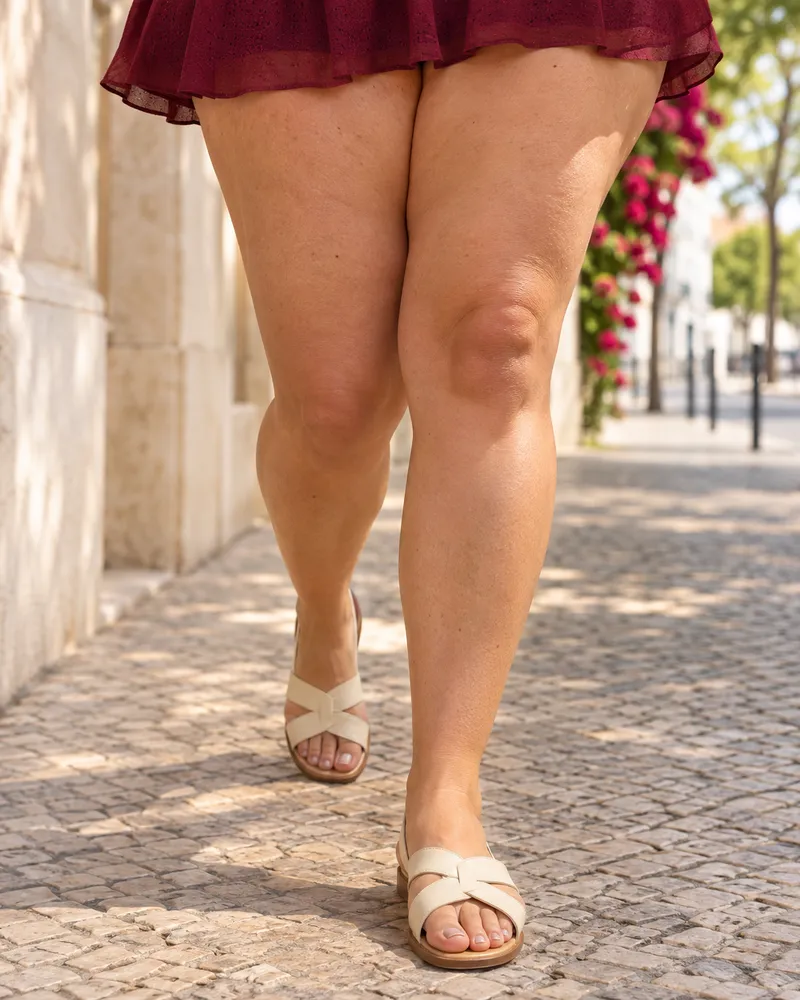
Legs of a woman in a skirt walking along a cobbled street

How to recognise it

Is it localised fat on the thighs?

Not all “thick” thighs are the same: some accumulate fat, others have softer skin, others suffer mainly from friction, and some have a medical cause behind them. These signs help you to see what is going on before the assessment.

Tick what you recognise0/7

Tick the signs you recognise in your case. This is not a diagnosis, it is only meant to give you an idea.

Is only one leg swollen, sore, warm or red, of rapid onset? Do you feel shortness of breath or chest pain? Are your legs enlarged symmetrically, out of proportion to the trunk, tender to the touch and with easy bruising, without improving with diet? Are there sores in the thigh crease, pus, fever or patches that are spreading? You need medical assessment before any treatment. Out of hours, call SNS 24: 808 24 24 24.

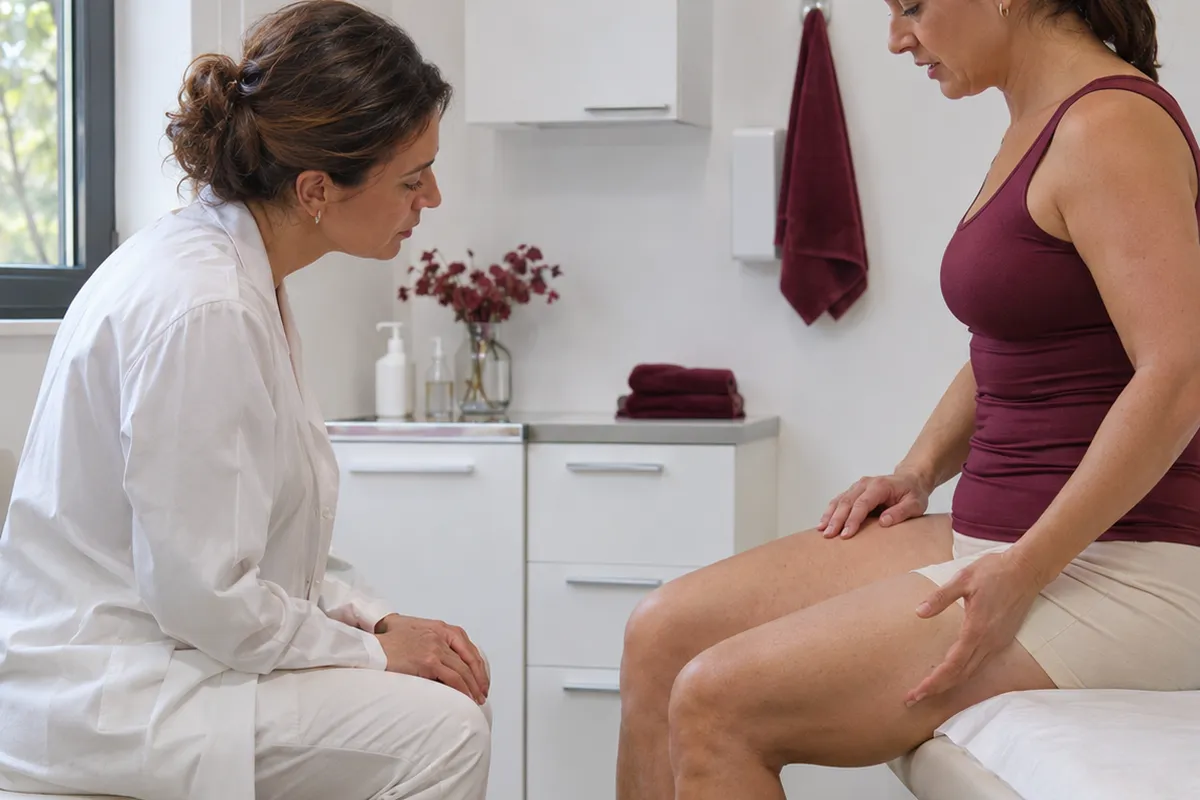
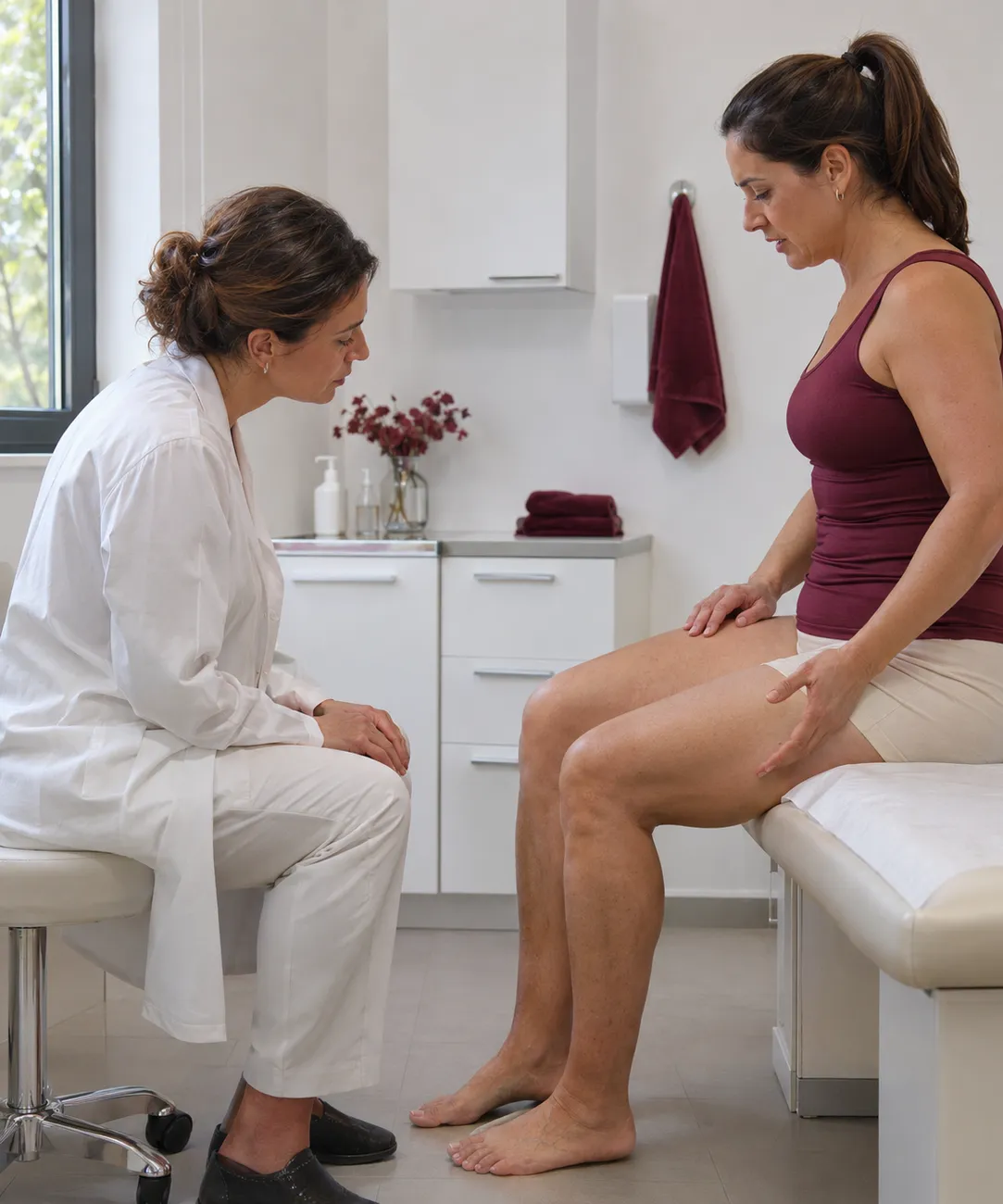
Female doctor sitting beside a woman on the examination couch, examining her legs
Photograph of a consultation. The dots mark what the doctor is assessing.

Why it happens

What may be behind fat on the thighs

There is almost always more than one cause at the same time. Choose a situation to see how it may contribute and what usually helps.

The female pattern of fat

In women, oestrogens promote fat deposition in the lower body, including the hips, buttocks and thighs, creating the so-called “pear” shape. This fat is harder to mobilise than abdominal fat and tends to be the last to go during weight loss. It is not a sign of disease.

What weighs on it

Comparing your body with other body types and trying to achieve the same thigh shape through highly restrictive diets alone.

What helps

Accepting that body shape is partly determined by biology and focusing your efforts on what can be changed: physical activity, muscle strength and skin care.

Normal or to be assessed

Simple localised fat or something requiring assessment

Most thigh fat is just localised fat, with or without friction. But some situations call for assessment before any contouring treatment, because enlargement of the legs is not always fat.

  • What it looks like. More fat on the inner thighs, distributed equally on both sides and fluctuating with weight, without pain, with or without chafing and dark patches caused by friction.

  • When it is noticed. In summer, with skirts, dresses and shorts, and after a lot of walking. There may also be softer skin in that area.

  • What the clinic does. The doctor listens to the history, examines the legs and skin and, if everything is compatible, explains what may make sense, without promising results.

  • At home. Movement and strength training, clothing that reduces friction, clean, dry skin, and giving the body time.

Do you have shortness of breath, chest pain or a leg that is very swollen, warm and sore? Call 112. If you have doubts about your legs or signs of skin infection, out of hours you can call SNS 24: 808 24 24 24.

Book an assessment

What the clinic may consider

Non-surgical options for the thighs

Start with measures that are always beneficial: physical activity, strength training, clothing that reduces friction and skin care. Procedures are considered only after an assessment and after lipedema and venous problems have been ruled out. For inner-thigh fat, the clinic may consider Sectum radiofrequency and contouring massage. Reviews of non-invasive body-contouring devices report circumference reductions of around 2 cm with several types of device, but the studies are heterogeneous and few have specifically investigated radiofrequency. Results vary from person to person, develop gradually, are generally temporary and require maintenance; these treatments are not a substitute for liposuction when there is a substantial amount of fat. If loose skin is your main concern, the doctor will explain the other options for improving firmness during your consultation.

Book an assessment
Dr Michelle Campagnoli, clinical director of Clínica Luxmed

First step

Assessment consultation

The doctor listens to what you are experiencing, examines your case and explains the suitable options. No treatment begins without this consultation.

May be considered when

you want to understand the cause and decide on the best path, with time and without commitment.

Book an assessment
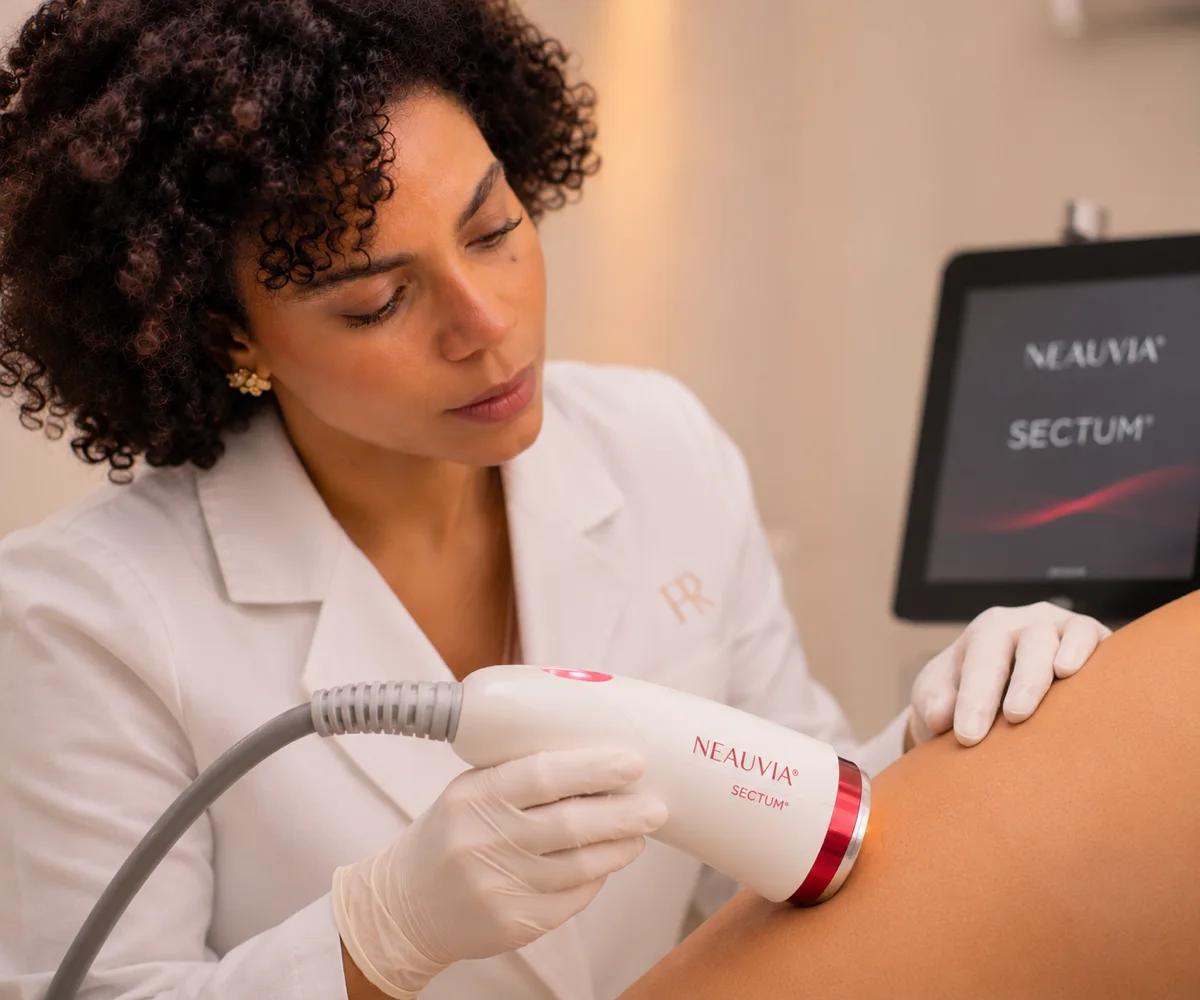
Radiofrequency handpiece treating the thigh under bright clinical lighting

Firmness of the skin

Sectum radiofrequency Neauvia

Radiofrequency is applied to the skin over a course of sessions to stimulate collagen production in the deeper layers and firm the skin on the inner thighs and other areas such as the arms or abdomen. It may also slightly reduce circumference. There is no downtime, you will feel warmth, and the results develop gradually.

May be considered when

the skin on your inner thighs is softer, your weight is stable and close to your ideal weight, lipedema and other causes have been ruled out, and the doctor has explained what you can realistically expect.

Find out more
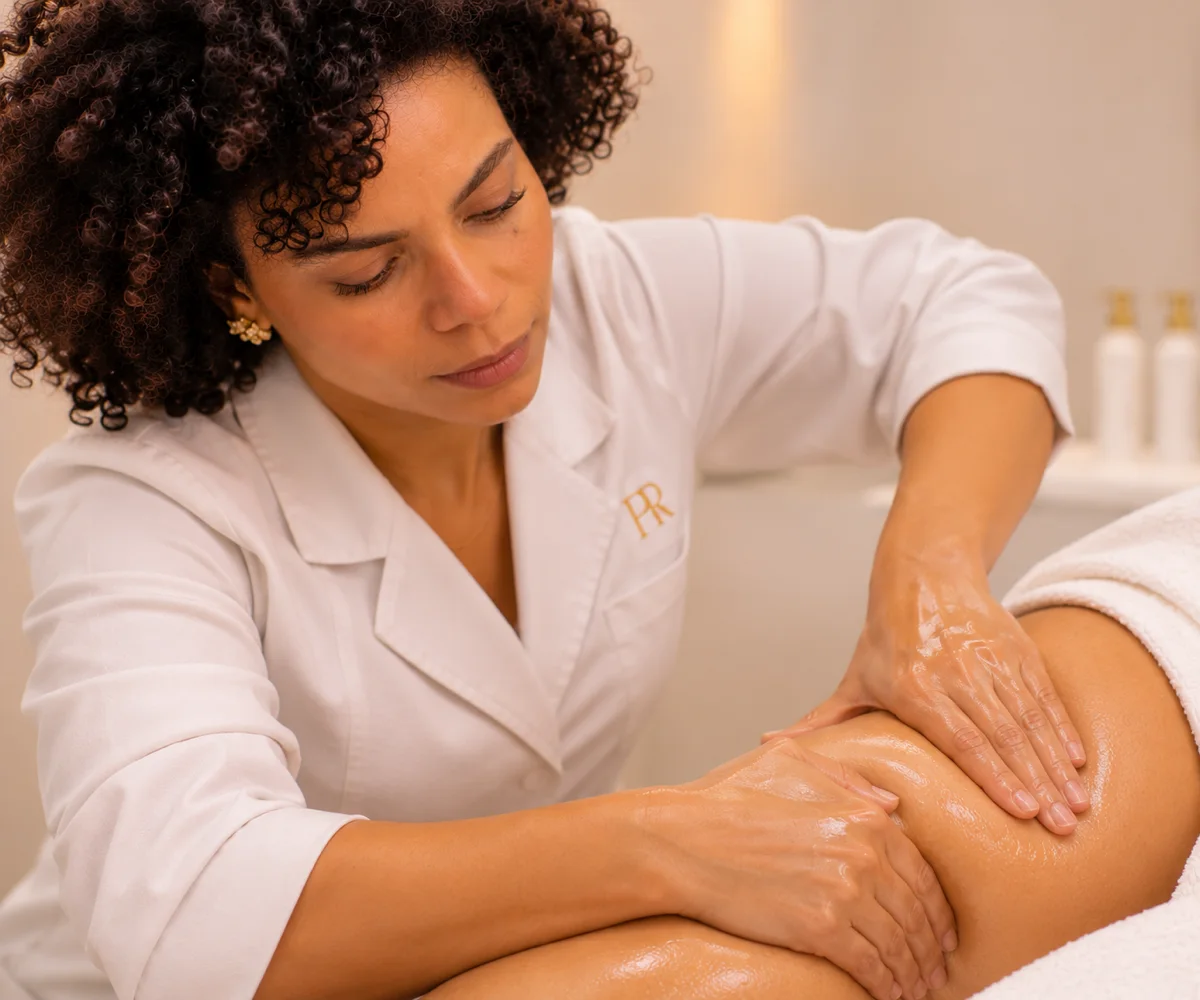
The therapist’s hands moving over the thigh in a calm treatment room

Contour and circulation

Contouring massage

A vigorous manual massage that stimulates circulation, helps reduce the sensation of swelling and enhances the contour of the thigh. Its effect on body contours is temporary, and it is used mainly as an adjunct to other care and procedures.

May be considered when

there is some fluid retention or the skin lacks tone, and you want an adjunct to other care with realistic expectations of a temporary effect.

Find out more

What the journey looks like

From the first conversation to a plan tailored to you

No procedure begins without an assessment by the doctor. Treatment starts with the simplest measures, and further options are considered only afterwards.

  1. 01At the clinic

    Telling your story

    The doctor asks how long the fat has been present, whether it has changed with weight or pregnancy, whether your legs hurt, swell or bruise easily, whether friction causes sores or dark patches, and what you have already tried.

  2. 02At the clinic

    Examine the legs

    The shape and proportions of the legs, the firmness and colour of the skin and the friction area are examined. If there is suspicion of lipedema, a venous or lymphatic problem, or infection, you are referred to the right specialty before any treatment.

  3. 03At home

    Reduce friction and care for the skin

    Clothing that reduces friction, clean and dry skin, strength training and regular movement. For many people, treating friction and chafing already improves everyday life a great deal.

  4. 04Over time

    Decide and follow up

    If the fat or laxity persists, the doctor will explain which options are appropriate, how many sessions are needed and what to expect, without promising results. Measurements will be taken regularly and the plan adjusted as needed, including maintenance.

Day to day

What helps at home

What you do at home matters more than you might think. These are sensible measures to take while you wait for your consultation and alongside the clinic’s plan.

The golden rule

Protect the skin and strengthen the legs

Thigh fat changes slowly and does not respond to shortcuts, but friction and chafing can be treated straight away. Looking after your skin and strengthening your leg muscles can provide benefits without waiting for any procedure. Legs that are painful, become disproportionately enlarged or swell on one side require medical assessment, not a diet.

Wear clothing that reduces friction

Friction results from contact between the thighs, and the right clothing can prevent much of the problem.

In practical terms: wear thin shorts made from performance fabric under skirts and dresses, and underwear that does not ride up.

Keep the skin dry and clean

Damp, warm skin becomes irritated more quickly and is more susceptible to fungal infection.

In practice: wash with lukewarm water, pat dry and change clothes after sport and the beach.

Protect with a barrier

A thin film reduces friction between the thighs in hot weather and on days when you walk a lot.

In practice: use a barrier ointment or an anti-chafing stick; in the genital area, avoid applying powders directly.

Strengthening the legs

Muscle improves firmness and overall body composition, even though it cannot reduce fat specifically on the inner thighs.

In practical terms: squats, lunges and walking, with gradual progression and professional guidance if you have pain or a medical condition.

Dr Michelle Campagnoli, clinical director of Clínica Luxmed

Who will look after you

An assessment carried out by the doctor

At Luxmed, in Algés, the first step is always an assessment with Dr Michelle Campagnoli. She will examine your legs and skin, determine whether the problem is localised fat, friction or a condition requiring referral to another specialty, and work with you to decide on the appropriate approach before any procedure.

  • Physical examination and medical historyA conversation about weight, habits, circulation, pain and friction, and examination of the legs and skin.
  • A plan tailored to youA clear plan, without promises, that addresses the essentials first and provides ongoing follow-up.
  • No obligationThe cost of any treatment is confirmed only after the assessment.
Book an assessment

Book a consultation

Book your consultation

Choose how you prefer to get in touch. We will arrange the assessment consultation with Dr Michelle Campagnoli.

Booking through the websiteAssessment consultationTalk to our assistant on WhatsApp and ask for the current price of the assessment.

New Life Miraflores, Algés · Office Center, R. Santa Teresa do Menino Jesus n.º 6, 9.º C, 1495-048

Your details are used only for this contact. Any treatment depends on a prior medical assessment.

Request an appointmentIt takes less than a minute.
Speciality
You do not need to go into detail. The doctor will talk to you during the consultation.
Request received. Our team will contact you as soon as possible.
What is localised fat on the thighs and why does it accumulate?

This is a deposit of fat beneath the skin, most noticeable on the inner, front and back of the thighs, which does not diminish at the same rate as fat elsewhere on the body. In women, it is mainly due to the hormonal pattern of fat distribution (the “pear” shape), genetics, weight and, over time, loss of muscle and skin firmness. It can be aggravated by friction between the thighs, which irritates and darkens the skin. It is not a sign of disease, but symmetrical, disproportionate and painful enlargement of the legs requires assessment.

Is it possible to have a “thigh gap”?

It depends mainly on the bone structure of the pelvis and how the thighs align, not just on the amount of fat. Many healthy, slim people do not have a thigh gap, and this is not a health problem. Pursuing this body shape can lead to excessive dieting, so expectations should be adjusted to each person’s anatomy.

Do adductor exercises reduce fat on the inner thighs?

They strengthen the muscles and improve firmness and performance, but they are not a reliable way to reduce fat specifically in that area. In studies of abdominal exercises, for example, the exercises alone did not reduce abdominal fat, and the evidence on spot reduction is mixed. What helps is reducing overall body fat through strength training, regular physical activity and a balanced diet.

How do I tell ordinary localised fat from lipedema?

Lipedema is a disorder of adipose tissue that mainly affects women and causes symmetrical, disproportionate enlargement of the legs, pain or tenderness, easy bruising and little response to weight loss. Ordinary localised fat is not usually painful. Diagnosis is based on a clinical assessment by a doctor and cannot be made from photographs or measurements alone. If you recognise these signs, book a consultation before starting any body-contouring treatment.

What can I do about my thighs rubbing together?

Reduce friction by wearing thin shorts made from performance fabric under skirts and dresses, using a barrier ointment or anti-chafing stick, keeping the skin clean and dry, and wearing underwear that does not ride up. If the skin is already irritated, wash it with lukewarm water, pat it dry, apply a barrier and avoid friction until it heals. If there are cracks, pus, severe itching, spreading patches or signs of a fungal or bacterial infection, seek medical advice. Losing weight may help, but many slim people also experience friction.

Does Sectum radiofrequency reduce thigh fat?

It may help firm the skin and, in some cases, slightly reduce circumference by stimulating collagen production in the deeper layers. However, reviews of non-invasive body-contouring devices include few studies specifically on radiofrequency, and the results are modest, variable, generally temporary and require maintenance. Treatment involves several sessions, with no downtime and a sensation of warmth. It works best in people close to their ideal weight and is not a substitute for liposuction when there is a substantial amount of fat.

Does contouring massage eliminate thigh fat?

It does not eliminate fat. It stimulates circulation, helps reduce the sensation of swelling and enhances body contours temporarily, and is used mainly as an adjunct when there is fluid retention. On its own, it does not treat fat or skin laxity, and there is little evidence that it has a lasting effect on localised fat.

Are anti-chafing ointments and powders safe, and will the dark patches fade?

A barrier ointment, for example one containing zinc oxide or petroleum jelly, and unperfumed drying powders are usually safe; avoid applying powders directly to the genital area. If a product stings, causes itching or makes the irritation worse, stop using it and seek medical advice. Dark patches caused by friction usually fade as friction and irritation decrease, but they do not always disappear completely. Any new patch that spreads or changes should be examined by a doctor. After assessing your skin, the doctor may recommend treatment options for the dark patches.

How long does the result last? How many sessions are needed?

There are no guaranteed or permanent results. Several sessions are normally needed, and the improvement, when there is one, is gradual and assessed with measurements and photographs. It depends on weight and habits, and maintenance may be needed. If weight goes up, fat accumulates again. The doctor defines the plan and expectations at the assessment, without promising results.

When should I see a doctor first?

Book a consultation before any treatment if your legs have enlarged symmetrically and disproportionately, are tender to the touch, bruise easily or swell at the end of the day, or if there are sores, pus, severe itching or spreading patches in the thigh crease. A single leg that rapidly becomes swollen, painful, warm or red requires urgent medical attention: out of hours, call SNS 24 (808 24 24 24). If you experience shortness of breath or chest pain, call 112.

We could not find that question. Ask us on WhatsApp

Scientific references

This page is based on the sources below and was reviewed by Dr. Michelle Campagnoli. Last updated on .

  1. Karastergiou K, Smith SR, Greenberg AS, Fried SK. Sex differences in human adipose tissues - the biology of pear shape. Biol Sex Differ, 2012.
  2. Buck DW 2nd, Herbst KL. Lipedema: a relatively common disease with extremely common misconceptions. Plast Reconstr Surg Glob Open, 2016.
  3. Herbst KL, Kahn LA, Iker E, Ehrlich C, Wright T, McHutchison L, et al. Standard of care for lipedema in the United States. Phlebology, 2021.
  4. Buso G, Depairon M, Tomson D, Raffoul W, Vettor R, Mazzolai L. Lipedema: a call to action!. Obesity (Silver Spring), 2019.
  5. Kennedy J, Verne S, Griffith R, Falto-Aizpurua L, Nouri K. Non-invasive subcutaneous fat reduction: a review. J Eur Acad Dermatol Venereol, 2015.
  6. Luebberding S, Krueger N, Sadick NS. Cellulite: an evidence-based review. Am J Clin Dermatol, 2015.
  7. Kalra MG, Higgins KE, Kinney BS. Intertrigo and secondary skin infections. Am Fam Physician, 2014.
  8. Vispute SS, Smith JD, LeCheminant JD, Hurley KS. The effect of abdominal exercise on abdominal fat. J Strength Cond Res, 2011.
CallAssistantAvailableBook