Algés, Oeiras Mon to Fri · 09:00 to 13:00 and 14:00 to 19:00 · Sat · 09:00 to 14:00
WhatsApp Book a consultation

Body aesthetics

Fat in the armsWhen the back of the arm wobbles and you want to know whether it is fat, loose skin or both

‘Wobbly arms’ are one of the most common body concerns, particularly after the age of 40 or significant weight loss. They may be caused by fat, skin that has lost firmness or, in most cases, a combination of the two. Distinguishing between them affects which approach is appropriate. Here, we explain how to tell them apart, what exercise can and cannot achieve, which options are available for fat and skin laxity, the strength of the supporting evidence, and when a thicker or swollen arm needs medical assessment before any treatment at Clínica Luxmed, in Algés.

Reviewed by Dr Michelle Campagnoli, clinical director

  • 2treatments for this topic
  • 1assessment, always first
  • Nocommitment
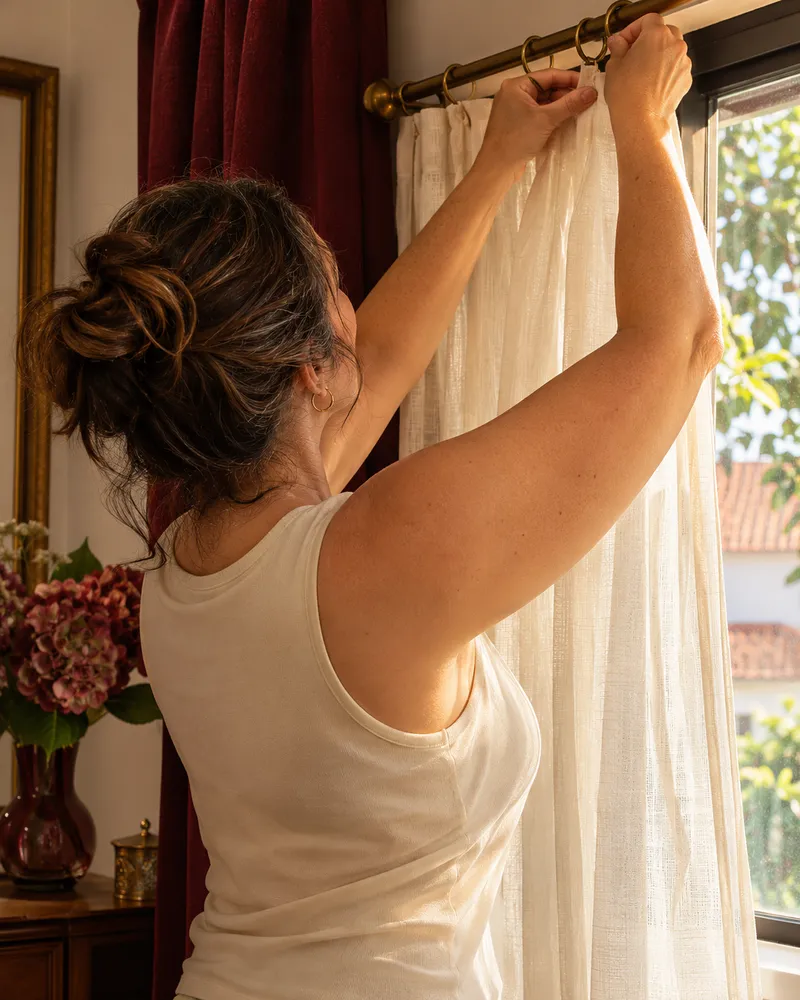
Woman in a sleeveless top hanging a curtain, with her arms raised

How to recognise it

Is it fat or laxity in the arms?

The same arm may have both, and the relative contribution of each varies from person to person. These signs can help you understand what may be happening before your assessment.

Tick what you recognise0/7

Tick the signs you recognise in your case. This is not a diagnosis, it is only meant to give you an idea.

Is only one arm more swollen, thicker or heavier, especially after surgery or radiotherapy of the breast or underarms? Is the arm red, warm and painful, or is there fever? Did the swelling appear suddenly? You need medical assessment before any treatment. Out of hours, call SNS 24: 808 24 24 24.

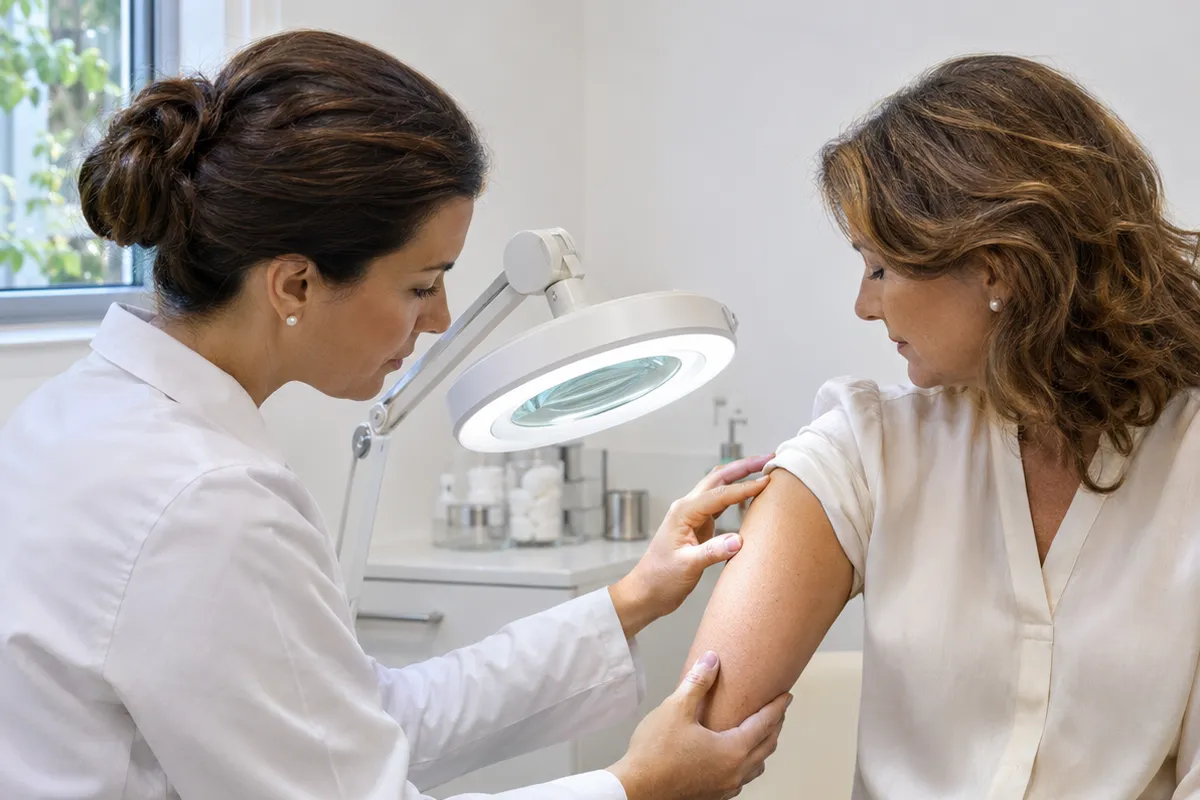
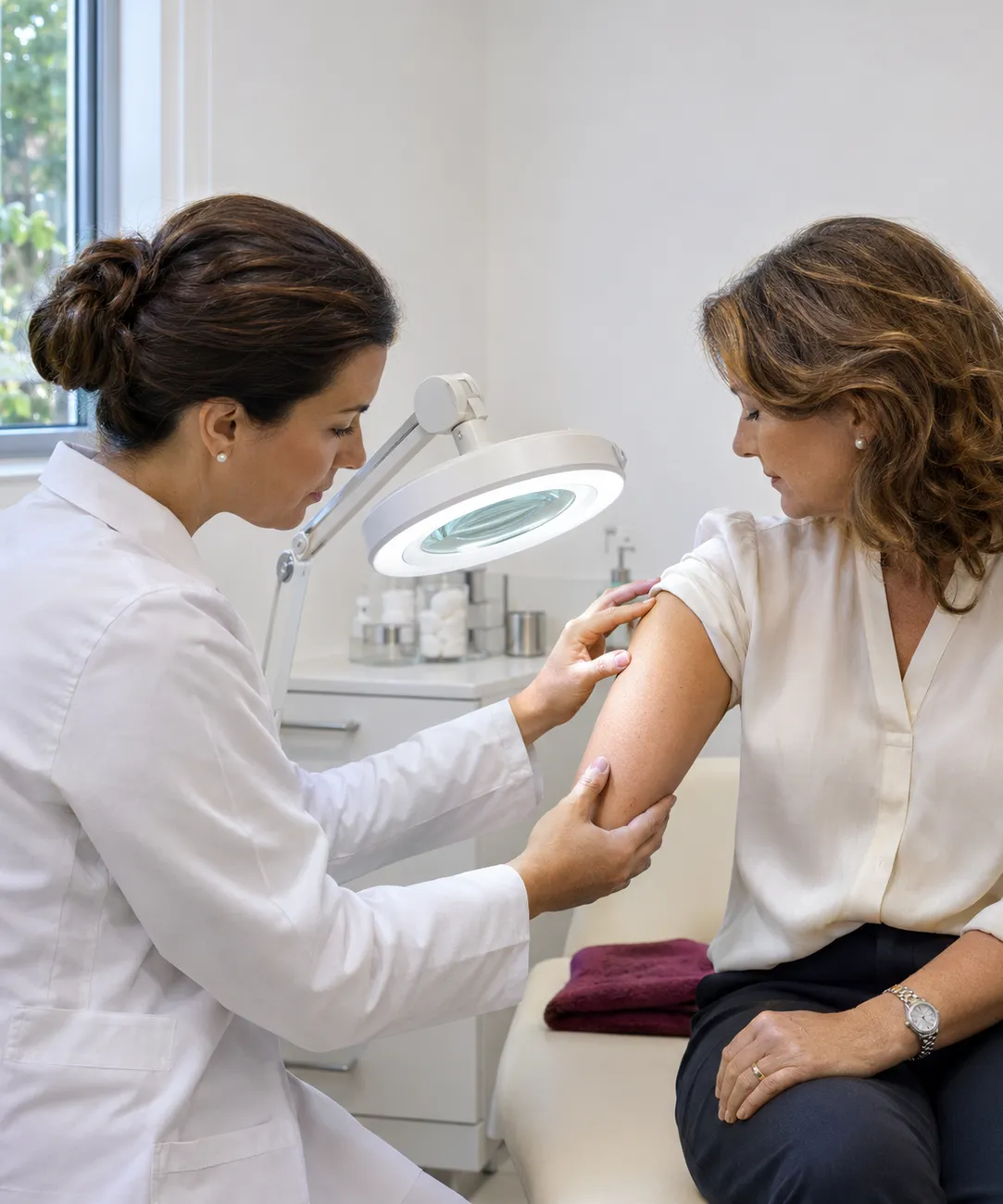
Female doctor assessing a patient's arm with an examination magnifier
Photograph of a consultation. The dots mark what the doctor is assessing.

Why it happens

What may be behind fat on the arms

There is almost always more than one cause at the same time. Choose a situation to see how it may contribute and what usually helps.

Genetics and fat distribution

Where each person stores fat varies and depends largely on sex hormones and inherited factors. This is why some people gain weight mainly on their arms while others gain it elsewhere. The same pattern is often seen in several women in the same family, and this is not a sign of disease.

What weighs on it

Comparing your arms with other people's arms and concluding that you are doing something wrong.

What helps

Accepting that part of the pattern is inherited and concentrating on what can be changed: muscle, overall weight and skin.

Normal or to be assessed

Typical fat and laxity, or something requiring assessment

In most cases, fat and skin laxity on the arms are body-contour concerns. However, there are situations in which an enlarged arm is a sign of another condition, and these require assessment before any treatment.

  • How it presents. Both arms look similar, with a thick, soft fold at the back caused by fat, thin skin that wrinkles and hangs because of laxity, or both signs at the same time, with no pain or swelling.

  • When it is noticed. When waving, when raising the arm or in sleeveless tops. It tends to worsen with age, after losing a lot of weight and with muscle loss.

  • What the clinic does. The doctor examines the arms, sees the fold and the firmness of the skin and confirms what weighs most, before proposing what makes sense.

  • At home. Regular strength training, a balanced diet, sun protection and patience, because changes take weeks to months.

Do you have an arm that has suddenly swollen, with chest pain, shortness of breath or coughing up blood? Call 112. If you have only one arm that is swollen, red, warm or painful, or doubts, out of hours you can call SNS 24: 808 24 24 24.

Book an assessment

What the clinic may consider

Options for the arms

First-line measures are regular strength training, overall weight loss when indicated, and protecting the skin from the sun. Exercise improves the muscle and shape of the arm but does not target fat loss in that area alone. For loose skin, the clinic may recommend radiofrequency and, as an adjunct to body contouring, contouring massage; the doctor will also assess whether a collagen biostimulator is appropriate. The evidence is limited: systematic reviews show measurable improvements in skin laxity with radiofrequency, but the studies are heterogeneous and the evidence for fat reduction is limited. Results are gradual, vary from person to person and are generally not permanent. When there is a large amount of excess skin or fat, surgery is the appropriate option: liposuction or brachioplasty, which leaves a scar. The clinic will refer you for a surgical assessment.

Book an assessment
Dr Michelle Campagnoli, clinical director of Clínica Luxmed

First step

Assessment consultation

The doctor listens to what you are experiencing, examines your case and explains the suitable options. No treatment begins without this consultation.

May be considered when

you want to understand the cause and decide on the best path, with time and without commitment.

Book an assessment
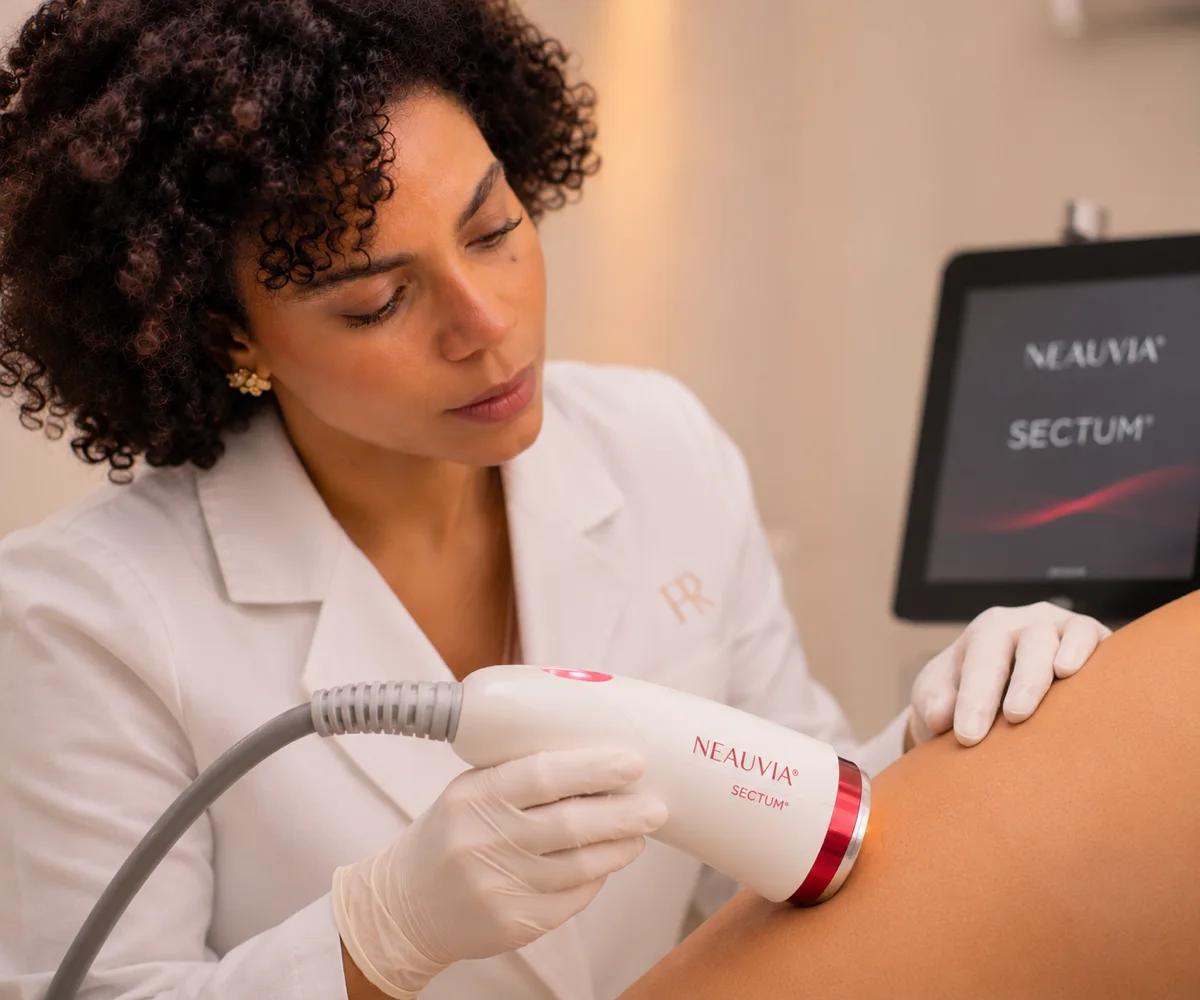
Radiofrequency handpiece gliding over the back of the arm in a brightly lit treatment room

Firmness of the skin

Sectum radiofrequency Neauvia

Radiofrequency is applied to the skin of the arm to heat the deeper tissues and stimulate collagen, with the aim of firming loose skin. Reviews show measurable improvement in laxity, with complications that are generally mild and temporary, but the studies vary considerably and results differ between individuals. Several sessions are required.

May be considered when

the laxity is mild to moderate, the skin still has some elasticity, and there is no excess skin that can only be corrected surgically, once the assessment has ruled out other causes of arm enlargement.

Find out more
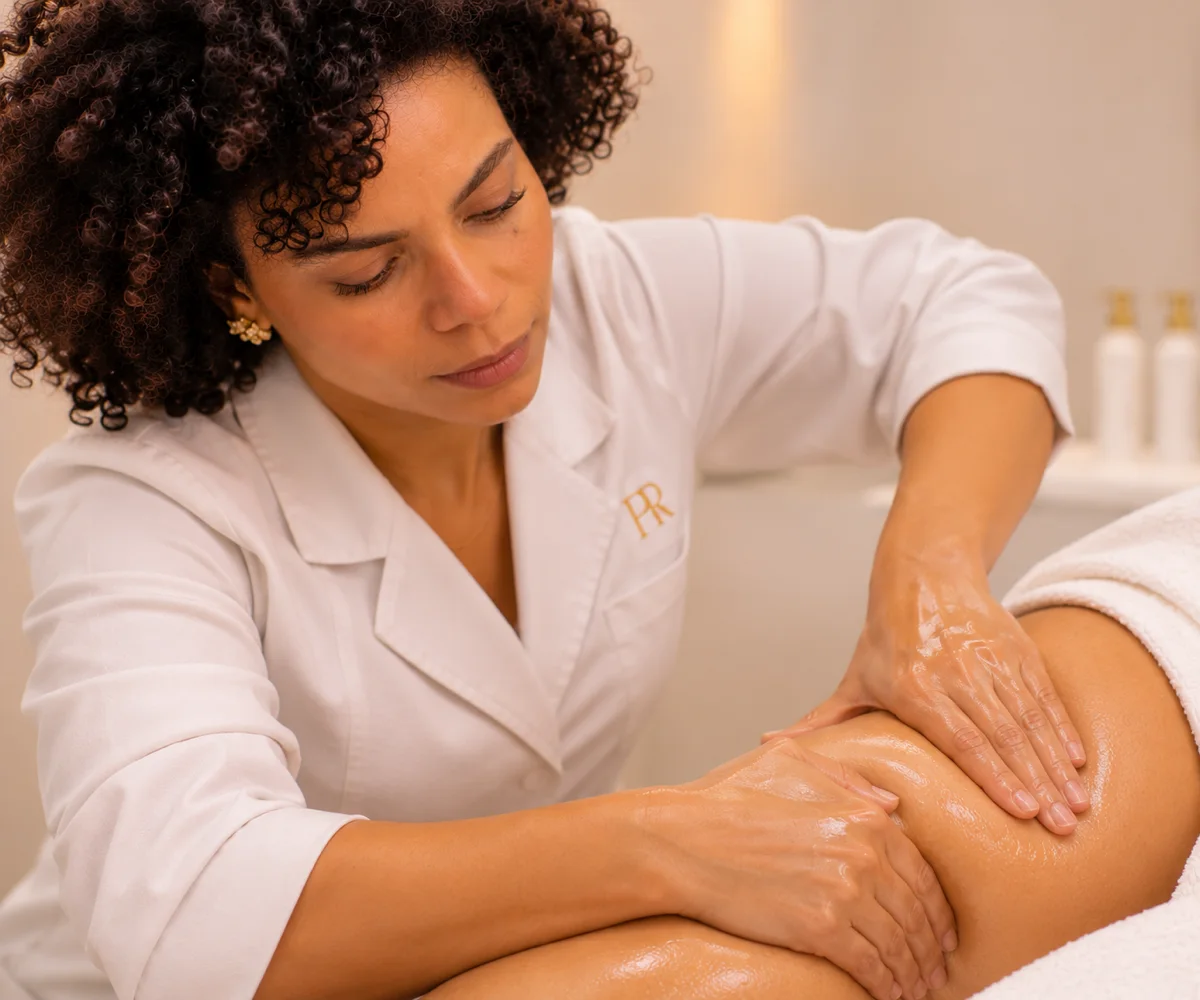
The therapist's hands massaging the back of the arm using long strokes in soft lighting

Contour

Contouring massage

Manual massage intended to improve the contour of the arm and stimulate circulation, enhancing the appearance of the skin and supporting the results of other procedures. It is a complementary treatment and does not replace exercise or treat excess skin on its own.

May be considered when

the main concern is the appearance and contour of the arm, or massage is being used as an adjunct to another treatment, once the doctor has confirmed that the arm is not swollen because of another condition.

Find out more

What the journey looks like

From the first conversation to a plan tailored to you

No treatment begins without an assessment appointment with the doctor. Most people start with the simplest measures, and only then are further options considered.

  1. 01At the clinic

    Telling your story

    The doctor asks when you first noticed the change, whether you have gained or lost weight, been pregnant or had breast or underarm surgery, what exercise you do and what you have already tried.

  2. 02At the clinic

    Examine and measure the arms

    One arm is compared with the other, the skinfold and skin firmness are assessed, and the circumference is measured. If one arm alone is thicker, or there is pain or signs of lymphoedema or another underlying cause, medical assessment and referral are required before any aesthetic treatment.

  3. 03At home

    Train, eat and protect

    In many cases, the first step is regular strength training, a balanced diet, gradual weight loss when indicated and sun protection for the arms. These measures have the strongest evidence and carry the fewest risks.

  4. 04Over time

    Decide and follow up

    If the problem persists, the doctor explains whether the skin may benefit from radiofrequency, whether contouring massage would be a useful adjunct or whether a surgical assessment is appropriate, as well as what to expect and how many sessions may be needed, without promising results. The arms are reassessed and the plan is adjusted.

Day to day

What helps at home

What you do outside the clinic matters more than you might think. These are sensible measures to take while you wait for your appointment and alongside the doctor’s plan.

The golden rule

First understand what it is, then choose what to do

Fat, loose skin and, less commonly, swelling require different approaches. Exercise is no substitute for assessing an arm that has changed shape, and choosing a treatment without knowing which factor is most significant may not produce the expected result.

Strength training, regularly

Exercise improves the tone and shape of the arm, and is part of a healthy lifestyle.

In practice: triceps extensions, push-ups (incline, if needed), rows and shoulder presses, 2 to 3 times a week, with good technique and increasing the load gradually.

Looking after overall weight

Fat comes off the whole body at the same time, and the arm area follows.

In practice: a balanced diet and daily movement; if you intend to lose weight, do so with follow-up.

Protect the skin from the sun

The sun accelerates the loss of skin firmness, and the arms are almost always exposed.

In practice: sunscreen on the arms and short-sleeved or light clothing in the hours of strongest sun.

Measuring and recording

It helps you to see whether the arm is really changing and gives you data for the consultation.

In practice: monthly photographs in the same light and a tape measure at the same point on the arm, and note your weight and the exercise you do.

Dr Michelle Campagnoli, clinical director of Clínica Luxmed

Who will look after you

An assessment carried out by the doctor

At Luxmed, in Algés, the first step is always an assessment with Dr Michelle Campagnoli. She examines your arms, determines whether fat, loose skin or both predominate, rules out other causes of one arm being thicker and works with you to decide on the most appropriate approach before any procedure.

  • Physical examination and medical historyA conversation about weight, exercise, surgery and medication, and examination and measurement of both arms.
  • A plan tailored to youA clear plan, without promises, beginning with the simplest measures and including follow-up over time.
  • No obligationThe cost of any treatment is confirmed only after the assessment.
Book an assessment

Book a consultation

Book your consultation

Choose how you prefer to get in touch. We will arrange the assessment consultation with Dr Michelle Campagnoli.

Booking through the websiteAssessment consultationTalk to our assistant on WhatsApp and ask for the current price of the assessment.

New Life Miraflores, Algés · Office Center, R. Santa Teresa do Menino Jesus n.º 6, 9.º C, 1495-048

Your details are used only for this contact. Any treatment depends on a prior medical assessment.

Request an appointmentIt takes less than a minute.
Speciality
You do not need to go into detail. The doctor will talk to you during the consultation.
Request received. Our team will contact you as soon as possible.
Fat on the arms: how do I know whether it is fat or laxity?

With the arm stretched out to the side, gently pinch the skin at the back. If you pick up a thick, soft fold, there is fat. If the skin is thin and wrinkles, laxity predominates. Often there are both, and that is why the result varies from arm to arm. It is a simple test and does not replace the doctor’s assessment, which also compares the two arms and looks for other causes of a thicker arm.

Why does the back of the arm “wobble”?

Almost always because of a combination of factors: fat that accumulates at the back of the arm, skin that has lost firmness with age, sun exposure or major weight loss, and reduced triceps tone. Genetics and hormones influence where each person stores fat, and the menopause contributes to loss of skin elasticity. The first step is therefore to identify which factor is most significant in your case.

Does fat on the arms appear with age? Do men get it too?

It is more common after the age of 40 because muscle mass decreases and the skin loses firmness with age, but it can occur at any age, for example after gaining weight or losing a great deal of weight. Men get it too, although they raise the concern less often.

Can a thicker arm be something other than fat?

It can. A single arm that is swollen, feels heavy or is thicker, especially after breast or axillary surgery or radiotherapy, may indicate lymphoedema. Very large, symmetrical arms and legs that are tender to the touch and bruise easily may indicate lipoedema. If the swelling develops suddenly, with pain, redness or fever, seek prompt medical attention. These conditions require medical assessment, not aesthetic treatment.

How do I lose fat from my arms? Do triceps exercises work?

Triceps exercises make the muscle firmer and may improve the shape of the arm, but studies do not consistently show that they remove fat from that area alone. In a study of 104 people who trained only one arm for 12 weeks, magnetic resonance imaging showed no difference in fat between the trained and untrained arms (skinfold measurements suggested fat loss in men only); in another, smaller study, training one leg reduced fat mainly in the arms and trunk, not in the trained leg. The foundations are whole-body strength training, diet and overall weight management. If loose skin is the main concern, exercise will do little to improve its appearance.

How long does it take to notice a difference with training?

In general, 8 to 12 weeks of regular training, 2 to 3 times a week, is enough to notice improved muscle tone. Arm fat depends on overall fat loss, and the rate varies from person to person. If, after a few months, you feel that loose skin is the main problem, it is worth speaking to the doctor.

What treatments exist for fat and laxity of the arms?

It depends on which issue predominates. With a small amount of fat and firm skin, contour can be improved through training and, at the clinic, contouring massage. For mild to moderate skin laxity, the clinic may recommend radiofrequency, and the doctor will assess whether a collagen biostimulator is appropriate. For a moderate amount of fat, liposuction is a surgical option; for significant excess skin, brachioplasty is an option and leaves a scar along the inner arm. Surgical procedures carry their own risks and are performed by a surgeon, to whom the clinic can refer you.

Does radiofrequency work on the arms? Do the results last?

A systematic review of monopolar and bipolar radiofrequency found measurable improvement in body skin laxity, with complications that were generally mild and temporary, although the studies were heterogeneous. The evidence for fat reduction is weaker. Results are gradual, vary from person to person and require several sessions. They are generally not permanent: skin ageing continues, and maintenance sessions may be needed.

And collagen biostimulators and contouring massage?

Contouring massage helps shape the area and promote circulation and is an adjunct, not a treatment for skin laxity on its own. Collagen biostimulators are used on the upper arms, and an expert consensus review suggests they may benefit skin laxity, although the evidence is mainly observational. They can cause papules or nodules, so technique and product dilution are important. The doctor will tell you whether they are appropriate in your case.

When should I see a doctor before treating the arms?

Book an appointment before starting any treatment so that the right option can be chosen and medical causes ruled out. This is particularly important if only one arm is swollen, feels heavy or is thicker; if you have had breast or axillary surgery or radiotherapy; if there is pain, warmth or redness; or if your arm hurts during exercise. If in doubt, call SNS 24 out of hours on 808 24 24 24. If an arm suddenly becomes swollen and you also have chest pain, shortness of breath or are coughing up blood, call 112.

We could not find that question. Ask us on WhatsApp

Scientific references

This page is based on the sources below and was reviewed by Dr. Michelle Campagnoli. Last updated on .

  1. Kostek MA, Pescatello LS, Seip RL, et al. Subcutaneous fat alterations resulting from an upper-body resistance training program. Med Sci Sports Exerc, 2007.
  2. Ramírez-Campillo R, Andrade DC, Campos-Jara C, Henríquez-Olguín C, Alvarez-Lepín C, Izquierdo M. Regional fat changes induced by localized muscle endurance resistance training. J Strength Cond Res, 2013.
  3. Bull FC, Al-Ansari SS, Biddle S, et al. World Health Organization 2020 guidelines on physical activity and sedentary behaviour. Br J Sports Med, 2020.
  4. Karastergiou K, Smith SR, Greenberg AS, Fried SK. Sex differences in human adipose tissues - the biology of pear shape. Biol Sex Differ, 2012.
  5. Farage MA, Miller KW, Elsner P, Maibach HI. Characteristics of the aging skin. Adv Wound Care (New Rochelle), 2013.
  6. Kennedy J, Verne S, Griffith R, Falto-Aizpurua L, Nouri K. Non-invasive subcutaneous fat reduction: a review. J Eur Acad Dermatol Venereol, 2015.
  7. Rohrich RJ, Schultz KP, Chamata ES, Bellamy JL, Alleyne B. Minimally invasive approach to skin tightening of the face and body: systematic review of monopolar and bipolar radiofrequency devices. Plast Reconstr Surg, 2022.
  8. Haddad A, Avelar L, Fabi SG, Sarubi J, Somenek M, et al. Injectable poly-L-lactic acid for body aesthetic treatments: an international consensus on evidence assessment and practical recommendations. Aesthetic Plast Surg, 2025.
  9. Vleggaar D, Fitzgerald R, Lorenc ZP. Understanding, avoiding, and treating potential adverse events following the use of injectable poly-L-lactic acid for facial and nonfacial volumization. J Drugs Dermatol, 2014.
  10. Chia CT, Theodorou SJ, Hoyos AE, Pitman GH. Radiofrequency-assisted liposuction compared with aggressive superficial, subdermal liposuction of the arms: a bilateral quantitative comparison. Plast Reconstr Surg Glob Open, 2015.
  11. Aljerian A, Abi-Rafeh J, Ramirez-GarciaLuna J, Hemmerling T, Gilardino MS. Complications in brachioplasty: a systematic review and meta-analysis. Plast Reconstr Surg, 2022.
  12. Brunelle CL, Jackson K, Shallwani SM, et al. Evidence-based recommendations regarding risk reduction practices for people at risk of or with breast cancer-related lymphedema: consensus from an expert panel. Med Oncol, 2024.
  13. NHS. Lymphoedema. (NHS, acedido 2026-11-11)
  14. Vazirnia A, Smart DR, Mohseni Y, Amron DM. Lipedema diagnosis, clinical manifestations, and therapeutics: a systematic review. Int J Dermatol, 2026.
CallAssistantAvailableBook