Algés, Oeiras Mon to Fri · 09:00 to 13:00 and 14:00 to 19:00 · Sat · 09:00 to 14:00
WhatsApp Book a consultation

Body aesthetics

Spots on the handsWhen the backs of the hands develop brown patches and you want to know what they are before thinking about treating them

The backs of the hands are exposed to the sun throughout life: when driving, walking, working or washing up by a window. It is no surprise that they are among the first areas to develop patches. In most cases, these are benign solar lentigines, also known as “age spots”, and have nothing to do with the liver. However, not all patches are the same: some are keratoses that require treatment, and, rarely, a lesion may need urgent assessment. Here we explain how to distinguish between the different types, the warning signs to look out for, how to help prevent new patches, and what chemical peels and microneedling can and cannot achieve at Clínica Luxmed, in Algés. All treatment begins with a medical assessment.

Reviewed by Dr Michelle Campagnoli, clinical director

  • 2procedures for this topic
  • 1assessment, always first
  • Nocommitment
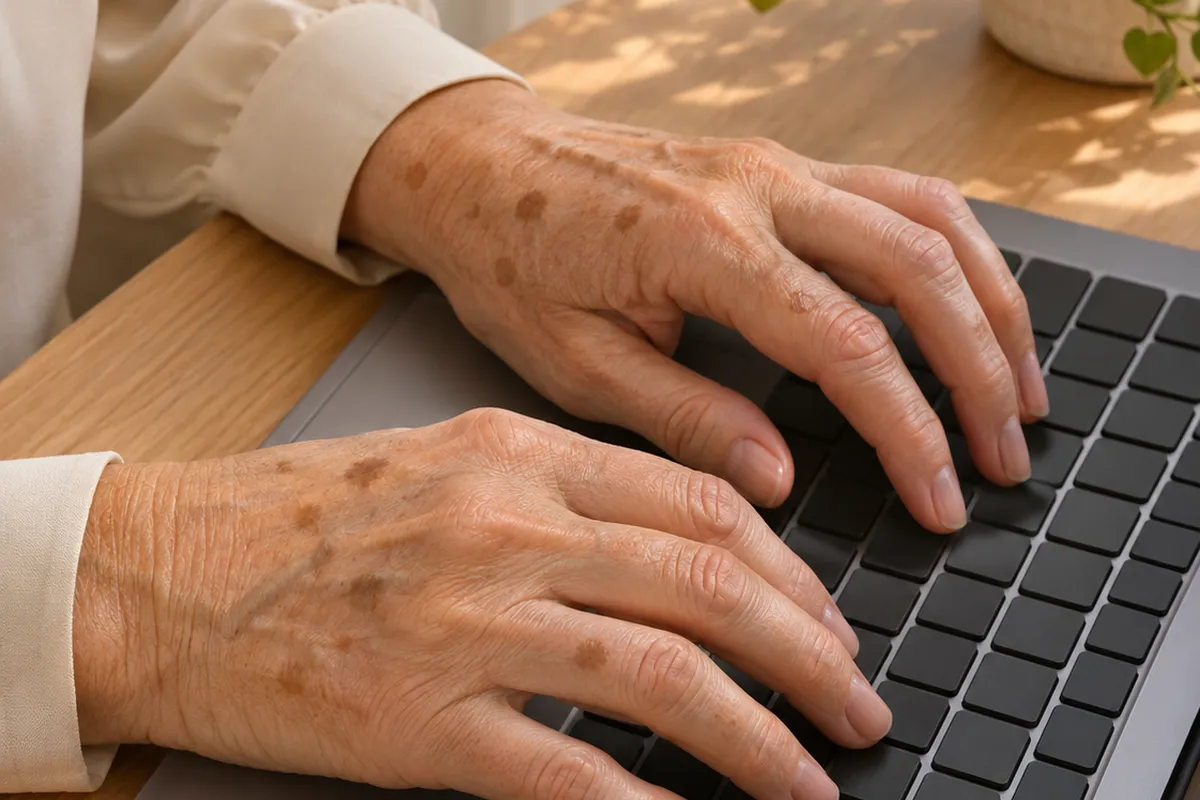
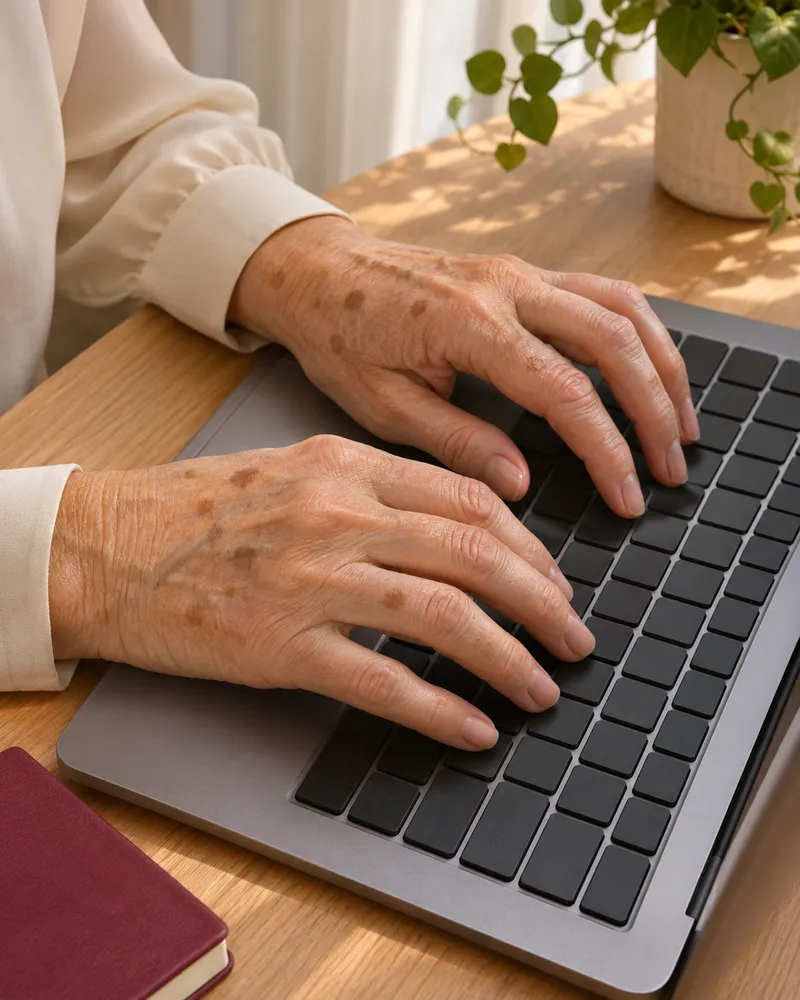
Woman's hands on a laptop keyboard, with sun spots on the backs of the hands

How to recognise it

Could they be patches from sun and age?

There are flat patches, raised patches and rough patches, and each has a different meaning. These signs help to understand what you may be seeing, before the medical assessment.

Tick what you recognise0/7

Tick the signs you recognise in your case. This is not a diagnosis, it is only meant to give you an idea.

Is there a patch that grows, changes colour or outline, has several colours, is asymmetrical or is different from the others? Does it bleed without a knock, hurt, have a crust that returns after removal, or is there a sore that does not heal in 4 weeks? Is there a nodule that grows? It needs a medical assessment before any treatment, without waiting. Out of hours, call SNS 24: 808 24 24 24.

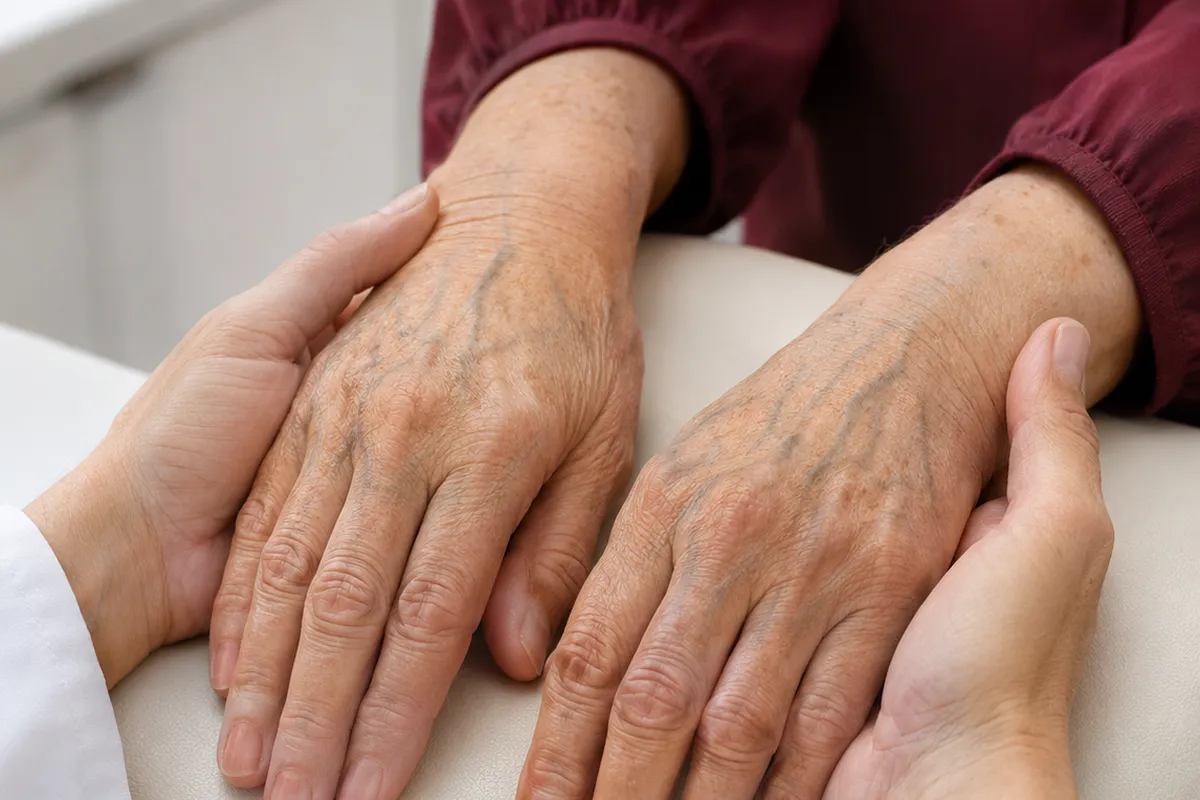
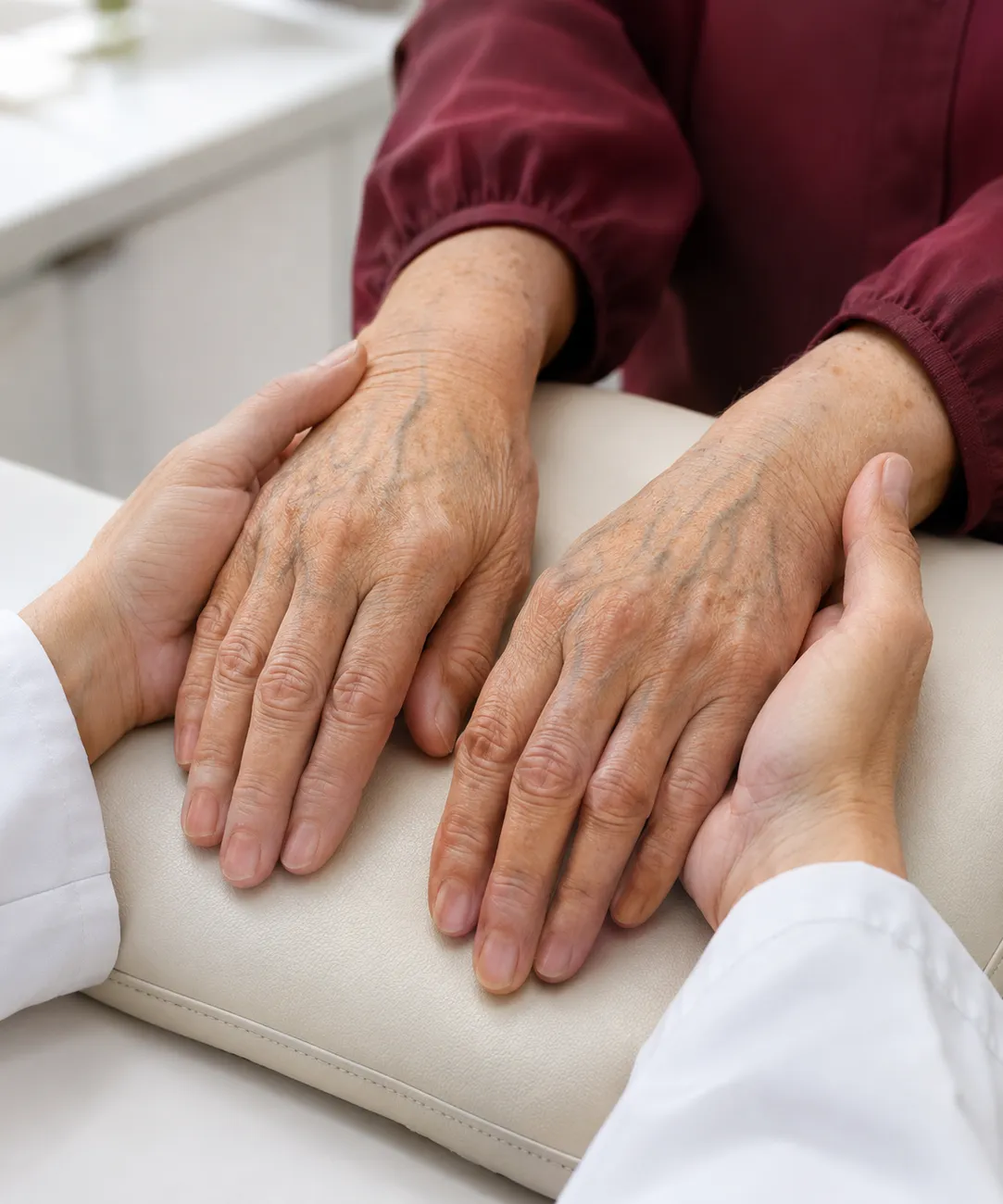
Female doctor holding a patient's hands over a support cushion
Photograph of a consultation. The dots mark what the doctor is assessing.

Why it happens

What may be behind patches on the hands

There is almost always more than one contributing factor, with sun exposure being the most important. Select a situation to see how it may have contributed and what usually helps.

Sun accumulated over the years

The backs of the hands are exposed to ultraviolet radiation for decades and are rarely protected. Melanocytes respond by producing pigment in localised areas, resulting in solar lentigines: flat, well-defined brown patches that are generally benign. They do not disappear on their own in winter, but may become lighter or darker depending on sun exposure.

What weighs on it

Repeated exposure without sunscreen, above all when driving, at the beach and in outdoor work, including the sun that comes through the car window.

What helps

Apply sunscreen to the backs of the hands every day and reapply it after washing; wear gloves during prolonged outdoor activities.

Benign or requiring assessment

Benign patch or lesion requiring assessment

Most patches on the hands are benign. However, some lesions require assessment before any treatment because colour is only the visible feature, and what lies beneath is what matters.

  • What it looks like. A brown, flat, well-defined patch, of a single colour, that has been there for years without changing, or a raised brown lesion with a “stuck-on” look, without bleeding, without pain and without a crust that returns.

  • When it is noticed. Darker after summer and more evident on thin, dry skin. There are usually patches on both hands, and sometimes on the forearms and chest too.

  • What the clinic does. The doctor examines each patch and confirms that it is benign. If they are benign, the doctor explains what can be considered, what expectations are realistic and what to do so that they do not return.

  • At home. Apply sunscreen to the backs of the hands every day, moisturise, do not pick at or scrape the patches, and take photographs to monitor them.

Do you have a patch that grows, changes colour or bleeds, or a sore that does not heal? Ask for an assessment without waiting. Out of hours you can call SNS 24: 808 24 24 24. 112 is only justified in an emergency.

Book an assessment

What the clinic may consider

Options to fade benign patches

The order matters. First, the patch must be confirmed as benign, because an unassessed lesion should not be treated simply “to see if it goes away”. The backs of the hands should then be protected from the sun every day, as otherwise the patches will return and new ones will develop. Topical depigmenting agents are available but should only be used on medical advice, while treatments such as cryotherapy or laser therapy for isolated patches are decided in consultation with dermatology, depending on the case. After assessment, the clinic may consider chemical peels or microneedling for benign patches. The evidence is limited: studies of peels and microneedling for pigmentation have mainly involved other areas and conditions, and few have focused on the hands. Results vary from person to person, are gradual and are generally temporary if sun exposure continues, so sun protection and maintenance treatment are required.

Book an assessment
Dr Michelle Campagnoli, clinical director of Clínica Luxmed

First step

Assessment consultation

The doctor listens to what you are experiencing, examines your case and explains the suitable options. No treatment begins without this consultation.

May be considered when

you want to understand the cause and decide on the best path, with time and without commitment.

Book an assessment
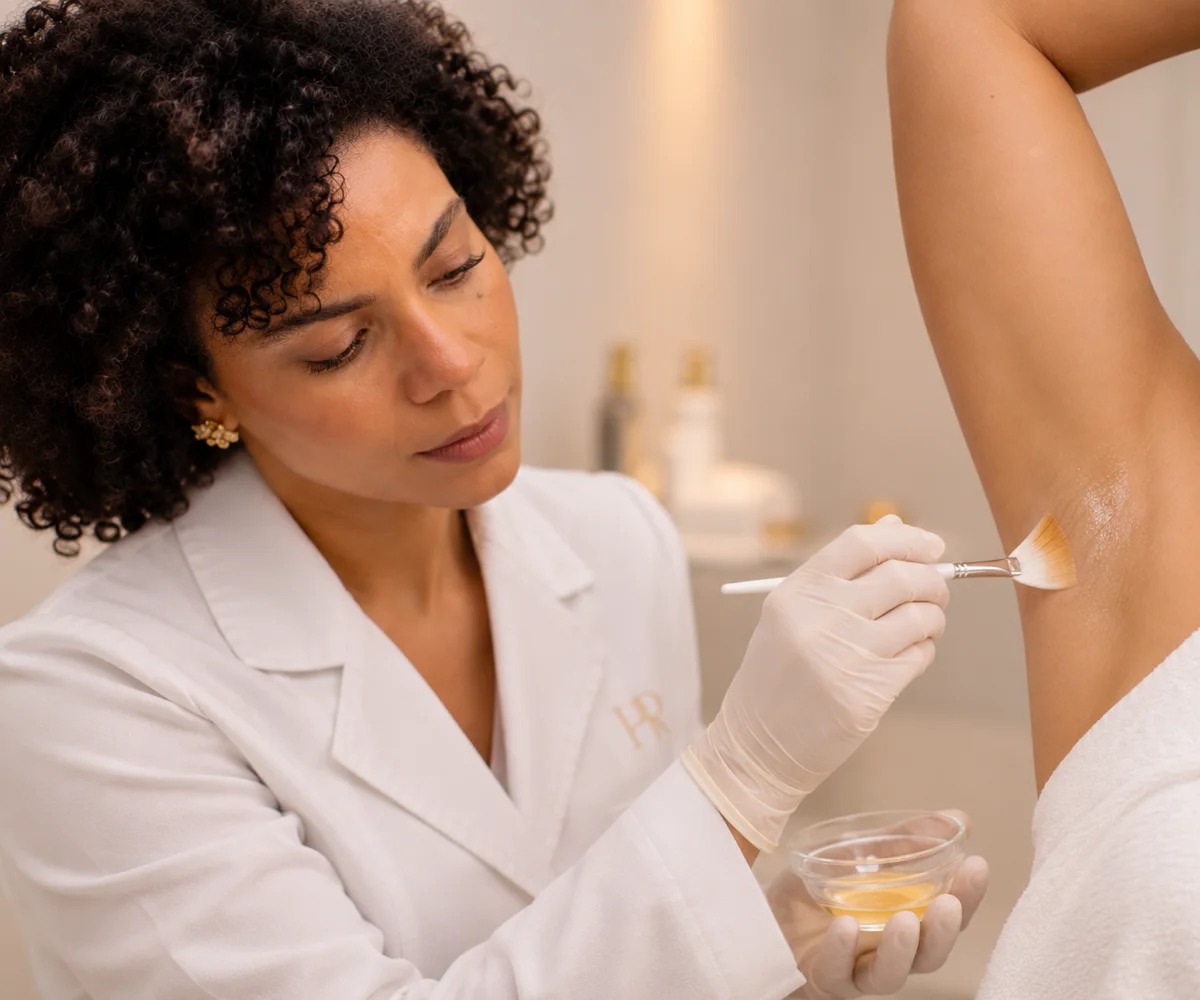
A clinician applying a peel solution to a skin fold with a brush in a brightly lit consulting room

Skin renewal

Chemical peel

An acid is applied to the skin to renew the superficial layers, with the aim of evening out skin tone and smoothing the texture of superficial patches. The skin on the backs of the hands is thin and sensitive, so the acid and its strength are selected carefully because irritation can darken the area rather than lighten it. Treatment usually involves a series of sessions.

May be considered when

the patches have been assessed and are benign, the skin is not irritated, broken or tanned, you are not pregnant or breastfeeding, you will protect your hands from the sun and the doctor has explained the risks and what is realistic to expect.

Find out more
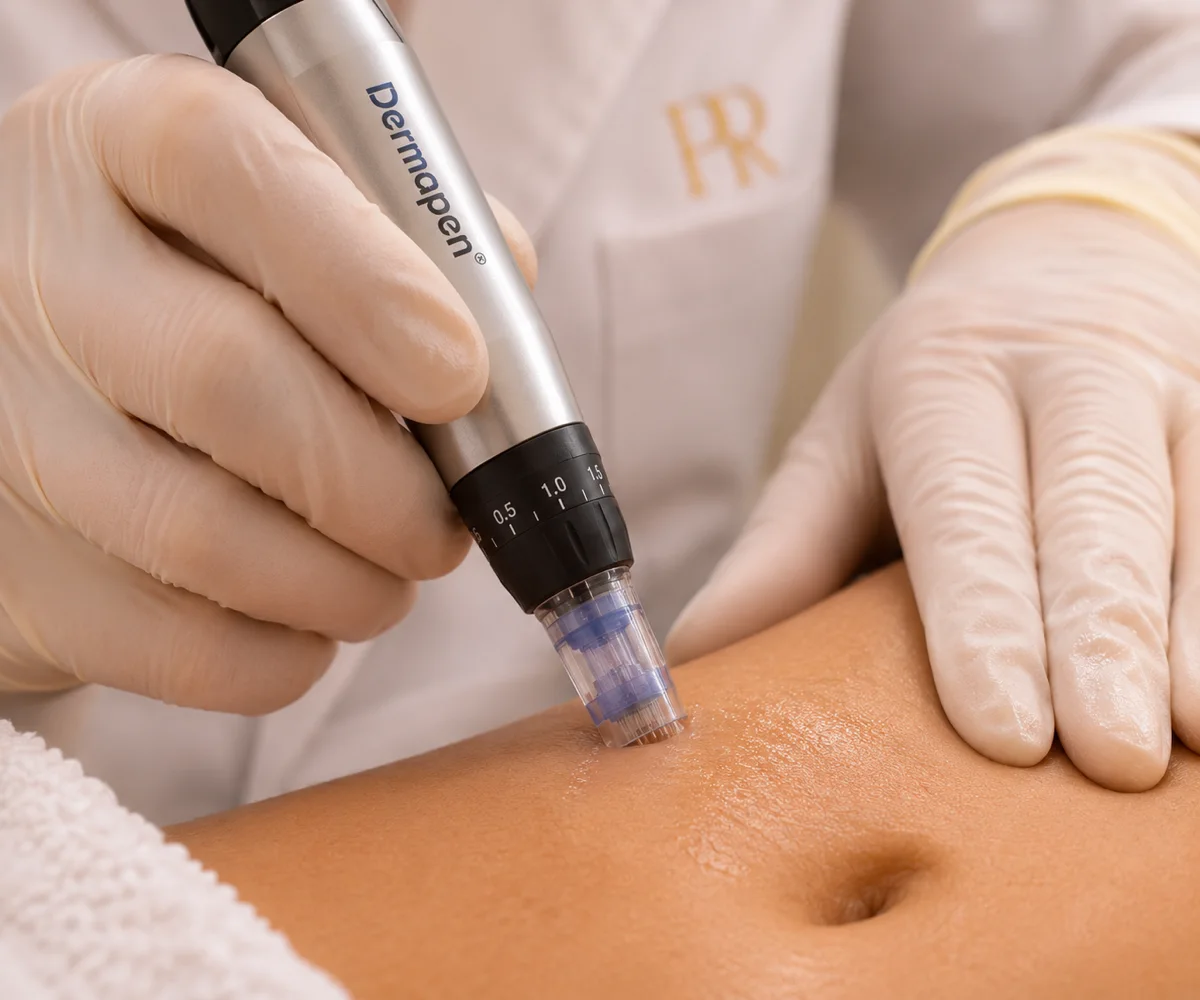
Microneedling pen gliding over the skin in bright clinical lighting

Texture and renewal

Microneedling

Controlled micro-injuries are made in the skin using very fine needles to stimulate renewal and the production of collagen and elastin, improving skin texture and evenness. There is little specific evidence for its effect on pigmentation on the hands, and results vary. Treatment involves several sessions spaced a few weeks apart.

May be considered when

the skin on the backs of the hands is thin and has an uneven texture, the patches have already been assessed as benign, there is no infection, active eczema or open wound, and the doctor considers the treatment appropriate in your case and has explained what you can expect.

Find out more

What the journey looks like

From the first conversation to a plan tailored to you

No procedure begins without an assessment by the doctor. The patches are examined first, and treatment is only considered once they have been confirmed as benign.

  1. 01At the clinic

    Telling your story

    The doctor asks when the patches first appeared, whether any have changed, grown, bled or become painful, about your lifetime sun exposure, what medication you take, and which creams or treatments you have already used.

  2. 02At the clinic

    Examining the patches

    The colour, shape, outline, elevation and texture of each patch are examined, often using a dermatoscope. If any lesion gives cause for concern, you will be referred to dermatology and a biopsy will be performed if necessary.

  3. 03At home

    Protecting and caring for the hands

    Apply sunscreen to the backs of the hands every day and reapply it after washing, wear gloves outdoors, moisturise, and take monthly photographs in the same lighting. These measures are the most important in the long term.

  4. 04Over time

    Decide and follow up

    For benign patches, the doctor explains whether a peel or microneedling makes sense, how many sessions are needed and what to expect, without promising results. The examination is repeated and sun protection is maintained.

Day to day

What helps at home

What you do at home matters more than you might think. These are sensible measures to take while you wait for your consultation and alongside the clinic’s plan.

The golden rule

Protecting the backs of the hands, every day

Without sun protection, the patches return and new ones appear, however good the treatment. And a patch that changes, is rough or bleeds should be seen by a doctor rather than “treated” at home.

Using sunscreen on the hands

The backs of the hands are exposed to the sun every day, including when driving, and are almost never protected.

In practice: apply in the morning and reapply after washing your hands and after a few hours in the sun.

Wearing gloves and covering up in strong sun

A physical barrier provides protection when sunscreen is removed by handwashing.

In practice: gloves for prolonged outdoor work and thin driving gloves on long journeys.

Moisturising the skin

Dry, thin skin heals less readily and develops marks more quickly.

In practice: a gentle moisturiser after washing the hands and at night, and unperfumed soap.

Photographing and bringing the photographs to the consultation

It helps the doctor to see whether any patch has changed, and when.

In practice: monthly photographs in the same light and at the same distance, and a list of the medication and creams you use.

Dr Michelle Campagnoli, clinical director of Clínica Luxmed

Who will look after you

An assessment carried out by the doctor

At Luxmed, in Algés, the first step is always an assessment with Dr Michelle Campagnoli. She will examine the marks, determine whether they are benign or whether any need to be assessed by a dermatologist, and discuss with you what is appropriate before any procedure.

  • Physical examination and medical historyA conversation about the sun, medication and the history of the patches, and examination of each patch, often with a dermatoscope.
  • A plan tailored to youA clear plan, without promises, with sun protection first and follow-up over time.
  • No obligationThe cost of any treatment is confirmed only after the assessment.
Book an assessment

Book a consultation

Book your consultation

Choose how you prefer to get in touch. We will arrange the assessment consultation with Dr Michelle Campagnoli.

Booking through the websiteAssessment consultationTalk to our assistant on WhatsApp and ask for the current price of the assessment.

New Life Miraflores, Algés · Office Center, R. Santa Teresa do Menino Jesus n.º 6, 9.º C, 1495-048

Your details are used only for this contact. Any treatment depends on a prior medical assessment.

Request an appointmentIt takes less than a minute.
Speciality
You do not need to go into detail. The doctor will talk to you during the consultation.
Request received. Our team will contact you as soon as possible.
Patches on the hands: what are they and why do they appear?

In most cases, these are solar lentigines, commonly known as “age spots” or “senile spots”: flat, well-defined brown patches caused by cumulative sun exposure over the years, particularly in fair skin. They may also be raised, benign seborrhoeic keratoses, or rough, pre-malignant actinic keratoses that require treatment. Rarely, a patch on the hands is a malignant lesion. The first step is therefore for a doctor to examine the patches and determine what type they are.

Are patches on the hands caused by the liver? And are they always age spots?

No. Despite the popular term “liver spots”, they are unrelated to the liver and are caused mainly by sun exposure. Nor do they occur only with age: cumulative sun exposure is more important, so they may appear earlier in people who have spent a great deal of time in the sun without protection. Some lesions look like age spots but are something else, which is why assessment is important.

How can I tell a solar lentigo from a seborrhoeic keratosis or an actinic keratosis?

A solar lentigo is flat, brown, smooth, a single colour and well defined. A seborrhoeic keratosis is raised, rough and looks as though it is “stuck on” to the skin. An actinic keratosis is rough, dry and scaly, sometimes reddish, and recurs after the scale is removed. However, these lesions can easily be mistaken for one another with the naked eye, and other lesions may resemble them. The doctor distinguishes between them by examination, often using a dermatoscope, and only a medical assessment can confirm the diagnosis.

When should I be concerned about a patch on the hands?

When it grows, changes colour or outline, has multiple colours, is asymmetrical or differs from the others, bleeds without an injury, hurts, feels rough and recurs after being removed, or is a sore that does not heal within 4 weeks. This is the ABCDE rule: asymmetry, borders, colour, diameter and evolution. If any of these signs are present, seek an assessment promptly. Out of hours, call SNS 24 on 808 24 24 24.

How can patches on the hands be removed?

First, the patches must be confirmed as benign, and only then is treatment considered. The backs of the hands should then be protected from the sun every day, as otherwise the patches will return. Depending on the case, topical depigmenting agents may be used, but only on medical advice, while methods such as cryotherapy or laser therapy for isolated patches are decided in consultation with dermatology. After assessment, the clinic may consider chemical peels or microneedling for benign patches. Results are gradual and vary from person to person.

Do pharmacy creams and home tricks work?

Some creams lighten slightly, but well-defined patches respond better to treatments done in the clinic, and no cream should be applied to a rough patch or one that is different from the others without assessment. Lemon, vinegar and other “tricks” are irritants, can burn the skin and leave a worse mark, and there is no proof that they lighten patches. If you want to do something at home, use sunscreen and moisturise the skin.

Do chemical peels remove dark spots on the hands?

It may help to even out skin tone and fade superficial pigmentation over several sessions. However, the evidence is limited: most studies of chemical peels for pigmentation have focused on other areas, such as facial melasma, and few have examined the hands. The skin on the backs of the hands is thin and sensitive, and irritation can darken rather than lighten the area, particularly in darker skin tones. Treatment is therefore only considered once the marks have been assessed and confirmed to be benign, and it is not performed during pregnancy or while breastfeeding.

Can microneedling help with pigmentation and improve the skin on the hands?

Microneedling creates controlled micro-injuries in the skin to stimulate renewal. Reviews show improvements in scars, stretch marks and wrinkles, but there is little evidence specifically on pigmentation on the hands, and results vary. Treatment involves several sessions spaced a few weeks apart and is not performed on irritated or infected skin, or where there is a lesion that has yet to be assessed. The doctor will tell you whether it is appropriate in your case.

Do the patches come back? Are the results permanent?

There are no guaranteed or permanent results. The marks may return or new ones may appear with continued sun exposure, and a clinical trial showed that daily use of sunscreen is associated with less skin ageing than occasional use. Applying sunscreen to the backs of the hands every day, reapplying it after washing and wearing gloves outdoors are therefore just as important as the procedure itself. Several sessions and maintenance treatment are usually needed, and the doctor will discuss realistic expectations with you without promising results.

Can I treat a rough patch with lightening cream? When should I see the doctor first?

No. A rough, scaly area that returns after the scale has been removed may be an actinic keratosis, which requires different treatment after assessment. Book a consultation first if the mark is rough, grows, changes, bleeds, hurts or looks different from the others, or if you have developed many new marks. If you have any concerns out of hours, call SNS 24 (808 24 24 24). Only call 112 in an emergency.

We could not find that question. Ask us on WhatsApp

Scientific references

This page is based on the sources below and was reviewed by Dr. Michelle Campagnoli. Last updated on .

  1. de Berker D, McGregor JM, Mohd Mustapa MF, Exton LS, Hughes BR. British Association of Dermatologists' guidelines for the care of patients with actinic keratosis 2017. Br J Dermatol, 2017.
  2. Abbasi NR, Shaw HM, Rigel DS, Friedman RJ, McCarthy WH, Osman I, Kopf AW, Polsky D. Early diagnosis of cutaneous melanoma: revisiting the ABCD criteria. JAMA, 2004.
  3. Hughes MCB, Williams GM, Baker P, Green AC. Sunscreen and prevention of skin aging: a randomized trial. Ann Intern Med, 2013.
  4. Sarkar R, Bansal S, Garg VK. Chemical peels for melasma in dark-skinned patients. J Cutan Aesthet Surg, 2012.
  5. Alster TS, Graham PM. Microneedling: a review and practical guide. Dermatol Surg, 2018.
  6. Kaufman BP, Aman T, Alexis AF. Postinflammatory hyperpigmentation: epidemiology, clinical presentation, pathogenesis and treatment. Am J Clin Dermatol, 2018.
  7. DermNet NZ. Solar lentigo. (DermNet, acedido 2026-11-11)
  8. DermNet NZ. Actinic keratosis. (DermNet, acedido 2026-11-11)
  9. NHS. Actinic keratoses (solar keratoses). (NHS, acedido 2026-11-11)
CallAssistantAvailableBook