
Algés, Oeiras Mon to Fri · 09:00 to 13:00 and 14:00 to 19:00 · Sat · 09:00 to 14:00
WhatsApp Book a consultation

Body aesthetics

Neck wrinklesWhen the neck shows lines and folds and you want to understand where they come from and what can be done

The neck has thin skin, is in constant motion and is rarely protected from the sun, so it is one of the first areas to show signs of ageing. There are horizontal lines, known as “necklace lines”, vertical bands and thin, crepey skin, each with a different cause. In recent years, spending long periods looking down at a phone or computer has made neck wrinkles a concern for younger people too. Here we explain what usually causes neck wrinkles, what creams and changes in habits can achieve, what procedures can and cannot promise, and when a medical assessment at Clínica Luxmed in Algés is advisable.

Reviewed by Dr Michelle Campagnoli, clinical director

  • 3treatment options for this concern
  • 1assessment, always first
  • Nocommitment
Woman in profile looking at her phone on public transport, with horizontal lines on her neck

How to recognise it

Could these be neck wrinkles, and of what type?

Not all neck wrinkles are the same: some are horizontal lines, some are vertical bands and others are simply areas of thin, crepey skin. The cause determines which approach is appropriate. These signs can help you understand what may be happening before your assessment.

Tick what you recognise0/7

Tick the signs you recognise in your case. This is not a diagnosis, it is only meant to give you an idea.

Have you noticed a lump or swelling in the neck, hoarseness that does not pass or difficulty swallowing? Is there a patch or mole that changes colour, shape or outline, or a sore that does not heal? It needs a medical assessment before any treatment: wrinkles do not explain these signs. Out of hours, call SNS 24: 808 24 24 24.

Female doctor examining the neck and décolletage of a seated patient
Photograph of a consultation. The dots mark what the doctor is assessing.

Why it happens

What may be behind neck wrinkles

There is almost always more than one cause at the same time. Choose a situation to see how it may contribute and what usually helps.

Age and loss of collagen

As the years pass, the skin produces less collagen and elastin, becoming thinner and less elastic. On the neck, where the skin is already delicate and has few sebaceous glands, this becomes apparent early: lines become more pronounced, the skin loses radiance and its texture becomes thinner and more crepey.

What weighs on it

Expecting a cream to make already deep lines disappear, or comparing your neck with that of other people of the same age.

What helps

Moisturising, protecting from the sun and understanding what is expected with age, treating above all what can be changed.

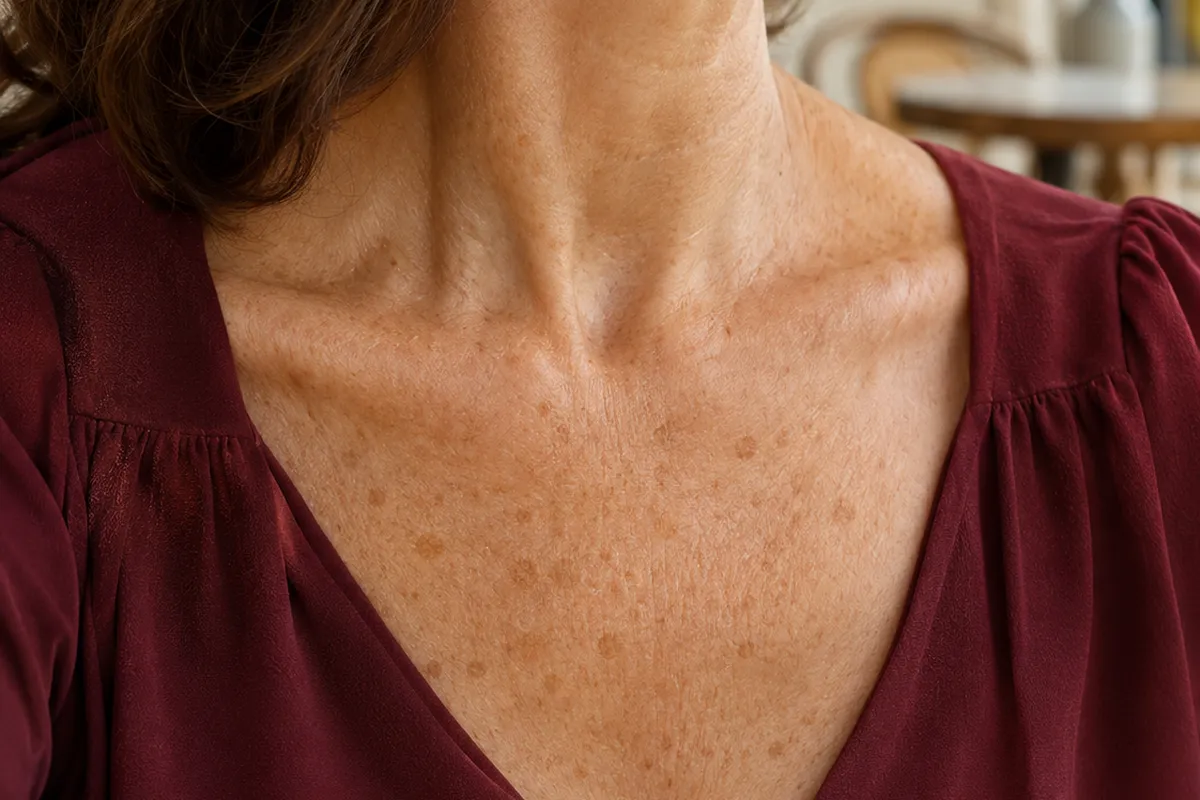
Normal or to be assessed

Wrinkles caused by ageing and habits, or something that needs assessment?

Most neck wrinkles have a simple cause. But some situations call for an assessment before any treatment, because wrinkles are only the visible part.

  • What it looks like. Horizontal lines, vertical bands or thin skin with a wrinkled texture, on both sides, that worsen with sun, weight and posture, without lesions or recent changes.

  • When it is noticed. In low necklines, in profile photographs and when looking down. Often you only notice when you look in the mirror in strong light.

  • What the clinic does. The doctor listens to the history, examines the neck and confirms the type of wrinkle, before proposing whatever makes sense.

  • At home. Sunscreen every day, moisturising, adjusting posture and pillow and giving the skin time; creams help in part, but do not eliminate bands or laxity.

Do you have sudden swelling of the neck, or sudden difficulty breathing or swallowing? Call 112. If you have a lump, a patch that is changing or doubts, out of hours you can call SNS 24: 808 24 24 24.

Book an assessment

What the clinic may consider

Options to soften wrinkles on the neck

The basics matter most: protect your neck from the sun every day, moisturise, adjust your posture and, when indicated, use a retinoid with care. A procedure is only considered afterwards, following an assessment. For neck wrinkles, the clinic offers microneedling for texture and fine lines, collagen biostimulators for firmness and skin quality, and radiofrequency (Sectum radiofrequency by Neauvia) when there is also loose skin. Other options described in the literature, such as fluid hyaluronic acid for lines, botulinum toxin for bands and surgery for marked laxity, must be considered during the consultation: the doctor will tell you what is appropriate in your case. The evidence is limited: many studies are small, concern other areas or combine techniques, and some applications on the neck are off-label. Results are gradual, vary from person to person, are generally not permanent and require maintenance.

Book an assessment
Dr Michelle Campagnoli, clinical director of Clínica Luxmed

First step

Assessment consultation

The doctor listens to what you are experiencing, examines your case and explains the suitable options. No treatment begins without this consultation.

May be considered when

you want to understand the cause and decide on the best path, with time and without commitment.

Book an assessment
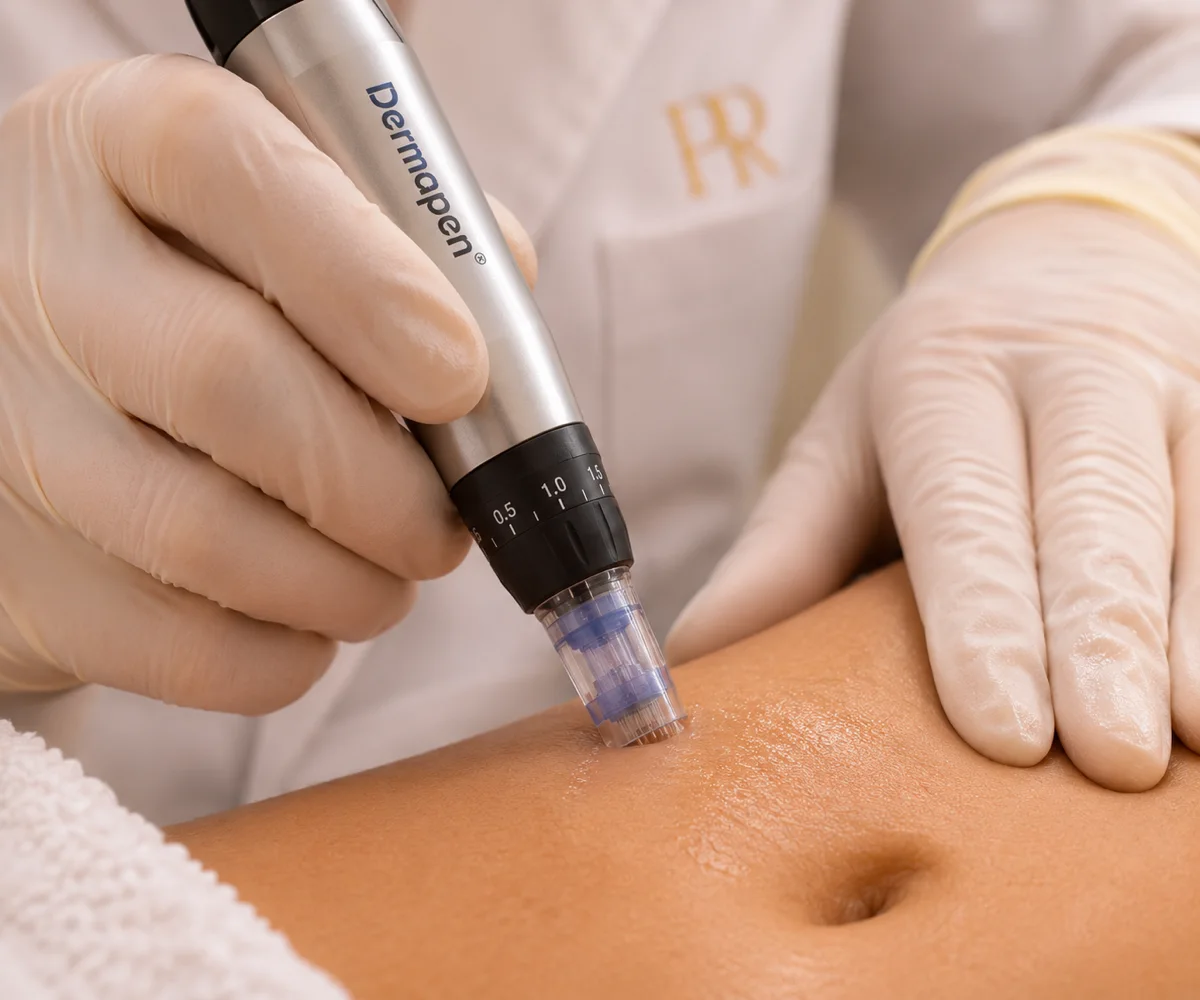
Microneedling pen gliding over the skin during a treatment at the clinic, in bright light

Texture and fine lines

Microneedling

Small, controlled punctures in the skin trigger a repair response and stimulate collagen and elastin, improving texture and fine lines. Several sessions are required, spaced weeks apart, and improvement is gradual. The skin on the neck is thin and sensitive, so the technique and depth are selected carefully.

May be considered when

the lines are fine and the skin has uneven texture, the skin is healthy, with no irritation, infection or lesion awaiting assessment, and you accept several sessions and gradual results, with no promise that the lines will disappear.

Find out more
Doctor preparing a biostimulator injection during a treatment at the clinic, in natural light

Firmness of the skin

Collagen biostimulators

The application of small quantities of a substance that progressively stimulates the skin to produce its own collagen, improving skin firmness and quality. The technique is delicate on the neck and the effect is gradual; not all products are indicated for use in this area.

May be considered when

the skin is thin and has lost firmness, the lines are mainly a matter of skin quality, and the doctor has assessed the type of wrinkle and explained the limited evidence, the alternatives and the risks.

Find out more

What the journey looks like

From the first conversation to a plan tailored to you

No procedure begins without an assessment by the doctor. Most people start with the simplest approach, and only then is anything further considered.

  1. 01At the clinic

    Telling your story

    The doctor asks when you first noticed the wrinkles, whether they have worsened with changes in weight, sun exposure or screen time, which creams you have used and what you would like to improve.

  2. 02At the clinic

    Examining the neck

    The type of wrinkle, the thickness and firmness of the skin, and the presence of any bands, folds, patches or other signs are assessed. If there is a lesion or lump, the first step is to assess it or refer you to the appropriate specialty.

  3. 03At home

    Protect and care for the skin

    The simplest measures come first: using sunscreen every day, moisturising, adjusting your posture and pillow and, when indicated, using a retinoid with care. In many cases, these measures make the greatest difference.

  4. 04Over time

    Decide and follow up

    If the lines persist, the doctor explains whether a procedure makes sense, what can be expected and how many sessions are needed, without promising results. The examination is repeated and the plan adjusted, including maintenance.

Day to day

What helps at home

What you do at home matters more than you might think. These are sensible measures to take while you wait for your consultation and alongside the clinic’s plan.

The golden rule

Protecting the neck before trying to correct it

Daily sunscreen use has the greatest effect on skin ageing, yet the neck is often overlooked. Prevention matters more than correction, and no cream can eliminate vertical bands or laxity. A lump or changing patch on the neck is not a wrinkle and should be assessed by a doctor.

Applying sunscreen to the neck

Sun exposure is the leading external cause of skin ageing, and the neck is rarely protected with sunscreen.

In practice: the same sunscreen as for the face, every day, and reapply when you are in the sun; a collar or scarf when the sun is strong.

Moisturising and caring for the skin

Moisturising improves the look of the skin in the short term, although it does not erase lines.

In practice: a simple moisturiser after bathing; your face cream, if well tolerated, will do, without needing a “neck-specific” product.

Using retinoids with care

Retinol has some evidence for improving fine lines and texture, but the skin on the neck is more easily irritated than facial skin.

In practice: start at a low concentration, a few nights a week, and increase slowly; in pregnancy and breastfeeding, only on medical advice.

Adjusting posture and pillow

Less repeated folding means that existing lines are less likely to become more pronounced.

In practice: screen at eye level, breaks to move the neck and a pillow that keeps it aligned with the spine.

Dr Michelle Campagnoli, clinical director of Clínica Luxmed

Who will look after you

An assessment carried out by the doctor

At Luxmed in Algés, the first step is always an assessment with Dr Michelle Campagnoli. She will examine your neck, establish which type of wrinkle you have and whether any signs require further investigation, and agree with you what is appropriate before any procedure.

  • Physical examination and medical historyA discussion about sun exposure, weight, posture and skin care, and an examination of the neck at rest and in motion.
  • A plan tailored to youA clear plan without promises, addressing lifestyle measures first and providing follow-up over time.
  • No obligationThe cost of any treatment is confirmed only after the assessment.
Book an assessment

Book a consultation

Book your consultation

Choose how you prefer to get in touch. We will arrange the assessment consultation with Dr Michelle Campagnoli.

Booking through the websiteAssessment consultationTalk to our assistant on WhatsApp and ask for the current price of the assessment.

New Life Miraflores, Algés · Office Center, R. Santa Teresa do Menino Jesus n.º 6, 9.º C, 1495-048

Your details are used only for this contact. Any treatment depends on a prior medical assessment.

Request an appointmentIt takes less than a minute.
Speciality
You do not need to go into detail. The doctor will talk to you during the consultation.
Request received. Our team will contact you as soon as possible.
Why do neck wrinkles appear, even in young people?

Almost always because of a combination of factors: ageing and collagen loss, cumulative sun exposure in an area that is rarely protected with sunscreen, genetics, repeated folding of the skin when the head is bent, weight fluctuations and smoking. Some people have had horizontal lines since the age of 20 simply because they run in the family, and this is not a sign of disease. The first step is therefore to establish which type of wrinkle you have and which factor contributes most in your case.

Do phones and screens cause neck wrinkles?

Repeated folding of the skin when looking down may make horizontal lines more pronounced — the so-called “tech neck” — particularly in people who are already prone to them. This is a plausible explanation, but direct evidence is limited and it is not the only cause. Raising your screen to eye level and taking breaks are sensible, low-risk measures; if you have neck pain, speak to your doctor or physiotherapist.

Are horizontal lines, vertical bands and folds beneath the chin the same thing?

No. Horizontal lines are mainly caused by repeated folding and genetics; vertical bands arise from the platysma muscle, which becomes more visible with age; fine, crepey skin is mainly caused by sun exposure; and folds beneath the chin are associated with fat and skin laxity. Each responds differently to creams and treatments, so identifying the type guides the choice of treatment.

Does sleeping on your side or do weight fluctuations worsen neck wrinkles?

They may make existing wrinkles more pronounced. Sleeping with the neck bent repeatedly folds the skin along the same lines, while major weight fluctuations stretch and loosen the skin. These factors do not usually cause wrinkles on their own, but they contribute. A pillow that keeps the neck aligned and gradual weight loss can help prevent the wrinkles from worsening.

Does a neck cream work? Do I need a specific one?

Some ingredients are supported by evidence, while others rely mainly on marketing claims. Daily sunscreen provides the greatest preventive benefit, retinol has some evidence for improving fine lines and texture, and moisturisers improve the skin's appearance in the short term. You do not need a specific neck cream: your usual face cream will do if it is well tolerated. No cream can eliminate vertical bands or laxity.

How can neck wrinkles be removed at home? Do exercises help?

At home, you can mainly prevent wrinkles and make them less noticeable: use sunscreen every day, moisturise, use a retinoid carefully when indicated and adjust your posture. Evidence that facial exercises improve neck wrinkles is limited. Well-established lines are unlikely to disappear with home care alone, in which case an assessment is worthwhile.

What in-clinic treatments exist for neck wrinkles?

Depending on the type of wrinkle, options described include microneedling and peels for texture and fine lines, biostimulators and radiofrequency for firmness, fluid hyaluronic acid for horizontal lines and botulinum toxin for platysma bands, often used in combination; marked laxity may require surgery. For this concern, the clinic offers microneedling, collagen biostimulators and radiofrequency (Sectum radiofrequency by Neauvia). Evidence is limited and results vary; during the consultation, the doctor will explain what is appropriate in your case.

How many sessions are needed and how long does the result last?

It depends on the treatment and your skin, and results cannot be guaranteed or permanent. In many cases, several sessions are needed, for example 2 to 4, spaced weeks apart, with gradual improvement over a period of months. Results tend to fade over time, particularly if sun exposure and repeated folding continue, so maintenance and home care are just as important as the procedure.

Do hyaluronic acid and botulinum toxin in the neck look natural? Are they safe?

With the appropriate product and technique, fluid hyaluronic acid can produce a subtle improvement in horizontal lines, but the technique is delicate: if injected too superficially, it can form nodules. Botulinum toxin is used for platysma bands in selected cases, and its use in the neck is off-label for many products. Results vary with both treatments, and the doctor will explain during the consultation whether either is appropriate in your case.

When should I see a doctor?

Book a consultation if you would like to improve established wrinkles or laxity, or want to choose the right treatment before you begin. If you have a lump or swelling in your neck, a patch or mole that changes colour, shape or outline, a sore that does not heal, persistent hoarseness or difficulty swallowing, you need a medical assessment before any aesthetic treatment. If in doubt, call SNS 24 outside normal hours on 808 24 24 24. If you develop sudden swelling of the neck or sudden difficulty breathing or swallowing, call 112.

We could not find that question. Ask us on WhatsApp

Scientific references

This page is based on the sources below and was reviewed by Dr. Michelle Campagnoli. Last updated on .

  1. Krutmann J, Bouloc A, Sore G, Bernard BA, Passeron T. The skin aging exposome. J Dermatol Sci, 2017.
  2. Farage MA, Miller KW, Elsner P, Maibach HI. Characteristics of the aging skin. Adv Wound Care (New Rochelle), 2013.
  3. Fabi SG, Burgess C, Carruthers A, et al. Consensus recommendations for combined aesthetic interventions using botulinum toxin, fillers, and microfocused ultrasound in the neck, décolletage, hands, and other areas of the body. Dermatol Surg, 2016.
  4. Kafi R, Kwak HSR, Schumacher WE, et al. Improvement of naturally aged skin with vitamin A (retinol). Arch Dermatol, 2007.
  5. Hughes MCB, Williams GM, Baker P, Green AC. Sunscreen and prevention of skin aging: a randomized trial. Ann Intern Med, 2013.
  6. Alster TS, Graham PM. Microneedling: a review and practical guide. Dermatol Surg, 2018.
  7. Beasley KL, Weiss RA. Radiofrequency in cosmetic dermatology. Dermatol Clin, 2014.
  8. Wong ZY, et al. Efficacy and safety of hyaluronic acid fillers for horizontal neck lines: a systematic review and meta-analysis. Aesthet Surg J Open Forum, 2026.
CallAssistantAvailableBook