Algés, Oeiras Mon to Fri · 09:00 to 13:00 and 14:00 to 19:00 · Sat · 09:00 to 14:00
WhatsApp Book a consultation

Body aesthetics

Ageing handsWhen your hands look older than the rest of you and you want to understand why and what can be done

The hands are among the first areas of the body to show signs of ageing, often before the face. This is no coincidence: they are exposed to the sun every day, washed dozens of times and have very thin skin with little fat beneath it. This is why some people aged 35 have hands that look older, while some people aged 60 have hands that have aged well. Here we explain the usual causes of thin, wrinkled and dull skin, what helps at home and which claims are little more than promises, how the clinic approaches hand rejuvenation in three areas (skin, pigmentation and volume), and when a medical assessment is advisable before any treatment at Clínica Luxmed, in Algés.

Reviewed by Dr Michelle Campagnoli, clinical director

  • 3procedures that the catalogue associates with this topic
  • 3areas to assess: skin, pigmentation and volume
  • Nocommitment
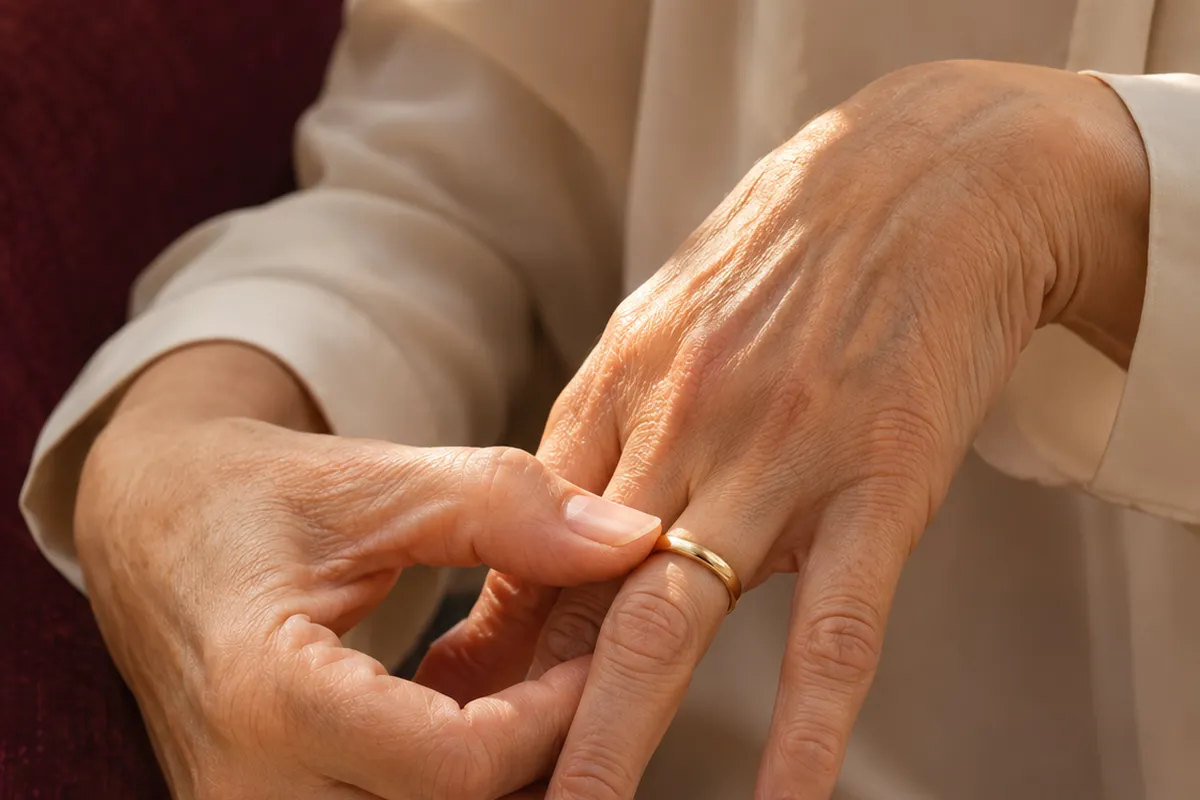
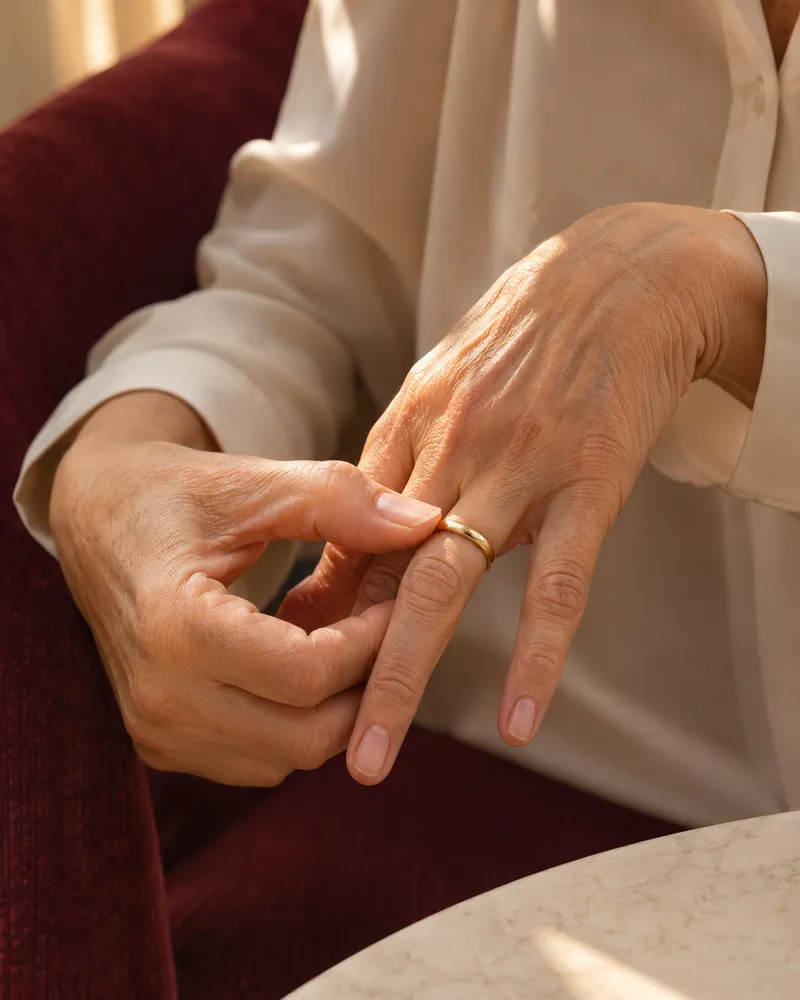
Woman's hands adjusting a loose ring, with thin skin on the back of the hand

How to recognise it

Is it ageing hands that you are seeing?

The hands age in three overlapping ways: the skin becomes thin and wrinkled, pigmentation and rough areas appear, and volume is lost. These signs can help you identify which changes affect you before your assessment.

Tick what you recognise0/7

Tick the signs you recognise in your case. This is not a diagnosis, it is only meant to give you an idea.

Do you have a patch or mole on one hand that has changed colour, shape or size, that bleeds or that does not heal? Is there a rough, scaly or crusted area that has persisted for weeks? Are the hands cracked, bleeding or with intense itching, or are the joints swollen, hot and sore? It needs a medical assessment before any treatment. Out of hours, call SNS 24: 808 24 24 24.

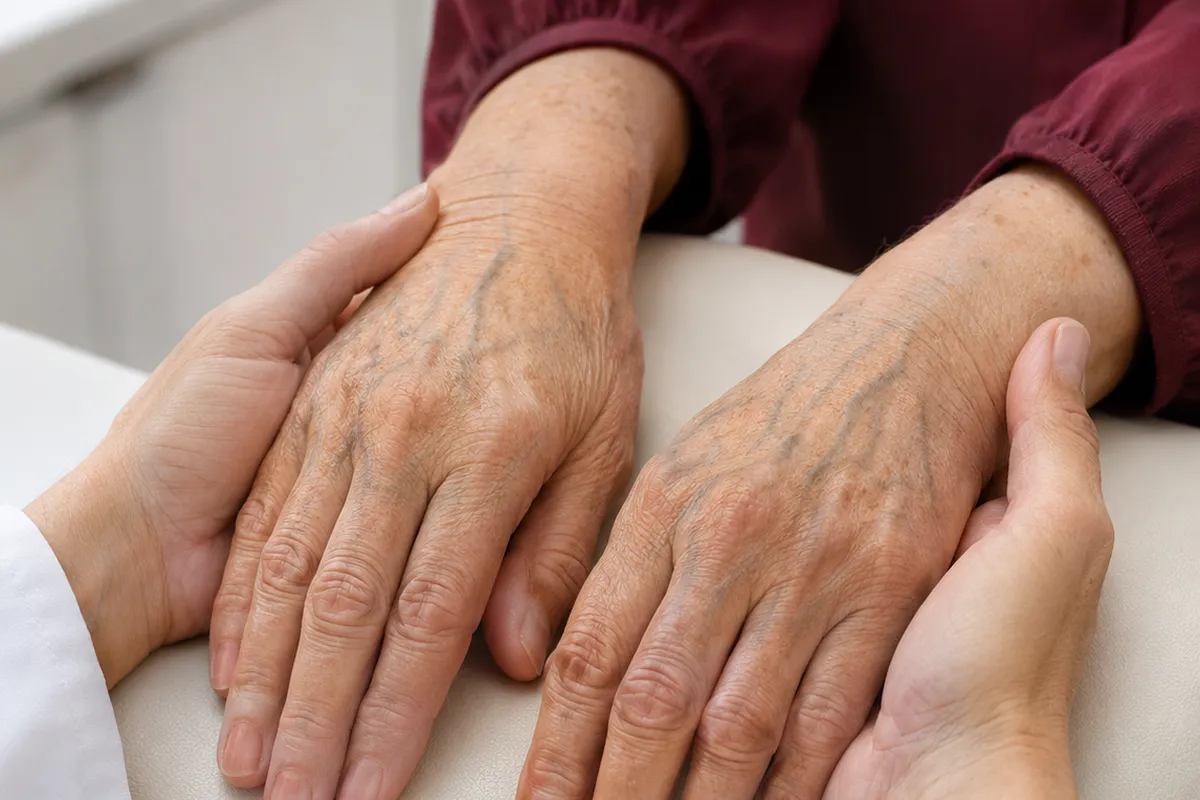
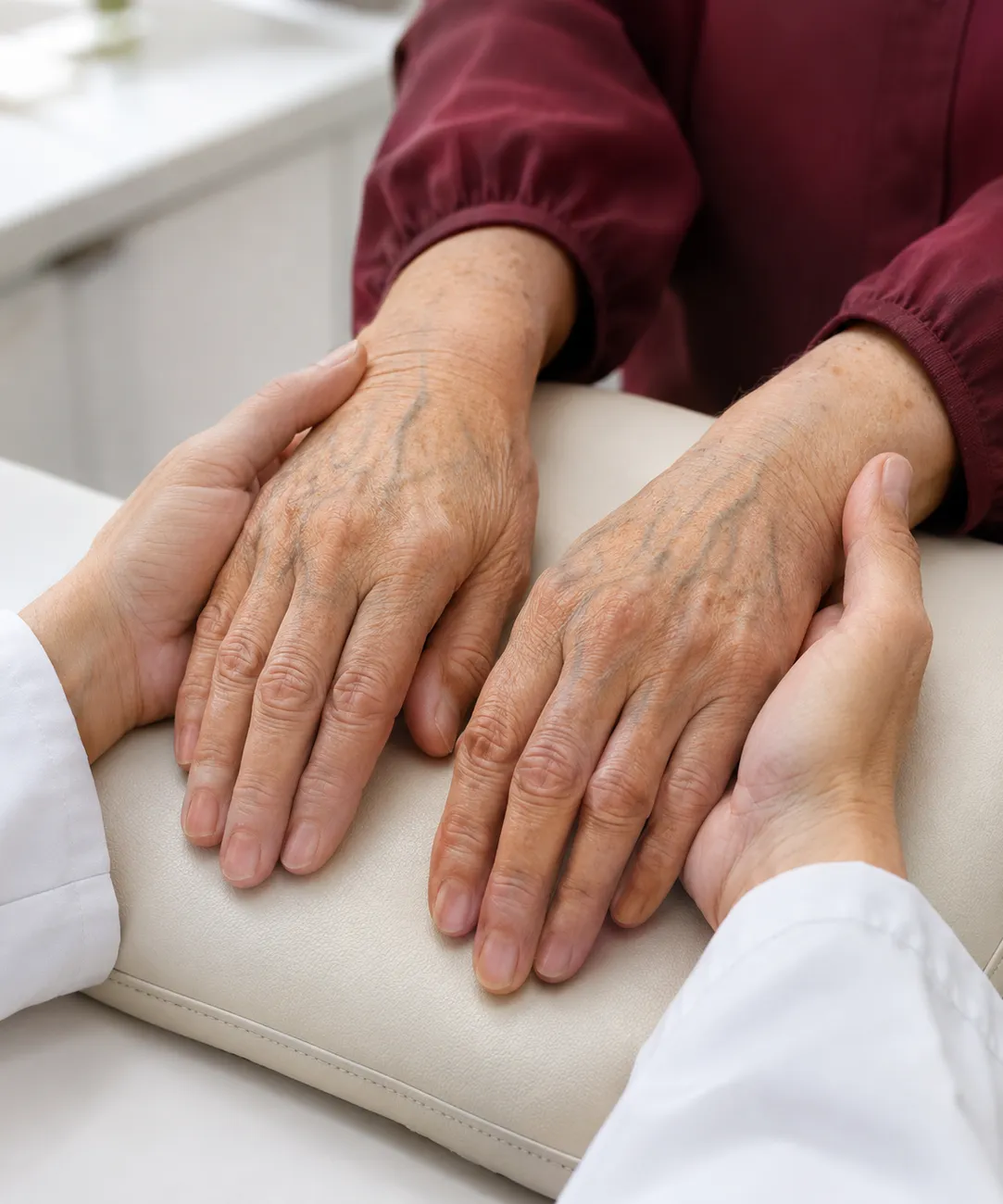
Female doctor holding a patient's hands over a support cushion
Photograph of a consultation. The dots mark what the doctor is assessing.

Why it happens

What may be behind ageing hands

There is almost always more than one cause, and some of them can be controlled. Select a situation to see how it may contribute and what usually helps.

The accumulated sun

The backs of the hands are exposed to the sun every day when driving, walking outdoors or sitting by a window, yet sunscreen is rarely applied to them. Ultraviolet rays damage collagen and elastin and stimulate pigment production, leading to dark marks, thin skin and fine lines. For many people, sun exposure is by far the biggest contributing factor, and it is one that can be reduced.

What weighs on it

Spending years without protecting your hands, especially when driving, and only applying sunscreen to your face.

What helps

Broad-spectrum sunscreen on the backs of the hands every day, reapplied after washing them, and gloves or long sleeves in strong sun.

Normal or to be assessed

Common ageing or something to assess

Most signs of ageing in the hands have well-understood, harmless causes. However, some lesions need to be assessed before any treatment, because their appearance is only the visible part of the problem.

  • What it looks like. Thin, wrinkled, dull skin, with flat, symmetrical brown patches on both hands, which appeared slowly over years, and more visible tendons and veins.

  • When it is noticed. When resting the hands in a photograph, when comparing with other people of the same age, or after a phase of a lot of washing and little moisturising.

  • What the clinic does. The doctor listens to the history, examines the skin and the patches, confirms that it is common ageing and assesses the three fronts, before proposing whatever makes sense.

  • At home. Sunscreen on the backs of the hands, moisturising several times a day, gloves for household tasks and patience: creams improve the skin, but do not restore volume.

Do you have a hand that is red, hot, swollen and very sore, with fever or redness spreading up the arm? Go to A&E out of hours you can call SNS 24: 808 24 24 24. Call 112 if there is confusion, shortness of breath or sudden, very intense pain. If you have a patch that is changing or doubts, book an assessment first.

Book an assessment

What the clinic may consider

Options to rejuvenate the hands

Hands age in three main areas—skin quality, pigmentation and volume—and each requires a different approach. The foundations are always the same: sunscreen, moisturising and gloves. Only after an assessment should a procedure be considered. For skin quality, the clinic may consider microneedling and collagen biostimulators; for lost volume, hyaluronic acid. Pigmented marks have their own page because they require a separate assessment. The evidence is limited: reviews report good results for most people with each technique used alone, but there are few studies on the best combination. Results vary between individuals, are generally temporary and require maintenance.

Book an assessment
Dr Michelle Campagnoli, clinical director of Clínica Luxmed

First step

Assessment consultation

The doctor listens to what you are experiencing, examines your case and explains the suitable options. No treatment begins without this consultation.

May be considered when

you want to understand the cause and decide on the best path, with time and without commitment.

Book an assessment
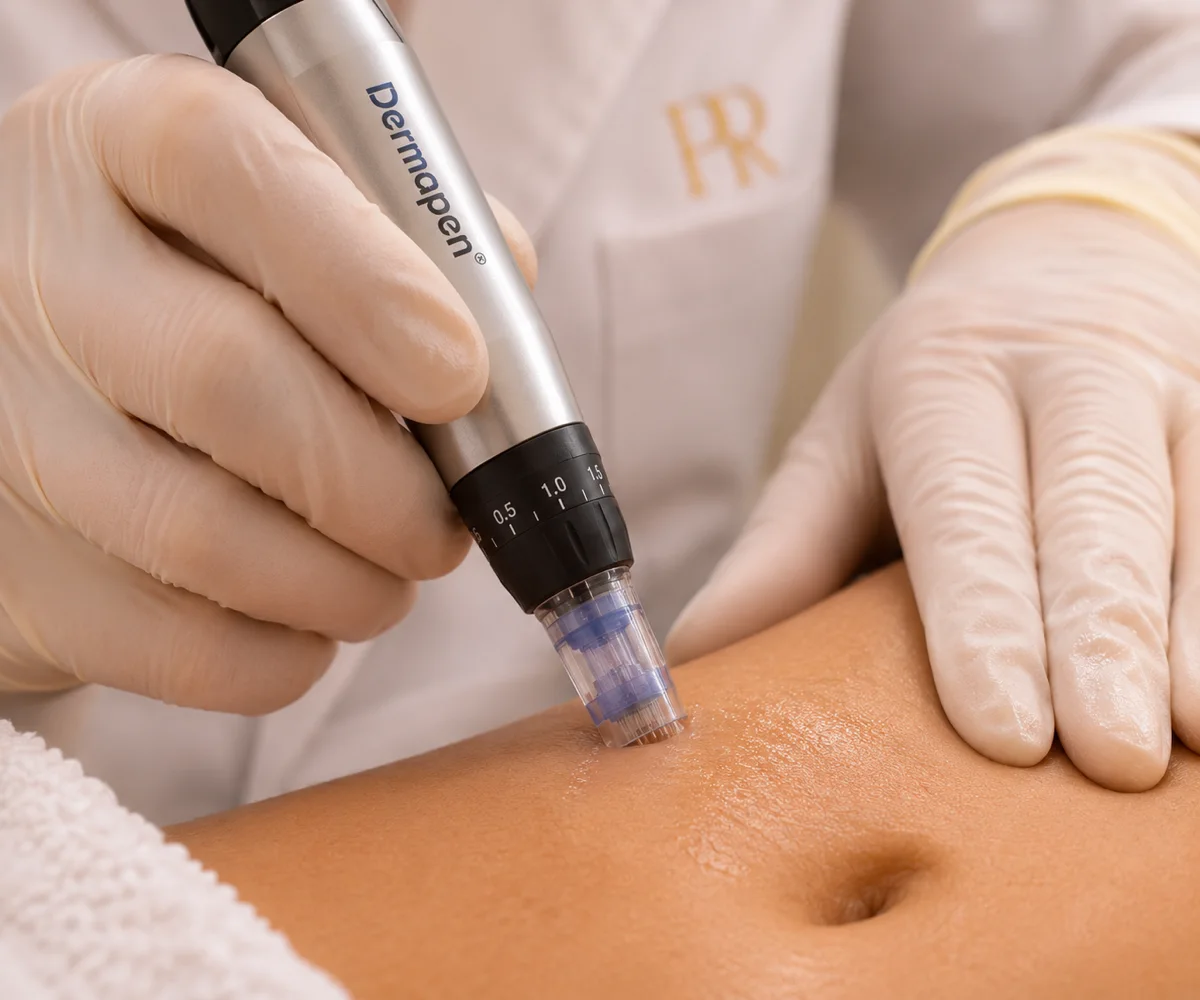
Close-up of a microneedling pen in contact with the skin, with the gloved doctor holding the area

Skin quality

Microneedling

Very fine needles create controlled micro-injuries in the skin to stimulate collagen and elastin, improving texture and evenness. On the hands, where the skin is thin, treatment is carried out over several sessions spaced several weeks apart, with the depth adjusted to each case. It is not performed on irritated, inflamed or infected skin.

May be considered when

the skin is thin, dull and uneven in texture, there is no dermatitis or any lesion awaiting assessment, and the doctor has explained the risks and what you can realistically expect.

Find out more
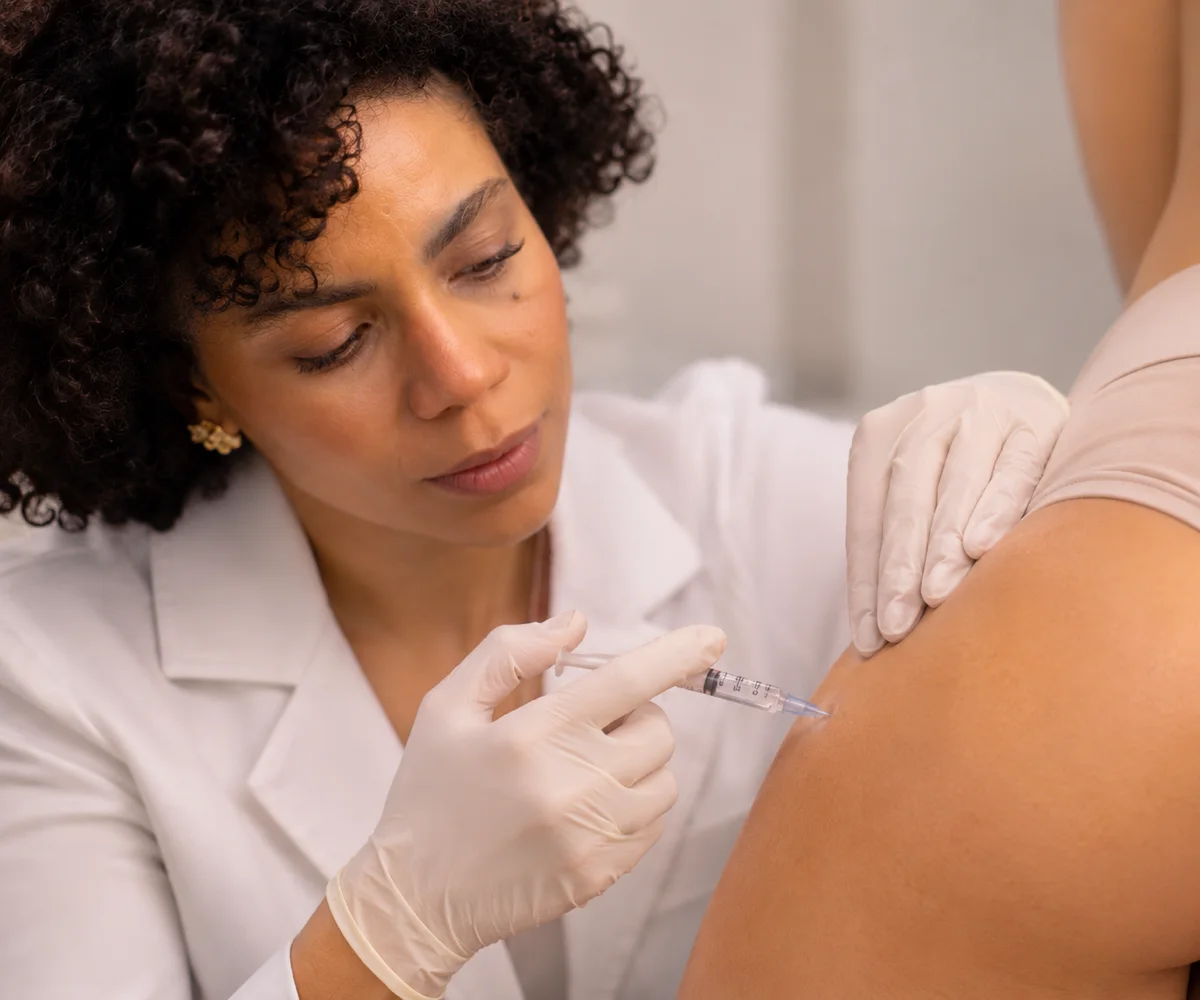
The doctor in gloves applying a filler with a fine syringe to the patient’s arm, in close-up

Volume

Hyaluronic acid

An injectable filler that restores some of the volume lost from the back of the hand, making the tendons and veins less visible and giving the hand a fuller contour. The result settles gradually and is temporary because hyaluronic acid is absorbed by the body. Reviews report favourable outcomes in most people, but patients need to understand the limitations and potential complications.

May be considered when

what bothers you most is the loss of volume, with prominent tendons and veins, the skin is in good condition, and the doctor has explained the risks, the likely duration and the need for repeat treatment.

Find out more

What the journey looks like

From the first conversation to a plan tailored to you

No procedure is carried out without an assessment consultation with the doctor. Hand treatment requires a phased plan, and most people start with the simplest measures.

  1. 01At the clinic

    Telling your story

    The doctor asks what bothers you most about your hands (the skin, the patches or the volume), how long it has bothered you, what you do for a living, your sun exposure and smoking history, which creams you have used and whether you have ever had eczema or skin cancer.

  2. 02At the clinic

    Examining the hands

    The thickness and elasticity of the skin, the patches, the roughness and the volume are examined. If there is a patch that is changing, a scaly area that persists or dermatitis, a dermatological assessment is requested before any procedure.

  3. 03At home

    Protecting and moisturising

    Sunscreen every day, moisturiser after washing and gloves for tasks involving water. In many cases this alone improves the appearance considerably, and is what makes any procedure last longer.

  4. 04Over time

    A phased plan and maintenance

    Where appropriate, the doctor explains the order in which each concern will be addressed (skin quality, pigmentation and volume), what to expect and the interval between sessions, without promising results. The full plan generally takes several months, followed by maintenance.

Day to day

What helps at home

What you do at home matters more than you might think and affects what can be achieved in the clinic. These are the measures you can start now and continue alongside your clinic treatment plan.

The golden rule

Protecting the backs of the hands as you protect the face

Sun exposure is the most important cause and the only one you can limit every day. Applying sunscreen to the backs of your hands and reapplying it after washing them is more valuable than any expensive cream, and also protects the results of any future treatment. A persistent patch or rough area should be examined by a doctor rather than ‘treated’ at home.

Sunscreen on the hands

The backs of the hands are exposed to the sun every day, when driving and outdoors, and this is where patches and thinning skin develop.

In practice: broad-spectrum, in the morning, reapplied after washing the hands and after a few hours in the sun.

Moisturising after washing

Washing removes oils from the skin, and dry skin always looks more aged.

In practice: a moisturiser with urea or glycerine several times a day, above all straight after washing the hands and at night.

Wearing gloves for tasks

Water, detergents and cleaning products are among the main causes of damage to the skin on the hands.

In practice: gloves for washing up and cleaning, with a cotton lining if you sweat, and take the gloves off from time to time.

Setting up a simple routine

A few products used regularly are more effective than many products used haphazardly.

In practice: in the morning moisturiser and sunscreen; at night, a retinoid or a depigmenting agent, only on advice, and then moisturiser. Results are seen over weeks to months.

Dr Michelle Campagnoli, clinical director of Clínica Luxmed

Who will look after you

An assessment carried out by the doctor

At Luxmed, in Algés, the first step is always an assessment with Dr Michelle Campagnoli. She examines your hands, determines which aspect is the main concern (the skin, pigmentation or volume), checks whether any lesion needs to be assessed first and works with you to decide on an appropriate approach before any procedure.

  • Physical examination and medical historyA conversation about the sun, washing, occupation, creams and health, and examination of the hands.
  • A plan tailored to youA clear plan, in phases and without promises, with protection and care first and follow-up over time.
  • No obligationThe cost of any treatment is confirmed only after the assessment.
Book an assessment

Book a consultation

Book your consultation

Choose how you prefer to get in touch. We will arrange the assessment consultation with Dr Michelle Campagnoli.

Booking through the websiteAssessment consultationTalk to our assistant on WhatsApp and ask for the current price of the assessment.

New Life Miraflores, Algés · Office Center, R. Santa Teresa do Menino Jesus n.º 6, 9.º C, 1495-048

Your details are used only for this contact. Any treatment depends on a prior medical assessment.

Request an appointmentIt takes less than a minute.
Speciality
You do not need to go into detail. The doctor will talk to you during the consultation.
Request received. Our team will contact you as soon as possible.
Why do my hands look older than my age?

It is almost always due to a combination of causes, the most significant of which is sun exposure: the backs of the hands are exposed every day, rarely have sunscreen applied, lose collagen and develop patches. Frequent washing and detergents, which dry and irritate the skin, also contribute, as does smoking, which reduces collagen. Genetics determine skin thickness and the amount of fat beneath it. In younger people, premature hand ageing is usually due more to sun exposure and washing than to age, and the good news is that much of it can be prevented.

Do frequent handwashing and the use of alcohol-based hand sanitiser make the hands age?

It dries the skin and, over time, can cause dermatitis—an inflammation with redness, flaking and cracks—and dry skin looks more wrinkled and older. Clinical sources identify water, soaps and detergents as common causes of contact dermatitis on the hands. You do not need to wash your hands less often than necessary: use lukewarm water, dry them thoroughly and moisturise immediately afterwards. If your hands crack, bleed or become intensely itchy, ask for an assessment.

Is thin, wrinkled skin with visible veins due solely to age?

To a large extent, yes: with age, the skin loses collagen and elastin and the fat on the back of the hand decreases, making the skin thinner and the tendons and veins more prominent. However, sun exposure, smoking, low body weight and genetics accelerate the process. If the loss of volume and visible veins are what bother you most, there is a separate page on thin hands and prominent veins. At the consultation, the doctor assesses whether the main concern is the skin, volume or pigmentation.

Are the patches, roughness and crusts on the hands just age?

Flat, symmetrical brown patches are usually benign solar lentigines caused by sun exposure. However, a persistent rough, scaly or crusted area may be an actinic keratosis, a sun-induced lesion that needs assessment, while a patch or mole that changes colour, shape or size, or that bleeds or hurts, may be more serious. Any lesion you do not recognise should therefore be examined by a doctor before treatment.

Which cream should I use for ageing hands?

It depends on what you want to improve. For dryness and texture, a moisturiser with urea or glycerine, several times a day. For patches and fine wrinkles, there are active ingredients such as retinoids and depigmenting agents, which are used at night and on advice, starting slowly. A study in 36 older people, with retinol applied to the arms, showed improvement in fine wrinkles after 24 weeks. And sunscreen prevents worsening. Creams do not restore volume.

Are there treatments at the clinic to rejuvenate the hands?

After an assessment, the clinic may consider microneedling and collagen biostimulators for skin quality, and hyaluronic acid for volume. For pigmentation, see the page on patches on the hands: the doctor will first determine what type of patch it is. Each treatment addresses a different concern, and the doctor will explain what is appropriate in your case, the evidence for each option and what you can realistically expect. Results vary and are generally temporary.

Can I combine treatments? How long does a plan take?

Hand rejuvenation often requires a combination of treatments because the hands age in three main areas. Reviews report good results with each technique used alone, but there are few studies on the best combination, so the plan is tailored to the individual and based on sound clinical judgement. The full plan generally takes three to six months. Some treatments can be combined on the same day, while others require an interval, and the order may vary according to what bothers you most.

How long do the results last and what are the risks?

There are no guaranteed or permanent results. Hyaluronic acid is absorbed by the body, so injections need to be repeated after a period of time. The effects of microneedling and biostimulators on the skin develop gradually and also require maintenance. Risks include redness, swelling and nodules and, more rarely, complications that the doctor will explain beforehand, so treatment should be provided by a trained professional. Sunscreen helps prolong any result.

Can I have hand treatments if my skin is irritated, if I have dermatitis or if I am pregnant?

It is not advisable. Procedures that affect the skin should not be carried out on irritated, inflamed or infected skin, and dermatitis must be treated first. During pregnancy and breastfeeding, many procedures and depigmenting agents should be postponed, and you should speak to your obstetric team before using any product. Lesions awaiting assessment, such as a changing patch or a persistent crust, must be examined by a doctor before any procedure.

When should I see a doctor first?

Book a consultation if you have a patch or mole that has changed colour, shape or size, that bleeds or hurts, a rough, scaly or crusted area that has persisted for weeks, a sore that does not heal, hands that are cracked and bleeding or with intense itching, or joints that are swollen, hot and sore. If in doubt, out of hours call SNS 24 (808 24 24 24). With a hand that is red, hot and swollen, with fever and spreading redness, go to A&E, and call 112 if there is confusion, shortness of breath or sudden, very intense pain.

We could not find that question. Ask us on WhatsApp

Scientific references

This page is based on the sources below and was reviewed by Dr. Michelle Campagnoli. Last updated on .

  1. Krutmann J, Bouloc A, Sore G, Bernard BA, Passeron T. The skin aging exposome. J Dermatol Sci, 2017.
  2. Riyaz FR, Ozog D. Hand rejuvenation. Semin Cutan Med Surg, 2015.
  3. Farage MA, Miller KW, Elsner P, Maibach HI. Characteristics of the aging skin. Adv Wound Care (New Rochelle), 2013.
  4. Kafi R, Kwak HS, Schumacher WE, Cho S, Hanft VN, Hamilton TA, King AL, Neal JD, Varani J, Fisher GJ, Voorhees JJ, Kang S. Improvement of naturally aged skin with vitamin A (retinol). Arch Dermatol, 2007.
  5. Pan M, Heinecke G, Bernardo S, Tsui C, Levitt J. Urea: a comprehensive review of the clinical literature. Dermatol Online J, 2013.
  6. Hughes MCB, Williams GM, Baker P, Green AC. Sunscreen and prevention of skin aging: a randomized trial. Ann Intern Med, 2013.
  7. Butterwick K, Sadick N. Hand rejuvenation using a combination approach. Dermatol Surg, 2016.
  8. Fabi SG, Burgess C, Carruthers A, et al. Consensus recommendations for combined aesthetic interventions using botulinum toxin, fillers, and microfocused ultrasound in the neck, décolletage, hands, and other areas of the body. Dermatol Surg, 2016.
  9. NHS. Contact dermatitis. (NHS, acedido 2026-11-11)
  10. DermNet NZ. Hand dermatitis (hand eczema). (DermNet, acedido 2026-11-11)
  11. DermNet NZ. Solar lentigo. (DermNet, acedido 2026-11-11)
  12. DermNet NZ. Actinic keratoses (solar keratosis): diagnosis and treatment. (DermNet, acedido 2026-11-11)
CallAssistantAvailableBook