
Algés, Oeiras Mon to Fri · 09:00 to 13:00 and 14:00 to 19:00 · Sat · 09:00 to 14:00
WhatsApp Book a consultation

Body aesthetics

Neck and décolletage with rough, patchy skinWhen the skin of the neck and décolletage has become thick, with patches and tiny vessels and you want to understand what the sun has left behind

Rough skin with brown patches and small visible blood vessels on the neck and upper chest is, in the vast majority of cases, the result of years of cumulative sun exposure: photoageing. This area rarely receives the same sun protection as the face, and the skin is thinner and heals more slowly. It is important, however, to distinguish benign sun damage from changes that need to be assessed by a doctor, such as rough, scaly patches that return after being picked off (actinic keratoses) or a changing patch. Here we explain how to recognise each sign, what you can do at home, what chemical peels and microneedling can and cannot achieve, and when you should have an assessment before any treatment at Clínica Luxmed, in Algés.

Reviewed by Dr Michelle Campagnoli, clinical director

  • 2procedures for this texture and tone
  • 1assessment, always first
  • Nocommitment
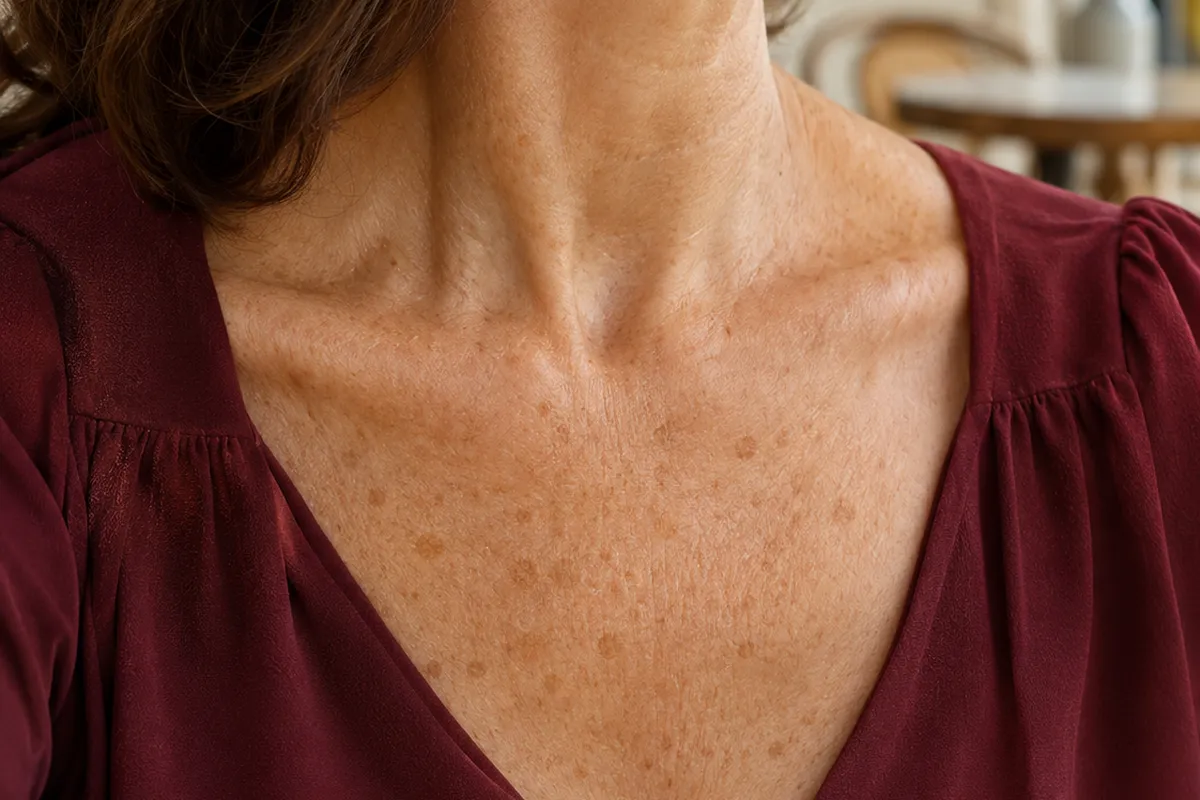
Woman in a V-neck blouse at a café table, with sun spots on her décolletage

How to recognise it

Is it sun damage on the neck and décolletage?

Sun damage can cause a range of signs, each with its own explanation. Almost all are benign, but some require attention. These signs can help you understand what may be happening before your assessment.

Tick what you recognise0/7

Tick the signs you recognise in your case. This is not a diagnosis, it is only meant to give you an idea.

Do you have rough, scaly patches that return after being picked off, a sore that does not heal, or a patch or mole that changes colour, shape or size, is asymmetrical, has an irregular border, bleeds or is painful? Did the redness appear suddenly, with itching, pain or lesions elsewhere? You need a medical assessment before any treatment. Out of hours, call SNS 24: 808 24 24 24.

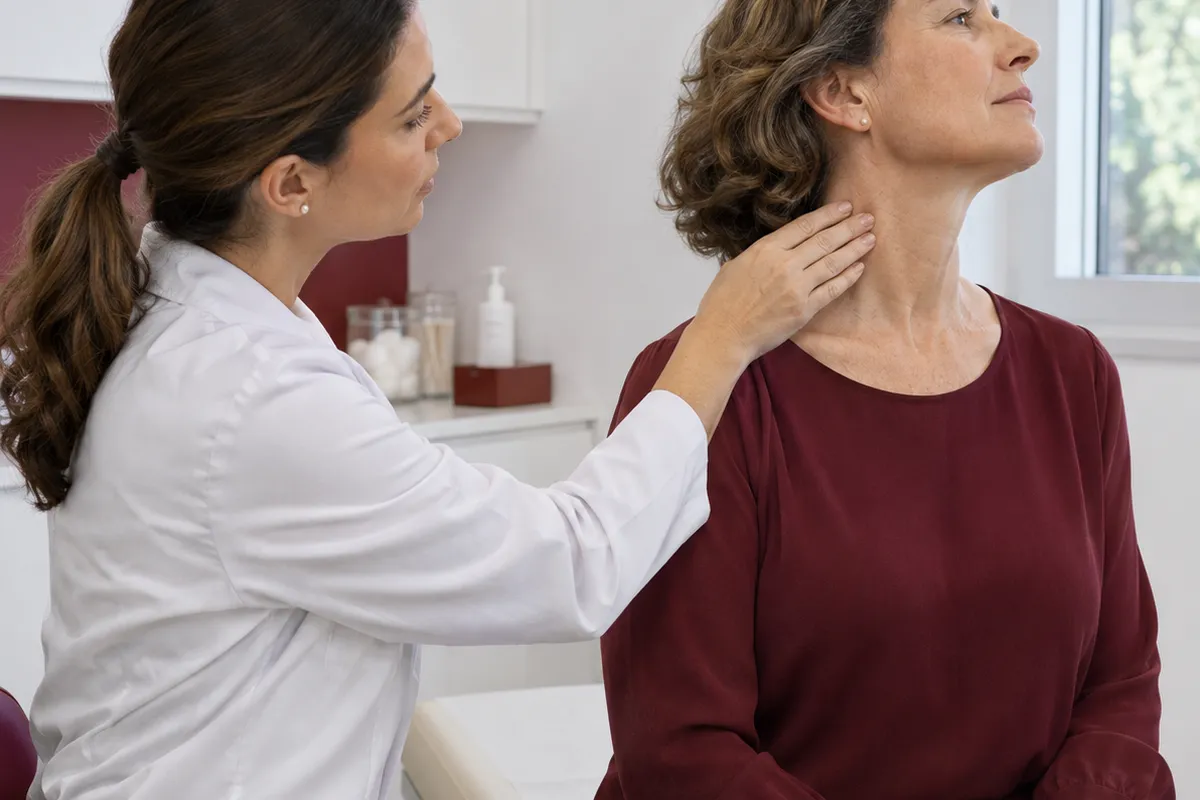
Female doctor examining the neck and décolletage of a seated patient
Photograph of a consultation. The dots mark what the doctor is assessing.

Why it happens

What may be behind rough, patchy skin

Cumulative sun exposure is the common thread, but several factors contribute. Select a situation to see how it contributes and what usually helps.

Accumulated sun

Ultraviolet radiation is the main cause of visible skin ageing, and the neck and upper chest are exposed to the sun for decades without receiving the same protection as the face. Over time, the skin becomes thicker and rougher, sometimes yellowish (solar elastosis), with more pronounced wrinkles and uneven tone.

What weighs on it

Exposing the neck and décolletage to the sun year after year without sunscreen, a hat or clothing that covers the area.

What helps

Protect your skin from the sun every day, especially in summer, and wait for it to stabilise before comparing results.

Normal or to be assessed

Benign sun damage or something requiring assessment

Most rough, patchy skin on the neck is benign sun damage. But some lesions call for assessment before any treatment, because texture and colour are only the visible part.

  • What it looks like. Rough, thick texture, flat brown patches that accumulate over the years, tiny vessels and the reddish-brown network of Civatte on the sides, sparing the area beneath the chin.

  • When it is noticed. After summer, in photographs, when wearing a neckline and beside the skin of the face, which has been better protected.

  • What the clinic does. The doctor examines the skin, confirms that the changes are due to benign sun damage and recommends an appropriate approach, beginning with sun protection.

  • At home. Daily sunscreen on the neck and chest, a hat and clothing, perfume on clothing and moisturising.

Do you have a sore that bleeds and does not stop, or swelling of the neck with difficulty breathing or swallowing? Call 112. If you have a lesion that is changing or doubts, out of hours you can call SNS 24: 808 24 24 24.

Book an assessment

What the clinic may consider

Options for the texture and patches of the neck

The first steps are always the same: rigorous sun protection every day, a hat and protective clothing, applying perfume to clothing, and moisturising. The skin must also be assessed before any procedure to avoid treating a lesion that needs medical attention. Only then, and provided the skin is healthy, may a chemical peel or microneedling be considered. The skin on the neck has fewer glands and heals more slowly than facial skin, so treatments are gentler and spaced further apart, and deep peels are not suitable. The evidence is limited: most studies of peels and microneedling have involved the face and other conditions, and few have focused on the neck and chest. Results are gradual, vary from person to person and generally require maintenance. Sectum Neauvia radiofrequency, which the clinic also uses, is intended primarily to improve skin firmness and does not treat pigmentation or roughness. It is discussed on the page about neck laxity. Other options may be available for the visible blood vessels and red network associated with poikiloderma; the doctor will assess these changes and, where appropriate, refer you to dermatology.

Book an assessment
Dr Michelle Campagnoli, clinical director of Clínica Luxmed

First step

Assessment consultation

The doctor listens to what you are experiencing, examines your case and explains the suitable options. No treatment begins without this consultation.

May be considered when

you want to understand the cause and decide on the best path, with time and without commitment.

Book an assessment
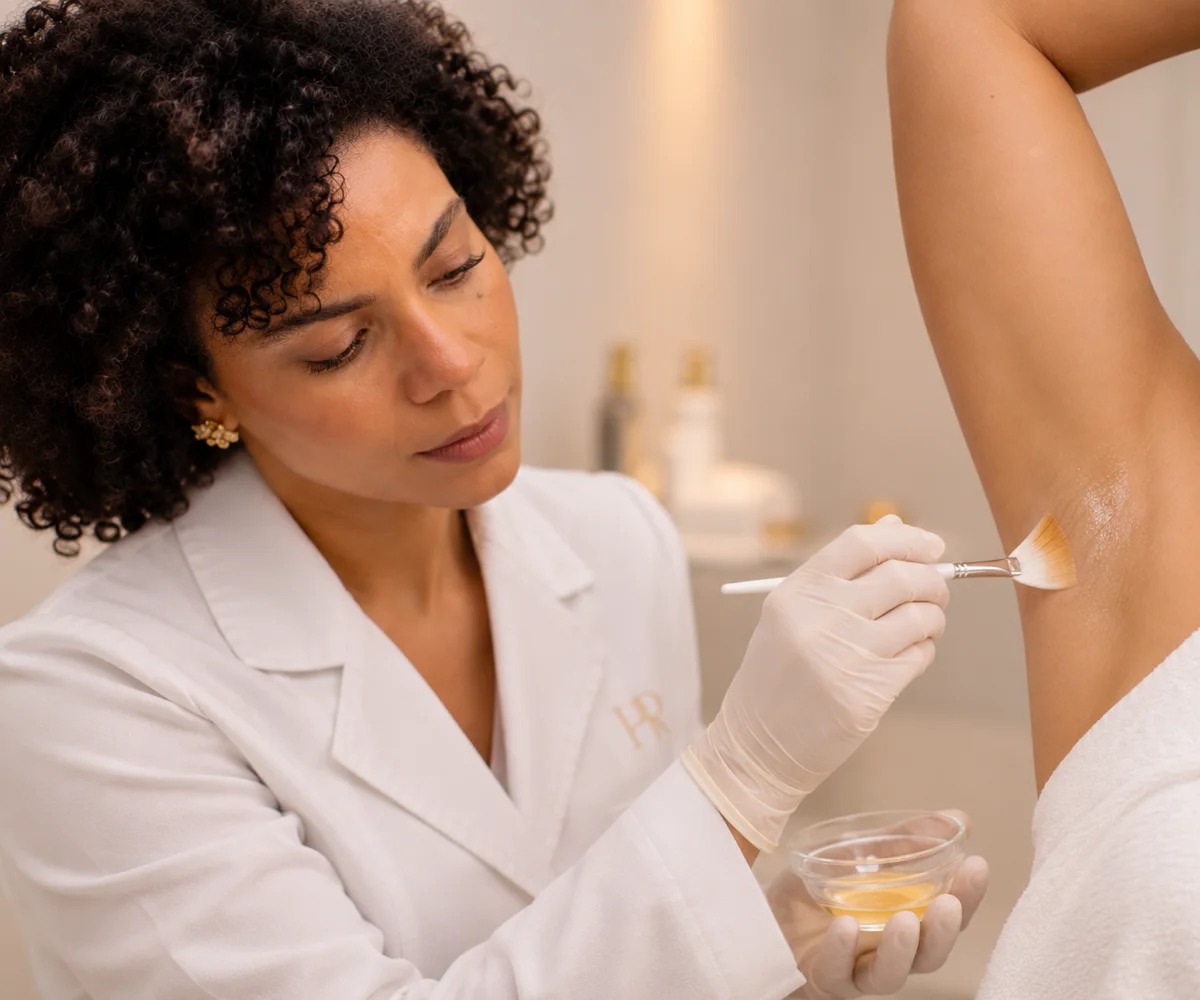
Consulting-room brush applying a peel solution to the skin, in bright consulting-room light

Skin renewal

Chemical peel

Application of an acid to the skin to renew the superficial layers, evening out the tone and softening thickened or darkened skin. On the neck, superficial peels are used, gentler and more widely spaced, because the skin heals more slowly than that of the face.

May be considered when

the patches are benign and have been assessed, the skin is not irritated or tanned, you are not pregnant or breastfeeding, and the doctor has explained the risks and what is realistic to expect.

Find out more
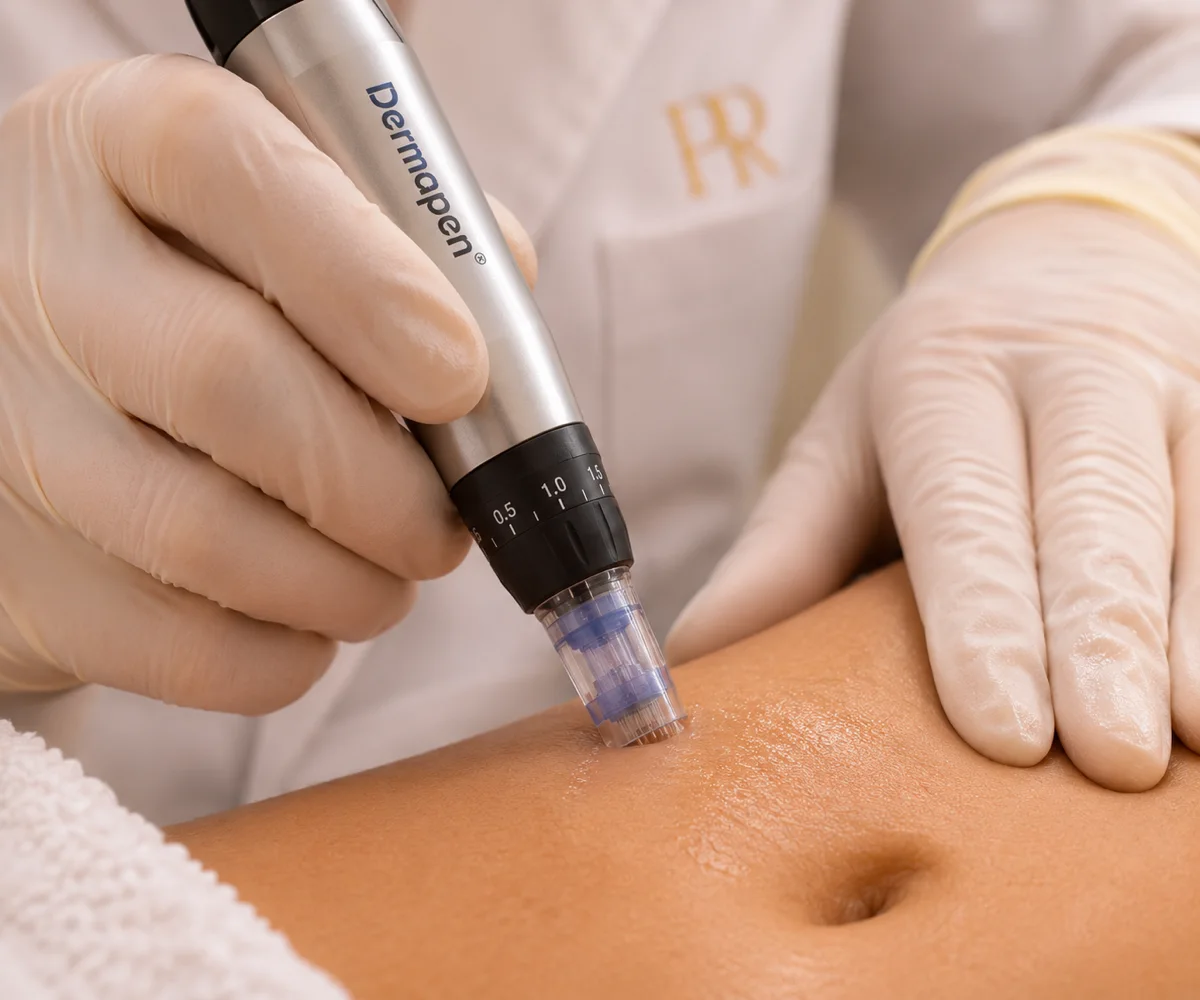
Microneedling pen gliding over the skin in bright clinical lighting

Collagen stimulation

Microneedling

Controlled micro-injuries are made in the skin using very fine needles, stimulating renewal and the production of collagen and elastin to improve texture, fine lines and skin evenness. Treatment usually involves several sessions, with redness that subsides within a few days.

May be considered when

the skin is healthy, with no infection or irritation, the lesions have been assessed, the concern is texture or fine lines, and you are willing to follow a plan involving several sessions spaced apart.

Find out more

What the journey looks like

From the first conversation to a plan tailored to you

No procedure begins without a consultation and assessment by the doctor. Most people start with sun protection and skin care, and further treatment is only considered afterwards.

  1. 01At the clinic

    Telling your story

    The doctor asks when you first noticed the changes, about your lifetime sun exposure and tanning history, the products and perfumes you use, the menopause and any medication you take, and whether any lesions bleed, hurt or recur.

  2. 02At the clinic

    Examining the skin

    The texture, colour and blood vessels of the neck and chest are examined, and the face and hands are also checked carefully. If a suspicious lesion is found, you will be referred to dermatology, and the lesion will only be treated after assessment and, if necessary, histological examination.

  3. 03At home

    Protect and care for the skin

    Use sunscreen every day, wear a hat and clothing that cover the area, apply perfume to clothing, and moisturise. These measures are the most important way to prevent the skin from worsening and form the basis of any treatment.

  4. 04Over time

    Decide and follow up

    If the texture and patches persist, the doctor explains whether a superficial peel or microneedling makes sense, how many sessions are needed, what can be expected and how to maintain it, without promising results. Monitoring of the skin continues.

Day to day

What helps at home

Daily care matters more than any procedure. These measures are helpful while you wait for your consultation and alongside the clinic’s treatment plan.

The golden rule

Protecting what can still be protected

Existing damage will not disappear with a cream, but what happens next depends greatly on the steps you take from today onwards. Sunscreen helps prevent further damage and allows the skin to recover, while a lesion that changes or recurs should be examined by a doctor rather than treated at home.

Sunscreen on the neck and chest

The neck and décolletage are the areas most often overlooked despite receiving the most sun exposure.

In practice: a broad-spectrum sunscreen with factor 30 or higher, applied every day and reapplied often, including the nape and the sides.

Hat, collar and clothing

A physical barrier is more reliable than remembering to reapply.

In practice: a wide-brimmed hat, high collars and closed fabrics in the hours of strongest sun, above all in summer and at the beach.

Perfume on clothing and moisturising

Some perfumes make the skin more sensitive to the sun, and dry skin becomes rougher.

In practice: apply perfume to clothing and not to the neck, and use a gentle, unperfumed moisturiser after bathing.

Observe and record

It helps to see whether something has changed and to give the doctor useful information.

In practice: a monthly photograph in the same light, and note what catches, bleeds or returned in the same place.

Dr Michelle Campagnoli, clinical director of Clínica Luxmed

Who will look after you

An assessment carried out by the doctor

At Luxmed, in Algés, the first step is always an assessment with Dr Michelle Campagnoli. She examines the skin of the neck and chest, determines whether the changes are benign sun damage or whether any lesions require referral to dermatology, and works with you to decide on an appropriate approach before any procedure.

  • Physical examination and medical historyA conversation about the sun, products, the menopause and medication, and careful examination of the skin of the neck, chest, face and hands.
  • A plan tailored to youA clear plan, without promises, starting with sun protection and with follow-up over time.
  • No obligationThe cost of any treatment is confirmed only after the assessment.
Book an assessment

Book a consultation

Book your consultation

Choose how you prefer to get in touch. We will arrange the assessment consultation with Dr Michelle Campagnoli.

Booking through the websiteAssessment consultationTalk to our assistant on WhatsApp and ask for the current price of the assessment.

New Life Miraflores, Algés · Office Center, R. Santa Teresa do Menino Jesus n.º 6, 9.º C, 1495-048

Your details are used only for this contact. Any treatment depends on a prior medical assessment.

Request an appointmentIt takes less than a minute.
Speciality
You do not need to go into detail. The doctor will talk to you during the consultation.
Request received. Our team will contact you as soon as possible.
Why does the skin of the neck become rough and patchy?

This is almost always due to cumulative sun exposure over the years, known as photoageing. The neck and chest receive substantial sun exposure but little protection, and the skin becomes thicker and rougher, with brown patches, visible small blood vessels and an uneven tone. The menopause, fair skin and perfumes applied to the area may make the problem worse. In some cases, persistent rough scales are actinic keratoses and need to be examined by a doctor. The first step is therefore to establish what each sign represents.

What is poikiloderma of Civatte?

This is a common, benign, chronic skin condition affecting the sides of the neck and the décolletage. It causes redness, visible small blood vessels, brown patches and thinning of the skin, while sparing the shaded area beneath the chin. It is more common in fair-skinned people from middle age onwards, particularly after the menopause. Cumulative sun exposure is the main factor, and some perfumes may contribute. It is not dangerous but is usually persistent: sun protection helps prevent it from worsening, and other treatment options may be available for the redness following assessment by the doctor.

Can patches and scales on the neck be cancer?

Most flat brown patches are benign sun spots. Rough, sandpaper-like scales that recur after being picked off may be actinic keratoses, which carry a small risk of progressing to skin cancer and should be assessed. The same applies to an asymmetrical patch or mole with an irregular outline or multiple colours, one that is growing or changing, or a sore that does not heal or bleeds. Only a medical examination can establish the diagnosis, so book a consultation rather than treating it yourself or waiting.

Is it worth protecting from the sun if the damage is already done?

Yes. A randomised trial in adults showed that daily sunscreen use slows the progression of skin ageing. Existing damage will not disappear, but protection helps prevent further damage and allows the skin to recover. It is worth applying sunscreen to the neck and chest every day, wearing a hat and clothing that cover the area, and applying perfume to clothing rather than the skin.

What can be done to improve rough, patchy skin on the neck?

First, use rigorous sun protection, wear a hat and protective clothing, apply perfume to clothing, moisturise, and have the skin assessed to ensure that no lesions require a different approach. Only then, if the texture and benign pigmentation persist, may the doctor consider a superficial chemical peel or microneedling. Results are gradual and vary from person to person, and the brown pigmentation associated with poikiloderma responds poorly to the available treatments.

Does a chemical peel work on the neck?

It may help even out skin tone and smooth the texture, but the neck heals more slowly than the face, so superficial peels are used more gently and at wider intervals; deep peels are unsuitable because of the risk of scarring. The evidence comes mainly from studies involving the face and other conditions, such as melasma, and darker skin carries a greater risk of post-inflammatory hyperpigmentation. Treatment is only considered after assessment and is never performed during pregnancy or while breastfeeding, or on irritated or tanned skin.

Does microneedling help the texture of the skin of the neck?

Reviews show improvements with microneedling in scars, stretch marks and wrinkles, with quick recovery, and the clinic performs microneedling on the neck after assessment. For the texture and fine wrinkles of the neck in particular, there is little specific evidence, and results vary. It is done in several sessions, generally 3 to 6, spaced a few weeks apart, with redness of 1 to 3 days, and is not done on skin that is irritated, infected or tanned.

How many sessions are needed and can I have them in summer?

Usually, 3 to 6 sessions are needed, spaced a few weeks apart, and improvement occurs gradually over several months. These procedures are preferably carried out in autumn and winter because treated skin is more sensitive to the sun, and rigorous sun protection is required before and after treatment. The doctor may ask you to stop using certain products, such as retinoids, a few days beforehand, and results cannot be guaranteed and are not permanent.

Does Sectum radiofrequency treat patches and roughness of the neck?

No. Sectum Neauvia radiofrequency, which the clinic uses, is intended to firm the skin and treat laxity by stimulating collagen in the deeper layers; it has no effect on pigmentation or roughness caused by sun exposure. Evidence for its effect on firmness is limited and results vary. If neck laxity is your main concern, the doctor can explain the treatment during your consultation, and there is also a dedicated page on this topic.

When should I see a doctor first?

Book a consultation if you have rough scales that recur after being picked off; a sore that does not heal; a patch or mole that changes colour, shape or size, bleeds, hurts or has an irregular outline; or redness that appeared suddenly with itching, pain or lesions in other areas. If you are unsure, call SNS 24 out of hours on 808 24 24 24. If you have a sore that will not stop bleeding, or swelling of the neck with difficulty breathing or swallowing, call 112.

We could not find that question. Ask us on WhatsApp

Scientific references

This page is based on the sources below and was reviewed by Dr. Michelle Campagnoli. Last updated on .

  1. Krutmann J, Bouloc A, Sore G, Bernard BA, Passeron T. The skin aging exposome. J Dermatol Sci, 2017.
  2. Katoulis AC, Stavrianeas NG, Georgala S, Bozi E, Kalogeromitros D, Koumantaki E, Katsambas AD. Poikiloderma of Civatte: a clinical and epidemiological study. J Eur Acad Dermatol Venereol, 2005.
  3. Hughes MCB, Williams GM, Baker P, Green AC. Sunscreen and prevention of skin aging: a randomized trial. Ann Intern Med, 2013.
  4. Alster TS, Graham PM. Microneedling: a review and practical guide. Dermatol Surg, 2018.
  5. Sarkar R, Bansal S, Garg VK. Chemical peels for melasma in dark-skinned patients. J Cutan Aesthet Surg, 2012.
  6. Fabi SG, Burgess C, Carruthers A, et al. Consensus recommendations for combined aesthetic interventions using botulinum toxin, fillers, and microfocused ultrasound in the neck, décolletage, hands, and other areas of the body. Dermatol Surg, 2016.
  7. NHS. Actinic keratoses (solar keratoses). (NHS, acedido 2026-11-11)
  8. NHS. Sunscreen and sun safety. (NHS, acedido 2026-11-11)
  9. American Academy of Dermatology Association. How to apply sunscreen. (AAD, acedido 2026-11-11)
  10. DermNet NZ. Poikiloderma of Civatte. (DermNet, acedido 2026-11-11)
  11. DermNet NZ. Solar lentigo. (DermNet, acedido 2026-11-11)
  12. DermNet NZ. Solar elastosis. (DermNet, acedido 2026-11-11)
  13. DermNet NZ. Chemical peels (face peels). (DermNet, acedido 2026-11-11)
CallAssistantAvailableBook