Algés, Oeiras Mon to Fri · 09:00 to 13:00 and 14:00 to 19:00 · Sat · 09:00 to 14:00
WhatsApp Book a consultation

Body aesthetics

Bony hands and prominent veinsWhen the back of the hand has lost volume and the veins and tendons show more than before

The back of the hand has little fat to protect the structures beneath it and, over time, loses some of that fat as well as some of the skin’s collagen. This results in a thinner, bonier hand with more prominent veins and tendons. For many people, this is a normal change with no underlying condition; for others, it occurs early because of low body weight, exercise, sun exposure or genetics. Here we explain why this happens, what you can do at home, what fillers and biostimulators can and cannot achieve, and which signs require a medical assessment before any treatment at Clínica Luxmed, in Algés.

Reviewed by Dr Michelle Campagnoli, clinical director

  • 2options to restore volume
  • 1assessment, always first
  • Nocommitment
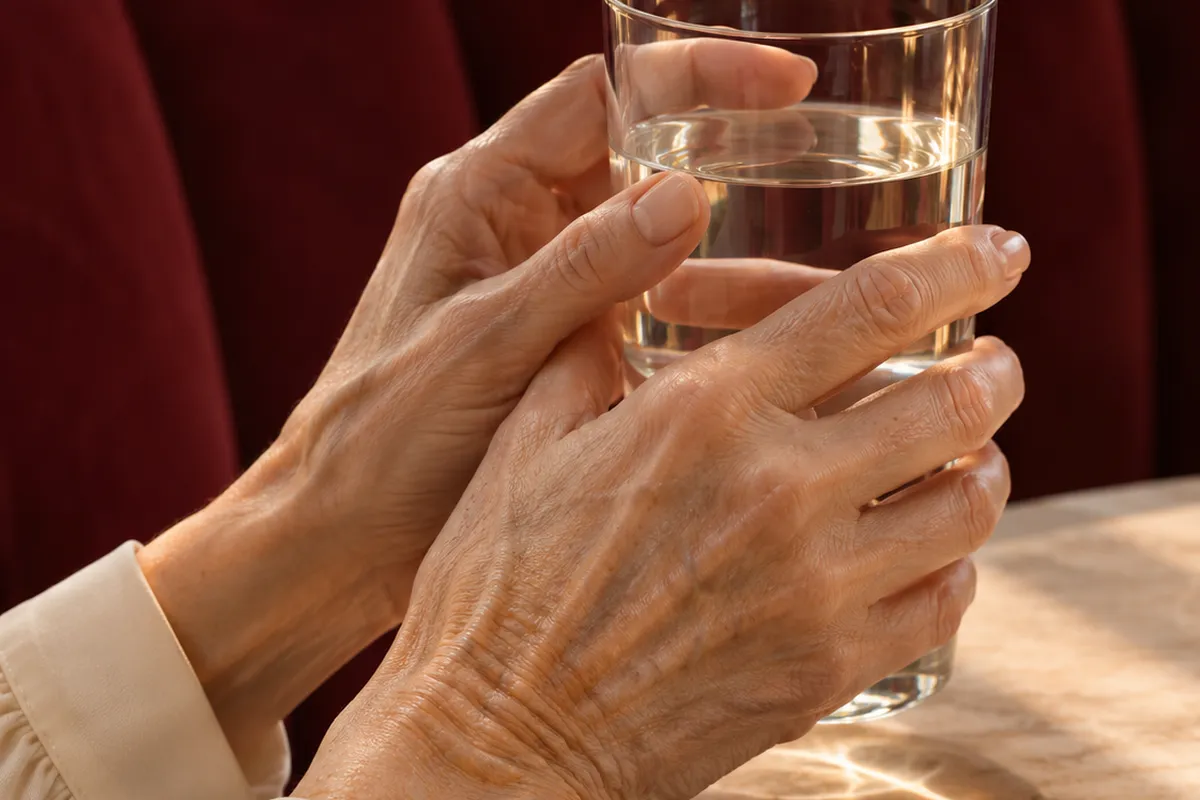
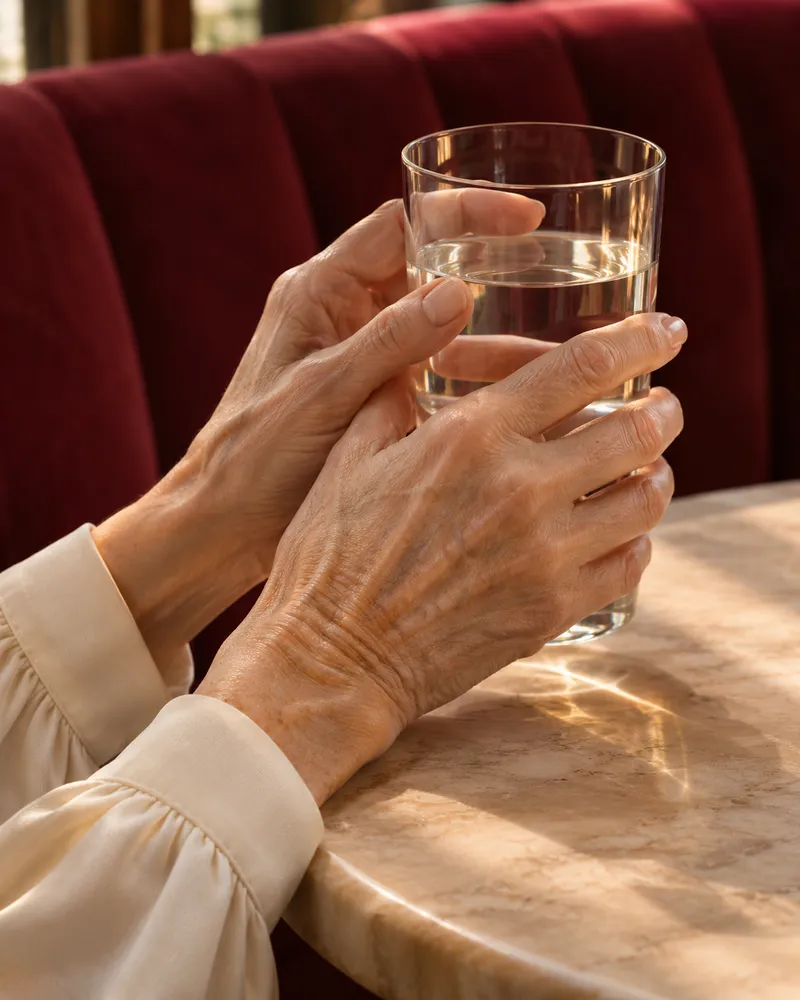
Thin hands holding a glass of water, with prominent veins and tendons

How to recognise it

Is it loss of volume on the backs of the hands?

Not all thin hands are the same: some only show the veins when it is hot, others have tendons and bones always on show. These signs help to understand what is going on before the assessment.

Tick what you recognise0/7

Tick the signs you recognise in your case. This is not a diagnosis, it is only meant to give you an idea.

Has a vein become hard, red, hot or painful? Is there swelling of one hand or one arm only, of recent onset? Do the fingers turn white or blue in the cold, or have you noticed weakness, tingling or loss of muscle between the bones of the hand? Is there a patch that changes colour, shape or outline, a rough lesion or a sore that does not heal? It needs a medical assessment before any treatment. Out of hours, call SNS 24: 808 24 24 24.

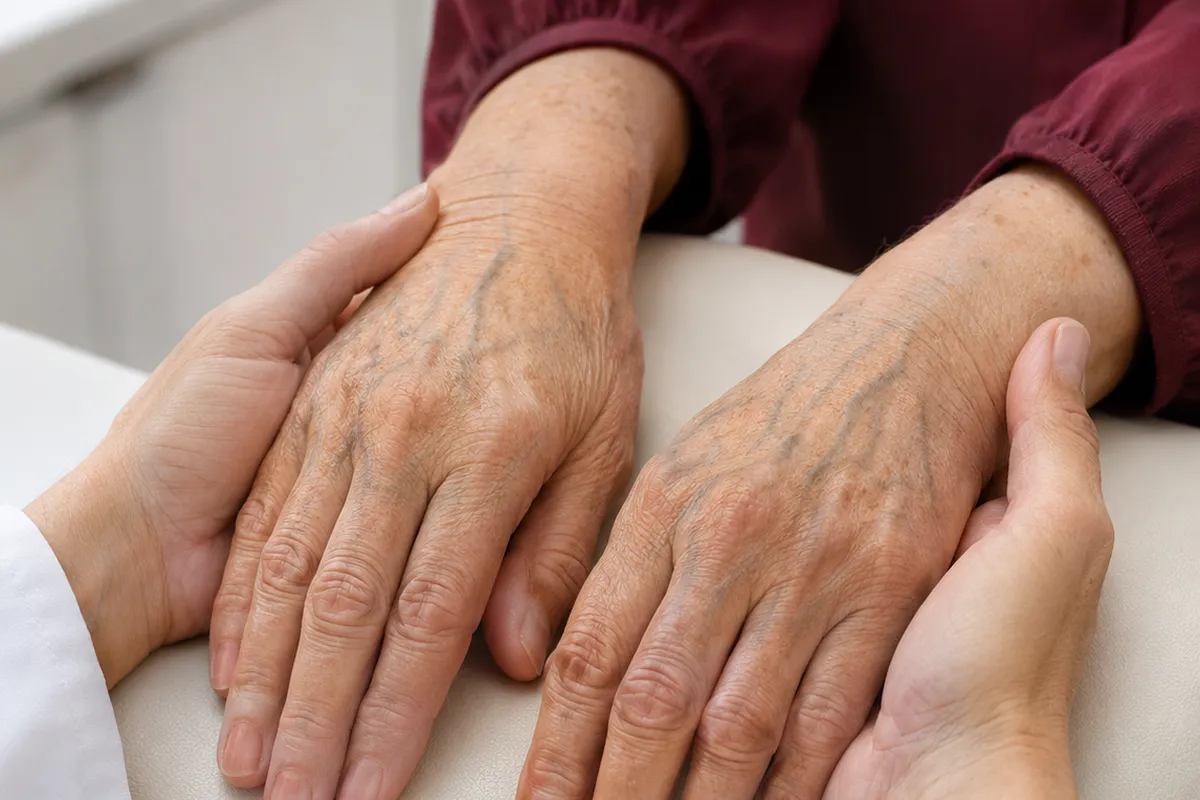
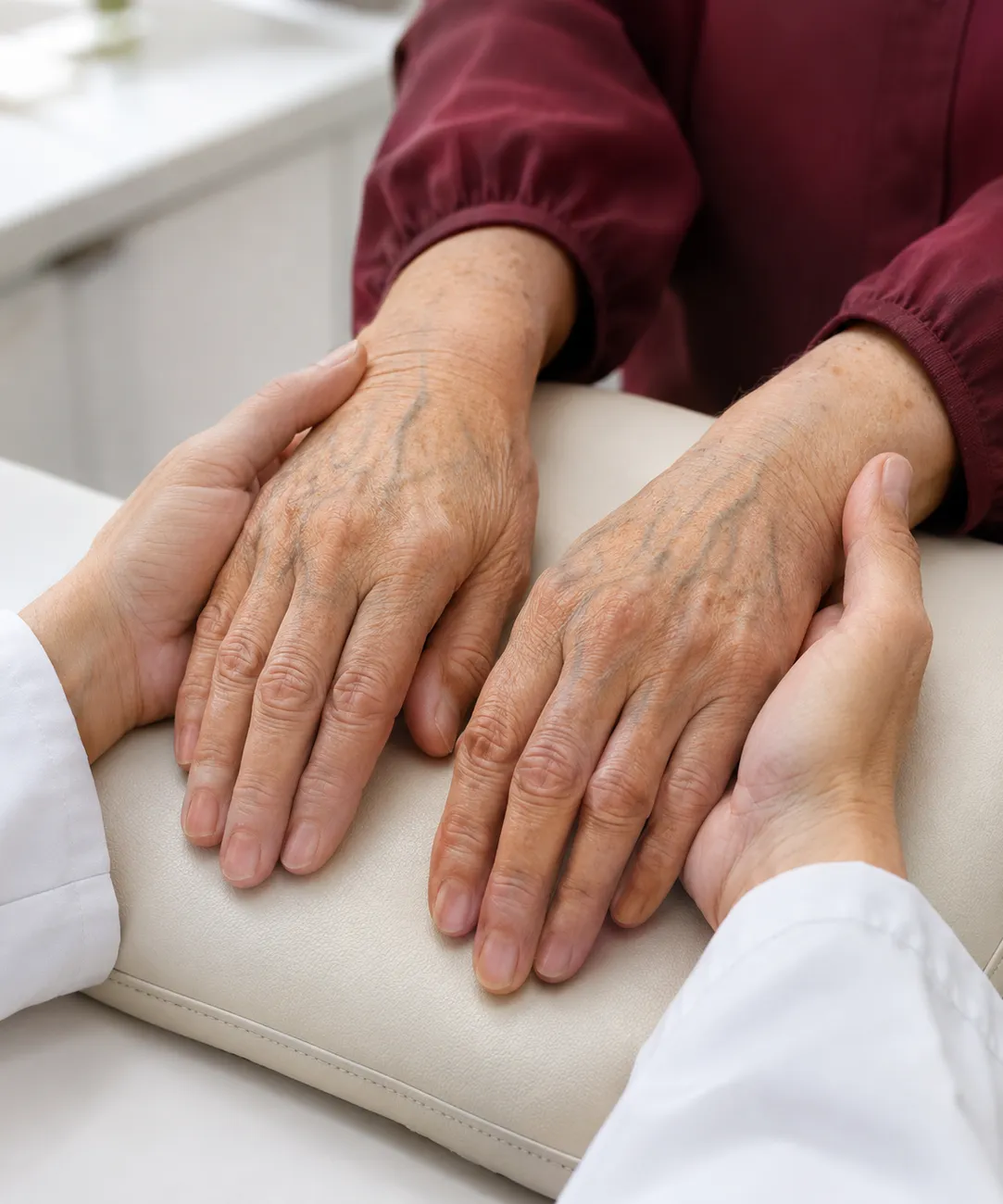
Female doctor holding a patient's hands over a support cushion
Photograph of a consultation. The dots mark what the doctor is assessing.

Why it happens

What may be behind thin hands and prominent veins

There is almost always more than one cause at the same time. Choose a situation to see how it may contribute and what usually helps.

The passing of the years

The back of the hand has a thin layer of fat beneath the skin. With age, this layer diminishes and the skin loses collagen and elasticity, and so the veins, tendons and bones are less covered. It is a gradual, expected change, which occurs earlier in some people than in others.

What weighs on it

Expecting the skin to “go back to what it was” with creams alone, or comparing your hands with those of twenty years ago.

What helps

Moisturise and protect your hands from the sun to avoid accelerating these changes. If the loss of volume bothers you, ask the doctor which options may be appropriate.

Normal or to be assessed

Expected change or something to assess

Most thin hands with visible veins are not a sign of disease. But some situations call for an assessment before any treatment, because appearance is only the visible part.

  • What it looks like. Both hands are similar, with less volume on the back, thin skin and more visible veins and tendons, gradually and without pain or swelling.

  • When it is noticed. In heat, after exercise and when the hands are down. With the hand raised or in the cold, the veins show less.

  • What the clinic does. The doctor listens to your history, examines the hands and confirms that it is a loss of volume, before proposing whatever makes sense.

  • At home. Protecting from the sun, moisturising and wearing gloves for tasks with detergents. These measures protect the skin, but do not restore the volume that has already been lost.

Do you have shortness of breath, chest pain, or a very swollen, red and hot arm that appeared suddenly? Call 112. If you have a hard, painful vein, swelling of one hand or arm only, or another doubt, out of hours you can call SNS 24: 808 24 24 24.

Book an assessment

What the clinic may consider

Options to restore volume to the hands

Before any procedure, the priorities are to protect the skin from the sun, moisturise it and determine whether there is an underlying cause that needs treatment. Only then, and after an assessment, should restoring volume to the back of the hand be considered. The clinic may consider hyaluronic acid fillers and collagen biostimulators, described below, as well as microneedling, which will be explained during the consultation and is used more to improve skin texture than volume. Scientific reviews report good results and an acceptable safety profile for hand filler treatments, but the studies are small and short-term. Results vary from person to person, last for months and require maintenance. No procedure removes the veins: the aim is to make them less visible by restoring volume over them. Several approaches are often combined, and only products indicated for use on the hands are used.

Book an assessment
Dr Michelle Campagnoli, clinical director of Clínica Luxmed

First step

Assessment consultation

The doctor listens to what you are experiencing, examines your case and explains the suitable options. No treatment begins without this consultation.

May be considered when

you want to understand the cause and decide on the best path, with time and without commitment.

Book an assessment
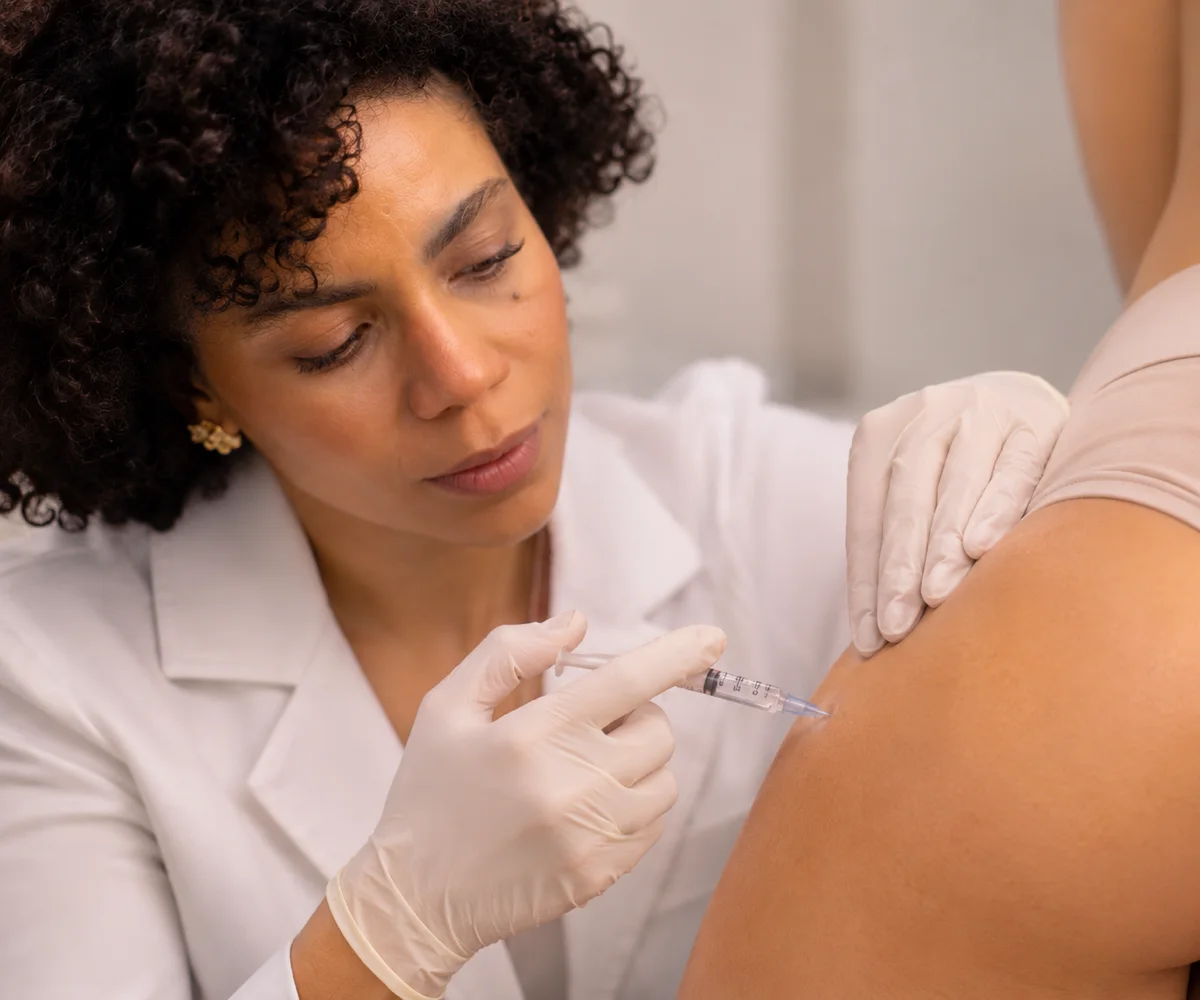
The doctor injecting filler into the patient’s forearm, wearing gloves in the bright light of the consulting room

Filler

Hyaluronic acid

Gel injected into the back of the hand, usually between the tendons using a cannula or needle, to restore lost volume and make veins and tendons less noticeable. The result is visible immediately, lasts for several months depending on the product and requires repeat treatment. Swelling and bruising are common in the first few days, and rare risks include nodules, temporary difficulty closing the hand and vascular complications.

May be considered when

the back of the hand has lost volume, the skin still has some thickness, there is no infection or other condition of the hand awaiting assessment, and the doctor has explained the risks and the limited duration of the effect.

Find out more
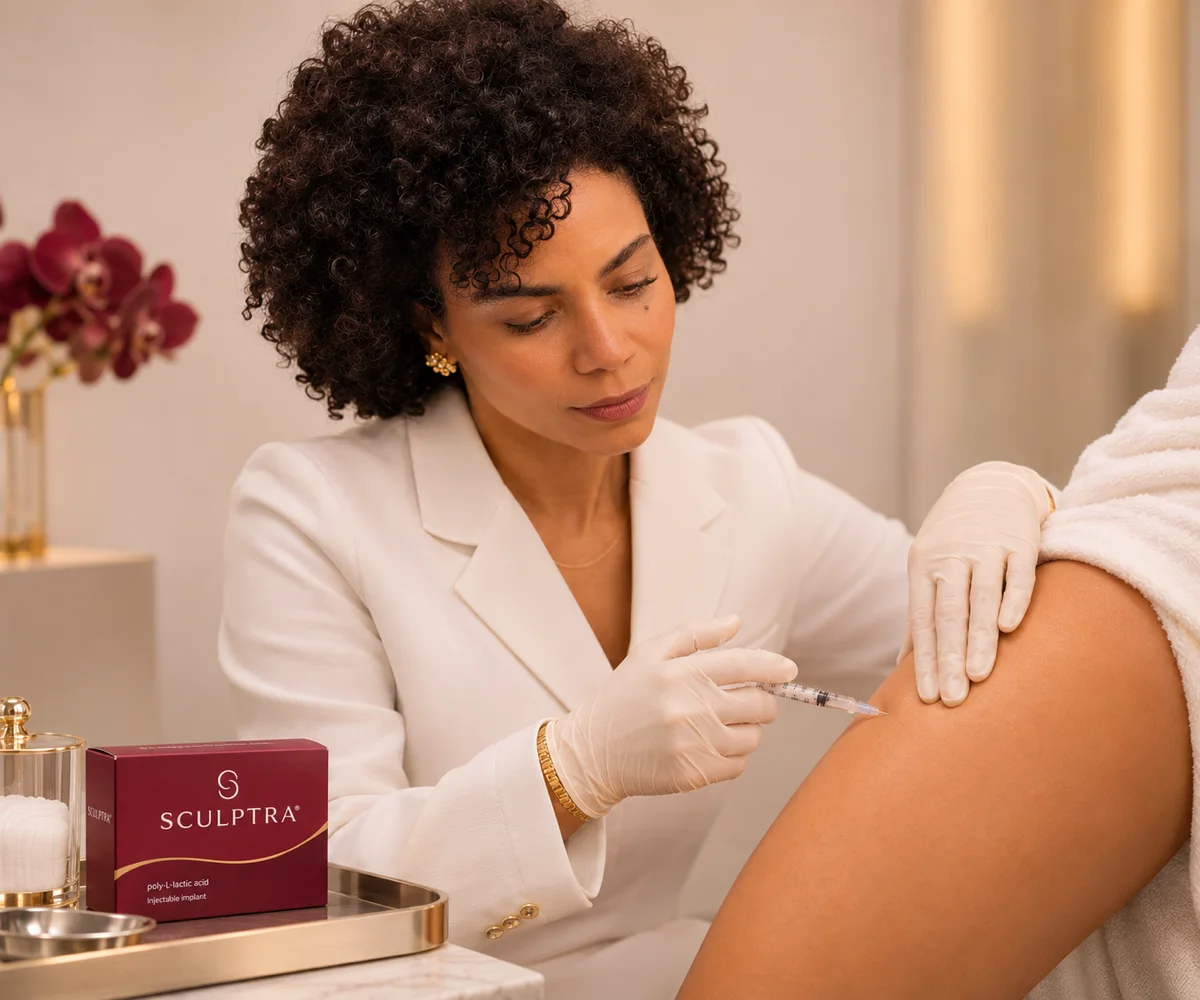
The doctor giving an injection in the patient’s arm, in bright consulting-room light

Collagen stimulation

Collagen biostimulators

A product is injected into the back of the hand to stimulate the skin to produce its own collagen, gradually improving skin thickness and texture and adding some volume over several weeks. Only products indicated for use on the hands are used. More than one session may be needed, and the risks are similar to those of other injections.

May be considered when

the skin is thin and has an uneven texture in addition to the loss of volume, and the doctor has explained what can realistically be expected, how long the effect will take to appear and the risks of the procedure.

Find out more

What the journey looks like

From the first conversation to a plan tailored to you

No procedure begins without an assessment by the doctor. Most people start with the simplest approach, and only then is anything further considered.

  1. 01At the clinic

    Telling your story

    The doctor asks when you first noticed the change, whether it developed gradually or quickly, whether you have lost weight, whether you have pain, swelling, tingling or cold fingers, what you do for work, and which skincare measures or treatments you have already tried.

  2. 02At the clinic

    Examining the hands

    The doctor examines the volume in the backs of the hands, the skin, veins and tendons, with the hands in several positions, and assesses the degree of volume loss. If there are signs of another cause, you will first be referred to your GP or another specialist.

  3. 03At home

    Protect and care for the skin

    Sunscreen every day, moisturising after washing and gloves for tasks with detergents. These are simple measures, which protect the skin and slow the change, but do not restore volume.

  4. 04Over time

    Decide and follow up

    If restoring volume makes sense, the doctor explains the option, the number of sessions, the risks and what is realistic to expect, without promising results. Reassessment is agreed, because the effect lasts months and maintenance is part of the plan.

Day to day

What helps at home

What you do at home matters more than you might think. These are sensible measures to take while you wait for your consultation and alongside the clinic’s plan.

The golden rule

Protecting the skin every day, not only at the beach

The hands are exposed to the sun when driving, through windows and while outdoors, and this everyday exposure is what ages them most. Protecting and moisturising them are the most important steps you can take, but these measures cannot restore lost volume. A hard, painful vein, swelling on one side only or a changing mark should be assessed by a doctor rather than treated with a cosmetic procedure.

Using sunscreen on the hands

The sun destroys collagen and leaves the skin thin and patchy, which highlights the veins and tendons.

In practice: apply every morning, reapply after washing your hands and keep a small tube in your bag or car.

Moisturising after washing

Dry skin looks thinner, and frequent washing removes the natural oils.

In practice: a simple moisturiser after washing the hands and a richer cream at night.

Protecting with gloves

Detergents and hot water wear down the skin on the back of the hand.

In practice: rubber gloves for washing up and cleaning and fabric gloves in winter and at the wheel on days of strong sun.

Record and bring to the consultation

This helps the doctor determine whether the change is recent and what may have triggered it.

In practice: photographs of both hands in the same light, the list of medicines and a note about weight.

Dr Michelle Campagnoli, clinical director of Clínica Luxmed

Who will look after you

An assessment carried out by the doctor

At Luxmed, in Algés, the first step is always an assessment with Dr Michelle Campagnoli. She will examine your hands, determine whether the loss of volume is an expected change or whether there is an underlying cause that needs investigation, and discuss with you what is appropriate before any procedure.

  • Physical examination and medical historyA conversation about weight, sun, work and medication, and examination of the hands in several positions.
  • A plan tailored to youA clear plan without unrealistic promises, starting with essential skincare and including follow-up over time.
  • No obligationThe cost of any treatment is confirmed only after the assessment.
Book an assessment

Book a consultation

Book your consultation

Choose how you prefer to get in touch. We will arrange the assessment consultation with Dr Michelle Campagnoli.

Booking through the websiteAssessment consultationTalk to our assistant on WhatsApp and ask for the current price of the assessment.

New Life Miraflores, Algés · Office Center, R. Santa Teresa do Menino Jesus n.º 6, 9.º C, 1495-048

Your details are used only for this contact. Any treatment depends on a prior medical assessment.

Request an appointmentIt takes less than a minute.
Speciality
You do not need to go into detail. The doctor will talk to you during the consultation.
Request received. Our team will contact you as soon as possible.
Why do I have prominent veins in my hands?

In most cases, because the back of the hand has lost fat and collagen, and the veins, which were always there, no longer have as much tissue over them. It happens with age, sun, low weight, sport and genetics, and the veins dilate even more with heat, exercise and the hand hanging down. Isolated prominent veins rarely indicate disease. It is advisable to assess whether there is pain, redness, swelling or a hard vein.

Are prominent veins in the hands a sign of poor circulation?

Usually not. The veins are visible because there is less tissue covering them, not because of poor circulation. A hard, red and painful vein, swelling in just one hand or arm, or fingers that turn white or blue in the cold require medical assessment.

Why do hands become thin and bony with age, and why do they reveal our age so readily?

The back of the hand has little fat and thin skin, and is exposed to the sun, water and detergents every day, yet sunscreen is rarely applied to it. Over the years, it loses volume, develops pigmented marks and becomes dry and wrinkled. All these changes are often more noticeable than on the face, which usually receives more care.

Does gaining weight disguise thin hands?

It may help a little because the amount of fat on the back of the hand may also increase, but this is not a cosmetic solution or a reason to gain weight. Volume loss in the hands also depends on collagen and sun exposure, and does not always improve with weight gain.

How can volume be restored to the hands?

Once the basic skincare measures are in place, the clinic may consider a hyaluronic acid filler, which restores volume immediately, or collagen biostimulators, which gradually stimulate collagen production in the skin. Both are injected into the backs of the hands after an assessment, and only products indicated for use on the hands are used. Results vary from person to person, last for several months and require maintenance treatment.

How is hand filler treatment performed and how long does it last?

During the consultation, the doctor assesses the degree of volume loss and the quality of the skin, disinfects the area, uses local anaesthetic if necessary, injects the product into the back of the hand, usually between the tendons using a cannula or needle, and massages the area to distribute it evenly. The procedure takes about 20 to 30 minutes. You can use your hands normally, but should avoid strenuous activity and heat for the first 24 to 48 hours. The effect lasts for several months, depending on the product, after which the treatment can be repeated.

Hyaluronic acid or biostimulator: what is the difference?

Hyaluronic acid is a gel that occupies space and adds volume immediately, whereas biostimulators encourage the skin to produce collagen, with results developing over several weeks. A recent review reports that hyaluronic acid provides immediate volume and hydration, while biostimulators primarily improve skin texture and quality. The choice of treatment, or combination of treatments, depends on what the doctor observes when examining your hands.

What are the risks of hand filler treatment?

The most common effects are swelling and bruising during the first few days. Nodules, unevenness and temporary difficulty closing the hand may occur. Rare risks include infection and a vascular complication, which is a medical emergency. If you experience severe pain, a change in skin colour, fever or persistent difficulty moving your fingers after treatment, contact the clinic immediately or call SNS 24 (808 24 24 24).

Does filler treatment remove the veins? And can microneedling help?

No. Filler treatment does not remove the vein; it restores volume over it, making the veins less visible without concealing them completely. Techniques that target the veins themselves are described in the literature but are not the focus of this page. Microneedling stimulates skin renewal and is used more to improve texture than volume; there is little evidence specifically on its use on the hands.

When should I see a doctor first?

Book a consultation if a vein is hard, red, hot or painful, if there is swelling in just one hand or arm, if your fingers turn white or blue in the cold, or if you have noticed weakness, tingling or muscle loss in the hand. You should also book if you have a changing mark, a rough lesion, a sore that does not heal or unexplained weight loss. If in doubt, call SNS 24 out of hours on 808 24 24 24. If you experience shortness of breath, chest pain or sudden severe swelling and heat in one arm, call 112.

We could not find that question. Ask us on WhatsApp

Scientific references

This page is based on the sources below and was reviewed by Dr. Michelle Campagnoli. Last updated on .

  1. Riyaz FR, Ozog D. Hand rejuvenation. Semin Cutan Med Surg, 2015.
  2. Butterwick K, Sadick N. Hand rejuvenation using a combination approach. Dermatol Surg, 2016.
  3. Farage MA, Miller KW, Elsner P, Maibach HI. Characteristics of the aging skin. Adv Wound Care, 2013.
  4. Krutmann J, Bouloc A, Sore G, Bernard BA, Passeron T. The skin aging exposome. J Dermatol Sci, 2017.
  5. Fabi SG, Burgess C, Carruthers A, et al. Consensus recommendations for combined aesthetic interventions using botulinum toxin, fillers, and microfocused ultrasound in the neck, décolletage, hands, and other areas of the body. Dermatol Surg, 2016.
  6. Hassan L, Rivkin A, Kroumpouzos E, Qureshi AQ, Kroumpouzos G. Hand rejuvenation with dermal fillers: key aspects and a comparison of commonly used fillers. Clin Dermatol, 2026.
  7. Faria GEL, Hasmann C, Viana RMM, et al. Calcium hydroxyapatite and polymicronutrient solution on hand rejuvenation: a split-hand, randomized, double-blind clinical and in vitro study. J Cosmet Dermatol, 2026.
  8. Nikolis A, Cohen JL, Enright KM, et al. Deliberations of the Safety Task Force: risk factors and treatment of adverse events associated with aesthetic injectables. J Cosmet Dermatol, 2024.
  9. Alster TS, Graham PM. Microneedling: a review and practical guide. Dermatol Surg, 2018.
CallAssistantAvailableBook