
Algés, Oeiras Mon to Sat · 09:00 to 13:00 and 14:00 to 19:00
WhatsApp Book a consultation

Hair problem

Maintaining results after PRPWhen the series of sessions has ended and a question remains: what to expect next and how to monitor your hair

You had hair PRP, or another regenerative treatment, and now wonder how long the effect will last, whether your hair will start falling again and whether you need to repeat it. The effects of these treatments are variable and, as a rule, temporary, because the underlying cause continues to exist. Here we explain what to expect, what helps, what to do if you noticed no difference and how the doctor reassesses your case.

Reviewed by Dr Michelle Campagnoli, clinical director

  • 3treatments the clinic may suggest
  • 1assessment consultation, always first
  • 70 €assessment booked through the website
Woman with long silver-grey hair and a scarf, smiling with her hand on her chin at a cafe table

How to recognise it

Is it time to reassess after PRP?

Finishing a series of sessions is not the end of follow-up. These situations are very common and help you tell whether it is time to speak to the doctor.

Tick what you recognise0/7

Tick the signs you recognise in your case. This is not a diagnosis, it is only meant to give you an idea.

Sudden, heavy shedding, a painful scalp, sores, marked flaking, redness or patches that appear quickly should be seen without delay, because they tend to have another cause and are not resolved with more sessions.

The doctor examining a patient's scalp during a hair assessment consultation
Photograph of an assessment appointment. The dots mark the areas usually compared before and after treatment; the image does not show the result of any treatment.

Why it happens

Why the effects vary and fade

PRP does not change the underlying cause of thinner hair. Choose a reason to see what weighs on it and what helps.

The underlying cause persists

PRP may help stimulate the follicle, but it does not eliminate heredity, hormonal changes or the deficiency that gave rise to the thinning. Reviews describe that the effect tends to fade when sessions stop. That is why maintenance is a follow-up conversation, not a promise.

What weighs on it

Expecting a series of sessions to solve for good a problem that is still active.

What helps

Review with the doctor what the underlying cause is and treat it in parallel, when it makes sense.
Maintenance or another path

When to maintain and when to rethink

After a series of PRP there are two very different scenarios: there was a response and the question is how to maintain it, or there was no response and the question is to understand why. The approach is not the same.

  • What it looks like. Your hair has shed less, the strands seem firmer or the parting is less wide, and you want to know how to keep that.

  • How it progresses. The effects tend to be variable and to fade over time without further sessions, which is why the doctor talks about maintenance, without promising the same schedule for everyone.

  • What the clinic does. She compares with the starting point, reviews progress and, if appropriate, suggests spaced maintenance sessions adjusted to your response.

  • Follow-up. The interval is decided according to progress: if the effect holds, the doctor may space sessions out; if it fades quickly, she reassesses the plan.

  • Tell us at the appointment. If you are worried about becoming dependent on sessions, say so. It is a legitimate concern and the doctor addresses it clearly.

Have you had PRP and are unsure what to do next? Book an assessment appointment so the doctor can review your progress and explain what is realistic to expect.

Book an assessment consultation

What the clinic can do

Treatments to maintain and monitor

None of these treatments repairs a strand that has already grown: they act on the scalp and the follicle, that is, on the hair that grows. The evidence is limited and the response varies. The doctor assesses whether any of them is suitable for your case, whether it makes sense to repeat what you have already had, or whether there is another path. Results vary from person to person and science is still studying these treatments, so the doctor explains what is known and what you can expect before any decision.

Book an assessment consultation
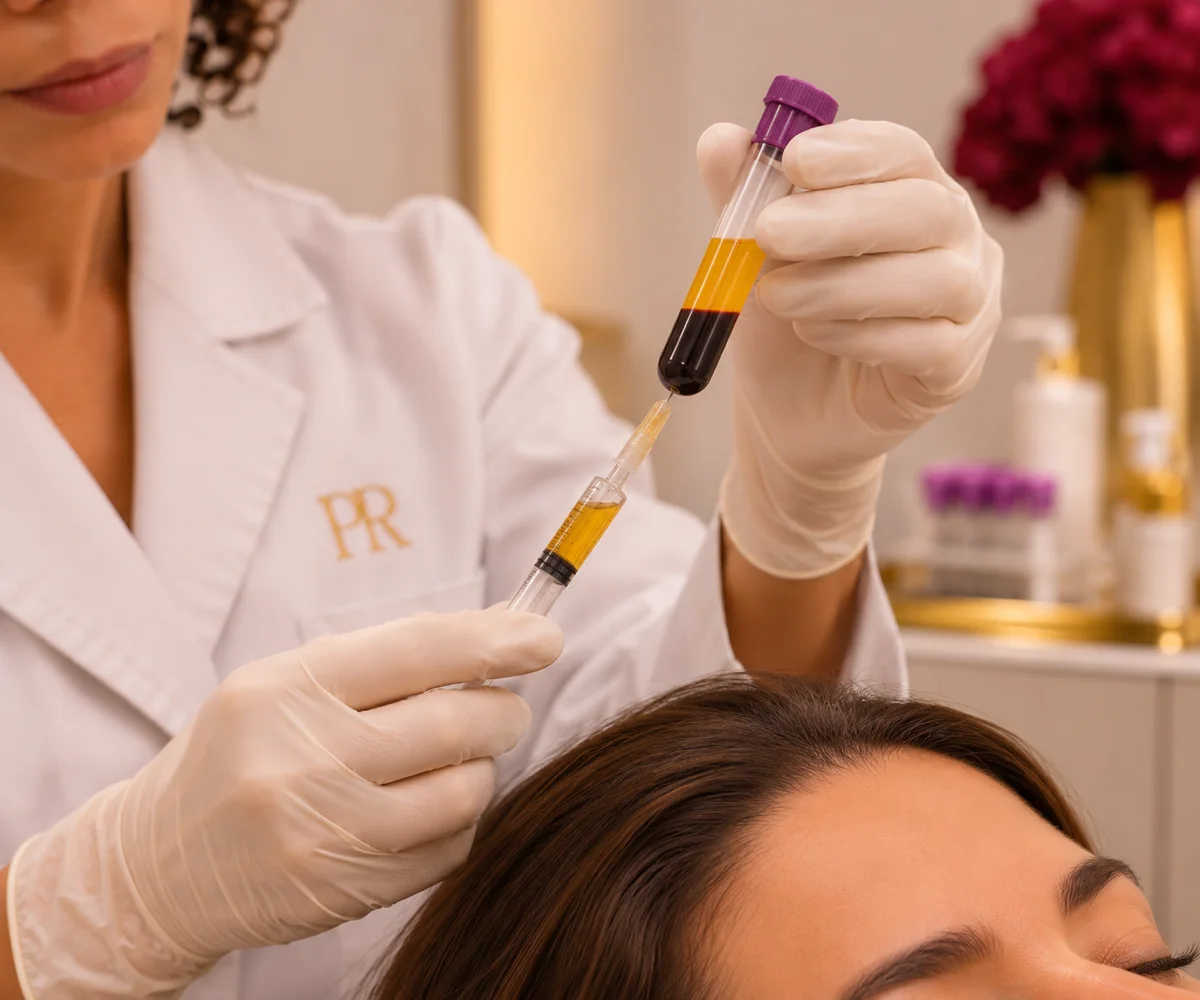
A doctor preparing platelet-rich plasma in a syringe, next to a tube of centrifuged blood

Regeneration

Hair PRP

Platelet-rich plasma, obtained from your own blood, which may help stimulate the follicle in some cases. The doctor first assesses whether it is appropriate.

Suitable when

you have already had a series and the doctor considers it appropriate to maintain with spaced-out sessions, or to resume after reassessing.

Find out more
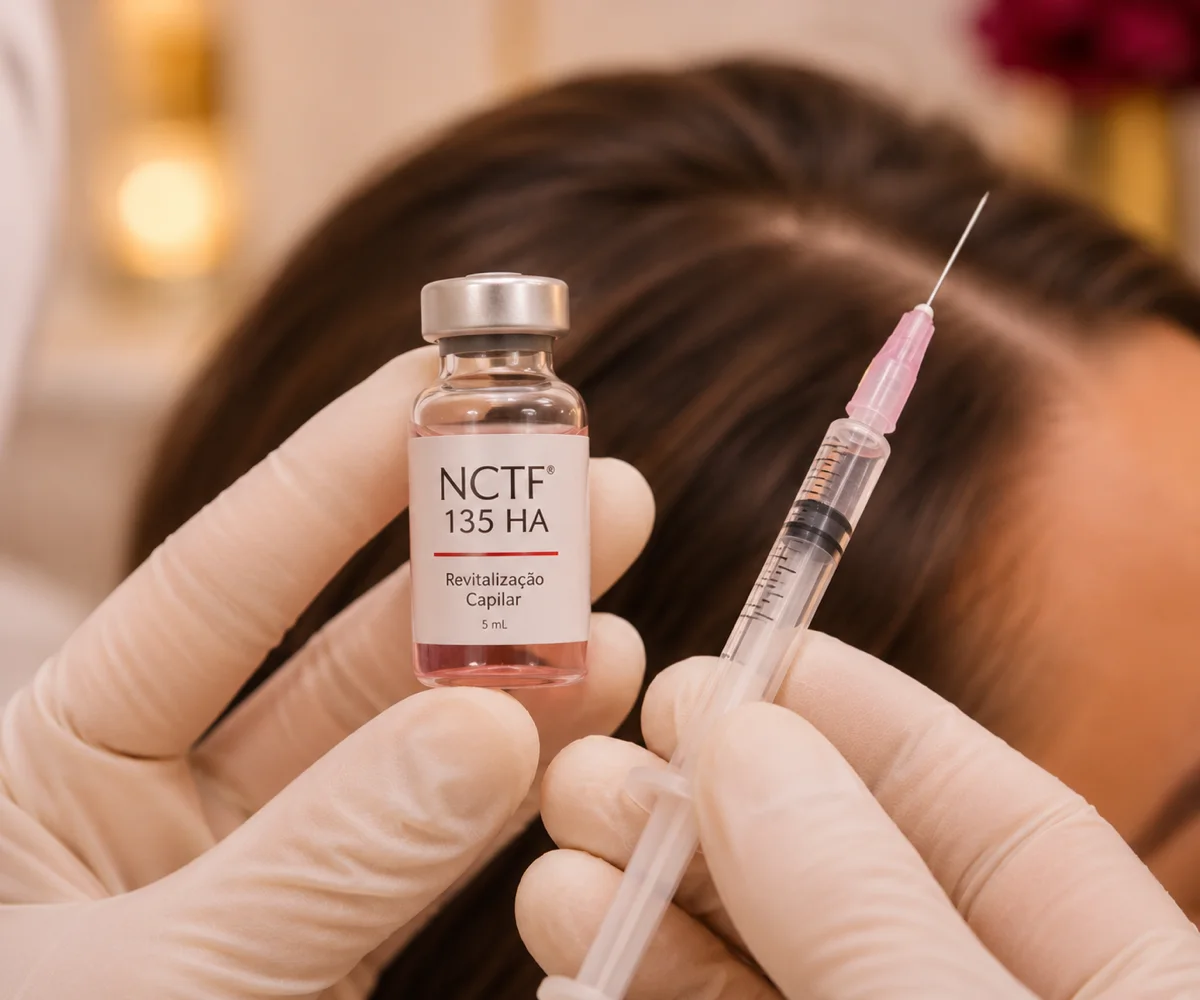
Ampoule of NCTF hair revitalisation and a syringe next to the scalp

Regeneration

Hair NCTF

Vitamins, amino acids, minerals and hyaluronic acid, which may help nourish the scalp and support finer hair.

Suitable when

the doctor considers it useful to alternate or complement PRP with scalp nutrition.

Find out more
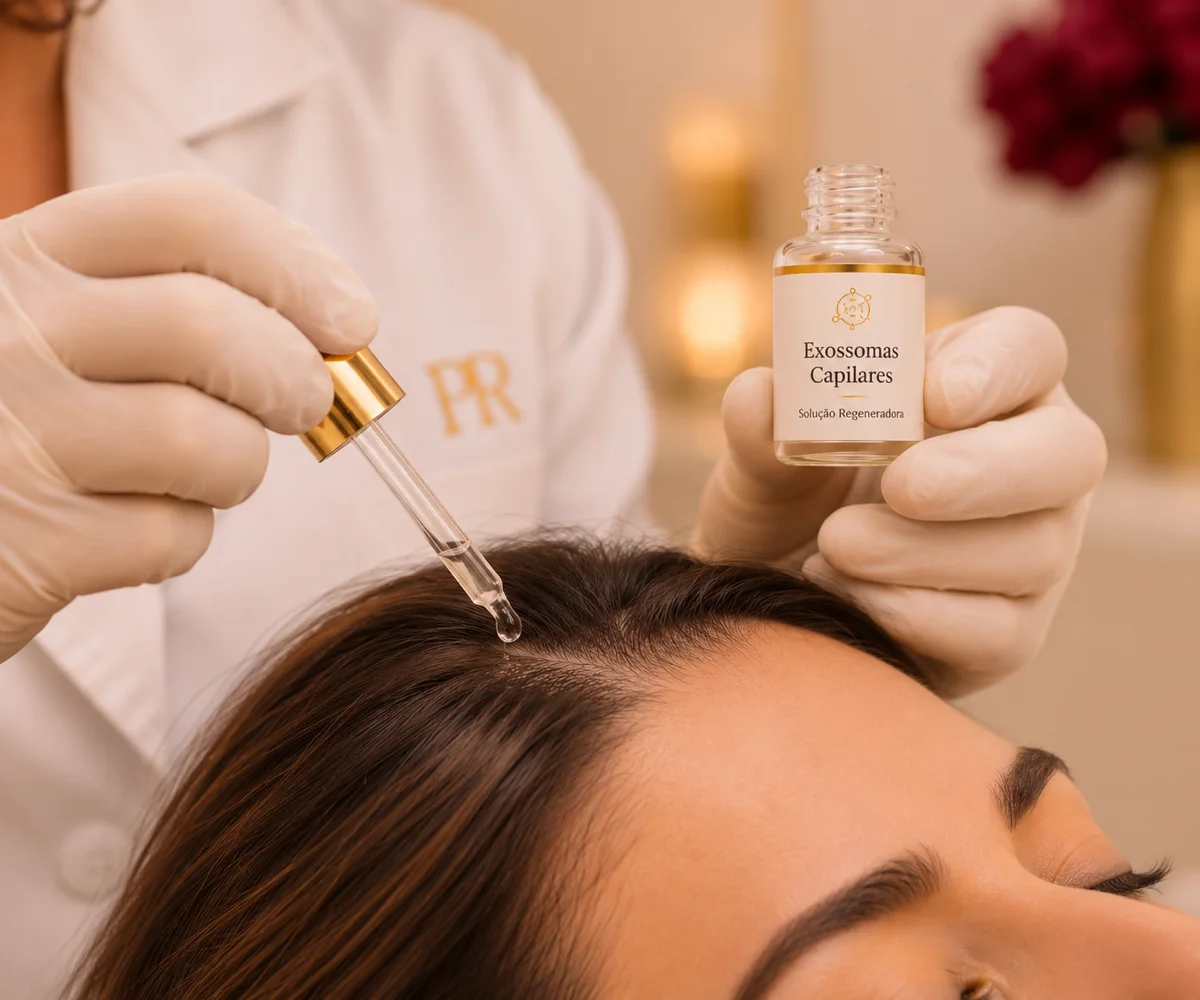
Vial of hair exosomes and a dropper over the scalp

Advanced regeneration

Hair exosomes

Regenerative solution that may help support the follicle and strand thickness, with a variable response.

Suitable when

the response to PRP was short or absent and the doctor considers another regenerative active useful.

Find out more

What if PRP did not work? Before changing treatment, the doctor goes back to the cause: she confirms the diagnosis, checks for a deficiency or a thyroid or hormonal change, and considers whether another treatment makes sense. Repeating the same treatment without reassessment is rarely the best answer. Results are gradual and variable.

What the journey looks like

From reassessment to follow-up

No treatment is resumed without a consultation with the doctor. This is how it usually goes.

  1. 01At the clinic

    Describe what was done

    The doctor asks when you had the sessions, how many, where and with what technique, what you noticed at each stage and what has changed in your life since then: illnesses, medication, pregnancy, menopause, stress.

  2. 02At the clinic

    Compare with the starting point

    She examines the scalp with trichoscopy and compares it with earlier photographs and records, to see whether there has been gain, stabilisation or loss.

  3. 03At the clinic

    Reviewing the underlying cause

    If useful, she requests tests, for example for iron, thyroid and other vitamins, and confirms whether the cause of the thinning has been properly identified.

  4. 04At the clinic

    Deciding what to do next

    She explains the options: maintaining with spaced sessions, pausing and observing, changing treatment or first treating an associated cause. She tells you what is realistic to expect.

  5. 05Over time

    Follow up and adjust

    She examines your hair again at agreed intervals and adjusts the plan to your response, instead of following a fixed schedule.

Day to day

What helps between sessions

There is no direct proof that habits prolong the effect of PRP, but looking after the scalp and the body supports the doctor's plan. These are the measures that make the most sense.

The golden rule

Follow up and do not repeat blindly

The right question after PRP is not "when do I repeat it?" but "how is my hair compared with the beginning?". With photographs and a reassessment, the decision is based on what is happening with you and not on a schedule that is the same for everyone.

Always photograph in the same way

Memory can deceive us.

In practice: a photo of the parting and the top of the head, with the same light and the same angle, from time to time.

Sleeping and managing stress

Prolonged stress and little sleep are poor allies.

In practice: keep regular hours and make time for something that helps you relax, even if brief.

Treat it gently

A thin strand breaks easily.

In practice: brush gently, avoid tight hair ties and hairstyles that pull on the roots.

Protect the scalp

Sun and pollution also damage it.

In practice: protect from the sun and wash with a mild shampoo, without rubbing hard.

Keep the agreed appointments

It allows early adjustment.

In practice: book the review at the time the doctor indicated, even if your hair seems fine.

Dr Michelle Campagnoli, clinical director of Clínica Luxmed

Who will look after you

An assessment carried out by the doctor

At Luxmed, the first step is always an assessment consultation with Dr. Michelle Campagnoli. She reviews what has been done, compares your progress and designs the plan with you, without deciding anything before seeing your hair.

  • Physical examination and medical historyReview of the previous treatment, examination of the scalp and of the medication you take.
  • A plan tailored to youA plan suited to your case, clearly explained, with follow-up over time.
  • No obligationThe cost of any treatment is confirmed only after the assessment.
Book an assessment consultation

Book a consultation

Book your consultation

Choose how you prefer to get in touch. We will arrange the assessment consultation with Dr Michelle Campagnoli.

Booking through the website100€70€Assessment consultationExclusive price for those who book the assessment through the website. Outside the website, the price is 100 €.

New Life Miraflores, Algés · Office Center, R. Santa Teresa do Menino Jesus n.º 6, 9.º C, 1495-048

Your details are used only for this contact. Any treatment depends on a prior medical assessment.

Request an appointmentIt takes less than a minute.
Speciality
You do not need to go into detail. The doctor will talk to you during the consultation.
Request received. Our team will contact you as soon as possible.
Is the effect of PRP permanent?

It usually is not. PRP acts on the scalp and the follicle, but it does not change the underlying cause of the thinning, and reviews describe that the effect tends to fade when sessions stop. That is why maintenance is discussed. How quickly this happens varies a great deal from person to person, and the doctor explains what is realistic in your case.

How many sessions are needed?

There is no single number for everyone. Reviews describe an initial series of sessions followed by a maintenance period, but protocols vary and the evidence for the ideal interval is limited. That is why the doctor does not promise a number: she observes your response and adjusts. Be wary of anyone who guarantees a fixed count before seeing you.

How often should I repeat it?

It depends on your response and the underlying cause. There is no established interval that suits everyone. The doctor compares your hair with the starting point and decides whether it is worth maintaining, spacing out or pausing. Booking automatic sessions without reassessment is not usually the best approach.

If I stop, does my hair go back to how it was?

It can happen, especially when the underlying cause is still active. The effect may fade without further sessions, but hair does not always return exactly to the starting point, and this is hard to predict. Stopping is not «losing everything»; it is a chance to see again how the hair responds. The doctor helps you decide whether pausing and observing is a reasonable option.

I noticed no difference at all. Did it fail?

It does not necessarily mean it failed. It may have been too early to see anything, the response may be small, the cause may be a different one, or the protocol may not have been the most suitable. The best approach is a reassessment compared with the starting point, rather than repeating automatically. The doctor explains the alternatives and realistic expectations.

Does PRP repair strands that are already damaged?

No. A strand that has already grown is lifeless material and cannot be repaired from within. PRP and other regenerative treatments act on the scalp and the follicle, that is, on the hair that is yet to grow. That is why dry, brittle or dyed hair still needs care for the strand itself. The doctor distinguishes what is a problem of the strand from what is a problem of the follicle.

Can I combine PRP with other treatments?

In some cases, yes. The doctor may suggest, for example, NCTF or exosomes, or first treat an associated cause, such as iron deficiency or a thyroid change. Evidence for combinations is limited, so the decision is individual and explained frankly. Do not start new products on your own without speaking to her.

What should I bring to the appointment?

Everything you know about the previous treatment: dates, number of sessions, where it was done and whether you were told how the PRP was prepared. Bring before and after photographs, the list of medicines and supplements, and recent tests, if you have them. Also note when you noticed changes and what was happening at that time. This helps the doctor compare accurately.

I am losing more hair after PRP. Is that normal?

There may be more shedding at an early stage or later on, and it does not always mean the treatment failed. An illness, stress, medication or hormones may play a part. If the shedding is sudden and heavy, or comes with pain, sores, flaking or redness, it should be seen without delay. Otherwise, mention it at the reassessment so the doctor can understand the cause.

Do lifestyle habits prolong the effect?

There is no direct proof that they prolong PRP, but sleeping well, managing stress, not smoking and treating the scalp gently support hair health in general. They work as a complement, not as a substitute for medical reassessment. Choose a few habits you can keep up, rather than a list you will not follow.

When should I book the reassessment?

When the series ends, if you have not yet arranged a review, or as soon as you notice that your hair is changing, getting worse, or showing no response. A good time is before deciding to repeat. Sudden and heavy shedding, scalp pain, sores, marked flaking, redness or patches that appear quickly should be seen without delay.

I had PRP at another clinic. Can I have the reassessment at Luxmed?

Yes. The assessment consultation is for looking at your hair as it is today and understanding what was done. The more information you bring about the previous treatment, the better. The doctor does not assume that anything has to be repeated: she assesses, explains what is known and what is realistic, and only then proposes something, if it makes sense.

Does PRP have risks or adverse effects?

Reviews do not describe serious adverse effects, but discomfort, pain or redness at the site may occur, and it is a medical procedure that requires prior assessment. The doctor explains what to expect and when PRP is not suitable, for example with certain blood disorders or scalp infections. Inform her about your medication, especially anticoagulants.

We could not find that question. Ask us on WhatsApp

Scientific references

This page is based on the sources below and was reviewed by Dr. Michelle Campagnoli. Last updated on .

  1. Hesseler MJ, Shyam N. Platelet-Rich Plasma and Its Utilities in Alopecia: A Systematic Review. Dermatol Surg, 2020.
  2. Picard F, Hersant B, Niddam J, Meningaud JP. Injections of platelet-rich plasma for androgenic alopecia: A systematic review. J Stomatol Oral Maxillofac Surg, 2017.
  3. Gupta AK, Cole J, Deutsch DP, et al. Platelet-Rich Plasma as a Treatment for Androgenetic Alopecia. Dermatol Surg, 2019.
  4. Gupta AK, Gupta AK, Bamimore M. Platelet-Rich Plasma Monotherapies for Androgenetic Alopecia: A Network Meta-Analysis and Meta-Regression Study. J Drugs Dermatol, 2022.
  5. Yuan J, He Y, Wan H, Gao Y. Effectiveness of platelet-rich plasma in treating female hair loss: A systematic review and meta-analysis of randomized controlled trials. Skin Res Technol, 2024.
  6. Kanti V, Messenger A, Dobos G, et al. Evidence-based (S3) guideline for the treatment of androgenetic alopecia in women and in men - short version. J Eur Acad Dermatol Venereol (European Dermatology Forum / EADV), 2018.
CallAssistantAvailableBook