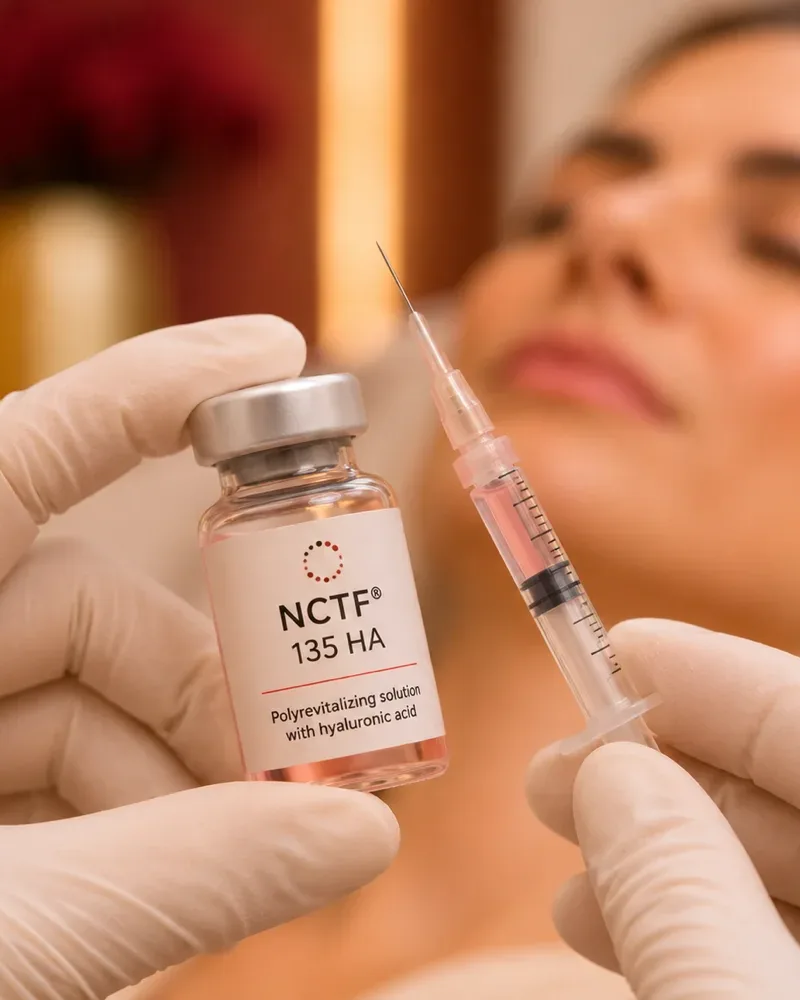
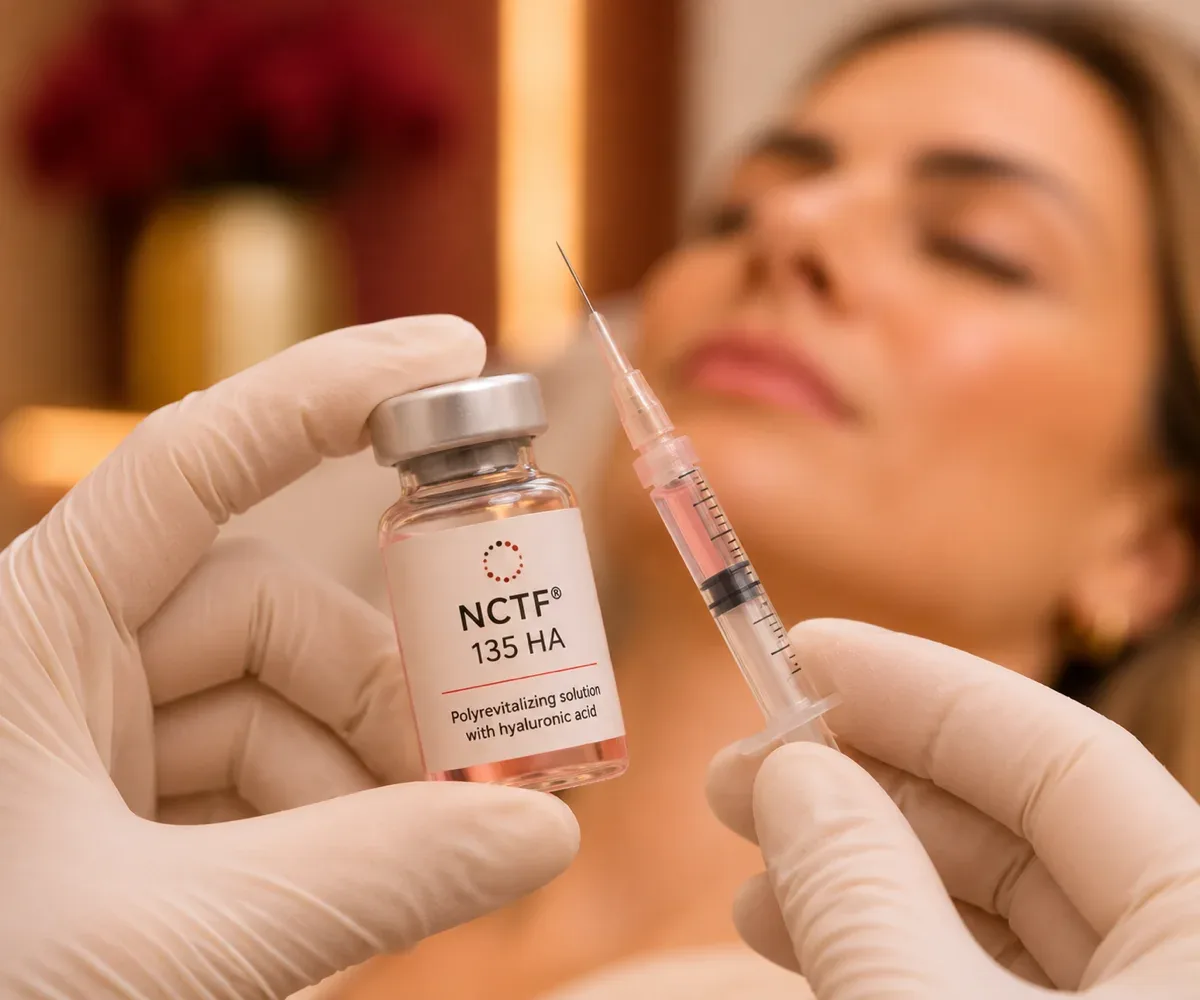
What is NCTF and what does it contain?
NCTF is a form of mesotherapy, also called biorevitalisation, in which a solution containing hyaluronic acid and nutrients is injected into the skin. According to the manufacturer, it contains non-cross-linked hyaluronic acid (5 mg per ml), 12 vitamins, 24 amino acids, 6 minerals, 6 coenzymes, 5 nucleosides and glutathione. It is intended to hydrate and nourish tired or dull skin. The composition information comes from the manufacturer, and the product is presented as an injectable medical device.
How does it differ from Skinbooster and other hydration treatments?
All deliver hydration to the skin through very superficial injections. Skinbooster is generally hyaluronic acid, while NCTF combines hyaluronic acid with vitamins, amino acids and minerals. Neither adds volume nor treats laxity. Which one to choose depends on your skin and what you want to improve, and is decided during the assessment.
Is it the same as mesotherapy?
NCTF is a type of mesotherapy: the injection of substances into the skin in microquantities. Mesotherapy uses many different formulations, and the evidence of their effectiveness varies from product to product. A 2021 review of facial mesotherapy in general concluded that conclusive data were lacking, so the doctor will assess with you whether it is appropriate.
What is the session like and does it hurt?
The solution is injected with a very fine needle or cannula at small points. You feel a repeated, light prick, which is more sensitive near the jaw and lip, and small bumps may remain before disappearing. The doctor may apply an anaesthetic cream and adjusts your comfort throughout the session.
How many sessions are needed, and at what intervals?
Usually 3 sessions. The manufacturer specifies an interval of about 3 weeks and recommends repeating the protocol at least twice a year. The clinic tailors the number of sessions and the interval to each person's skin, and the details are established during the assessment.
Can it be used around the eyes?
The skin around the eyes is very thin, and marks and swelling are more noticeable. The 2023 trial studied crow's feet, and the manufacturer's information refers to the face, neck and décolletage. We found no studies specifically on the skin under the eyes. The doctor will therefore assess during the consultation whether treating this area is appropriate and how it should be done, and may suggest other options.
Can it be used on the neck and décolletage?
Yes, it may be considered: the manufacturer describes its use on the face, neck and décolletage, and the 2023 trial studied crow's feet, the neck and the décolletage. The skin in these areas is thin and responds variably, and the doctor assesses each case individually.
Can I combine it with other treatments?
It can, when appropriate, for example with botulinum toxin or a peel, in separate sessions and at the correct interval. Recent studies are assessing combinations with botulinum toxin, but the order and spacing are determined by the doctor so as not to overload the skin.
Does NCTF work? What do the studies say?
Results vary and the available evidence is limited, so the doctor will assess with you whether it is appropriate. There is one randomised trial from 2023 (Fanian and colleagues), funded by the manufacturer, involving 146 people: the treated group had fewer fine lines in the three areas studied, better radiance and more hydration than the group that used cream only. It has limitations: it is a single study funded by the product manufacturer. It is a complementary treatment with variable results.
When will I see results and how long do they last?
The effect is gradual and varies from person to person. In the 2023 trial, improvements were assessed on day 75 and day 120. Results are not permanent: the manufacturer recommends repeating the protocol at least twice a year, and the doctor will tell you what frequency is appropriate in your case.
What are the risks and side effects?
The most common effects are redness, small bumps, swelling and bruising at the injection site. In the 2023 trial, most reactions were mild and resolved within 48 hours. With mesotherapy in general, allergic reactions, nodules and infections have been reported rarely, mainly in case reports. If you experience severe pain, pus, fever, spreading redness or signs of an allergic reaction, contact the clinic and, if it is serious, call 112; outside opening hours, you can call SNS 24 (808 24 24 24).
Who should not have it?
Anyone who is pregnant or breastfeeding, has an allergy to any ingredient, has an autoimmune disease or is undergoing immunotherapy, has an infection or another skin condition in the area, and anyone under 18, in accordance with the manufacturer's contraindications. The doctor will explain each individual case.
NCTF or non-ablative laser: which is better?
They work differently. NCTF aims to hydrate and nourish the skin, with a short recovery time. The non-ablative laser stimulates skin renewal with light energy, without injections, and has been studied more extensively for texture, pigmentation and scars, but it can cause pigmentation, especially in dark skin. Clínica Luxmed does not offer non-ablative laser treatment: if the doctor believes another option would be better for you, she will tell you.
Is an assessment needed first? Is there a charge?
Yes. All treatments at Clínica Luxmed begin with an assessment consultation with the doctor, where we work out whether the treatment makes sense for you. The cost of the assessment is deducted if you decide to go ahead with the treatment.
How should I prepare for the session, and can I work afterwards?
Come with clean skin and tell us about herpes, allergies, medication that makes bruising more likely and any change in your health since the assessment. Many people return to their routine the same day or the next, but marks may be visible, so if you have an important event, mention it during the assessment so that we can schedule the sessions with enough time. Use sunscreen every day.