What is platelet-rich plasma (PRP)?
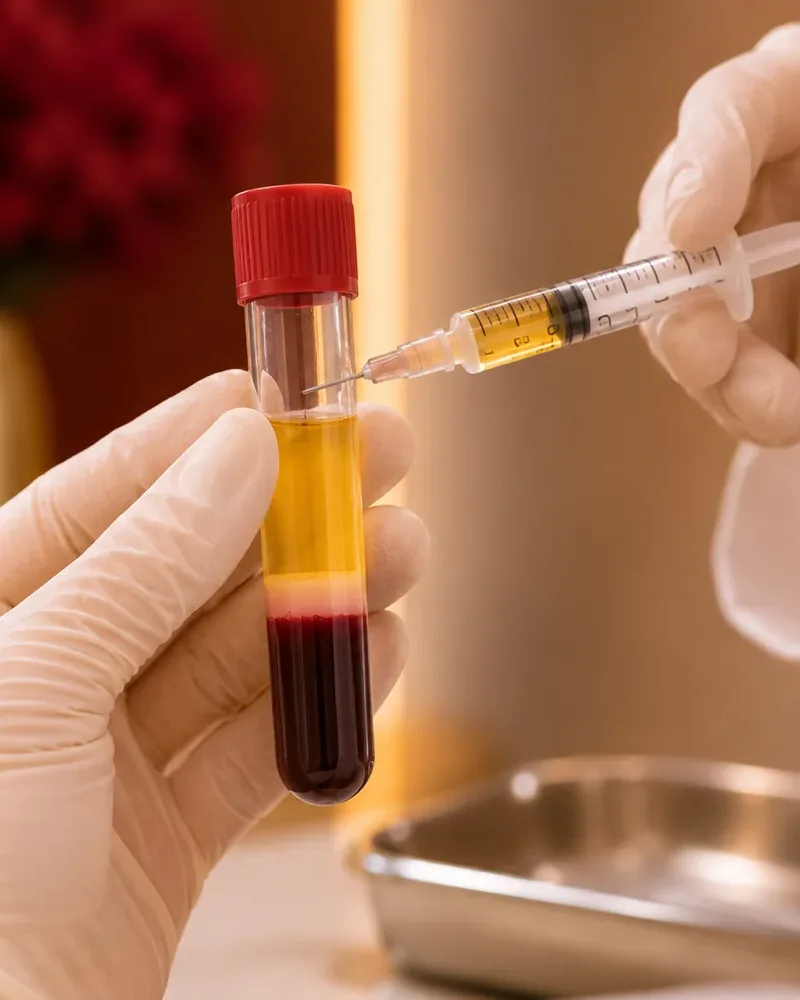
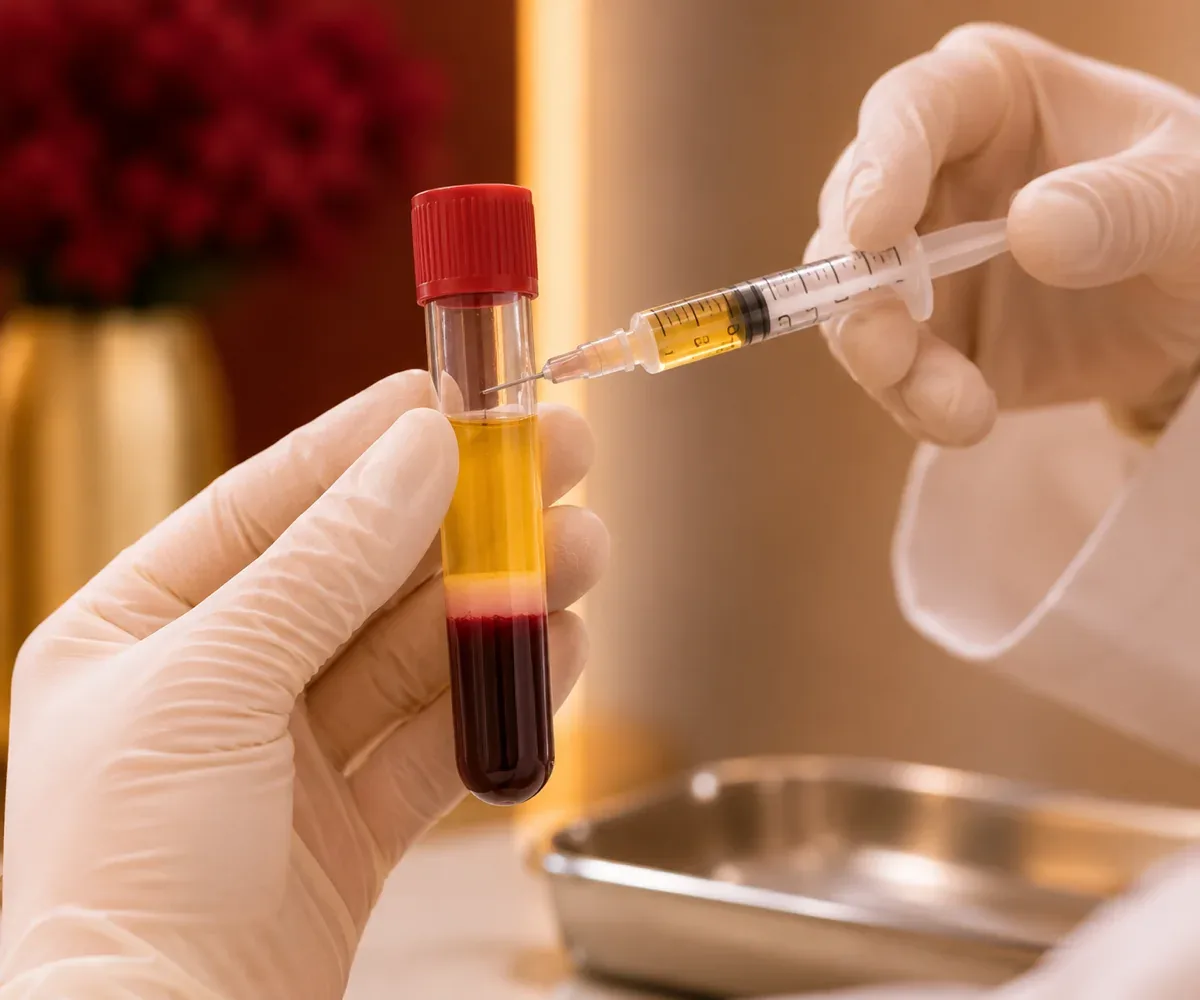
This treatment is made from your own blood. A small amount is drawn and centrifuged to concentrate the platelets, cells that release growth factors, and the platelet-rich portion is applied to the skin by injection or with microneedling. The aim is to stimulate skin renewal. It is also called PRP or autologous plasma, and it is not the same as PRF.
PRP for the face: what is it used for and what should you expect?
It is used to improve skin quality: thickness, elasticity, radiance and, in some studies, fine lines and acne scars. The effect is usually subtle and gradual, and it does not restore volume or tighten the skin significantly. A 2025 systematic review of 20 studies involving 514 people found improvements mainly in thickness and elasticity, with less consistent results for wrinkles, texture and pigmentation. Results vary and the evidence is limited, so the doctor will assess with you whether it is appropriate.
How does it differ from PRF?
PRF, or platelet-rich fibrin, is also made from the person’s own blood, but is prepared without an anticoagulant and forms a denser fibrin matrix that releases growth factors more slowly. PRP is a liquid prepared with an anticoagulant. The two are used with similar aims, and the choice between them is made at the assessment.
What about fat grafting?
They are different types of option. Fat grafting removes fat from another area of the body and restores volume, but involves liposuction, anaesthesia and a longer recovery, and the amount of fat retained is unpredictable: close to half of the volume in a 2021 meta-analysis. PRP is made from blood, does not restore volume, has a short recovery and a more subtle effect over several sessions. Clínica Luxmed does not perform fat grafting: if the doctor considers at the assessment that it would be the best option for you, she will tell you.
How is it done, and does it hurt?
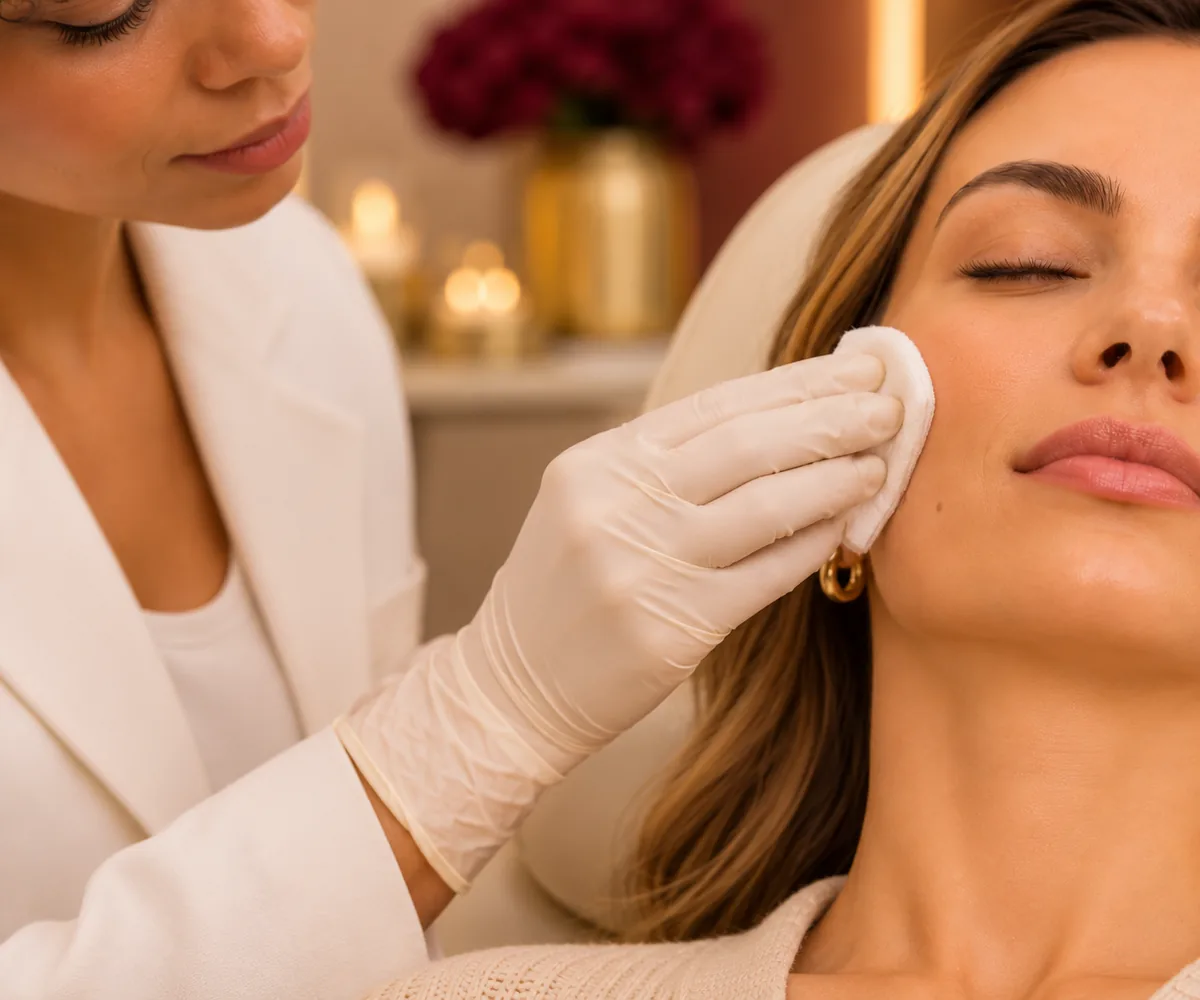
Blood is drawn as for a blood test, and the plasma is prepared immediately. It is then applied to the skin with very fine needles or microneedling. Topical anaesthetic may be used, and sensitivity varies from person to person: you feel needle pricks, which are more noticeable over bony areas and near the eyes. The doctor adjusts your comfort during the session.
How many sessions are needed and how long does each take?
Generally 3 to 4 sessions, a few weeks apart, but there is no single protocol, and the number and interval depend on the area, aim and skin response. Each session includes the blood draw and plasma preparation, and the timings are determined at the assessment.
Microneedling with PRP: what is the combination used for?
In microneedling, the needles create microchannels in the skin and stimulate renewal, while the plasma is spread over the skin to enter through them. For acne scars, a 2021 meta-analysis (Kang and Lu) of 14 controlled studies involving 472 people found better results with microneedling and PRP than with microneedling alone, without more serious side effects. There are articles about this subject on the blog.
Can I combine it with other treatments?
It can be, when appropriate, in separate sessions with the correct interval, for example with microneedling, peels or laser treatment. In an umbrella review, PRP combined with laser treatment increased satisfaction and elasticity, but the evidence was of very low certainty. The doctor determines the order and spacing.
PRP before and after: what results can be expected over the course of sessions?
The result develops gradually: some people notice more radiant skin after a few weeks, and the improvement tends to be more visible after the final session. Before-and-after photographs do not guarantee the same result because it depends on the skin, area, plasma preparation and technique. Results vary and the evidence is limited, so the doctor will assess with you whether it is appropriate.
Are the results permanent?
No. Results are gradual, vary from person to person, and the skin continues to age. If appropriate, the doctor will tell you how often it should be repeated. PRP does not replace a filler or surgery.
PRP: contraindications and side effects
The most frequent effects are local pain, redness, swelling and bruising, which resolve within days. Infection and allergic reactions are rare. In an exceptional case, vision loss was reported following an injection between the eyebrows, which is why the technique around the eyes and forehead requires particular care. If you experience severe pain, fever, pus, spreading redness or changes in vision, contact the clinic and, if it is serious, call 112; outside opening hours, you can call SNS 24 (808 24 24 24).
Who should not have it?
Depending on the assessment: anyone who is pregnant or breastfeeding; has platelet or blood disorders, significant anaemia, takes anticoagulants, has an active infection or herpes in the area, fever or recent acute illness, a history of a tumour in the area, or active autoimmune disease. The doctor explains each case and tells you whether any medication needs adjusting: do not stop it on your own initiative.
Does it help with dark circles?
It depends on the type of dark circles. A small study of 10 people (Mehryan, 2014) found an improvement in the evenness of colour, with no significant changes in the amount of melanin, wrinkles or hydration. A 2021 review includes PRP among the treatments described and emphasises the lack of higher-quality studies. If dark circles are caused by shadowing or lack of volume, PRP may not be the right option, and the doctor first assesses the cause.
Is an assessment needed first? Is there a charge?
Yes. All treatments at Clínica Luxmed begin with an assessment consultation with the doctor, where we work out whether the treatment makes sense for you. The cost of the assessment is deducted if you decide to go ahead with the treatment.
How do I prepare for the session?
Arrive with clean skin and preferably without make-up; you can eat and drink normally. Avoid intense sun and artificial tanning in the preceding days. Report any change in your health or medication since the assessment, especially anticoagulants or anti-inflammatory medicines, and do not stop any medication unless instructed by the doctor.
Can I work and carry on with my normal life afterwards?
Many people resume their routine the same day or the next day, while others prefer to wait until the small marks have faded. Avoid sun, intense heat and exfoliants for the first few days, and wear sunscreen every day. If you have an important event, mention it at the assessment so that we can plan the sessions.