Algés, Oeiras Mon to Sat · 09:00 to 13:00 and 14:00 to 19:00
WhatsApp Book a consultation

Hair problem

Hair loss after anesthesia or surgeryWhen hair falls out weeks or months after an operation and there is concern that anesthesia was the cause

Having a surgery go well and, two or three months later, seeing hair in the drain, on the brush and on the pillow frightens many people, and the first suspicion is usually the anesthesia. What is known is that the most likely explanation is that the body reacted to the strain of the operation as a whole, and not to the anesthetic substance itself, and that this hair loss is usually temporary. Here we explain why it happens, what is uncertain, what you can do and when it is worth requesting an assessment.

Reviewed by Dr Michelle Campagnoli, clinical director

  • 3treatments the clinic may suggest
  • 1assessment consultation, always first
  • 70 €assessment booked through the website
Woman with wavy grey hair in a hospital gown, seated in a recovery bed reading a book

How to recognise it

Is it hair loss after anesthesia or surgery?

This type of hair loss has its own signature: it arrives with a delay, spreads all over the head and follows a period when the body was under strain. These signs help to tell whether it resembles your case.

Tick what you recognise0/7

Tick the signs you recognise in your case. This is not a diagnosis, it is only meant to give you an idea.

Sudden and heavy hair loss, a painful scalp, sores, crusts, marked scaling, redness or patches that appear quickly should be seen without delay, because they usually have another cause. A well-defined patch, where the head rested during the operation, also deserves assessment.

The doctor examining a patient's scalp during a hair assessment consultation
Photograph of an assessment appointment. The dots mark where hair loss is usually noticed; the photo does not show hair loss.

Why it happens

What weighs on hair loss after surgery

It is almost never just one thing. Choose a cause to see what makes it worse and what helps.

The physical stress of surgery

An operation is a significant strain on the body. When this happens, many hairs may enter the resting phase at the same time and, about two to three months later, fall out all at once, which is called telogen effluvium. This is the mechanism most often cited in the literature for hair loss after operations.

What makes it worse

Returning to the previous pace too quickly, with little rest and poorly slept nights.

What helps

Respecting the recovery plan given by the team that operated on you and giving the body time.

Diffuse or localised

Telogen hair loss or pressure alopecia

After surgery, hair can fall out in two very different ways. Telling them apart changes what to expect and what to do.

  • What it looks like. More hair falls out all over the head, two to three months after surgery, without marked patches and with a normal scalp.

  • When it slows down. In most cases it slows down after a few months and the hair gradually recovers over several months.

  • It is not a sign of going bald. In this type of hair loss the follicles are not destroyed: the hairs shed because they entered the resting phase together.

  • What the clinic does. The doctor confirms the pattern, looks for associated causes (iron, thyroid) and explains what to expect.

  • Tell us at the appointment. Date of surgery, duration, type of anaesthesia, fever, fasting, medication and how the hair loss has progressed.

Has your hair fallen out after surgery? Book an assessment appointment, so the doctor can work out whether it is the usual temporary hair loss, whether anything needs correcting and what you can expect.

Book an assessment consultation

What the clinic can do

Treatments for hair loss after surgery

In most cases this hair loss is temporary, and often the most important thing is to confirm the pattern, correct what is lacking and follow up. Injectable treatments act on the scalp and the follicle, that is, on the hair that grows in, and do not repair a strand that has already grown and has since fallen out or become fragile. When the doctor considers them appropriate, they may support the recovery phase, with limited evidence. Results vary from person to person and science is still studying these treatments, so the doctor explains what is known and what you can expect before any decision.

Book an assessment consultation
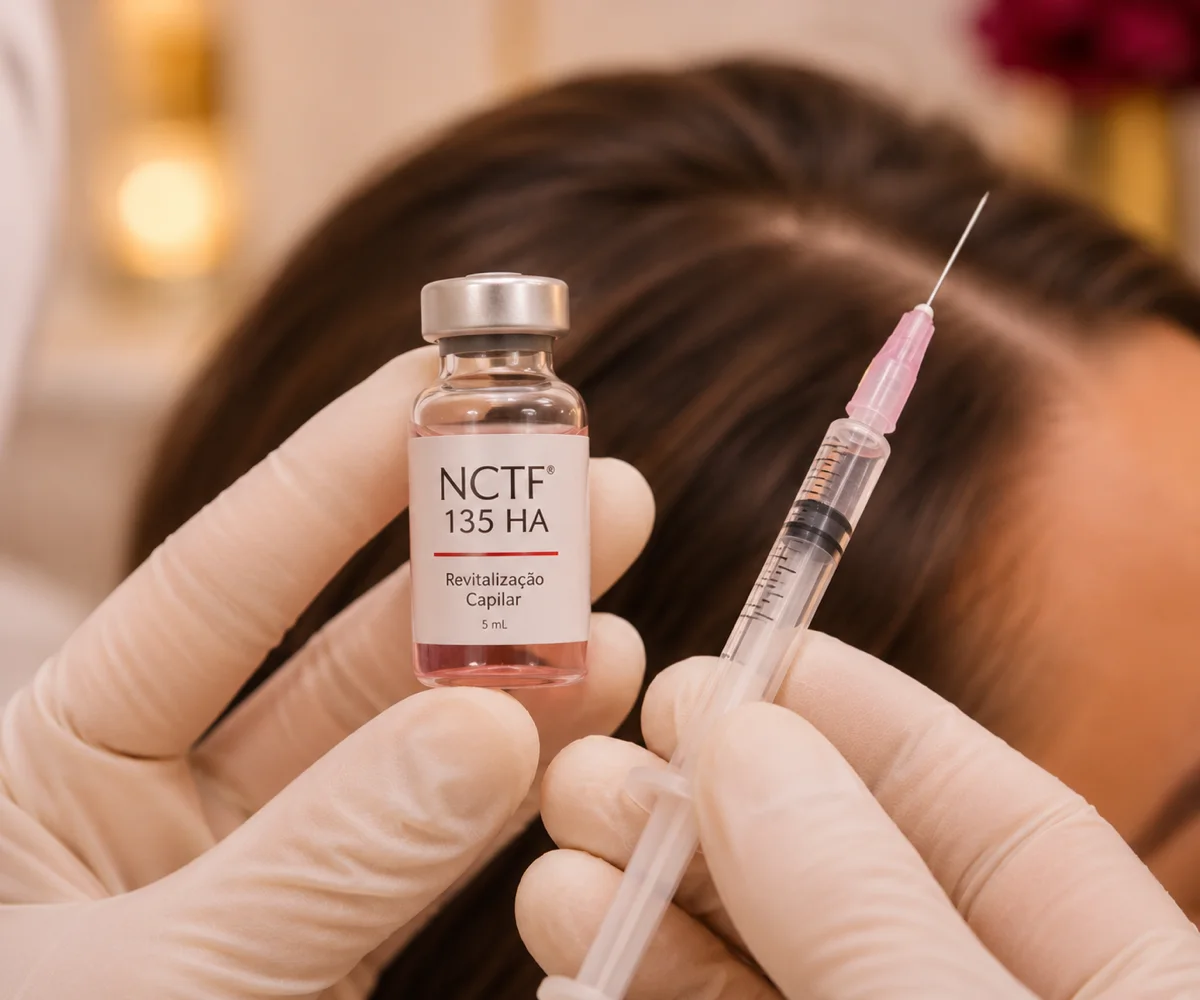
Ampoule of NCTF hair revitalisation and a syringe next to the scalp

Regeneration

Hair NCTF

Vitamins, amino acids, minerals and hyaluronic acid, which may help nourish the scalp and support finer hair.

Suitable when

the hair is finer and the doctor considers scalp nourishment appropriate.

Find out more
A doctor preparing platelet-rich plasma in a syringe, next to a tube of centrifuged blood

Regeneration

Hair PRP

Platelet-rich plasma, obtained from your own blood, which may help stimulate the follicle in some cases. The doctor first assesses whether it is appropriate.

Suitable when

the hair loss persists and the doctor considers stimulation of the follicle appropriate.

Find out more
Vial of hair exosomes and a dropper over the scalp

Advanced regeneration

Hair exosomes

Regenerative solution that may help support the follicle and strand thickness, with a variable response.

Suitable when

the doctor considers it useful to reinforce the plan with a regenerating active ingredient.

Find out more

And if none is needed? If the hair loss is the usual temporary kind, the doctor may suggest only monitoring, correcting deficiencies and waiting, and saying so is part of the appointment. If there is low iron, a thyroid change or a medication to review, treating the cause comes first. Results are gradual.

What the journey looks like

From the first consultation to follow-up

No treatment starts without an assessment consultation with the doctor. This is how it works.

  1. 01At the clinic

    Assessment consultation

    The doctor asks when the surgery was, how long it lasted, what anaesthesia you had, whether there was fever, fasting or blood loss, what medications you take and when you noticed the hair loss. She also asks about diet, sleep and stress.

  2. 02At the clinic

    Examining the scalp

    She examines the scalp and the hairs with trichoscopy, to see whether the pattern is that of temporary diffuse hair loss, whether there is a pressure patch or another alopecia, and whether the skin is normal.

  3. 03At the clinic

    See what is lacking

    If useful, she requests tests, for example for iron, the thyroid, vitamin B12 and vitamin D, and explains what the results mean, without exaggerating or minimizing.

  4. 04Over time

    Explaining what to expect

    It tells you how this kind of hair loss usually progresses, how long it is reasonable to wait and which signs call for coming back before the scheduled date.

  5. 05Over time

    Plan and follow-up

    It combines home care with the treatments that make sense, if any do, addresses associated causes and reviews the hair after a few months, to compare with the starting point.

Day to day

What helps at home

Caring for the hair gently and for the body as a whole counts, alongside the doctor's plan. These are the measures that matter most after surgery.

The golden rule

Giving the body time and not blaming without investigating

After surgery, hair usually reacts with a delay to the strain the body has been through, and recovery is also slow. Rather than looking for someone or something to blame and trying everything, it is more useful to confirm the pattern, see what may be lacking and monitor progress.

Recovering with full meals

Hair needs energy and protein to grow back.

In practice: include eggs, fish, legumes or yoghurt in your meals, even if your appetite is still low.

Following the postoperative instructions

Rest and follow-up appointments are part of recovery, and the hair follows it.

In practice: follow the rest, appointments and medication prescribed, and speak up if something does not improve.

Treating the hair gently

The remaining hairs are more fragile and break easily.

In practice: brush gently with a soft-bristle brush, and avoid pulling or tightening the hair in hairstyles.

Keeping track of the hair loss

It helps to tell whether it is slowing down.

In practice: take a photo of the parting every month, in the same light, and note the date of the surgery and of any changes.

Tell the doctor everything

The details of the surgery help to distinguish one type of hair loss from another.

In practice: bring the date of the operation, the type of anaesthesia, recent blood tests and the list of medications.

Dr Michelle Campagnoli, clinical director of Clínica Luxmed

Who will look after you

An assessment carried out by the doctor

At Luxmed, the first step is always an assessment consultation with Dra. Michelle Campagnoli. She looks for the cause of hair loss after surgery, requests tests if useful and designs the plan with you, telling you honestly what is known and what is not.

  • Physical examination and medical historyAssessment of the scalp, of how the hair loss has progressed and of what has changed since the surgery.
  • A plan tailored to youA plan suited to your case, clearly explained, with follow-up over time.
  • No obligationThe cost of any treatment is confirmed only after the assessment.
Book an assessment consultation

Book a consultation

Book your consultation

Choose how you prefer to get in touch. We will arrange the assessment consultation with Dr Michelle Campagnoli.

Booking through the website100€70€Assessment consultationExclusive price for those who book the assessment through the website. Outside the website, the price is 100 €.

New Life Miraflores, Algés · Office Center, R. Santa Teresa do Menino Jesus n.º 6, 9.º C, 1495-048

Your details are used only for this contact. Any treatment depends on a prior medical assessment.

Request an appointmentIt takes less than a minute.
Speciality
You do not need to go into detail. The doctor will talk to you during the consultation.
Request received. Our team will contact you as soon as possible.
Does general anaesthesia cause hair loss?

It has not been shown that the anesthetic substance causes hair loss. What is described is that surgery, as a strain on the body, can lead to hair loss two to three months later. Anesthesia is part of that whole, and few studies separate it from the rest, so the honest answer is that it is probably not the cause on its own, but that it is not fully known. The doctor will assess your case.

Does spinal or epidural anaesthesia also cause hair loss?

There are no data showing a direct relationship. People who have a spinal or an epidural have usually undergone surgery, and it is that strain, with fasting, pain, medication and stress, that is most associated with hair loss. If hair falls out months later, it is worth considering everything that happened and checking with the doctor whether there is low iron or a thyroid problem.

And local anaesthesia, like the dentist's?

A local anesthetic, such as one for a tooth extraction, is a small strain on the body and is not usually cited as a cause of hair loss. If hair falls out months later, another reason is more likely: a period of stress, an infection, medication, a deficiency or hair loss that was already under way. It is advisable to have it assessed if the hair loss persists.

Why does the hair only fall out months after surgery?

Because hair reacts with a delay. When the body goes through a strain, many hairs enter the resting phase at the same time, which lasts a few weeks, and only then fall out. That is why hair loss usually appears two to three months later, and the person no longer links it to the operation. This delay is one of the reasons why anesthesia is thought to be the culprit.

How long does hair loss last after surgery?

It is usually temporary. Acute hair loss typically lasts a few months, and sources report that hair recovers its normal volume in about six to nine months in most people, but recovery may be slower or incomplete in some cases. If the hair loss continues beyond six months, if there are patches or if it is getting worse, it is worth booking an assessment.

Will the hair grow back as it was?

In most cases the hair recovers, because the follicles are not destroyed in this type of hair loss. Recovery is gradual: short strands, so-called baby hairs, grow first, and then the hair gradually gains length. In some cases it may be less dense than before, especially if another cause is involved, such as a hereditary predisposition. The doctor explains what is realistic.

How can hair loss be avoided before surgery?

No reliable way to prevent it is known, because it depends on the strain the body undergoes and not on what is done to the hair. What helps is going into surgery as balanced as possible, with good nutrition and up-to-date tests, following the team's instructions and resuming full meals afterwards. If you have had hair loss after previous surgeries, tell the doctor.

What can I do when the hair is already falling out?

Eat complete meals with protein, sleep as much as you can, treat your hair gently and avoid tight hairstyles and chemicals. Note the date of the surgery and take monthly photos of the parting. Do not take supplements at random or stop medications on your own. If the hair loss is heavy or persistent, ask for an assessment, to check whether iron, thyroid or another cause needs correcting.

Do I need blood tests?

It is often reasonable. The doctor may request tests for iron and ferritin, the thyroid, vitamin B12 and vitamin D, among others, because a deficiency or a thyroid problem can maintain or worsen hair loss after surgery. The role of iron in hair is debated, so the values are interpreted as a whole, not in isolation.

When should I be concerned and book an appointment?

If the hair loss is very intense, if it does not slow down after a few months, if bald patches appear or if the hair is clearly getting thinner, an assessment is advisable. The same applies if there is pain, sores, crusts, marked scaling or redness of the scalp. These signs call for prompt assessment, because they usually have another cause, and should not wait six months.

What is pressure alopecia and how can it be distinguished?

In very long operations, the head may stay resting in the same position and the continuous pressure reduces circulation in one spot. This results in a well-defined patch, usually at the nape, and it shows up earlier than diffuse hair loss. In most cases the hair grows back, but crusts or a sore worsen the outlook. If you have a well-defined patch after a long operation, show it to the doctor.

Do the clinic's treatments help with this hair loss?

In many cases no treatment is needed, because the hair loss is temporary. When the doctor considers them appropriate, hair NCTF, hair PRP and hair exosomes may support the scalp and the follicle, that is, the hair that is growing, but they do not repair a hair that has already grown, and the evidence is limited. None is decided before the assessment appointment.

Do shampoos and supplements for hair loss work?

They help to care for the hair, but rarely resolve the cause, which here is the strain on the body. Supplements only make sense when a deficiency has been confirmed, and too much iron can be harmful. Many products promise fast results, which do not match what is known. It is best to speak to the doctor before spending money or taking something at random.

Can it happen again with a future surgery?

It can. People who have had hair loss after one operation may have it again after another, or after an illness with fever, because the mechanism is the same: the body reacts to strain. Knowing this helps you not to be alarmed the second time, to inform the doctor in advance and to prepare for recovery with good nutrition and rest.

We could not find that question. Ask us on WhatsApp

Scientific references

This page is based on the sources below and was reviewed by Dr. Michelle Campagnoli. Last updated on .

  1. Asghar F, Shamim N, Farooque U, Sheikh H, Aqeel R. Telogen Effluvium: A Review of the Literature. Cureus 12(5):e8320, 2020.
  2. DermNet (New Zealand). Telogen effluvium (hair shedding). (DermNet, acedido 2026-11-11)
  3. American Academy of Dermatology Association. Hair loss: Who gets and causes. (American Academy of Dermatology (aad.org), acedido 2026-11-11)
  4. Johnson-Gray E, Currier SA, Fernandez H, Brown M, Franzen M. Telogen Effluvium and Anesthesia Considerations: A Case Report. Cureus 17(7):e88366, 2025.
  5. Corona-Rodarte E, Cano-Aguilar LE, Baldassarri-Ortego LF, Tosti A, Asz-Sigall D, et al. Pressure alopecias: A review. J Am Acad Dermatol, 2024.
  6. Chang ZY, Ngian J, Chong C, Chong CT, Liew QY. Postoperative permanent pressure alopecia. J Anesth, 2016.
CallAssistantAvailableBook