Algés, Oeiras Mon to Sat · 09:00 to 13:00 and 14:00 to 19:00
WhatsApp Book a consultation

Hair problem

Stress-related hair lossWhen hair falls out after a difficult period

After a period of heavy stress, it is common to notice that your hair is falling out more than usual. In most cases the shedding is temporary and the hair grows back. Here we explain why it happens, what helps and what the clinic can offer.

Reviewed by Dr Michelle Campagnoli, clinical director

  • 3treatments the clinic may suggest
  • 1assessment consultation, always first
  • 70 €assessment booked through the website
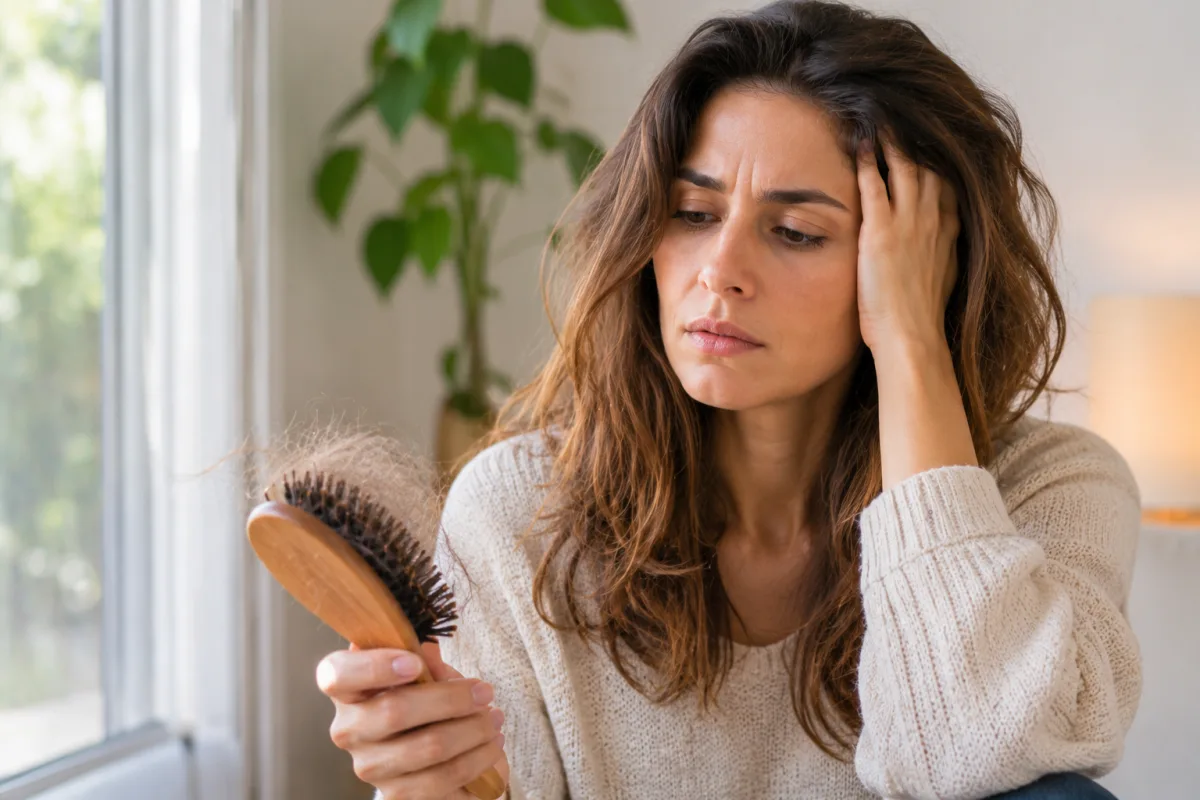
Worried woman in front of a mirror, hand in her hair and a clump of fallen hair in her other hand

How to recognise it

Could it be stress-related hair loss?

Stress-related hair loss follows a pattern: it begins months after the difficult period and spreads across the whole scalp. These signs help you see whether it is your case.

Tick what you recognise0/5

Tick the signs you recognise in your case. This is not a diagnosis, it is only meant to give you an idea.

Sudden hair loss in patches, a painful or sore scalp, or stress that does not go away should be seen without delay. If your stress is very intense or prolonged, also speak to your own doctor.

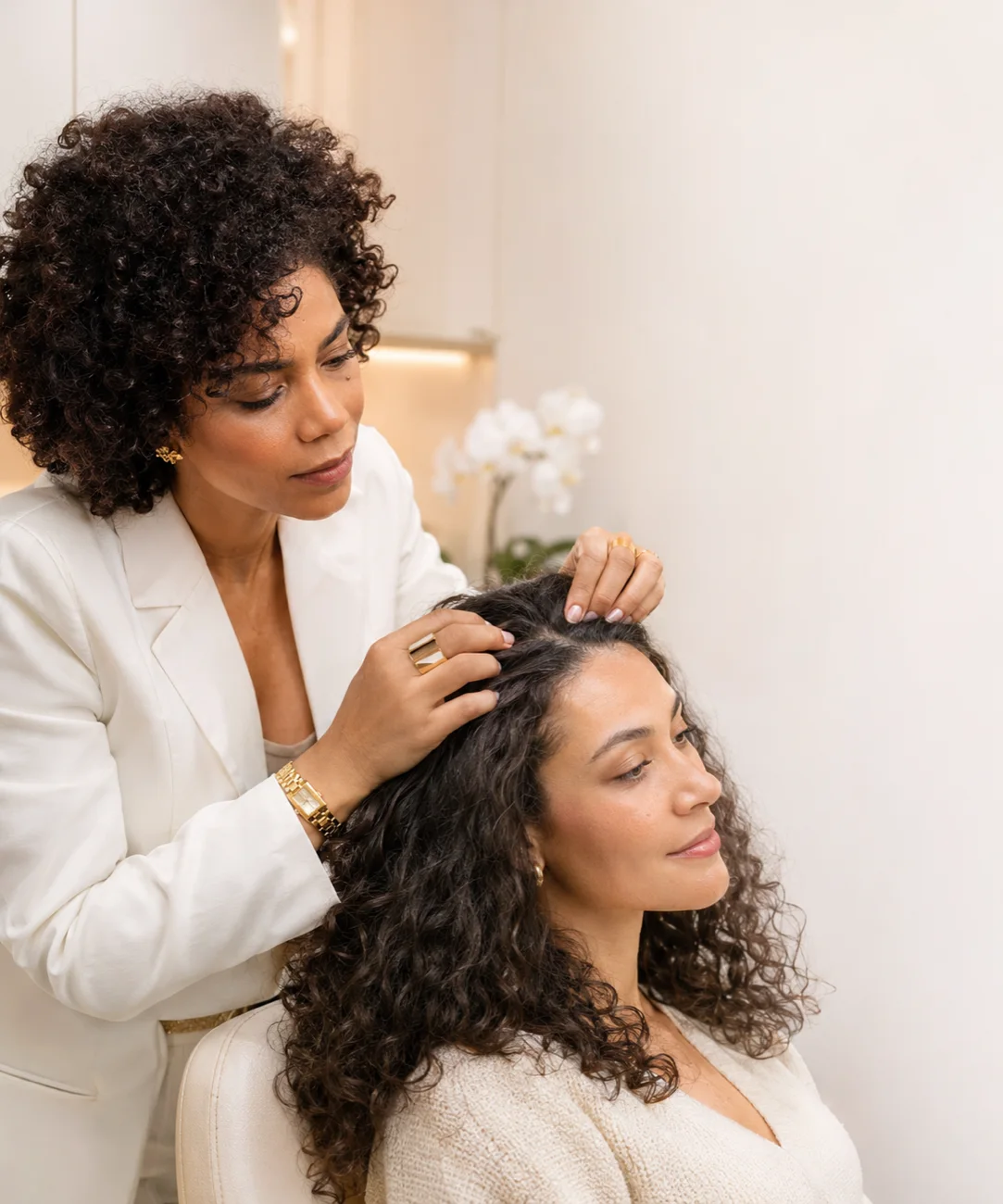
The doctor examining a patient's scalp during a hair assessment consultation
Photograph of an assessment consultation. The dots mark the areas where stress-related hair loss is usually noticed; the image does not show hair loss.

Why it happens

What weighs on your hair when there is stress

It is almost never just one thing. Choose a cause to see what makes it worse and what helps.

Emotional stress

A period of great tension, grief, change or heavy workload can push many hairs into the shedding phase at the same time, which shows two to four months later.

What makes it worse

Weeks on end of tension with no breaks or rest.

What helps

Create pauses, ask for support and, if needed, talk to a health professional.

Temporary or needs assessment

Temporary hair loss or hair loss that needs assessment

In most cases, stress-related hair loss is temporary. These signs help tell it apart from hair loss that deserves a consultation.

  • What it looks like. More hair falls out diffusely, two to four months after a period of stress. The parting widens and the ponytail gets thinner.

  • When it eases. In many cases it eases as stress lessens, and the hair gradually recovers over several months.

  • What the clinic does. The doctor confirms the pattern, requests blood tests if useful and proposes the plan.

  • At home. Rest, meals with protein, gentle hair care and patience.

Went through a difficult period? Tell us at the consultation so the doctor has the full picture. Hair usually recovers when the body returns to balance.

Book an assessment consultation

What the clinic can do

Treatments for stress-related hair loss

When hair loss is linked to stress, the first step is to understand what else is contributing and to give the body time. These are the treatments the doctor may propose to strengthen the follicle, always after looking at your case.

Book an assessment consultation
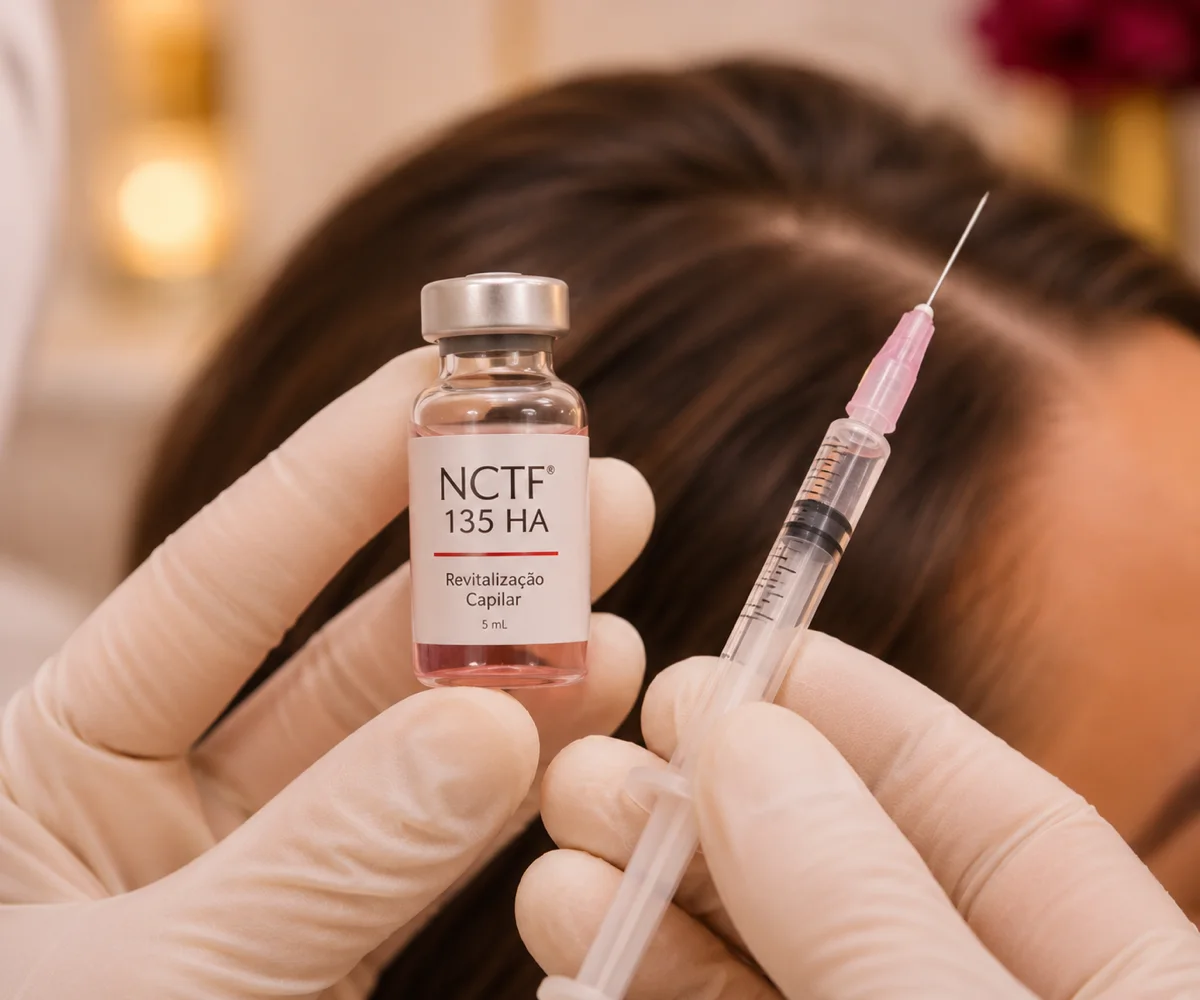
Ampoule of NCTF hair revitalisation and a syringe next to the scalp

Regeneration

Hair NCTF

Vitamins, amino acids, minerals and hyaluronic acid, to nourish the scalp and support weakened hair.

Suitable when

the hair is weak after a difficult period and the doctor considers scalp nutrition suitable.

Find out more
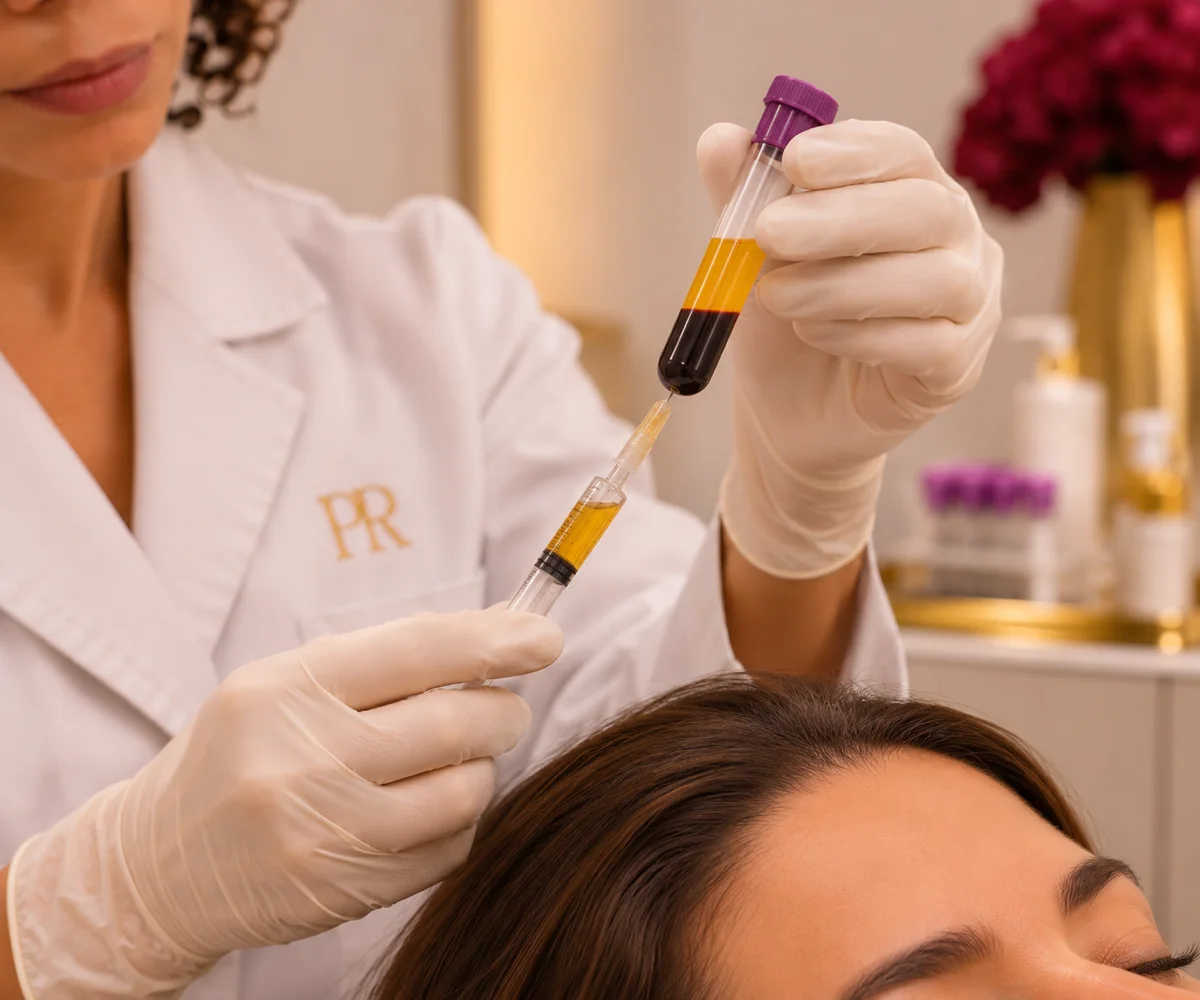
A doctor preparing platelet-rich plasma in a syringe, next to a tube of centrifuged blood

Regeneration

Hair PRP

Platelet-rich plasma, obtained from your own blood, to stimulate the follicle. The doctor first assesses whether it is appropriate.

Suitable when

the hair loss continues after the stress has eased and any deficiencies have been corrected.

Find out more
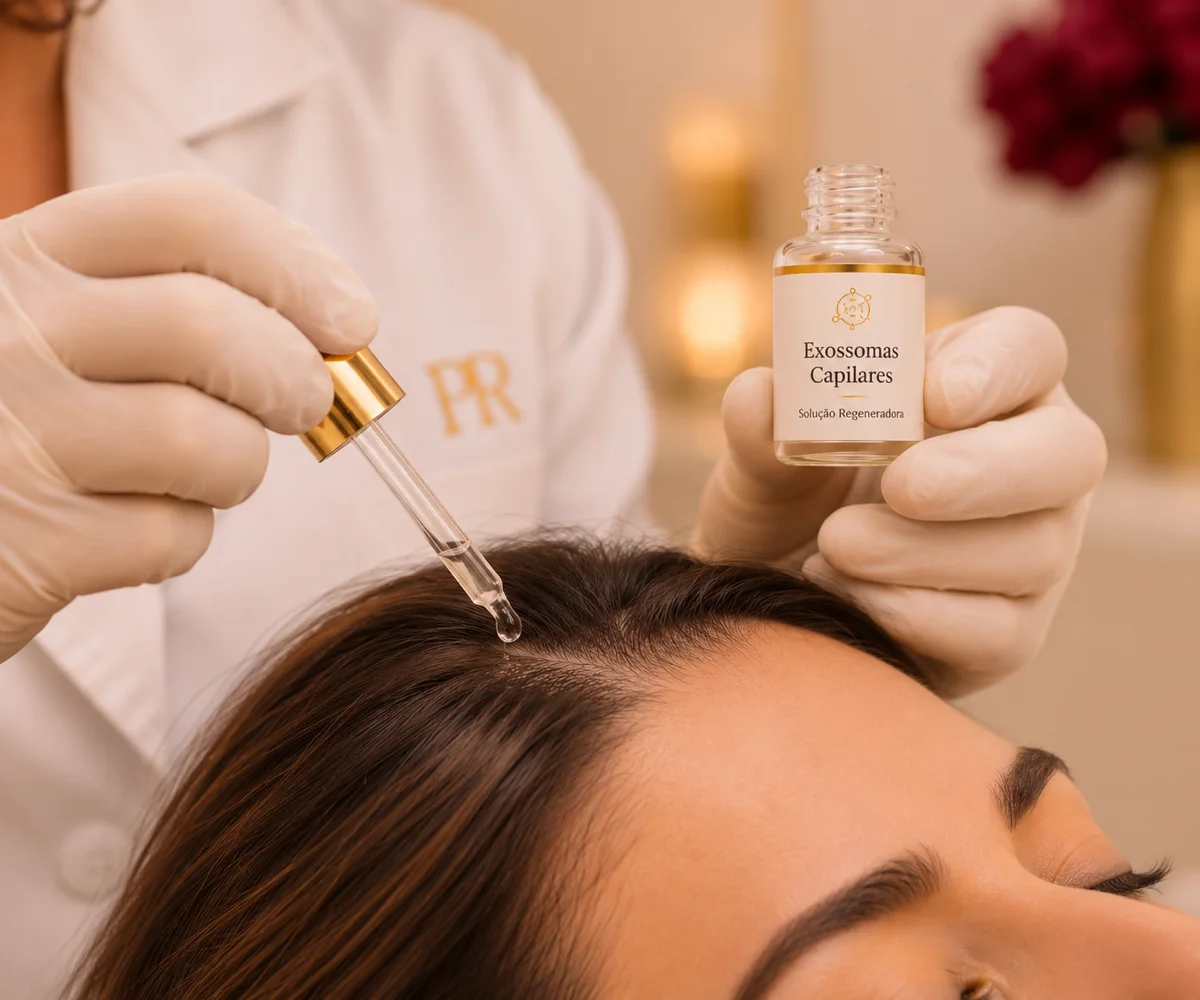
Vial of hair exosomes and a dropper over the scalp

Advanced regeneration

Hair exosomes

Regenerative solution to support follicle repair and improve hair thickness.

Suitable when

the doctor considers it useful to reinforce the plan with a regenerating active ingredient.

Find out more

What about oral therapy? It is often the starting point, to replace what is lacking, and it is always chosen by the doctor after assessment and, if useful, blood tests. Results are gradual.

What the journey looks like

From the first consultation to follow-up

No treatment starts without an assessment consultation with the doctor. This is how it works.

  1. 01At the clinic

    Assessment consultation

    The doctor asks when the hair loss began, what changed in your life, how you sleep and eat and what medication you take, and examines your scalp.

  2. 02At the clinic

    See what is lacking

    If useful, requests blood tests for iron, vitamins, zinc and the thyroid, and explains what to expect and how long it may take.

  3. 03At the clinic and at home

    A plan tailored to you

    It combines what to replenish, care at home and, if justified, a treatment, adapted to where you are right now.

  4. 04Over time

    Follow-up

    We look at your hair again after a few months and adjust, because recovery is slow and follows the body's return to balance.

Day to day

What helps at home

Resting, eating well and being patient count for more than any product. These are the habits that matter most.

The golden rule

Looking after your body so your hair can recover

Hair is one of the first things to suffer in a difficult period and one of the last to recover. Sleeping, eating and slowing down help your hair and the rest of your body.

Getting enough sleep

Sleep helps the body recover from a difficult period.

In practice: keep regular hours and cut back on screens before bed.

Meals with protein

Hair is made of protein and needs nutrients.

In practice: include eggs, fish, pulses or yoghurt and a variety of vegetables at every meal.

Breaks and movement

Slowing down and moving your body helps lower stress.

In practice: walk outdoors and set aside time for yourself every day.

Gentle care

Weakened strands break easily.

In practice: brush slowly, use moderate heat and wear loose hairstyles.

Dr Michelle Campagnoli, clinical director of Clínica Luxmed

Who will look after you

An assessment carried out by the doctor

At Luxmed, the first step is always an assessment consultation with Dra. Michelle Campagnoli. She works out what is contributing to the hair loss, requests tests if useful and designs the plan with you.

  • Physical examination and medical historyAssessment of the scalp, of the period you went through, of your sleep and your diet.
  • A plan tailored to youReplacement of what is lacking, appropriate treatments and care, clearly explained.
  • No obligationThe cost of any treatment is confirmed only after the assessment.
Book an assessment consultation

Book a consultation

Book your consultation

Choose how you prefer to get in touch. We will arrange the assessment consultation with Dr Michelle Campagnoli.

Booking through the website100€70€Assessment consultationExclusive price for those who book the assessment through the website. Outside the website, the price is 100 €.

New Life Miraflores, Algés · Office Center, R. Santa Teresa do Menino Jesus n.º 6, 9.º C, 1495-048

Your details are used only for this contact. Any treatment depends on a prior medical assessment.

Request an appointmentIt takes less than a minute.
Speciality
You do not need to go into detail. The doctor will talk to you during the consultation.
Request received. Our team will contact you as soon as possible.
Does stress really make hair fall out?

Yes, it can. A period of great stress, physical or emotional, can push many hairs into the shedding phase at the same time. Everyone is different, and only an assessment can say what is contributing in your case.

When does hair loss start after stress?

It usually begins two to four months after the difficult period, which is why many people do not link the two.

How long does it last?

In many cases it eases after a few months, once stress lessens, and the hair recovers over several months. If the hair loss continues after six months, it is worth having it assessed.

Will the hair grow back?

In many cases yes, because the follicle is not damaged. Recovery is slow and depends on reducing stress and correcting what is lacking. If it does not recover, it is worth looking at other causes.

Will I go bald because of stress?

That is not what usually happens. Stress-related hair loss is, as a rule, diffuse and temporary, and does not leave permanent bald patches. If there are bald patches or the hair loss does not stop, it should be assessed.

What treatments does the clinic use?

Depending on the case: oral therapy to replenish what is lacking, hair NCTF, hair PRP and hair exosomes. The doctor sets the plan after the assessment.

Do I need blood tests?

Often, yes. The doctor may request iron, vitamin D, zinc, vitamin B12 and thyroid tests, because deficiencies and thyroid changes are common causes of hair loss.

When should I book a consultation?

When the hair loss lasts more than a few weeks, leaves the hair visibly thinner or comes with extreme tiredness. Hair loss in patches or a painful scalp should be seen without delay.

Do hair supplements help?

They can help when a deficiency is confirmed, but taken without criteria they do not solve anything and can do harm. The best approach is to have blood tests and speak to the doctor.

Does reducing stress help the hair recover?

It helps. When the body returns to balance, the hair tends to recover. Sleeping, eating well and slowing down are the starting point, and the doctor can add whatever is useful.

We could not find that question. Ask us on WhatsApp

CallAssistantAvailableBook