Algés, Oeiras Mon to Fri · 09:00 to 13:00 and 14:00 to 19:00 · Sat · 09:00 to 14:00
WhatsApp Book a consultation

Facial aesthetics

Chin with an orange-peel lookWhen the skin of the chin becomes dimpled and wavy, especially when talking or smiling, and you want to understand why

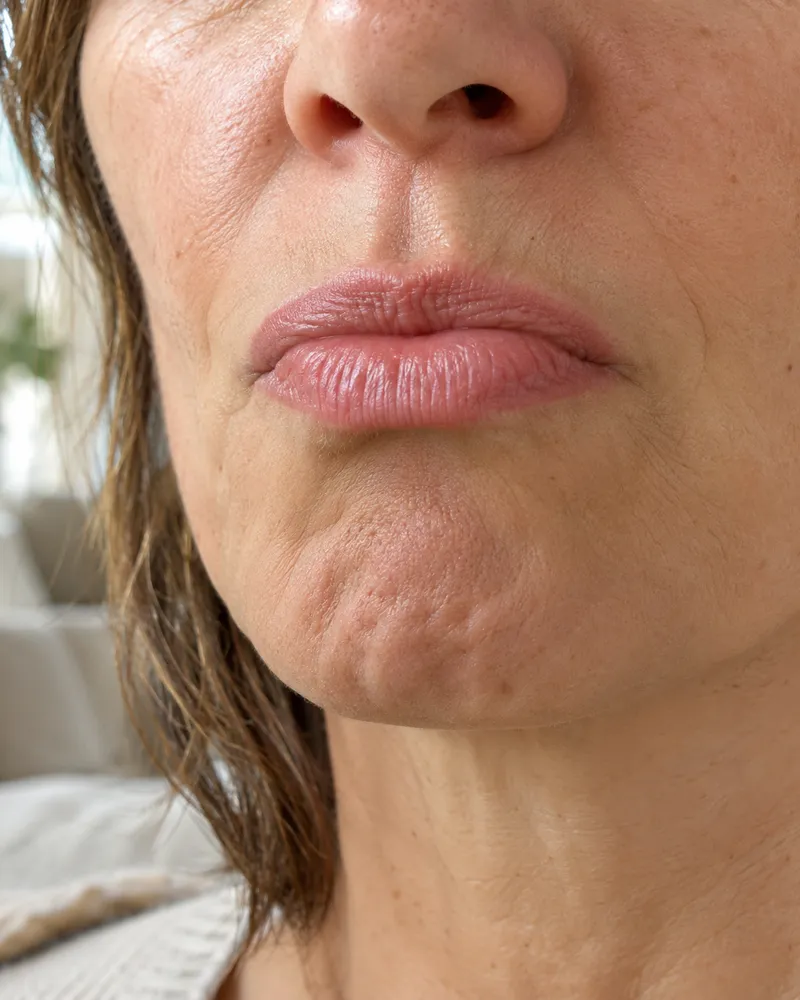
A chin that looks like “orange peel”, or “like a golf ball”, is a frequent and almost always harmless concern: the skin becomes marked with small dimples and waves, especially when talking, smiling or pursing the mouth. In most cases, what lies behind it is a small muscle, the chin muscle (mentalis), which pulls the skin inwards each time it contracts. But not everything that wrinkles the chin is muscle: thin skin, sun, loss of volume and a receding chin also count, and sometimes there are acne scars or ingrown hairs mixed in. Here we explain how to distinguish these situations, what helps at home, what the evidence says about botulinum toxin and hyaluronic acid in this area and when a medical assessment is advisable before any procedure, at Clínica Luxmed, in Algés.

Reviewed by Dr Michelle Campagnoli, clinical director

  • 2options the clinic may consider
  • 1assessment, always first
  • Nocommitment
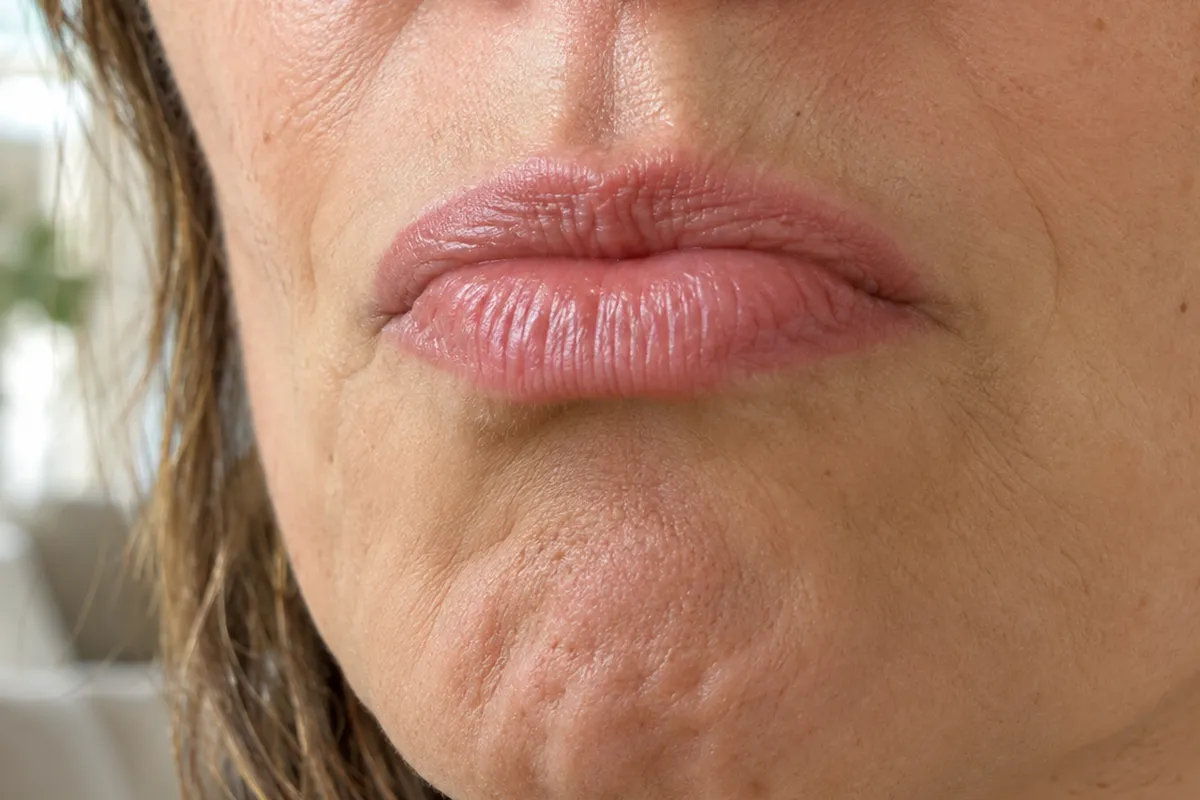
Close-up from a woman's nose to chin, showing uneven, orange-peel skin on her chin

How to recognise it

Is it really orange-peel skin on the chin?

Not every wrinkled chin is the same: sometimes it is the muscle contracting, sometimes the skin has changed, sometimes it is the shape of the chin. These signs help you understand what is going on before the assessment.

Tick what you recognise0/7

Tick the signs you recognise in your case. This is not a diagnosis, it is only meant to give you an idea.

Do you have swelling, redness, heat or pain in the chin, with fever or malaise? Is there a sore or lump on the chin that does not heal, grows, bleeds or changes colour or shape? You need a medical assessment before any treatment. If the swelling is sudden, with difficulty breathing or swallowing, call 112. If you have already had a filler and have severe pain, pale, dark or purplish-patched skin, changes in vision, a severe headache or weakness on one side of the face, call 112 immediately and contact the clinic that injected. Out of hours, call SNS 24: 808 24 24 24.

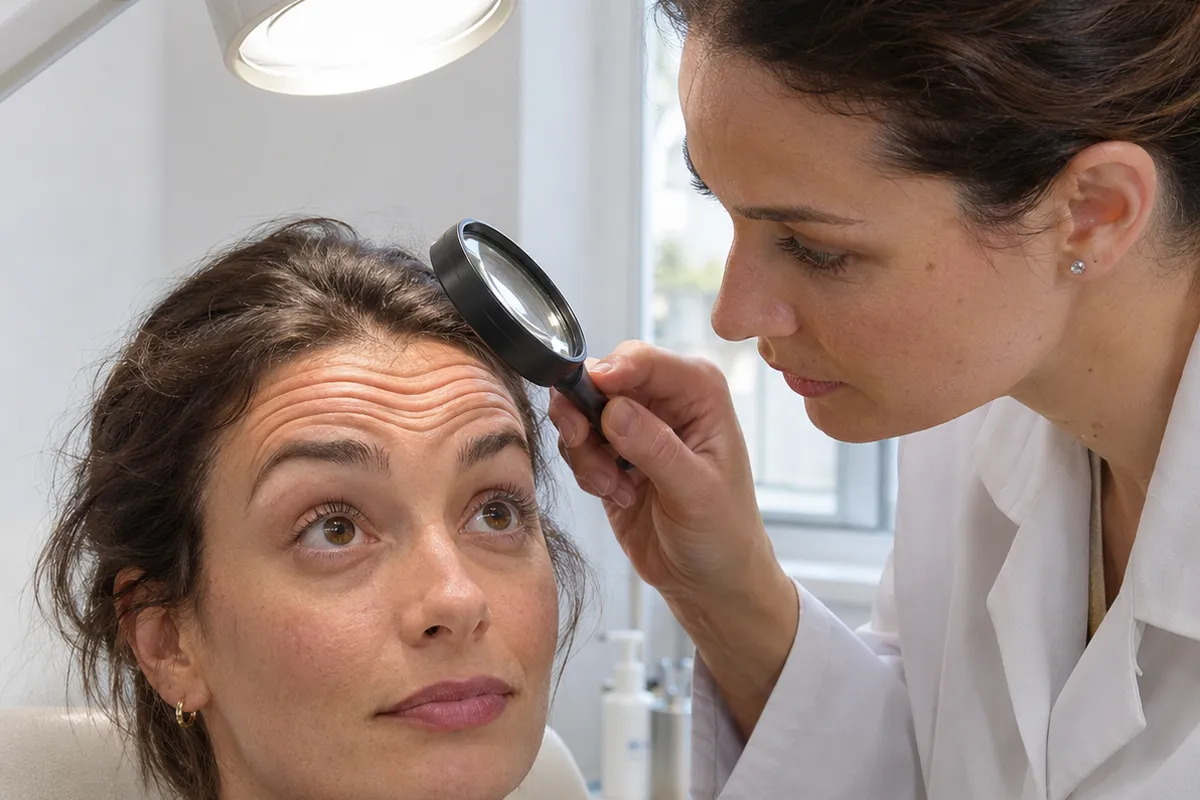
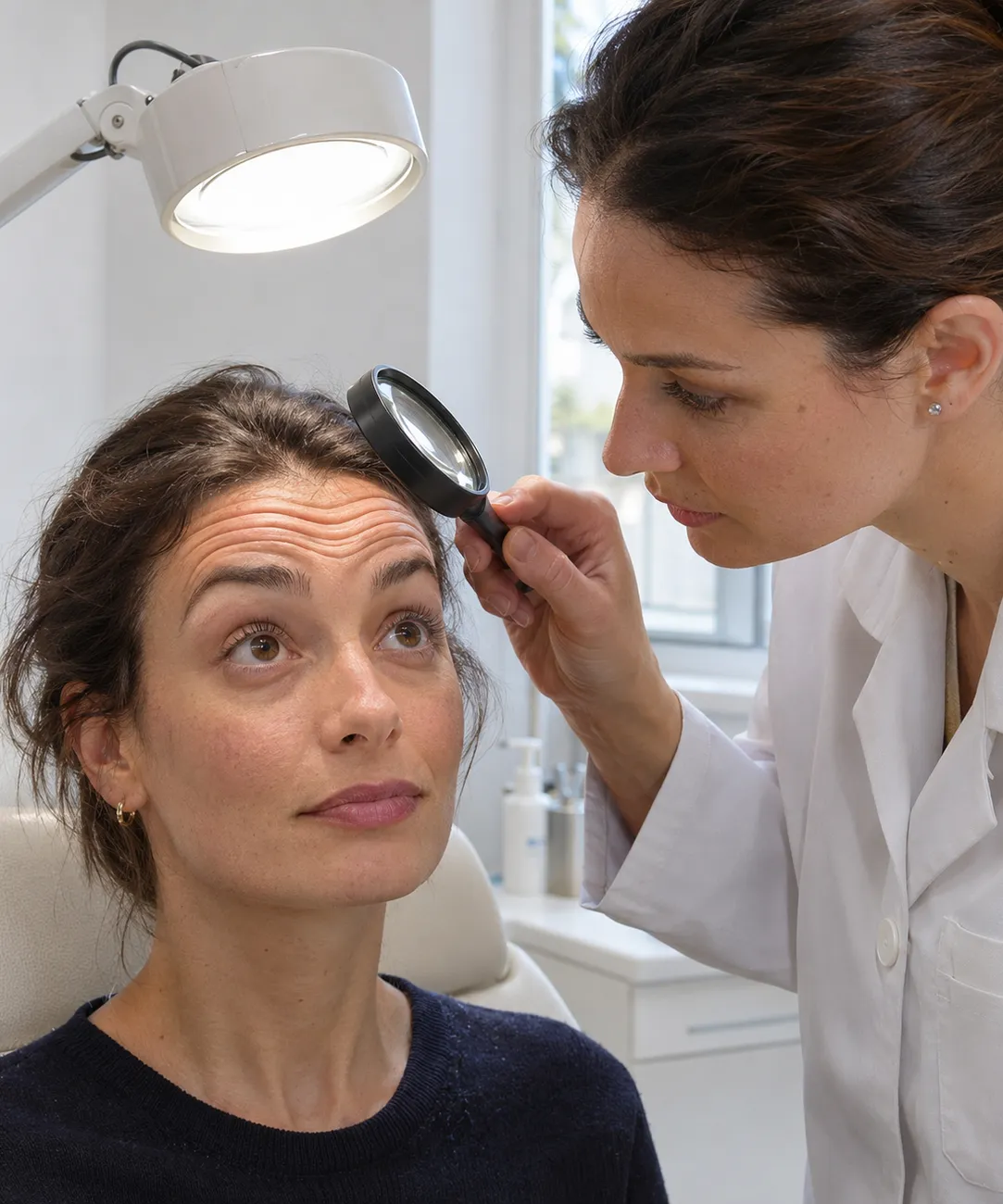
Doctor examining a patient's forehead with a magnifying glass under an examination light
Photograph of a consultation. The dots mark what the doctor is assessing.

Why it happens

What may lie behind an orange-peel chin

There is almost always more than one cause at the same time. Choose a situation to see how it may contribute and what usually helps.

A very active chin muscle

The mentalis muscle originates in the bone of the chin and attaches to the skin. Each time it contracts, it pulls that skin upwards and inwards, and this is what creates the dimples. In some people it contracts more than is needed, when talking, smiling or even at rest, and over time the skin becomes marked. A panel of Italian experts considered this “orange-peel” look the main indication for treating the muscle.

What weighs on it

Habits that keep the muscle contracted, such as pressing the lower lip, and trying to stretch the skin with massage or devices, which do not relax the muscle.

What helps

Understanding that it is the muscle working too hard and, if it bothers you, talking to the doctor about what can be considered.

Normal or to be assessed

Ordinary chin or something to assess

Most orange-peel chins have a simple cause. But some situations call for an assessment before any treatment, because the look is only the visible part.

  • What it looks like. Dimples that appear when talking, smiling or pursing the mouth, equal on both sides, present for a long time or made worse by age, without pain, without swelling and without sores.

  • A clue, not a diagnosis. If the dimples disappear with the mouth at rest, it tends to be muscle; if they remain even when still, it may be skin, scars or loss of volume; and if the chin looks small in profile, the shape counts.

  • What the clinic does. The doctor examines the chin at rest and in movement, from the front and in profile, works out what weighs most and proposes, if it makes sense, an option, without promising results.

  • At home. Protecting from the sun, moisturising, not squeezing spots or ingrown hairs and giving the skin time.

After a filler, do you have severe pain, pale skin or skin with purplish patches, a change in vision, a severe headache or facial weakness? Call 112 immediately and tell the clinic that injected. Only a doctor can use hyaluronidase, which dissolves hyaluronic acid, and you should not massage the area on your own. If in doubt, out of hours you can call SNS 24: 808 24 24 24.

Book an assessment

What the clinic may consider

Options for softening the chin

Before any procedure come the right habits: sunscreen every day, hydration, treating acne or ingrown hairs, looking at the bite and working out how much of the look is muscle, skin or the shape of the chin. Only then is a procedure considered. For this concern, the clinic associates two options: botulinum toxin, which relaxes the chin muscle, and hyaluronic acid, which restores volume when the chin is small or receding. The evidence is limited: toxin in the chin rests mainly on expert consensus and small case series, with no large trials that we are aware of, and hyaluronic acid has better support for chin recession, but not for smoothing the skin. Results vary, are not permanent and are generally temporary. In some cases the doctor may propose the two options at different times.

Book an assessment
Dr Michelle Campagnoli, clinical director of Clínica Luxmed

First step

Assessment consultation

The doctor listens to what you are experiencing, examines your case and explains the suitable options. No treatment begins without this consultation.

May be considered when

you want to understand the cause and decide on the best path, with time and without commitment.

Book an assessment
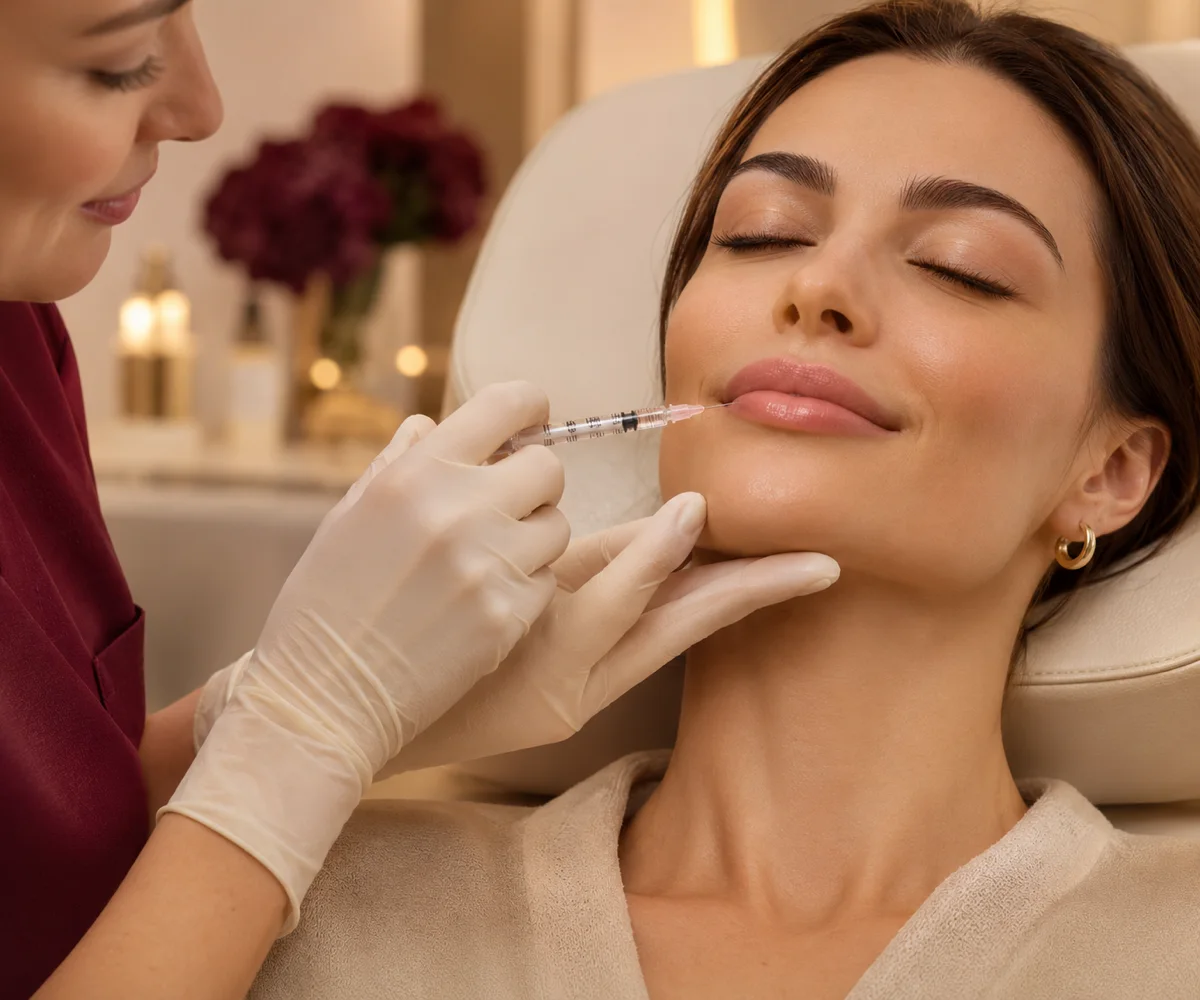
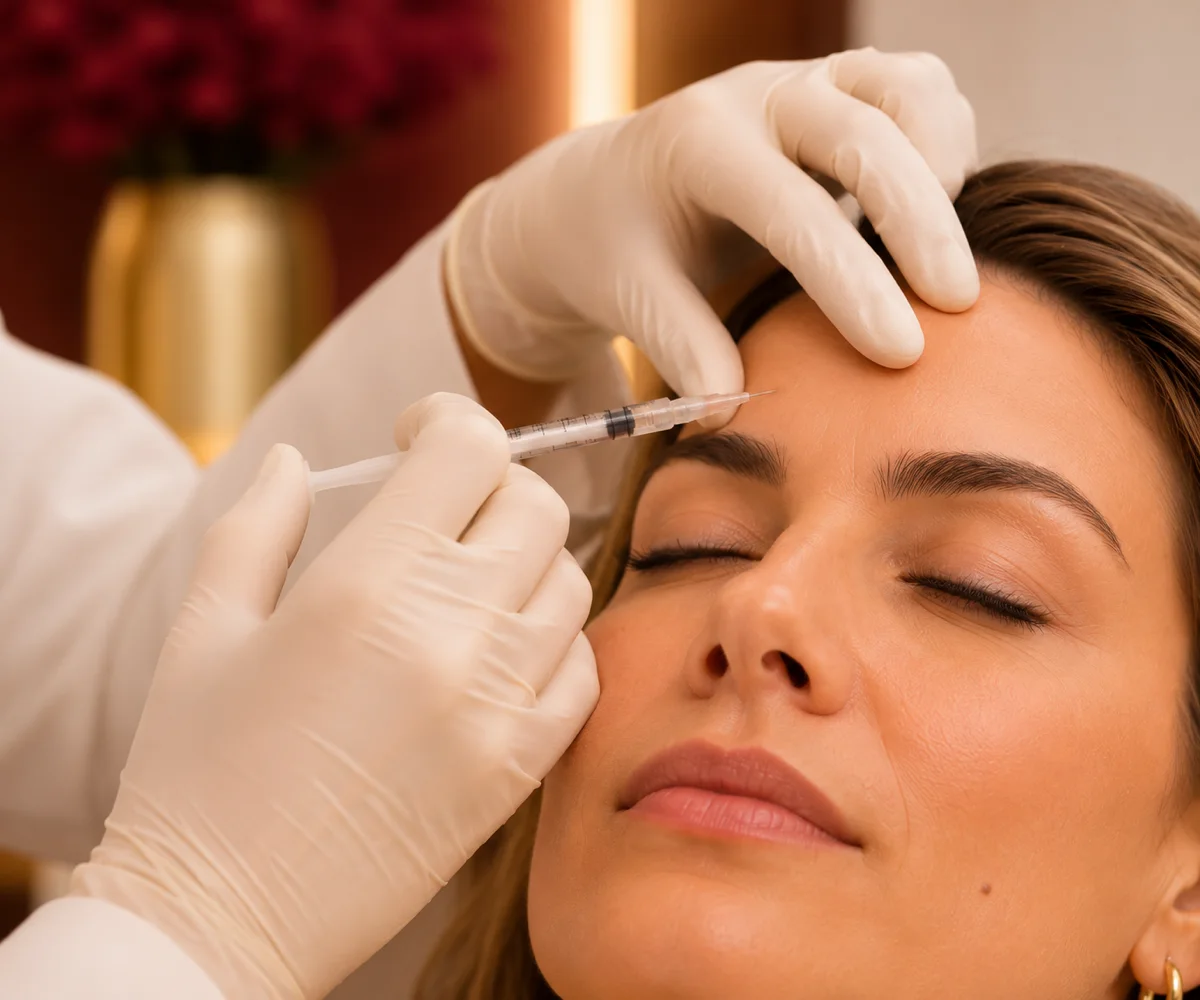
Application of botulinum toxin with a fine syringe in a facial aesthetics consultation

Relaxing the muscle

Botulinum toxin

Injection of small amounts into the chin muscle, so that it contracts less and the skin puckers less. It is the option described for an orange-peel chin when the cause is the muscle, but it is an application outside the usual approved indications, supported by expert consensus and small series. The effect is temporary, lasts a few months, and there may be a lump or bruise, asymmetry of the smile and weakness of the lower lip, which are usually temporary. It is not carried out during pregnancy or breastfeeding.

May be considered when

the dimples appear mainly when the muscle contracts, the skin is healthy, the bite has been assessed and the doctor has explained the risks and what is realistic to expect.

Find out more
Doctor injecting hyaluronic acid in a facial aesthetics consultation, in bright consulting-room light

Restoring volume

Hyaluronic acid

An injectable gel that restores volume and projection when the chin is small or receding, which can soften the skin that is in excess in front of the bone. It does not by itself smooth the dimples of the muscle. In a randomised trial, about half of the people improved chin recession at 6 months, and local effects, such as tenderness and firmness, were frequent. Serious complications, such as blockage of a vessel, are rare. The effect is temporary and may need repeating.

May be considered when

the chin is small or receding in profile and this recession contributes to the look, the skin is healthy and the doctor has explained the risks, the limits and what is realistic to expect.

Find out more

What the journey looks like

From the first conversation to a plan tailored to you

No procedure begins without an assessment by the doctor. Most people start with the simplest approach, and only then is anything further considered.

  1. 01At the clinic

    Telling your story

    The doctor asks since when the chin has looked like this, whether the dimples appear only with expression, whether there is acne, ingrown hairs or scars, medicines, the bite and whether you have had toxin or fillers.

  2. 02At the clinic

    Examine the chin

    The skin is observed at rest and in movement, from the front and in profile, to work out what is muscle, skin or the shape of the chin. If there are signs of infection, a suspicious lesion or doubts about the bite, the route is referral to dermatology or dentistry.

  3. 03At home

    Look after the skin and protect it from the sun

    You protect yourself from the sun every day, moisturise with gentle products and stop pressing the lower lip, when you notice that habit. In many cases, this alone improves the look.

  4. 04Over time

    Decide and follow up

    If the look persists and bothers you, the doctor explains whether a procedure makes sense, what can be expected, the risks and whether it needs repeating, without promising results. The examination is repeated and the plan adjusted.

Day to day

What helps at home

What you do at home matters more than you might think. These are sensible measures to take while you wait for your consultation and alongside the clinic’s plan.

The golden rule

Understand what is wrinkling the chin before treating it

A chin wrinkled by the muscle, another wrinkled by thin skin and another wrinkled by the shape of the bone call for different things. Sun protection, moisturising and treating acne always help; the rest is decided after knowing what weighs most, and excluding a cause that needs another specialty.

Protect from the sun

Ultraviolet radiation ages the skin and makes it less elastic, which accentuates the marks of movement.

In practice: facial sunscreen every day, including on the chin and along the jawline.

Moisturise with gentle products

Well-moisturised skin looks less marked, but no cream relaxes the muscle.

In practice: a fragrance-free moisturiser and gentle cleansing, without rough exfoliants.

Notice the habit of pressing the lips together

Puckering the lower lip and chin keeps the muscle contracted, and this accentuates the dimples.

In practice: try to relax the mouth and jaw throughout the day, and talk to the dentist if you find it hard to close the lips without effort.

Record and bring to the consultation

It helps the doctor to understand when and how the dimples appear.

In practice: photographs from the front and in profile, at rest and smiling, in the same light, and a list of medicines and previous treatments.

Dr Michelle Campagnoli, clinical director of Clínica Luxmed

Who will look after you

An assessment carried out by the doctor

At Luxmed, in Algés, the first step is always an assessment with Dr Michelle Campagnoli. She is the one who examines the chin, works out whether the look comes from the muscle, the skin or the shape of the chin, rules out other causes and decides with you what makes sense, before any procedure.

  • Physical examination and medical historyA conversation about the history and habits, and an examination of the chin at rest and in movement, from the front and in profile.
  • A plan tailored to youA clear plan, without promises, with the cause treated first and follow-up over time.
  • No obligationThe cost of any treatment is confirmed only after the assessment.
Book an assessment

Book a consultation

Book your consultation

Choose how you prefer to get in touch. We will arrange the assessment consultation with Dr Michelle Campagnoli.

Booking through the websiteAssessment consultationTalk to our assistant on WhatsApp and ask for the current price of the assessment.

New Life Miraflores, Algés · Office Center, R. Santa Teresa do Menino Jesus n.º 6, 9.º C, 1495-048

Your details are used only for this contact. Any treatment depends on a prior medical assessment.

Request an appointmentIt takes less than a minute.
Speciality
You do not need to go into detail. The doctor will talk to you during the consultation.
Request received. Our team will contact you as soon as possible.
Why does my chin look like orange peel?

In most cases, because the chin muscle, the mentalis, contracts and pulls the skin inwards, creating dimples, especially when talking, smiling or pursing the mouth. Thin skin, sun, age and a small or receding chin accentuate the look. Less often, the texture comes from acne, scars or ingrown hairs, which do not change with expression. That is why the first step is to work out which of these causes weighs most in your case.

Is an orange-peel chin a sign of disease?

Almost never. It is a variation in the movement of the muscle and the skin, very common and without risk to health. But there are situations that call for assessment: swelling, redness, heat or pain in the chin, a sore or lump that does not heal, or a mole that grows, changes colour or bleeds. In those cases the look is not treated without first assessing the cause.

What is the mentalis muscle and why does it wrinkle the skin?

It is a small muscle that originates in the bone of the chin and attaches to the skin of the area. When it contracts, it lifts the chin and pushes the lower lip upwards, as when you pout. Because it is connected directly to the skin, each contraction leaves a mark of dimples, and in people whose muscle works a lot, or who have thin skin, that mark is noticeable even when the contraction is small.

How can I tell muscle dimples from scars or ingrown hairs?

Muscle dimples appear and disappear with expression: with the mouth still, the skin is smooth or almost so. Scars, visible pores and ingrown hairs stay the same when you are still. A mixture is possible, and the doctor examines the chin at rest and in movement, from the front and in profile, to work out what weighs most.

How can the orange-peel look be removed from the chin?

There is no cream or device with solid evidence that it undoes it. What helps consistently is protecting the skin from the sun, moisturising and not squeezing spots. If the cause is the muscle, the option described is botulinum toxin, administered by a doctor; if the chin is small or receding, hyaluronic acid may be considered. Results vary and are, in general, temporary.

Does botulinum toxin in the chin work? How does it work?

Toxin relaxes the muscle, which then contracts less, and the skin puckers less. A consensus of 14 Italian experts considered the orange-peel chin the main indication for treating this muscle, with small and careful injections. But the evidence is mainly from consensus and small series, and the area is not among those in usual use under the product’s approved indications. We do not promise a result: the effect is temporary, lasts a few months, and the doctor explains what is realistic in your case.

Is hyaluronic acid suitable for an orange-peel chin?

It is suitable mainly when the chin is small or receding, restoring projection, and this can soften the skin that is in excess in front of the bone. It does not relax the muscle, so it does not by itself smooth the dimples. In a randomised trial of 192 people with a receding chin, the improvement at 6 months was 56% against 28% in the control group. The effect is temporary and may need repeating.

What risks does toxin carry in the chin? And filler?

With toxin, there may be bruising, pain at the site and, if the product spreads to neighbouring muscles, weakness of the lower lip or an asymmetrical smile, generally temporary. Difficulty swallowing or breathing is an emergency (112). With filler, swelling, firmness and bruising are common; rarely, the product enters a vessel and causes severe pain, pale, dark or purplish skin and changes in vision: call 112 and the clinic that injected you immediately. Only a doctor can use hyaluronidase, and you should never massage the area on your own.

Are the results permanent? How many sessions are needed?

There are no guaranteed or permanent results. The effect of toxin lasts a few months and that of hyaluronic acid is also temporary, so repeats may be needed. A retrospective study of 46 people suggests that, when toxin is used before chin filler, there may be fewer touch-ups, but it is a small, non-randomised study. The doctor sets out the plan and expectations at the assessment, without promising results.

When should I see a doctor first? And what if I had toxin or filler and something went wrong?

Book a consultation if the look appeared quickly, is on one side only, or if there is swelling, redness, heat, pain, a sore that does not heal or a mole that changes. After toxin, a lip that droops or a crooked smile should be reported to the clinic. After a filler, severe pain, pallor or purplish patches on the skin, a change in vision, a severe headache or facial weakness require 112 immediately. If in doubt, out of hours call SNS 24 (808 24 24 24).

We could not find that question. Ask us on WhatsApp

Scientific references

This page is based on the sources below and was reviewed by Dr. Michelle Campagnoli. Last updated on .

  1. Fundarò S, Molinari P, Brunelli G, Cazzulani M, Dalla Costa G, Dell'Avanzato R, D'Emilio R, Di Gregorio C, Franceschelli A, Renga M, Salti G, Santorelli A, Urso US, Zollino I. Italian Consensus and Review in Lower Face Mimetic Muscle Treatment with Botulinum Toxin-A. Toxins (Basel), 2026.
  2. Yi KH, Lee KL. Muscle- and Gland-Specific Dosing of Botulinum Toxin in Facial Aesthetics: Review of Dose Ranges, Target Depth, Muscle Thickness, and Neuromuscular or Glandular Anatomy. Toxins (Basel), 2026.
  3. Lembo S, Macias-Arias P, Uribe Posada MP, Banegas R, Rengifo J. A Novel Intraoral Technique for Botulinum Toxin Type A Application in the Mentalis Muscle. Cureus, 2026.
  4. Betti E, Paglianiti M, Vaira LA, Ricciardi A, Cirignaco G, Consorti G. Combined Botulinum Toxin Type A and Hyaluronic Acid Versus Exclusive Hyaluronic Acid Injections: A Potential Nonsurgical Alternative for Chin Augmentation. J Craniofac Surg, 2026.
  5. Beer K, Kaufman-Janette J, Bank D, Biesman B, Dayan S, Kim W, Chawla S, Schumacher A. Safe and Effective Chin Augmentation With the Hyaluronic Acid Injectable Filler, VYC-20L. Dermatol Surg, 2021.
  6. Ou Y, Wu M, Liu D, Luo L, Xu X, He J, Long Y, Feng J, Nian M, Cui Y. Nonsurgical Chin Augmentation Using Hyaluronic Acid: A Systematic Review of Technique, Satisfaction, and Complications. Aesthetic Plast Surg, 2023.
  7. Al-Khafaji MQM, Althobaiti NSA, Alhassani NFM, Alnahwi ZAH, Aldawsari WA, Alquraini SK, Abdrabalameer AH, Alharamlah FSS, Almalki AS, Alotaibi NA. The Application and Efficacy of Hyaluronic Acid Fillers for Chin Enhancement and Retrusion Correction: A Systematic Review of Patient-Reported Outcomes. Cureus, 2023.
  8. Rolek A, Pokrowiecki R. Chin Ptosis: Etiology, Classification, Diagnosis and Surgical Management-A Literature Review. J Clin Med, 2026.
  9. Beleznay K, Carruthers JDA, Humphrey S, Carruthers A, Jones D. Update on Avoiding and Treating Blindness From Fillers: A Recent Review of the World Literature. Aesthet Surg J, 2019.
  10. Kandhari R, Sharma R, Aggarwal I, Arora G, Ranka N. Complications of Botulinum Toxin, Fillers, and Threads: A Narrative Review by the Special Interest Group (SIG) Aesthetics, IADVL Academy. Cureus, 2026.
  11. Hughes MCB, Williams GM, Baker P, Green AC. Sunscreen and prevention of skin aging: a randomized trial. Ann Intern Med, 2013.
CallAssistantAvailableBook