Algés, Oeiras Mon to Sat · 09:00 to 13:00 and 14:00 to 19:00
WhatsApp Book a consultation

Hair problem

Fine, limp hairWhen the strand is fine, the hair lacks body and the style falls flat straight away

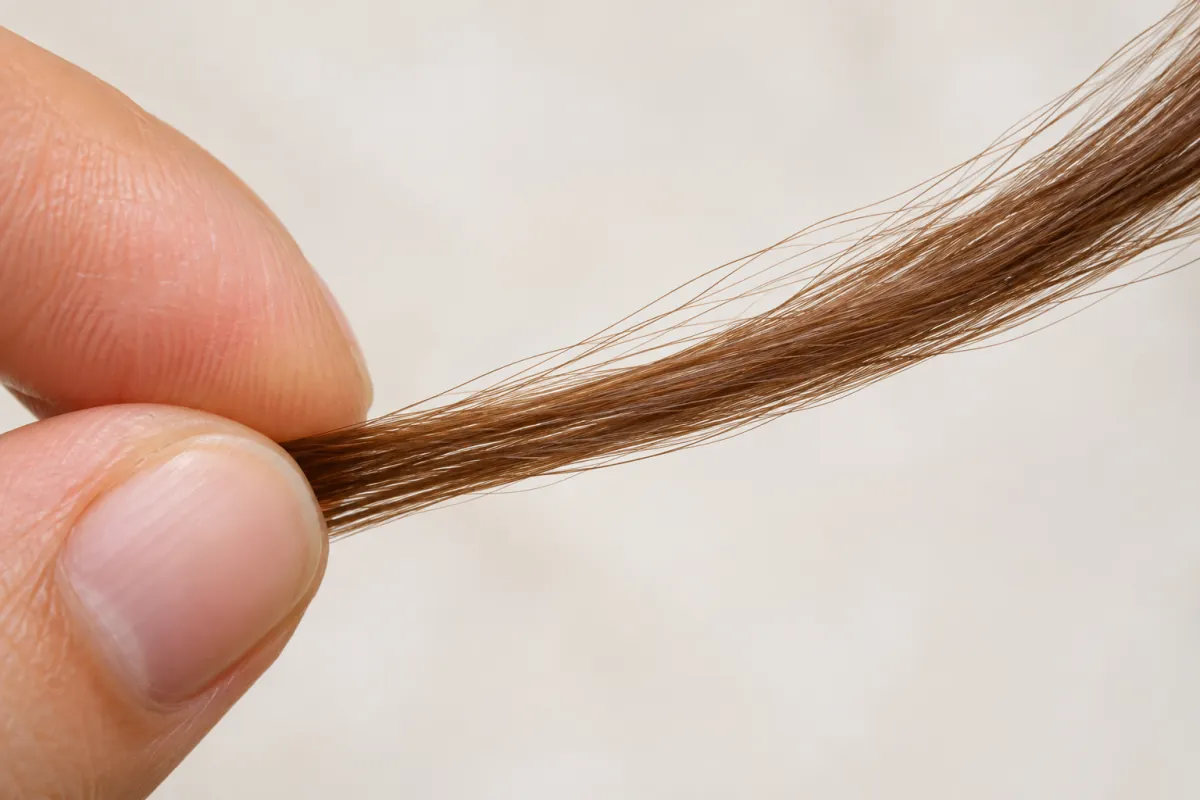
Having fine hair is not the same as having less hair. A fine strand means a strand of small diameter, and some people have had it all their lives; loss of density, on the other hand, means fewer strands on the head. Both can give the same feeling of lacking volume, and they can add up. Here we explain how they differ, what is usually behind them, what the doctor assesses, and which care routines give the hair body without damaging it.

Reviewed by Dr Michelle Campagnoli, clinical director

  • 3treatments the clinic may suggest
  • 1assessment consultation, always first
  • 70 €assessment booked through the website
Woman with short grey hair and hoop earrings facing the camera by a bright window, with a serene smile

How to recognise it

Is it fine hair without volume?

Fine hair is noticed more by touch and in the mirror than in the number of strands. These signs help you see whether you recognise yourself in them, and whether it is worth requesting an assessment.

Tick what you recognise0/7

Tick the signs you recognise in your case. This is not a diagnosis, it is only meant to give you an idea.

Sudden, heavy hair loss, a painful scalp, sores, marked scaling, redness or patches that appear quickly should be seen without delay, because they usually have another cause.

The doctor examining a patient's scalp during a hair assessment consultation
Photograph of an assessment appointment. The dots mark the areas where fine hair is usually noticed; the image does not show fine hair.

Why it happens

What weighs down fine hair

It is almost never just one thing. Choose a cause to see what makes it worse and what helps.

Genetics

The diameter of the strand, the density and the way the hair behaves are largely inherited: there are families with fine, straight hair. Heredity is also the most common cause of loss of density, in which the follicles gradually shrink and the strand becomes finer. Having had fine hair all your life is different from seeing it get finer, and it is this difference that the doctor looks for.

What makes it worse

Comparing your hair with that of someone with thick strands, or giving up on caring for it because “it runs in the family”.

What helps

Asking relatives what their hair was like at 30 and at 50, and bringing old photographs to the appointment.

Strand or density

Fine strands or fewer strands?

These are different situations, which are easily confused and which can add up. Telling them apart helps to choose the path and to avoid treating the wrong thing.

  • What it looks like. There are plenty of strands, but each one is fine. The scalp is no more visible than before, and the feeling is of little body, of hair that “falls flat” and of locks you can hardly feel between your fingers.

  • How it evolves. It has usually been this way for as long as you can remember, or very stable over the years, and there may be others in the family.

  • What gives volume. A good layered cut, light products and a suitable washing routine count for more here than any treatment.

  • What the clinic does. The doctor checks that there is no other cause, such as deficiencies or thyroid problems, and explains what is realistic to expect.

  • Follow-up. Treatment is not always needed: sometimes reassurance and a few adjustments to your care are enough.

Not sure whether it is the strand or the number of strands? Book an assessment appointment: the doctor examines the scalp and helps you understand what has really changed.

Book an assessment consultation

What the clinic can do

Treatments for fine hair

It is important to be clear: the strand that has already grown is lifeless material, and no treatment repairs it. In-clinic treatments act on the scalp and the follicle, that is, on the hair that is yet to grow, and the evidence for several of them is limited. When hair is naturally fine, the most useful measures are usually the cut, the routine and treating any associated causes, and the doctor will tell you frankly whether any of these treatments makes sense in your case. Results vary from person to person and research on these treatments is ongoing, so the doctor explains what is known and what you can expect before any decision.

Book an assessment consultation
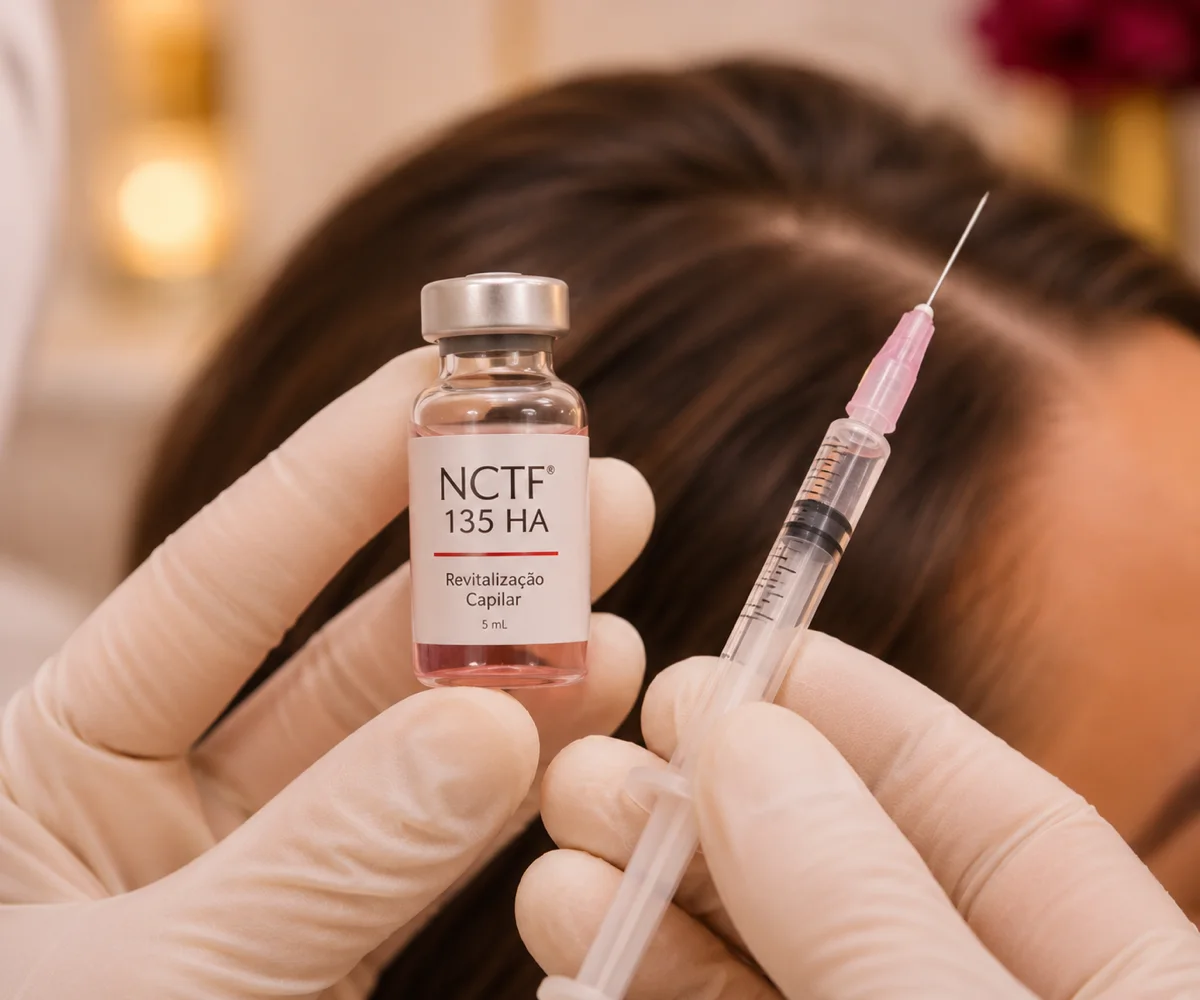
Ampoule of NCTF hair revitalisation and a syringe next to the scalp

Regeneration

Hair NCTF

Vitamins, amino acids, minerals and hyaluronic acid, which may help nourish the scalp and support finer hair.

Suitable when

the hair is finer and the doctor considers scalp nourishment appropriate.

Find out more
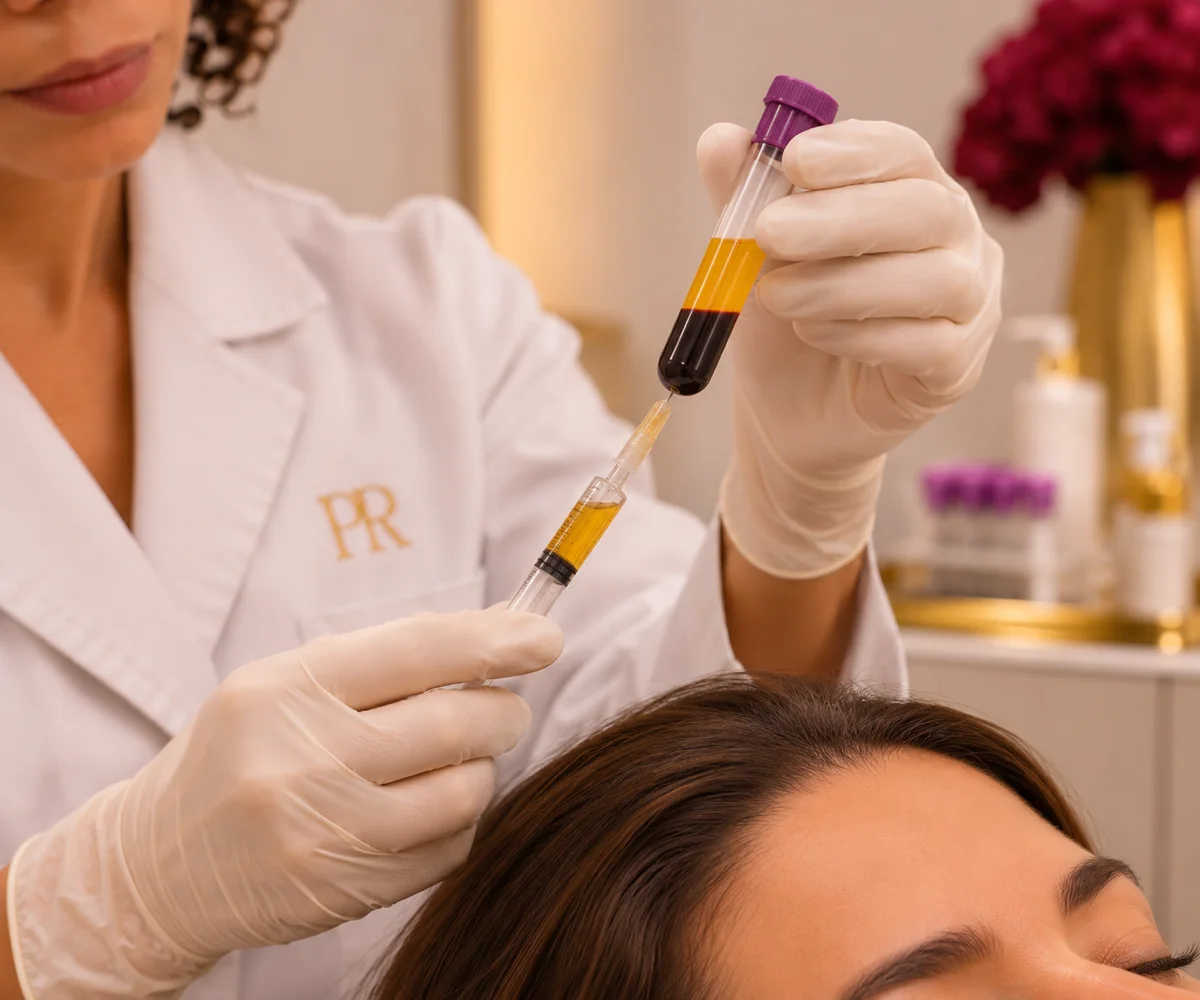
A doctor preparing platelet-rich plasma in a syringe, next to a tube of centrifuged blood

Regeneration

Hair PRP

Platelet-rich plasma, obtained from your own blood, which may help stimulate the follicle in some cases. The doctor first assesses whether it is appropriate.

Suitable when

there is a loss of density and the doctor considers stimulating the follicle appropriate.

Find out more
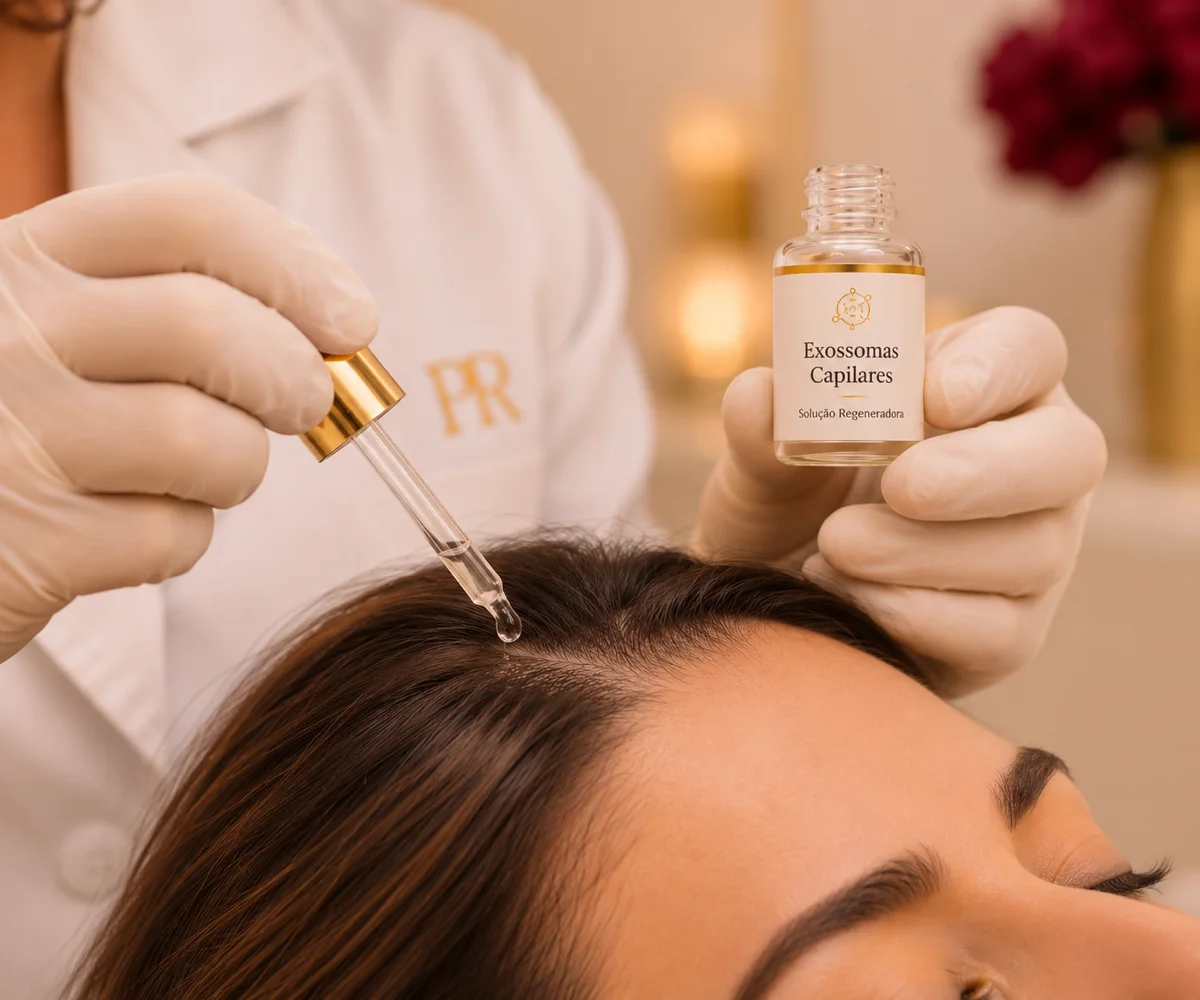
Vial of hair exosomes and a dropper over the scalp

Advanced regeneration

Hair exosomes

Regenerative solution that may help support the follicle and strand thickness, with a variable response.

Suitable when

the doctor considers it useful to reinforce the plan with a regenerating active ingredient.

Find out more

What if your hair is naturally fine? Then none of these treatments is compulsory, and the doctor may recommend only care and follow-up. If there is a deficiency, a thyroid problem or a medication to review, treating the cause comes first. Results, when they occur, are gradual and the evidence remains limited.

What the journey looks like

From the first consultation to follow-up

No treatment starts without an assessment consultation with the doctor. This is how it works.

  1. 01At the clinic

    A conversation about your hair

    The doctor asks since when your hair has been fine or has become finer, whether there are others in the family, what your strands were like at other stages of life and what has changed: pregnancy, menopause, illness, diet, medication, changes of products or hairstyle.

  2. 02At the clinic

    Examining the scalp and hair

    She examines the scalp and hair with trichoscopy, to see whether there are many fine strands, whether density is reduced, or whether there are signs of inflammation or flaking that would call for a different approach.

  3. 03At the clinic

    See what is lacking

    If useful, she requests tests, for example for iron, the thyroid and vitamin B12, and explains what the results mean, without overloading you with unnecessary examinations.

  4. 04At the clinic

    Discussing expectations

    She says clearly what can and cannot be expected: a strand that has already grown cannot be repaired, and the difference between hair that has “always” been fine and hair that is getting finer changes the plan.

  5. 05Over time

    Plan and follow-up

    She combines the treatments that make sense with care at home, treats any associated causes and reviews the hair again after a few months, using photographs for comparison.

Day to day

What helps at home

The volume of fine hair comes from a few right habits rather than from too many products. These are the ones that count most, alongside the doctor's plan.

The golden rule

Less weight, more softness

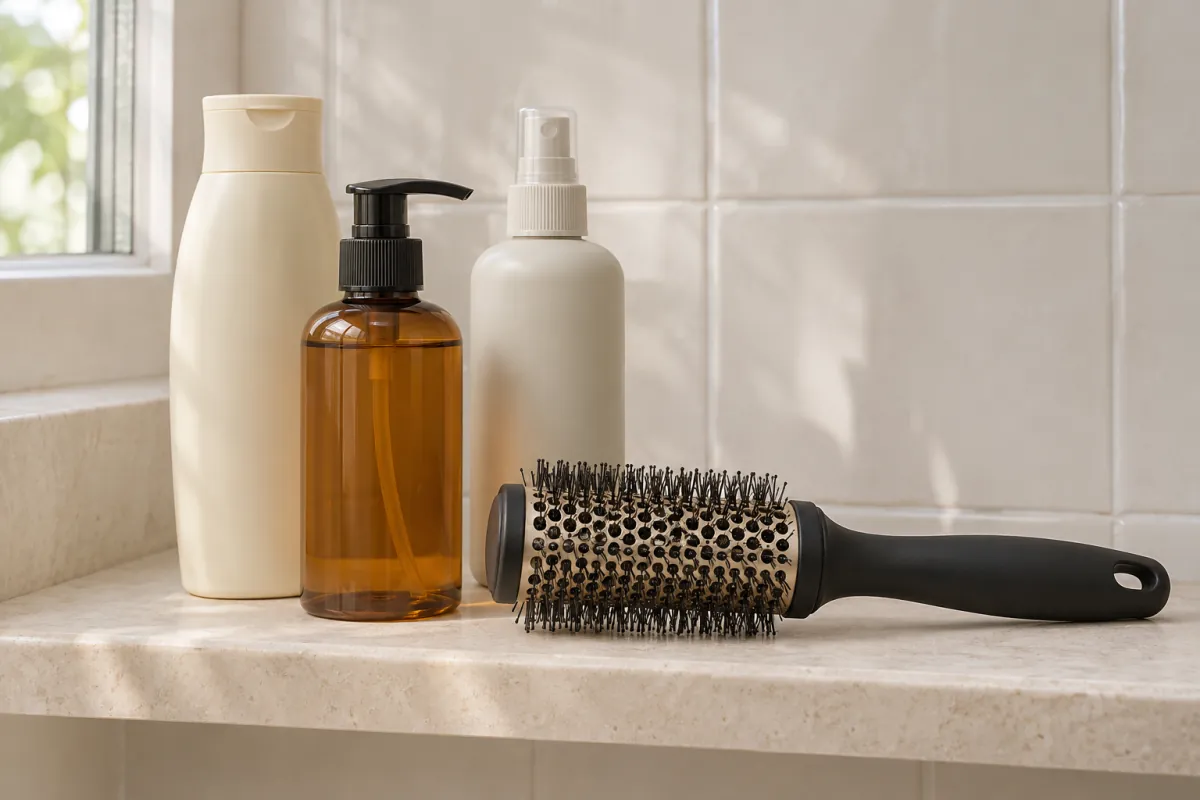
Fine hair does not need more product; it needs less weight and less aggression. Washing the scalp well, moisturising only the lengths and protecting the strand from heat and tension does more for volume than adding layers of products.

Washing the scalp regularly

A clean root lifts more.

In practice: massage the shampoo into the scalp and let the lather run down the lengths, without rubbing them.

Conditioner on the lengths only

At the root, it only weighs hair down.

In practice: apply from the mid-lengths to the ends and rinse well; if your hair is very fine, use only a small amount.

Layered cuts, done on time

Split ends shorten and thin the hair.

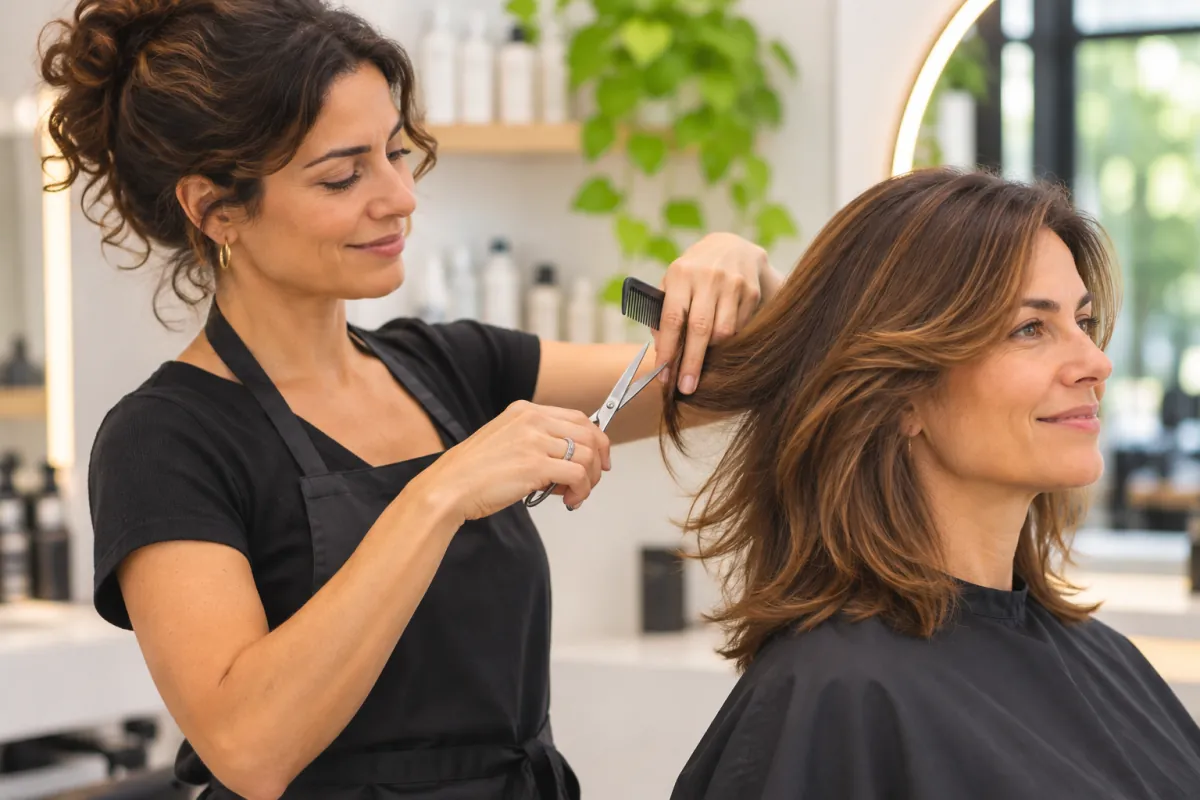
In practice: ask your hairdresser for a cut that works with the strand and removes excess from the ends.

Drying on low heat or air-drying

Heat weakens fine strands.

In practice: dry from the root upwards, on low or medium heat with a heat protectant, and air-dry when you can.

A diet with enough protein

Hair is made of protein.

In practice: include protein in every meal and speak to the doctor before taking supplements.

Dr Michelle Campagnoli, clinical director of Clínica Luxmed

Who will look after you

An assessment carried out by the doctor

At Luxmed, the first step is always an assessment appointment with Dr. Michelle Campagnoli. She distinguishes whether the hair is naturally fine or is losing density, looks for the causes, requests tests if useful and draws up the plan with you.

  • Physical examination and medical historyAssessment of the scalp, the strands, the density and the medication you take.
  • A plan tailored to youA plan suited to your case, explained clearly and honestly about what can be expected, with follow-up over time.
  • No obligationThe cost of any treatment is confirmed only after the assessment.
Book an assessment consultation

Book a consultation

Book your consultation

Choose how you prefer to get in touch. We will arrange the assessment consultation with Dr Michelle Campagnoli.

Booking through the website100€70€Assessment consultationExclusive price for those who book the assessment through the website. Outside the website, the price is 100 €.

New Life Miraflores, Algés · Office Center, R. Santa Teresa do Menino Jesus n.º 6, 9.º C, 1495-048

Your details are used only for this contact. Any treatment depends on a prior medical assessment.

Request an appointmentIt takes less than a minute.
Speciality
You do not need to go into detail. The doctor will talk to you during the consultation.
Request received. Our team will contact you as soon as possible.
Is fine hair the same as thinning hair?

No. Fine strands means each strand has a small diameter; thinning hair means there are fewer strands per square centimetre. They can occur separately or together, and the feeling of lacking volume can be the same. The way to tell them apart is to examine the scalp and the density, which the doctor does at the appointment. If what worries you most is seeing the scalp, it is also worth reading the page on thinning hair.

How do I know whether my hair is getting finer?

Compare photographs from a few years ago, with your hair down and tied up, and notice whether the hair tie of your ponytail goes round more times. Feeling a lock between your fingers and noticing that it is no longer as thick as before is also a clue. These signs do not replace an assessment: the doctor examines the scalp and the strands and tells you whether there is a change, and of what kind, in your case.

Why does my hair have no volume, even with good products?

On a fine strand, volumising products have little margin: what lifts a little often weighs hair down and ends up sticking it to the head. In addition, accumulated residue, conditioner at the root and frequent heat take body from the strand. Before buying yet another product, it is worth simplifying your routine and finding out whether there is an underlying cause, such as a deficiency, or a hormonal or thyroid problem.

Can fine hair become thicker again?

If the hair is fine because of genetics, the diameter of the strand tends to stay the same, and what can be achieved is an improved appearance through cut, care and routine. If the strand has thinned because of a treatable cause, such as a deficiency or temporary shedding, there may be gradual recovery, which is not always complete. The doctor explains what is realistic in your case, without promising what no one can guarantee.

Can the clinic's treatments repair a damaged strand?

No. The strand that has already grown is lifeless material, and no in-clinic treatment repairs it. Treatments such as NCTF, PRP or exosomes are applied to the scalp and may help support the follicle, that is, the hair that is yet to grow, with variable response and limited evidence. For the strand that has already grown, the cut and care make the difference.

Do I need blood tests?

Often, yes, but not always. The doctor may request blood tests for iron, thyroid and vitamin B12, among others, because deficiencies and thyroid problems can make hair weaker and with less body. If the results are normal, you avoid spending money on supplements. If any is abnormal, treating it is part of the plan. Bring any recent test results you have, so they are not repeated unnecessarily.

Do hair supplements work?

They usually only make sense when there is a confirmed deficiency, such as low iron. The scientific review on vitamins and minerals in hair reports abundant but contradictory evidence, and calls for better studies. Taking supplements without tests may bring no benefit and, in some cases, may do harm, especially with iron. It is best to speak to the doctor before buying, and to bring what you already take.

Can menopause or pregnancy make hair finer?

They can. Hormonal changes alter the hair cycle: after childbirth, for example, it is common to lose more hair for a few months, and at menopause the strand tends to become finer and the hair less full. There is usually gradual recovery once the cause passes, but in some cases the hair does not return to how it was. If you are noticing the change during one of these phases, mention it at the appointment.

Can I colour or straighten fine hair?

You can, with care. Fine hair is more fragile, so it is best to space out colouring, avoid combining bleaching and straightening in the same period, and moisturise the lengths. If you notice burning or pain on the scalp, or more hair breaking, stop and speak to the doctor. A hairdresser experienced with fine hair can choose less aggressive products and techniques and tell you honestly whether your hair can withstand the service.

Which cut and hairstyle give fine hair more volume?

In general, medium or short lengths, with light layers and well-cut ends, give more movement than a straight, long cut, which tends to fall flat. A slightly off-centre parting, or one changed from time to time, lifts the root. Your hairdresser sees your hair in person and is best placed to advise; the cut creates the effect of volume, but does not change the number or thickness of the strands.

How long does it take to see a difference?

It depends on what lies behind it. The effect of care and a good cut is noticeable straight away. When there is a treatable cause, the hair usually responds gradually, over months, because the hair cycle is slow. With in-clinic treatments, responses vary from person to person and cannot be guaranteed. The doctor explains what to expect and reviews the hair again after a few months, using photographs for comparison.

When should I book a consultation?

When you notice that your hair is finer or thinner than it used to be, or if the lack of volume worries you, because it is easier to understand the cause early. Sudden and heavy hair loss, a painful scalp, sores, marked flaking, redness or patches that appear quickly should be seen without delay, as they usually have a different cause.

Can fine hair be a sign of another condition?

Sometimes, yes, but for most people it is simply a trait or a phase. The thyroid, nutritional deficiencies and certain medications can change the hair, which is why the doctor asks about your general health. If you have unusual tiredness, or changes in weight, the menstrual cycle or the skin, say so: it helps decide whether tests are needed, and whether a referral to another specialist is necessary.

What should I bring to the appointment?

Photographs of your hair from a few years ago, for comparison; a list of the medicines and supplements you take; recent blood tests, if you have them; and an idea of when you began to notice the change and what happened at that time. Come with clean hair and no styling products, so that the doctor can see the scalp properly. If you have questions, write them down beforehand: it helps you not to forget any.

We could not find that question. Ask us on WhatsApp

Scientific references

This page is based on the sources below and was reviewed by Dr. Michelle Campagnoli. Last updated on .

  1. Kanti V, Messenger A, Dobos G, et al. Evidence-based (S3) guideline for the treatment of androgenetic alopecia in women and in men - short version. J Eur Acad Dermatol Venereol (European Dermatology Forum / EADV), 2018.
  2. Ramos PM, Miot HA. Female Pattern Hair Loss: a clinical and pathophysiological review. An Bras Dermatol, 2015.
  3. Almohanna HM, Ahmed AA, Tsatalis JP, Tosti A. The Role of Vitamins and Minerals in Hair Loss: A Review. Dermatol Ther (Heidelb), 2019.
  4. Gavazzoni Dias MF. Hair cosmetics: an overview. Int J Trichol, 2015.
  5. American Academy of Dermatology Association. How to stop damaging your hair. (American Academy of Dermatology (aad.org), acedido 2026-11-11)
  6. DermNet (New Zealand). Telogen effluvium (hair shedding). (DermNet, acedido 2026-11-11)
CallAssistantAvailableBook