Algés, Oeiras Mon to Fri · 09:00 to 13:00 and 14:00 to 19:00 · Sat · 09:00 to 14:00
WhatsApp Book a consultation

Treatment · Skin regeneration

PRFA concentrate made from your own blood, to improve the quality and texture of facial skin

PRF, or platelet-rich fibrin, is prepared from a small sample of your blood, centrifuged without an anticoagulant, and then injected into the skin. It concentrates platelets and growth factors and is used mainly to improve skin texture and appearance, for example around the eyes and mouth. Results vary and the evidence is limited. Like all treatments at Clínica Luxmed, it begins with an assessment by the doctor, the cost of which is deducted if you decide to proceed.

  • Your ownblood, drawn during the same session
  • 1assessment, deducted if you go ahead
  • 1 to 3sessions in studies, to be determined at the assessment
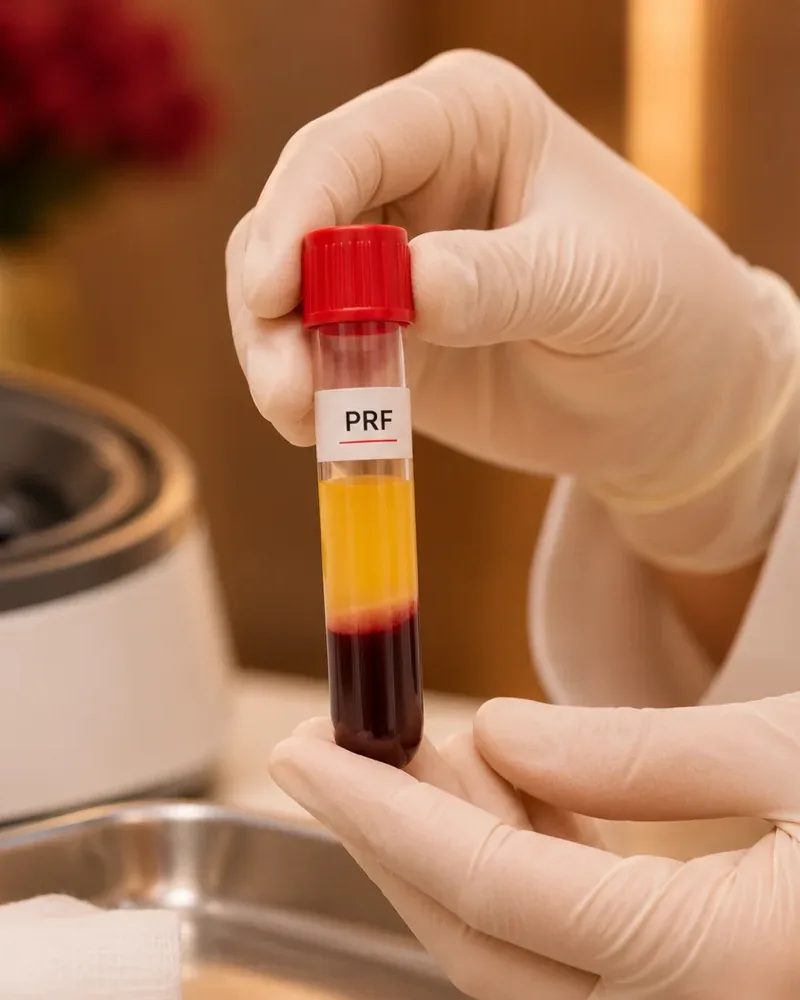
PRF: tube after centrifugation, in the doctor's hands

How it works

From your blood to your face

PRF involves just a few steps, all using your own blood. Choose a step to see what happens and what it means for you.

The blood draw

It all begins with a blood draw from a vein in the arm, as for a blood test. Special tubes are used, and in the Choukroun technique described in 2006, no anticoagulant or other substances are added to the blood.

What happens

A small amount of blood is drawn, depending on the area and what is to be treated.

What this means

Because the material comes from you, there is no externally sourced product in the syringe. This does not eliminate all risks, but it changes their profile.

What the journey looks like

It all starts with an assessment

At Clínica Luxmed, no treatment is decided over the phone or from what is seen in a photograph. The first step is always an assessment consultation with the doctor.

The assessment fee is deducted. If you decide to go ahead with the treatment, the cost of the assessment is deducted. If you prefer not to go ahead, nothing further is asked of you.

Book an assessment
  1. 01At the clinic

    Assessment with the doctor

    The doctor listens to your history, examines your skin, asks about medication and previous treatments, and explains what it is realistic to expect.

  2. 02At the clinic

    A plan tailored to you, with no commitment

    The areas, the number of sessions, the intervals and the aftercare are defined. You can think it over calmly and come back whenever you wish: nothing is started until you have fully understood what is going to be done.

  3. 03At the clinic

    Sessions

    The number of sessions and the interval vary: the studies described range from a single session to three monthly sessions. The doctor agrees the plan with you and, where appropriate, may combine it with other treatments in separate sessions.

  4. 04Over time

    Result and follow-up

    When improvement occurs, it is gradual and varies from person to person. In studies of the eye area, the effect often faded at around 6 months. The doctor will tell you whether and when it is appropriate to repeat treatment.

Who it is for

When it makes sense and when it is necessary to wait

The decision always rests with the doctor, after examining your skin and getting to know your history. These are the most common scenarios.

  • Thin, tired-looking skin around the eyes. This is the most studied area: reviews describe improvements in texture, fine lines and the skin’s ‘crepey’ appearance, with variable results.

  • Uneven texture and lack of radiance. Skin that has lost quality, without its previous firmness or luminosity, and which is to be treated gently.

  • Fine lines around the mouth. It may improve the appearance of the skin in the area. It does not increase lip volume: in studies, volume did not change.

  • Preference for using your own blood. For those who prefer not to receive an externally sourced product. The doctor explains what this does and does not change.

  • Moderate expectations and time. For those who accept that the effect is gradual, variable and may fade over the months.

  • As a complement to other treatments. It may be combined with other options at the clinic, in separate sessions, when the doctor considers this appropriate.

Comparing options

PRF or fat grafting?

Anyone considering using ‘something from their own body’ may also consider fat grafting, which Clínica Luxmed does not perform. We compare the two options honestly. It is not a choice between ‘good’ and ‘bad’: it depends on what you want to treat, and the doctor decides this with you at the assessment.

At LuxmedPRF
5of 8
criteria
Fat grafting or
nanofat
Fat grafting
3of 8
criteria
Blood draw and injection
Liposuction and injection
Needle prick in the arm
Local, with or without sedation
Generally short
Longer
Mild in studies
Those of surgery
Easy
Less simple
Does not restore volume
Restores volume
Months, and variable
Some remains
Limited and heterogeneous
More studied
Luxmed does not perform fat grafting

It marks the side with the advantage in each criterion. Tap a criterion to see the detail.

In summary. If you want to improve skin quality with a short procedure using your own blood and with a quick recovery, PRF may be suitable, bearing in mind that the effect is moderate and the evidence limited. If what you lack is volume, other options, including fat grafting, may be more appropriate, and we will tell you this frankly at the assessment.

This compares types of treatment, not professionals, clinics or brands. The scoring is simple and does not weigh the importance of each criterion: for someone who wants to restore volume, the ability to do so and how long it lasts may matter more than anything else. Results and risks vary from person to person and depend on the technique and equipment used.

Where it can help

Facial concerns for which the clinic may consider it

PRF is not suitable for every case or the only option, and is used mainly for skin quality. These are the concerns for which the clinic may recommend it, alone or combined with other treatments. Open each page to see the causes and the other options.

What a session is like

From preparation to recovery

Each session has three stages. What is described is the usual process, and the doctor adapts it to your case: the protocol is only finalised at the assessment.

Book an assessment

Swipe to see the three stages →

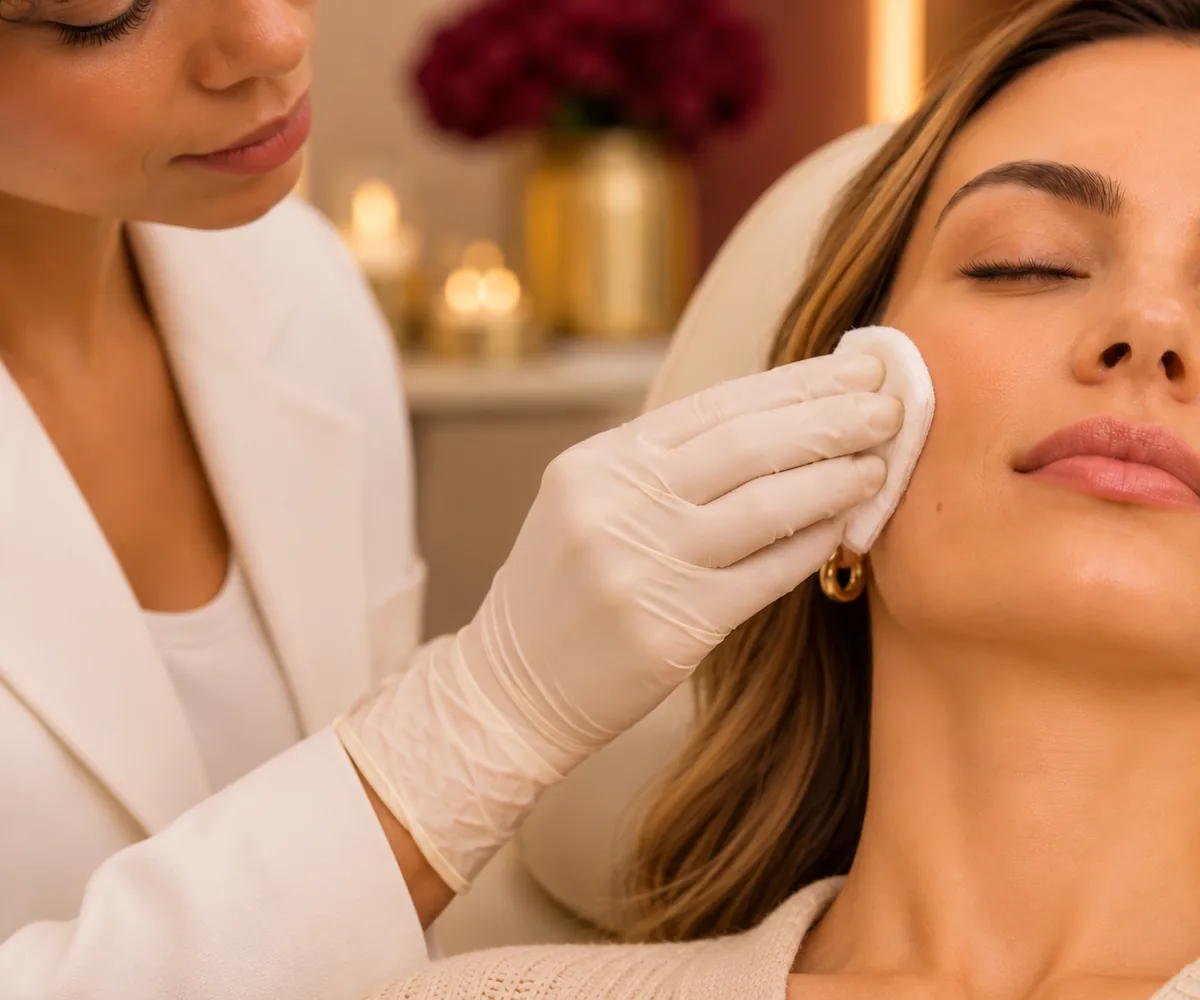
The doctor's gloved hand cleaning a woman's cheek with a gauze pad before the treatment

Before

Blood draw and preparation

The doctor confirms the area to be treated and reviews your medical history and medication. A small sample of blood is taken from a vein in your arm into special tubes and placed in the centrifuge while your skin is prepared. Topical anaesthetic is applied if appropriate.

Worth remembering

Tell us about any changes in your health or medication, particularly anticoagulants, antiplatelet medicines and anti-inflammatory medicines. Do not stop taking anything on your own initiative. Arrive with clean skin and, if possible, without make-up.

Book an assessment
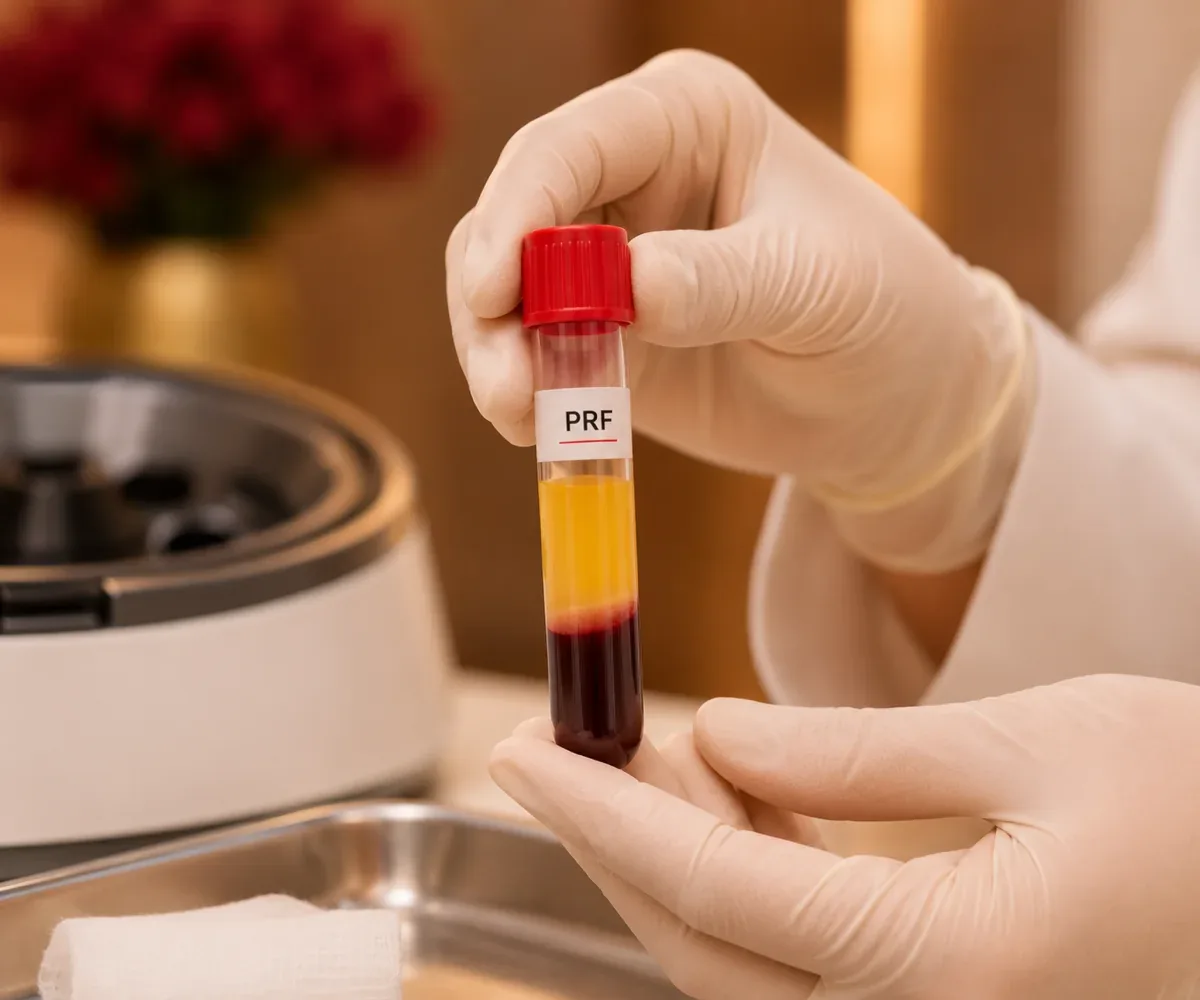
PRF: tube after centrifugation, in the doctor's hands

During

Administration

Once centrifugation is complete, the preparation is collected and injected with a fine needle into the superficial layer of the skin in the treatment area. The technique and quantity vary according to the area and aim.

What you feel

Small needle pricks and some discomfort, more noticeable in thin or sensitive areas such as the skin around the eyes and lips. The doctor adjusts your comfort throughout the session.

Book an assessment
Woman lying in the treatment chair with her eyes closed and a hand on her face after the treatment

Afterwards

Recovery

During the first few days, there may be redness, mild swelling, small marks at the injection sites and, sometimes, a bruise. These are generally temporary. The doctor explains how to care for your skin over the following days and when to contact the clinic.

When to return to your routine

Recovery varies from person to person, and the doctor tells you what to expect in your case. Use sunscreen and avoid intense heat and exfoliants while your skin is sensitive.

Book an assessment
Dr Michelle Campagnoli, clinical director of Clínica Luxmed

Who will look after you

An assessment carried out by the doctor

At Luxmed in Algés, the first step is always an assessment with Dra. Michelle Campagnoli. She examines your skin, determines whether PRF is the right option for you and agrees the plan with you before any procedure. The cost of the assessment is deducted if you decide to proceed with treatment.

  • Physical examination and medical historyA conversation about your skin, medication, previous treatments and what you would like to improve, and a careful examination of the area to be treated.
  • A plan tailored to youAreas, number of sessions, intervals and aftercare, explained clearly and without promises.
  • Deducted if you go aheadIf you decide to go ahead with the treatment, the cost of the assessment is deducted. If you prefer not to go ahead, nothing further is asked of you.
Book an assessment

Book a consultation

Book your consultation

Choose how you prefer to get in touch. We will arrange the assessment consultation with Dr Michelle Campagnoli.

Booking through the websiteAssessment consultationTalk to our assistant on WhatsApp and ask for the current price of the assessment.

New Life Miraflores, Algés · Office Center, R. Santa Teresa do Menino Jesus n.º 6, 9.º C, 1495-048

Your details are used only for this contact. Any treatment depends on a prior medical assessment.

Request an appointmentIt takes less than a minute.
Speciality
You do not need to go into detail. The doctor will talk to you during the consultation.
Request received. Our team will contact you as soon as possible.
What is PRF?

PRF stands for platelet-rich fibrin. It is a concentrate prepared from a small sample of your own blood, which is centrifuged without an anticoagulant to obtain a layer rich in platelets, white blood cells and fibrin, and is then injected into the skin. The aim is to use the growth factors released by the platelets to stimulate skin renewal. The exact method and protocol are determined at the assessment.

What is the difference between PRF and PRP?

Both are platelet concentrates made from your blood. PRP (platelet-rich plasma) is generally prepared with an anticoagulant and one or two centrifugation cycles. PRF is prepared without an anticoagulant and, as it clots, forms a fibrin network that retains the platelets and may release growth factors more slowly. A 2025 review concluded that current evidence does not show which is better, and that PRF appears to help more with texture and fine lines, while PRP appears to help more with pigmentation. The doctor explains which is appropriate in your case. The clinic offers both.

What is PRF used for on the face?

It is used to try to improve skin quality: texture, fine lines and a tired appearance, particularly around the eyes and mouth. A 2025 systematic review found the strongest evidence for skin thickness and elasticity and the weakest for hydration. Results vary and the evidence is limited, so the doctor assesses with you whether it is appropriate.

Does PRF add volume, like hyaluronic acid?

No. PRF is not a filler. In a study that measured lip volume using 3D imaging after one session, volume had not changed at 3 months, although people were more satisfied with their skin and lips. If you are looking for volume or definition, the doctor will discuss more suitable options with you.

What about fat grafting?

These options are different in nature. Fat grafting involves liposuction and an injection, restores volume and some of it remains over time, but it carries the risks of a surgical procedure. PRF is simpler and has a short recovery, but its effect is moderate and the evidence is limited. Clínica Luxmed does not perform fat grafting: if the doctor considers it the best option for you at the assessment, she will tell you.

How is the blood drawn and how is PRF prepared?

A small amount of blood is taken from a vein in your arm, as for a blood test, into special tubes. The tubes are placed in a centrifuge, which separates the blood into layers, and the preparation is collected and used soon afterwards because it tends to clot. Technical details such as speed and duration vary between protocols and are determined by the clinic.

Does it hurt?

The blood draw feels like a needle prick in the arm, as with a blood test. During application, you feel the discomfort of small needle pricks, which is more noticeable in thin areas such as around the eyes and mouth. Sensitivity varies from person to person, and the doctor adjusts your comfort throughout the session, using topical anaesthetic where appropriate.

How many sessions are needed and how long does each take?

It varies. Studies range from a single session to three monthly sessions, as in a 2020 study with three sessions, one per month. The number and interval are determined at the assessment, according to the area and the skin’s response. Each session includes the blood draw, preparation and application.

PRF for the lips and around the mouth: what should you expect?

It may improve the appearance and texture of the skin in the area, including fine lines around the mouth. In a 2021 study involving 10 women and one session, satisfaction with the skin and lips improved at 3 months, but lip volume did not change. PRF is therefore not chosen to enlarge the lips. The evidence is limited, and the doctor explains what is realistic in your case.

Can I have PRF under my eyes?

This is the most studied area. A 2025 review comparing PRP and PRF around the eyes in 14 studies described improvements in texture, fine lines and the skin’s ‘crepey’ appearance with PRF, with mild, temporary effects, and the effect often diminished at around 6 months. The area is delicate, and there are articles about this subject on the blog. The doctor will assess your case.

When will I see results and how long do they last?

When results occur, they are gradual and vary from person to person. In studies, improvement assessed at 3 months was already visible in some parameters and, around the eyes, the effect often diminished at around 6 months. Results are not permanent, and the doctor will tell you whether and when it is appropriate to repeat treatment.

Does PRF really work? Is there evidence?

Some studies describe skin improvements and high satisfaction, but they are small, use different methods and include few comparative trials. Results therefore vary and the evidence is limited, and the doctor will assess with you whether it is appropriate, without promising a result. Where useful, that assessment includes explaining what PRF does not do.

What are the risks and side effects?

In studies, the reported effects were mild and temporary: redness, swelling, small marks and, sometimes, bruising. A 2025 review found no serious events. As with any injection, there are risks, such as pain, a haematoma or infection. If you have severe pain, fever, pus, spreading redness or changes in vision, contact the clinic and, if it is serious, call 112; outside opening hours, you can call SNS 24 (808 24 24 24).

Who should not have PRF?

Generally, anyone who is pregnant or breastfeeding, has platelet or clotting disorders, an infection, active herpes or inflammatory acne in the area, or has significant illnesses that the doctor wishes to assess first. If you take anticoagulants, mention this at the assessment and do not stop them yourself. The doctor assesses each case.

Is an assessment needed first? Is there a charge?

Yes. All treatments at Clínica Luxmed begin with an assessment consultation with the doctor, where we work out whether the treatment makes sense for you. The cost of the assessment is deducted if you decide to go ahead with the treatment.

How should I prepare, and can I resume my routine afterwards?

Come with clean skin and tell us about any changes in your health or medication, particularly anticoagulants, antiplatelet medicines and anti-inflammatory medicines, without stopping them on your own initiative. Recovery is usually short, but varies: you may have redness and marks during the first few days, and the doctor tells you when you can resume your routine. If you have an important event, mention it at the assessment so that we can plan the sessions.

We could not find that question. Ask us on WhatsApp

Scientific references

This page is based on the sources below. Updated on .

  1. Qin N, Kochheiser M, Akosman I, et al. Systematic Review of Platelet-Rich Plasma and Platelet-Rich Fibrin in Facial Rejuvenation. Ann Plast Surg, 2025.
  2. Sollitto CF, Narduzzi M, Wolinsky C. A Systematic Review of Platelet-Rich Plasma Versus Platelet-Rich Fibrin for Periorbital Rejuvenation. J Cosmet Dermatol, 2025.
  3. Hassan H, Quinlan DJ, Ghanem A. Injectable platelet-rich fibrin for facial rejuvenation: A prospective, single-center study. J Cosmet Dermatol, 2020.
  4. Hamid O, Quinlan DJ, Seemann R, Hassan H. Injectable platelet-rich fibrin for perioral rejuvenation as assessed by 3D lip volume imaging. J Cosmet Dermatol, 2021.
  5. Dohan DM, Choukroun J, Diss A, et al. Platelet-rich fibrin (PRF): a second-generation platelet concentrate. Part I: technological concepts and evolution. Oral Surg Oral Med Oral Pathol Oral Radiol Endod, 2006.
  6. Gornitsky J, Viezel-Mathieu A, Alnaif N, Azzi AJ, Gilardino MS. A systematic review of the effectiveness and complications of fat grafting in the facial region. JPRAS Open, 2019.
  7. Schiraldi L, Sapino G, Meuli J, et al. Facial Fat Grafting (FFG): Worth the Risk? A Systematic Review of Complications and Critical Appraisal. J Clin Med, 2022.
CallAssistantAvailableBook