What is a body chemical peel, and how does it differ from a facial peel?
It involves applying an acid to the skin to produce controlled exfoliation: the surface layers shed and are replaced by newer, more even skin. The technique is the same as for the face, but body skin behaves differently. It is thicker on the elbows and knees; the underarms and groin are exposed to friction, sweat and hair removal; and, in general, body skin heals more slowly and is more likely to develop pigmentation after irritation. This is why mainly superficial peels and cautious settings are used on the body, with the doctor tailoring the plan to each area.
Which acids are used on the body?
Superficial peels are used most often, with acids such as glycolic, salicylic, mandelic and lactic acid, as well as low-concentration trichloroacetic acid. Glycolic acid is one of the most widely studied for dark spots; salicylic acid is often chosen for oily, acne-prone skin, such as on the back; mandelic acid penetrates more slowly and is generally better tolerated. The doctor selects the acid, concentration and contact time during the assessment, according to the area, the cause and your skin tone.
An in-clinic peel or over-the-counter creams and acids at home?
These are different types of options, and the clinic does not provide at-home care. At home, you choose and apply the product yourself, at lower concentrations, which produces a gentler effect and less irritation with each application. In the clinic, the cause is assessed, the concentration is higher and the doctor monitors the skin's reaction. Using peels on your own carries risks: in 2025, authors affiliated with the FDA described eighteen injuries, including burns and scars, in people who had applied peels themselves, some at concentrations intended for professional use. If the discolouration is mild, at-home care may be enough, and the doctor will tell you so frankly.
What is acanthosis nigricans, and what role does a peel play?
This is a thickened, velvety darkening of the skin folds, particularly on the neck, underarms and groin. It is often associated with insulin resistance and excess weight, so you should have a medical assessment, including blood tests, before any aesthetic treatment. In rare cases, a sudden and widespread onset is associated with another disease and should be examined promptly (Phiske, 2014). The peel treats the skin, not the cause: it improves its appearance, but if the insulin resistance persists, the skin is likely to darken again. In a 2024 trial involving 30 people with acanthosis nigricans of the underarms and neck, tretinoin cream was more effective than a 70 per cent glycolic acid peel on the underarms, while neither treatment was effective on the neck. Results vary and the evidence is limited, so the doctor will discuss what makes sense for you, including treating the cause first.
How are underarms lightened with a peel, and what can you expect?
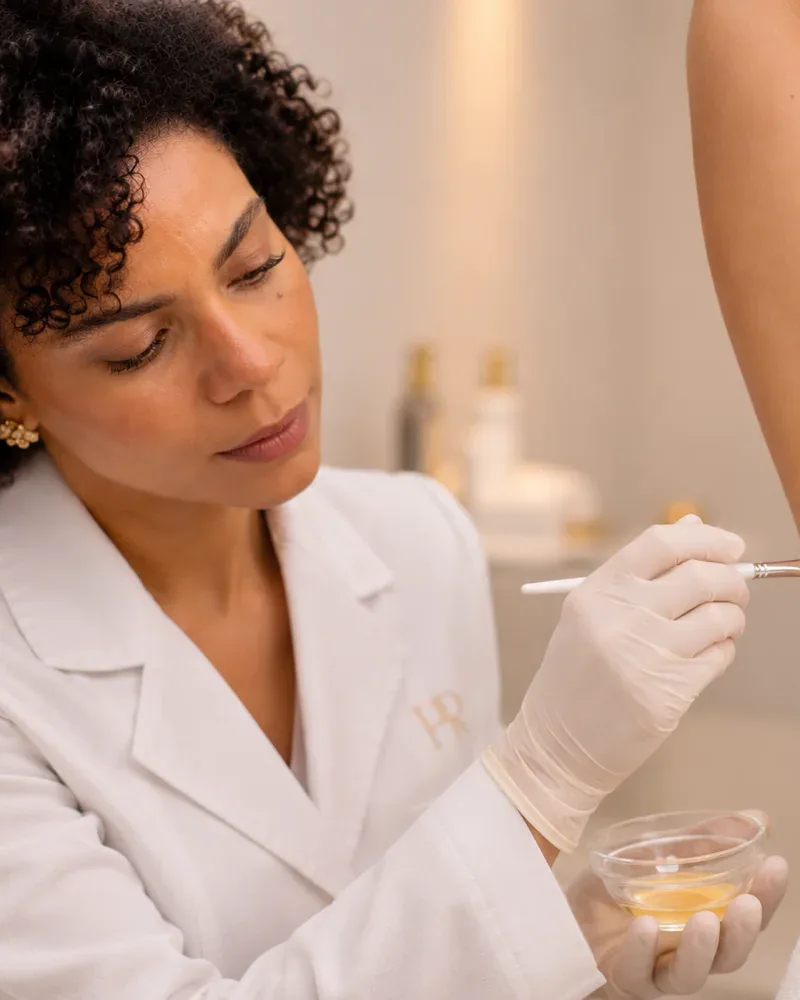
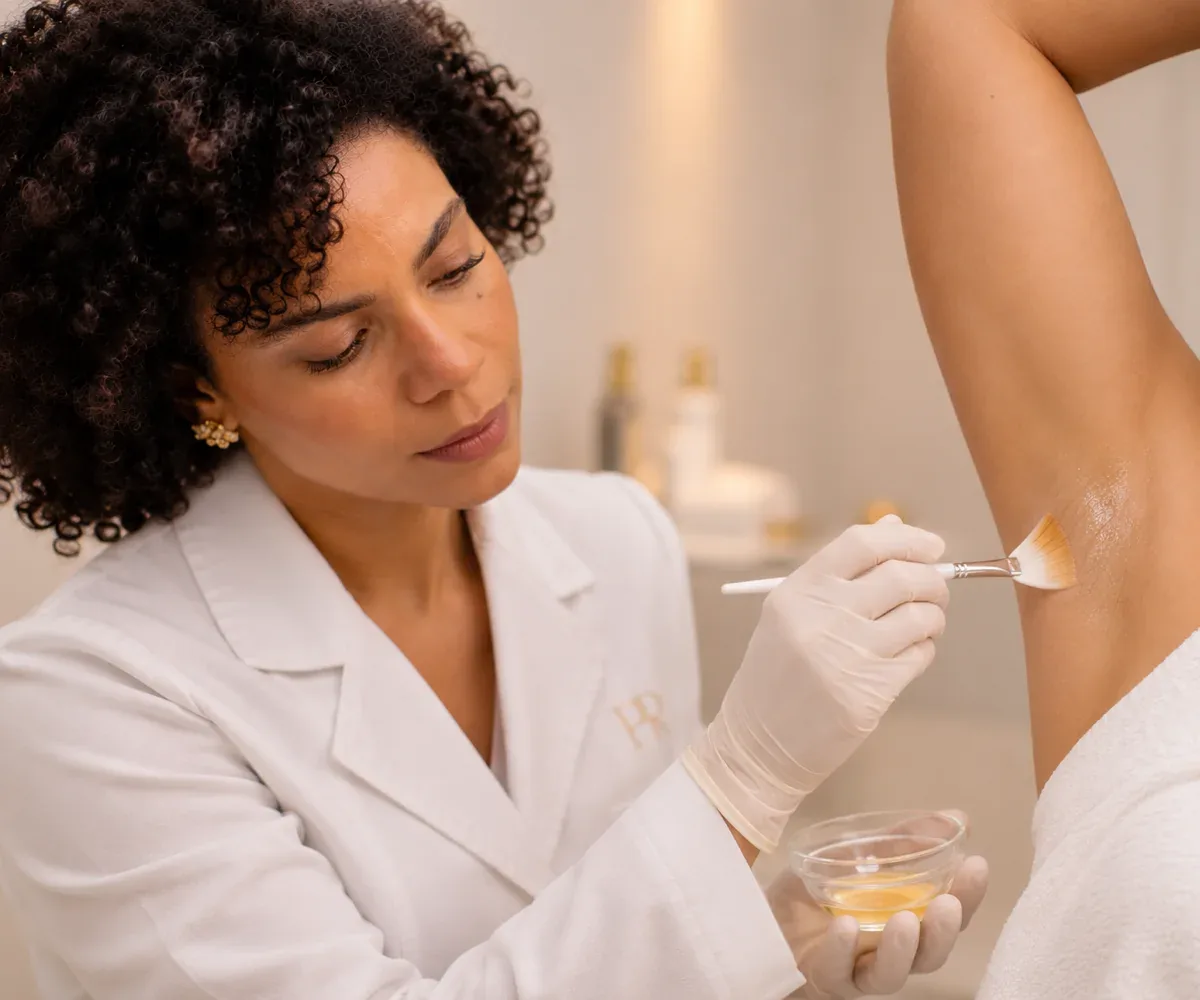
The cause is identified first: friction, hair removal, previous inflammation or acanthosis. If the skin is calm but the discolouration persists, a course of peels may gradually help even out the colour and smooth thickened skin. A 2025 systematic review found only ten studies on underarm darkening; they were small and had short follow-up periods, and the review concluded that there is no standard treatment. In one of the studies, an alpha-hydroxy acid peel was less effective than intense pulsed light and caused more adverse effects. Results therefore vary, the evidence is limited and conservative settings are used. Changing the hair-removal method and reducing friction matter just as much as the acid.
Darkened groin, elbows and knees: which peels are used?
The skin on the elbows and knees is thicker, and darkening is mainly caused by pressure and friction: superficial peels are used as a course of treatment. In the groin and other skin folds, the skin is thinner and more reactive, and irritation causes darkening more easily: treatment is gentler and gradual, and only proceeds once the skin is calm and the cause has been identified, whether it is friction, a skin-fold infection or acanthosis. For every area, the doctor selects the acid, concentration and interval during the assessment. Studies of peels for pigmentation have mainly involved other areas and conditions, so the evidence for these areas is limited.
Back peel: does it treat acne, dark marks and folliculitis?
On the back, a peel may help with acne and the dark marks it leaves, particularly when salicylic acid is used, as this is one of the acids most commonly used for acne. It complements medical treatment rather than replacing it. For the marks to improve, the acne must be under control, and sun protection and time are needed. If the lesions are folliculitis, the cause is infectious or irritant and must be treated first, because a peel is not applied to infected, wounded or irritated skin. What looks like a pigmented spot may be something else, such as a fungal infection, which is treated with an antifungal rather than a peel, or a lesion that has changed and must be examined first. The skin on the back is thick and heals slowly, and this is taken into account in the plan.
Does it hurt? What is the peeling like?
The acid may cause stinging, warmth or a prickling sensation while it is working. Sensitivity varies from person to person and from area to area, and is greater in skin folds such as the underarms. The doctor monitors the session and makes adjustments to keep you comfortable. Afterwards, the skin may become pink, feel tight and peel lightly for a few days. Allow the flakes to fall away on their own: do not pick or rub them off, as this can cause marks and dark spots.
How many sessions are needed, and at what intervals?
The number of sessions and the interval between them are determined by the doctor after the assessment and depend on the area, the cause and the skin's response. As a rule, peels are performed as a course, with an interval of a few weeks. Protocols vary in published studies: in the 2024 trial on acanthosis nigricans, the glycolic acid peel was applied every 15 days for four sessions, but this does not mean that it is the right protocol for you. Between sessions, the doctor reassesses the skin and adjusts the acid, concentration and next interval.
When will I see results, and do they last?
Improvement is gradual: it becomes noticeable over weeks and months and depends on the cause. A 2024 systematic review of post-inflammatory hyperpigmentation in skin of colour, involving 48 studies, concluded that most people experienced only partial improvement. The result lasts as long as the cause remains under control: if friction, irritating hair removal, acne, sun exposure or insulin resistance persist, the discolouration tends to return. Sun protection and maintenance help, and the doctor will tell you how often treatment is appropriate.
What are the risks and side effects?
Common mild effects include redness, burning, tightness and peeling, which resolve within days. Less common effects include darker marks after inflammation, particularly in darker skin tones, with sun exposure and on irritated skin, as well as lighter patches, reactivation of herpes and infection. Rare effects include burns or scarring, particularly when inappropriate concentrations are used. If you experience severe pain, blisters, pus, fever or spreading redness, contact the clinic and, if it is serious, call 112; outside opening hours, you can contact SNS 24 on 808 24 24 24.
Can it be performed on brown or black skin?
It may be considered, but the risk is real: in darker skin tones and on the body, irritation can darken the skin instead of lightening it. For this reason, superficial peels and cautious parameters are selected, the plan progresses gradually and sun protection must be rigorous: a 2025 systematic review concluded that sunscreen was the only measure that consistently prevented post-inflammatory hyperpigmentation in skin of colour. The doctor will explain what is realistic in your case.
Who should not have it?
This includes people who are pregnant or breastfeeding; have recently taken isotretinoin; have an infection, wounds, irritation or active dermatitis in the area; have active herpes, tanned or recently depilated skin, an allergy to acids or salicylates, or a tendency to develop keloids; and other cases identified during the assessment. A dark spot that has changed, is growing, bleeding or not healing must be examined by a doctor before any aesthetic treatment. The doctor will explain what applies in each case.
Is an assessment needed first? Is there a charge?
Yes. All treatments at Clínica Luxmed begin with an assessment consultation with the doctor to determine the cause of the colour or texture and whether the peel is appropriate for you. The cost of the assessment is deducted if you decide to proceed with treatment.
How should I prepare? Can I remove hair beforehand?
Avoid shaving, waxing or exfoliating the area in the days beforehand, as irritated skin should not be peeled, and avoid intense sun exposure and tanning if the doctor advises you to do so. Arrive with clean skin and no creams on the area. Tell us about any changes to your health or medication, any use of retinoids or isotretinoin, and any previous herpes. If you have a trip or event planned, mention it at the assessment so the doctor can plan the sessions, and bear in mind that many people prefer the months with less sun.
When can I return to my routine, remove hair or go to the beach?
Many people return to their normal routine the next day after a superficial peel. Moisturise the skin, use sunscreen on exposed areas and avoid intense sun exposure, swimming pools, the sea, exfoliants and friction in the area for the first few days. For the underarms, avoid irritants such as hair removal until the skin has settled. The doctor will tell you when you can resume hair removal, exercise and going to the beach, depending on the area and your skin's reaction.