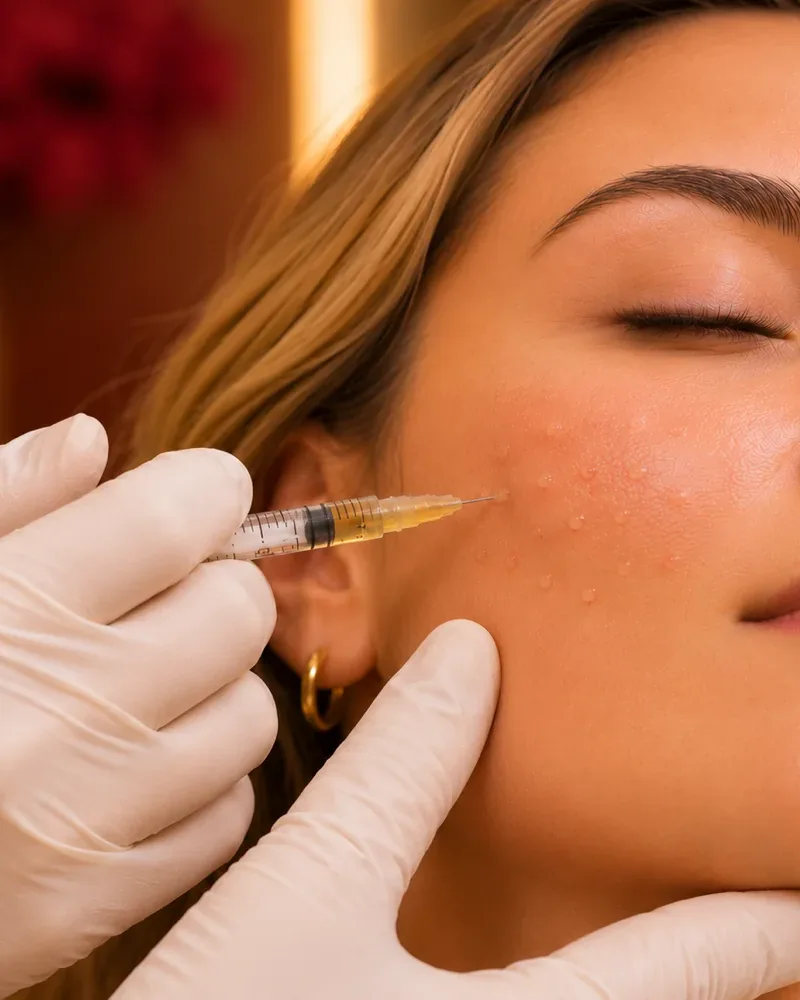
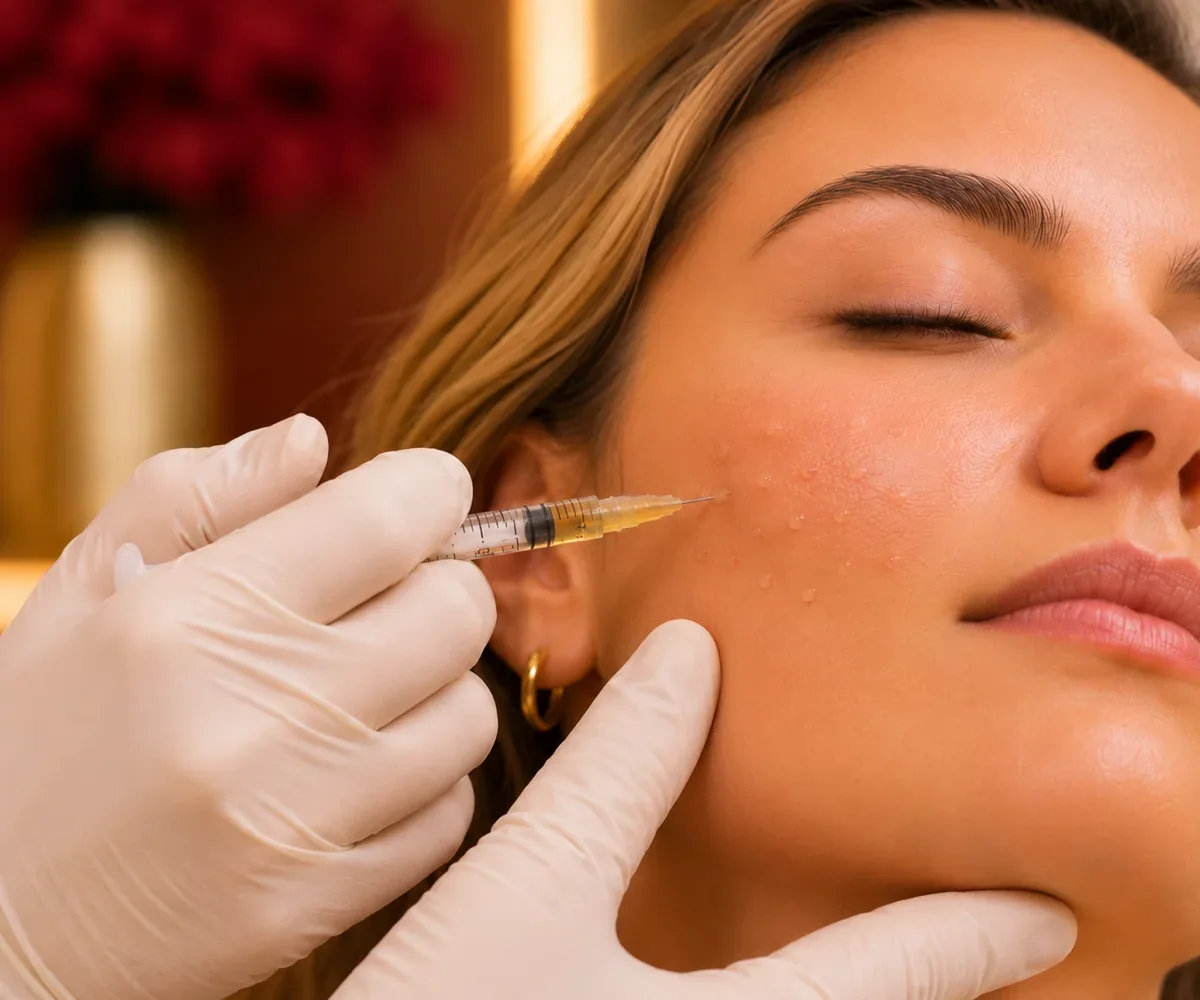
What is intradermotherapy?
Also called mesotherapy, this is a treatment in which small amounts of a solution are injected into the dermis at many points in the skin. The solutions often combine lightly cross-linked hyaluronic acid with vitamins, amino acids, minerals and antioxidants. The aim is to improve hydration, radiance and skin quality. This page concerns the face, but the technique is also used on other areas, such as the body and scalp.
Are intradermotherapy and mesotherapy the same thing?
In practice, yes: they are two names for the technique of injecting substances into the dermis with microneedles. ‘Mesotherapy’ is the better-known name, while ‘intradermotherapy’ emphasises that the injection is intradermal, that is, inside the skin. Mesotherapy also has long-standing uses in other tissues and for other indications, which are not the subject of this page.
Intradermotherapy or skinbooster: what is the difference?
The two techniques are similar: microdroplets are injected into the dermis to improve skin quality. A skinbooster generally uses only fluid hyaluronic acid. In intradermotherapy, the solution may also include vitamins, amino acids and other active ingredients. A 2023 systematic review found better results with hyaluronic acid alone than with mixtures, so the choice between the two is made at the assessment according to what you want to treat.
Which active ingredients are used?
The most commonly used classes are lightly cross-linked hyaluronic acid, vitamins, amino acids, minerals and antioxidants, alone or combined. In selected cases, some doctors use other active ingredients, such as tranexamic acid for pigmentation. We do not claim a fixed ‘formula’: at the assessment, the doctor explains what she proposes for you and why, and the product and brand are chosen at that point.
Does it hurt?
There are quick needle pricks and some burning, which are more noticeable near the nose, lip and forehead. With topical anaesthetic, most people tolerate it well. Sensitivity varies from person to person, and the doctor adapts the technique to your comfort.
How many sessions are needed and what influences the number?
The usual protocol is 3 to 5 sessions, 2 to 4 weeks apart, followed by maintenance. The number depends on the aim (hydration and radiance, pigmentation or acne), the initial condition of the skin, age, sun exposure, smoking, the chosen formulation and each person's response. The plan is therefore only defined at the assessment and can be adjusted over the course of the sessions.
Can I combine it with other treatments?
It can, when appropriate, for example with peels, microneedling or other skin-quality treatments, in separate sessions and at the correct interval. The order and spacing are defined by the doctor so as not to overload the skin, and some treatments should not be carried out at the same time.
When will I see results and how long do they last?
Some people notice greater radiance and hydration after the first or second session, but the effect usually becomes established over the full course of sessions. It generally lasts a few months, and maintenance helps preserve it. It is not permanent because the skin continues to age, and it varies from person to person.
What evidence is there? Does it really work?
The evidence is mixed. A 2023 systematic review of 13 studies described improvements in hydration, luminosity and texture with injectable hyaluronic acid, which were clearer with hyaluronic acid alone than with mixtures. A 2006 study of 10 people, however, found no significant differences with a mixture of multivitamins and hyaluronic acid, and a 2021 review considered that evidence for the effectiveness of facial mesotherapy is still lacking. Results vary and the evidence is limited, so the doctor will assess with you whether it is appropriate.
Does it help with acne and oily skin?
For acne and oily skin, results vary and the evidence is limited, so the doctor will assess with you whether it is appropriate. Acne treatment is based mainly on topical and oral treatments with strong evidence (the 2024 American Academy of Dermatology guidelines strongly recommend topical retinoids and benzoyl peroxide, for example). Intradermotherapy may be considered as a complement for the skin and the marks left behind, not as the main treatment. It is postponed if there is active inflammatory acne in the area.
Does tranexamic acid injected into pigmentation and melasma work?
Tranexamic acid is a medicine used mainly to stop bleeding. On the skin, it is sometimes used for pigmentation, including melasma, orally, topically or injected into the dermis. This is an off-label use in many countries, and studies are small and conflicting: a 2025 meta-analysis of 17 trials concluded that intradermal injection is an effective alternative, while another from 2024, covering 28 trials, found no significant difference with this route or the topical route and called for more data. It should not be used in people who have had thrombosis, take anticoagulants or are pregnant. For pigmentation, diagnosis and sun protection come first, and the doctor decides with you whether it is appropriate.
What are the risks and side effects?
Common and mild effects are redness, small raised areas, swelling, burning and bruising, which resolve within hours or a few days. Uncommon: inflammatory or allergic reactions and reactivation of herpes. Rare: infection, nodules and other reactions, described mainly with unsuitable products or non-sterile technique. A 2019 review concluded that larger safety studies are needed. If you have severe pain, pus, fever or spreading redness, contact the clinic and, if it is serious, call 112; outside opening hours, you can call SNS 24 (808 24 24 24).
Who should not have it?
People who are pregnant or breastfeeding; those with an infection, active herpes or inflammatory acne in the area, a known allergy to a component, or a skin lesion that has changed. Previous thrombosis, anticoagulation, autoimmune diseases and a tendency to form keloids require careful assessment, depending on the case. The doctor will explain each situation.
Is an assessment needed first? Is there a charge?
Yes. All Clínica Luxmed treatments begin with an assessment consultation with the doctor, where it is determined whether the treatment is appropriate for you and which formulation to suggest. The cost of the assessment is deducted if you decide to proceed with treatment.
How do I prepare for the session?
Come with clean skin and preferably without make-up. Avoid intense sun, sunbeds and irritating products (such as acids and retinoids) in the preceding days if the doctor advises this. Report any changes in your health or medication, and any allergies, since the assessment. If you take anticoagulants or aspirin, mention this: do not stop them on your own initiative.
Can I work and carry on with my normal life afterwards?
Many people resume normal life the same day or the next, while the skin is still pink and sometimes has small marks. Avoid intense sun, heat and exfoliants for the first few days, and use sunscreen every day. If you have an important event, mention it at the assessment so that we can plan the sessions with a few days to spare.