Algés, Oeiras Mon to Fri · 09:00 to 13:00 and 14:00 to 19:00 · Sat · 09:00 to 14:00
WhatsApp Book a consultation

Treatment · Facial aesthetics

Fractional CO2 laserLaser microcolumns to renew the skin at depth, with better texture, greater firmness and fewer marks, in exchange for a recovery lasting days to weeks

Fractional CO2 laser creates thousands of microcolumns of controlled injury in the skin, leaving intact skin between them. The body repairs them and produces new collagen, which may soften wrinkles, scars, sun spots and uneven texture. It is one of the most intensive renewal treatments, so it requires its own recovery period and careful selection. Like all Clínica Luxmed treatments, it begins with an assessment consultation with the doctor, the cost of which is deducted if you decide to proceed.

  • 1 to 3sessions, depending on the skin and intensity
  • 1assessment, deducted if you go ahead
  • Days to weeksof recovery, depending on the intensity
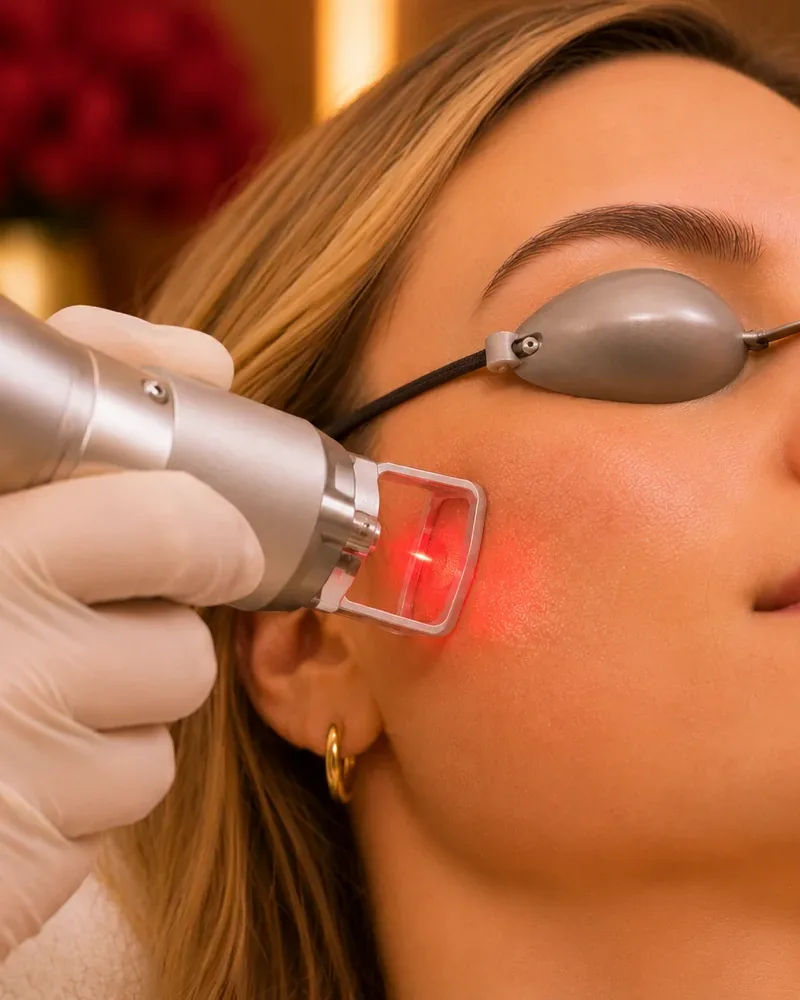
Fractional CO2 laser: equipment in use on the face, with eye protection

How it works

Laser columns, skin renewing itself

The fractional CO2 laser treats the skin in points rather than all at once. Choose one of the stages to see what happens and what it means for you.

The microcolumns

The carbon dioxide laser is absorbed by water in the skin and vaporises very fine microcolumns. Healthy skin remains between each column, helping it to heal faster than with a laser that treats the entire surface.

What happens

The laser light is divided into thousands of points. Each point opens a small channel in the skin, without treating the entire surface at once.

What this means

Fractionation made ablative laser more acceptable: a 2016 review reports that the ‘islands’ of intact skin speed healing and reduce side effects compared with non-fractional laser.

What the journey looks like

It all starts with an assessment

At Clínica Luxmed, no treatment is decided over the phone or from what is seen in a photograph. The first step is always an assessment consultation with the doctor.

The assessment fee is deducted. If you decide to go ahead with the treatment, the cost of the assessment is deducted. If you prefer not to go ahead, nothing further is asked of you.

Book an assessment
  1. 01At the clinic

    Assessment with the doctor

    The doctor listens to your history, examines your skin, asks about medication and previous treatments, and explains what it is realistic to expect.

  2. 02At the clinic

    A plan tailored to you, with no commitment

    The areas, the number of sessions, the intervals and the aftercare are defined. You can think it over calmly and come back whenever you wish: nothing is started until you have fully understood what is going to be done.

  3. 03At the clinic

    Sessions

    The number of sessions and interval depend on the skin, what is being treated and the chosen intensity: there may be a single more intensive session or several gentler ones. The doctor defines this with you at the assessment.

  4. 04Over time

    Result and protection

    The skin closes within days to weeks and the improvement becomes noticeable over several months. During this period, rigorous sun protection and the care recommended by the doctor are part of the result.

Who it is for

When it makes sense and when it is necessary to wait

This is a demanding treatment that is not suitable for every skin type or every season. The doctor assesses each case individually.

  • Sun damage and uneven texture. Rough, dull skin with a ‘weathered’ appearance, particularly after years of sun exposure. This is the situation in which fractional laser has been studied most.

  • Fine to moderate wrinkles. Around the eyes, mouth or forehead, when they are visible without moving the face. It does not replace toxin or filler when the cause is muscle movement or lack of volume.

  • Atrophic acne scars. ‘Depressed’ scars. The laser may soften their texture and depth, generally over more than one session and with gradual results.

  • Selected sun spots. Only after the pigmentation has been correctly diagnosed and when the skin has a low risk of developing new pigmentation.

  • Mild laxity and thin skin. Slightly loose or ‘crepey’ skin on the eyelids and face. The eye area requires its own technique and eye protection.

  • People who accept the recovery period. Days to weeks of red, crusted skin, and sunscreen every day for several months. Those who cannot take time out, or want immediate discretion, may prefer another option.

Comparing options

Fractional CO2 laser or non-ablative laser?

People seeking skin renewal often hear about gentler lasers that heat the skin without removing it, which Clínica Luxmed does not offer. We compare the two types honestly, so that you can understand what each does best. It is not a choice between ‘good’ and ‘bad’: it depends on what you want to treat, your skin type and the time you have available, and the doctor decides with you during the assessment.

At LuxmedFractional CO2 laser
3of 7
criteria
Fractional laser without removing the skinNon-ablative laser
4of 7
criteria
Greater, as a rule
Gentler
Better suited
More limited response
Fewer sessions
More sessions
Days to weeks
Hours to a few days
More risks
Fewer risks
Higher risk of pigmentation
Lower risk
Highly dependent
Less dependent
Luxmed does not offer non-ablative laser

It marks the side with the advantage in each criterion. Tap a criterion to see the detail.

In summary. If you are seeking a greater effect on wrinkles, scars and sun damage and accept a recovery period of days to weeks, fractional CO2 laser may be appropriate. If a short recovery is your priority or you have dark skin, a non-ablative laser or another technique may be the more suitable choice, and we will tell you so plainly at the assessment.

A comparison between types of treatment, not between professionals, clinics or brands. The count is simple and does not weight the importance of each criterion: for someone who cannot have days of red skin or has a great deal of sun exposure ahead, recovery and risk may matter more than intensity. Results and risks vary from person to person and depend on the technique and equipment used.

Where it can help

Facial concerns for which the clinic may consider it

The fractional CO2 laser is not suitable for every case or the only option, and requires careful selection. These are the concerns for which the clinic may propose it, alone or combined with other treatments. Open each page to see the causes and the other options.

What a session is like

From preparation to recovery

Each session has three stages. The times given are typical, and the doctor adjusts them to your case: the final protocol is only set at the assessment.

Book an assessment

Swipe to see the three stages →

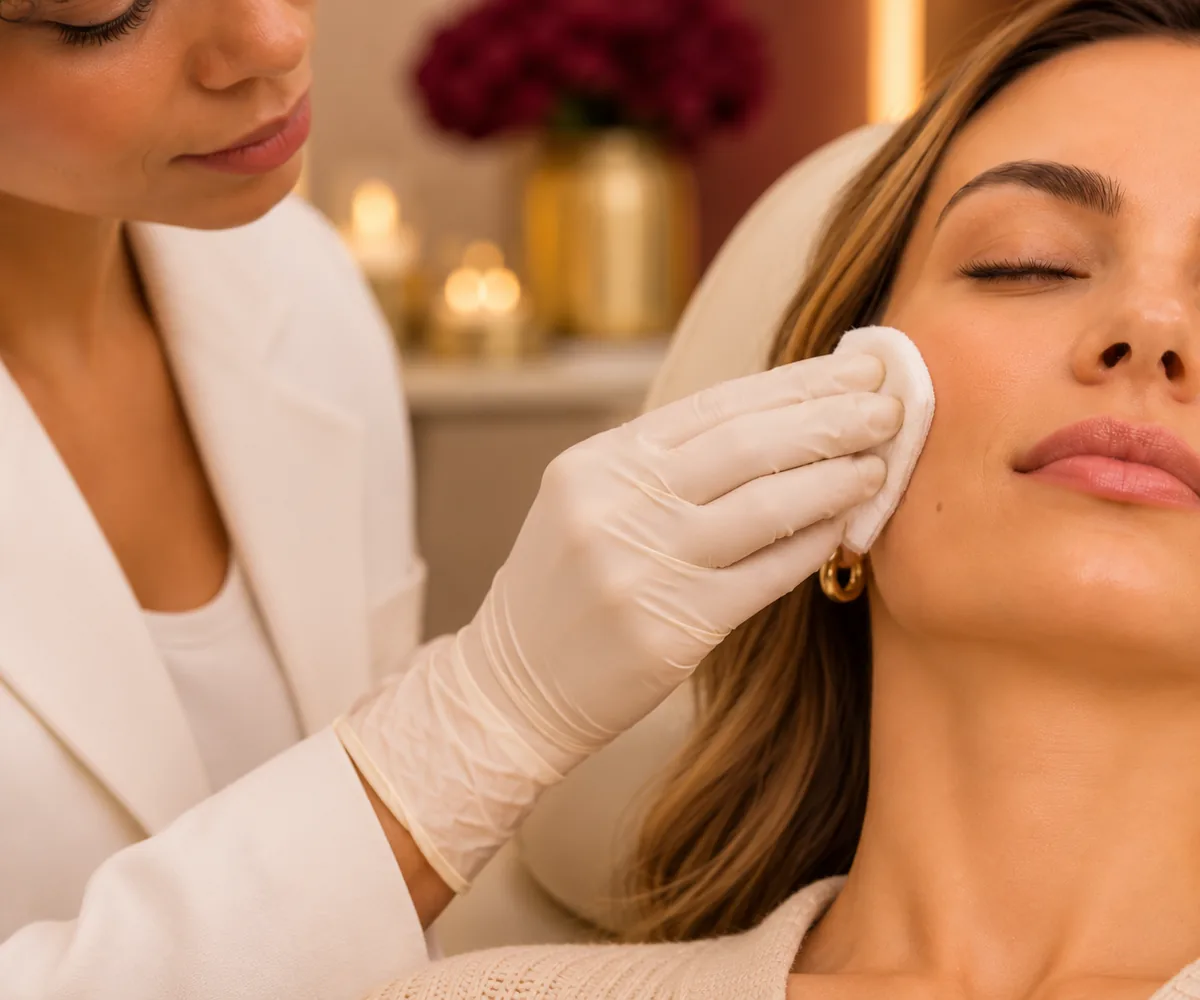
The doctor's gloved hand cleaning a woman's cheek with a gauze pad before the treatment

Before

Preparation

Clean skin, without make-up, and topical anaesthetic cream. If the doctor recommends it, an antiviral is taken before and after the laser to prevent herpes, and skin preparation may be advised. The doctor confirms the area and intensity.

Worth remembering

Avoid sun, tanning and irritating products in the preceding weeks, and disclose herpes, isotretinoin use, keloids and medication from the assessment onwards.

Book an assessment
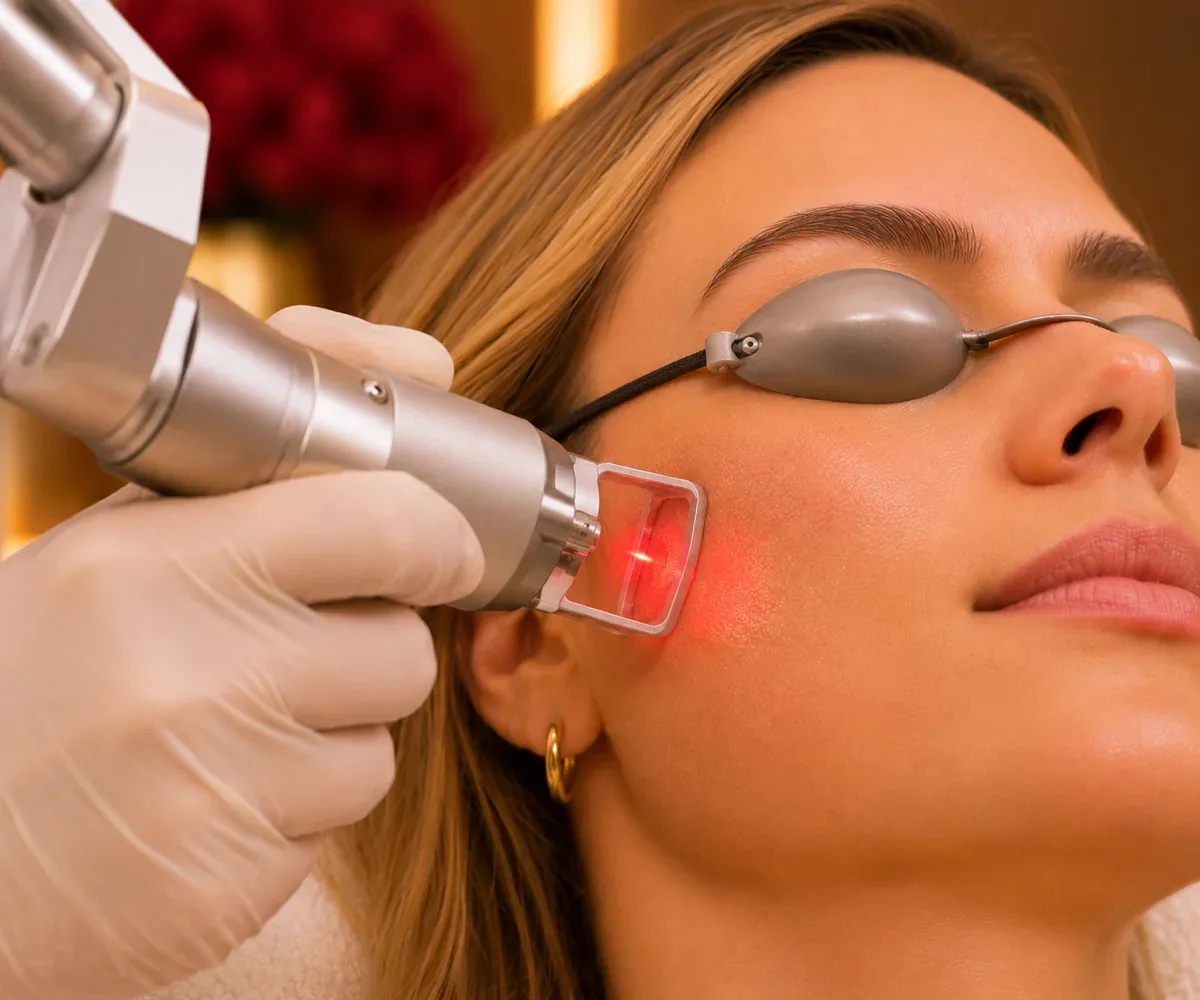
Fractional CO2 laser: equipment in use on the face, with eye protection

During

The session

The skin and eyes are protected, and the laser is passed over the treatment area, causing a sensation of heat and pricking. As a rule, the session takes about 15 to 45 minutes, depending on the area, plus the time needed for anaesthesia.

What you feel

Intense heat and pricking, more noticeable in bony and sensitive areas. You can speak to the doctor during the session, and she takes steps to keep you comfortable.

Book an assessment
Woman lying in the treatment chair with her eyes closed and a hand on her face after the treatment

Afterwards

Recovery

For the first few days, the skin is red, hot and swollen, and forms fine crusts. Keep it moisturised and protected from the sun, and do not exfoliate. It then peels and remains pink for several weeks. If the crusts last longer than one to two weeks, tell the clinic.

When to return to your routine

Social activities, make-up and work depend on the intensity: the doctor will tell you when and plan the session with you. Wear sunscreen every day for several months.

Book an assessment
Dr Michelle Campagnoli, clinical director of Clínica Luxmed

Who will look after you

An assessment carried out by the doctor

At Luxmed, in Algés, the first step is always an assessment with Dra. Michelle Campagnoli. She examines the skin, determines whether the fractional CO2 laser is the right option for you and agrees the plan with you before any procedure. The cost of the assessment is deducted if you decide to go ahead with treatment.

  • Physical examination and medical historyA conversation about your skin, medication, previous treatments and what you would like to improve, and a careful examination of the area to be treated.
  • A plan tailored to youAreas, number of sessions, intervals and aftercare, explained clearly and without promises.
  • Deducted if you go aheadIf you decide to go ahead with the treatment, the cost of the assessment is deducted. If you prefer not to go ahead, nothing further is asked of you.
Book an assessment

Book a consultation

Book your consultation

Choose how you prefer to get in touch. We will arrange the assessment consultation with Dr Michelle Campagnoli.

Booking through the websiteAssessment consultationTalk to our assistant on WhatsApp and ask for the current price of the assessment.

New Life Miraflores, Algés · Office Center, R. Santa Teresa do Menino Jesus n.º 6, 9.º C, 1495-048

Your details are used only for this contact. Any treatment depends on a prior medical assessment.

Request an appointmentIt takes less than a minute.
Speciality
You do not need to go into detail. The doctor will talk to you during the consultation.
Request received. Our team will contact you as soon as possible.
What is fractional CO2 laser?

It is an ablative carbon dioxide laser that vaporises thousands of microcolumns of skin and leaves intact skin between them. The skin repairs itself from these islands and the body produces new collagen, which may improve wrinkles, scars, sun spots and texture. It is one of the most intensive renewal treatments, with a recovery lasting days to weeks.

How does it differ from non-fractional and non-ablative laser?

Non-fractional CO2 laser treats the entire surface and has a longer recovery and more risks. Fractional laser treats the skin in points and recovers more quickly. A non-ablative laser heats the skin without removing it: it usually involves less recovery and fewer risks, but a gentler effect and more sessions. The choice depends on what is being treated and is made at the assessment.

How does it differ from radiofrequency microneedling?

Both stimulate collagen and may improve texture and scars, but through different mechanisms. The fractional CO2 laser removes microcolumns of skin, with a greater effect on texture, fine lines and sun damage, and a longer recovery. The radiofrequency microneedling delivers heat into the dermis through fine needles, causing less damage to the surface and a shorter recovery, and is used more for firmness, texture and pores. Neither is better overall: the doctor explains which makes sense in your case, or whether combining them makes sense.

Can the eye and eyelid area be treated?

It may be considered in selected cases, such as thin, crepey skin and fine lines around the eyes. This is a delicate area: it requires eye protection and a specific technique, with less energy and fewer passes, because the lower eyelid is at risk of ectropion, in which the eyelid turns outwards. There are articles on this subject on the blog.

Does it hurt?

With topical anaesthesia, most people feel heat and pricking, which they generally tolerate, but it may be more uncomfortable than other skin treatments. Sensitivity varies and is greater over bony areas, and the doctor adjusts the energy and takes steps to keep you comfortable during the session.

How many sessions are needed and how long does each one take?

It depends on the intensity and what is being treated. A more intensive treatment may be performed in a single session, and a gentler one over several sessions, at intervals of weeks to months. Each session generally takes 15 to 45 minutes, depending on the area, plus the time needed for anaesthesia. The protocol is set at the assessment.

What is recovery like, day by day?

As a rule, for the first few days the skin is red, hot and swollen, with a sunburn-like sensation. It then forms fine crusts and peels, and after one to two weeks begins to return to a pink tone, which may take weeks, and sometimes months, to fade. Keep the skin moisturised and protected from the sun, without picking off the crusts. Timing varies greatly with intensity and, if the crusts last longer than one to two weeks, you should tell the clinic. There are articles on this subject on the blog.

Can I combine it with other treatments?

It can, when appropriate, for example with botulinum toxin or peels, in separate sessions and at the correct interval. The order and spacing are determined by the doctor to avoid overloading the skin while it heals.

What can I expect? Before and after

As a rule, it improves texture, fine lines, mild laxity and the appearance of sun damage, and may soften atrophic scars. In a small study involving 10 people, six months later doctors’ assessments showed an improvement of about half in texture and wrinkles. Results vary from person to person, are not permanent and do not replace other treatments when the cause is muscle movement or lack of volume. We do not promise specific ‘before and after’ photographs.

What are the risks and side effects?

Common, temporary effects are redness, swelling, crusting and peeling. Dark patches (post-inflammatory pigmentation), infection, herpes reactivation, acne, small cysts (milia) and, rarely, scarring or ectropion may occur, particularly on the lower eyelid. If you have increasing pain, pus, blisters, fever or spreading redness, contact the clinic and, if it is serious, call 112; outside opening hours, you can call SNS 24 (808 24 24 24).

Who should not have it?

Those who are pregnant or breastfeeding, have an infection or active herpes in the area, tanned skin or recent sun exposure, or have keloids or active skin diseases, depending on the assessment. Recent isotretinoin use and medication are assessed by the doctor because recommendations differ. There are articles on this subject on the blog.

Can it be performed on brown or black skin?

It may be considered for medium skin tones using conservative settings, but the risk of dark patches is higher, and some specialists reserve this laser for lighter skin. In a study involving phototype IV skin, pigmentation occurred on 75% of one side of the face and 40% of the other, where a topical corticosteroid had been applied for two days. Evidence for very dark skin is limited. The doctor will carefully assess with you whether this laser or another option makes more sense.

What time of year should I have it done, and when can I return to the sun?

The sun is the main enemy of the result: it increases the risk of pigmentation. Many people therefore prefer months with less sun, although, with rigorous protection, treatment can be performed at other times. Before: avoid sun and tanning; recommendations suggest one to four weeks. Afterwards: no direct sun while healing and sunscreen every day for several months. The doctor adapts this to your case. There are articles on this subject on the blog.

Is an assessment needed first? Is there a charge?

Yes. All treatments at Clínica Luxmed begin with an assessment consultation with the doctor, where we work out whether the treatment makes sense for you. The cost of the assessment is deducted if you decide to go ahead with the treatment.

How do I prepare for the session?

Come with clean skin and no make-up. Avoid sun, tanning and irritating products in the preceding weeks if the doctor advises this. Mention herpes, isotretinoin, keloids, pregnancy and medication. If indicated, take the antiviral and start the care plan before the session.

Can I work and carry on with my normal life afterwards?

It depends on the intensity. With a gentler treatment, some people return to work after a few days, with pink skin. With a more intensive treatment, crusted skin may require a week or more at home. If you have an important event, mention it at the assessment so that we can plan the treatment in advance.

We could not find that question. Ask us on WhatsApp

Scientific references

This page is based on the sources below. Updated on .

  1. Levy T, Lerman I, Waibel J, Gauglitz GG, Clementoni MT, Friedmann DP, et al. Expert consensus on clinical recommendations for fractional ablative CO2 laser, in facial skin rejuvenation treatment. Lasers Surg Med, 2025.
  2. Metelitsa AI, Alster TS. Fractionated laser skin resurfacing treatment complications: a review. Dermatol Surg, 2010.
  3. Tierney EP, Hanke CW, Petersen J. Ablative fractionated CO2 laser treatment of photoaging: a clinical and histologic study. Dermatol Surg, 2012.
  4. Spring LK, Krakowski AC, Alam M, Bhatia A, Brauer J, Cohen J, et al. Isotretinoin and timing of procedural interventions: a systematic review with consensus recommendations. JAMA Dermatol, 2017.
  5. Borges J, Manela-Azulay M, Cuzzi T. Photoaging and the clinical utility of fractional laser. Clin Cosmet Investig Dermatol, 2016.
  6. Cheyasak N, Manuskiatti W, Maneeprasopchoke P, Wanitphakdeedecha R. Topical corticosteroids minimise the risk of postinflammatory hyper-pigmentation after ablative fractional CO2 laser resurfacing in Asians. Acta Derm Venereol, 2015.
CallAssistantAvailableBook