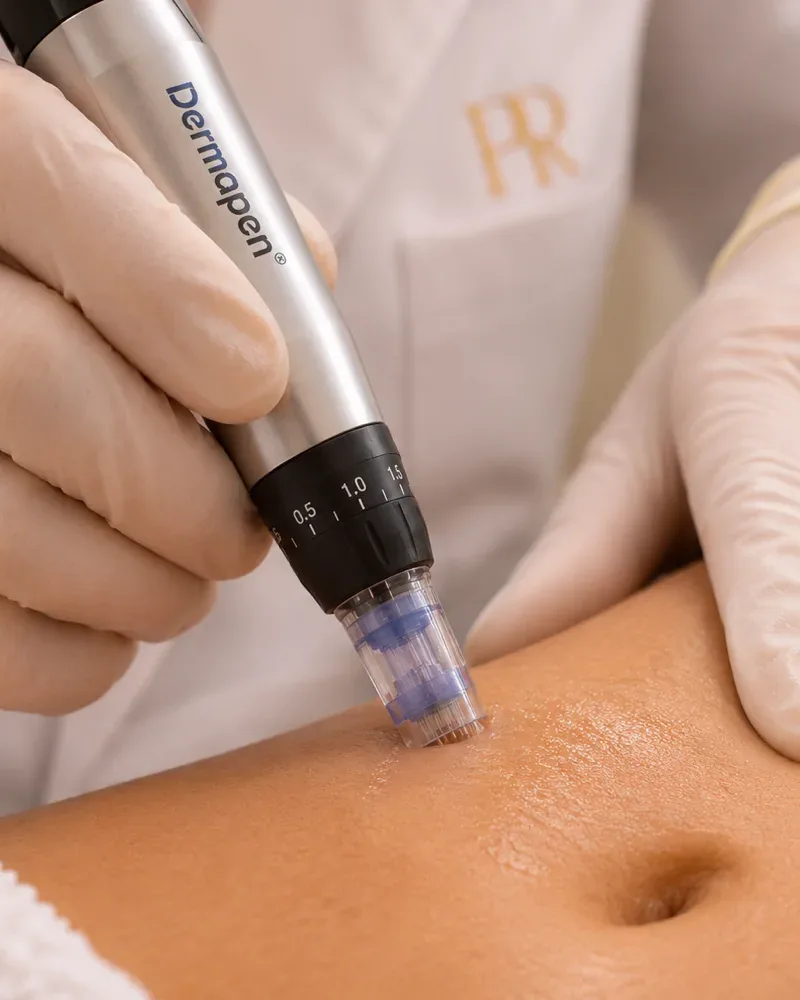
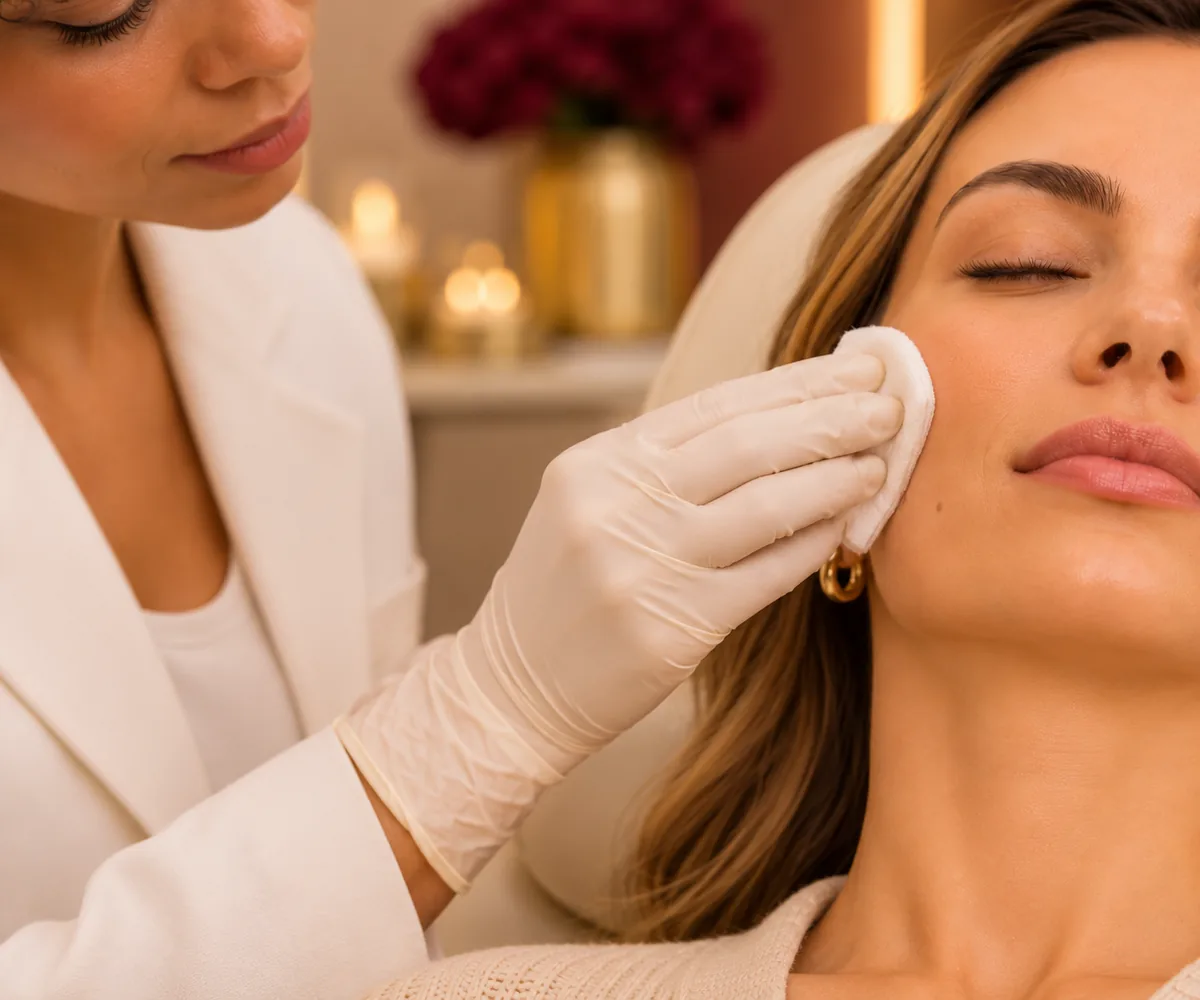
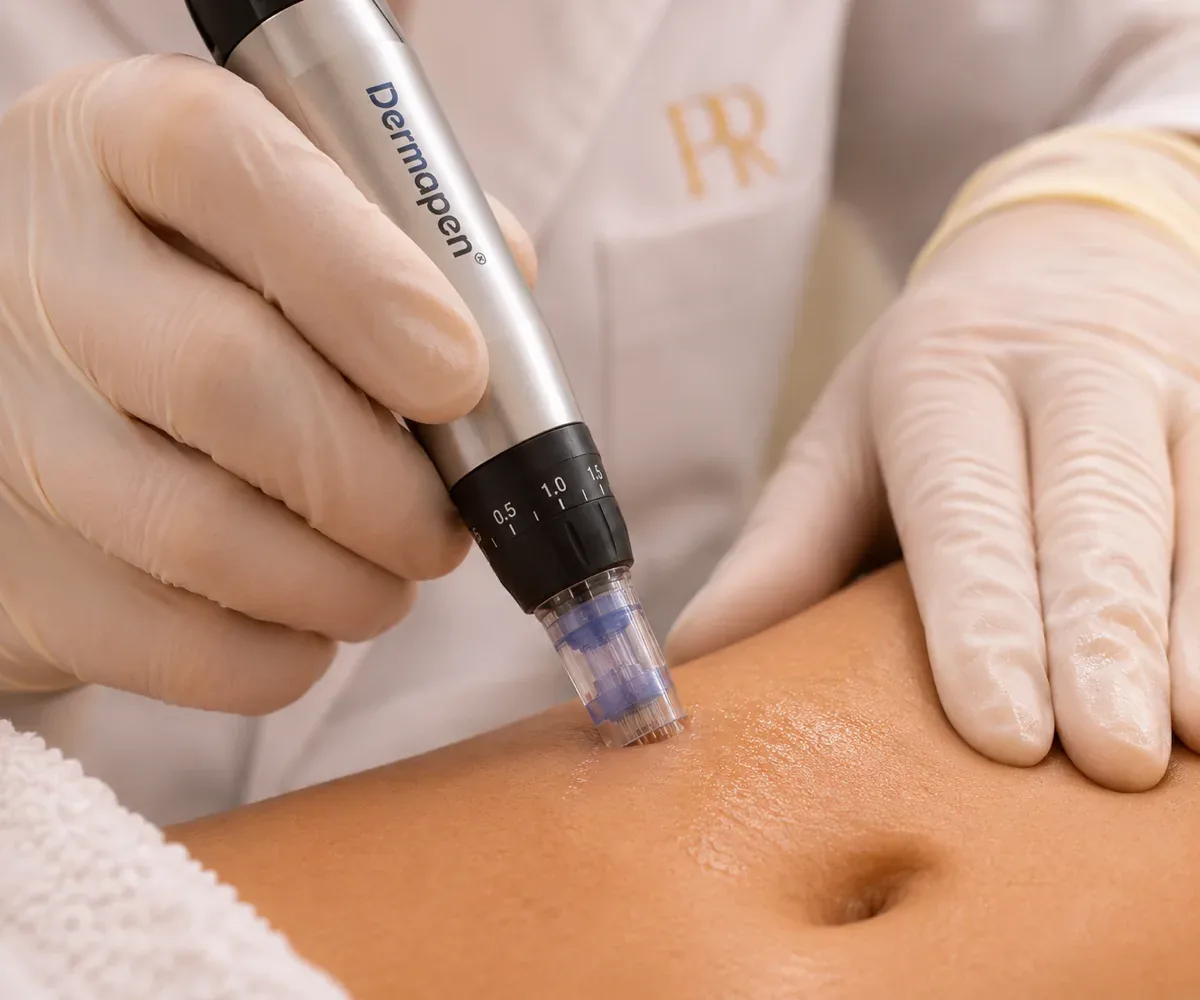
What is body microneedling?
This is a treatment in which a pen fitted with very fine needles creates controlled micro-injuries in the skin on the body. The body responds with a repair process that stimulates collagen and elastin production, which may gradually reduce stretch marks, scars and uneven texture. It is also known as percutaneous collagen induction. It is used on areas such as the abdomen, thighs, buttocks, arms and back.
How does it differ from radiofrequency microneedling?
Microneedling works through the mechanical action of the needles, without heat. In radiofrequency microneedling, the needles also deliver radiofrequency energy into the dermis, which is thought to provide a greater firming effect. Both techniques have been studied for stretch marks; the choice depends on what is being treated and is made during the assessment. When the main concern is skin laxity rather than a stretch mark or scar, radiofrequency is usually considered first.
Red or white stretch marks: when should treatment begin?
Red or purplish stretch marks are recent and more active, while white ones are older and more difficult to treat. Studies have used microneedling for both types, and a 2017 review reported that no treatment is completely effective and that the quality of the studies is limited. It is generally best to seek an early assessment because there are more options when a stretch mark is recent, but it can still be treated later with realistic expectations. The doctor will explain what is appropriate in your case.
Stretch marks after pregnancy: when can I start? What if I am breastfeeding?
Treatment is not performed during pregnancy. After giving birth, you should allow your body to recover, usually for several weeks, and the doctor will discuss the right time with you, once your weight is more stable. During breastfeeding, the decision is made on an individual basis and confirmed during the assessment. If your stretch marks are still red, mention this: the doctor will assess whether it is best to start sooner or wait.
Old white stretch marks: microneedling, laser or radiofrequency microneedling?
For stretch marks, studies comparing the three options have found similar improvements. In a 2022 trial involving 40 people, microneedling and the fractional CO2 laser reduced stretch marks to a comparable degree. A 2025 meta-analysis of 6 trials involving 166 people reached the same conclusion, with fewer dark patches after microneedling; a 2024 meta-analysis also found fewer dark patches with radiofrequency microneedling than with the CO2 laser. Microneedling does, however, cause more pain during the session than laser treatment. No single option is best for everyone: the choice depends on the skin, the stretch mark and individual tolerance, and is made during the assessment.
Is it suitable for scars on the body, such as those caused by back acne, burns or surgery?
It may be suitable for depressed scars, such as acne scars, and mature scars from burns, accidents or surgery, to improve texture. Scar studies have focused mainly on the face, and evidence for the body is more limited. Acne must be under control, and a recent scar needs time. A scar that is growing or raised requires different options, which the doctor will explain during the assessment.
Does it resolve skin laxity or excess skin?
That is not its purpose. Microneedling targets texture, stretch marks and scars; it does not remove skin or eliminate fat. If loose skin is your main concern, during the assessment the doctor will explain what other options are available, such as radiofrequency, and when only surgery—which the clinic does not perform—would resolve it.
Does it hurt?
With topical anaesthesia, most people feel warmth and tiny pricks. A 2024 review reports that microneedling is more painful than laser treatment during the session. Sensitivity varies from person to person and from one area to another, and is generally more noticeable where there is little fat beneath the skin. The doctor adjusts the treatment throughout the session to keep you comfortable.
How many sessions are needed, and at what intervals?
The number of sessions and the interval between them are determined by the doctor after the assessment and depend on the area, the type of stretch mark or scar, and the skin's response. Protocols vary in published studies: a 2012 pilot study used 3 sessions 4 weeks apart, while a 2022 trial used 4 sessions one month apart. No ideal number has been established.
What will the stretch marks and skin look like in the following days? (before and after)
During the first few days, the skin is red and warm, like mild sunburn, with small pinpoint marks and, sometimes, dryness and slight flaking. A 2021 systematic review indicates that the most common temporary effects last up to 7 days. Improvements in stretch marks and texture appear later, over weeks and months, and are not the same for everyone: in a 2012 pilot study, 7 of 16 people experienced marked to excellent improvement, while the remainder experienced minimal to moderate improvement.
What are the risks and side effects?
Common, mild effects include redness, swelling, warmth, dryness, flaking and pinpoint bleeding, which resolve within days. Less common effects include temporary dark patches and herpes reactivation. Rare but important effects include ‘tram-track’ scarring, persistent discolouration and granulomatous reactions, particularly when products unsuitable for the dermis are used. If you develop severe pain, pus, fever or spreading redness, contact the clinic and, if the symptoms are severe, call 112; outside opening hours, you can call SNS 24 (808 24 24 24).
Can it be done on brown or black skin? And in summer?
It may be considered, but the risk of dark marks (hyperpigmentation) is higher in darker skin tones, so an assessment is essential. Sun exposure is generally avoided before and after the session because it increases the risk of pigmentation. For body treatments, with trips to the beach, swimming and more revealing clothing in summer, the doctor may recommend treatment outside the sunniest months.
Are the results permanent?
Stretch marks and scars do not disappear completely: they become less noticeable, and the degree of improvement varies from person to person. The skin continues to change, and weight fluctuations or another pregnancy can cause new stretch marks to appear. The doctor will tell you whether repeating or maintaining the treatment makes sense.
Can I do microneedling at home with a dermaroller?
Home-use devices generally have shorter needles, are reused and are difficult to keep sterile between uses; their effect tends to be milder. The advantages of home use are convenience and a lower initial cost. Granulomatous reactions have been reported following microneedling with products not intended for use in the dermis, and home use is not a substitute for medical treatment of stretch marks or scars.
Is an assessment needed first? Is there a charge?
Yes. All treatments at Clínica Luxmed begin with an assessment consultation with the doctor, where we work out whether the treatment makes sense for you. The cost of the assessment is deducted if you decide to go ahead with the treatment.
How should I prepare and when can I return to my routine?
Come with clean skin and no creams on the area, and avoid intense sun exposure, tanning beds and irritating products in the preceding days if advised by the doctor. Tell us about any change in your health or medication and any recent herpes outbreak. Many people return to their routine shortly afterwards, but it is best to avoid sun exposure, intense heat, swimming pools and exfoliants for a few days. If you have an event or holiday planned, mention it during the assessment so the doctor can schedule your sessions accordingly.