What is body radiofrequency microneedling?
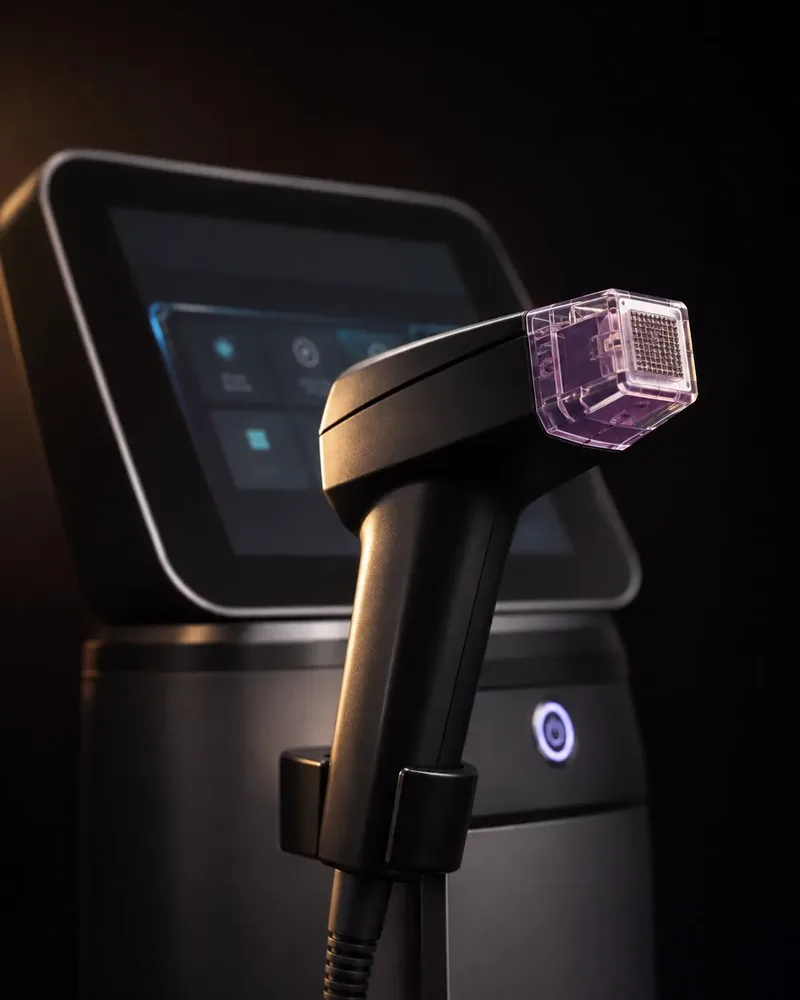
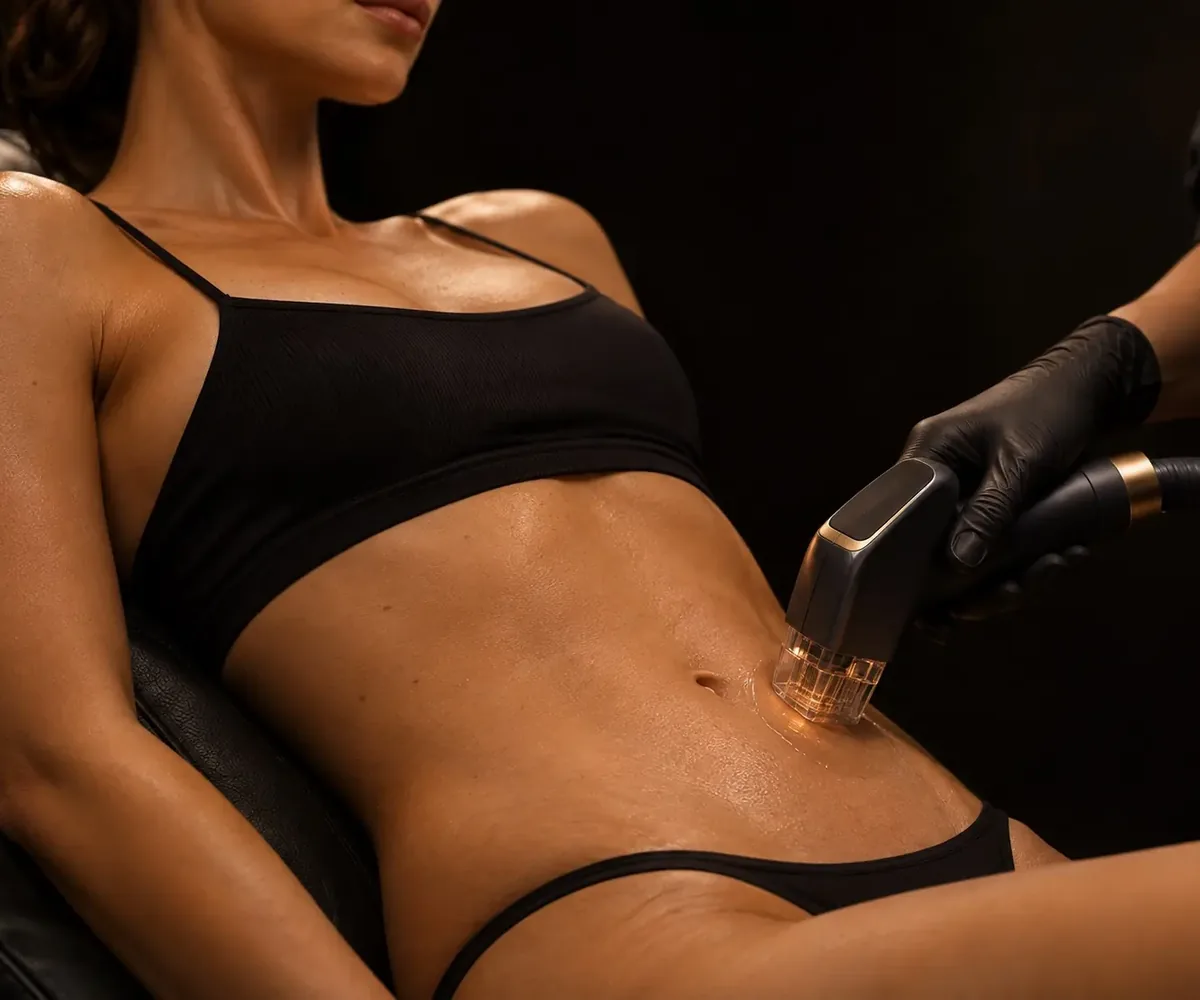
Also called RF microneedling or microneedling with radiofrequency, this treatment combines microneedles and radiofrequency. The very fine needles enter the skin and deliver radiofrequency energy to the dermis, heating it in a controlled way. The heat stimulates collagen and elastin production and skin remodelling, which may gradually improve firmness, texture and some stretch marks. On the body, it is used on areas such as the abdomen, arms and thighs.
Is there a difference between devices from different brands, such as Morpheus8?
There are several radiofrequency microneedling devices from different brands, and Morpheus8 is one of the best known. The technique is of the same type, but devices differ in needle depth, type of energy and settings, and studies are not always comparable. We therefore do not claim that the results are the same as those from any particular device: they depend on the equipment, the settings, the area and each person’s skin. The equipment is selected at the assessment, and the doctor explains what it is realistic to expect.
How does it differ from standard microneedling?
With standard microneedling, the needles create micro-injuries that stimulate the skin through their mechanical action alone. With radiofrequency microneedling, the needles also deliver heat deep within the skin, contracting existing collagen and stimulating new collagen. In general, the effect on firmness is greater, but the choice between the two techniques depends on what is to be treated and is made during the assessment. For stretch marks, for example, standard microneedling is also supported by studies.
How does it differ from needle-free radiofrequency and biostimulators?
Needle-free radiofrequency, such as Sectum by Neauvia, heats the skin from the surface; with radiofrequency microneedling, energy is delivered directly to the dermis through the needles. Collagen biostimulators are injectable and stimulate collagen over several months through a different mechanism. Each technique has its own indications, and the doctor explains which is appropriate for your case, or whether combining them makes sense.
What about surgery, such as abdominoplasty or brachioplasty?
They are different types of option. Surgery removes excess skin and has a greater, longer-lasting effect, but involves anaesthesia, a permanent scar and a recovery lasting weeks. Radiofrequency microneedling is non-surgical, with a recovery of a few days; it improves firmness and texture and has a gradual, more moderate effect, but does not remove skin. Clínica Luxmed does not perform surgery: if the doctor considers during the assessment that surgery would be the best option for you, she will tell you.
I have lost a lot of weight, for example with tirzepatide or another medication. Does it make sense to treat the skin?
Rapid weight loss, whether through diet, bariatric surgery or medications such as tirzepatide, often leaves the skin less firm because it takes time to adjust to the loss of volume. This is most noticeable on the abdomen, inner arms and thighs. Radiofrequency microneedling targets skin quality, namely firmness and texture: it neither eliminates fat nor removes excess skin. The right time for treatment depends on whether your weight is already stable, any medication you are still taking and how much elasticity your skin retains; the doctor will determine this during the assessment. If there is excess skin, she will tell you frankly: in that case, only surgery can remove it.
Does radiofrequency microneedling help with weight loss or fat reduction?
No. It is not a weight-loss treatment, nor does it dissolve localised fat. It acts on the dermis to improve skin firmness and texture, which is why it is considered once your weight is stable. If fat is your main concern, the doctor will explain during the assessment what other options are available and whether they are suitable for you.
Can it correct very severe skin laxity?
As a rule, no. When there is too much skin for the volume beneath it and it forms folds or an apron, a non-surgical treatment will fall short of expectations. It may improve the firmness and appearance of the excess skin, but it does not remove it. In these cases, body-contouring surgery is the option most likely to achieve the desired outcome. The doctor will tell you this frankly during the assessment, even if it means not proceeding with treatment.
Does it hurt?
With topical anaesthetic, most people feel heat and tolerable discomfort. Sensitivity varies from person to person and from area to area, and is usually more noticeable where there is little fat beneath the skin. The doctor adjusts the energy to keep you comfortable.
How many sessions are needed, and at what intervals?
The number of sessions and the interval are determined by the doctor after the assessment and depend on what is being treated, the area and the skin’s response. Protocols vary in published studies: in one study involving 17 women after childbirth, 3 sessions were carried out 8 weeks apart, while in other studies using different devices a single session was sufficient. Each session takes as long as the area requires, in addition to the time for the topical anaesthetic.
Which areas of the body can be treated?
Usually the abdomen, arms, thighs, buttocks, flanks and knees, and sometimes the back or areas with stretch marks. Skin thickness varies from one area to another, and at the appointment the doctor assesses whether the area you are interested in is suitable and how it should be treated.
Can I combine it with other treatments?
It can, where appropriate, for example with collagen biostimulators, carboxytherapy or microneedling, in separate sessions with the correct interval. The order and spacing are defined by the doctor to avoid overloading the skin.
What happens between sessions?
The doctor reassesses the skin, checks how it has responded and adjusts the plan: the energy level, depth and interval before the next session may change, and it may sometimes be decided to add or postpone another treatment. There is no single schedule that suits everyone.
Do I need lymphatic drainage after the sessions?
It is not compulsory. The doctor may suggest it as a complementary measure between sessions if she believes it could help in your case. This decision is part of each person’s individual plan, which is adjusted throughout the course of treatment.
Which areas of the body are commonly considered for treatment?
The abdomen, to improve skin firmness and texture, including marks left after pregnancy or weight loss. The thighs, when there is a loss of firmness; the evidence for cellulite is limited. The arms, when the skin on the inner side is loose. The buttocks, to improve skin texture rather than volume or shape. The doctor will assess each area and tell you whether the treatment is appropriate for it.
When will I see results?
Some people notice an improvement within weeks, but the full result develops over several months because new collagen takes time to form. A 2021 critical review reported that improvement continues for at least six months after treatment.
Are the results permanent?
No. Results are gradual and vary from person to person, and the skin continues to age, with weight fluctuations and pregnancies having an effect. Maintenance helps preserve the results, and the doctor advises how often this is appropriate. It does not replace surgery when there is a great deal of excess skin.
What are the risks and side effects?
Common, mild effects include redness, swelling, small grid-like marks and some tenderness, which resolve within days. Less common effects include bruising, temporary pigmentation changes and herpes reactivation. Rare effects include burns or scars when the settings are unsuitable. If you experience severe pain, pus, fever or spreading redness, contact the clinic and, if it is serious, call 112; outside opening hours, you can call SNS 24 (808 24 24 24).
Does it work on stretch marks and cellulite?
There are some studies on stretch marks: a 2024 meta-analysis found no significant difference between radiofrequency microneedling and fractional CO2 laser in improving stretch marks, and the laser caused more dark spots after treatment. For cellulite, there is a trial involving 50 people, using a specific device and a single session. In both cases, results vary and the evidence is limited, so the doctor assesses with you whether it is appropriate or whether another option would be better.
Who should not have it?
People who are pregnant or breastfeeding, have a pacemaker or other implanted devices, metal implants in the area, an infection or wounds, or take anticoagulants, among other cases, depending on the assessment. After childbirth, the doctor assesses when treatment is possible, once weight is stable and breastfeeding has ended. The doctor explains each case.
Can I have treatment if I have previously had surgery in the area or have implants?
Always tell the doctor before booking. A surgical or caesarean scar must be fully healed, and after liposuction or another operation in the area, you will need to wait for the period specified by the doctor. Implanted electronic devices, such as a pacemaker, and metal implants in the area may prevent treatment because radiofrequency energy is delivered into the skin. During the assessment, the doctor will review any implants or devices you have and decide what is safe.
Does the outcome depend on maintaining my weight?
To some extent, yes. If your weight fluctuates considerably again, the skin may begin to sag again because its appearance is determined by both the volume and the skin itself. The doctor will discuss this during the assessment, along with what can be expected and maintained while your weight is still changing.
Is an assessment needed first? Is there a charge?
Yes. All treatments at Clínica Luxmed begin with an assessment consultation with the doctor, where we work out whether the treatment makes sense for you. The cost of the assessment is deducted if you decide to go ahead with the treatment.
How should I prepare and when can I return to my routine?
Come with clean skin and no creams on the area, and avoid intense sun, artificial tanning and irritating products in the preceding days if instructed by the doctor. Tell us about any changes in your health or medication. Many people resume their routine the next day, but it is best to avoid sun, intense heat and exfoliants during the first week. If you have an event planned, mention it at the assessment so that the doctor can plan the sessions.