What is Sectum radiofrequency Neauvia for the body?
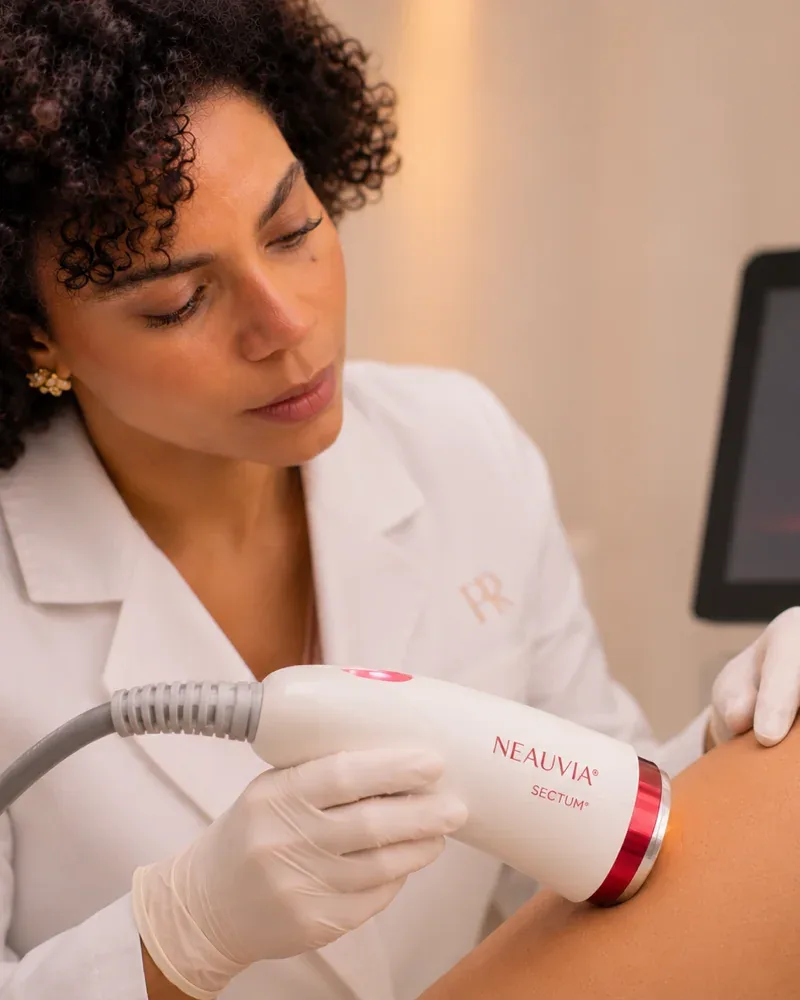
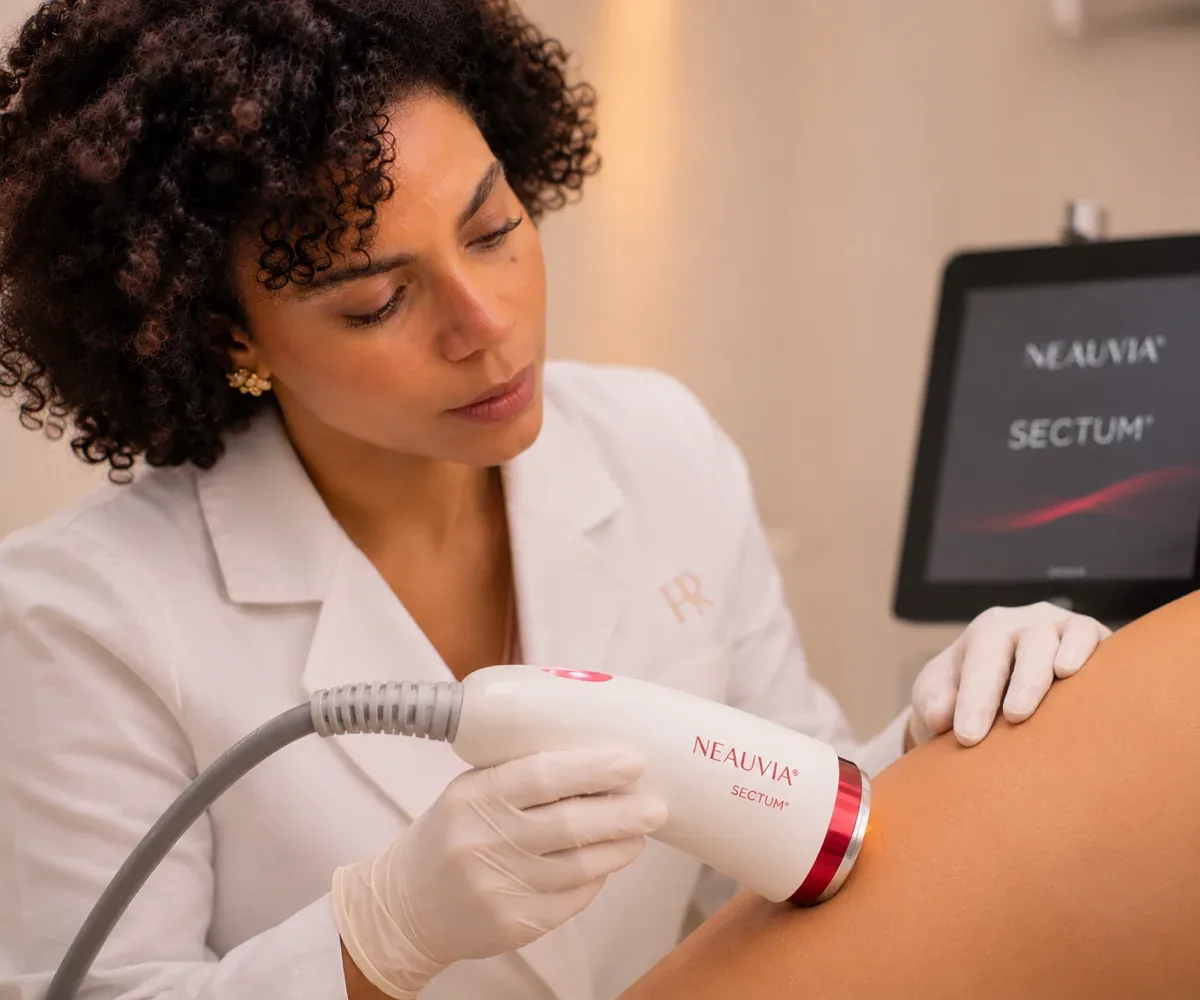
It is a Neauvia radiofrequency device with applicators for the face, body and intimate area. At Clínica Luxmed, the body applicator heats the deeper layers of the skin without needles or incisions, with the aim of stimulating collagen and elastin and improving firmness and texture. The effect is gradual and moderate, varies from person to person and is not a substitute for surgery. It is usually considered for the abdomen, inner arms and thighs, and during the consultation the doctor will assess whether the area you are concerned about is suitable.
What can you expect from radiofrequency treatment on the body?
A gradual, moderate improvement in skin firmness and texture, especially in cases of mild laxity. A 2022 systematic review concluded that monopolar and bipolar radiofrequency produces measurable improvements in laxity, with complications generally being mild. However, the methodological quality of the studies has been considered low, and results vary. No specific before-and-after outcome is promised, and the doctor will tell you candidly what is realistic in your case.
Are there studies on Sectum? What is it registered for?
We found no published clinical studies specifically on Sectum. The available studies concern radiofrequency in general rather than any particular device, so we do not promise results identical to those described for other devices. In the device's FDA registration, the indication refers to topical heating and a temporary reduction in the appearance of cellulite, not a specific indication for skin firmness. The overall evidence for radiofrequency points to a moderate improvement, and the doctor will use this realistic perspective when assessing with you whether the treatment is appropriate.
How does it differ from radiofrequency microneedling?
Radiofrequency microneedling delivers energy into the dermis through very fine needles and has a slightly more noticeable recovery period. Sectum does not use needles: it heats the skin from the surface. Each technique has its own indications, and the doctor will explain which makes sense in your case, or whether combining them is appropriate. There is a page about radiofrequency microneedling for the body.
How does it differ from cavitation?
These are different technologies. Cavitation uses low-frequency ultrasound, generally targeting localised fat. Radiofrequency heats the skin and tissues, and the literature focuses mainly on skin firmness and texture. They are sometimes combined at clinics that offer both, but Clínica Luxmed does not offer cavitation: if, during the assessment, the doctor believes another approach would be better for you, she will tell you.
What about surgery, such as abdominoplasty or brachioplasty?
These are fundamentally different options. Surgery removes excess skin and produces a greater, longer-lasting effect, but it involves anaesthesia, a permanent scar and a recovery period of several weeks. Sectum is non-invasive, with a short recovery, and improves firmness and texture with a gradual, more moderate effect, but it does not remove skin. Clínica Luxmed does not perform surgery: if, during the assessment, the doctor believes surgery would be the best option for you, she will tell you.
Does it hurt?
Most people feel heat, which should be tolerable and is more noticeable where there is little fat beneath the skin, such as over the hips or on the inner upper arms. Sensitivity varies, and the doctor adjusts the energy to your comfort throughout the session. Always say if the heat feels excessive.
How many sessions are needed and how often?
There is no single answer. The number of sessions and the interval between them are determined by the doctor after the assessment and depend on the area, what is to be treated and how the skin responds. Protocols described in the literature vary greatly between devices and studies. Each session takes as long as the area requires, and the doctor will give you an estimate during the assessment.
Can abdominal radiofrequency help after pregnancy or weight loss?
It may help improve the firmness and texture of the skin on the abdomen when laxity is mild to moderate and weight is stable. It does not bring together muscles that separated during pregnancy, eliminate fat or remove excess skin: if there are folds or an apron of skin, surgery is the option most likely to achieve the desired result. After childbirth, the doctor will assess the right time, once you are no longer breastfeeding, and tell you candidly what is realistic.
Can I combine it with other treatments?
It can be combined when appropriate, for example with collagen biostimulators or carboxytherapy, in separate sessions with the right interval between them. The doctor determines the order and spacing to avoid overloading the skin.
Does it work for cellulite? How many sessions are needed, and what changes can be seen before and after?
The device's FDA registration lists a temporary reduction in the appearance of cellulite, not its elimination. Reviews are mixed: a 2025 review of 24 trials included radiofrequency among the options with promising results, while a 2024 review states that the quality of the studies is poor. The result depends on the severity of the cellulite, the skin and lifestyle, and during the assessment the doctor will explain what is realistic and how many sessions she plans, without making ‘before and after’ promises.
Are the results permanent? How long do they last?
No. Results are gradual and vary from person to person, and the skin continues to age, with weight changes and pregnancies having an impact. Results do not last for the same length of time for everyone, and the doctor will tell you whether repeat or maintenance treatment is appropriate and how often. It is not a substitute for surgery when there is a large amount of excess skin. It is not a treatment for weight loss or reducing body measurements.
What are the risks and side effects?
The most frequent effects are mild and temporary: redness, warmth and, sometimes, mild swelling. Rare: burns when the energy is unsuitable, and temporary skin colour changes. If you have severe pain, blisters, pus, fever or spreading redness, contact the clinic and, if it is serious, call 112; outside opening hours, you can call SNS 24 (808 24 24 24).
Who should not have the treatment? Can it be performed on brown or Black skin?
This treatment is not suitable for anyone who is pregnant or breastfeeding, or who has a pacemaker, defibrillator or other implanted electronic device, metal implants or permanent fillers in the area, an infection or wounds, or a suspicious lesion, among other situations, as determined during the assessment. Treatment may be considered for brown or Black skin: radiofrequency uses an electrical current to generate heat and, unlike laser treatment, does not depend on skin colour. This does not eliminate the risk of changes in pigmentation, so the settings are selected carefully.
Is an assessment needed first? Is there a charge?
Yes. All treatments at Clínica Luxmed begin with an assessment consultation with the doctor, where we work out whether the treatment makes sense for you. The cost of the assessment is deducted if you decide to go ahead with the treatment.
How do I prepare, and can I work afterwards?
Come with clean skin and no creams applied to the area, with no recent tan or irritation, and report any changes in your health or medication since the assessment. You can generally resume your normal routine immediately afterwards, while moisturising and avoiding intense sun and excessive heat over the following days. If you have an important event, mention it during the assessment so that we can plan the sessions.