Algés, Oeiras Mon to Fri · 09:00 to 13:00 and 14:00 to 19:00 · Sat · 09:00 to 14:00
WhatsApp Book a consultation

Treatment · Facial aesthetics

LuxFusion deep peelAn intensive renewal of facial skin for deep wrinkles, scars and marked damage, with very careful selection

The LuxFusion deep peel is one of the clinic’s most intensive renewal treatments. A chemical agent causes a controlled injury extending to the deeper layers of the skin, to renew it and stimulate collagen in deep wrinkles, scars and marked damage. It requires a long recovery and careful selection. Like all treatments at Clínica Luxmed, it begins with an assessment consultation with the doctor, the cost of which is deducted if you decide to proceed.

  • 1session, as a rule
  • 1assessment, deducted if you go ahead
  • 2 to 3weeks of recovery, or longer
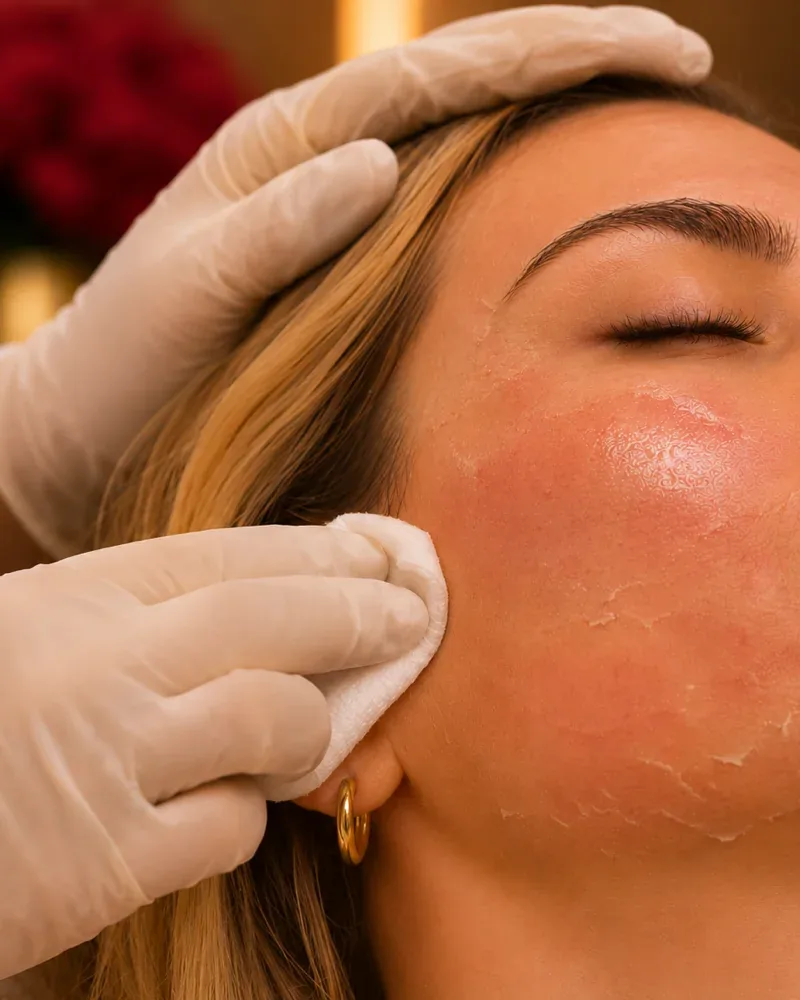
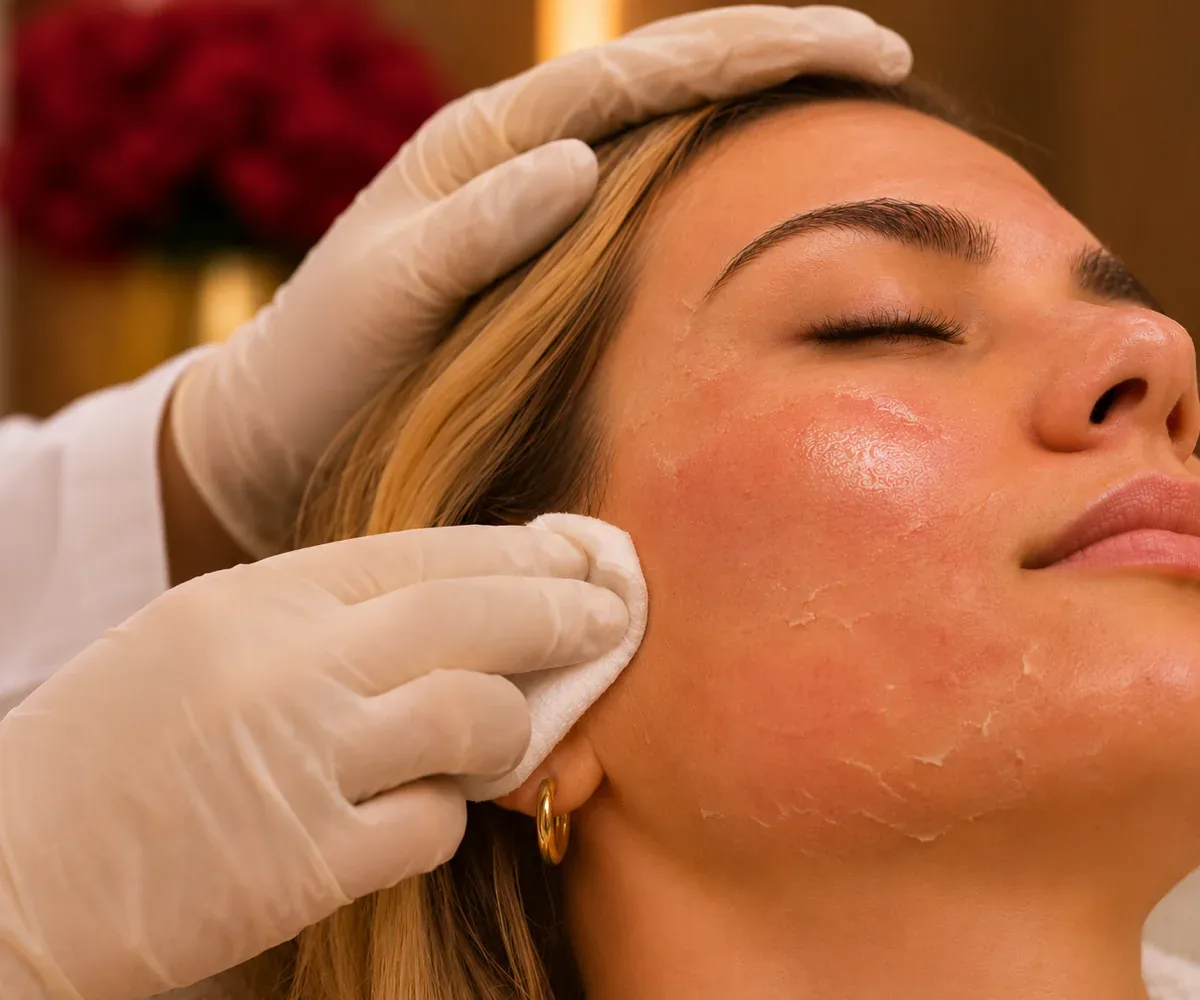
Deep peel: the skin after treatment, with the doctor's care

How it works

A controlled injury, skin that renews itself

In a deep peel, the depth of the injury determines both the result and the risk. Choose one of the stages to see what happens to the skin and what it means for you.

The chemical agent

Once the skin has been cleansed and prepared, a chemical agent is applied to destroy the superficial layers and part of the deeper layers in a controlled way. Deep peels reach the reticular dermis, the deepest part of the dermis, where much of the collagen is found.

What happens

The strength of a peel depends on the substance, its concentration and how it is applied. Peels can therefore differ greatly, even when they are all called ‘deep’.

What this means

At the assessment, the doctor explains what LuxFusion contains, what to expect from it and whether it is suitable for your skin.

What the journey looks like

It all starts with an assessment

At Clínica Luxmed, no treatment is decided over the phone or from what is seen in a photograph. The first step is always an assessment consultation with the doctor.

The assessment fee is deducted. If you decide to go ahead with the treatment, the cost of the assessment is deducted. If you prefer not to go ahead, nothing further is asked of you.

Book an assessment
  1. 01At the clinic

    Assessment with the doctor

    The doctor listens to your history, examines your skin, asks about medication and previous treatments, and explains what it is realistic to expect.

  2. 02At the clinic

    A plan tailored to you, with no commitment

    The areas, the number of sessions, the intervals and the aftercare are defined. You can think it over calmly and come back whenever you wish: nothing is started until you have fully understood what is going to be done.

  3. 03At the clinic

    Session

    As a rule, one session, with skin preparation in the preceding weeks when recommended by the doctor. Anaesthesia, support during the session and subsequent care are set at the assessment according to the agent and depth.

  4. 04Over time

    Recovery and protection

    The skin generally closes after 2 to 3 weeks, and redness may last weeks to months. Rigorous sun protection must be maintained, and the doctor monitors recovery.

Who it is for

When it makes sense and when it is necessary to wait

This treatment requires careful patient selection. The decision is always made by the doctor after examining your skin and learning about your health history.

  • Marked sun damage in light skin. Skin with many sun spots, roughness and widespread fine and medium wrinkles, for which gentler treatments fall short of what the person is seeking.

  • Deep, widespread wrinkles. For example, around the mouth. This is one of the classic indications for deep peels, alongside resurfacing lasers.

  • Pronounced scars. Acne or surgical scars, where the type of scar and skin allow. It may be one of several options and can be combined with others.

  • People who accept a long recovery. Two to three weeks until the skin closes, with redness that may last for months, and who are able to stay at home for the first few days.

  • People who can avoid the sun. During and after recovery, rigorous sun protection and no direct exposure are essential to protect the result.

Comparing options

Deep peel or dermabrasion?

Dermabrasion is another classic way of renewing the skin at depth: instead of a chemical agent, it uses an instrument that removes layers of skin by abrasion. Clínica Luxmed does not offer it. We compare the two honestly, so that you can understand what each does best. The choice depends on what you want to treat, and the doctor decides with you during the assessment.

At LuxmedLuxFusion deep peel
3of 6
criteria
Mechanical abrasion of the skinDermabrasion
3of 6
criteria
Chemical, without sanding
Mechanical abrasion
Even
More involved
Adaptable
More difficult
Less direct
Direct and visible
Less specific
Classic technique
Depends on the agent
Localised only
Luxmed does not offer dermabrasion

It marks the side with the advantage in each criterion. Tap a criterion to see the detail.

In summary. If you are looking for intense, even facial renewal with careful selection, a deep peel may be suitable. For an isolated scar, or when direct control of depth matters more, dermabrasion may be the better option; the doctor will tell you frankly at the assessment.

A comparison between types of treatment, not between professionals, clinics or brands. The count is simple and does not weight the importance of each criterion: for those with well-defined scars, depth control may matter more than anything else. Results and risks vary from person to person and depend on the technique and equipment used.

Where it can help

Facial concerns for which the clinic may consider it

A deep peel is not suitable for every case or the only option, and some of these concerns require greater caution (pigmentation, rosacea and redness). These are the concerns with which the clinic’s catalogue associates it, alone or combined with other treatments. Open each page to see the causes and the other options.

What a session is like

From preparation to recovery

The session has three stages. The timings and care are the usual ones, and the doctor adapts them to your case: the protocol is only set at the assessment.

Book an assessment

Swipe to see the three stages →

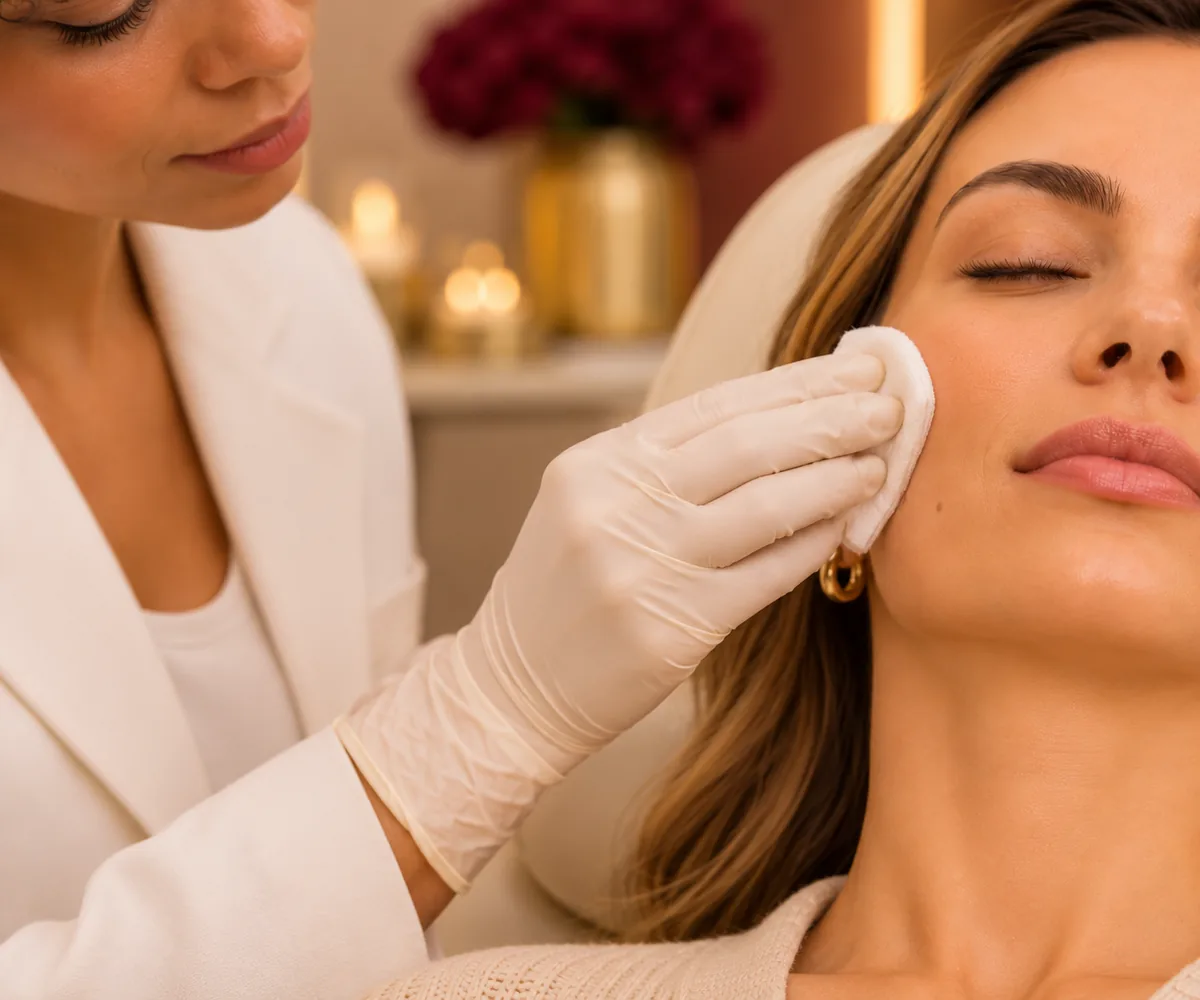
The doctor's gloved hand cleaning a woman's cheek with a gauze pad before the treatment

Before

Preparation

In some cases, the doctor requests skin preparation for 2 to 4 weeks, with sunscreen and, where appropriate, products that help the skin respond better. On the day, the skin is cleansed and the doctor confirms the treatment area.

Worth remembering

Report illnesses, medication, herpes, recent treatments and sun exposure from the assessment onwards. Plan to spend the following days at home, with someone available to help.

Book an assessment
Deep peel: the skin after treatment, with the doctor's care

During

The session

The agent is applied to the agreed areas, at the appropriate strength for each. Anaesthesia and support during the session depend on the agent and depth, and are set at the assessment. A burning sensation is felt during application.

What you feel

Burning and heat, which the doctor seeks to control throughout the session. The skin looks markedly affected immediately afterwards.

Book an assessment
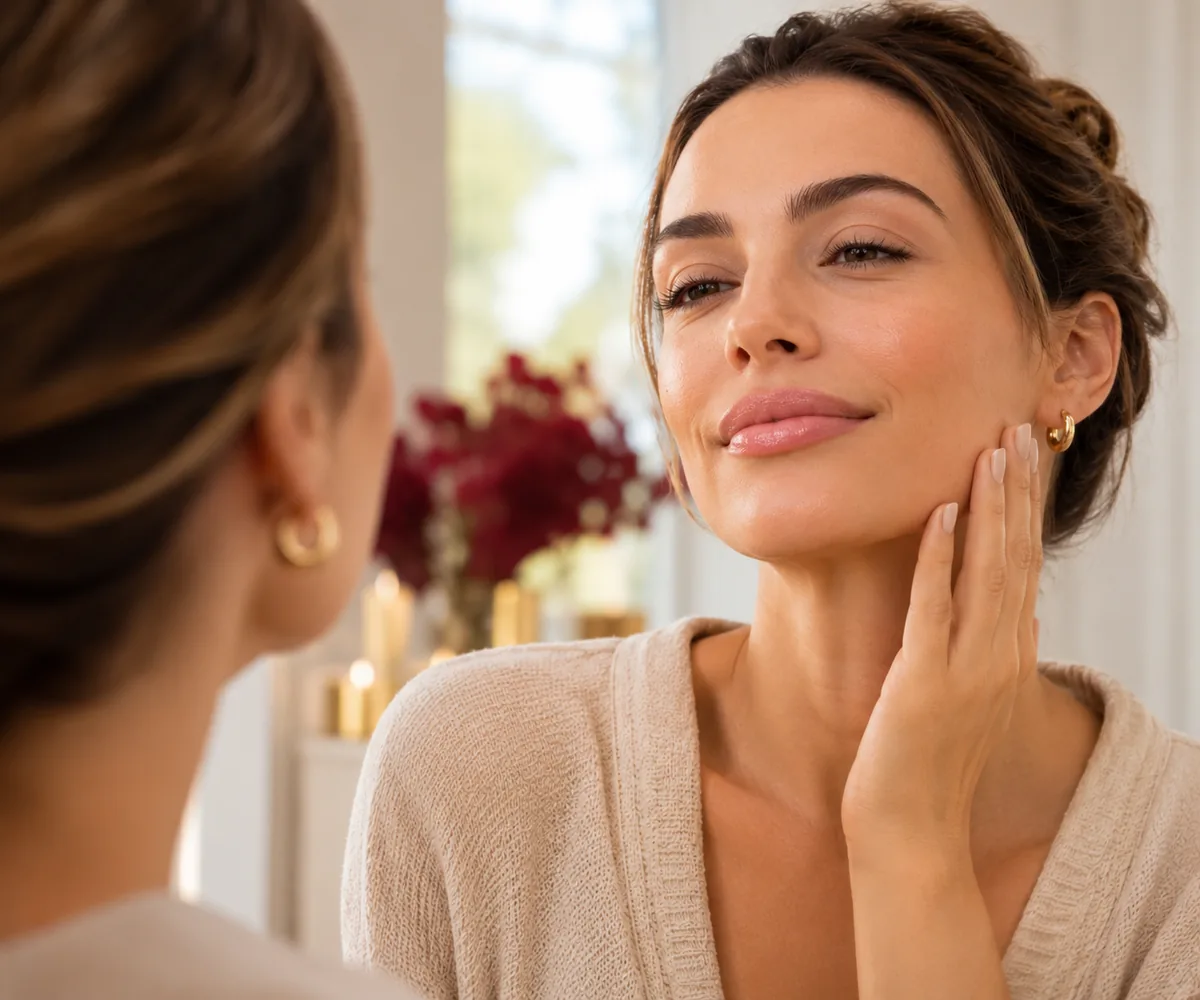
Woman looking at herself in the mirror with a calm expression and a hand on her face, after the treatment

Afterwards

Recovery

During the first few days, swelling, burning, darkening and peeling, with daily moisturising and skin-protection care. Between 1 and 2 weeks, new, pink and sensitive skin appears. Redness may last weeks to months.

When to return to your routine

As a rule, it takes 2 to 3 weeks for the skin to heal over, or longer depending on the depth. Strict sun protection every day during and after recovery.

Book an assessment
Dr Michelle Campagnoli, clinical director of Clínica Luxmed

Who will look after you

An assessment carried out by the doctor

At Luxmed, in Algés, the first step is always an assessment with Dra. Michelle Campagnoli. She examines the skin, determines whether the LuxFusion deep peel is the right option for you and agrees the plan with you before any procedure. The cost of the assessment is deducted if you decide to go ahead with treatment.

  • Physical examination and medical historyA conversation about your skin, medication, previous treatments and what you would like to improve, and a careful examination of the area to be treated.
  • A plan tailored to youAreas, number of sessions, intervals and aftercare, explained clearly and without promises.
  • Deducted if you go aheadIf you decide to go ahead with the treatment, the cost of the assessment is deducted. If you prefer not to go ahead, nothing further is asked of you.
Book an assessment

Book a consultation

Book your consultation

Choose how you prefer to get in touch. We will arrange the assessment consultation with Dr Michelle Campagnoli.

Booking through the websiteAssessment consultationTalk to our assistant on WhatsApp and ask for the current price of the assessment.

New Life Miraflores, Algés · Office Center, R. Santa Teresa do Menino Jesus n.º 6, 9.º C, 1495-048

Your details are used only for this contact. Any treatment depends on a prior medical assessment.

Request an appointmentIt takes less than a minute.
Speciality
You do not need to go into detail. The doctor will talk to you during the consultation.
Request received. Our team will contact you as soon as possible.
What is the LuxFusion deep peel?

This is Clínica Luxmed’s deep peel: the application of a chemical agent that causes a controlled injury extending to the deeper layers of the skin, to renew it intensively and treat deep wrinkles, scars and marked damage. It requires a long recovery and very careful selection. At the assessment, the doctor explains what LuxFusion contains and what can be expected from it in your case.

What is a phenol peel?

This is a deep peel in which a phenol-based formula, often combined with croton oil, is applied to the skin and reaches the reticular dermis, the deepest part of the dermis (Fischer et al., 2010). Formula concentrations vary greatly, and the risk of pigment loss increases with higher concentrations of croton oil (Hetter, 2000). The results for deep wrinkles and sun damage are striking, but recovery is lengthy and requires careful selection and monitoring. This answer describes phenol peels in general and does not state what LuxFusion contains: the doctor explains this at the assessment.

What is a TCA peel and how does it differ from a deep peel?

TCA stands for trichloroacetic acid, one of the substances used in peels. At concentrations below 50 per cent, it acts from the epidermis to the superficial dermis and is considered a superficial to medium-depth peel; at higher concentrations, it may reach deeper layers (Fischer et al., 2010). Medium-depth peels treat pigmentation, fine lines and sun damage, with a shorter recovery than deep peels (Rendon et al., 2010). At the assessment, the doctor explains what LuxFusion contains and the depth at which it acts.

Deep peel or CO2 laser for deep wrinkles?

These are two ways of renewing the skin at depth, with similar indications. In a small 2000 study involving four people and a non-fractional CO2 laser, the phenol peel was as effective as the laser in areas of thin skin; the laser produced better results in areas of thicker skin, but with more pigment loss, more discomfort and longer-lasting redness (Langsdon et al., 2000). According to a 2018 review, lasers have largely replaced deep peels (Soleymani et al., 2018). The clinic also offers fractional CO2 laser (see the fractional CO2 laser page), and at the assessment the doctor will tell you which makes most sense, or whether neither does.

And what about dermabrasion?

Dermabrasion removes skin by mechanical abrasion down to the papillary or reticular dermis (Alkhawam and Alam, 2009), and is a classic technique for scars (Hom and Harmon, 2019). It provides more direct control over depth and is better suited to defined areas, while a deep peel is applied evenly over the whole face. Clínica Luxmed does not offer dermabrasion: if the doctor considers it the best option for you at the assessment, she will tell you.

Does it hurt?

You will feel a burning sensation during application. The anaesthesia and support provided during the session depend on the agent and depth, and the doctor explains at the assessment what is planned in your case. Afterwards, there is burning and discomfort during the first few days, which gradually ease as the skin heals.

What is recovery like, day by day?

During the first few days there is swelling, burning, darkening and peeling of the skin. Between 1 and 2 weeks, new, pink and sensitive skin appears; redness may last for weeks or months. As a rule, the skin heals over within 2 to 3 weeks or longer, depending on the depth. Strict sun protection is essential during and after recovery.

How many sessions are needed?

As a rule, one session, because the peel is deep. The details are set at the assessment. More superficial peels, which the clinic may propose as an alternative or complement, are performed as a series.

Can I combine it with other treatments?

It can, when appropriate, in separate sessions and at the correct interval, because the skin needs to heal completely. In some cases, a series of medium-depth peels, fractional laser or microneedling, with retinoids, provide good results with fewer risks and a shorter recovery. The doctor determines the order and spacing.

When will I see results, and do they last?

The result can only be seen after the skin has closed and the redness has subsided, and improvement continues over the following months as new collagen forms. Results vary from person to person and are not permanent because the skin continues to age. Rigorous sun protection helps to maintain them.

What are the risks and side effects?

Risks include dark marks or loss of pigment, sometimes permanent, infection (including reactivation of herpes), scarring and prolonged redness. Some agents, such as phenol, can cause changes in heart rhythm that require monitoring. A deeper injury is associated with greater change, but also longer healing and more complications (Rendon et al., 2010). If you develop severe pain, pus, fever or spreading redness, contact the clinic and, if it is serious, call 112; outside opening hours, you can call SNS 24 (808 24 24 24).

Is a phenol peel dangerous? How are the risks controlled?

This peel is not suitable for everyone and requires careful selection and aftercare. Phenol is absorbed through the skin and can affect heart rhythm, so standard recommendations exclude people with heart, liver or kidney disease. In a 2007 study of 181 women who underwent a full-face deep peel with continuous cardiac monitoring, arrhythmias occurred in 12 (about 7 in every 100) and were more common in those with diabetes, hypertension or depression; 4 resolved on their own and 8 were controlled with intravenous lidocaine. The author concluded that, when performed properly, the risk is lower than previously thought (Landau, 2007). At the assessment, the doctor explains what LuxFusion contains and what this means.

Can it be performed on brown or black skin?

As a rule, it is not the first option. Medium and deep peels carry a higher risk of dark marks and loss of pigment in darker skin, and guidelines for darker skin advise against deep peels (Khunger, 2008). At Luxmed, safer alternatives are preferred in these cases. An assessment is essential.

Who should not have it?

Those who are pregnant or breastfeeding, have active rosacea or dermatitis, active infection or herpes, a tendency to raised scars, recent isotretinoin use, heart, liver or kidney disease (with some agents), or cannot avoid the sun. Peel guidelines also mention active infection, a tendency to keloids, facial dermatitis, photosensitising medicines and unrealistic expectations (Khunger, 2008). The doctor assesses each case.

Is an assessment needed first? Is there a charge?

Yes. All treatments at Clínica Luxmed begin with an assessment consultation with the doctor, to determine whether the treatment makes sense for you and whether there are better alternatives. The cost of the assessment is deducted if you decide to go ahead with treatment.

How should I prepare, and when is the best time to have it?

At the assessment, the doctor explains how to prepare your skin; in some cases this begins 2 to 4 weeks beforehand with sunscreen and products that help the skin respond better. Tell her about herpes, medication and recent treatments. Because the new skin is very sensitive to the sun, it is best to plan the peel for a period with little sun exposure and when you can spend a few days at home. If you have an upcoming event, mention it at the assessment.

We could not find that question. Ask us on WhatsApp

Scientific references

This page is based on the sources below. Updated on .

  1. Rendon MI, Berson DS, Cohen JL, Roberts WE, Starker I, Wang B. Evidence and considerations in the application of chemical peels in skin disorders and aesthetic resurfacing. J Clin Aesthet Dermatol, 2010.
  2. Fischer TC, Perosino E, Poli F, Viera MS, Dreno B; Cosmetic Dermatology European Expert Group. Chemical peels in aesthetic dermatology: an update 2009. J Eur Acad Dermatol Venereol, 2010.
  3. Soleymani T, Lanoue J, Rahman Z. A practical approach to chemical peels: a review of fundamentals and step-by-step algorithmic protocol for treatment. J Clin Aesthet Dermatol, 2018.
  4. Landau M. Cardiac complications in deep chemical peels. Dermatol Surg, 2007.
  5. Langsdon PR, Milburn M, Yarber R. Comparison of the laser and phenol chemical peel in facial skin resurfacing. Arch Otolaryngol Head Neck Surg, 2000.
  6. Khunger N; IADVL Task Force. Standard guidelines of care for chemical peels. Indian J Dermatol Venereol Leprol, 2008.
  7. Hetter GP. An examination of the phenol-croton oil peel: part IV. Face peel results with different concentrations of phenol and croton oil. Plast Reconstr Surg, 2000.
  8. Alkhawam L, Alam M. Dermabrasion and microdermabrasion. Facial Plast Surg, 2009.
  9. Hom DB, Harmon J. Dermabrasion for scars and wire loop electrocautery for rhinophyma. Facial Plast Surg, 2019.
CallAssistantAvailableBook