Algés, Oeiras Mon to Fri · 09:00 to 13:00 and 14:00 to 19:00 · Sat · 09:00 to 14:00
WhatsApp Book a consultation

Treatment · Body aesthetics

Body carboxytherapyMicroinjections of medical-grade carbon dioxide to stimulate skin circulation, as a complementary treatment for cellulite, stretch marks and scars

Carboxytherapy consists of microinjections of medical-grade carbon dioxide (CO2) into or just beneath the skin to stimulate circulation and tissue oxygenation. On the body, it is considered as an adjunct for cellulite, stretch marks, scars and skin texture. Results vary, the evidence is limited and it is not a weight-loss treatment. Like all treatments at Clínica Luxmed, it begins with an assessment consultation with the doctor, the cost of which is deducted if you decide to proceed.

  • 4 to 8sessions, in published studies
  • 1assessment, deducted if you go ahead
  • Doctordetermines the sessions after the assessment
Body carboxytherapy: medicinal carbon dioxide microinjections · Luxmed Clinic, Algés

How it works

A gas the body already knows

Carbon dioxide is a gas that the body itself produces and eliminates. Select one of the stages to see what happens in the body's tissues and what this means for you.

The gas

Sterile, purified medical-grade carbon dioxide is used and supplied by a dedicated device that regulates the gas flow and volume. It is not the same as the CO2 laser, which uses light rather than an injected gas.

What happens

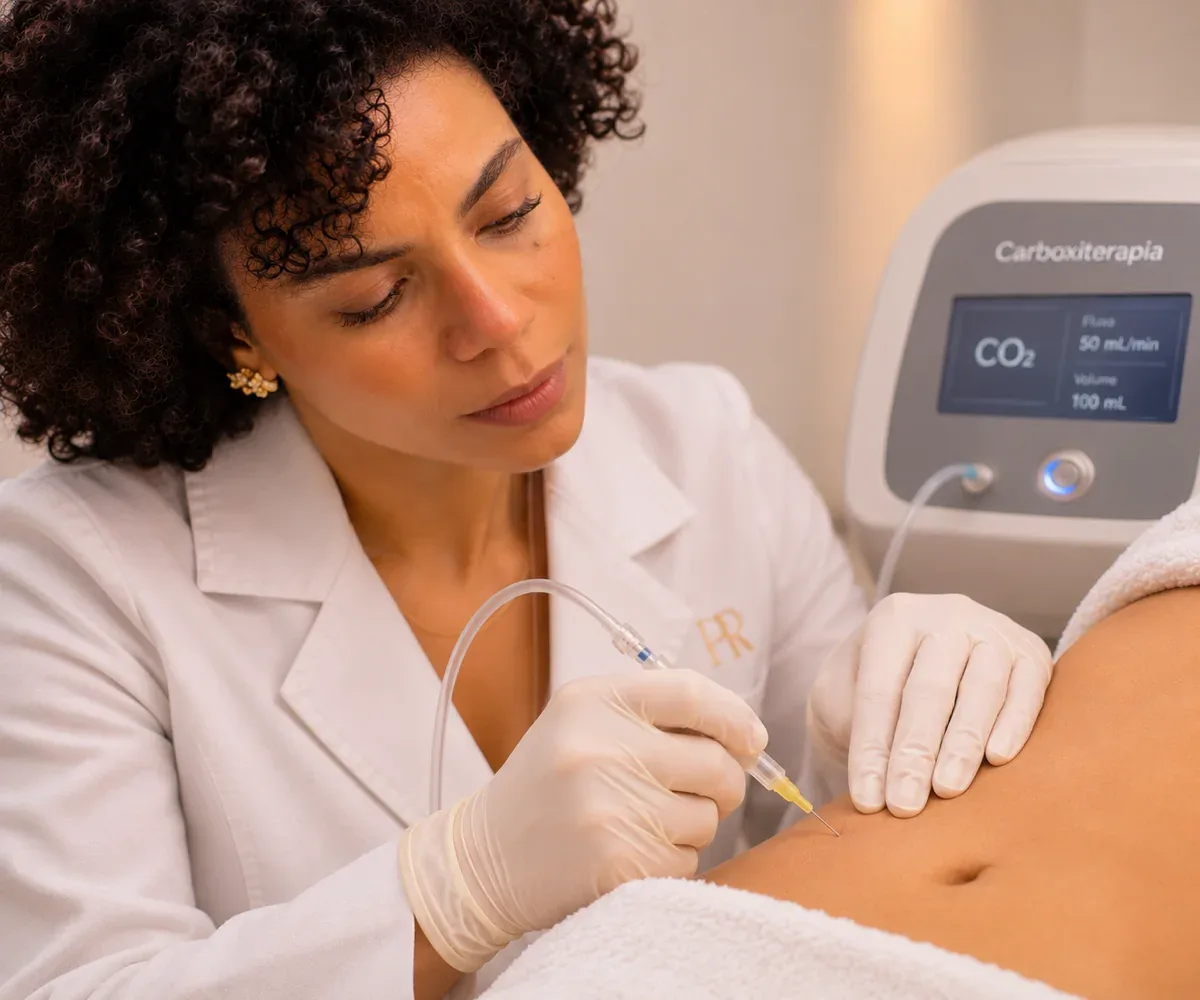
The device delivers a measured amount of gas through a very fine needle. On the body, the treatment area (abdomen, thighs, buttocks or arms) is larger than on the face, and the volumes and flow are adapted to each area.

What this means

The doctor selects the volume and flow rate for each area and aim. There is no single ‘dose’ suitable for every case.

What the journey looks like

It all starts with an assessment

At Clínica Luxmed, no treatment is decided over the phone or from what is seen in a photograph. The first step is always an assessment consultation with the doctor.

The assessment fee is deducted. If you decide to go ahead with the treatment, the cost of the assessment is deducted. If you prefer not to go ahead, nothing further is asked of you.

Book an assessment
  1. 01At the clinic

    Assessment with the doctor

    The doctor listens to your history, examines your skin, asks about medication and previous treatments, and explains what it is realistic to expect.

  2. 02At the clinic

    A plan tailored to you, with no commitment

    The areas, the number of sessions, the intervals and the aftercare are defined. You can think it over calmly and come back whenever you wish: nothing is started until you have fully understood what is going to be done.

  3. 03At the clinic

    Sessions

    The number of sessions and the interval between them are only determined by the doctor after the assessment, according to the area, the aim and the skin's response. Where appropriate, carboxytherapy may be included in a plan with other body treatments, in separate sessions.

  4. 04Over time

    Result and reassessment

    When improvement occurs, it is gradual and varies from person to person. The doctor reassesses the results with you at the end of the sessions and advises whether it makes sense to repeat the treatment, switch to another option or combine it with another treatment.

Who it is for

When it makes sense and when it is necessary to wait

Carboxytherapy is a complementary treatment with variable results. These are the cases in which the doctor may consider it, after assessing the type of concern and the area.

  • Mild to moderate cellulite. On the thighs, buttocks or abdomen, when the person understands that the evidence is limited, with small studies, and that the aim is to improve the appearance of the skin rather than eliminate cellulite.

  • Stretch marks. The studies are small, but some have shown improvement in stretch marks, including on the abdomen. Other options, such as the fractional CO2 laser or microneedling, may also be considered, and the choice is made during the assessment.

  • Indented or uneven scars. Old, fully healed scars, such as acne or surgical scars, where the aim is to improve texture. There are fewer studies than for stretch marks.

  • Body skin with reduced firmness or uneven texture. When the aim is to improve circulation and the appearance of the skin gently, as part of a plan with other treatments.

  • Small fat deposits, as a complementary treatment. The difference measured in one trial was temporary, so it is only considered with realistic expectations and never as a way to lose weight.

  • People who prefer a non-surgical option. And who accept the need for several sessions and a moderate, variable result.

Comparing options

Carboxytherapy or liposuction for localised fat?

People seeking treatment for abdominal or thigh fat often consider liposuction, which Clínica Luxmed does not provide. We compare the two options honestly: they treat different concerns, and liposuction removes fat in a way that carboxytherapy cannot. Neither is a weight-loss method, and the doctor makes the decision with you during the assessment.

At LuxmedBody carboxytherapy
5of 8
criteria
Surgery to remove fatLiposuction for localised fat
3of 8
criteria
Without surgery
Surgery
Days, usually
Several weeks
Generally mild
Those of surgery
May improve
Does not treat it
Yes
One-off decision
Minor and temporary
Removes fat
Several sessions
One procedure
Variable and moderate
More predictable
Luxmed does not perform surgery

It marks the side with the advantage in each criterion. Tap a criterion to see the detail.

In summary. If you are looking to improve the texture and appearance of the skin on your body without surgery, carboxytherapy may make sense as an adjunct. If the aim is to remove an area of localised fat, liposuction is the option that does so, and we will tell you this plainly during the assessment.

This compares types of treatment, not professionals, clinics or brands. The scoring is simple and does not weight the importance of each criterion: for removing localised fat, surgery is the option that actually achieves this. Results and risks vary from person to person and depend on the technique and equipment used.

Where it can help

Body concerns for which the clinic may consider it

Carboxytherapy is not suitable for every case, nor is it the only option. These are the concerns for which the clinic may suggest it, generally as an adjunct. Open each page to see the causes and the other options.

What a session is like

From preparation to recovery

Each session has three stages. The time required and the care provided are as usual, and the doctor adapts them to your case and the size of the area: the protocol is only established during the assessment.

Book an assessment

Swipe to see the three stages →

Before

Preparation

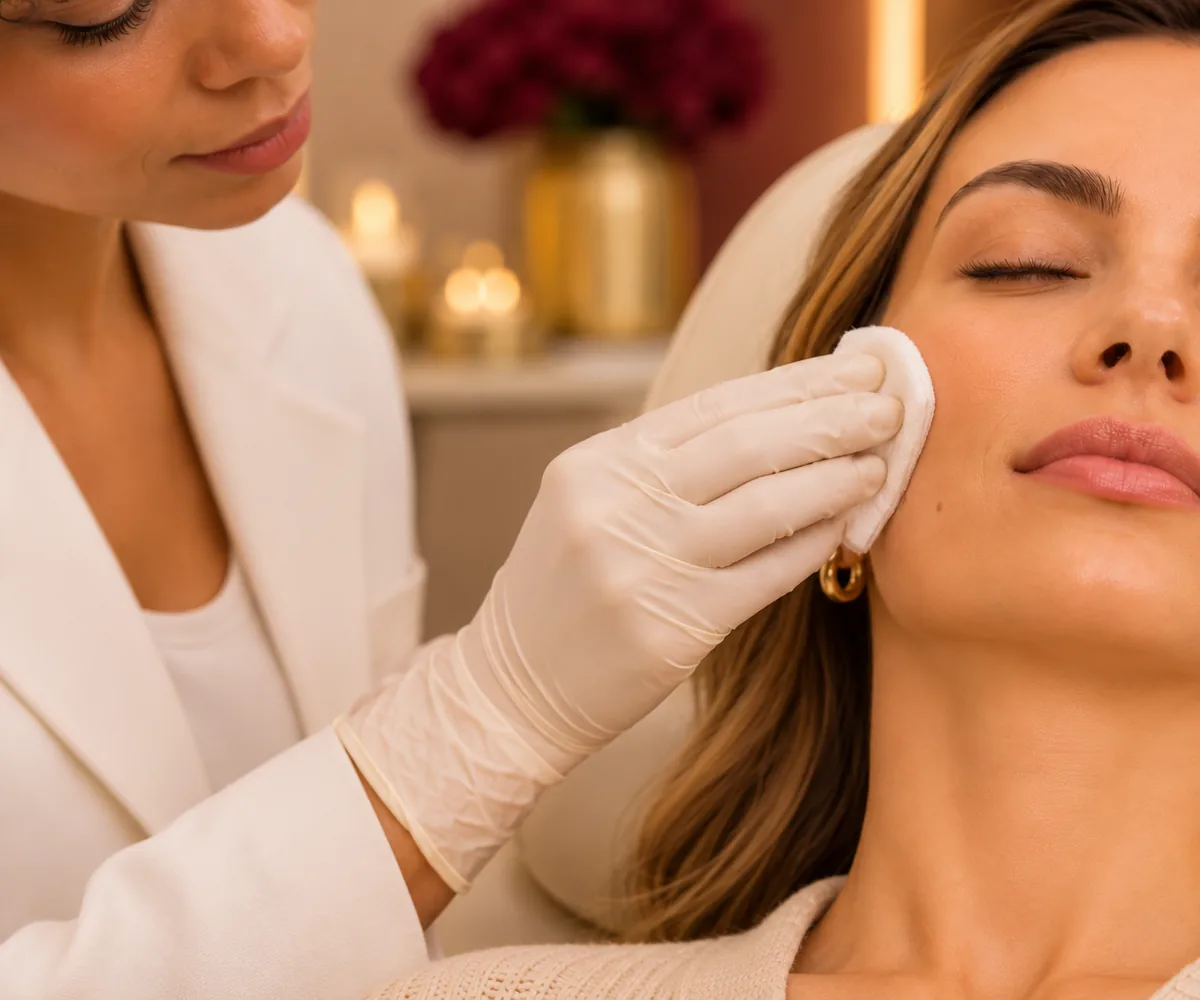
The skin is cleansed, the area is marked and, if the doctor considers it appropriate, topical anaesthetic is applied. The doctor confirms again that there are no contraindications, such as pregnancy, fever or infection, and checks the medication you take.

Worth remembering

Arrive with clean skin and no creams on the area, and tell the doctor about any medication that affects blood clotting and any change in your health since the assessment. Anyone with an important event in the following days should mention it before booking.

Book an assessment

During

The session

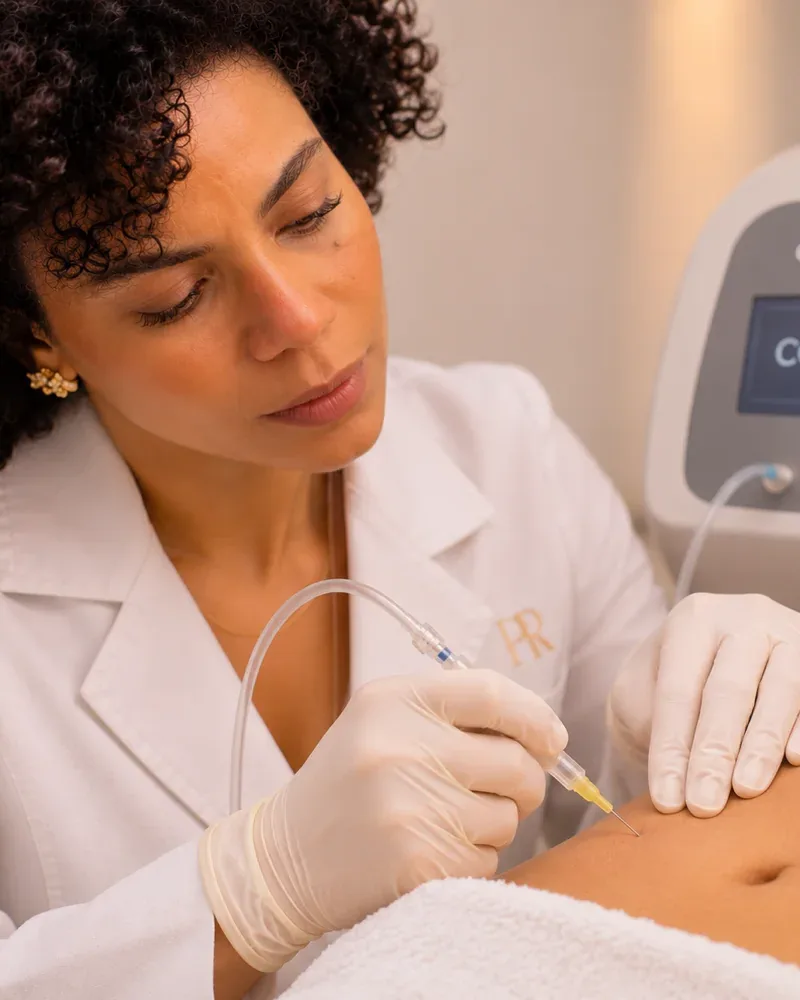
The doctor slowly and carefully injects small amounts of gas at several points using a very fine needle, while the device regulates the flow. You feel a needle prick, pressure and a burning sensation, and sometimes a slight crackling under the skin. The duration depends on the area and is agreed during the assessment.

What you feel

Pressure and a burning sensation as the gas spreads, with the area becoming slightly raised and red for a short time. The doctor adjusts the rate for your comfort.

Book an assessment

Afterwards

Recovery and follow-up

There may be redness, mild swelling and small bruises for a few days. You can usually return to your routine, while moisturising the area, applying sunscreen if it is exposed and avoiding rubbing it.

When to seek help

Severe pain, rapidly increasing swelling, an area that is hot and producing pus, fever or shortness of breath: contact the clinic and, if it is severe, call 112. Outside opening hours, you can call SNS 24 (808 24 24 24).

Book an assessment
Dr Michelle Campagnoli, clinical director of Clínica Luxmed

Who will look after you

An assessment carried out by the doctor

At Luxmed in Algés, the first step is always an assessment with Dr Michelle Campagnoli. She examines your skin, determines whether body carboxytherapy is the right option for you and agrees the plan with you before any procedure. The assessment fee is deducted if you decide to proceed with treatment.

  • Physical examination and medical historyA conversation about your skin, medication, previous treatments and what you would like to improve, and a careful examination of the area to be treated.
  • A plan tailored to youAreas, number of sessions, intervals and aftercare, explained clearly and without promises.
  • Deducted if you go aheadIf you decide to go ahead with the treatment, the cost of the assessment is deducted. If you prefer not to go ahead, nothing further is asked of you.
Book an assessment

Book a consultation

Book your consultation

Choose how you prefer to get in touch. We will arrange the assessment consultation with Dr Michelle Campagnoli.

Booking through the websiteAssessment consultationTalk to our assistant on WhatsApp and ask for the current price of the assessment.

New Life Miraflores, Algés · Office Center, R. Santa Teresa do Menino Jesus n.º 6, 9.º C, 1495-048

Your details are used only for this contact. Any treatment depends on a prior medical assessment.

Request an appointmentIt takes less than a minute.
Speciality
You do not need to go into detail. The doctor will talk to you during the consultation.
Request received. Our team will contact you as soon as possible.
What is body carboxytherapy?

This treatment involves injecting small amounts of sterile, medical-grade carbon dioxide (CO2) into or just beneath the skin. The gas dilates the small blood vessels, increases local circulation and oxygenation and is eliminated by the body. On the body, it is used mainly for cellulite, stretch marks, scars and skin texture, and sometimes for small fat deposits, always as a complementary treatment and with realistic expectations.

How does it differ from radiofrequency, microneedling and intradermotherapy?

With radiofrequency, heat stimulates the skin and collagen. With microneedling, the needles create micro-injuries that stimulate skin renewal. In intradermotherapy, substances are injected into the dermis. In carboxytherapy, a gas is injected, acting mainly on local circulation and oxygenation. These are different techniques that may complement one another, and the choice is made during the assessment. Nor should it be confused with the CO2 laser, which uses light.

What about liposuction?

These are fundamentally different options. Liposuction removes fat, usually with a more predictable and longer-lasting result, but it involves surgery, anaesthesia and several weeks of recovery. Carboxytherapy is non-surgical, is performed as a course of sessions and has a short recovery time, but its effect on fat is small and may be temporary. Clínica Luxmed does not perform surgery: if the doctor believes surgery would be the best option for your case, she will tell you during the assessment.

Does carboxytherapy eliminate abdominal fat?

Not permanently. The only controlled trial with a comparison group that we found was conducted on the abdomen and involved 16 people: in the treated area, fat measured by ultrasound decreased slightly immediately after five weekly sessions, but that difference was no longer visible at 28 weeks, and body weight did not change. It is therefore not a treatment for weight loss or reducing body measurements. At most, it may be considered as a complementary treatment, with realistic expectations. The doctor explains the other options during the assessment.

Does it get rid of cellulite?

It does not eliminate it. The studies are small: in one of them, involving ten women and eight weekly sessions on the thighs and buttocks, the cellulite grade fell from III to II, but there was no comparison group. No treatment has been definitively established for cellulite. Results vary and the evidence is limited, so the doctor will assess with you whether it makes sense and whether another option would be better for your case.

Does it hurt? What does it feel like?

According to reviews, pain during injection is the treatment's main limitation. You feel a needle prick, pressure and a burning sensation as the gas spreads, and sometimes a slight crackling under the skin. The area briefly becomes raised and red before returning to normal. Sensitivity varies from person to person and from one area to another, and the doctor adjusts the rate for your comfort.

How many sessions are needed and how often?

In studies, protocols involved 4 to 8 sessions: eight weekly sessions for cellulite, five weekly sessions for abdominal fat, four fortnightly sessions for scars and eight fortnightly sessions for stretch marks. At the clinic, the number of sessions and the interval between them depend on the area, what is being treated and the skin's response, and are determined by the doctor only after the assessment.

Can I combine it with other treatments?

It can be, when appropriate. Studies and reviews describe combinations with Fractional CO2 laser or Microneedling, always with an interval between sessions determined by the doctor. For skin laxity, the evidence for Carboxytherapy is limited: if this is your main concern, other options, such as radiofrequency, may be more suitable. During the assessment, the doctor will tell you whether combining treatments is worthwhile or whether one technique is sufficient.

Does it work on stretch marks?

Some studies show improvement, but they are small and mostly have short follow-up periods. In a trial involving 40 women with abdominal stretch marks, fractional CO2 laser and carboxytherapy produced comparable improvements in the width and length of the stretch marks; there was more bruising with carboxytherapy and more pain and pigmentation with the laser. In another study cited in a review, the laser achieved a better result. The choice between the two is made during the assessment.

Does it work on scars?

There are fewer studies than for stretch marks. In twelve mature scars, four sessions were associated with a smaller scar surface area and softer tissue, without a comparison group. In one review, carboxytherapy had an effect comparable to microneedling on depressed scars (for example, acne scars). It is only considered for fully healed scars, and the doctor will tell you what you can realistically expect.

Are the results permanent?

No. Results are gradual, vary from person to person and may not last: in the trial on abdominal fat, for example, the difference measured immediately after the sessions was no longer visible at 28 weeks. Changes in weight, pregnancy and ageing also have an effect. During the assessment and after the sessions, the doctor advises whether it makes sense to repeat the treatment.

What are the risks and side effects?

The most common effects are pain during injection, redness, swelling and bruising: bruising is the most frequently reported adverse effect. Subcutaneous emphysema, meaning gas spreading beneath the skin, has been reported rarely: in one case, after treatment of the thigh, the gas reached the abdominal wall and was reabsorbed in about ten days. Infections caused by inadequate equipment hygiene have also occurred. If you experience severe pain, rapidly increasing swelling, fever, pus or shortness of breath, contact the clinic and, if it is severe, call 112; outside opening hours, you can call SNS 24 (808 24 24 24).

Who should not have it?

People who are pregnant or breastfeeding, or who have an infection, fever or inflammation in the area, severe heart, lung or kidney disease, thrombosis or thrombophlebitis, a history of stroke, uncontrolled high blood pressure or a blood-clotting disorder. The doctor assesses each case, including any medication you take, especially medication that affects blood clotting.

Is an assessment needed first? Is there a charge?

Yes. All treatments at Clínica Luxmed begin with an assessment consultation with the doctor, where we work out whether the treatment makes sense for you. The cost of the assessment is deducted if you decide to go ahead with the treatment.

How should I prepare and what should I do afterwards?

Come with clean skin and no creams on the area, and tell us about any medication that affects blood clotting and any change in your health since the assessment. Afterwards, there may be redness, swelling and bruising for a few days: moisturise the skin, use sunscreen if the area is exposed and avoid rubbing it. The doctor will give you instructions for your particular case, including advice on exercise.

Can I work and carry on with my normal life afterwards?

Usually, yes: recovery is short. However, depending on the area, bruising and swelling may be noticeable for a few days, particularly on the thighs and inner upper arms. If you have an important event or a holiday when you will be wearing shorter clothing, mention it at the assessment so that we can plan the sessions well in advance.

We could not find that question. Ask us on WhatsApp

Scientific references

This page is based on the sources below. Updated on .

  1. Pianez LR, Custódio FS, Guidi RM, de Freitas JN, Sant'Ana E. Effectiveness of carboxytherapy in the treatment of cellulite in healthy women: a pilot study. Clin Cosmet Investig Dermatol, 2016.
  2. Alam M, Sadhwani D, Geisler A, Aslam I, Makin IRS, Schlessinger DI, et al. Subcutaneous infiltration of carbon dioxide (carboxytherapy) for abdominal fat reduction: a randomized clinical trial. J Am Acad Dermatol, 2018.
  3. Elmorsy EH, Elgarem YF, Sallam ES, Taha AAA. Fractional carbon dioxide laser versus carboxytherapy in treatment of striae distensae. Lasers Surg Med, 2021.
  4. Stolecka-Warzecha A, Chmielewski Ł, Deda A, Śmich A, Lebiedowska A, Wilczyński S. The influence of carboxytherapy on scar reduction. Clin Cosmet Investig Dermatol, 2022.
  5. Zelenkova H, Wollina U. Carboxytherapy in esthetic medicine: a review. CosmoDerma, 2023.
  6. Bagherani N, Smoller BR, Tavoosidana G, Ghanadan A, Wollina U, Lotti T. An overview of the role of carboxytherapy in dermatology. J Cosmet Dermatol, 2023.
CallAssistantAvailableBook