Algés, Oeiras Mon to Fri · 09:00 to 13:00 and 14:00 to 19:00 · Sat · 09:00 to 14:00
WhatsApp Book a consultation

Treatment · Body aesthetics

Body IntradermotherapyMicroinjections into the dermis to improve the quality of the skin on the body and, in selected cases, support other treatments

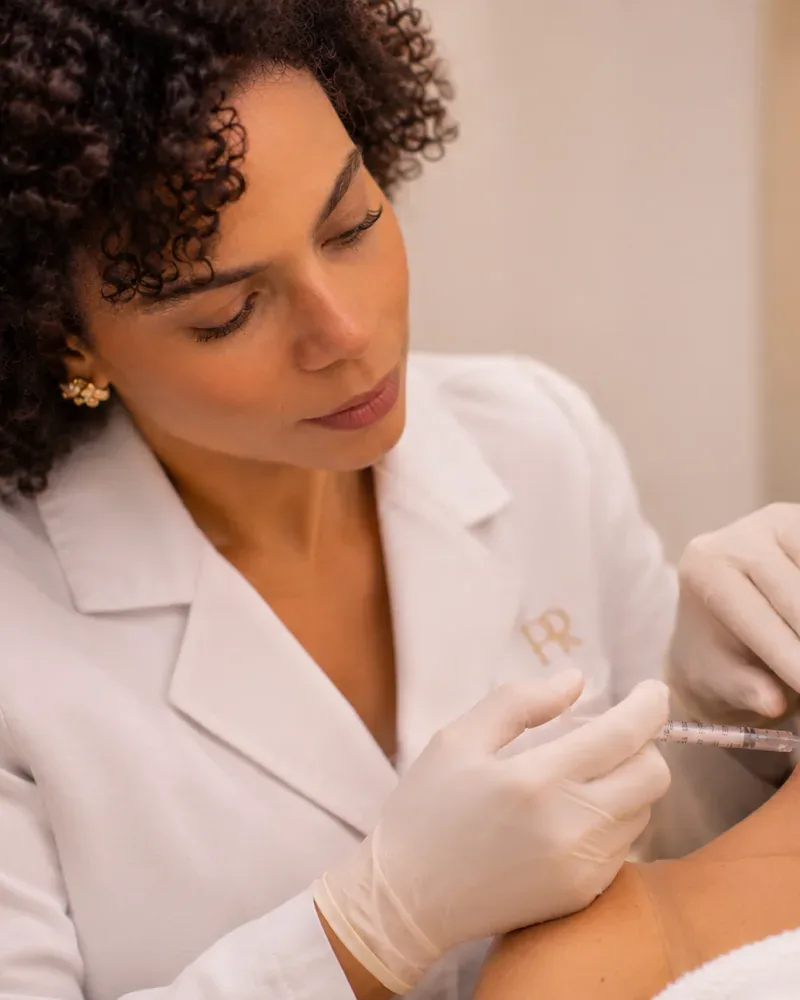
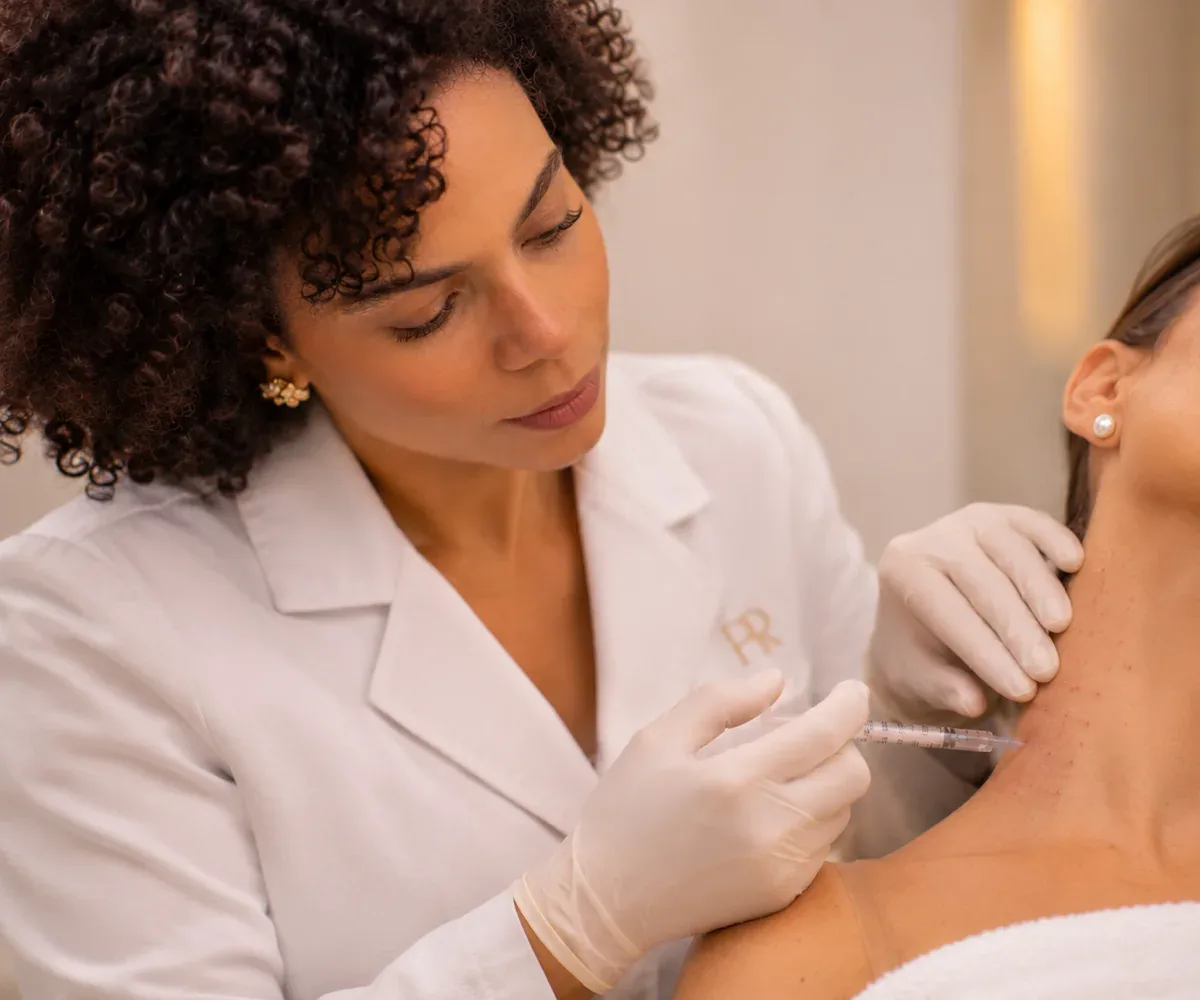
Intradermotherapy, also called mesotherapy, involves injecting microdroplets of a solution selected by the doctor into the dermis to improve skin hydration and quality. On the body, it is used in areas such as the neck, hands and arms and, in selected cases, as an adjunct for cellulite. It is not a weight-loss treatment. Like all treatments at Clínica Luxmed, it begins with an assessment consultation with the doctor, the cost of which is deducted if you decide to proceed.

  • Doctordetermines the sessions after the assessment
  • 1assessment, deducted if you go ahead
  • Fewdays of mild marks, as a rule
Body intradermotherapy: body aesthetics treatment · Luxmed Clinic, Algés

How it works

Microinjections into the skin of the body

On the body, the skin is thicker and the treatment area is larger than on the face. Choose one of the stages to see what happens in the skin and what this means for you.

The micro-injections

Using very fine needles, microdroplets of a solution are injected into the dermis, the layer of skin containing collagen and small blood vessels. The injection is repeated at multiple small points throughout the treatment area. In mesotherapy in the broad sense, the solution may also reach the tissue just beneath the dermis.

What happens

Small raised bumps form on the skin and usually disappear within hours, and topical anaesthetic can be used before the session.

What this means

The skin on the neck, hands, arms and thighs differs, and the doctor adapts the depth and spacing of the injections to the area.

What the journey looks like

It all starts with an assessment

At Clínica Luxmed, no treatment is decided over the phone or from what is seen in a photograph. The first step is always an assessment consultation with the doctor.

The assessment fee is deducted. If you decide to go ahead with the treatment, the cost of the assessment is deducted. If you prefer not to go ahead, nothing further is asked of you.

Book an assessment
  1. 01At the clinic

    Assessment with the doctor

    The doctor listens to your history, examines your skin, asks about medication and previous treatments, and explains what it is realistic to expect.

  2. 02At the clinic

    A plan tailored to you, with no commitment

    The areas, the number of sessions, the intervals and the aftercare are defined. You can think it over calmly and come back whenever you wish: nothing is started until you have fully understood what is going to be done.

  3. 03At the clinic

    Sessions

    The number of sessions, the interval between them and the formulation are only determined by the doctor after the assessment, based on the area and the skin's response. Between sessions, the doctor reassesses the skin and adjusts the plan. It can be performed on its own or, when appropriate, as a complement to other body treatments, such as Radiofrequency microneedling or Carboxytherapy, in separate sessions.

  4. 04Over time

    Result and maintenance

    If there is an improvement, it becomes noticeable gradually. It is not permanent: the skin continues to change with age, weight and everyday care. The doctor will tell you whether maintaining the treatment makes sense and how often it should be done.

Who it is for

When it makes sense and when it is necessary to wait

The decision always rests with the doctor, after examining your skin and getting to know your history. These are the most common scenarios.

  • Poor-quality skin on the body. Dull, dehydrated or uneven-textured skin in areas such as the neck, décolletage, hands or inner upper arms. This is where the technique is most commonly used.

  • Cellulite, as an adjunct. In selected cases, it may be proposed alongside other treatments. Results vary and the evidence is limited, so the doctor will assess with you whether it is appropriate or whether another option would be better.

  • Skin with mild loss of firmness. When the skin has lost some radiance and elasticity but there is no excess skin. Other techniques may be more suitable for improving firmness, and the doctor will advise you which one.

  • Sun-damaged skin. Dark spots, loss of radiance and a rough texture caused by years of sun exposure on the most exposed areas of the body, such as the décolletage, arms and hands.

  • Hardening or unevenness after surgery or liposuction. As a local adjunct, once the acute phase has passed and with the surgeon's agreement. The doctor assesses the right time.

Comparing options

Intradermotherapy or liposuction?

People who want to reduce localised fat often consider liposuction, which Luxmed Clinic does not perform. We compare the two options honestly so that you can understand what each does best. They have different aims: one seeks to improve skin quality, while the other removes fat. During the assessment, you and the doctor will decide what makes sense in your case.

At LuxmedBody Intradermotherapy
6of 8
criteria
Surgery to remove fatLiposuction
2of 8
criteria
Without surgery
Surgery
Topical, as a cream
Local with sedation or general
A few days
Several weeks
Usually mild
Those of surgery
No scarring
Small scars
Aims to improve it
Does not treat it
Does not remove it
Removes it
Variable
Greater
Luxmed does not perform surgery

It marks the side with the advantage in each criterion. Tap a criterion to see the detail.

In summary. If you want to improve the quality of the skin on your body without surgery and with a short recovery, Intradermotherapy may be appropriate, bearing in mind that the effect is subtle and the evidence is limited. If you want to remove localised fat, liposuction is the option that actually does so, and we will tell you this directly at the assessment.

This compares types of treatment, not practitioners, clinics or brands. The scoring is simple and does not weight the importance of each criterion: for someone who wants to remove localised fat, the actual removal of fat may matter more than anything else. Results and risks vary from person to person and depend on the technique and equipment used.

Where it can help

Body concerns for which the clinic may consider it

Intradermotherapy is not suitable for every case, nor is it the only option, and is usually a complementary treatment. These are the concerns for which the clinic may recommend it, either on its own or combined with other treatments. Open each page to see the causes and the other options.

What a session is like

From preparation to recovery

Each session has three stages. The timings are typical, and the doctor adjusts them to your case and the size of the area: the protocol is only finalised at the assessment.

Book an assessment

Swipe to see the three stages →

Before

Preparation

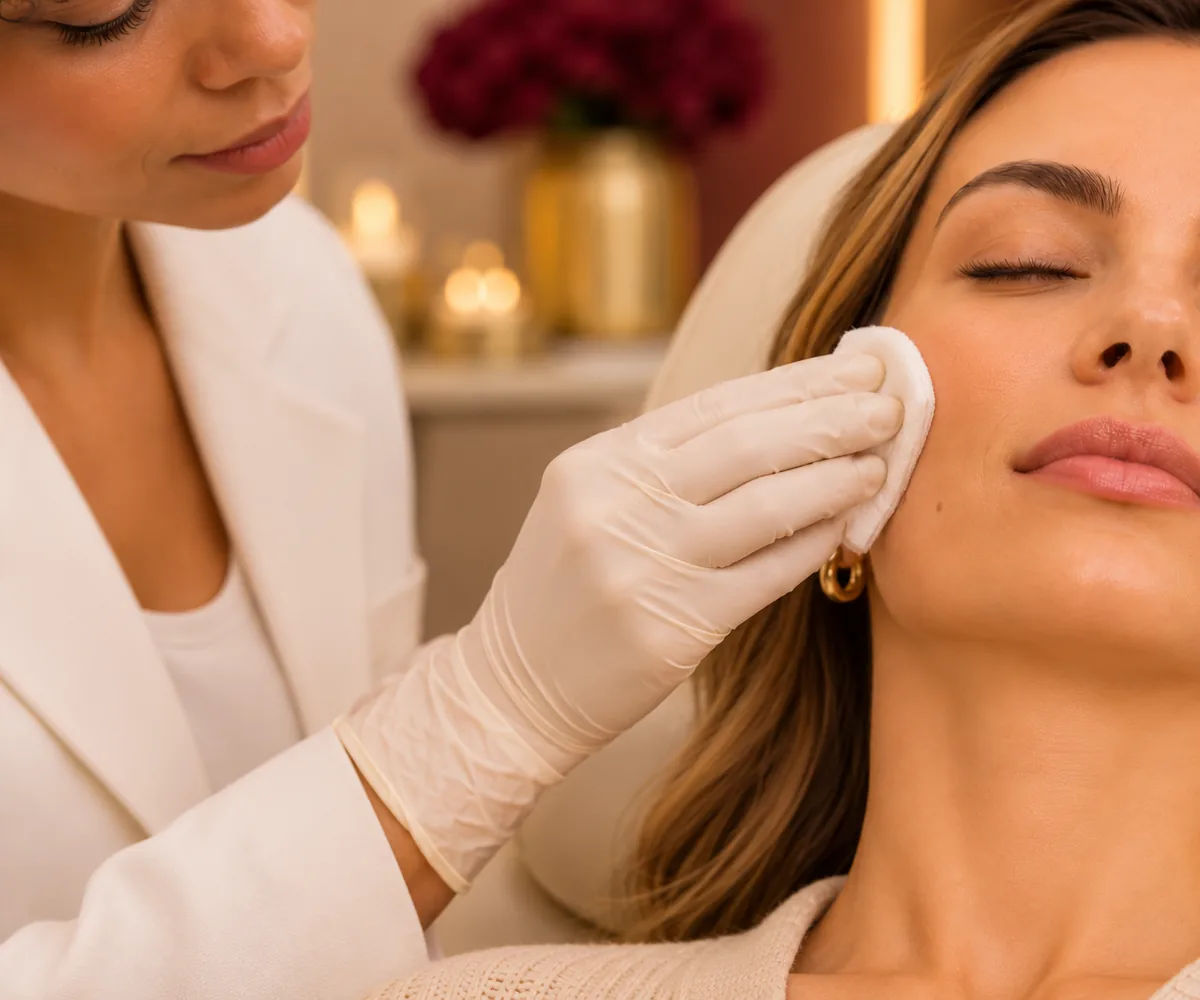
The area is cleaned and, if selected, a topical anaesthetic is applied for a period of time. The doctor confirms the area to be treated and the formulation, and asks again about allergies and medication.

Worth remembering

Arrive with clean skin and no creams on the area, and report any change in your health, any new allergy or any change in medication (especially anticoagulants) since the assessment.

Book an assessment

During

The session

Multiple shallow microinjections are given throughout the area. You will feel a series of small pricks, and some formulations cause temporary stinging. The duration depends on the size of the area and is agreed during the assessment.

What you feel

Needle pricks and mild stinging, which vary with the area and formulation. The doctor adjusts the pace throughout the session.

Book an assessment

Afterwards

Recovery and follow-up

In the hours and days afterwards, it is normal to have small raised bumps, redness and sometimes mild bruising at the injection sites. Keep the skin moisturised and protected from the sun.

When to return to your routine

Many people return to their usual routine the following day. Avoid rubbing the area and intense sun exposure, and ask the doctor for guidance on physical exercise. Contact the clinic if you develop increasing pain, heat, spreading redness, pus or a painful lump.

Book an assessment
Dr Michelle Campagnoli, clinical director of Clínica Luxmed

Who will look after you

An assessment carried out by the doctor

At Luxmed in Algés, the first step is always an assessment with Dr Michelle Campagnoli. She examines your skin, determines whether body Intradermotherapy is the right option for you and agrees the plan with you before any procedure. The cost of the assessment is deducted if you decide to proceed with treatment.

  • Physical examination and medical historyA conversation about your skin, medication, previous treatments and what you would like to improve, and a careful examination of the area to be treated.
  • A plan tailored to youAreas, number of sessions, intervals and aftercare, explained clearly and without promises.
  • Deducted if you go aheadIf you decide to go ahead with the treatment, the cost of the assessment is deducted. If you prefer not to go ahead, nothing further is asked of you.
Book an assessment

Book a consultation

Book your consultation

Choose how you prefer to get in touch. We will arrange the assessment consultation with Dr Michelle Campagnoli.

Booking through the websiteAssessment consultationTalk to our assistant on WhatsApp and ask for the current price of the assessment.

New Life Miraflores, Algés · Office Center, R. Santa Teresa do Menino Jesus n.º 6, 9.º C, 1495-048

Your details are used only for this contact. Any treatment depends on a prior medical assessment.

Request an appointmentIt takes less than a minute.
Speciality
You do not need to go into detail. The doctor will talk to you during the consultation.
Request received. Our team will contact you as soon as possible.
What is body Intradermotherapy?

This treatment involves using very fine needles to inject microdroplets of a solution into the dermis at many points across the treatment area. It aims to improve skin hydration and quality and is used on the body in areas such as the neck, décolletage, hands and arms and, in selected cases, as an adjunct for cellulite. The formulation of the solution is selected after the assessment.

Are intradermotherapy and mesotherapy the same thing?

In common usage, the two names are used almost synonymously: mesotherapy originated in Europe as a method of injecting medicines into the skin, particularly for pain and vascular diseases, with aesthetic applications developing later. A 2006 review (Rotunda and Kolodney) distinguishes classic mesotherapy from phosphatidylcholine and deoxycholate injections, which are a different treatment used in an attempt to dissolve small amounts of fat. The distinction matters because the substances and risks are not the same.

Which substances are injected?

It varies. To improve skin quality, active ingredients such as Hyaluronic acid, vitamins and amino acids are generally used. In other cases, other medicines may be used, some outside their approved indication (off-label), and the doctor will explain this before proceeding. There is no standardised formula, and the product and brand are chosen during the assessment.

Do ‘lipolytic enzymes’ and Aqualyx dissolve localised fat?

Injections intended to dissolve fat are often called ‘lipolytic enzymes’, but the best-known substances, phosphatidylcholine and deoxycholate, act like a detergent that disrupts fat cells (Rotunda and Kolodney, 2006), rather than as enzymes. Evidence for localised fat is limited, and there are safety concerns. The US FDA states that only one injectable medicine is approved for fat, and only under the chin, and warns that unapproved products, including Aqualyx, are associated with permanent scarring, infections, skin deformities and painful nodules. In Norway, the Norwegian Medical Products Agency (NOMA) classifies these injections as prescription medicines, not cosmetics. The regulatory framework varies between countries and products. We are not stating that the clinic uses any of these products: at the assessment, the doctor will explain what is safe and appropriate for you.

Does intradermotherapy help with weight loss or reducing body measurements?

No. It is not a treatment for weight loss or reducing body measurements. It acts on the skin to improve hydration and texture, so it is considered when weight is already stable. If fat is your concern, the doctor will explain during the assessment which options are available and whether they are suitable in your case.

Mesotherapy, cavitation or cryolipolysis: which should you choose for localised fat?

These are different techniques: mesotherapy injects substances into the skin, cryolipolysis uses cold and cavitation uses ultrasound. They do not share the same indications, and this page describes Intradermotherapy only. For localised fat, the evidence for mesotherapy is limited, as explained above. The choice depends on the amount of fat, the skin and the intended outcome; at the assessment, the doctor will explain what is appropriate, including, when applicable, that none of them is the best option.

What about liposuction?

They are different types of treatment. Liposuction is surgery that actually removes fat, with anaesthesia, small permanent scars and a recovery period of several weeks. Intradermotherapy is non-surgical, has a recovery time of a few days and aims to improve skin quality, but it does not remove fat. Luxmed Clinic does not perform surgery: if the doctor considers during the assessment that surgery would be the best option for you, she will tell you.

Does it work on cellulite?

Results vary and the evidence is limited. A 2015 systematic review analysed 67 studies of cellulite treatments, only 19 of which were randomised and placebo-controlled, and found no clear evidence that any were highly effective. A 2005 review noted that the substances injected for cellulite had not been fully evaluated for safety and efficacy. The doctor will therefore assess with you whether it is appropriate, generally as an adjunct rather than as a stand-alone treatment.

Does it hurt?

You feel a series of small needle pricks and, with some formulations, temporary stinging. A topical anaesthetic may be applied beforehand. Sensitivity varies from person to person and from area to area, and the doctor adjusts the pace of the session to your comfort.

How many sessions are needed, and can I combine it with other treatments?

The number of sessions and the interval between them are determined by the doctor after the assessment and depend on the area, the formulation and the skin's response. There is no single schedule for everyone, and the doctor reassesses and makes adjustments between sessions. It can be performed on its own or, when appropriate, alongside other body treatments such as Radiofrequency microneedling or Carboxytherapy, in separate sessions with the correct interval between them.

Which areas of the body can be treated?

It is most commonly used on the skin of the neck, décolletage and hands, as well as on the arms, abdomen and thighs as a complementary treatment, depending on the concern. After surgery or liposuction, it is only considered as a local complementary treatment once the acute phase has passed and with the surgeon's agreement. During the consultation, the doctor will assess whether the area you are concerned about is suitable.

When will I see results and how long do they last?

Any improvement is gradual and subtle and is assessed over the course of the sessions. It is not permanent: the skin continues to change with age, weight and everyday care, and the doctor will tell you whether maintaining the treatment makes sense. Results vary from person to person.

What are the risks and side effects?

Common, mild effects include redness, small raised areas, bruising and some tenderness, which resolve within days. The literature includes reports of nodules, inflammatory reactions, infections and, rarely, serious skin injuries, mainly in case series and isolated case reports (Plachouri and Georgiou, 2019), and the authors conclude that larger safety studies are needed. If you develop severe and increasing pain, pus, fever, spreading redness or a painful nodule, contact the clinic; if it is serious, call 112. Outside opening hours, you can call SNS 24 on 808 24 24 24.

Who should not have it?

This includes people who are pregnant or breastfeeding, those with an infection, wounds or active skin disease in the area, a known allergy to any component, or who take anticoagulants, among other situations, depending on the assessment. Autoimmune diseases and a tendency to form keloids require special care. The doctor will explain each individual case.

Is an assessment needed first? Is there a charge?

Yes. All treatments at Clínica Luxmed begin with an assessment consultation with the doctor, where we work out whether the treatment makes sense for you. The cost of the assessment is deducted if you decide to go ahead with the treatment.

How should I prepare and when can I return to my routine?

Come with clean skin and no creams on the area, and tell us about any change in your health, allergies or medication, especially anticoagulants. Many people return to their usual routine the next day, but it is advisable to avoid rubbing the area and intense sun exposure during the first few days, and to ask the doctor for advice about exercise. If you have an event coming up, mention it at the assessment, as mild bruising may occur.

We could not find that question. Ask us on WhatsApp

Scientific references

This page is based on the sources below. Updated on .

  1. Rotunda AM, Kolodney MS. Mesotherapy and phosphatidylcholine injections: historical clarification and review. Dermatol Surg, 2006.
  2. Rotunda AM, Avram MM, Avram AS. Cellulite: Is there a role for injectables?. J Cosmet Laser Ther, 2005.
  3. Luebberding S, Krueger N, Sadick NS. Cellulite: an evidence-based review. Am J Clin Dermatol, 2015.
  4. Plachouri KM, Georgiou S. Mesotherapy: Safety profile and management of complications. J Cosmet Dermatol, 2019.
  5. Duncan D, Rotunda AM. Injectable therapies for localized fat loss: state of the art. Clin Plast Surg, 2011.
  6. U.S. Food and Drug Administration. Using Fat-Dissolving Injections That Are Not FDA Approved Can Be Harmful. FDA, 2023.
  7. Norwegian Medical Products Agency (NOMA). Products for injection for fat removal are medicines – not cosmetics. NOMA, 2024.
CallAssistantAvailableBook